Tag: Opera Depot

  • At Home With Wagner III

    Wagner

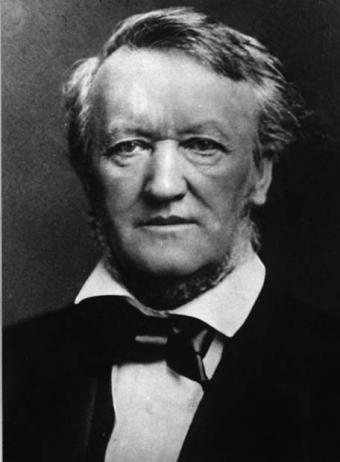
    Above: Richard Wagner

    Having taken a break from listening to Wagner at home while I was wrapped up with attending the RING operas at The Met, I picked up where I’d left off in playing CDs that my friend Dmitry has graciously made for me. These live recordings all come from a valuable source, Opera Depot, and this latest round of Wagnerian adventures kicks off with a 1966 performance of FLIEGENDE HOLLANDER from Covent Garden.

    HOLLANDER was not the first Wagner opera I ever experienced in the theatre, but my first encounter with it (in 1968) was a memorable event with Leonie Rysanek (singing despite a high fever) magnificent as Senta, and Walter Cassel, James King and Giorgio Tozzi as the male principals.

    Jones

    Above: Dame Gwyneth Jones

    For this 1966 performance from London, Sir Georg Solti is on the podium, stirring up a vivid performance that comes across excitingly in this recording which is in pretty good broadcast sound, with the voices prominent.

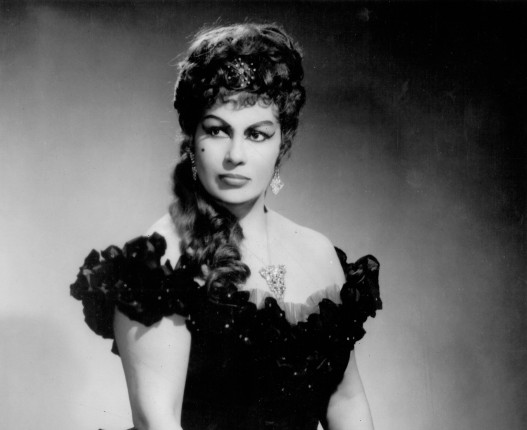
    David Ward is a bass-oriented Dutchman and his singing is moving in its passion and despair, fierce in anger and with a touching human quality in the more reflective passages. He and his Senta, Dame Gwyneth Jones, manage the strenuous demands of their long duet very well: both the tessitura and the emotional weight of this duet test the greatest of singers and if there are slight signs of effort here and there in this recording, the overall effect is powerful.

    Dame Gwyneth, just two years after her break-through performance at The Garden in TROVATORE casts out the powerful top notes before her final sacrificial leap thrillingly; earlier, in the Ballad she is engrossing in her use of piano singing and creates a haunting picture of the obsessed girl. The soprano’s well-known tendency to approach notes with a rather woozy attack before stabilizing the tone is sometimes in evidence; I find it endearing.

    The great basso Gottlob Frick is a wonderful Daland, and tenor Vilem Pribyl holds up well in the demanding role of Erik; his third act aria – which recalls Bellini in its melodic flow – is passionately sung. Elizabeth Bainbridge and Kenneth MacDonald give sturdy performances as Mary and the Steersman.

    ~~~~~~~~~~~~~~~~~~~~~~~~~~~~~~~~~~~~~~~~~~~~~~~~~~~~~~~~~~~~~~~~~~~~~~~~~~~~~~~~~~~~~~~~~~~~
    1024px-Horst_Stein

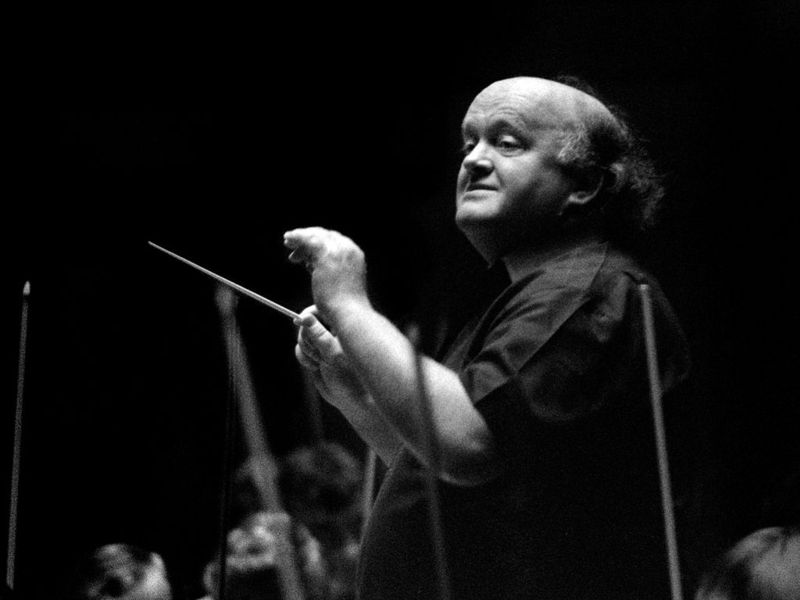
    A WALKURE Act I from Bayreuth 1971 finds conductor Horst Stein (above) giving a great sense of urgency to the opening ‘chase’ music. Helge Brilioth, probably better known for his Tristan and Siegfried, sounds a bit rough-hewn at first as Siegmund but summons up some poetry later in the act. Dame Gwyneth Jones as Sieglinde shows both contemplative lyricism and the power of a future Brunnhilde; her singing is emotional without breaking the musical frame. Karl Ridderbusch is a darkly voluminous Hunding; despite a few moments of sharpness here and there, he makes a strong impression.

    ~~~~~~~~~~~~~~~~~~~~~~~~~~~~~~~~~~~~~~~~~~~~~~~~~~~~~~~~~~~~~~~~~~~~~~~~~~~~~~~~~~~~~~~~~“
    540752_10151474196683142_112317311_n

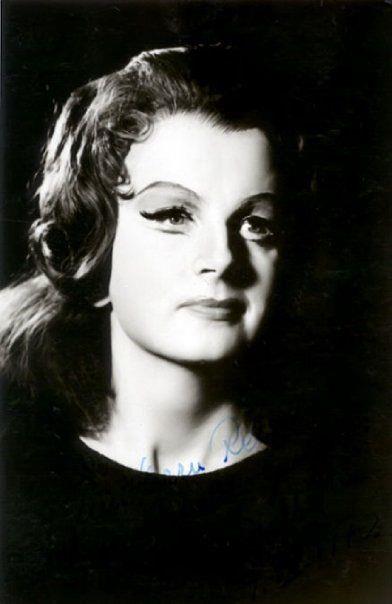
    The Swedish singer Berit Lindholm (above) was one of a group of sopranos – Rita Hunter, Ingrid Bjoner, Caterina Ligendza and Dame Gwyneth Jones were some of the others – who increasingly tackled the great Wagnerian roles as Birgit Nilsson’s career wound down. In 1976 Lindholm sang Brunnhilde in a performance of GOTTERDAMMERUNG at Covent Garden conducted by Sir Colin Davis, and she does quite well by the role, bringing a more feminine and vulnerable quality to her interpretation than Nilsson did. Lindholm reaches a fine peak as Act I moves toward its inexorable climax with the meeting between Brunnhilde and Waltraute, followed by the false Gunther’s rape of the ring.

    Interestingly, though both the recording and the Covent Garden website list Yvonne Minton as Waltraute in this performance, there is some question that she might have been replaced last-minute by Gillian Knight; in fact, some listings for this recording on other releases do show Knight singing Waltraute. A delicious mystery, since whichever mezzo it is is impressive indeed. (I’ve left an inquiry on the Opera Depot listing, perhaps someone can shed further light…)

    Jean Cox certainly has an authentic Wagnerian voice though at times in Act I his singing falls a shade below pitch. The wonderful basso Bengt Rundgren sounds fine as Hagen in Act I, and his half-siblings are Siegmund Nimsgern – later a Bayreuth Wotan – as Gunther, and Hanna Lisowska as Gutrune, a role she repeated at the Met when the ‘Levine’ Cycle was filmed for posterity.

    As an admirer of the Norn scene, I’m very pleased with the three women who sing this fantastic music here: Patricia Payne, Elizabeth Connell and Pauline Tinsley. Ms. Payne is steady and sure of voice and what a delight to hear a future Isolde (Ms. Connell) and Kundry (Ms. Tinsley) in these roles; Ms. Tinsley dips impressively into her chest voice at one point, an unusual and exciting effect.

    Sir Colin Davis builds the great span of the prologue/Act I persuasively; a few minor orchestral blips here and there are barely worth mentioning. Once Waltraute arrives at Brunnhilde’s Rock the conductor attains a heightened level of dramatic intensity and the act ends excitingly.

    Act II opens with the mysterious conversation between Alberich and his slumbering son, Hagen. Zoltán Kelemen, who was Karajan’s Alberich when the conductor inaugurated his RING Cycle at The Met (a project from which the maestro withdrew after the first two operas) makes a fine effect, and Mr. Rundgren maintains his sturdily sung Hagen throughout this act. Jean Cox is very authoritative as he declaims his oath on Hagen’s spear; any misgivings about him from Act I are swept away here. Berit Lindholm may lack the trumpeting, fearlessly sustained high notes of the more famous Nilsson, but her Brunnhilde is exciting in its own right, with her anguished cries of ‘Verrat! Verrat!’ (“Betrayed!”) a particularly strong moment.   

    Whether she is the Waltraute or not, Gillian Knight is definitely one of the Rhinemaidens, joined in melodious harmonies by Valerie Masterson and Eiddwen Harrhy for the opening scene of Act III. There’s some vividly silly giggling from this trio, and Ms. Masterson in particular sounds lovely – an augury of her eventual status as a fabulous Cleopatra.

    Mr. Cox has impressive reserves to carry him thru Siegfried’s taxing narrative – he’s at his best here – and if Ms. Lindholm’s voice doesn’t totally dominate the Immolation Scene, she’s very persuasive in the more reflective passages of Brunnhilde’s great concluding aria. Sir Colin Davis had built the opera steadily and with a sure sense of the music’s architecture; he saves a brilliant stroke for the end of the opera when he does not take the ‘traditional’ pause before the reprise of the ‘redemption thru love’ theme but instead sails forth into it with impetuous fervor.

    There were times while listening to this performance when I wondered if this was a broadcast performance or was recorded in-house. The voices do not always have the prominence we associate with broadcast sound, but perhaps the micorphones were oddly placed. At any rate, GOTTERDAMMERUNG has again made its mark as the culmination of the great drama of The RING.
  • AIDA at the Teatro Colon 1968

    Arroyo10

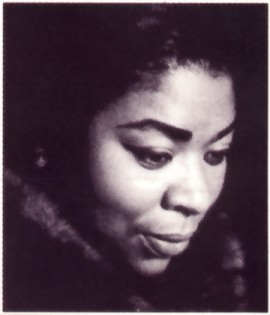
    This 1968 performance of AIDA from the Teatro Colon, Buenos Aires, cropped up on the Opera Depot website and thought the combination of Martina Arroyo (above) and Carlo Bergonzi as Aida and Radames would be exciting to hear, since they are two of my all-time favorite Verdi singers. Both are in prodigious voice, providing phrase after phrase of wonderfully generous vocalism. My thanks to Dmitry for making me a copy.

    Martina Arroyo never made a commercial recording of AIDA, and Bergonzi’s Radames on the Decca label (with Tebaldi) was recorded in an unusual acoustic which even later tampering-with could not make really enjoyable. So it’s wonderful to have this live recording from the Colon in perfectly good sound and with both singers on impressive vocal form.

    Teatro Colon, BA

    The Teatro Colon (above) is a vast house (1,000 standees may be accommodated), and over the years has been rated high acoustically by singers and listeners alike. On this evening in 1968, the crowd surely senses that they are hearing teriffic vocalism from Arrroyo and Bergonzi and they repay the singers with generous ovations throughout the performance.

    Bruno Bartoletti is on the podium; over the years I have heard performances conducted by this man that seem ideal and others that are less inspiring. For this AIDA he sets a generally fast pace (the ballet segments are wickedly speedy – I would not want to have been dancing in this performance!) but he certainly gives his singers a lot of leeway, and they enjoy lingering on high notes and having the opportunity to sustain favorite phrases.

    There are some off-notes and a few unhappy bits from the pit musicians, and one jarring passage in the Tomb Scene where Bartoletti inexplicably rushes ahead of Bergonzi who is in the middle of some raptly poetic music-making; it takes a few bars to get things back in sync.

    Carlo-Bergonzi

    Carlo Bergonzi (above) has always been my personal king of tenors; yes, I know all his flaws and yes, he went on singing too long after he should have stopped. But in his heyday he was just so thoroughly pleasing to listen to, his marvelous turns of phrase and beautifully sustained vocalism always make me feel…happy. The beauty of hearing the Italian language wrapped in Bergonzi’s plangently expressive sound has always given me particular joy; even now, if I’m feeling blue, I’ll reach for that first Decca recital disc and soon I’m transported out of myself and basking in the music that has kept me – both spiritually and psychologically – on an even keel all these years. His singing in this AIDA is simply marvelous to experience: the unstinting generosity of both voice and style, the many small touches of sustained notes and his lovely colourings of the words in a rich emotional palette. It’s Verdi tenor singing at its best.

    Martina Arroyo is in glorious voice also, rich and even throughout the role’s vast range. If she does not employ the ravishing piano effects that some sopranos have in this music, we are amply compensated with the velvety splendour of Arroyo’s sound and her plush phrasing, as well as her dramatic awareness which never carries her to excess. In this grand performance, the great Martina rises to the high-C of ‘O patria mia’ – a note which has defeated many a soprano – with blessed assurance and sustains it with glorious ease. In the opera’s concluding Tomb Scene, she and Bergonzi trade passages of soul-pleasing Verdi vocalism, and together they sustain their final joint phrase seemingly beyond the realm of human possibility.

    Cvejic

    The Serbian mezzo-soprano Biserka Cvejic (above) is probably not on anyone’s list of top-ten mezzos; yet if she had been the Amneris in either of the last two AIDAs I heard at The Met, I would have been satisfied. It’s a crusty, Old-World sound with an ample and pleasing chest register and higher notes sometimes approached from below. Cvejic has the role well in hand and if her singing doesn’t rise to the level of the soprano and tenor, neither does she let down her side of the triangle.

    Cornell MacNeil is a powerful, dramatic Amonasro and I was surprised to find Nicola Rossi-Lemeni listed as Ramfis: this basso – a famous stage-creature of the 1950s – is surely nearing the end of his singing career by 1968. If not vocally prime, he surprises with some very robust moments (‘Immenso Ptah!’) and makes an authoritative impression.

  • At Home With Wagner II

    Wagner-02

    More Wagnerian treats have come my way, thanks to Opera Depot and to Dmitry’s generosity in making me copies. I have a ‘new’ (to me) TANNHAUSER, and an Act I of WALKURE, and a complete GOTTERDAMMERUNG to enjoy on these long Winter afternoons.

    0

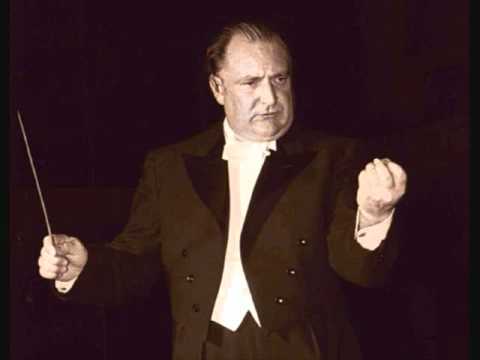
    I played the WALKURE Act I first; it comes (as does the GOTTERDAMMERUNG) from a 1959 Covent Garden RING Cycle conducted by Franz Konwitschny (above). This Cycle does not seem to be readily available in the USA, but it was on special offer at Opera Depot so Dmitry snatched it up since one can never have too many RING Cycles.

    Konwitschny opens with a superbly-paced prelude; it’s slightly on the fast side but gives an uncanny feeling of relentless pursuit: Siegmund is the prey and little does he know that he’ll find shelter in the very home of his pursuer. Ramon Vinay, who sang Siegmund in the 1953 Keilberth RING from Bayreuth, sounds more baritonal here – six years later – and tends he to be a bit more declamatory in his approach. Amy Shuard, who was to be Brunnhilde for Solti at Covent Garden in 1965 seems to me better suited to Sieglinde. She has a nice feeling of womanly lyricism in her voice and is especially moving in the passage where she asks Siegmud to stay with her and await Hunding’s return. Later, Shuard scores again with a wonderfully pensive quality at “O still, lass mich der Stimme lauschen!”. She has a few passing moments of flatness in the middle register, and Vinay is taxed by his final “…Walsungen Blut!” But overall they are quite exciting, and Kurt Boehme is a strong. dark-hued Hunding. Some random off-notes from the orchestra; the sound quality is quite good overall.

    ~~~~~~~~~~~~~~~~~~~~~~~~~~~~~~~~~~~~~~~~~~~~~~~~~~~~~~~~~~~~~~~~~~~~~~~~~~~~~~~~~~~~~~~~~~~~

    Taking a break from the RING, I moved to the 1965 Bayreuth TANNHAUSER. Andre Cluytens gives a well-paced reading of the score, and the sound quality of the recording is more than acceptable. Wolfgang Windgassen, then 50-years-old, takes on the arduous title-role; as he begins to sing there is a sense of strain, but he somehow manages to get the voice in gear and though there are moments when he seems tested, his knowledge of the role and of his instrument manage to sustain him through the first two acts. The strenuous demands of the Rome Narrative sometimes cause the tenor to sound as if he’s at the outer edge of his vocal possibilities, and although he steers thru the music without disaster it’s not pleasant to listen to. The fact that Tannhauser is exhausted and on the brink of madness can serve to cover some of the moments of vocal peril, but in the end it’s not something to listen to more than once. 

    Leonie Rysanek sings with her usual intensity and command of the upper range, and she uses a broad dynamic palette quite impressively. There are moments when she sounds unstable, notably in the Act III prayer which is taken quite slowly. In 1964, the soprano had had something of a vocal crisis which affected her performances in OTELLO and DON CARLO at The Met. At the end of the 1964-65 season she was gone from the Met for nearly a year (including the very Summer of this Bayreuth TANNHAUSER) and when she returned to New York City she seems to have given up nearly all of her Italian roles (aside from Tosca – though she later took on Medea, Gioconda and Santuzza, but not at The Met). She continued to sing Elisabeth in TANNHAUSER for twenty more years, including a stunning performance in San Francisco in 1973, and an impressive Met broadcast in 1982. This Bayreuth ’65 Elisabeth is perhaps not her finest rendering of the role, but it’s pretty exciting nonetheless. 

    Ludmila Dvorakova’s huge, over-ripe sound amply fills the role of Venus though her singing will not be to all tastes, and basso Gerd Neinstedt makes a strong impression as Biterolf in the scene of the song contest.

    Talvela4

    What makes the performance worthwhile are the performances of Martti Talvela (above) as the Landgraf Hermann and Hermann Prey as Wolfram. Talvela is on spectacular form, his commanding voice – marked by just a trace of the vocal ‘whine’ that was something of trademark – is thrilling to hear he welcomes the guests to the Watrburg and sets forth the framework of the contest. It was such a pleasure to hear this voice again.

    H prey

    Hermann Prey (above) as the steadfast Wolfram, who gallantly sets aside his own feelings for Elisabeth in view of her clear preference for Tannhauser, sings with lovely lyricism and expressiveness; a couple of the lowest notes of the Evening Star are a bit of a downward stretch for him, but for tenderness and poetic resonance his is a peerless incarnation of the role. Both Talvela and Prey have voices instantly recognizable, and their contributions to this performance are superb.

    ~~~~~~~~~~~~~~~~~~~~~~~~~~~~~~~~~~~~~~~~~~~~~~~~~~~~~~~~~~~~~~~~~~~~~~~~~~~~~~~~~~~~~~~~~~~~

    Thomas-Marjorie-03[771]

    Back to the ’59 Konwitschny Covent Garden RING Cycle for GOTTERDAMMERUNG in which the first voice we hear is that of Marjorie Thomas (above) as the First Norn. I had not been aware of this singer previously, despite her substantial career, and she makes a wonderful impression in thei opening scene of the RING‘s final opera – a scene I greatly enjoy both for its atmosphere and the vocal opportunities afforded the three singers. Her sister-Norns are Monica Sinclair – a mezzo who later joined Joan Sutherland’s touring Company and whose prodigious breath control makes her an unusually interesting Bradamante on the Sutherland recording of ALCINA – and soprano Amy Shaurd, who doubles as Gutrune here and later went on to sing the Brunnhildes.

    Wagner legends Astrid Varnay and Wokfgand Windgassen pour their hearts out in the prologue duet. Varnay is a soprano I sometimes find oddly matronly and overblown but here she is in very fine voice, moving from strength to strength as the opera progresses. I hear some similarities between her voice and that of Regina Resnik; does anyone else?  Windgassen is unfortunately not at his best in this performance. His voice is unsettled, his phrasing wayward. In this repertoire one has to allow for off-days; it”s just too bad this was a performance being preserved for posterity. Hermann Uhde (Gunter) and Gottlob Frick (Hagen) are simply magnificent, and Shuard is an ample-toned Gutrune, sometimes a shade off pitch.

    Stravinsky_und_boese1

    Ursula Boese (above, with composer Igor Stravinsky) is a rich-toned Waltraute, sometimes putting me in mind of Rita Gorr. Ms. Boese’s voice sometimes takes a moment to tonalize on a given note, giving a slight feeling of pitchiness, but overall she is impressive in her long scene with Varnay.

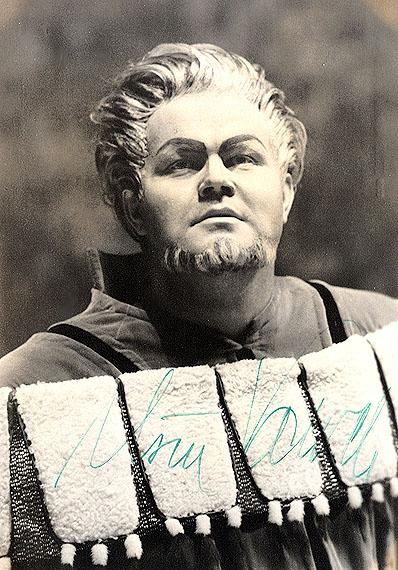
    Kraus-Otakar-01[Alberich-099]

    As Act II begins, the Czech-born baritone Otakar Kraus (above, great photo as Alberich) sings the role of the dwarf who appears to his son Hagen in a dream, singing with mysterious, haunted tone. This sets the stage for one of the most thrilling readings of the cataclysmic events of this singular Wagnerian act that I have heard. If only Mr. Windgassen had been on peak form on this day, we’d have been left with a veritable masterpiece. The tenor does sing powefully and doesn’t shrink for the demands, but moments of strain and rhythmical variances detract a bit from the overall sweep of the act.

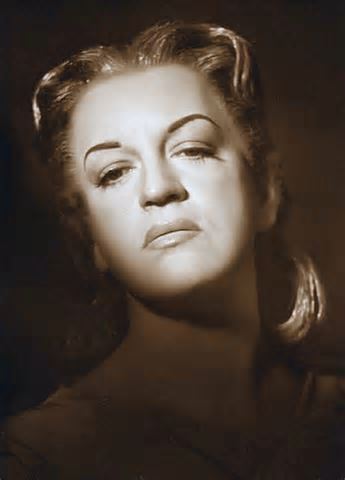
    Th

    Astrid Varnay (above) is simply thrilling in this demanding music; her voice – not so much the timbre but the way she sings – continues to remind me a bit of Resnik. The top is earth-shattering and her expressively dramatic vocal thunderbolts are astounding in their bright, steady power. Along with her 1953 ELEKTRA this is my favorite Varnay recording I’ve heard to date. Gottob Frick is imperterbably sinister and grand as Hagen, and if the notion that Gunther’s undoing could be described as heartbreaking, you hear it magnificently here in Hermann Uhde’s uncanny vocal portrayal.

    I’ll confess to skipping over some of the final act, since Windgassen is so out-of-sorts. The Rhinemaidens – led by the girlish-sounding Joan Carlyle singing along with star-in-the-making Josephine Veasey and Marjorie Thomas, who fills out her evening by adding the third Rhinemaiden to her First Norn.

    Varnay’s Immolation Scene begins triumphantly. The diva is in huge and secure voice, and her characteristic tendency to sometimes approach a high note from below doesn’t bother me, since she always gets where she’s going eventually. In her deeply felt and lyrical singing of “Wie Sonne lauter strahlt mir sein Licht…” Varnay wins my heart entirely. A bit later though there is a jarring parting of ways between singer and orchestra: Varnay seems absolutely in the right to my ears (not having a score to hand), but a few measures of musical mayhem ensue before things are set to rights. Thereafter traces of fatigue creep into the soprano’s vocalism, but by this time she’s delivered so much marvelous singing that we can’t help but be swept away in admration for her overall performance.