Tag: Opera

  • Sir Simon Rattle conducts RHEINGOLD – 2004

    Snapshot anna l - Copy

    Above: Anna Larsson (Erda) gives a wonderfully subtle interpretation in this concert performance of Wagner’s DAS RHEINGOLD at Baden-Baden, 2004. Sir Simon Rattle conducts a very impressive cast.

    Watch and listen here.

    You’ll want to block the annoying ads.

    CAST:
    Sir Willard White – Wotan
    Oleg Bryjak – Alberich
    Kim Begley – Loge
    Yvonne Naef – Fricka
    Robbin Leggate – Mime
    Geraldine McGreevy – Freia
    Anna Larsson – Erda
    James Rutherford – Donner
    Timothy Robinson – Froh
    Peter Rose – Fasolt
    Robert Lloyd – Fafner
    Kate Royal – Woglinde
    Karen England – Wellgunde
    Christine Rice – Flosshilde

    Orchestra of the Age of Enlightenment
    Sir Simon Rattle

    Baden-Baden, 2004

  • Stuttgart Cellists ~ PARSIFAL

    Snapshot celli

    Cellists from the Stuttgart Staatsorchester play music from Wagner’s PARSIFAL.

    Watch and listen here.

  • Isolation Wagner

    Snapshot prelude lohengrin

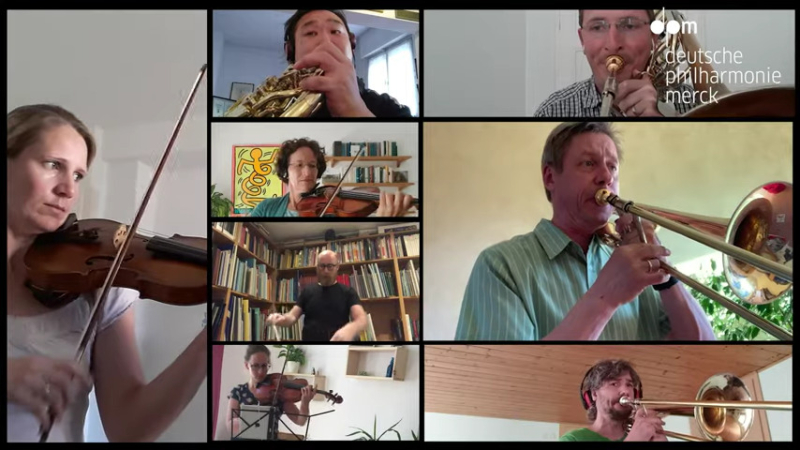
    The artists of the Deutsche Philharmonie Merck, led by Chief Conductor Ben Palmer, perform the prelude to Act III of Wagner’s LOHENGRIN in isolation.

    Watch and listen here.

  • White Swan ~ Makarova & Nagy

    Snapshot swan 2

    Natalia Makarova and Ivan Nagy dance the White Swan pas de deux from SWAN LAKE at the 100th anniversary celebration of the Metropolitan Opera in New York City in 1984. Ivan Nagy came out of retirement to dance with Ms. Makarova on this occasion. The dancers are accompanied on-stage by violinist Itzhak Perlman and cellist Lynn Harrell.

    Watch and listen here.

  • White Swan ~ Makarova & Nagy

    Snapshot swan 2

    Natalia Makarova and Ivan Nagy dance the White Swan pas de deux from SWAN LAKE at the 100th anniversary celebration of the Metropolitan Opera in New York City in 1984. Ivan Nagy came out of retirement to dance with Ms. Makarova on this occasion. The dancers are accompanied on-stage by violinist Itzhak Perlman and cellist Lynn Harrell.

    Watch and listen here.

  • Ticho Parly

    Parly

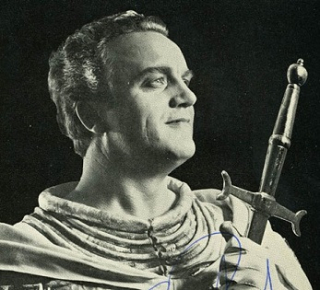
    Ticho Parly (above, as Lohengrin) would have been my first-ever Tristan if I’d been able to secure a ticket for one of his 1966 Met performances of the role, opposite Ludmila Dvořáková. But every performance at the Met in that opening season was sold out well in advance, and so it was not until 1982 that I had the unexpected pleasure of hearing this estimable helden-tenor.

    Born in Denmark, Ticho Parly went from being a treble to being a bass-baritone. It was while studying with Charles Paddock (the teacher of Anthony Laciura and Greer Grimsley) in New Orleans that Parly settled in as a tenor. He made his operatic debut with New Orleans Opera as Pong in Turandot.

    Returning to Europe, the tenor sang at Aachen, Brussels, Wuppertal, Lisbon, Kassel, Amsterdam, and Vienna. He made his Bayreuth debut in 1963 as Walther von Stoltzing in Meistersinger, and returned to the Festival to sing Siegmund and Siegfried in 1966.

    1966 was also the year of his Met debut, in the afore-mentioned Tristan und Isolde. Parly’s other Met roles were Erik in Fliegende Hollander and Aegisth in Elektra.

    Ticho Parly’s career kept him shuttling between Europe and the Americas: he sang at Covent Garden, La Scala, Paris, Covent Garden, San Francisco, Mexico City, and at the Teatro Colón. His roles included Tannhauser, Parsifal, Loge, the Drum Major in Wozzeck, Herod in Salome, the Emperor in Frau ohne Schatten, Florestan, Bacchus, and Peter Grimes. He was active thru 1988, when he sang Otello in Denmark, and passed away in 1998 in Seattle where he had been teaching.

    Here’s the story of my one opportunity to hear Ticho Parly live:

    An enterprising organization called The Wagner International Institution offered the complete Ring Cycle in concert form at Northeastern University on Boston. The operas were given on four consecutive Sunday afternoons. My friend Paul and I decided to give the Walkure a try, prompted mainly by the fact that Roger Roloff was singing Wotan. We enjoyed it thoroughly, and immediately obtained tickets for the Götterdämmerung, scheduled for two weeks later.

    Scanned Section 7-1

    Ticho Parly was not the announced Siegfried in the pre-publicity for this Ring, but on performance day, there he was onstage. He’d had a long career and I was unsure of what to expect from him, but here’s what I wrote the day after:

    “Ticho Parly was a surprise Siegfried. He sang commandingly and sustained the long, often cruelly demanding part impressively. He had ample vocal heft, and the tone is still quite pleasant; his diction so clear, and his feeling for the music so sure. His third act was especially fine: a huge and sustained high-C on “Hoi-ho!” (greeting the hunting party) and a firm rendition of his long narrative. His final apostrophe to Brünnhilde was tenderly sung, and moving. In sum: an excellent performance!”

    Mr. Parly recorded Siegfried’s farewell to Brünnhilde: here.

    Mr. Parly and Gladys Kuchta sing the final duet from Siegfried from a 1966 NY Philharmonic concert conducted by Lukas Foss. Ms. Kuchta never quite makes it up the the concluding high-C but otherwise it’s a very interesting performance. Listen here.

    ~ Oberon

  • WALKURE @ Vienna 2016

    Snapshot walkure

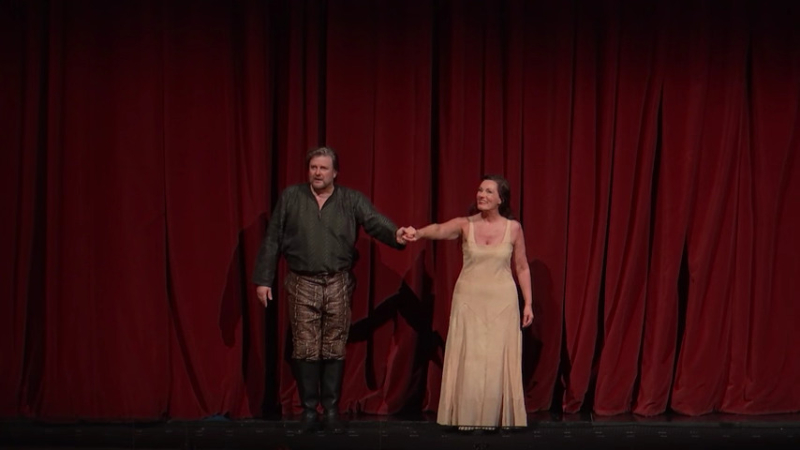
    Above: Christopher Ventris and Waltraud Meier winning a huge ovation after Act I of WALKURE

    Adam Fischer conducts a performance of Wagner’s WALKURE at the Vienna State Opera in 2016 with Linda Watson (Brunnhilde), Waltraud Meier (Sieglinde), Michaela Schuster (Fricka), Christopher Ventris (Siegmund), Tomasz Konieczny (Wotan), and Ain Anger (Hunding).

    Watch and listen here.

  • Gabriella Tucci Has Passed Away

    Tucci

    Above: my favorite photo of Gabriella Tucci, costumed as Leonora in TROVATORE and posing at the New York World’s Fair in 1964. I cut it out of Opera News and pasted it on shirt-board; she signed it for me in 1968 after a performance of TURANDOT at The Met. It has been ‘borrowed’ by other websites, but this is the original.

    Soprano Gabriella Tucci passed away on July 11th, 2020, in Rome, the city of her birth. She was 90 years old. In recent days, I had been listening to Ms. Tucci a lot, unaware of her death. 

    Gabriella Tucci was the first soprano I called “my favorite”. She sang in some of the earliest Met broadcasts I heard from our house in the little town  – AIDA, OTELLO, FAUST, FALSTAFF, MADAMA BUTTERFLY, TRAVIATA, FORZA DEL DESTINO, and TROVATORE – and her voice, a blooming lyrical and wonderfully feminine sound, always seemed to get to the heart of the character she was portraying. 

    Ms. Tucci studied at the Accademia di Santa Cecilia and made her operatic debut at Lucca as Violetta in 1951. After winning a voice competition at Spoleto, she appeared in LA FORZA DEL DESTINO opposite Beniamino Gigli. In 1953, she sang Glauce in Cherubini’s MEDEA at the Maggio Musicale with Maria Callas in the title-role.

    Thereafter, the Tucci career then took off: she made her La Scala debut in 1959 as Mimi, and appeared at Rome, the Arena di Verona, Vienna, Berlin, Moscow, Tokyo, San Francisco, and Buenos Aires.
    82386433_10218182844816609_8898027572693041152_n

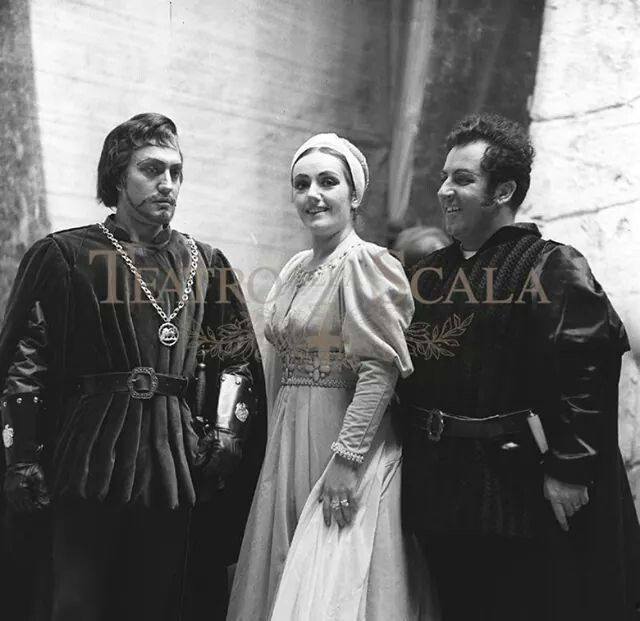
    Among Ms. Tucci’s notable evenings at La Scala was a 1964 production of TROVATORE where her co-stars were Piero Cappuccilli and Carlo Bergonzi (photo, above).
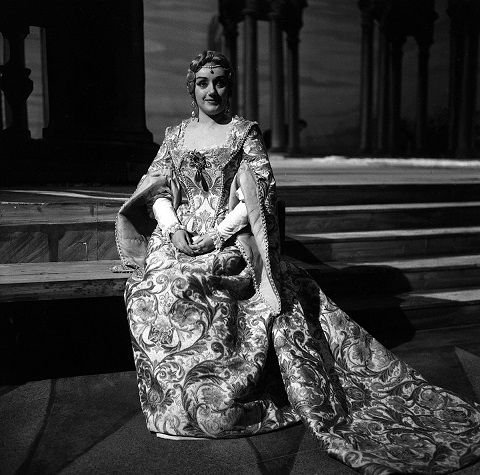
    Tucci desdemona

    Gabriella Tucci sang 260 performances with the Metropolitan Opera in New York City and on tour. In 1964, she was Desdemona (photo, above) in a new production of OTELLO that featured the return of James McCracken to The Met.

    Falstaff

    Also in 1964, Ms. Tucci sang Alice Ford in a new production of FALSTAFF conducted by Leonard Bernstein. In the above photo, she and colleagues Regina Resnik (Dame Quickly) and Rosaline Elias (Meg Page) attempt to hide Falstaff (Anselmo Colzani) in a laundry basket.

    She opened the Met’s 1965-1966 season in a new production of FAUST, and sang ravishingly in the love duet on a broadcast of that opera the following year. Her singing of “O silence! ô bonheur! ineffable mystère!” is pure magic:

    FAUST ~ scene – Gabriella Tucci – John Alexander – Justino Diaz – Met 1966

    On October 23rd, 1965, Ms. Tucci was heading to her dressing room after a matinee of FAUST when she was asked by Sir Rudolf Bing if she would be willing to step in for an ailing colleague in that evening’s performance of BOHEME. She did, with great success. And on April 16th, 1966, she was (officially) the last soprano to be heard at the Old Met when she sang the final trio from FAUST with Nicolai Gedda and Jerome Hines as the closing number at the gala that bade farewell to the venerable house.

    My first experience of hearing Gabriella Tucci live was at the Old Met in November of 1965; she sang – gloriously – the music of Leonora in TROVATORE, one of her most felicitous roles.

    Gabriella Tucci – D’amor sull’all rosee ~ TROVATORE

    In the late Summer of 1966, I traveled to New York City alone for the first time and joined the ticket line for the first performances at the New Met. I had been on the line for about five minutes when a woman next to me casually asked, “What singers do you like?” and I replied, “Gabriella Tucci!” She called some other friends over, and we discussed the soprano and her various roles in detail. Finally, I had found some kindred spirits after years of being a lonely opera-lover in my hometown. 

    Ms. Tucci was my first Aida and my first Elisabetta in DON CARLO. I saw her again in TROVATORE, and as  Liu and Mimi. But as the 1970s arrived, Tucci’s star had begun to fade; after years of singing roles like Aida and Amelia in BALLO that – in truth – extended her beyond her natural lyric realm, time seemed to catch up with her voice. She gave her last performance at The Met on Christmas Day, 1972, in FAUST

    Many years later, while I was working at Tower Records, a lively woman of a certain age came in; her hair was done in curls with a reddish tinge, and she wore a mini-skirt. I could not immediately place her, but her speaking voice gave me a clue: “Do you have the live performance of AIDA from Tokyo,1961?”   I handed her a copy. “Have you heard it?” she asked. “Yes, it’s very exciting…but…I am not sure it’s Mario del Monaco.” She smiled: “I am Gabriella Tucci, and I assure you it’s him!” I kissed her hand and after telling her she had always been a great favourite of mine, she smiled, and then returned to the topic of the Tokyo AIDA. “Why do you think it is not del Monaco?” I gave my reasons. She thought for a moment. “Well, who do you think it is, then?” and I replied “Gastone Limarilli.” “Hmmmm…you know your stuff. I did sing Aida with Gastone and I can understand your impressions of del Monaco’s performance…he was ill during that tour, and dropped out of the CAVALLERIA. I agree, he was not his best in the AIDA. But…he definitely sang that day!” She gave me a big hug, and swept from the room.

    Oddly, just the day before I learned of her passing, I was listening to that AIDA which includes her impressive “O patria mia“:

    Gabriella Tucci – O patria mia – AIDA – Tokyo 1961

    And then there’s the scene of the sighting of Pinkerton’s ship from Act II of MADAMA BUTTERFLY. Helen Vanni is Suzuki. Tucci elicits a burst of applause after her “…ei torna e m’ama!“. Listen to it here.

    It’s had to choose favorite Tucci items from among so many, but she and baritone Ettore Bastianini are superb in a scene from Act III of ANDREA CHENIER. Listen to them here.

    …and she sings a beautiful “Pace, pace mio dio” from FORZA DEL DESTINO:

    Gabriella Tucci – FORZA aria – Met 1965

    ~ Oberon
  • Judith Raskin

    Hqdefault

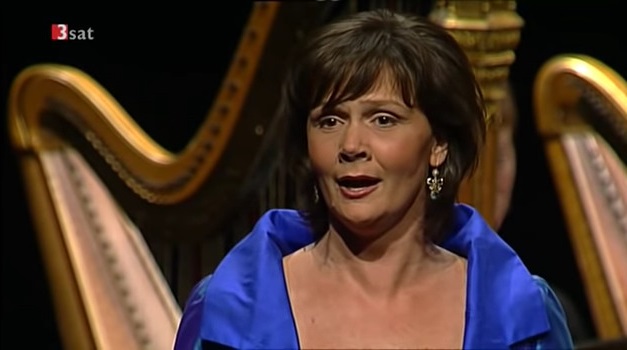
    American soprano Judith Raskin (above) began taking voice lessons while attending Smith College. She began concertizing, and in 1957 sang Sister Constance in a televised performance of Poulenc’s DIALOGUES OF THE CARMELITES. She made her New York City Opera debut as Despina in 1959, and enjoyed a personal success there in the title-role of Douglas Moore’s BALLAD OF BABY DOE

    Ms. Raskin made her Metropolitan Opera debut in 1962 as Susanna in NOZZE DI FIGARO and went on to give more than a hundred performances with the Met company over the next decade. Her roles included Marzelline, Nanetta, Sophie in ROSENKAVALIER, Zerlina, Pamina, and Micaela.

    69628137_10216986455747630_1200814637679902720_n
    I first saw Judith Raskin onstage as Pamina in the Marc Chagall production of THE MAGIC FLUTE. She made such a beautiful impression in Mozart’s sublime music. Later I saw her in her signature role as Susanna in NOZZE DI FIGARO. Her last Met performance was as Marzelline in 1972.

    Judith Raskin sang with the opera companies of Chicago and San Francisco, and appeared as Pamina at the Glyndebourne Festival, She also performed frequently in concerts, most notably with the Cleveland Orchestra under George Szell. And she once said, ““In my heart of hearts, I have always been a recitalist.”

    After retiring from the stage, Judith Raskin taught at the Manhattan School of Music. She passed away in 1984.

    Judith Raskin sings Samuel Barber’s Knoxville: Summer of 1915 here.

    ~ Oberon

  • Nadine Sierra @ The Met’s At-Home Gala

    Snapshot sierra

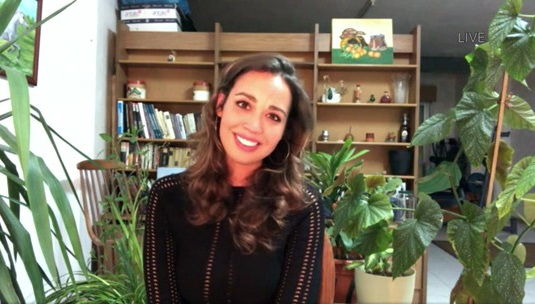
    Nadine Sierra sang Mimi’s narrative “Mi chiamano Mimí” from LA BOHEME for the Metropolitan Opera’s At-Home Gala on April 25th, 2020. Watch and listen here.