Tag: Opera

  • The Orchestra Now: Penderecki & Holst

    Falletta

    Above: conductor JoAnn Falletta, photo by Cheryl Gorski

    ~ Author: Ben Weaver

    Thursday December 14th, 2017 – TŌN (The Orchestra Now) consists of musicians from leading musical conservatoires around the globe, including Julliard, Curtis and Shanghai Conservatory. I’ve heard less impressive and less cohesive playing from big name orchestras. Under the baton of JoAnn Falletta, the concert was a thrilling evening of superb music-making. And filling the entire stage of Alice Tully Hall at Lincoln Center, one was overwhelmed by the sheer impact and presence of their sound. It rather reinforced my belief that David Geffen Hall truly does have dreadful acoustics. Granted, Alice Tully is a much smaller hall, but it’s not the volume alone that impresses. NY Philharmonic can be plenty loud too. It’s feeling the sound envelop you and pins you to your seat that can be truly breathtaking. This does not happen at David Geffen Hall.

    John Adams’ “Short Ride in a Fast Machine” is about five minutes of pure adrenaline. Its percussive opening sets the tone for a repeating loop of fanfares, shrieking woodwinds, and stabbing violins. Adams once described the piece: “You know how it is when someone asks you to ride in a terrific sports car, and then you wish you hadn’t?” Composed in his trademark post-minimalist style, the work constantly shifts, turns, and twists, and the young musicians played it without fear.

    Krzysztof Penderecki is one of the giants of contemporary classical music. His “Concerto Doppio”, completed in 2012, was originally written for violin and viola, but in this TŌN concert the version for violin and cello was performed instead, with soloists Dennis Kim and Roman Mekinulov, respectively.

    Penderecki intended the solo instruments to be adapted to whatever string instruments are needed for the concert, in the style of J.S. Bach perhaps, who allowed arrangements of a lot of his music for different instruments on as-needed basis. This concerto – proving that great music is still being written – begins unusually with an extended duet for the solo instruments. In fact, the entire concerto is something of a conversation between soloists and orchestra. The music alternates from the largely (or entirely) unaccompanied solo instruments back to the orchestra, and so on. The opening minutes had something of Arvo Pärt’s instrumental chanting, and throughout one could grasp influences from Bach and Shostakovich. The concerto’s end reminded me very much of the hushed conclusion of the first movement of Shostakovich’s Symphony No. 4.

    Falletta allowed the excellent soloists, Kim and Mekinulov, to play without conducting them. As so much of their music really is an unaccompanied duet, it allowed the musicians a great deal of flexibility and freedom.

    After the intermission, the orchestra played one of the most popular of all orchestral works: Holst’s “The Planets.” It is appropriate that the concert was given on the day the new Star Wars film, “The Last Jedi,” was released. Hearing the work once again I am struck by how much composer John Williams borrowed from Holst to write the legendary film scores.

    Again, to hear such a great and inventive orchestral work for a large orchestra in a hall like Alice Tully was very exciting. Holst’s endless stream of melodies and remarkable orchestration is a war-horse for a good reason and I do not tire of hearing it. The orchestra played it superbly, relishing every note.

    No doubt many of the musicians were playing it for the first time. I am reminded of a story – perhaps a myth – about Fritz Reiner rehearsing Wagner’s “Die Meistersinger” overture, and one musician kept making a mistake. When Reiner called him out, the musician said: “I am sorry, Maestro, I am playing this for the first time.” Reiner is said to have replied: “Oh, how I envy you.”

    It is not easy to make a work as familiar as “The Planets” sound fresh, but the wonderful young TŌN Orchestra, under JoAnn Falletta’s inspired leadership, not only made it sound fresh, they did it without any noticeable mistakes.

    ~ Ben Weaver

  • Destinations: A Dancer’s Journey

    _MG_3049

    Above: Francesco Pireddu

    In 2011, the Sardinian dancer Francesco Pireddu appeared with Roberto Villanueva’s BalaSole Dance Company here in New York City. Francesco’s solo, Silence, was a highlight of the show. A few weeks ago, I heard from Francesco; together we arranged for him to write an article for my blog. And here it is:

    ~~~~~~~~~~~~~~~~~~~~~~~~~~~~~~~~~~~~~~~~~~~~~~~~~~~~~~~~~~~~~~~~~~~~~~~~~~~~~~~~~~~~~~~~~~~~

    Destinations: A Dancer’s Journey ~ Guest Author: Francesco Pireddu

    Hi. My name is Francesco Pireddu. And, like each one of us, I have a story.

    When I look at my childhood I see a small, very small village in the middle of the mountains, in the beautiful Italian island called Sardinia. My parents, myself, three brothers and one sister. A big Italian family surrounded by gorgeous nature, visited by particularly cold winters and delighted with bright and hot summers. There was not much to do, apart from going to school, doing the homework and help my mother out in the house. Discipline, simplicity and rigor were the key notes of my family’s life. I was profoundly drawn to everything that wasn’t there: dance, performance, self-expression in the deepest form. I needed to explore. And, as soon as I finished high school, I left.

    > First destination: Rome. I was excited, determined and scared. Dance and acting: that’s all I wanted to do, and I ran to register at the most prestigious acting school. I was told that, first things first, there was a “three-monologues-audition” to prepare. Three monologues? Did I have to perform three monologues in front of a bunch of people? No, thanks. I was too shy. Very self-conscious. The day after, I registered at one of the most famous dance schools and I felt so much better. Ballet, modern and improvisation classes: I was in my element. The movement was a beautiful journey. My body language was exposed and explored.

    > Second destination: Tuscany. Without a formal audition I was chosen to perform with Micha Van Hoecke, the renowned Belgian director. He was preparing RIGOLETTO, one of the greatest Italian operas by Giuseppe Verdi. Later, I joined Lindsay Kemp’s ensemble and toured the country with LE MASCHERE, a joyful and engaging operetta by Mascagni based on La Commedia dell’Arte. I was happy and proud of being part of such huge productions, and working with Lindsay Kemp, the great choreographer and director who worked closely with artists such as David Bowie and Kate Bush, is definitely one of the best experiences of my career.

    In Tuscany I also kept working on my craft and I intensely studied ballet with Marina Van Hoecke, a gifted and demanding teacher who trained Maurice Bejart’s male dancers for more than a decade. Her gentle and tough personality, her immense knowledge and captivating spirit defined profoundly my journey and improved my foundation.

    > Third destination: London. One day, Marina, out of the blue, said to me: “I don’t want you in my class anymore. Go somewhere else”. I was devastated. Speechless. I could not understand. I didn’t do anything wrong and I was a devoted student. Why was she pushing me away? It took me many years to understand that the people who really love you and believe in you are the ones who let you go or make you go. Since then, rejection hurts me minimally. I like to believe that that lesson was part of the training.

    In London I performed at the Royal Opera House, Covent Garden, in productions such as BORIS GODUNOV and LA FORZA DEL DESTINO, and I studied ballet with teachers such as Roland Price, Romayne Grigorova, Joan Hewson and Raymond Chai.

    > Fourth destination: New York. On my first day in the Big Apple I walked from 42nd street to 75th and Broadway and I ended up at Steps Dance Studio. I still remember the energy, the vibrancy that only a dance studio emanates. I was watching a ballet class and eating a massive walnut muffin. A tall and gentle lady was next to me. She was staring at me and started to ask me simple questions such as: what’s your name? Where are you from? Are you a dancer…..? And a conversation was born. She asked me to audition for her company and, a week later, I found myself in Hartford, Connecticut, rehearsing the Albano NUTRACKER. We performed in different cities and at Mohegan Sun arena.

    6a00d8341c4e3853ef015434168d1f970c-800wi

    I am still in New York City and so many beautiful things have happened: I performed at New York Live Arts with Balasole Dance Company (photo above, by Kokyat); at Dixon Place I co-created a solo with the director Albert Andrew Garcia for his new show “Tryptych”, and I was cast as a dancer and actor in the off-Broadway musical “The Raja’s Son and Princess Labam”. Last season I was in AIDA at the  Metropolitan Opera and I am currently in their production of TURANDOT. Along the way I was cast in numerous commercials such as: Chase Bank Holiday, JA Bank, Mountain Dew, Bud Light beer and Pima cotton sheets. I made my screen debut in the movie “Top Broker” and I just finished shooting the first season of the series “Play Love”.

    7566C6AF-85FA-4FB2-BD6C-99D1257F4CFB

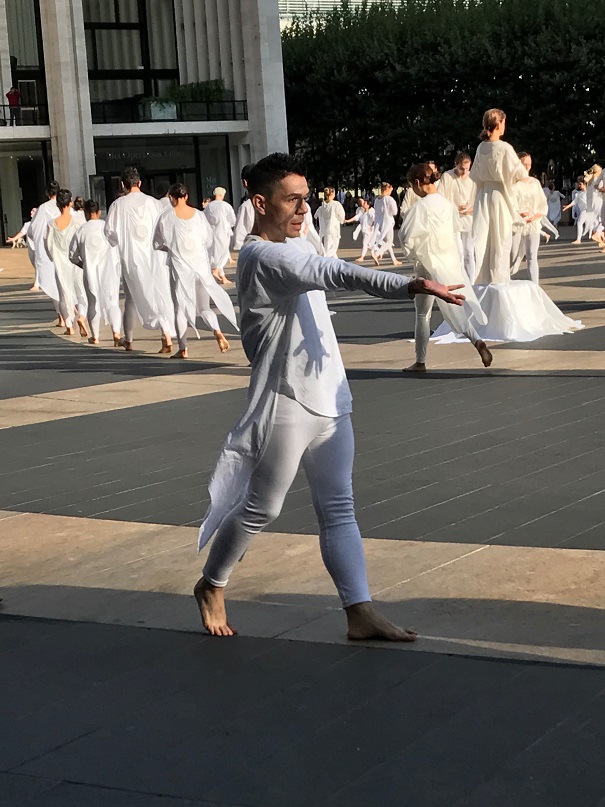
    Above: Francesco performing in Table of Silence

    Last September I joined the Buglisi Dance Company at the Lincoln Plaza in Table of Silence: with a beautiful and emotional dance tribute we remembered and honored the victims of 9/11 and the event was seen livestream all over the world. I was honored to be part of such a remarkable event.

    Oh, and in New York City I closed the circle: I trained full-time for two years at HB Studio, the prestigious acting school.

    IMG_5690

    I treasure my experiences. From a village of 600 people, zero money and infinite obstacles, my journey surprises me every day. Next destination: the next rejection(s)! Only then and there do miracles happen.”

    ~ Guest Author: Francesco Pireddu

  • Jon Crain

    J crain

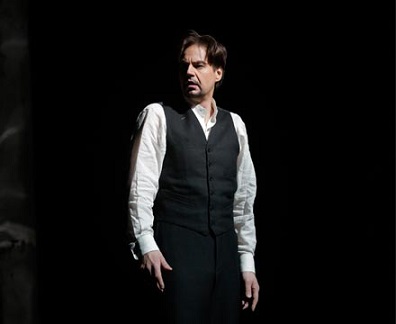
    Tenor Jon Crain sang with the New York City Opera and at The Met, where his roles included Don Jose, Narraboth in SALOME, and Matteo in ARABELLA. He also participated in a studio recording of CAROUSEL with Roberta Peters, Alfred Drake, Claramae Turner, and Norman Treigle, and in an abridged English-language recording of TALES OF HOFFMANN issued by The Metropolitan Opera. Crain appeared on radio programs devoted to opera and song. 

    Following his retirement, the tenor joined the music faculty at West Virginia University. He passed away in 2003.

    Jon Crain ~ Ariadne auf Naxos – excerpt in English ~ 1958

  • John Stewart

    John Stewart

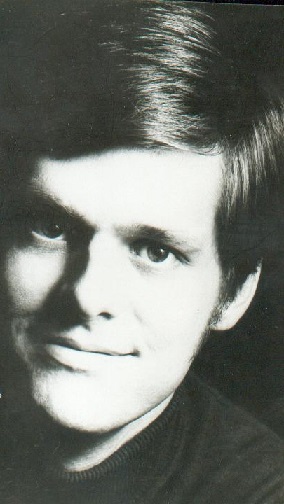
    The American tenor John Stewart made his professional debut at Santa Fe in 1964. Over the ensuing years, he returned often to Santa Fe in a wide-ranging repertory. He made his New York City Opera debut in 1968 and sang many roles there, including Albert Herring, Tamino, and Nanki-Poo. At the Metropolitan Opera, he appeared as Don Ottavio and as Alfred in FLEDERMAUS.

    It was at the New York City Opera that I had the pleasure of hearing John Stewart as Pinkerton, Alfredo in TRAVIATA, Sali in A VILLAGE ROMEO AND JULIET, and Mozart’s Tito.

    In 1972, he sang Mathan in Handel’s ATHALIA with the Handel Society at Carnegie Hall. The cast further featured Elinor Ross, Maureen Forrester, and Ara Berberian. Mr. Stewart’s singing of the aria “Gentle airs, melodious strains” that evening remains a cherished memory of mine.

    In 1974, John Stewart joined the Frankfurt Opera where he sang until his retirement in 1990. He currently teaches voice in New York City.

    John Stewart – ROI D’YS aria – Lexington KY 1970

  • Vladimir Kastorsky

    65882

    Born in 1870, Vladimir Kastorsky entered the St. Petersburg Conservatory in 1893. A year later he was expelled for “voicelessness and incompetence”. But he persevered, and made his operatic debut at the Opera House of Pskov in 1894; he went on to a career of nearly 50 years.

    Kastorsky was a star of both the Mariinsky and Bolshoi Theatres. He sang all the great Russian basso roles as well as Mozart’s Count Almaviva and Leporello, Nilakantha in LAKME, and Wagner’s Wotan and Wolfram.

    In 1907-1908, Kastorsky participated in Sergei Diaghilev’s Russian seasons in Paris. He also was heard at La Scala, Prague, Berlin, Rome, Munich, London, Kiev, Odessa, and Tiflis. Later in life, he taught at Mariinsky Theatre, Leningrad’s Art Studio and at the Saint Petersburg Conservatory. Kastorsky continued to give recitals of Russian songs and German lieder into his old age. He died on July 2, 1948…one day before I was born.

    Vladimir Kastorsky – Pimen’s Monologue from BORIS GODUNOV

    Vladimir Kastorsky ~ Eugene Onegin – Prince Gremin’s Aria

  • dell’Arte Opera Ensemble: LA CALISTO

    CAVALLI

    ~ Author: Oberon

    Sunday August 20th, 2017 matinee – Francesco Cavalli (above) wrote about 30 operas, and of them LA CALISTO has become a favorite with contemporary audiences. Premiered in 1651, the opera’s brief and richly-varied musical numbers – and its sensuous, lusty characters – seem wonderfully fresh and relevant to us today, especially in a performance such as was offered this afternoon by the enterprising dell’Arte Opera Ensemble down at the La MaMa Theater.

    A brief synopsis of the opera will help sort out the twists of plot and the infatuations and motivations of the various characters:

    THE PROLOGUE
    Nature and Eternity celebrate those mortals who have climbed the path to immortality. Destiny insists that the name of Calisto be added to the list.

    THE OPERA
    A thunderbolt hurled by Giove has gone awry and decimated a portion of the valley of Arcadia. The god comes down with his sidekick Mercurio to inspect the damage They find the nymph Calisto, desperately seeking water. Giove causes a stream to gush up. He then attempts to seduce Calisto, who is a follower of Diana – the goddess of the hunt – and a staunch virgin. She rejects Giove’s advances, but later succumbs when he disguises himself as Diana. Meanwhile, the real Diana, because of her vow of chastity, cannot return the love of the handsome shepherd boy Endimione. Diana relies on the help of her attendant nymph, Linfea, who desires a husband but spurns the advances of a young satyr.

    On Mount Lycaeus, Endimione sings to the moon, the symbol of Diana. As he sleeps, Diana covers him with kisses. He awakes and they sing of their love. Jove’s infidelity is discovered by his wife Juno, while Diana’s secret is found out by Pane, the god of the forest, who has long desired her. Endimione is persecuted by Pane and his satyrs.

    The Furies turn Calisto into a bear at the command of the indignant Juno. Giove sadly confesses all to Calisto: she must live the rest of her life as a bear, but eventually he will raise her to the stars. Diana rescues Endmione and they agree that, while their kissing-fest was enjoyable, they will leave it at that. Giove and Mercurio celebrate Calisto’s ascension to her heavenly home in the constellation Ursa Major

    ~~~~~~~~~~~~~~~~~~~~~~~~~~~~~~~~~~~~~~~~~~~~~~~~~~~~~~~~~~~~~~~~~~~~~~~

    Sung in the original Italian, with English surtitles, the dell’Arte production is directed with wit and affection by Brittany Goodwin, who let the bawdiness of certain scenes play out without lapsing into vulgarity. The costumes by Claire Townsend mix modern-day wear with fantasy elements. The scenic design is by You-Shin Chen, and the atmospheric lighting by Dante Olivia Smith.

    The score was played by an expert period-instrument ensemble led by Charles Weaver, with Mr. Weaver and Adam Cockerham playing lutes, violinists Dongmyung Ahn and Sarah Kenner, cellist Matt Zucker, and Jeffrey Grossman at the harpsichord. Their unfailing grace and perceptive dramatic accents brought Cavalli’s music into our time in all its glory.  

    20768180_10107878883186965_3866968242292011471_n

    Vocally, the afternoon got off to a splendid start as Allison Gish (above, in a backstage portrait) intoned the lines of La Natura with a voice that evoked thoughts of the great contraltos of bygone days.

    In a scene which anticipates Wagner’s GOTTERDAMMERUNG Norns (even down to having a contralto sing first), Ms. Gish’s La Natura is joined by Elyse Kakacek as L’Eternità and Jungje Xu as Il Destino. Ms. Kakacek looked striking as she sang from the mezzanine; the voice is full and wide-ranging, pinging out into the theater space. Jungje Xu’s voice is lyrical, and she sang very well as she pleaded Destiny’s case for giving Calisto a place in the heavens. When these three singers blended voices, the effect was superb. Later in the opera, they portrayed the stream which sprang up to quench Calisto’s thirst, and – later still – were Furies, minions of the goddess Juno, who revel in a scene where they torment Calisto.

    20747980_10154800303580777_7132399321096474619_o

    Above: Emily Hughes as Calisto, with her fellow archers of Diana’s entourage, in a Brian Long photo. Ms. Hughes was the lovely focal-point of the story; with her clear, appealing timbre and a charming streak of vulnerability in her personification of the role, the young soprano made Jupiter’s infatuation entirely understandable. Her long aria in the opera’s second half was particularly pleasing.  

    Mason Jarboe as Giove (Jupiter) – handsome in appearance and authoritative of voice – was an ideal matching of singer to role. My only wish was that he’d had more to sing. The same might be said of tenor Brady DelVecchio as Mercurio; his characterful singing, easy stage demeanor, and pimp-like persona were much appreciated. Both gentlemen savoured their every moment onstage.

    EmilyHughes_AdriaCaffaro

    Above: Emily Hughes as Calisto with Adria Caffaro, who appears both as Diana and as Giove disguised as Diana. Ms. Caffaro was able to subtly differentiate vocally between her two roles; the voice is warm, sizable and pliant, with a touch of earthiness. And she exuded goddess-like confidence. After an episode of heated kissing between Calisto and Giove in his Diana guise, Ms. Caffaro returns as ‘Diana herself’ and is amused – and then annoyed – by Calisto’s description of ‘their’ smooching session and the implication that Diana might have same-sex desires: Ms. Caffaro here turned fiery, making the scene one of the highlights of the afternoon. 

    PadraicCostello

    Above: Padraic Costello as Endimione. Mr. Costello’s honeyed counter-tenor and gift for persuasive phrasing fell graciously on the ear. His portrayal of the shepherd, infatuated with Diana, was as expressive as his singing. As the most human character in the story, and the one for whom love is truly all, Mr. Costello was as moving in his sincerity as in the beauty of sound he produced.   
    JoyceLin

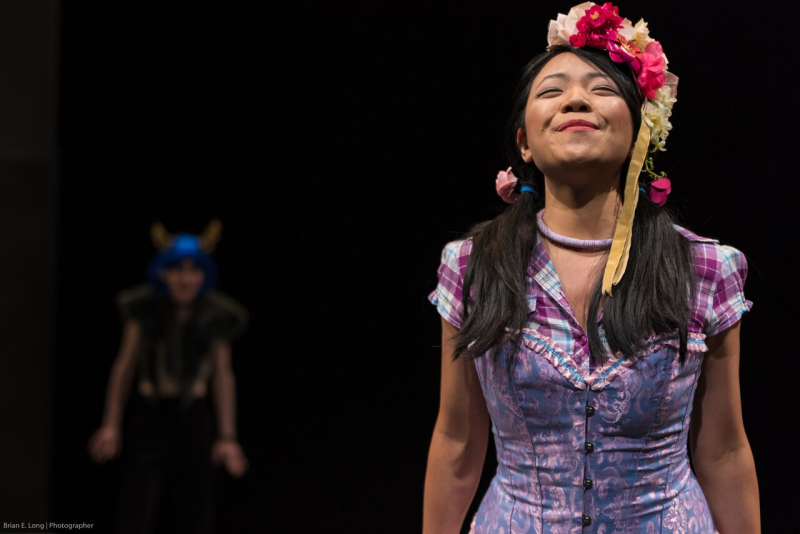
    Above: Joyce Yin as Linfea, one of Diana’s handmaidens who is torn between preserving her chastity and losing it. Satirino, a lusty satyr, offers to solve Linfea’s dilemma for her, but she fends him off. Ms. Yin’s voice is clear and assertive, pealing forth to express her excitement. Stage-wise, she was a bundle of energy, and very amusing when she ‘remembered’ to strike the required archer’s poses.
    RaymondStorms

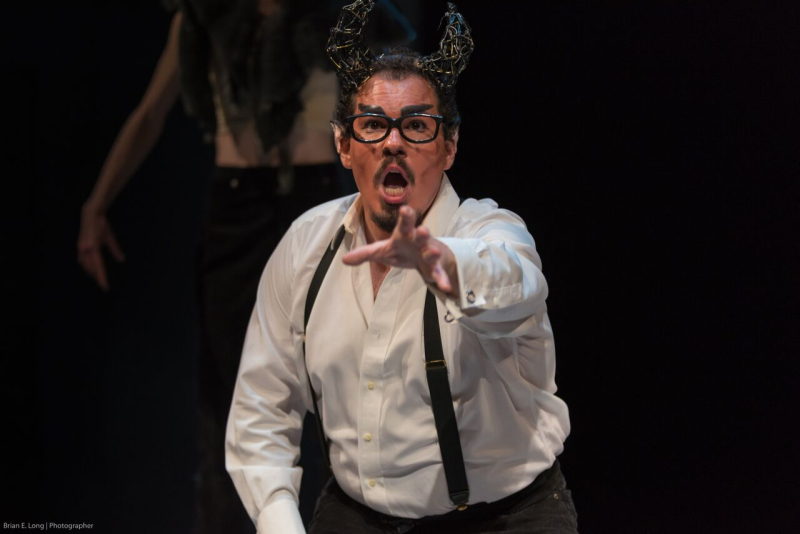
    Above: Raymond Storms as Pane. This is the opera’s second counter-tenor role and Mr. Storms excelled in the music, which veered from passionate declaration to soft, sweet turns of phrase. His acting was spot-on as yet another frustrated lover of Diana (she’s so popular!).

    Pane’s pals are Shawn Palmer as Satirino (the satyr who tried to have his way with Linfea earlier) and Angky Budiardjono as Silvano. This trio’s scenes recall the rustics in MIDSUMMER NIGHT’S DREAM…and all three are actors who can sing.

    Ms. Palmer looked androgynous with her lithe, long-legged figure and glossy blue bob-wig. Her cantering walk and occasional pawing of the ground revealed her animal nature. Her rather long dramatic aria showed a deeper side to the character, and she sang it so well.

    Mr. Budiardjono’s singing was wide-ranging and ample-toned, a very pleasing sound to be sure. In Part II of the opera, Mssrs. Storms and Budiardjono have a duet that really showed off their talents; Ms. Palmer then joined them in a trio that was sheer fun to see and hear.

    Sophie Delphis as the goddess Giunone, wife of Jove, did not descend from the heavens until the start of Part II. Clad in an elaborate haute couture dress, spike heels, and a flame-red hat, Ms. Delphis’ appearance was as striking as her singing and acting. A complete immersion into the character made her every note, word, and movement vivid. In a vindictive rage upon learning her husband has been unfaithful, Ms. Delphis unleashed her anger like a sylvan Santuzza. The voice has a real bite to it.

    Diana’s archers also served as stagehands, quickly maneuvering floor platforms into different configurations and nimbly transforming swaths of long, hanging sheer-white fabric into clouds, canopies, or pillars.

    The afternoon flew by; all too soon we were hearing what seemed to be a choral finale with all the characters mingling voices as Giove showed Calisto the firmament…her future home. But the voices fade away and the opera ends on a parlando passage from Giove.

    Production photos by Brian Long.

    ~ Oberon

  • Julia Claussen

    Julia_Claussen

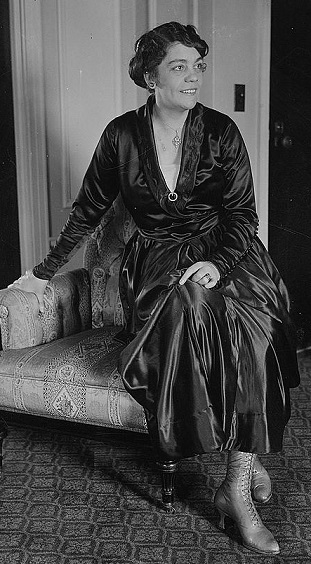
    Swedish mezzo-soprano Julia Claussen studied at the Royal Academies of Stockholm and Berlin, made her operatic debut in Stockholm in 1903, and sang at Paris, London, and Chicago.

    From her debut there as Dalila in 1917 until 1932, Julia Claussen was a mainstay at the Metropolitan Opera in New York City. She sang Azucena, Amneris, Ortrud, Fricka, Brangaene, Kundry, Venus, Marina in BORIS GODUNOV, Laura in LA GIOCONDA, and other roles for a total of nearly 175 performances at the Old House and on tour. She frequently participated in the opera and song concerts that were regular features of Met seasons at that time. 

    An interview with Julia Claussen here. She died at Stockholm in 1949.

    Julia Claussen – Schmerzen from Wagner’s Wesendonck Lieder

  • Matti Salminen as Hagen

    Gotterdammerung.0304.05

    On October 21st, 1988, basso Matti Salminen (in a Marty Sohl photo, above) enjoyed a huge personal triumph with his magnificent portrayal of Hagen at the Metropolitan Opera’s premiere performance of the Otto Schenk production of GOTTERDAMMERUNG, with James Levine on the podium. I was there, and it was one of the great nights in my opera-going career.

    This excerpt comes from the 1993 broadcast of the Wagner masterwork:

    Matti Salminen as Hagen – Met 1993

  • Barbara Conrad Has Passed Away

    B Conrad

    Mezzo-soprano Barbara Conrad has passed away; famously the center of a racist imbroglio during her college days at the University of Texas, Ms. Conrad went on to a long and distinguished career. 

    In 1957, when she was 19 years old, Barbara Conrad was chosen to play Dido, the queen of Carthage, opposite a white student as her lover in a production of Henry Purcell’s DIDO & AENEAS. The interracial pairing stirred up a major controversy: Ms. Conrad drew death threats from white students, who harassed her with phone calls. The case reached the Texas legislature, which threatened to withdraw funding from the university if she was not replaced in the production. When university officials caved in to the legislature’s demands, Ms. Conrad was publicly gracious, but on a personal level she was devastated.

    Harry Belafonte offered to pay the young singer’s tuition at any school of her choice if she desired to transfer, but she stuck things out in Austin. Belafonte later arranged for Ms. Conrad to fly to New York City for auditions; the trip’s expenses were underwritten by Eleanor Roosevelt.

    Putting the past behind her, Conrad emerged as a distinctive singer and stage personality; she sang at both the New York City Opera and at The Met, where I saw her as Maddalena in RIGOLETTO and Preziosilla in FORZA DEL DESTINO. She was also heard at The Met as Annina in ROSENKAVALIER, Hecuba in LES TROYENS, and as Maria in the Met’s premiere performances of PORGY AND BESS.

    Ms. Conrad appeared with major opera companies and orchestras, and worked with such conductors as  Maazel, Bernstein, and Levine. She went on to teach at the Manhattan School of Music, where she co-founded the Wagner Theater Program.

    Amazingly enough, I got to hear Barbara Conrad yet again: in 2008, she sang Fricka in the Wagner Theater Program’s semi-staged WALKURE. She was “…vivid, larger-than-life…her frustration and anger grandly portrayed. Despite some tension on the uppermost notes, Conrad’s intense, chesty sound and authoritative command of the stage elicited applause as she made her exit…”

    Incredibly, part of this WALKURE performance is to be found on YouTube. It will give you an idea of Ms. Conrad’s vibrant performance as the queen of the gods.

    There was a post-script to the story: a few days after the WALKURE, Barbara Conrad came to Tower Records where I was working. I struck up a conversation with her, using her Fricka as an entrée. She was beyond gracious, and so tickled that I recalled seeing her as Preziosilla; I remarked that not only had she made a smouldering physical impression, but that she was the one Preziosilla in my experience who really made something of the music.

    Barbara Conrad is the subject of a documentary, WHEN I RISE.

    Here’s a sampling of Ms. Conrad’s singing, from her repertoire of spirituals:

    Barbara Conrad sings ‘Deep River’

    May she rest in peace.

  • EUGENE ONEGIN @ The Met

    Netrebko ONEGIN

    Above: Anna Netrebko as Tatiana

    Author: Ben Weaver

    Saturday April 22nd, 2017 matinee – Tchaikovsky’s operatic adaptation of Pushkin’s “Eugene Onegin” arrived this Spring at the Metropolitan Opera. Today, the season’s final performance of the opera was telecast via HD to cinemas around the world. It’s a practice that has been contributing to the hemorrhaging of live audience attendance for the house. The Met auditorium has countless empty seats more often than not, and many of those that are filled are actually papered and subsidized by donors. Today’s ONEGIN matinee was one of only two performances of the opera that actually sold out.

    Robin-Ticciati

    In the pit was the English conductor Robin Ticciati (above). He led a really magnificent reading the score, the Met Orchestra responding to Tchaikovsky’s superb orchestration with perfection. Ticciati was careful not to overwhelm the singers with sound (Tchaikovsky’s orchestral writing is often dense). There was a wonderful lightness to his interpretation, each musical strand rising magically out of the tapestry of sound. His energetic, forward moving pacing mostly worked well. Perhaps if Tatiana in her Letter Scene and Lensky in his Act II aria had been allowed to linger just a tad longer…but overall Tchaikovsky’s magical score danced and sighed superbly.

    The cast assembled for the revival of this 2013 production was first rate. At the heart of it was Anna Netrebko as Tatiana. When Netrebko first sang the role at the Met in 2013 I did not think she made a great impression. Primarily I objected to her bland reading of the text, disappointing for a native speaker. She has certainly been able to deepen her understanding of the role. This afternoon she was a living, breathing heroine. Her Letter Scene was by turns wistful and sad, excited and terrified. Fear as she awaits Onegin’s arrival, and shame at his rejection, were palpable. Haughtiness, in a crimson gown at the royal ball in Act III as she sees Onegin for the first time in many years, was delicious. And the final scene revealed verismo-ish declarations that she will not betray her husband. I suddenly remembered that Netrebko has sung Lady Macbeth and intends to sing Tosca too. These flashes of pure steel were thrilling. Vocally she was excellent. There are occasional tendencies (not new to her) to stray off pitch in her middle voice. But her top was strong and gleaming, and the aforementioned steel in the final scene brought to mind Galina Vishnevskaya. The young, impressionable Tatiana is a woman now, royalty even. She won’t let Onegin forget this.

    Mattei ONEGIN

    Peter Mattei as Onegin (above) was in stunning voice. Truly this is one of the most beautiful baritone sounds in the world. Soft and plush, but not lacking in volume. Mattei’s long-limbed figure undergoes a reverse transformation of Tatiana. Haughty and indifferent at first, he unravels as Tatiana grows in stature. While Mattei’s singing was beyond reproach, his Russian diction was quite poor. In Act 1 it was still recognizable as Russian. Alas, as the opera progressed I often wasn’t sure he was singing in Russian at all, or just making sounds intended to sound vaguely Slavic.

    Russian tenor Alexei Dolgov was a terrific Lensky. His singing is effortless. Perhaps his neurotic, bordering hysteric Lensky would not be to all tastes, but it was believable, and – again – the singing was terrific. His Act II aria was heart-wrenching; his Russian diction crystal clear. Elena Maximova, as Lensky’s fiancée Olga, did everything right dramatically and musically. Perhaps the voice is a bit too monochrome and lacks warmth, but during the Act II ball she wonderfully conveyed a flirty, young woman who only too late realizes that her behavior towards her fiancée will lead to tragedy.

    It is a great touch to have a young bass play Prince Gremin. Usually Gremin is seen as an old man, but a youthful Stefan Kocan, with the necessary low notes in full bloom, leaves no doubt why Tatiana would refuse to leave him for a now-pathetic Onegin. 

    It was wonderful to see and hear two veteran Russian mezzos as the matriarchs. Elena Zaremba as Madame Larina showed off a still gleaming, forceful mezzo, effortlessly dominating ensembles. The great Larissa Diadkova, long one of my favorite singers, was a superb Filippyevna. There is still much voice left and dramatically her fussy Nanny was by turns funny and deeply moving as she recalls her own youth. My first live Filippyevna was the legendary Irina Arkhipova making a much belated Met debut in 1997. It is the highest compliment I can pay Diadkova to say that she is in the Arkhipova stratosphere of artists. 

    There were wonderful supporting appearances by Tony Stevenson as Triquet (lovely singing of the birthday song; it’s a character that can be very grating, but Stevenson is a superb character singer/actor), Richard Bernstein as Zaretski, and David Crawford as a Captain. The chorus was in excellent form, under the leadership of Donald Palumbo. 

    The big problem with the Met’s ONEGIN, alas, is the mediocre-to-terrible production by Deborah Warner, sets by Tom Pye, costumes by Chloe Obolensky and lighting by Jean Kalman. Warner’s boring conception is old-fashioned in the worst sense of the word. I’m as fond of a “period appropriate” production as anyone, but Warner’s staging contributes nothing to the work. The previous, gorgeous production by Robert Carsen showed more depth with a simple white box and autumn leaves than Warner and team manage with stuffy period detail. The silly “when in doubt, just lay down on the stage” trope should be made illegal. All of Act I is set in the Larin country home living room. Why the family would bring their entire farming staff in there, and then allow people to throw wheat on the living room floor, is a mystery. The Duel scene is the most effective, a moody wintry landscape. But the columns in all of Act III are simply too large, sitting like titans, distracting from any and all action on the stage. 

    So it was the superb cast of singing actors, the orchestra, and thrilling conducting by Ticciati that made this ONEGIN a superb musical event.

    ~ Ben Weaver