Tag: Opera

  • Mozart & Bartók @ The NY Philharmonic

    Week32-BrandonPatoc_0059

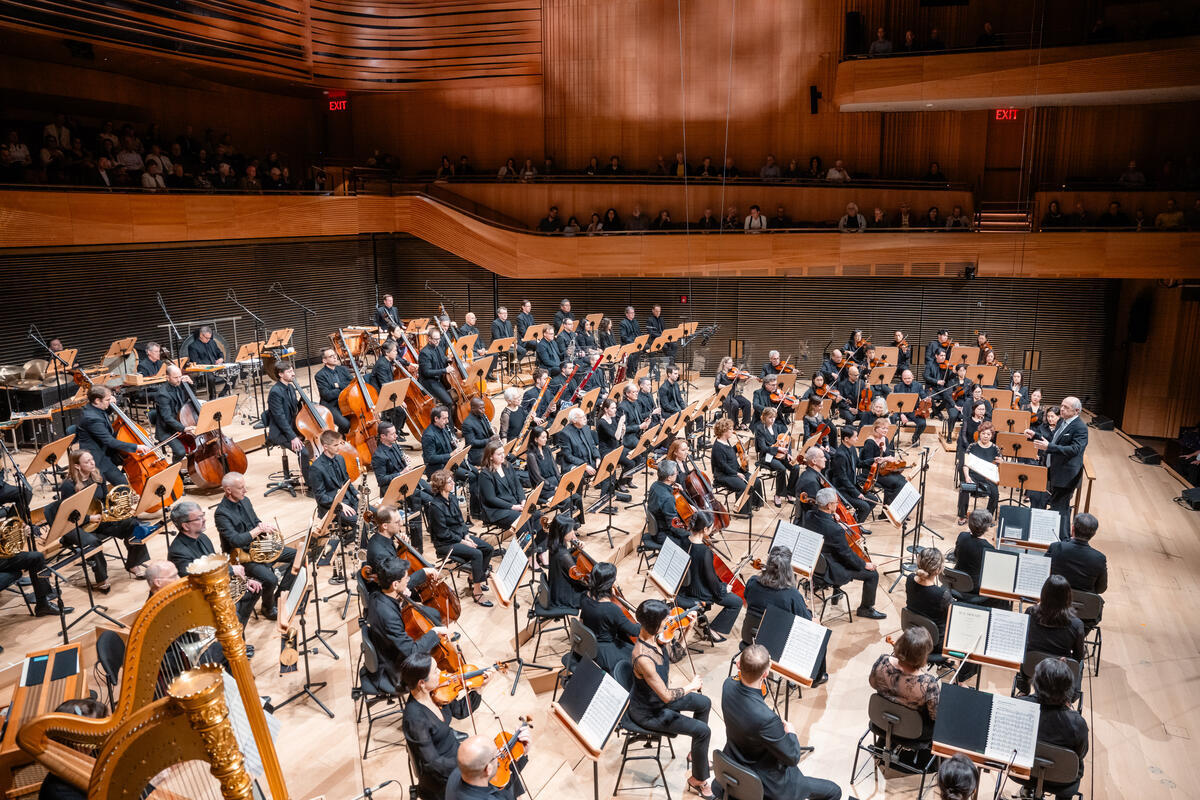
    Above: performance photo by Brandon Patoc

    ~ Author: Mark Anthony Martinez II

    Saturday April 26th, 2025 – The New York Philharmonic played a fantastically curated concert of Mozart and Bartók. Although the throughline of the pieces isn’t immediately apparent, the pairing of Mozart at his most theatrical — with the Magic Flute Overture and his Fifth Violin Concerto — with Bartók’s The Wooden Prince, originally written as music for a ballet, made for a fantastic night of music.

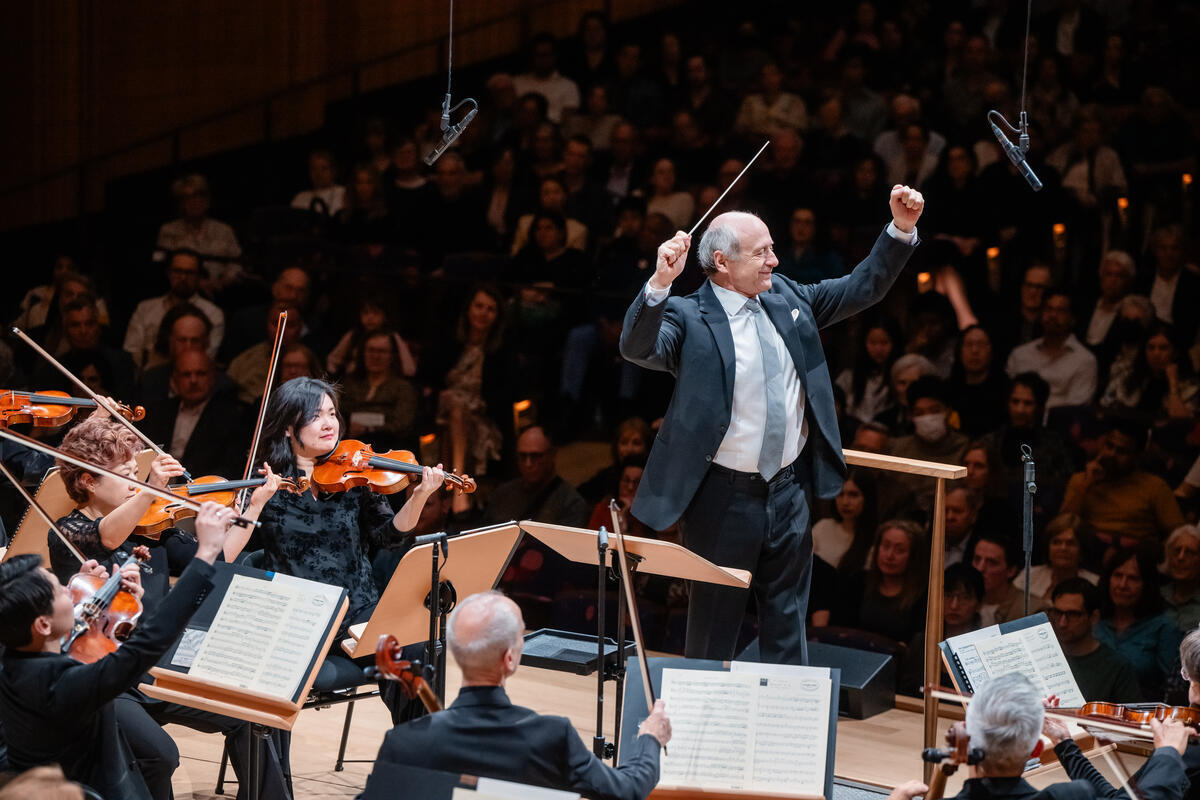
    The guest conductor was Iván Fischer, and he conducted marvelously: at ease in the music while simultaneously seeming to really have fun. Maestro Fischer appeared to conduct The Magic Flute Overture from memory at the podium, moving through the different sections of the piece with wide arm gestures.

    I had just recently seen The Magic Flute at the Metropolitan Opera the week before, so the piece was still fresh in my memory. Something very interesting was that, when I heard it that night at the Philharmonic, the overture seemed more like a symphonic suite than an overture to a stage play. It seemed more related to Mozart’s Jupiter Symphony somehow in this moment, rather than the opening to Così fan tutte. The music was played perfectly, with every dynamic crystal clear in execution. Maybe it was the perfection of how the piece was played that made it seem more symphonic and less like a piece written for the stage, where inevitably something new happens every night.
    Week32-BrandonPatoc_0013

    I particularly liked the restraint that Maestro Fischer (above, photo by Brandon Patoc) showed in the moments of the overture where silence mattered more than sound, such as the callback to the brass opening punctuated with long rests. The rests seemed longer than usual, but the impact was memorable because of it.

    The audience gave a very warm and deserved applause, after which the orchestra reduced in size to prepare for the violin concerto.

    Lisa b

    The soloist, Lisa Batiashvili (above), came out in a very memorable bright yellow dress with a baby blue sash around her waist. Normally, I don’t notice what soloists wear in performances, but this outfit seemed too intentional, almost as if it were making a statement. I thought that the color scheme seemed coincidentally similar to the Ukrainian flag until I saw a giant brooch of the U.S. Stars and Stripes cinching the sash onto her. So whatever the intent was, I’m sure it meant something to those more sartorially inclined.

    Batiashvili played the Mozart with clear familiarity with the style and music. Normally, I feel soloists tend to lean into the fiery, show-stopping nature of concertos, but Batiashvili tended toward austerity and restraint in her playing for the first two movements. The piece was played in a way that seemed courtly: certainly pleasant, but not too forward to draw attention to itself. Things changed when Batiashvili reached the cadenza of the first movement. The cadenza started out seeming to be in a Mozartian style, then veered into the chromatic and atonal. It wasn’t bad by any means, and certainly showcased Batiashvili’s virtuosity. It was just surprising to hear something so very non-classical in such a quintessentially classical piece. I read the program afterwards and saw that the cadenza was composed by a 15-year-old Georgian composer named Tsotne Zedginidze, which made quite a lot of sense in hindsight.

    I quite enjoyed the unconventional cadenza because it made me look forward to hearing the other cadenzas, which were also newly composed, one of them by the soloist herself. The other cadenzas were more traditional in nature though, which maybe was a good pairing with the one anachronistic one.

    The third movement was where Batiashvili took off and seemed to have the typical soloist verve. I had never heard the finale of this concerto before, and I loved the effects that gave the whole piece the moniker of “Turkish.” The sections where Batiashvili played the more exotic melody and the strings played col legno seemed like a vision into the future of where classical music would head with early Romanticism. The sections sounded more like Mendelssohn in one of his symphonic overtures rather than Mozart, and I was thrilled to hear it.

    After the concerto, Batiashvili gave several curtain calls, and it seemed like there was going to be an encore, but in the end, one didn’t come.

    Before the concert began, I overheard some audience members chatting and wondering why the screen normally used for super-titles for lyrics was open. Another audience member joked that it was just so they could make sure to tell people to silence their cell phones before the show.

    During intermission, the size of the orchestra ballooned, and it was almost impossible to fit more musicians on the stage. Before he started the Bartók piece, Maestro Fischer gave a short introduction. He told the audience that the piece was originally written for a short ballet, and — in an unconventional but amazing idea — had the original stage directions for the ballet projected onto the aforementioned screen while The Wooden Prince was being played.

    This piece was another first for me, and it was truly a masterpiece. The piece starts with a humming sound that almost feels like what you’d expect from a movie showing deep space.

    The story of The Wooden Prince follows a prince who falls in love with a princess, who is guarded by a fairy. The prince is blocked from being able to see the princess by the fairy, who enchants the forest in which they are to physically prevent the prince from reaching her.

    The stage directions were such a wonderful idea because they showed where Bartók’s mind went when he was creating the music for each physical gesture. At first, I thought there were going to be instruments tied to each of the characters, but in the end, the entire orchestra was involved in every scene to provide complete sonic storytelling.

    I found myself thinking about how The Wooden Prince compared with some of the other great ballets, like Tchaikovsky’s Swan Lake and Stravinsky’s Rite of Spring. The conclusion I came to was that The Wooden Prince was uniquely its own masterpiece.

    ~ Mark Anthony Martinez II

    (Performance photos by Brandon Patoc, courtesy of the NY Philharmonic)
  • Gertrud Rünger

    G runger

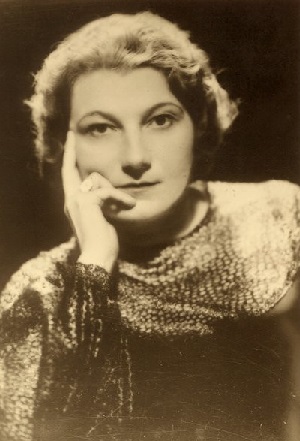
    Gertrud Rünger (1899-1965) sang both mezzo-soprano and dramatic soprano roles during her career. She began as a choral singer, moving on to solo roles in smaller German houses in 1923.

    In 1930, she joined the ensemble of the Vienna State Opera, and in 1934 came to the Berlin Staatsoper. She sang Verdi’s mezzo roles in German, and developed a reputation as a Wagnerian soprano, singing in Paris, London, Amsterdam, Dresden, and Munich.

    Ms. Rünger sang the Nurse in FRAU OHNE SCHATTEN at the Salzburg Festival in 1932-1933, and later appeared there as Klytemnestra and as Beethoven’s Leonore. She sang briefly at The Met in 1937, as the WALKURE and GOTTERDAMMERUNG Brunnhildes, Fricka in RHEINGOLD, and as Ortrud opposite Kirsten Flagstad’s Elsa.

    Designated as Kammersängerin, Gertrud Rünger continued to perform into the 1950s, whilst also teaching voice. She passed away at Berlin in 1965.

    Gertrud Rünger – Sleepwalking Scene ~ MACBETH – in German

    Gertrud Rünger – DON CARLO aria – in German

    And here is Ms. Rünger live in a thrilling rendition of Ortrud’s Invocation.

    ~ Oberon

  • Donner Summons the Mists

    donner

    Dwayne Croft as Donner summons the mists as Wagner’s DAS RHEINGOLD draws to its finish. I vividly recall how thrilling this was in the House as the baritone strode up the inclined stage and deployed his powerful voice into the great cavern of The Met.

    The performance dates from 2010 and is conducted by James Levine.

    Watch and listen here: https://www.youtube.com/watch?v=bBETnbgm6sE

  • RHEINGOLD @ THE MET ~ 25 YEARS AGO

    langridge loge

    Reading thru some of my hand-written diaries from a quarter-century ago, this entry about a tremendous performance of DAS RHEINGOLD brought back vivid memories.

    “Wonderful to see this opera again, and the cast of (mainly) RING veterans gave a superbly confident and nuanced performance. Levine had the huge orchestra under finger-tip control…there were passages of great beauty and lyricism, along with the unleashing of massive sound at times.  Although the lighting seems less evocative now, the production is still quite effective, though the first scene could use some freshening: the Rhinemaidens don’t always remember that they are underwater, and the rock pinnacle holding the gold wavered as Alberich clambered up.

    To start from the beginning: lovely lyricism from the Rhnemaidens: Joyce Guyer, Kristine Jepson, and Jane Bunnell each sang well in their solo lines, and their voices blended beautifully.

    Ekkehard Wlaschiha remains a powerful, vivid Alberich…his voice is now sketched indelibly on this music: magnificent in defeat, and in his vibrant, chilling curse. Hanna Schwarz brought her personal allure and great vocal authority to her interpretation of Fricka. She spun out some lovely soft phrases, creating a sensuous appeal that is not always heard in this music.  James Morris shows some vocal wear and tear as Wotan, but he is still able to hurl out vocal thunderbolts (especially at the end) as well as many pages of wonderfully musing soft singing. Very much a god to be reckoned with…bravo!

    Hei-Kyung Hong’s vocal radiance and sheer physical beauty made Freia a major role. She’s at her peak now, and I’m so lucky to be living here in NYC to witness it!  Mark Baker brought wafting lyricism as well as power to Froh’s music, and Alan Held’s darkish baritone produced a steady stream of well-inflected singing as Donner – his “Heda! Hedo!!“was a vocal high-point. 

    Splendid giants: the flowing depths of tone from Eric Halvarson perfectly complimented the more gritty, malevolent sound of Sergei Koptchak…bravissimi, gentlemen!! Graham Clark has a perfect role in Mime, where he is able to bring some “real” singing to a part that doesn’t always get it. His incisive diction was crystal clear. Brigitta Svendén  sounded simply gorgeous, and she makes Erda the alluring, mysterious icon she must be. 

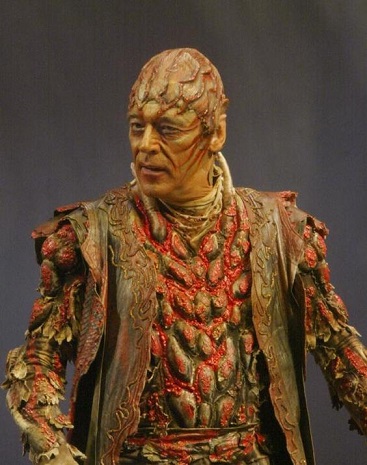
     Dominating the stage and the music, Philip Langridge as Loge  (photo at the top) used his multi-coloured “big lyric” voice with the finesse of a poet. Langridge created the enigmatic character in purely musical terms whilst the added physical dimension of his portrayal (the grace of a ballet dancer, the gestures of a skilled magician) simply clinched the evening for this great singing-actor. He was greeted with a massive ovation at his bows.

    The entire cast was deservedly hailed by the Houseful of avid Wagnerites, and Levine and his orchestra were given a rousing ovation. A very stimulating evening!

    2000 rheingold-1jpg

  • Premiere: Levine/Schenk GÖTTERDÄMMERUNG

    Scanned Section 6-1

    (NOTE: this was originally published during the pandemic…)

    During these endless days of being at home, I’ve been reading thru my opera diary, a hand-written document I started in 1962 and which now fills numerous file folders. So many wonderful memories of the great performances I saw over the years were stirred up by reading about them.

    One such exciting night was the 1988 premiere of the Otto Schenk GÖTTERDÄMMERUNG, the closing opera of Wagner’s epic RING Cycle. Often referred to affectionately as “the Levine RING”, full cycles of the production in the ensuing seasons created a great international buzz; Wagnerites from all over the globe gathered in New York City to witness this classic staging.

    Having already seen the RHEINGOLD, WALKURE and SIEGFRIED, I had a pretty good idea of what to expect; still, when the Gibichung Hall loomed into view, it took my breath away. Levine was mostly magnificent, though there were moments when he let things drag a bit; his orchestra gave it their all, and the chorus sounded sensational as they gathered in lusty expectation of the double wedding.

    As to the singers, here’s what I wrote upon returning to my room at the Colonial House after the performance: 

    “Casting was strong, with pretty singing from the Rhinemaidens – Joyce Guyer (in her Met debut), Diane Kesling, and Meredith Parsons – and Franz Mazura made an astoundingly vivid Alberich, singing with oily malice. The opening scene of Act II, with Alberich pawing at the sleeping Hagen, was very atmospheric.

    The Gibichung brother and sister were rather curiously cast: as Gunther, Anthony Raffell’s voice sounded veiled and throaty, and Kathryn Harries’ beautiful (and beautifully acted) Gutrune was undone by effortful singing and a prominent vibrato. [I mentioned that Cornell MacNeil and Lucine Amara could have made for far more interesting casting in these roles!].

    The Norn Scene, which I have always loved, benefited from the super casting of Mignon Dunn as 1st Norn, sung with richly doom-ladened tone. Hanna Schwarz (2nd Norn) had a couple of husky moments, but overall sang vividly, with excellent diction. As the 3rd Norn, Marita Napier sometimes sounded a bit insecure, but she did not let down the side. These three really made something of their opening discussion. 

    Toni Kramer sang erratically but acceptably in the torturous role of Siegfried. He seemed to be husbanding his powers, doing his best singing in Act III.

    C l + h b

    Above: Christa Ludwig as Waltraute and Hildegard Behrens as Brunnhilde

    The divine Christa Ludwig made a thrilling Waltraute, singing with great clarity and verbal point. The distinctive Ludwig tone – that cherished sound – drew the audience in to her every phrase. Add to this the anguished urgency of her delivery, and the result was a veritable triumph.

    The Ludwig Waltraute produced one of my all-time favorite curtain calls: stepping before the gold curtain for her first solo bow, she was greeted by such a din of applause and shouting that she halted in her tracks; her eyes opened wide in amazement, and she broke into a huge smile. It seemed to me that she had not expected such an avalanche of affection. She bowed deeply, clearly savoring this outpouring of love from the crowd.

    Matti

    The towering magnificence of Matti Salminen as Hagen (above) produced tremendous excitement in the House. His huge voice was at peak form, effortlessly filling the hall with sinister sound. In the scene where Hagen’s father appears to him in a dream, Salminen and Franz Mazura matched one another in both power and eerily expressive subtlety: thoroughly engrossing. The basso’s portrayal as the drama of Act II unfolded was towering in its epic nastiness and in his manipulation of the situation to attain the character’s sole goal: to regain the ring. This was a performance thrilling to behold, and to hear. 

    The roar of applause for each of Salminen’s solo bows was thunderous, and I was so excited to be part of it, shouting myself hoarse.

    ~ Sample the Salminen Hagen, from a later broadcast…it gives me he chills: 

    Matti Salminen as Hagen – Met 1993

    Snapshot

    Hildegard Behrens (above) was a Brunnhilde of terrifying intensity and incredible feminine strength. This was an overwhelming interpretation, in which voice and physicality combined to transcend operatic convention, reaching me on the deepest possible level. Behrens lived the part, in no uncertain terms.

    The Dawn Duet found Behrens portraying the tamed warrior maid to perfection, savoring her domestic bliss but eager that Siegfried should go out into the world and do great deeds. Her unconventional beauty and her inhabiting of the character were so absorbing to behold. Later, In the scene with Waltraute, Behrens as Brunnhilde listened anxiously to all her sister’s words and she began to grasp the first signs of the downward spiral that would culminate with Siegfried’s betrayal and her own sacrifice. Even so, she dismissed Waltraute with fierce disdain. Behrens’ vivid depiction of Brunnhilde’s terror and helpless dejection as the false Siegfried wrested the ring from her was palpable.

    Scanned Section 1-1

    In one of the evening’s most gripping moments, Behrens – having become possessed by Brunnhilde’s plight in Act II – responded to Siegfried’s oath by snatching Hagen’s spear away him and singing her own oath with blistering abandon. Totally immersed in the character, her pain was painful to behold. In the powerful trio that ends Act II, Behrens, Raffell, and Salminen were splendid.

    Behrens GOTTER

    Above: Hildegard Behrens as Brunnhilde ~ Immolation Scene

    In the Immolation Scene, the great strength of Brunnhilde’s love for Siegfried, and her determination to perish in the flames of his funeral pyre, marked the culmination of Hildegard Behrens’ sensational performance. Her singing was powerful, with unstinting use of chest voice and flaming top notes; there were moments when expressionistic effects crept in but it all seemed so right. The amazing thing about Behrens’ singing and acting here was that it all seemed spontaneous…she seemed to be living it all in the moment. One cannot ask more of an operatic portrayal.

    The curtain calls went on and on, the audience eager to show their appreciation with volleys of bravos as the singers stepped forward time and again. Here we must also thank James Levine, whose grand design underlies the great success to date of the individual operas. Ahead, in the Spring, seeing the full cycle in a week’s time is already on my calendar. My dream will come true!” 

    ~ Oberon

  • The Met’s Newest Aida (+ A Cast Change!)

    nilsson

    ~ Author: Oberon

    Saturday March 22nd, 2025 matinee – In 1883, a Swedish soprano named Christina Nilsson sang Marguerite in FAUST for the opening of the then-new Metropolitan Opera House. Last week, another Swedish soprano named Christina Nilsson (photo above) made her Met debut as Aida. This afternoon, I went to hear my second AIDA of the current season to see how she fared in the daunting role.

    Alejandro-Roy

    Another singer new to me, tenor Alejandro Roy (above), stepped in today as Radames; he had made a short-notice Met debut in TURANDOT in 2019 opposite Christine Goerke…

    Burdenko

    …and the Amonasro, Roman Burdenko (above), had just made his Met debut a few days ago.

    Alexander Soddy was on the podium, and while he has good ideas about tempi and the alternating currents of grandeur and intimacy that run thru the score, he (like so many opera conductors today) tends to let the orchestra get the better of the singers all too frequently. Despite this, the score seemed extremely beautiful today, and I often felt moved.

    The Messenger and the Priestess – Yongzhao Yu and Ann-Kathrin Niemczyk – made the most of their moments. The two bassos were both super: Alexander Vinogradov (Ramfis) and Krzysztof Bączyk (the King) have powerful voices and they sounded assured throughout their range. So many phrases from these two gentlemen impressed me today. In the ensemble in the opening scene – and again in the Triumphal Scene – where both bassos have great moments, they created a sonic energy that was so pleasing to experience.

    Mr. Burdenko likewise made a vivid impression, his opening “Suo padre!” immediately established his dignity and fierce pride. Capable of both power and subtlety, Mr. Burdenko made every phrase come to life; a feeling of steadfastness emerged in his plea “Ma tu, Re…“. In the Nile Scene duet with Ms. Nilsson, the baritone veered from venomous (“…tu sei la schiava!“) to tenderness (“…pensa che un popolo…vinto…straziata…”) Bravo!!

    Mr. Roy’s voice exudes masculine confidence; it’s tinged with baritonal shadings at times but he also had the top notes for the music when needed. Following with my score, he seemed to heed all the dynamic markings, though he took the end of the “Celeste Aida” full voice. Joining in the trio with Ms. Nilsson and Judit Kutasi (Amneris), the three were sometimes covered by the orchestra. Again, in the Temple Scene, the sturdy voices of Mssrs. Roy and Vinogradov had to combat the orchestra’s volume..

    Having only one intermission, after the Triumphal Scene (wherein Mr. Roy blasted an epic B-flat at one point), the tenor must sing in succession the demanding Nile Scene and the dramatic confrontation with Amneris, and then bring forth lyricism for the tender final duet, “O terra addio…”). He handled this marathon quite impressively. I thought he might run out of steam near the end, but the final “…si schiude il ciel…” with Ms. Nilsson was handsomely clear and sustained. 

    Ms. Kutasi, whose Amneris was disappointing at my earlier performance this season, fared little better today, though her B-flats in the repeated phrase “…dal ciel si compira...” in the Judgement Scene were her best notes of the day. I really don’t know what is going on with her; there are exciting clips of her on YouTube, but the voice now is very erratic. The audience cheered her enthusiastically.

    I grew up on such plushy spinto Aidas as Leontyne Price, Martina Arroyo, Leona Mitchell, Gilda Cruz-Romo, and Anna Tomowa-Sintow. Ms. Nilsson today curiously put me in mind of Lucine Amara, an under-appreciated ‘big lyric’ soprano who could float lovely piani on high; Ms. Nilsson’s style is not as Italianate as Lucine’s, but their vocal heft is similar. 

    A ravishing clarinet solo introduces Aida, and the Nilsson voice has immediate appeal; she sounds young – even girlish at times. In the cantabile passages of the trio and ensemble of the opening scene, her singing is very persuasive; but Mr. Soddy lets that ensemble get too brassy…and there was an added drum rhythm I’d never noticed before.

    Ms. Nilsson got to show her stuff with “Ritorna vincitor“, her singing reflective, her phrasing having a lyrical glow; she gave the aria a lovely, poignant finish. In the boudoir scene, the soprano’s tone sometimes lacked richness, but she fared well in the Triumphal Scene, with a gleaming top-C to cap the ensemble’s first half.

    On the banks of the Nile, Ms. Nilsson shaped “O patria mia…” perfectly, though more colours could have been introduced along the way. Her sweet high-C lingered long on the air, and her sustained phrases at the aria’s finish were gorgeous. Mr. Burdenko’s raging “…tu sei la Schiava!” elicited a blistering top-A from the soprano. She later got enticingly floaty and provocative with “…la, tra le foreste vergini...” in the duet with Radames, before spinning out a magical “…fuggiam…fuggiam.....” The stretta, with Mr. Roy, was excitingly sung.

    The tenor commenced the final scene expressively, and Ms. Nilsson’s lyricism glows, lit by beaming high notes along the way; here she really reminded me of Amara. Mr. Roy sang valiantly as the opera moved towards its solemn ending, his voice well-matched to Ms. NIlsson’s. They took a joint bow, to a warm salute from the crowd. Mr. Roy had saved the day, and Ms. Nilsson had won new admirers. 

    Notably, it was the all-male ballet in the Triumphal Scene that roused the audience to the afternoon’s most enthusiastic cheers.

    ~ Oberon

  • Waiting for Elisabeth Grümmer

    The most-read article from Oberon’s Grove:

    Gruemmer

    ~ In 1967 the Metropolitan Opera held its first June Festival. Having just opened the ‘New Met’ in September 1966, ticket demand for the premiere season at Lincoln Center had been phenomenal and the Company seized the opportunity to add several performances in the month of June. This was a bonanza for the fans and also provided the general public, who were curious to see the interior of the new opera house, expanded possibilities. The Met offered some very fine casting that June, and topping the list of exciting events (at least from the fans’ point of view) was the belated Met debut of the German soprano Elisabeth Grummer. 

    Grümmer was 57 at the time, and had already had a very successful career in Europe and had made several top-class recordings, working with Europe’s finest conductors. She had made her debut with the Met on tour in Boston earlier that Spring and was now coming to the House in the role of Elsa in Wieland Wagner’s production of LOHENGRIN.

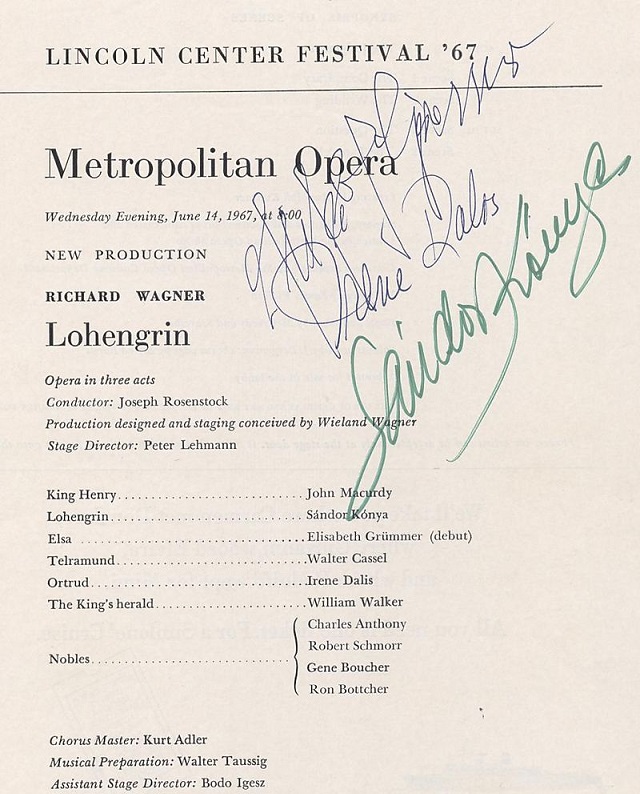
    This was my first chance to see this opera; Sandor Konya was at that time the leading exponent of the title role, and my beloved Irene Dalis was singing her venomous Ortrud. Stalwarts Walter Cassel, John Macurdy and William Walker completed the cast. Andre Cluytens, who was to have conducted this production of LOHENGRIN, had died the previous summer and so Joseph Rosenstock was on the podium. I suppose by international standards that Rosenstock was considered a routinier but – inexperienced as I was – I was simply thrilled to be there.

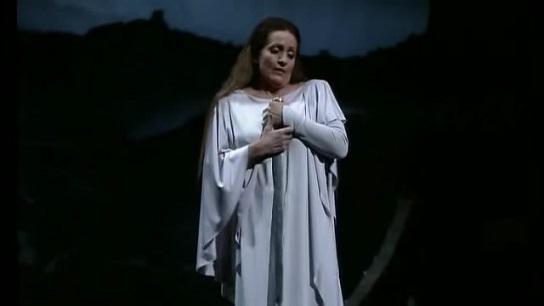
    Grümmer made her entrance, and I recall the entire phalanx of Family Circle standees were waiting with collectively bated breath for her first line, which she deployed with a silvery pianissimo: “Mein armer bruder!”  We were under her spell immediately and she went on to sing a really thrilling Elsa and to win a very warm acclaim from the packed house. Although nearing the end of her career, Grümmer had maintained her clarity of sound; the voice had a lyrical feeling but she was able to ride the ensembles  with a bit of metallic thrust. It was an exciting debut but after repeating the role once, she never sang at the Met again. (She did appear as the Marschallin at the New York City Opera the following season.)

    A large contingent of fans gathered at the stage door. Sandor Konya came out and was so kind; aside from signing my programme he gave me a beautiful photo of himself as Lohengrin. Irene Dalis  appeared and she even remembered me and thanked me for coming. Then the crowd began to drift away. I knew Grümmer hadn’t left yet and I couldn’t imagine why no one wanted her autograph after such an exciting debut.

    After a few moments only a half-dozen of us remained. A chorister walked out and someone asked him if Miss Grümmer was coming out soon: “Oh, she doesn’t sign autographs!” Someone else emerged and saw us: “You waiting for Grümmer? She won’t sign.” The other fans left. I figured at least I would get a glimpse of her. It had been an hour since the curtain had fallen, and I was exhausted. But something kept me there.

    A car pulled up; the driver got out. He looked at me and said, “If you’re waiting for Elisabeth Grümmer, you’re wasting your time.  She doesn’t like giving autographs.”  I shrugged, trying to pretend that I WASN’T waiting for Elisabeth Grümmer.

    Finally the stage door opened and Ms. Grümmer walked out with a gentleman. They got in the car and closed the doors. But they didn’t leave. I stood by the stage door holding my program and pen, looking as forlorn as I could. I was 19 but looked younger, and I hoped she would take pity on me. The driver was pointing at me and the soprano looked my way hesitantly. Then she suddenly rolled down her window and gestured to me. Neither of us spoke, but I handed her the program. She briskly wrote her name and handed it back to me with just a trace of a smile. I thanked her and made a little bow; she rolled up the window and the car pulled away.

    Click to enlarge:

    6a00d8341c4e3853ef00e553e3255c8833-800wi
  • The Marcella Sembrich Museum

    Sembrich museum-1 jpg

    In the summer of 1963, my parents took me to see an English-language production of Rossini’s BARBER OF SEVILLE given by the Lake George Opera Company; this was my third live opera performance. I still remember how cold it was in the small theater, how much I liked the Berta (played by Ellen Berse, who later joined the short-lived Metropolitan Opera National Company), and that my favorite part of the opera was the “Frigid and motionless” ensemble. 

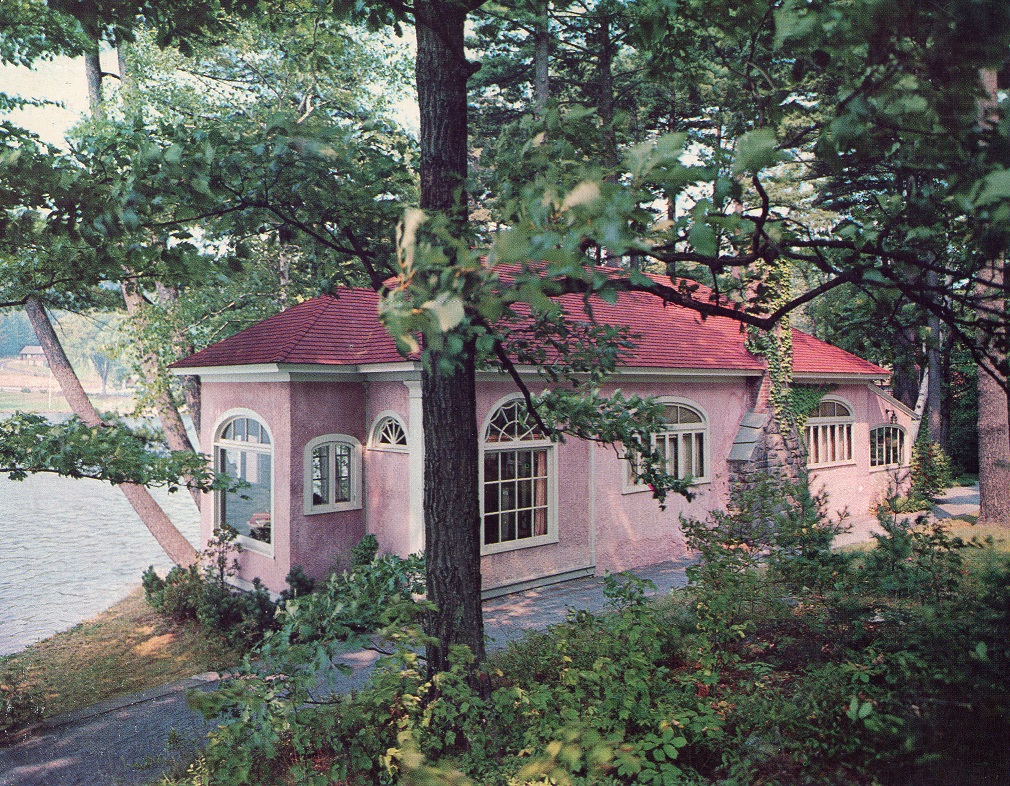
    We spent an extra day on Lake George, which included a visit to the Marcella Sembrich Museum; this was housed in a pink cottage at Bolton’s Landing, NY, where the legendary Polish soprano spent her off-seasons from The Metropolitan Opera, giving voice lessons.

    The main thing I remember about our time at the museum was that it was far briefer than I had anticipated. Although I was fascinated by all the opera artwork, old photographs, scores, even some of Sembrich’s costumes and accessories, my parents seemed oddly tense. It took me a few minutes to realize that the middle-aged man who was overseeing the place was subtly eyeing me; whenever I stopped to examine a particular photo or artifact, he would hover nearby and comment on whatever it was I was looking at. My mother would then materialize out of nowhere.  

    We’d only been there for 15 minutes when my father announced that it was time to go; I was not anywhere near done looking around, and I had also wanted to ask if I could play the piano (I was sure it was forbidden) and then sit outside the cottage, enjoying the sun and the lake view. The man then suggested that my parents leave me there and come back and pick me up in an hour. My mother turned frosty, and we left a few seconds later. Once in the car, I complained that there was so much I hadn’t gotten to see. They quickly changed the subject: where should we have lunch?

    Of course. I knew perfectly well what was going on: they viewed the man as a predator and me as an innocent victim. I wasn’t exactly innocent anyway; I’d been fooling around with one of the neighbor boys for a while. But I sometime think back on that afternoon; it would be another ten years, filled with fantasies and frustrations, before I took the leap. 

  • The Wanderer Summons Erda

    Zhang Nikitin_yevgeny

    Above: contralto Qiu lin Zhang, basso Yvgeny Nikitin

    In this scene from the final act of Wagner’s SIEGFRIED, Wotan (in his guise as The Wanderer) wakens the Earth Mother Erda from her deep slumber. She wearily evades his questions, and it becomes clear that the doom of the gods is at hand.

    SIEGFRIED – Act III scene- Evgeny Nikitin – Qiu Lin Zhang – Eschenbach – BBC Proms 2006 

  • TRISTAN UND ISOLDE ~ Act II ~ Auckland Philharmonia

    Karneus

    Above: Katarina Karnéus singing Brangäne in a concert performance of Act II of Wagner’s TRISTAN UND ISOLDE by the Auckland Philharmonia, conducted by Giordano Bellincampi.

    CAST:

    Tristan – Simon O’Neill; Isolde – Ricarda Merbeth; Brangäne – Katarina Karnéus; Kurwenal – Johan Reuter; King Marke – Albert Dohmen; Melot – Jared Holtin

    Watch and listen here.