Tag: Opera

  • The Turandots

    Turandot

    During the coming season at the Metropolitan Opera, I’ll be hearing four different sopranos in the role of Turandot. Of these, three will be new to me in the role: Christine Goerke, Jennifer Wilson, and Nina Stemme. The fourth will be Lise Lindstrom, who made a very fine vocal impression as Turandot here during the 2009-2010 season and who has the added appeal of being wonderfully suited to the role in terms of physique and stage savvy.

    For opera lovers of my generation, the silver-trumpet voice of the great Swedish soprano Birgit Nilsson is unforgettably linked to the music of Turandot; I had the good fortune of seeing Nilsson’s Turandot five times – each performance with a different soprano portraying Liu: Teresa Stratas, Anna Moffo, Mirella Freni, Montserrat Caballe, and Gabriella Tucci. Once you experienced the Nilsson sound in this role in the theatre, you felt you’d never find her equal. 

    And yet, Nilsson was not my first Turandot: it was instead Mary Curtis-Verna who made a very strong impression on this young opera-lover in a performance at the Old Met with Jess Thomas (Calaf) and Lucine Amara (Liu) also in the cast. Curtis-Verna had the Italian style down pat, and she had no problems whatsoever leaping over the many vocal hurdles Puccini set in her path; her final high B-flat had a theatre-filling glow.

    Nilsson (who we referred to as “The Big B” or “The Great White Goddess”) was at her vocal apex in 1966 when she sang a series of Turandots starting in the first week of the first season at the New Met. It’s impossible to describe the exhilarating build-up of anticipation as we waited for her to commence: “In questa reggia”. No recording of Nilsson in this opera, whether studio-made or live, has quite captured the frisson of her brilliant attack and the sheer thrust of the voice being deployed into the big space. Her partnership with Franco Corelli in this opera is legendary; and I was also there on a single night when the stars aligned and we had a Birgit Nilsson-James King-Montserrat Caballe TURANDOT which ended with one of the longest ovations I every experienced. 

    Nilsson sang her last Met Turandot in 1970. When the opera returned to the Met repertory in 1974, Nilsson’s good friend, the Norwegian soprano Ingrid Bjoner was one of three sopranos cast in the title-role. Bjoner for me was the ‘next best thing’ to Nilsson, and to my mind it seemed that Bjoner’s characterization was more detailed and thoughtful than Birgit’s.

    Since Bjoner, I have seen more than two dozen sopranos in the fearsome role of the Chinese princess, at The Met, New York City Opera, and Opera Company of Boston (where we saw Eva Marton take on the role for the first time with great success). Linda Kelm at New York City Opera and Dame Gwyneth Jones at The Met stand out in my memory as particularly thrilling, though I must admit in all honesty I never heard anyone give a less-than-respectable performance in the role – which is saying something, really, given the rigors of the composer’s demands and with the spirit of Nilsson hovering over the popolo di Pekino.

    I have my notions as to how this season’s Turandots will fare, based on their recent performances; I look forward to being proved right…or wrong.

  • Leo Goeke

    Leo-Goeke

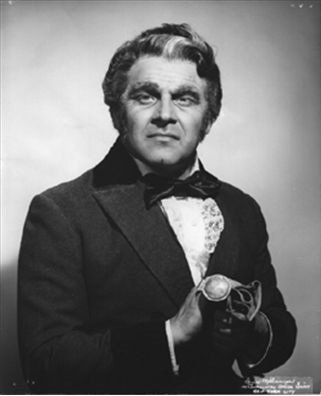
    During the 1970s, the American lyric tenor Leo Goeke (above) was a popular artist at both the New York City Opera and The Met. A finalist in the 1967 Met Auditions, Goeke sang more than 200 performances at The Met and on tour, including such roles as Tamino, Count Almaviva, and the Italian Singer in ROSENKAVALIER. He sang (beautifully) the Voice of the Young Sailor in the Met’s 1971 August Everding production of TRISTAN UND ISOLDE, and in 1973 he was Hylas in the Metropolitan Opera premiere of Berlioz LES TROYENS.

    Several of Leo Goeke’s numerous European successes are available on DVD: from England’s Glyndebourne Festival where he sang three Mozart roles and – in 1975 – Stravinsky’s Tom Rakewell in an interpretation that was hailed as ideal; and his performance as Gandhi in Achim Freyer’s Stuttgart Opera production of Glass’s SATYAGRAHA.

    Goeke passed away in 2012.

    Leo Goeke – Il mio tesoro – DON GIOVANNI – NYCO 10~29~72

  • Camellia Johnson Has Passed Away

    C johnson

    News of the death of Camellia Johnson (above) eerily came on a day I had just been listening to her voice. In the course of my Summer project of transferring some of the rare items in my cassette collection to MP3, I had just come across a tape of parts of the Verdi REQUIEM in which Ms. Johnson is the soprano soloist. 

    The broadcast of this REQUIEM was something I came upon quite by chance; as the announcer was introducing the performance, I found myself with only one blank side of one tape to hand. I slipped it into the deck and decided to concentrate on recording excerpts in which the two women are prominent, Florence Quivar being a particular favorite of mine. Listen to what I preserved here:

    Verdi REQUIEM – excerpts – Baltimore 1994 – C Johnson Quivar Heppner G Relyea – Zinman

    In 1995, I had the good fortune to hear Camellia Johnson live at two different, wonderful venues. She sang with the Philharmonia Virtuosi at the Met Museum, and she gave a recital at Alice Tully Hall accompanied by Neal Goren. I remember being blown away by both the velvety warmth of her tone and her gift for finding a direct communicative channel to the audience. On both evenings she programmed Wagner’s Wesendonck lieder; at the Met concert, she gave a stunning performance of “To This We’ve Come” from Menotti’s THE CONSUL whilst with Mr. Goren she sang a lushly resonant “Du bist der lenz” from DIE WALKURE.  

    Camellia Johnson sang at The Met from 1985 thru 1994, debuting there as Lily in PORGY AND BESS. Her most frequent Met role was the Priestess in AIDA; she also scored a personal success with her sumptuous and emotionally charged singing of Madelon’s aria in ANDREA CHENIER.

  • Mario Sereni Has Passed Away

    MI0002863986

    Above: Mario Sereni as Giorgio Germont in Verdi’s LA TRAVIATA

    Mario Sereni, the Italian baritone who sang over 550 performances with The Metropolitan Opera between 1957 and 1984, has reportedly died at the age of 87.

    Sereni had a warm, rich sound with an easy top, and an instinctive feel for phrasing off the words of his native language. I first saw him at the Old Met as Belcore in L’ELISIR D’AMORE (with Freni, Gedda, and Corena, no less!); once the new House opened and I was going to the opera frequently, Sereni was a singer I saw often. He was popular with the fans, and always very cordial when we greeted him after a performance.

    Although he sang many of the great Verdi roles – Germont in TRAVIATA being particularly well-suited to his voice, and he also appeared as Amonasro, Count di Luna, Posa, Ford in FALSTAFF and Don Carlo in LA FORZA DEL DESTINO – it was in the more verismo-oriented operas that Sereni made his best impression, at least for me. His Tonio in PAGLIACCI was outstanding, and he was often cast in the sympathetic roles of Sharpless (MADAMA BUTTERFLY) and Marcello (LA BOHEME). One performance that I recall with special affection was his Carlo Gerard in ANDREA CHENIER, where he appeared opposite Raina Kabaivanska in her only Met performance as Maddalena. In the French repertoire, Sereni sang Valentin in FAUST and Escamillo in CARMEN; he even made a foray into Wagner, as the Herald in LOHENGRIN. Among other Sereni roles were Rossini’s Figaro, Donizetti’s Malatesta (DON PASQUALE) and Enrico (LUCIA), and Lescaut in the Puccini opera. Near the end of his Met career, he sang several performances of Schaunard in BOHEME, and that was the role of his final Met performance in 1984.

    Mario Sereni appears on several complete opera recordings; my personal favorite is (again) his Carlo Gerard in CHENIER on EMI, opposite Antonietta Stella and Franco Corelli. Also on EMI, he sings with Victoria de los Angeles on her classic recordings of BUTTERFLY and TRAVIATA. And he is in fine fettle on the RCA recording of LUCIA DI LAMMERMOOR, with Anna Moffo and Carlo Bergonzi. Here is the Wolfscrag Scene from that recording, in which Bergonzi and Sereni make such a vivid impression, both vocally and dramatically.

  • Kerstin Meyer

    Meyer_abcd100

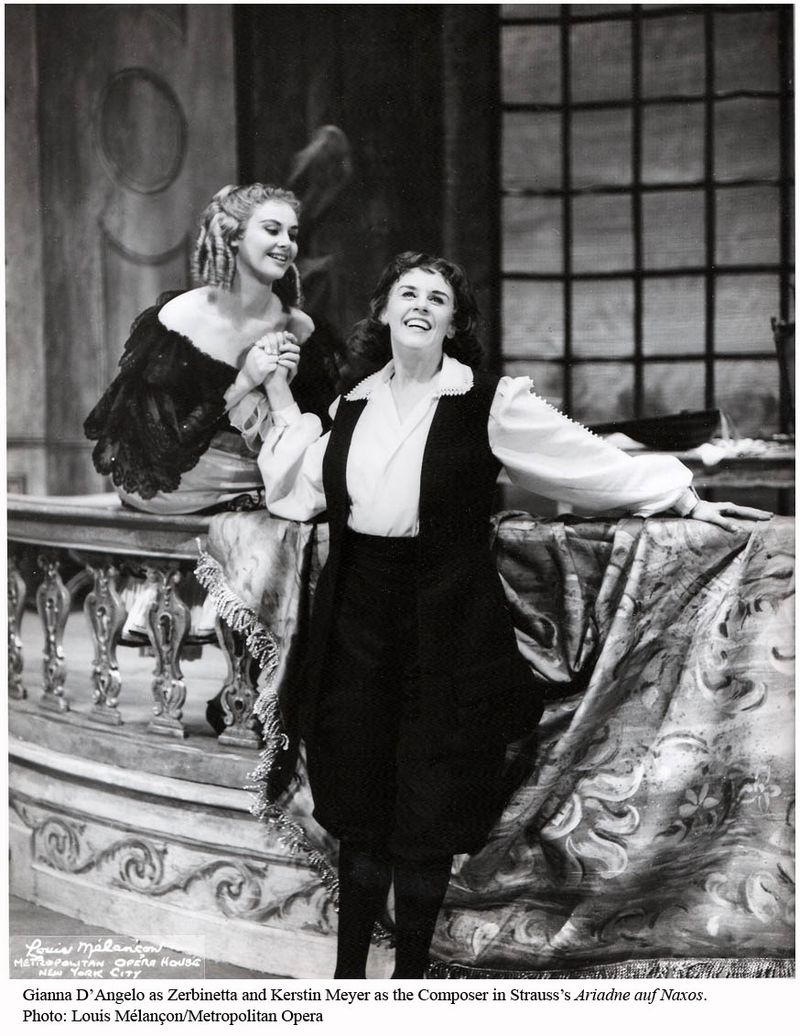
    Kerstin Meyer sings Konchakovna’s cavatina from Borodin’s PRINCE IGOR. Meyer sang the role of the Composer in the Metropolitan Opera premiere of Strauss’s ARIADNE AUF NAXOS in 1962, having previously appeared there as Carmen and Gluck’s Orfeo. 

    Ariadne6263.04

  • At Home With Wagner VIII

    1310368-Richard_Wagner

    In 1968, Lorin Maazel conducted the RING Cycle at Bayreuth and from that cycle, the WALKURE looked especially tempting to me: not only are the ever-thrilling pairing of Leonie Rysanek and James King cast as the Wälsungs and such stalwart Wagnerians as Berit Lindholm, Theo Adam and Josef Greindl featured, but a rare performance as Fricka by Janis Martin – a singer in whom I’ve recently taken a renewed interest and who in December 2014 passed away – drew me to purchase this set. It’s an exciting performance in many ways, and Ms. Martin’s Fricka is one of the best-sung I have heard.

    Leonie Rysanek and James King sang Sieglinde and Siegmund together often, including on the commercial release of the entire Cycle conducted by Karl Böhm; the two singers know these roles inside-out but somehow they always manage to make the music seem fresh and genuinely exciting. Rysanek, always a powerhouse singer at The Met, scales down her voice here to suit the more intimate space of the Bayreuth Festspielhaus. She creates many poetic effects but when the emotional temperature of the drama rises, Rysanek – as ever – turns up the voltage. In Act I she produces her trademark hair-curling top notes and the famous scream (at Wieland Wagner’s bidding) as the sword is pulled from the tree. 

    James King is in superb voice; he sings with tireless generosity – his Sword Monolog one of the finest I’ve heard, with his astonishing cries of “Walse! Walse!” sustained with epic fervor – and he’s always vivid in the expressing the passions of the final pages of Act I. That pillar of Wagnerian basso singing, Josef Greindl, is as ever a strong and fearsome Hunding. The three singers, with vital support from Masetro Maazel (his tempos tending towards speed rather than breadth) make for a truly stimulating rendering of this act.

    As Wotan, Theo Adam’s powerful voice greets his favorite daughter; Berit Lindholm is bright and true in Brunnhilde’s battle cry, and then Janis Martin as Fricka arrives to throw a monkey-wrench into her husband’s plans. Ms. Martin, at this point in her career about to transition from mezzo to soprano (in the 1970s she was to be my first in-house Sieglinde, Kundry and Marie in WOZZECK); thus the highest notes of Fricka’s music hold no terrors for her. Her singing is clean, wide-ranging, and impressive. As she and Mr. Adam debate the matters at hand, Lorin Maazel’s orchestra underscores both sides of the argument. Ms. Martin exits, secure in her triumph.
    T adam

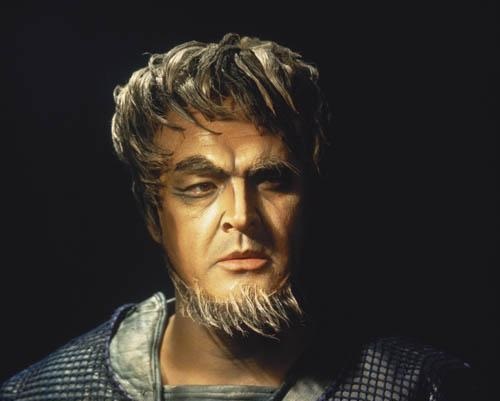
    Theo Adam (above) was my very first Wotan at The Met in RHEINGOLD in 1969, and I saw him some 20 years later, still very impressive in WALKURE. His sound per se is not highly individualized – it’s basically darkish and grainy – but he always manages to use it to optimum effect. His long monolog, with keen support from Maazel and increasingly urgent responses from Lindholm, is appropriately central to the drama of the performance.

    Rushing on, pursued by Hunding’s hounds, Rysanek and King make much of their scene together. For Ryssanek, moments of lyric tenderness veer off to outbursts of hysteria; King is heroically comforting. Rysanek emits a demented, curdled scream at the sound of Hunding’s approaching horns, and as she swoons, King sings “Schwester! Geliebte” as tenderly as I have ever heard it done. 

    In the great Todesverkundigung scene (the Annuncation of Death, where Brunnhilde appears as in a vision and warns Siegmund of his impending death in battle), Maazel brings weightiness without impeding the forward flow. A doom-ladened feeling of tension and barely controlled urgency underscores the exchange between soprano and tenor, with Ms. Lindholm expressing increasing desperation as she feels herself losing control of the situation. Maazel brilliantly emphasizes Brunnhilde’s shift of allegiance: a feeling of high drama as she rushes off. 

    The poignant cello ‘lullabye’ as Siegmund blesses Sieginde’s slumber is taken up by the orchestra with a rich sense of yearning, til Hunding’s horns intrude to terrifying effect. Awakening in a daze before grasping the situation, Rysanek’s mad scene reaches fever pitch. Adam thunders forth Wotan’s intercession, Rysanek screams as Siegmund is slain. After Wotan has dispatched Hunding with great contempt, Adam and Maazel rise to a thunderous finish as Wotan storms away to catch the traitorous Brunnhilde.

    Synek_Portrait1a

    Above: Liane Synek

    An excellent Helmwige from Liane Synek (sample her singing here, as Brunnhilde in a passage from a WALKURE performance in Montevideo 1959): she stands out from some rowdy singing by her sister-Valkyries. 

    Sieglinde’s desperate plea to be slain turns to joy as Brunnhilde informs her that she is with child, giving wing to Leonie Rysanek’s cresting ‘O hehrstes Wunder!’, the crowning moment of one of the soprano’s greatest roles.

    The scene is then set for the final father-daughter encounter; both Lindholm and Adam have moments of unsteadiness and the sound-quality is sometimes marred by overload. But both singers are truly engaged in what they are singing, with Theo Adam particularly marvelous in the long Act III passage starting at “So tatest du, was so gern zu tun ich begehrt…” (“So you did what I wanted so much to do…”) Once Brunnhilde has fallen into slumber, the bass-baritone and Maestro Maazel give an emotionally vibrant performance of Wotan’s farewell.

    ~~~~~~~~~~~~~~~~~~~~~~~~~~~~~~~~~~~~~~~~~~~~~~~~~~~~~~~~~~~~~~~~~~~~~~~~~~~~~~~~~~~~~~~~~~~

    Lilowa

    Above: mezzo-soprano Margarita Lilowa

    A RHEINGOLD from Vienna 1976 piqued my curiosity – mainly to experience the conducting of Horst Stein whose superb 1975 Bayreuth GOTTERDAMMERNG I wrote about here. I was also wanting to hear Margarita Lilowa’s Erda, having recently really enjoyed her singing as Mary in a recording of FLIEGENDE HOLLANDER, and Peter Hofmann in what is said to be his Vienna debut performance, as Loge.

    The recording is clearly not from a broadcast but rather was recorded in-house; the sound varies – some overload in spots, some distancing of the voice, a couple of dropouts – and in quieter passages the breathing of the person making the recording can be heard: an unsettling effect. Also during the Alberich/Mime scene there’s some annoying mike noise. But overall, with steadfast concentration, the performance has many rewards. And chief among them is Maestro Stein’s expert shaping of the score.

    The Rhinemaidens are Lotte Rysanek (Leonie’s sister, who sometimes sounds a bit like her famous sibling), Rohangiz Yachmi, and Axelle Gall. Their more attractive moments come in solo lines rather than in a vocal blend. Zoltán Kelemen, the Alberich of the era, is superb here. He paints a full vocal portrait of the dwarf, from his early semi-playful pursuit of the Rhinemaidens thru the rape of the Gold, on to the vanity of his bullying Lord of Nibelheim, his shattering fall into Loge’s trap, and the vividly expressed narrative leading up to the Curse.

    Grace Hoffmann and Theo Adam are experienced Wagnerians who inhabit their roles thoroughly. The mezzo’s voice is no longer at its freshest (she was in the twenty-fifth year of her career here) but she is authoritative in characterization. Adam, strong and true of voice, makes a fine impression throughout, especially in his final hailing of Valhalla.

    Hannelore Bode’s voice seems too weighty and unwieldy for Freia, but the giants who pursue her are impressive indeed: Karl Ridderbusch and Bengt Rundgren are so completely at home as Fasolt and Fafner, and their dark, ample voices fill the music richly. Hale and hearty one moment, and wonderfully subtle the next, both bassos make all their music vivid. A lyric Froh (Josef Hopferweiser) and an ample-toned Donner (Reid Bunger – his “Heda! Hedo” has a nicely sustained quality) are well-cast.      

    Peter-Hofmann-calendar-250x350px

    Above: tenor Peter Hofmann

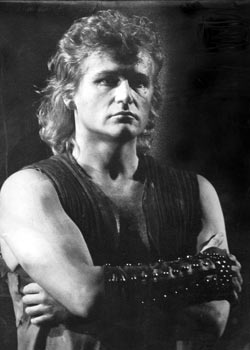
    Peter Hofmann’s Loge has a baritonal quality, and he blusters a bit but soon settles in to give a sturdy if not very imaginative performance of the Lord of Fire. The Nibelheim scene finds Adam, Hofmann, and Kelemen all at their keenest in sense of dramatic nuance, and Heinz Zednik is a capital Mime, well-voiced and inflecting the text with eerie colours.

    Ms. Lilowa’s Erda, sounding from a distance at first, comes into focus after her first line or two and has a round-toned, steady voice, making the most of her brief but important scene.

    Horst Stein’s overall vision of the score seems nearly ideal to me, and there are a number of particularly satisfying passages: his underscoring of the big lyric themes in Loge’s narrative, the detailing of the orchestral parts at Loge’s mention of Freia’s apples, the descent to Nibelheim. And once in Alberich’s domain, Stein shows keen mastery of nuance, both in colorfully supporting the dialogue and in a truly ominous “dragon” theme for Alberich’s transformation. Throughout the performance, it’s Stein who keeps us keenly focused on this marvelous score.

    ~~~~~~~~~~~~~~~~~~~~~~~~~~~~~~~~~~~~~~~~~~~~~~~~~~~~~~~~~~~~~~~~~~~~~~~~~~~~~~~~~~~~~~~~~~~
    Mcintyre

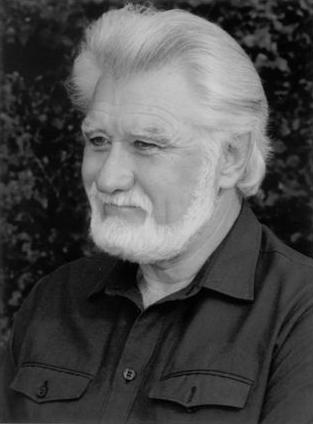
    Above: Sir Donald McIntyre

    Another RHEINGOLD – a recording of a performance I actually attended – is from a Met broadcast of February 15th, 1975. It’s interesting to compare my reactions to the recording with what I had written in my opera diary on the day of the performance, some forty years earlier.

    The 1974-75 season was a rich one for me; I was living (though not enrolled) at Sarah Lawrence College with TJ. We’d had our summer on Cape Cod together and, as we prepared to part company and resume our separate lives, we found we’d become so attached to one another that, only a few days after I’d returned to the tiny town and he’d moved into the college dorm, we threw caution to the wind and I went down and got a temp job at IBM in Westchester County and slept with him in his twin bed (he had drawn, luckily, one of the few ‘private’ room on the entire campus). We went down to Manhattan for the opera and the ballet three or four times a week.

    The Met were doing the RING Cycle that season, with Sixten Ehrling conducting. The virtues (or not) of his readings of the scores were hotly debated by the fans; he was sometimes booed when entering the pit, and sometimes cheered when he took his bows at the end of each opera. I thought at the time his conducting was “maybe lacking in grandeur, but well-paced and considerate of the singers.” Listening to it now, his RHEINGOLD seems perfectly fine, with many very satisfying passages…despite some fluffs from the horns here and there.
    Ehrling-Sixten-05

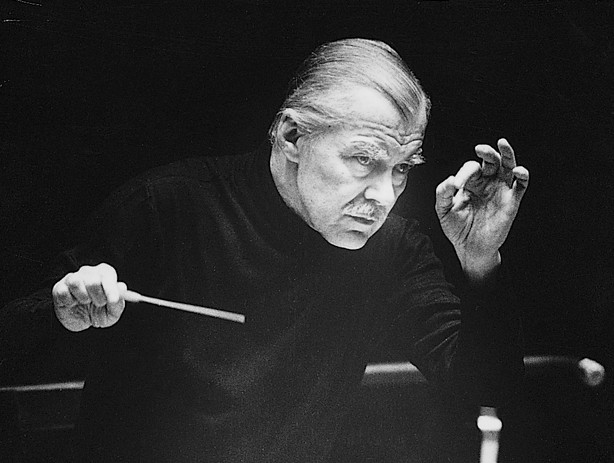
    Above: Sixten Ehrling

    (Note: in 1998, when I started working at Tower Records, I met Maestro Ehrling and his charming wife, a former ballerina. The first day I met him, he was in a cantankerous mood because all the clerks were busy and he was in a rush. I stepped up, greeted him with a little bow, and immediately began to talk to him about his RING Cycle. He became a regular customer and regaled me with all sorts of wonderful stories about the singers he had worked with. He also liked to correct my pronunciation; when I referred to Wotan’s daughter as “Broon-HILL-da” he yelled: “BROON-hil-d…” I ended up really enjoying our little friendship, and missed him when he became too ill to come to the store…though he’d often send his wife to us, with strict instructions as to what to buy for him. He passed away in 2005.)  

    Christine Weidinger, Marcia Baldwin, and – especially – Batyah Godfrey are good Rhinemaidens; they raise the performance level starting with the first appearance of the ‘gold’ motif. Marius Rintzler seems at first to be a bass-oriented Alberich (though later his topmost notes are wonderfully secure) and he becomes actually scary as his plan to steal the treasure takes over his mind. Abetted by Ehrling, the scene of the rape of the gold is dramatically vivid.

    Ehrling scores again in his super-reading of the descent to Nibeheim. Rintzler as Alberich, in his own domain, lords it fabulously over his brother and his slaves. Later, betrayed, Rintzler’s performance rings true in its desperation and his powerful declaiming of the curse.

    The opera’s second scene shows Ehrling at his best, with a nice sense of propulsion and excellent support of his singers. This matinee marked the Met debut of Donald McIntyre as Wotan; he would become known and beloved worldwide a few years later when the Chereau RING was filmed for international telecast at the Bayreuth Festival. On this afternoon in 1975, he makes a superb impression: he begins a bit sleepily (Fricka has just awakened him) but once he claps eyes on the finished Valhalla, his godliness rises to full stature. His singing throughout is generously sustained; by turns imperious and subtle, he makes an ever-commanding dramatic impression. McIntyre’s final scene, hailing the new home of the gods and dismissing the Rhinemaidens who plead from below for the return of the ring, is really exciting.

    Mignon Dunn, always a great favorite of mine, is an immediately distinctive Fricka. The role is rather brief, but Mignon makes the most of every opportunity, and her gift for vocal seduction manifests itself near the end, as she lures Wotan’s thoughts away from the mysterious Erda and turns them instead towards Valhalla (where she hopes to keep him on a tighter tether…but, it doesn’t work.)

    Glade Peterson, as Loge, seems rather declamatory at first. His ample voice serves him well in the monolog, despite some moments of errant pitch. He lacks a bit of the subtlety that can make Loge’s music so entrancing. As the hapless Mime, Ragnar Ulfung is both note-conscious and characterful; he makes a string impression though once or twice he too wanders off-pitch.

    The giants are simply great: John Macurdy’s Fafner is darkly effective – he has less to sing than his brother Fasolt, but he will eventually get the upper hand…violently. Bengt Rundgren as the more tender-hearted of the two is truly authoritative, with page after page of finely inflected basso singing.

    Mary Ellen Pracht, a Met stalwart, does well as Freia, and William Dooley is a splendid Donner…his dramatic, full-voiced cries of “Heda, Hedo!” are in fact a high point if the opera, and are punctuated by a fantastical thunder-blast. Tenor Kolbjørn Høiseth is rather a fuller-toned Froh than we sometimes hear; there’s something rather ‘slow’ about his delivery. (A few days later, he sang a single Loge at The Met, and then a single Siegmund.)

    In the house, the amplifying of Erda’s Warning ruined the moment musically, but this does not affect the broadcast which is picked up directly from the stage mikes. And so Lili Chookasian makes an absolutely stunning effect with her rich, deep tones. Where are such voices as hers today? After “Alles was ist, endet!” and “Meide den Ring!”, one feels chills running up and down the spine. Magnificent!

  • ASO: Max von Schillings’ MONA LISA

    Mona_Lisa

    Friday February 20th, 2015 – An opportunity to hear a forgotten opera, Max von Schillings’ MONA LISA, came about thanks to conductor Leon Botstein and the American Symphony Orchestra. Bringing us operatic rarities is one of Maestro Botstein’s specialties, and tonight MONA LISA proved a wonderful discovery.

    The opera was vastly popular in its day; in the fifteen years following its 1915 premiere, it was performed more than 1,200 times, including in St. Petersburg and at New York’s Metropolitan Opera. The composer’s embrace of Nazism has since cast him as an unsavory individual and, upon his death in 1933, he and his music were essentially forgotten.

    von Schillings was considered a neo-Wagnerian, but in MONA LISA we experience a link with Italian verismo; both in its Renaissance setting and its musical style, I was most often put in mind of Zandonai’s FRANCESCA DA RIMINI. The influence of Strauss and Zemlinsky may also be felt. von Schillings successfully blends a variety of stylistic elements into music that evokes the Age of da Vinci from a Germanic viewpoint. 

    The story is a Mona Lisa fantasy and revolves around her jealous husband, Francesco del Giocondo, and her former lover, Giovanni de Salviati who arrives at the del Giocondo palazzo on an errand from the pope: to purchase a rare pearl. Mona Lisa and Giovanni had once been lovers, and the flame is re-kindled.

    The pearl is kept in a small, air-tight chamber. After arranging the purchase, Giovanni covertly persuades Mona Lisa that they should run away together when he comes to collect the pearl. Her husband notices the mysterious smile on his wife’s face – a smile she has never shone on him in their years of marriage –  and suspects Giovanni as a rival. To avoid being caught, Giovanni hides in the pearl-chamber, which Francesco then locks. Mona Lisa knows that Giovanni will suffocate, but she keeps her cool and the next morning she tells her husband says she will wear the pearl. When Francesco enters the chamber to fetch the jewel for her, she slams the door shut behind him and locks it.

    The opera is set during carnival season which gives rise to some passages of courtly entertainment. And, subtly, the libretto refers to Madama Borgia as being Mona Lisa’s friend. Thus the notion of dispatching an unwanted husband would come naturally to Mona Lisa.

    The score abounds with melody and the opera is impressively orchestrated, bringing in harp, celeste, mandolin and organ…even castanets are heard at one point. The ASO‘s concertmaster Erica Kiesewetter seized several opportunities to bring forth beautiful solo violin passages.

    The opera was well-cast with singers intent on characterizing their music. In the title-role, soprano Petra Maria Schnitzer, despite a less-than-comfortable upper register, blended lyricism with passionate declamation. As Francesco, the charismatic Michael Anthony McGee, delighted in the vocal art of insinuation, his genial vocal veneer covering a soul of brooding jealousy and duplicity. In a performance of intense power and commitment, tenor Paul McNamara scored a great success as he met the Wagnerian demands of the role of Giovanni; his vocalism made a strong impact in the Hall.

    A quintet of courtiers, led by tenor Robert Chafin as Arrigo Oldofredi, provided ongoing commentary in Act I, with bursts of song woven into the tapestry. John Easterlin, Justin Hopkins, Christopher Burchett, and Michael Scarcelle kept their scenes lively with characterful singing and good dramatic interaction. An appealing trio of young women gave a vocal counter-balance to the men’s ensemble: Lucy Fitz Gibbon and Katherine Maysek sang attractively, and Ilana Davidson had a lovely vocal vignette, portraying Venus in a carnival pageant. The Bard Festival Chorale had rather less to do than one might have wished, but they did it well indeed.

    THE CAST

    Foreigner/Francesco del Giocondo: Michael Anthony McGee, bass-baritone
    Woman/Mona Fiordalisa: Petra Maria Schnitzer, soprano
    Lay Brother/Giovanni de Salviati: Paul McNamara, tenor
    Pietro Tumoni: Justin Hopkins, bass-baritone
    Arrigo Oldofredi: Robert Chafin, tenor
    Alessio Beneventi: John Easterlin, tenor
    Sandro da Luzzano: Christopher Burchett, baritone
    Masolino Pedruzzi: Michael Scarcelle, bass-baritone
    Mona Ginevra: Ilana Davidson, soprano
    Dianora: Lucy Fitz Gibbon, soprano
    Piccarda: Katherine Maysek, mezzo-soprano

    Bard Festival Chorale (James Bagwell, director)

    Conductor: Leon Botstein

  • ASO: Max von Schillings’ MONA LISA

    Mona_Lisa

    Friday February 20th, 2015 – An opportunity to hear a forgotten opera, Max von Schillings’ MONA LISA, came about thanks to conductor Leon Botstein and the American Symphony Orchestra. Bringing us operatic rarities is one of Maestro Botstein’s specialties, and tonight MONA LISA proved a wonderful discovery.

    The opera was vastly popular in its day; in the fifteen years following its 1915 premiere, it was performed more than 1,200 times, including in St. Petersburg and at New York’s Metropolitan Opera. The composer’s embrace of Nazism has since cast him as an unsavory individual and, upon his death in 1933, he and his music were essentially forgotten.

    von Schillings was considered a neo-Wagnerian, but in MONA LISA we experience a link with Italian verismo; both in its Renaissance setting and its musical style, I was most often put in mind of Zandonai’s FRANCESCA DA RIMINI. The influence of Strauss and Zemlinsky may also be felt. von Schillings successfully blends a variety of stylistic elements into music that evokes the Age of da Vinci from a Germanic viewpoint. 

    The story is a Mona Lisa fantasy and revolves around her jealous husband, Francesco del Giocondo, and her former lover, Giovanni de Salviati who arrives at the del Giocondo palazzo on an errand from the pope: to purchase a rare pearl. Mona Lisa and Giovanni had once been lovers, and the flame is re-kindled.

    The pearl is kept in a small, air-tight chamber. After arranging the purchase, Giovanni covertly persuades Mona Lisa that they should run away together when he comes to collect the pearl. Her husband notices the mysterious smile on his wife’s face – a smile she has never shone on him in their years of marriage –  and suspects Giovanni as a rival. To avoid being caught, Giovanni hides in the pearl-chamber, which Francesco then locks. Mona Lisa knows that Giovanni will suffocate, but she keeps her cool and the next morning she tells her husband says she will wear the pearl. When Francesco enters the chamber to fetch the jewel for her, she slams the door shut behind him and locks it.

    The opera is set during carnival season which gives rise to some passages of courtly entertainment. And, subtly, the libretto refers to Madama Borgia as being Mona Lisa’s friend. Thus the notion of dispatching an unwanted husband would come naturally to Mona Lisa.

    The score abounds with melody and the opera is impressively orchestrated, bringing in harp, celeste, mandolin and organ…even castanets are heard at one point. The ASO‘s concertmaster Erica Kiesewetter seized several opportunities to bring forth beautiful solo violin passages.

    The opera was well-cast with singers intent on characterizing their music. In the title-role, soprano Petra Maria Schnitzer, despite a less-than-comfortable upper register, blended lyricism with passionate declamation. As Francesco, the charismatic Michael Anthony McGee, delighted in the vocal art of insinuation, his genial vocal veneer covering a soul of brooding jealousy and duplicity. In a performance of intense power and commitment, tenor Paul McNamara scored a great success as he met the Wagnerian demands of the role of Giovanni; his vocalism made a strong impact in the Hall.

    A quintet of courtiers, led by tenor Robert Chafin as Arrigo Oldofredi, provided ongoing commentary in Act I, with bursts of song woven into the tapestry. John Easterlin, Justin Hopkins, Christopher Burchett, and Michael Scarcelle kept their scenes lively with characterful singing and good dramatic interaction. An appealing trio of young women gave a vocal counter-balance to the men’s ensemble: Lucy Fitz Gibbon and Katherine Maysek sang attractively, and Ilana Davidson had a lovely vocal vignette, portraying Venus in a carnival pageant. The Bard Festival Chorale had rather less to do than one might have wished, but they did it well indeed.

    THE CAST

    Foreigner/Francesco del Giocondo: Michael Anthony McGee, bass-baritone
    Woman/Mona Fiordalisa: Petra Maria Schnitzer, soprano
    Lay Brother/Giovanni de Salviati: Paul McNamara, tenor
    Pietro Tumoni: Justin Hopkins, bass-baritone
    Arrigo Oldofredi: Robert Chafin, tenor
    Alessio Beneventi: John Easterlin, tenor
    Sandro da Luzzano: Christopher Burchett, baritone
    Masolino Pedruzzi: Michael Scarcelle, bass-baritone
    Mona Ginevra: Ilana Davidson, soprano
    Dianora: Lucy Fitz Gibbon, soprano
    Piccarda: Katherine Maysek, mezzo-soprano

    Bard Festival Chorale (James Bagwell, director)

    Conductor: Leon Botstein

  • IOLANTA/BLUEBEARD’S CASTLE @ The Met

    7-133410_gallery

    Above: Boris Kudlicka’s set design for The Met’s production of Bartok’s BLUEBEARD’S CASTLE

    Wednesday February 18th, 2015 – This pairing of ‘short’ operas by Tchaikovsky and Bartok at The Met didn’t really work. IOLANTA is an awkward work: too short to stand alone but too long to be successfully coupled with another opera. BLUEBEARD, so intense musically and rather static dramatically, is best paired with something like Schoenberg’s ERWARTUNG or Stravinsky’s OEDIPUS REX. Aside from the musical mismatch, the evening was further spoilt by an endless intermission.

    Tchaikovsky’s IOLANTA is full of nice melodies and is perfectly palatable but at no point do we feel connected to the story or the characters as we do with ONEGIN or PIQUE-DAME. The production is gloomy, with a central ‘box’ (Iolanta’s bedroom) which periodically (and rather annoyingly) rotates. The stage direction was random and incoherent, the minor characters popping in and out, and then a big choral finale populated by men in waiters’ aprons. Nothing made much sense, really.

    Musically, IOLANTA was given a not-very-inspired reading by Pavel Smelkov. It took Anna Netrebko a while to warm up; her singing became more persuasive as the evening wore on. She was attractive to watch and did what she could dramatically with a limited character and a dreary production. Mzia Nioradze was a sturdily-sung Marta. Among the male roles, Matt Boehler stood out vocally as Bertrand. Neither Vladimir Chmelo (Ibn-Hakia) nor Alexei Tanovitski (King Rene) seemed to be Met-caliber singers, and Maxim Aniskin’s Duke Robert was pleasant enough vocally though of smallish scale in the big House.

    IOLANTA was in fact only saved by a superb performance as Vaudemont by Piotr Beczala. From the moment of his first entrance, the tenor’s generous and appealing sound and his commanding stage presence lifted the clouds of tedious mediocrity that had settled over the scene. As his most Gedda-like vocally, Beczala seemed to enflame Ms. Netrebko and their big duet had a fine sense of triumph.

    The House, which was quite full for the Tchaikovsky, thinned out a bit at intermission. Those who stayed for the Bartok were treated to an impressive musical performance thwarted to an extent by busy, awkward staging. Mr. Smelkov seemed more in his element here than in the Tchaikovsky; the orchestra played Bartok’s gorgeous score for all it’s worth, and that’s saying a lot.

    After the eerie, ominous spoken prologue, we enter Bluebeard’s dark domain. Where we should see seven doors, we instead see an automatic garage door closing. Then begins the long conversation between Bluebeard and Judith which will end with her bound in permanent captivity with his other wives.

    The staging did the two singers – Michaela Martens and Mikhail Petrenko – no favors; periodically they appeared – for no apparent reason – in an isolated ‘cupboard’ high up at extreme stage left while the central space was filled with the filmed image of a gaping elevator shaft (see photo at the top of this article). The opening of each each ‘door’ was staged as a series of odd vignettes. Nothing made much sense. The final scene was ugly and failed to project the sense of mystery that should hover over Judith’s fate.

    Both Ms. Martens and Mr. Petrenko were on fine vocal form, and both brought unusual warmth and unexpected lyricism to much of their music. They sang powerfully, the mezzo showing a large and expressive middle register and resonant lower notes, with the basso having both power and tonal beauty at his command.

    At several points along the way, their singing seemed somewhat compromised by the staging; and never more so than in Judith’s famous high-C. At this moment, the director placed the singer far upstage – almost on Amsterdam Avenue – and so although Ms. Martens nailed the note, she was too far back to crest the orchestra. I suspect it was staged this way as a covering device for the vocal unreliability of the production’s earlier Judith, Nadja Michael. 

    But overall, Ms. Martens and Mr. Petrenko each made a distinctive vocal showing; and it was they, the Met orchestra, and Piotr Beczala’s Vaudemont earlier in the performance that gave the evening its lustre and saved it from sinking into the murky depths. Attempts to show some kind of link between the two operas by means of certain stage effects proved unconvincing. The Bartok, especially, deserves so much better.  

    Metropolitan Opera House
    February 18, 2015

    IOLANTA
    P I Tchaikovsky

    Iolanta....................Anna Netrebko
    Vaudémont..................Piotr Beczala
    Robert.....................Maxim Aniskin
    King René..................Alexei Tanovitski
    Bertrand...................Matt Boehler
    Alméric....................Keith Jameson
    Ibn-Hakia..................Vladimir Chmelo
    Marta......................Mzia Nioradze
    Brigitte...................Katherine Whyte
    Laura......................Cassandra Zoé Velasco

    BLUEBEARD'S CASTLE
    Béla Bartók

    Judith.....................Michaela Martens
    Bluebeard..................Mikhail Petrenko

    Conductor..................Pavel Smelkov

  • LA BOHEME @ The Met

    Jean_Francois_BORRAS_2

    Monday Jaunary 19th, 2015 – When my friend Lisette was appearing in WERTHER at The Met in 2014, she spoke well of the tenor Jean-François Borras (above) who was covering the title-role and who ended up singing one performance. Now he is back for three performances as Rodolfo in LA BOHEME and I decided to try it, especially after some soprano-shuffling brought Marina Rebeka into the line-up as Musetta.

    Overall it was a good BOHEME, though somewhat compromised by the conducting of Riccardo Frizza who had fine ideas about tempo and some nice detailing but tended to give too much volume at the climaxes: this might have worked had the principals been Tebaldi and Tucker, but not for the current pair of lovers. Mr. Borras wisely tried to resist pushing his voice; Kristine Opolais, the Mimi, was having other problems so riding the orchestra was the least of her worries. It was Ms. Rebeka who ended up giving the evening’s most stimulating performance, along wth baritone Mariusz Kwiecien, an outstanding Marcello.

    Following her well-received Met RONDINEs, Ms. Opolais became something of the darling of The Met, especially when – last season – she sang back-to-back performances of Butterfly and Mimi. I heard one of the Butterflies which was marred by some sharpness of pitch. A glance at her bio reveals that she has already sung roles like Tosca, Manon Lescaut, Shostakovich’s Lady Macbeth, Jenufa, even Aida, all of which seem to me ill-suited to what is essentially a lyric voice. Tonight much of her singing was tremulous and pallid, and the tendency to go sharp spoiled several potentially attractive passages. One hears that The Met plans new productions of MANON LESCAUT, RUSALKA, and TOSCA for her (there are even whispers of a new THAIS); unless she can somehow repair her over-spent voice, I can’t see how she’ll get thru these demanding roles in the Big House. Anyway, she seems now to have been usurped as the talk-of-the-town soprano by Sonya Yoncheva…one wonders what new productions she has been promised. Meanwhile it’s sad to hear Ms. Opolais – who might be (have been?) a lovely Pamina, Liu, and Micaela – having pushed herself into inappropriate repertory at the cost of vocal stability.

    Mr. Borras gave such an appealing performance that the conductor’s lack of consideration was particularly unfortunate. The tenor’s warm timbre falls most pleasingly on the ear, and he had so many felicitious phrases to give us, and some lovely word-colourings. After the orchestra encroached on the climax of “Che gelida manina” – which the tenor managed nonetheless – I enjoyed the way he handled Rodolfo’s little melodic gems at Cafe Momus, and his persuasive vocalism in Act III was a balm to the ear, especially the lingering bitter-sweetness of his hushed “…stagione dei fiori…”

    Latvian-soprano-Marina-Rebeka

    Ms. Rebeka (above) was the most marvelous Musetta I have encountered since Carol Neblett’s sensational debut at New York City Opera in 1969. Her voice gleaming and generous, Ms. Rebeka seized the stage in no uncertain terms, really making something out of the super-familiar Waltz which she climaxed with a smile-inducing diminuendo on the top-B. She went on to thrill the ear in the ensuing ensemble, and she was excellent in Act III.

    Mr. Kwiecien gave a first-rate performance as Marcello. In this music, he can spend his voice generously without having to be concerned with sustaining a full title-character evening, something he’s never had quite the vocal and theatrical presence for, despite his undoubted appeal. Tonight, it was ample-toned, warm singing from note one, and an extroverted, somewhat ‘mad-artist’ view of the character handsomely presented. Would that he’d had a Mimi to match him in the Act III duet. But he and Borras were both superb in their scene, in which they almost came to fisticuffs before Rodolfo finally admitted the truth about Mimi’s illness and his hopeless state of poverty. Kwiecien then melted into the caring ‘best friend’ that makes Marcello a standout portrait in these scènes de la vie de bohème.

    Alessio Arduini (Schaunard) and David Soar (Colline) gave attractive vocal performances despite the conductor’s trampling on some of their lines; they were charming during a mini-food-fight at Cafe Momus.

    Some of the staging at the Barrière d’Enfer didn’t enhance the narrative: Mimi reveals her eavesdropping presence not by an attack of coughing – such a moving device – but by stumbling down the staircase and collapsing melodramatcally at the door to the inn. Later, too many by-standers surround Marcello and Musetta as they argue, and the ever-so-moving reconciliation of Mimi and Rodolfo is marred by Musetta grabbing a passser-by and kissing him lavishly: this gets a wave of unwanted laughter during one of the opera’s most poignant moments.

    The first intermission was debilitating; these extended breaks always drain the life out of the evening, and the better the performance the more annoying they are. And seat-poaching is so unattractive, especially when it causes a disruption if there’s an unexpected seating break – as tonight between the garrett and Momus.

    But BOHEME still casts its spell, as it has for me ever since I first heard it on a Texaco broadcast 53 years ago to the day, with Lucine Amara and Barry Morell as the lovers. The Beecham recording remains my touchstone document of this heart-rending score. Tonight’s audience, quite substantial by current standards, embraced the classic Met production warmly.

    Metropolitan Opera House
    January 19th, 2015

    LA BOHÈME
    Giacomo Puccini

    Mimì....................Kristine Opolais
    Rodolfo.................Jean-François Borras
    Musetta.................Marina Rebeka
    Marcello................Mariusz Kwiecien
    Schaunard...............Alessio Arduini
    Colline.................David Soar
    Benoit..................John Del Carlo
    Alcindoro...............John Del Carlo
    Parpignol...............Daniel Clark Smith
    Sergeant................Jason Hendrix
    Officer.................Joseph Turi

    Conductor...............Riccardo Frizza