Tag: Opera

  • Score Desk for TRAVIATA

    Rebeka

    Above: soprano Marina Rebeka

    Saturday December 27th, 2014 matinee – The Met’s lame production of La Traviata – yet another attempt to make opera ‘relevant’ – isn’t worth seeing, but I thought this particular cast might be worth hearing, so I bought a score desk for today’s matinee. In the event, Marina Rebeka (Violetta) and Quinn Kelsey (Germont) made for a particularly exciting afternoon: their singing of the great Act II duet – the heart of the opera – was indeed memorable. And both of them were in fact excellent throughout. It’s good to experience this kind of singing in a standard-rep work at The Met, for there’s no guarantee of it in this day and age. 

    On the podium, Marco Armiliato seemed more intent than usual on molding a convincing rendering of the score: sometimes he is too hasty, too loud, too provincial. But today he showed great attention to details of tempo and dynamic, and allowed his singers plenty of leeway to linger on favorite notes and pamper beloved phrases. The orchestra played very well.

    Aside from Maria Zifchak (Annina) and James Courtney (Dr. Grenvil), the singers in the smaller roles were more serviceable than memorable.

    In a role which has been sung in living memory at The Met by such luminaries as Richard Tucker, Alfredo Kraus, Carlo Bergonzi, Nicolai Gedda, Neil Shicoff, Placido Domingo, and Jonas Kaufmann, Stephen Costello – today’s Alfredo – seemed like a case of sending a boy to do a man’s job. A feeling of uncertain pitch pervaded quite a bit of Costello’s singing, and despite a lovely passage here and there, he seemed unsure as the music ventured higher, and his breath-line sometimes didn’t sustain. His offstage serenade in Act I was flat, and he struggled with the cabaletta “O mio rimorso”, sounding tentative and uneasy. It’s sad to hear a young and promising voice in this state; it might be a good idea for him to take a break and address the problems that seem to have cropped up in his singing.

    But Marina Rebeka and Quinn Kelsey swept Verdi’s immortal score to triumph with their outstanding vocalism all afternoon. Ms. Rebeka, who has proven vastly pleasing in Rossini’s Moïse et Pharaon at Carnegie Hall and in Don Giovanni at The Met, moved into the upper echelons of the many Violettas I have encountered in-house – more than 60 of them to date – in my many years of opera-going. Her voice has a pearly sheen; she displays impressive dynamic control, appealing turns of phrase, vibrant top notes, agile coloratura; and it’s a voice with a personality behind it. Her singing of the Act I scena was some of the most aurally stimulating I have heard in recent seasons, with plenty of verve in “Sempre libera” and a nicely placed E-flat to polish it off.

    In Act II, the soprano met her vocal equal in Quinn Kelsey, who had sung an excellent Marcello in Boheme earlier this season. This vocal duo of Met-sized voices brought to this scene the kind of tonal allure, dramatic nuance, passion, and sheer vocal glamour that made the theatre seem to pulsate with emotion. Trading phrases, each seemed to produce one magical effect after another: the sopranos pppp “Di due figli?”, the baritone’s twinge of heartache at “Deh, non mutate in triboli…” and later his deeply felt “…tai detti a un genitor!” led us to Ms. Rebeka’s superbly delicate “Dite alla giovine…”: the absolute turning point of the opera. Throughout this duet, the two singers gave the kind of involved, emotionally engaging singing that seems often to be missing in performances today. I scrawled the word “Wow!” in my Playbill. 

    Q Kelsey

    Mr. Kelsey (above) returned for a big-toned, finely-modulated and tender “Di Provenza”, winning a burst of sincere applause from the crowd (who were rather stingy with aria-applause today but went nuts at the end of the opera). I kind of wish they’d left off the baritone’s cabaletta – which Kelsey sang very well but which seems musically trite to me and de-rails the impetus of the drama.

    In the scene at Flora’s, Mr. Costello sounded flattish and seemed to lack reserves of power for the denunciation scene, but Mr. Kelsey upbraided his son with some grand singing to which Costello’s response was perhaps his best moment of the evening. Ms. Rebeka sailed over the ensemble with gleaming tone, having sung the opera’s most moving passage – “Alfredo, Alfredo…di questo core…” (where she prays that God will spare her beloved from remorse for his callous behavior) – beautifully.

    Moving directly from the country-house to Flora’s party scene to the final scene in succession, without pause, makes for a very long sing for the soprano, but Ms. Rebeka took it all in stride and did some of her most ravishing singing in “Addio del passato” where she worked some piano magic along the way and for once made the second verse seem necessary. Despite Mr. Costello being again off-pitch in “Parigi, o cara” the soprano managed to carry it off, moving on to a pensive “Ma se tornando…” as the reality that Alfredo’s love cannot save her sinks in; she bursts out thrillingly in “Gran dio, morir si giovine”, though the tenor’s response is effortful…and later in an ensemble passage he seems quite taxed by a couple of B-double-flats.

    Her chance for happiness has come too late; but with a big build-up of hope, Violetta speaks of her pain having vanished. Rising to a stunning top-A on “O gioia!”, Ms. Rebeka draws the opera to a heart-rending close.

    Big ovations for the soprano and baritone at their curtain calls; the House was still resounding with cheers as I left. If my upcoming two performances of Aïda come close to the level of today’s Traviata, I’ll be more than pleased. 

    Metropolitan Opera House
    December 27, 2014 matinee

    LA TRAVIATA
    Giuseppe Verdi

    Violetta.....................Marina Rebeka
    Alfredo......................Stephen Costello
    Germont......................Quinn Kelsey
    Flora........................Maya Lahyani
    Gastone......................Eduardo Valdes
    Baron Douphol................Jason Stearns
    Marquis D'Obigny.............Kyle Pfortmiller
    Dr. Grenvil..................James Courtney
    Annina.......................Maria Zifchak
    Giuseppe.....................Juhwan Lee
    Messenger....................Joseph Turi
    Guest........................Athol Farmer
    Gentleman....................Paul Corona

    Conductor....................Marco Armiliato

  • Janis Martin Has Passed Away

    6a00d8341c4e3853ef01bb079c2285970d

    Above: Claudio Abbado and soprano Janis Martin prior to a performance of Schoenberg’s ERWARTUNG at La Scala, 1980

    Following yesterday’s news of the death of Irene Dalis, more sad tidings in the opera world today with the passing of Janis Martin, the American mezzo-turned-soprano, a singer who loomed large in my opera-going career. A Met Auditions winner in 1962 (she sang Dalila’s “Mon coeur s’ouvre a ta voix” at the Winners’ Concert), Martin sang nearly 150 performances at the Metropolitan Opera, commencing in 1962 as Flora Bervoix in TRAVIATA. As a young opera-lover, I heard her many times on the Texaco broadcasts. She eventually progressed to “medium-sized” roles: Siebel, Nicklausse, Lola in CAVALLERIA RUSTICANA. Martin left The Met in 1965 and built a career abroad, moving into soprano territory. She returned to The Met and from 1974 thru 1977; during these seasons, she was my first in-house Kundry, Marie in WOZZECK, and Sieglinde. Another hiatus, and then she was back at Lincoln Center from 1988-1992, singing the Witch in HANSEL & GRETEL, the Dyer’s Wife in FRAU OHNE SCHATTEN, Senta, the Foreign Princess in RUSALKA, and two performances of TOSCA.

    In the past couple of months, I’ve taken a renewed interest in Janis Martin’s singing, after first hearing her as Gutrune in a recording of a tremendous GOTTERDAMMERUNG from Bayreuth 1975. This prompted me to pursue her further, acquiring her Senta in a 1972 Vienna HOLLANDER. Waiting in my pile of “to-listen-to” CDs is her WALKURE Fricka, from Bayreuth 1968. I also searched out my old cassettes of her Met broadcast as the Dyer’s Wife (she sings tirelessly, and with great vocal thrust and considerable beauty of tone) and I purchased her commercial recording of ERWARTUNG with Pierre Boulez conducting, which is very impressive.

    Janis Martin sings two songs from Hindemith’s Drei Gesänge op.9 here. The songs are “Meine Nächte sind heiser zerschrien” (text by Ernst Wilhelm Lotz), and “Weltende” (text by Else Lasker-Schüler).

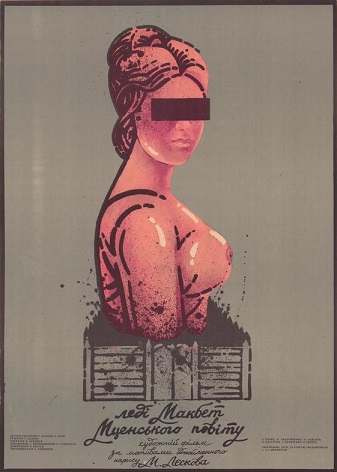
  • LADY MACBETH OF MTSENSK @ The Met

    Lady-macbeth-of-mtsensk-district-movie-poster-1989-1020340180

    Saturday November 29th, 2014 matinee –  My friend Dmitry and I both really like Shostakovich’s LADY MACBETH OF MTSENSK; I remember being bowled over by Catherine Malfitano’s portrayal of Katerina Ismailova back in 2000. The chance to see this season’s revival caused us to weigh the pros and cons: basically we were not sure of what to expect from Eva-Maria Westbroek – who plays Katerina this season – having not been especially thrilled with what we’d seen her do to date: a solid but un-illuminating Sieglinde and a seriously miscast Francesca da Rimini. But in the end Shostakovich won out, and we were rewarded with one of the greatest Met experiences in the past decade.

    As Katerina this afternoon, Ms. Westbroek sounded rather wobbly and edgy at first, but as the performance progressed the voice became steadier (though never truly steady) and her control of it was increasingly impressive. It’s a generous voice, and in addition to some rich spinto outpourings she was able to hone the voice down to a whisper at times. As an actress, she surely threw herself unsparingly into the role, winning a roar from the crowd as she took her curtain calls.

    Brandon Jovanovich was the passionate, randy, and ultimately heartless Sergei. His voice is Met-sized, warm and vigorous. Tall and handsome of physique, he tackled the physical requirements of the production with gusto, including being hoisted aloft whilst humping the cook (Holli Harrison is a spirited yet hapless portrayal). Mr. Jovanovich sings the Verdi REQUIEM with the New York Philharmonic in January: something to look forward to even more eagerly after his big success today.

    As the cuckolded Zinovy, tenor Raymomd Very gave a strong vocal performance; dramatically he seemed to be thoroughly under his father’s thumb and unable to comprehend the needs and desires of his slowly-smouldering wife.

    In LADY MACBETH Shostakovich provides a number of finely-crafted roles which today were seized upon by a wonderful coterie of singing actors/actresses. In particular, we had a veritable parade of bassos who plumbed the vocal depths so beloved in Russian music whilst constructing their characters with juicy, scene-grabbing theatrics. In a pair of towering characterizations, Anatoli Kotscherga as Boris and Vladimir Ognovenko (the Police Sergeant) gave object lessons in the art of operatic performing. Mr. Kortsherga was the oily, lazy, hypocritical father figure to a T; his singing had delightful tinges of liquor and sleaze, his tone ample and with a dark vibrance. Mr. Ognovenko, who for over two decades has given us great portrayals at The Met, was in thunderous voice and threw himself into the staging with great gusto. His was a major triumph today. More basso brilliance from Mikhail Kolelishvili (the ample-voiced, dancing priest), Dmitry Belosselskiy (with his deep lamenting sound in the final ‘hymn’ of the doomed prisoners); and Ricardo Lugo (making his mark as a Prison Guard).

    Back in August 1982 I saw a breathtaking Beni Montresor-designed production of Cavalli’s L’ORMINDO given by Chamber Opera Theatre of New York. The two male leads were tenor Ronald Naldi and (then-) baritone Allan Glassman. Both went on to appear in many Met productions. Mr. Glassman made the transition to tenor and has sung both character and leading roles at The Met, including Herod in SALOME and Bégearss in GHOSTS OF VERSAILLES. Today he was cast as the Shabby Peasant, the man who discovers the dead body of Zinovy, setting up the arrest of Katerina and Sergei. Mr. Glassman’s singing was stentorian and superbly characterized, his stage portrayal at once manic and furtive. His scene was a highlight of the afternoon.

    Oksana Volkova, an outstanding Olga in ONEGIN last season, was rich-toned as Sonyetka – how gross that she and Katerina drowned in a vat of dumped human waste! – and Kelly Cae Hogan’s clear, pointed soprano rang out nicely in her few phrases as a Convict. Tyler Duncan (Millhand) and John McVeigh (Teacher) stood out among the supporting cast.

    Safe_image.php

    The hero of the afternoon was conductor James Conlon (above). With both the Met orchestra and chorus on absolute peak form, Conlon shaped the spectacular Shostakovch score with extraordinary commitment, summoning forth the vast colour-range of the music and evoking stellar playing in the featured instrumental solo passages that crop up quite frequently. Conlon gave his singers ideal support, and it was his musical vision that made the performance the thrilling event that it was. After the final chord, the Maestro remained in the pit, shaking hands with many of the players.  

    The Graham Vick production is one of The Met’s finest, making very inventive use of the stage area (especially the trap doors!) and with countless touches to lure the eye: the disco ball in particular casts brilliant shards of light into the auditorium. Elements of the Orthodox faith are incorporated (the over-the-top grieving widows clambering up a towering pile of garbage to plant crosses whilst flagellating themselves or beating their breasts); then there are the comic-opera police force, the roistering peasants, the shirtess hunks who work for Boris. It’s a vulgar, boozy, ironic and  – in the end – moving production. This afternoon’s large audience seemed mesmerized throughout, and there were very few defections at intermission. The ovation at the end was hearty (though more was really deserved) and the orchestra players remained in the pit to be hailed lustily along with James Conlon during the bows. After the final curtain fell, there were loud sounds of celebration from the stage as the cast, chorus, and crew shared in the mutual admiration of their work at the end of a successful run.

    Note: The performance started about 15 minutes late due to some lighting malfunction in the pit.

    Metropolitan Opera House
    November 29, 2014 (matinee)

    LADY MACBETH OF MTSENSK
    Dmitri Shostakovich

    Katerina Ismailova......Eva-Maria Westbroek
    Sergei..................Brandon Jovanovich
    Zinovy..................Raymond Very
    Boris...................Anatoli Kotscherga
    Aksinya.................Holli Harrison
    Millhand................Tyler Duncan
    Coachman................Dustin Lucas
    Peasant.................Allan Glassman
    Steward.................Rod Nelman
    Porter..................Brandon Cedel
    First Foreman...........Kurt Phinney
    Second Foreman..........Daniel Clark Smith
    Third Foreman...........David Lowe
    Priest..................Mikhail Kolelishvili
    Chief of Police.........Vladimir Ognovenko
    Policeman...............Earle Patriarco
    Teacher.................John McVeigh
    Old Convict.............Dmitry Belosselskiy
    Sentry..................Ricardo Lugo
    Sonyetka................Oksana Volkova
    Convict.................Kelly Cae Hogan
    Prison Officer..........Paul Corona

    Conductor...............James Conlon

  • Hilary Hahn/Jaap van Zweden @ The NY Phil

    E0022344_23154243

    Above: violinist Hilary Hahn

    Wednesday November 26th, 2014 – After experiencing conductor Jaap van Zweden’s performance of the Shostakovich 8th with The New York Philharmonic last week, I was very glad of the chance to attend a second concert under his baton. In addition, the evening provided my first opportunity to hear Hilary Hahn live.

    The evening opened with a genuine rarity: Johan Wagenaar’s Cyrano de Bergerac Overture which was inspired by Edmund Rostand’s play of the same name. The play premiered in 1897, the concert overture dates from 1905. The overture commences with a bold statement, then waxes poetical, romantic or swashbuckling by turns. It’s a melody-rich piece; though sometimes compared to the works of Richard Strauss, there’s no hint in the Wagenaar of the absonance that tends to crop up in some of Strauss’s works.

    Ms. Hahn then appeared for the Korngold violin concerto. Most widely known as a composer of film scores, Erich Wolfgang Korngold arrived in Hollywood in the 1930s, already an established classical composer. Themes from his movie scores found their way into his concert works; for the violin concerto, Korngold drew upon his music for the films Another Dawn, Juárez, Anthony Adverse, and The Prince and the Pauper. Jascha Heifetz premiered the concerto in 1947.

    Ms. Hahn looked fetching in a silvery-steely strapless gown; slender and elegant, she is as lovely to watch as to hear. In the concerto’s opening movement, much of it set in the violin’s high register, Ms. Hahn displayed a truly shimmering quality of timbre. In the second movement, Romance, she caught the quality of sehnsucht that the rapturous themes evoke; and in the quirky, devilish technical demands of the final Allegro assia vivace, she really went to town, dazzling us with her virtuosity.

    Ms. Hahn and Maestro van Zweden were greeted with sustained applause after the concerto; coming out for a second solo bow, the comely violinist took up her bow for a Bach encore. Tonight’s Playbill states that Hilary Hahn has not appeared with the NY Phil for a decade; she should immediately be signed for future appearances: she’s a treasurable player and we should have every possible opportunity to experience her artistry.

    Following the interval, Jaap van Zweden unfurled the Beethoven 7th for us. This symphony is just about perfect: neither too short nor too long, and especially appealing in its rhythmic variety. The symphony’s first movement opens slowly (marked ‘sostenuto‘…’sustained’) and then turns animated. The famiiar allegretto that follows – one of Beethoven’s most widely-appreciated passages – has a stately sway to it. The lively dance of the ensuing Presto propels us irresistibly to the finale with its exhilarating feeling of joyous abandon. The music sailed on with Maestro van Zweden, the  musicians, and Beethoven carrying the audience along on buoyant waves of sound. Richard Wagner called this symphony “the apotheosis of the dance itself…” and the audience responded with vigorous enthusiasm to the almost breathless pace which the conductor imposed in this uninhibited finale.

  • Mozart & Shostakovich @ The NY Phil

    Jaap

    Above: conductor Jaap van Zweden

    Saturday evening November 22nd, 2014 – Venturing out after my off-again-on-again cold caused me to miss some events earlier in the week, I found tonight’s finely-contrasted programme at the New York Philharmonic both soothing (the elegant, melodious Mozart) and grandly stimulating (the epic Shostakovich). It was all played to perfection, under the baton of Jaap van Zweden.

    Mozart wrote his Sinfonia Concertante for violin and viola sometime in 1779; the work is cast in three movements in the traditional fast/slow/fast concerto style, the soloists backed by a neat ensemble of two oboes, two horns, and strings. Although one of the composer’s most popular works, this was my first chance to exprience it live.

    1415-1120b

    Above: Sheryl Staples, Cynthia Phelps

    To play this Mozart masterwork, NY Philharmonic principals Sheryl Staples (violin) and Cynthia Phelps (viola) stepped forward, much to the delight of the orchestra’s many fans. The two women struck up a lovely rapport, trading themes with silken assurance and harmonizing gracefully. Maestro van Zweden propelled the ensemble forces with stately finesse; he did not seem pleased that applause rose up after the first movement (which also happened, more annoyingly, during the Shostakovich). In the quiet radiance of the second movement, the Andante, Ms. Staples intones the opening melody which Ms. Phelps then takes up with an alto resonance. Throughout the work, the two women and the Maestro showed spot-on dynamic control and a mutual sense of phrasing that gave this listener great pleasure.

    The stage setting was then re-configured to accommodate the large forces called upon by Dmitry Shostakovich for his 8th symphony, written in 1943. The composer was ever falling in and out of favor with Communist authorities; his 8th was basically proscribed as having no artistic value. This ban lasted nearly a decade, after which the symphony began to find its way. Along with Shostakovich’s other symphonies, the 8th now stands at the center of the symphonic repertoire.

    Tonight’s large audience at Avery Fisher Hall were clearly enthralled to experience to piece which, in the course of its sprawling hour-long duration, veers from the bleak to the savagely intense to a darkly luminous introspection.

    The half-hour opening movement is a masterful tone poem in itself; embarking on a slow build-up, it leads to fiendish outcries by the horns, massive percussive waves which evaporate only to recoil and strike again, and a marvelous, plaintive cor anglais solo. The second movement, an ironic dance with a piping flute, is followed by a second scherzo-like movement, a militaristc polka with a massive unison theme. The Largo transports us to a shadowed realm; the solo horn emerges, then flute, then clarinet; the winds take on a flutter-vibe, the clarinet returns. In the concluding movement, bassoon, flute, and cellos sing forth in succession; big, brassy waves of calamity strike, then the deep brass voices hum as the bass clarinet brings further riches. Solo violin, cello, and bassoon take turns, returning to a satiny violin passage. The massive forces are now quietened to a shimmer as the cello and double bass gently persuade us that rest, if not peace, may finally come.

    Maestro van Zweden wrought this wondrous music into a sonic mural in which the horrors of war and deprivation, the Devil dancing with Fate, and the human spirit’s will to survive are painted in rich colours. The many solo voices to which Shostakovich gave such expressive opportunities displayed yet again the unfailing grace and musical stature of the Philharmonic artists.

    Jaap van Zweden continues his work with the Philharmonic in the week ahead with a programme that features the Beethoven 7th along with Hilary Hahn playing the Korngold violin concerto. Details here. As we left the Hall tonight with the audience was heaping cheers on the conductor, I of course was thinking how much I’d like to hear him conduct some Wagner.

  • Rudolf Schock

    Rudolf schock

    Rudolf Schock sings “In fernem land” from Wagner’s LOHENGRIN, conducted by Horst Stein.

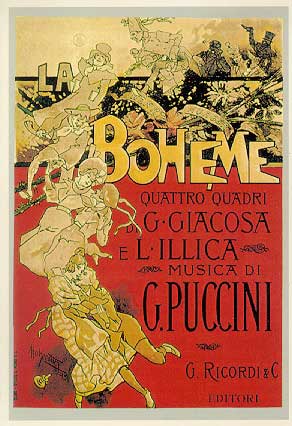
  • Score Desk for LA BOHEME

    Boheme

    Tuesday September 23rd, 2014 – After a touch-and-go Summer of contract negotiations where – at one point – it seemed inevitable that there would be a lock-out at the Metropolitan Opera, the shut-down was miraculously averted and The Met opened last night with a new production of LE NOZZE DI FIGARO. The casting of the three major female roles in the Mozart opera didn’t appeal to me, so I skipped it and started my season on the second night.

    The house seemed fuller than on most evenings last season, perhaps an indication that New York City opera-goers prefer traditional productions. And yes, curtain-rise on Franco Zeffirelli’s Cafe Momus still evokes a big round of applause.

    Admittedly tonight’s cast, on paper, didn’t have much allure. The Met seem to be putting all their eggs in one basket this first week: the singers aligned for MACBETH (Netrebko, Lucic, Calleja, Pape) are about the closest you can come to an all-star cast in this day and age. Friends asked me why I bothered with this BOHEME and as the curtain fell on the Cafe Momus scene I in fact asked myself why I was there. 

    Bryan Hymel in the role of Rodolfo was the main attraction for me tonight; his impressive performances in LES TROYENS and MADAMA BUTTERFLY drew me back to hear him in this, his second Puccini role at The Met. He did not seem at his best tonight though there were many appealing moments in his singing of the role. He was not much helped by conductor Riccardo Frizza who tended to unleash too much orchestral volume at key moments. Hymel’s account of the famous aria “Che gelida manina” was nice, and he sustained the high-C to fine effect despite the conductor’s overdrive of volume. At the end of the big Cafe Momus ensemble, the two sopranos were perched none-too-sweetly on their high-B when Hymel chimed in on the same note and gave the climax the necessary zest.

    Neither of the women were very pleasing to the ear. Ekaterina Scherbachenko (Mimi) lacked a persuasive feeling for the Italian style and didn’t bring a lot of nuance or colour to Mimi’s Act I narrative. When she ventured to the upper register, an uncomfortable feeling set in. Oddly, she did not attempt the written high-C at the end of the love duet; instead she sang an E-natural whilst Mr. Hymel sustained a high-C. This put me in mind of the 1968 Met broadcast of BUTTERFLY where Teresa Stratas ducked the final high-C of Act I, leaving her tenor Barry Morell to finish on his own.

    Myrto Papatanasiu revealed a dime-a-dozen overly-vibrant lyric soprano as Musetta, snatching at her interjectory phrases until she got to the Waltz which was reasonably well-sung despite rather shallow tone. I don’t suppose we’ll ever again experience a Musetta the likes of Carol Neblett or Johanna Meier: big voices and big personalities. 

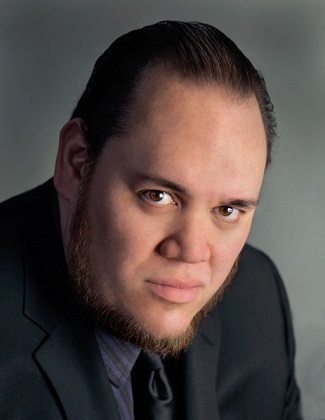
    NextWaveKelseylg812

    The evening’s most impressive singing came from baritone Quinn Kelsey (above, in a Ken Howard headshot) as Marcello. This is a Met-sized voice for sure and I got a vast amount of pleasure listening to him nail Marcello’s music, phrase after phrase. I would have liked to have heard him in the third and fourth acts where the character has so much great music to sing, but the overall lack of magic in the evening sent me home after Momus. I hope The Met will give Quinn Kelsey more opportunities.

    Of the remaining members of the cast, no one managed to make a special impression. The children’s chorus deserve a note of praise.

    There’s nothing wrong with taking curtain calls after each act provided the audience is displaying sufficient enthusiasm to summon the singers out before the gold curtain. After both of the first two acts tonight, the applause had completely stopped but the bow lights came on and the singers came out, forcing people to clap for them out of a sense of obligation. I understand that the bows are ‘scripted’ into the performance but someone needs to determine whether there is any applause happening before sending the singers out.

    Metropolitan Opera House
    September 23, 2014

    LA BOHÈME
    Giacomo Puccini

    Mimì....................Ekaterina Scherbachenko
    Rodolfo.................Bryan Hymel
    Musetta.................Myrtò Papatananasiu [Debut]
    Marcello................Quinn Kelsey
    Schaunard...............Alexey Lavrov
    Colline.................David Soar
    Benoit..................Donald Maxwell
    Alcindoro...............Donald Maxwell
    Parpignol...............Daniel Clark Smith
    Sergeant................Jason Hendrix
    Officer.................Joseph Turi

    Conductor...............Riccardo Frizza

  • At Home With Wagner VI

    Richard-wagner-1351529175-view-0

    Wagnerian afternoons in the Summer: from the Bayreuth Festival 1961 comes the prologue and first act of GOTTERDAMMERUNG featuring Birgit Nilsson at her most marvelous. Conducted by Rudolf Kempe, the performance generates tremendous excitement, most notably in the thrilling build-up to the Dawn Duet. Nilsson unleashes her patented lightning-bolt top notes, and hearing her on this form reminds me of my first encounters with her live at The Met where in 1966 she sang a series of Turandots that were simply electrifying.

    Elisabeth Schärtel

    The performance is very fine all around, opening with a thoroughly absorbing Norn Scene which begins with the richly expressive singing of contralto Elisabeth Schärtel (above) followed soon after by the equally impressive Grace Hoffman. It’s rather surprising to find Regine Crespin singing the Third Norn. She had made a huge success at Bayreuth in 1958 as Kundry, and had repeated that role at the next two festivals. In 1961 she was invited back to the Green Hill for Sieglinde, and thus she was able to take on the Norn as part of her summer engagement. She sings beautifully, with her distinctive timbre, though there is a trace of tension in her highest notes.

    317372_340994792689362_1142580761_n

    Above: Birgit Nilsson; we used to refer to her as “The Great White Goddess” or simply “The Big B”. The thrilling accuracy and power of her singing here, as well as her ability to create a character thru vocal means, is breath-taking.

    Hans Hopf is a fine match for Nilsson in the Dawn Duet; he is less persuasive later on when his singing seems a bit casual. Wilma Schmidt (Gutrune) and the always-excellent Thomas Stewart (Gunther) make vocally strong Gibichungs, and the great Wagnerian basso Gottlob Frick is a dark-toned Hagen with vivid sense of duplicity and menace. Rudolf Kempe again shows why he must be rated very high among the all-time great Wagner conductors: his sense of grandeur and ideal pacing set him in the highest echelon.

    ~~~~~~~~~~~~~~~~~~~~~~~~~~~~~~~~~~~~~~~~~~~~~~~~~~~~~~~~~~~~~~~~~~~~~~~~~~~~~~~~~~~~~~~~~~~ 

    Gerhard Stolze

    Gerhard Stolze (above) is the Loge in a RHEINGOLD from the Bayreuth Festival 1964; I have a special love for Mr. Stolze in this role as he was my first Loge – at The Met on February 22, 1968, a broadcast performance conducted by Herbert von Karajan and my first experience of a RING opera live. Here at Bayreuth, as later at The Met, Stolze brings a wonderfully debauched, almost greasy vocal quality to the vain, spoiled demi-god. The voice is large and effortlessly penetrating, but he can also be tremendously subtle: after screaming “Durch raub!’ (‘By theft!”) when Wotan asks Loge how the Rhinegold might be acquired, Stoltze goes all lyrical as he says: “What a thief stole may be stolen from the thief…” this is but one of Stotze’s countless brilliant passages in the course of his portrayal. At Nibelheim and later, as Loge taunts the captured Alberich, Stolze is simply superb.

    Two other singers who appeared in my Met/Karajan RHEINGOLD are also heard in this Bayreuth performance: Theo Adam has a big, burly voice and sings imposingly if not always with a lot of tonal allure. His Wotan builds steadily throughout the opera to an imposing rendering of Wotan’s greeting to Valhalla and the entire final scene. Zoltán Kelemen is a splendid Alberich; his handsome baritone sound sometimes shines thru in what is essentially a dramatic character role. Power and calculation mark his traversal of the first scene; later, in Nibelheim, Kelemen is wonderfully subtle. Having been tricked by Loge and kidnapped, he’s truly fabulous as he summons his slaves to bring the treasure up as ransom for his freedom. Later, having lost everything, his crushing sense of vulnerability gives way to a violent hurling of the curse at Wotan.

    Z Keleman

    Above: Zoltán Kelemen as Alberich

    Grace Hoffman is a capital Fricka, bringing verbal urgency and vocal attractiveness to her every line, most expressive as she draws Wotan back to her after Erda’s intervention. Jutta Meyfarth, a very interesting Sieglinde on the 1963 Bayreuth WALKURE conducted by Rudolf Kempe, is too stentorian and overpowering as Freia, a role which – for all its desperation – needs lyricism to really convince. Hans Hopf, ever a stalwart heldentenor, probably should not have tried Froh at this point in his career: he sounds too mature. Marcel Cordes is a muscular-sounding Donner; there is an enormous thunderclap to punctuate Donner’s “Heda! Hedo!”

    The estimable contralto Marga Höffgen brings a real sense of mystery to Erda’s warning. Gottlob Frick is a vocally impressive Fasolt, his scene of despair at giving up Freia is genuinely awesome. Peter Roth-Ehrang (Fafner) and Erich Klaus (Mime) are names quite unknown to me; the basso is a bit blustery but has the right feeling of loutishness. Herr Klaus is a first-class Mime, with his doleful singing in the Nibelheim scene giving way to a fine mix of dreamy dementia and raw power as he tells Loga and Wotan of his dwarvish despair. Barbara Holt as Woglinde plucks some high notes out of the air; Elisabeth Schwarzenberg and the excellent Sieglinde Wagner as her sister Rhinemaidens.
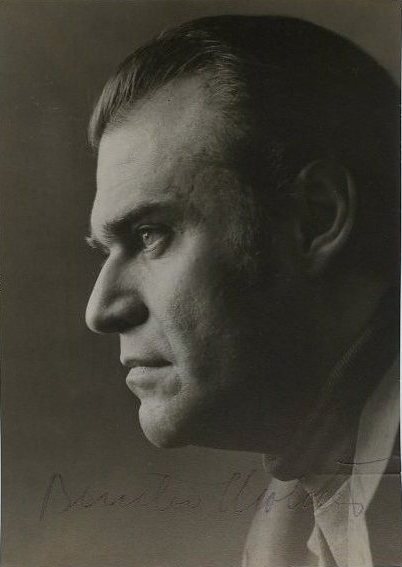
    Klobucar

    Berislav Klobucar (above), who conducted 21 Wagner performances at The Met in 1968 (including taking over WALKURE from Herbert von Karajan when the latter withdrew from his half-finished RING Cycle for The Met) opens this RHEINGOLD with a turbulent prelude. Klobucar has an excellent feel for the span of the opera, for the intimacy of the conversational scenes, and for the sheer splendour of the opera’s finale.

    ~~~~~~~~~~~~~~~~~~~~~~~~~~~~~~~~~~~~~~~~~~~~~~~~~~~~~~~~~~~~~~~~~~~~~~~~~~~~~~~~~~~~~~~~~~~
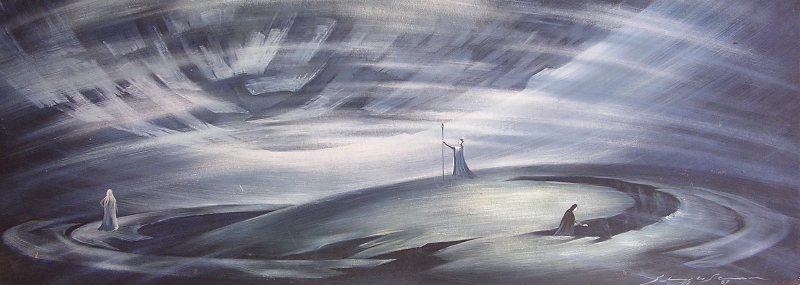
    1967-rheingold-salzburg-easter-festival-karajan-1967

    Above: a Günther Schneider-Siemssen design for the Herbert von Karajan Salzburg Festival production of the RING Cycle, 1967.

    Thinking of my Karajan/RHEINGOLD introduction to the RING at The Met in 1968 caused me to next take up the conductor-director’s complete WALKURE and GOTTERDAMMERUNG from the 1967 Salzburg Festival where his production of the Cycle originated. Of course, he only ended up conducting RHEINGOLD and WALKURE at The Met though the two remaining operas were staged there in his absence, with the productions credited to him. The settings remained in use at The Met thru 1981, and then the Otto Schenk production commenced in 1986.

    I must admit to never having listened to Karajan’s commercial RING Cycle (maybe a few random scenes but never any of the complete operas); it’s simply one of those inexplicable sins of omission which all opera lovers must eventually confess to. Maybe someday I will get around to it, though I’m so taken up with all these live RING recordings that Opera Depot keep tempting us with.

    At any rate, I must say I don’t much care for Karajan’s first act of WALKURE, at least not as it was performed at Salzburg in 1967. It feels to me terribly slow and overly polite. Gundula Janowitz and Jon Vickers seem much of the time to be vocally walking on eggshells: they whisper and croon gently to one another and the lifeblood seems to drain out of the music. Martti Talvela is his usual excellent self as Hunding; once he has gone to bed, Vickers commences a properly reflective sword monologue (the first orchestral interjection of the Sword motif ends on a cracked note). The tenor is stunning in his prolonged cries of “Wälse! Wälse!”, and then comes Janowitz’s ” Der Männer Sippe” which is verbally alert but there’s a slight tension in her upper notes and a feeling of being a bit over-parted. They sing very successfully thru the familiar “Winterstürme” and “Du bust der Lenz” all filled with attractive vocalism but Karajan maintains a rather stately pacing thru to end end of the act: there’s no impetus, no sense of being overwhelmed by sexual desire. Actually I found it all somewhat boring, and my mind tended to wander.

    A complete volte face for Act II, one of the finest renderings of this long and powerful act that I have ever encountered. Karajan launches the prelude, weaving together the various motifs, and Thomas Stewart unfurls Wotan’s opening lines commandingly. Regine Crespin’s sings a spirited “Ho-Jo-To-Ho!” and then Fricka arrives on the scene…
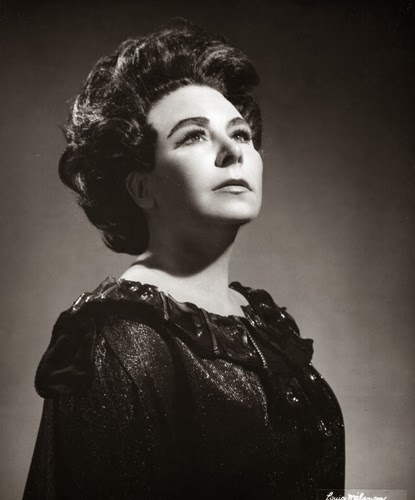
    16 Ludwig Fricka Walkure Melancon 1967

    …in the marvelous person of Christa Ludwig (Louis Melançon photo, above). When people ask me, “Who was the greatest singer you ever heard?” I invariably reply “Christa Ludwig” even though on a given day the memory of some other voice might seem to rival her. But in everything I have heard from her, both live and on recordings, Ludwig seems to have the ideal combination of a highly personal timbre, natural and effortless technical command, a remarkably even range, phenomenal abilities as a word-colorist, and overwhelming warmth and beauty of sound. Her Fricka here is magnificent in every way, and so supremely Christa

    6a00d8341c4e3853ef01901e20b373970b-800wi

    The scene between Fricka and Wotan is so impressive, yet incredibly Thomas Stewart (above, with Karajan) goes on to surpass himself with one of the most thrilling and spine-tingling renderings of Wotan’s monolog that I have ever experienced. Stewart vocally displays every nuance of the god’s emotional state as he confides in his daughter, first in his long ‘historical’ narrative which grumbles and whispers its way into our consciousness. Crespin is an ideal listener, her beauteously sung queries lead her father to divulge more and more. Soon Stewart is pouring out both his vanity and despair; the temperature is at the boiling point when he reaches “Das ende! Das ende!”, overcome by tears of anguish. Instructing Brunnhilde to honor Fricka’s cause and defend Hunding in the impending fight, Stewart crushes Crespin’s protests with a furiously yelled “Siegmund falle!” (“Siegmund must die! That is the Valkyrie’s task!”) and he storms away. I had to stop at this point; Stewart’s performance had both moved and shaken me and I wanted to pause and reflect.

    As beautifully as Crespin and Vickers sing the ‘Todesverkundigung’ (Annunciation of Death), the scene does not quite generate the mysterious atmosphere that I want to experience here. Thomas Stewart’s snarling “Geh!” as he send Hunding to his fate is a fabulous exclamation mark to end the act.

    Act III opens and there is some very erractic singing from the Valkyries in terms of pitch and verbal clarity. Crespin’s top betrays a sense of effort in her scene with Sieglinde, and Janowitz’s voice doesn’t really bloom in Sieglinde’s ecstatic cry ” O hehrstes Wunder!”  Thomas Stewart hurls bold vocal thunderbolts about as he lets his anger pour out on Brunnhilde and her sisters.

    And then at last the stage is cleared for the great father-daughter final scene. Crespin is at her very best here, singing mid-range for the most part and with some really exquisite, expressive piano passages. Only near the end, when the music takes her higher, does the tendency to flatness on the upper notes seem  to intrude. Stewart is impressive throughout. Karajan takes the scene a bit on the slow side, but it works quite well.

    It should be noted that the voice of the prompter sometimes is heard on this recording, especially in Act I.

    ~~~~~~~~~~~~~~~~~~~~~~~~~~~~~~~~~~~~~~~~~~~~~~~~~~~~~~~~~~~~~~~~~~~~~~~~~~~~~~~~~~~~~~~~~~~
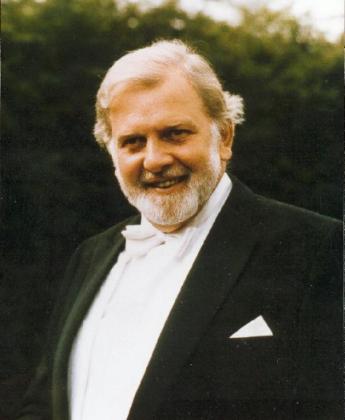
    Ridderbusch

    Above: Karl Ridderbusch, who sang Hagen in the 1967 Salzburg Festival RING Cycle.

    Herbert von Karajan’s GOTERDAMMERUNG, from the Salzburg Festival 1970, starts off with a very fine Norn Scene. Lili Chookasian – after a few warm-up measures – and Caterina Ligendza are authetically Wagnerian as the first and third sisters, with the resplendent Christa Ludwig luxuriously cast as the 2nd Norn. Her superb vocalism is marked by a great lieder-singer’s colourings of the text.

    Helga Dernesch and Jess Thomas give a sturdily-sung rendition of the Dawn duet. Though Dernesch’s highest notes seem somewhat tense, she does sustain a solid high-C at the duet’s conclusion. Karl Ridderbusch is a potent Hagen, able to bring out a softer grain to the tone when he wants to. His sound is somewhat baritonal, but he still hits the lowest notes with authority. Thomas Stewart is an outstanding Gunther, a role that often loses face as the opera progresses. Gundula Janowitz  is not my idea of a good Gutune: she sound mature and a bit tired.

    Christa Ludwig’s Waltraute is a performance of the highest calibre; her superb musicality wedded to her acute attentiveness to the words make this scene the highlight of the performance. Dernesch is good here also, but both she and Jess Thomas seem to flag a bit in vocal energy in the rape scene.

    Act II opens with another of my favorite RING scenes: Alberich (Zoltán Kelemen) appears to his son Hagen (Karl Ridderbusch). Kelemen, so musical in the 1964 Klobucar RHEINGOLD reviewed above, here resorts to sprechstimme and all manner of vocal ‘effects’: I wonder if this is what Karajan wanted, or is this simply what the baritone came up with. Ridderbush sings much of Hagen’s music here in an appropriately dreamy half-voice. A bit later he turns on the power with his “Hoi ho!”, summoning the vassals; the men’s chorus lung it lustily in response. Despite the continued feeling of effort behind Helga Dernesch’s high notes, she hits them and holds them fair and square. Jess Thomas sounds a bit tired as Siegfried; though he manages everything without any slip-ups, the voice just seems rather weary. Gundula Janowitz’s Gutrune is much better in Act II than earlier in Act I, and Thomas Stewart’s Gunther transforms what is sometimes viewed as a ‘secondary’ role into a major vocal force in this performance.

    I had high hopes for the opening scene of Act III: the Rhinemaidens – Liselotte Rebmann, Edda Moser, and Anna Reynolds are all fine singers. Yet they don’t quite achieve a pleasing blend. Jess Thomas sounds brassy and one keeps thinking he might have a vocal collapse, but he stays the course. It is left to Dernesch to be the performance’s saving grace and she nearly accomplishes it: the sense of vocal strain is successfully masked for the most part and she hits and sustains the high notes successfully though it’s clear she is happier singing lower down; she did in fact become a highly successful dramatic mezzo in time. Dernesch gives the Immolation Scene a tragic dimension, and then Karajan sweeps thru the long orchestral postlude with a sense of epic grandeur.

    Overall, Karajan’s GOTTERDAMMERUNG is impressive to hear. Were Helga Dernesch and Jess Thomas thoroughly at ease vocally the overall performance would have been quite spectacular. As it is, it’s Christa Ludwig, Thomas Stewart, and Karl Ridderbusch who make this a memorable Twilight of the Gods.
  • My First RING Cycle: WALKURE

    Jones-Gwyneth-04

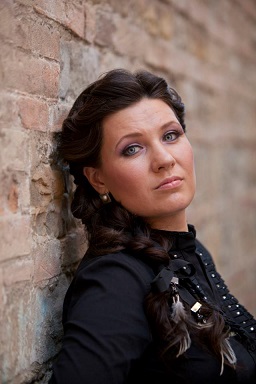
    Above: Dame Gwyneth Jones

    A week-long RING Cycle invariably involves RHEINGOLD on Monday night followed immediately by WALKURE on Tuesday. This places heavy demands on the gentleman singing Wotan; he has a lot of singing to do on Monday and even more (much more) on Tuesday. Fricka also appears in both operas, but her role in RHEINGOLD – though major – is not especially demanding, and in WALKURE she has only one scene: quite a strenuous one vocally, but once it’s over she is finished for the night. Fortunately the Wotan in my first Cycle, Hans Sotin, managed the back-to-back operas superbly. And Helga Dernesch’s Fricka was a thrilling interpretation.

    WALKURE brings four new characters to the drama: Brunnhilde, Sieglinde, Siegmund and Hunding. With Dame Gwyneth Jones’s first appearance as Brunnhilde in Act II, this RING Cycle – already off to such an impressive start – soared into the stratosphere.

    Here’s my diary entry from the second night of the Cycle:

    WALKURE – excellent despite some audience distractions. Levine and the orchestra do wonders with this score. The cast was really fabulous, though I had mixed feelings about the Siegmund of Robert Schunk. He looked well, sang and phrased in a musicianly manner; he had the right feel for the role and – for the most part – more than enough volume. He tended, however, to sing just a shade flat much of the time. Too bad…he tried hard and he did have his moments.

    Everyone else was on peak form. Matti Salminen gave a tremendous Hunding, rolling out the tone with tremendous force and simply smacking of evil…really menacing sound and thoroughly convincing as an actor: his long, deadly stare at Siegmund after man-handling his wife was such a provocation (Siegmund, weaponless at this point, is in no posotion to respond). Salminen continues my great line of Hundings – Rundgren, Haugland, Moll, Macurdy – and he’s such a fascinating artist.

    Gessendorf_Portrait

    We have a wonderful new Wagnerian soprano in Mechthild Gessendorf (above) who, if this performance is any indication of her abilities, is a fine addition to the operatic gallery. Her bright, almost girlish tone has a clear middle range with top notes that can be clean-attacked or slightly scooped-up to: they are exciting!  Oddly, she reminds me a bit of Mara Zampieri though I can’t put my finger on why! She gave a glorious Sieglinde, full of feminine warmth and real emotional commitment; I look forward to her Kaiserin and Senta.

    Helga Dernesch’s Fricka proved spellbinding, sung with great authority and vocal power; the slight peril in the upper range was overcome by force and she simply did a magnificent job. The drama of her plea was put across with an awesome balance of of security and desperation: really engrossing. And she looked gorgeous…a splendid assumption of the role.

    Hans Sotin’s Wotan was given with great vocal command and heartrending dramatic sureness. He was in excellent voice, giving a truly impressive monolog and ending Act II with a furious “Geh!” to Hunding who crashed to the ground at the god’s irate command. Singing gloriously, Sotin came thru with much moving and beautfully modulated vocalism in the third act, and he triumphantly sustained the top notes of his final phrase to majestc effect…bravississimo!!!!

    It was a great pleasure to see Dame Gwyneth Jones on the Met stage again: still unsure of how she would sound, she nevertheless is an arresting physical presence. But as soon as she began to sing, it was clear we were in for a thrilling Brunnhilde: her great personal and vocal radiance set its stamp on the entire evening. She is a very different Brunnhilde from Behrens, more feminine and less complicated. She offered a spectacular battle cry, sustaining the clear-attack high-C and thereafter she simply went at it vocally all evening, with powerful and moving singing in the ‘Todesverkundigung where she well portrayed Brunnhilde’s increasing embarrassment at the deceitful way Wotan has treated Siegmund. Jones’s third act was wonderful in every regard, with a movingly intoned “War es so schmählich” and increasing desperation as she begs Wotan to spare her degradation. Her final plea – to surround her slumbering place with magic fire – literally tore at the heart. The sheer size of Dame Gwyneth’s voice is such a treat at The Met, and her occassional wooziness and a couple of oddly pronounced words (“Siegfried” in her Act III address to Sieglinde somehow became “Augfried”) were just trifles compared to the great flood of warm, emotional power she generates. Simply great!! And she looks marvelous…great legs! So, a really remarkable evening with huge ovations for all and a particular hurricane of applause for Dame Gwyneth. A grand night!!!”

    Metropolitan Opera House
    May 2, 1989

    DIE WALKÜRE
    Wagner

    Brünnhilde..............Gwyneth Jones
    Siegmund................Robert Schunk
    Sieglinde...............Mechthild Gessendorf
    Wotan...................Hans Sotin
    Fricka..................Helga Dernesch
    Hunding.................Matti Salminen
    Gerhilde................Pyramid Sellers
    Grimgerde...............Wendy Hillhouse
    Helmwige................Marita Napier
    Ortlinde................Adriana La Ganke
    Rossweisse..............Judith Christin
    Schwertleite............Sondra Kelly
    Siegrune................Diane Kesling
    Waltraute...............Joyce Castle

    Conductor...............James Levine

  • Nelida

    Index

    Above: detail from the tomb of Marie D’Agoult at Pere-Lachaise Cemetery in Paris

    Nelida in an anagram for Daniel, and Daniel Stern was the nom de plume of Marie D’Agoult, the mistress of Franz Liszt and the mother of Cosima Wagner. Nelida is also the title of D’Agoult’s 1846 novel, drawing upon her tempestuous relationship with Liszt; ironically, the composer (they were long since estranged) seems to have sent her a congratulatory letter when the novel was published.

    Marie D’Agoult was the only one among Liszt’s lovers to bear him children: Blandine, Cosima, and  Daniel. Liszt met Marie in 1832 or 1833 and they became lovers in 1834, though d’Agoult was not divorced from her husband Comte D’Agoult until 1835. The affair between Marie and Franz was a stormy one; she deplored the composer/pianist’s long absences on his performance tours. These absences – and Liszt’s philandering – led to a final break in their relationship in 1844. Marie then took up the name Daniel Stern; she became a journalist. She died in 1876.  Though a less prolific and skilled writer than George Sand, D’Agoult is sometimes compared with her better-known compatriot; the two women shared the distinction of being the respective lovers of a pair of musical geniuses.

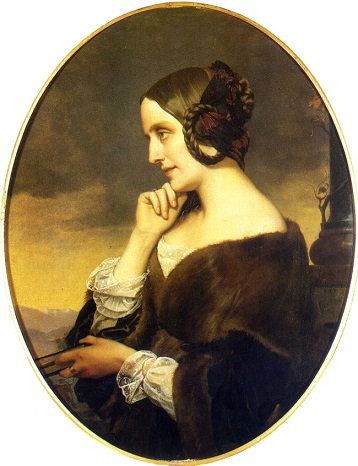
    Marie_d'Agoult
    Above: portrait of Marie D’Agoult

    Out of curiousity, I took up a copy of Nelida (in an English translation, to be sure) and enjoyed the story, and D’Agoult’s romantic style. In the novel, Liszt is transformed into the painter Guermann Régnier whilst Marie appears in the guise of Nelida.

    First published in 1846 (under the pen name Daniel Stern), Nelida tells the story of a beautiful young French heiress who was plucked from a convent school – where she had expressed a fervent desire to become a nun – to make a socially advantageous marriage to one Timoleon de Kervaens. Almost at once, Nelida’s husband proves himself unworthy of her. And then, re-connecting with a childhood friend who is now a rising painter – Guermann Régnier – Nelida surrenders everything (her marriage, reputation, and an affluent lifestyle) to dedicate herself to Guermann.

    Marie d’Agoult, in fictionalizing her ten-year affair with Liszt, may have written the novel as an act of revenge against the pianist-composer whose frequent absence while touring combined with his numerous amorous adventures slowly destroyed their love, despite the successive births of their three children. In the novel, Guermann/Liszt falls into decline and illness without Nelida/Marie; she visits him on his death-bed where he begs her forgiveness for having treated her so indifferently: “From the day I left you, I left – and never found again – my virtue, my rest, my happiness, my genius,” he tells her.

    The reality for D’Agoult/Liszt was very different, for after leaving Marie, Liszt went on to his greatest achievements. But the fictional resolution of the love affair must have brought needed closure for D’Agoult and she went on to a distinguised career as a woman of letters whose works included a major history of the 1848 revolution in Paris.

    In Nelida, Marie D’Agoult reveals the personal story behind her public life as Liszt’s lover and the mother of his children. Summoning forth the social mores and artistic and religious atmosphere of the era, the novel reveals a woman seeking to be at once faithful to her genius/beloved while at the same time vindicating herself and claiming her own destiny.