Tag: Opera

  • Score Desk for TOSCA @ The Met

    Tosca_(1899)

    Friday December 20, 2013 – Having greatly enjoyed the Portuguese soprano Elisabete Matos in her two previous roles at The Met (Minnie in FANCIULLA DEL WEST and Abigaille in NABUCCO) I was very much looking forward to her single scheduled Met performance of the current season. But since the Bondy production of TOSCA is such an eyesore, I opted for a score desk tonight as Matos sang her second Puccini role at The Met. {Rumor has it the Bondy production will soon be seen for the last time here in New York City; however, we cannot be sure of getting something better in their place.}

    A great many empty seats in the House was not a good sign; and the audience tended to laugh freely at the MetTitles making me think there were a lot of newbies present. But Marco Armiliato, on the podium for an opera that suits him to a T, gave an extroverted, blood-and-thunder reading of the score. The first act especially was genuinely exciting in every regard.

    Two bassos with enormous voices set the tone for the performance: Richard Bernstein was a capital Angelotti and John Del Carlo a stentorian Sacristan. Marcello Giordani, that most unpredictable of tenors, served notice in “Recondita armonia” that he was really in voice tonight. The aria was generously sung, with clear and expressive phrasing, a thrillingly sustained foray to the climactic B-flat, and a fine diminuendo to a very long piano on the last note.

    Ms. Matos and her tenor then gave a vididly declaimed version of the lovers’ banter and they were really exciting in the sustained passages of the ensuing love duet. George Gagnidze’s Scarpia added more decibels to the evening, and his dramatic inflections were spot on. Ms. Matos lost points with me only on the phrase “Tu non l’avrai stasera…giuro!” where she shrilled on the final word: I like to hear this done in chest voice (or sung ‘from the crotch’ as we used to say of Tebaldi). Mr. Gagnidze and the Met chorus brought the act to a thunderous conclusion with the Te Deum.

    Then, as so often happens at The Met these days, a long intermission seemed to drain the energy from the evening; and I have never heard such banging, thudding and shouting from behind the curtain as the stagehands struck the set.

    Act II found the principals and conductor doing their utmost to restore the dramatic tension siphoned away by the long interval. Mr. Giordani produced an amazingly sustained “Vittoria!” and Mr. Gagnidze was thoroughly impressive in every regard. Ms. Matos struck off steely but not always stable high notes and made a strong dramatic impact with Tosca’s iconic lines: “Assassino! Voglio vederlo!”, “Quanto?…il prezzo?”, “Ah…piuttosto giu m’avento!” and “E morto…or gli perdono!”: these were all delivered with the intensity of a seasoned verismo diva. Her rendering of the great aria “Vissi d’arte” was persuasive in its vulnerability and the prolonged top B-flat at the climax was exciting though she could not sustain the following descending phrase of A-flat and G…and the conductor did nothing to aid her.

    Faced with another extended intermission, I left after the Act II curtain. I would like to have heard Giordani’s “E lucevan…” and the big duet and the opera’s flaming finale, but the thought of another lull diminished my enthusiasm.

    Metropolitan Opera House
    December 20, 2013

    TOSCA
    Giacomo Puccini

    Tosca...................Elisabete Matos
    Cavaradossi.............Marcello Giordani
    Scarpia.................George Gagnidze
    Sacristan...............John Del Carlo
    Spoletta................Eduardo Valdes
    Angelotti...............Richard Bernstein
    Sciarrone...............Jeffrey Wells
    Shepherd................Thatcher Pitkoff
    Jailer..................David Crawford

    Conductor...............Marco Armiliato

  • At Home With Wagner III

    Wagner

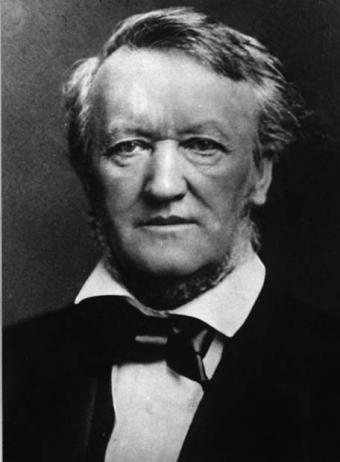
    Above: Richard Wagner

    Having taken a break from listening to Wagner at home while I was wrapped up with attending the RING operas at The Met, I picked up where I’d left off in playing CDs that my friend Dmitry has graciously made for me. These live recordings all come from a valuable source, Opera Depot, and this latest round of Wagnerian adventures kicks off with a 1966 performance of FLIEGENDE HOLLANDER from Covent Garden.

    HOLLANDER was not the first Wagner opera I ever experienced in the theatre, but my first encounter with it (in 1968) was a memorable event with Leonie Rysanek (singing despite a high fever) magnificent as Senta, and Walter Cassel, James King and Giorgio Tozzi as the male principals.

    Jones

    Above: Dame Gwyneth Jones

    For this 1966 performance from London, Sir Georg Solti is on the podium, stirring up a vivid performance that comes across excitingly in this recording which is in pretty good broadcast sound, with the voices prominent.

    David Ward is a bass-oriented Dutchman and his singing is moving in its passion and despair, fierce in anger and with a touching human quality in the more reflective passages. He and his Senta, Dame Gwyneth Jones, manage the strenuous demands of their long duet very well: both the tessitura and the emotional weight of this duet test the greatest of singers and if there are slight signs of effort here and there in this recording, the overall effect is powerful.

    Dame Gwyneth, just two years after her break-through performance at The Garden in TROVATORE casts out the powerful top notes before her final sacrificial leap thrillingly; earlier, in the Ballad she is engrossing in her use of piano singing and creates a haunting picture of the obsessed girl. The soprano’s well-known tendency to approach notes with a rather woozy attack before stabilizing the tone is sometimes in evidence; I find it endearing.

    The great basso Gottlob Frick is a wonderful Daland, and tenor Vilem Pribyl holds up well in the demanding role of Erik; his third act aria – which recalls Bellini in its melodic flow – is passionately sung. Elizabeth Bainbridge and Kenneth MacDonald give sturdy performances as Mary and the Steersman.

    ~~~~~~~~~~~~~~~~~~~~~~~~~~~~~~~~~~~~~~~~~~~~~~~~~~~~~~~~~~~~~~~~~~~~~~~~~~~~~~~~~~~~~~~~~~~~

    1024px-Horst_Stein

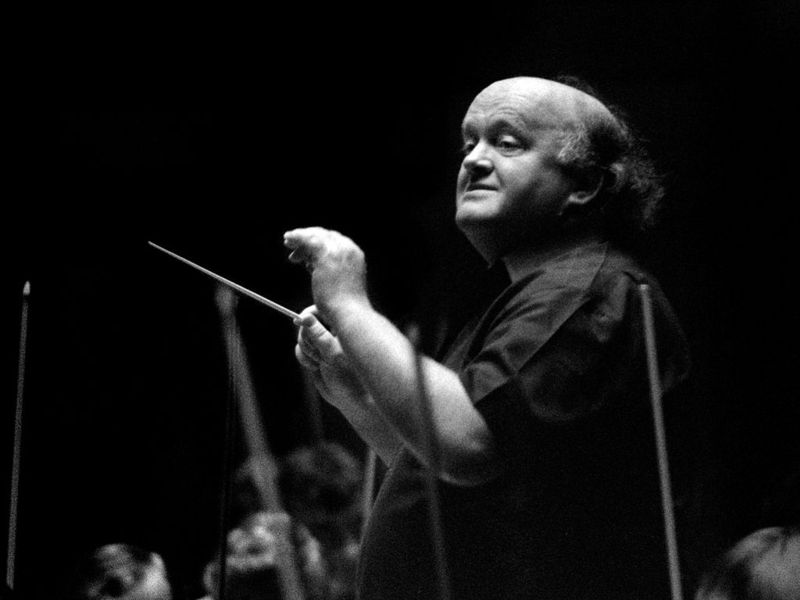
    A WALKURE Act I from Bayreuth 1971 finds conductor Horst Stein (above) giving a great sense of urgency to the opening ‘chase’ music. Helge Brilioth, probably better known for his Tristan and Siegfried, sounds a bit rough-hewn at first as Siegmund but summons up some poetry later in the act. Dame Gwyneth Jones as Sieglinde shows both contemplative lyricism and the power of a future Brunnhilde; her singing is emotional without breaking the musical frame. Karl Ridderbusch is a darkly voluminous Hunding; despite a few moments of sharpness here and there, he makes a strong impression.

    ~~~~~~~~~~~~~~~~~~~~~~~~~~~~~~~~~~~~~~~~~~~~~~~~~~~~~~~~~~~~~~~~~~~~~~~~~~~~~~~~~~~~~~~~~“

    540752_10151474196683142_112317311_n

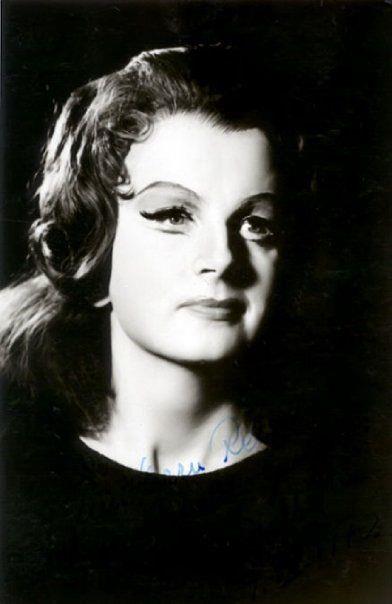
    The Swedish singer Berit Lindholm (above) was one of a group of sopranos – Rita Hunter, Ingrid Bjoner, Caterina Ligendza and Dame Gwyneth Jones were some of the others – who increasingly tackled the great Wagnerian roles as Birgit Nilsson’s career wound down. In 1976 Lindholm sang Brunnhilde in a performance of GOTTERDAMMERUNG at Covent Garden conducted by Sir Colin Davis, and she does quite well by the role, bringing a more feminine and vulnerable quality to her interpretation than Nilsson did. Lindholm reaches a fine peak as Act I moves toward its inexorable climax with the meeting between Brunnhilde and Waltraute, followed by the false Gunther’s rape of the ring.

    Interestingly, though both the recording and the Covent Garden website list Yvonne Minton as Waltraute in this performance, there is some question that she might have been replaced last-minute by Gillian Knight; in fact, some listings for this recording on other releases do show Knight singing Waltraute. A delicious mystery, since whichever mezzo it is is impressive indeed. (I’ve left an inquiry on the Opera Depot listing, perhaps someone can shed further light…)

    Jean Cox certainly has an authentic Wagnerian voice though at times in Act I his singing falls a shade below pitch. The wonderful basso Bengt Rundgren sounds fine as Hagen in Act I, and his half-siblings are Siegmund Nimsgern – later a Bayreuth Wotan – as Gunther, and Hanna Lisowska as Gutrune, a role she repeated at the Met when the ‘Levine’ Cycle was filmed for posterity.

    As an admirer of the Norn scene, I’m very pleased with the three women who sing this fantastic music here: Patricia Payne, Elizabeth Connell and Pauline Tinsley. Ms. Payne is steady and sure of voice and what a delight to hear a future Isolde (Ms. Connell) and Kundry (Ms. Tinsley) in these roles; Ms. Tinsley dips impressively into her chest voice at one point, an unusual and exciting effect.

    Sir Colin Davis builds the great span of the prologue/Act I persuasively; a few minor orchestral blips here and there are barely worth mentioning. Once Waltraute arrives at Brunnhilde’s Rock the conductor attains a heightened level of dramatic intensity and the act ends excitingly.

    Act II opens with the mysterious conversation between Alberich and his slumbering son, Hagen. Zoltán Kelemen, who was Karajan’s Alberich when the conductor inaugurated his RING Cycle at The Met (a project from which the maestro withdrew after the first two operas) makes a fine effect, and Mr. Rundgren maintains his sturdily sung Hagen throughout this act. Jean Cox is very authoritative as he declaims his oath on Hagen’s spear; any misgivings about him from Act I are swept away here. Berit Lindholm may lack the trumpeting, fearlessly sustained high notes of the more famous Nilsson, but her Brunnhilde is exciting in its own right, with her anguished cries of ‘Verrat! Verrat!’ (“Betrayed!”) a particularly strong moment.   

    Whether she is the Waltraute or not, Gillian Knight is definitely one of the Rhinemaidens, joined in melodious harmonies by Valerie Masterson and Eiddwen Harrhy for the opening scene of Act III. There’s some vividly silly giggling from this trio, and Ms. Masterson in particular sounds lovely – an augury of her eventual status as a fabulous Cleopatra.

    Mr. Cox has impressive reserves to carry him thru Siegfried’s taxing narrative – he’s at his best here – and if Ms. Lindholm’s voice doesn’t totally dominate the Immolation Scene, she’s very persuasive in the more reflective passages of Brunnhilde’s great concluding aria. Sir Colin Davis had built the opera steadily and with a sure sense of the music’s architecture; he saves a brilliant stroke for the end of the opera when he does not take the ‘traditional’ pause before the reprise of the ‘redemption thru love’ theme but instead sails forth into it with impetuous fervor.

    There were times while listening to this performance when I wondered if this was a broadcast performance or was recorded in-house. The voices do not always have the prominence we associate with broadcast sound, but perhaps the micorphones were oddly placed. At any rate, GOTTERDAMMERUNG has again made its mark as the culmination of the great drama of The RING.

  • Hampson/The Jupiter Quartet @ Alice Tully Hall

     Hugo Wolf

    Above: the composer Hugo Wolf

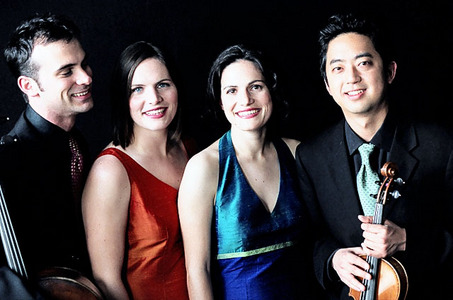
    Sunday April 28, 2013 – The Chamber Music Society of Lincoln Center presented a programme of works spanning three centuries; the Jupiter String Quartet and the celebrated baritone Thomas Hampson collaborated in a new work by Mark Adamo (NY Premiere), and the Quartet played Wolf, Schubert and Webern before rounding out the evening with Wolf songs sung by Mr. Hampson.

    Large_Jupiter quartet6

    The Jupiter String Quartet opened the programme with Franz Schubert’s quartet in E-flat major, written when the composer was 16 years old. The players immediately displayed the warm, Autumn-gold sound that they would sustain throughout the concert. The melodies of this youthful work of the composer were wafted into the hall with generous lyricism; in the adagio especially, violinist Nelson Lee’s persuasive turns of phrase had a bel canto polish.

    Anton Webern’s Langsamer Satz (‘Slow Movement’) was composed in 1905 but never publicly performed in the composer’s lifetime. Dating from the period before he embraced his twelve-tone destiny, this brief quartet was written when Webern was 22 and exploring a relationship with his cousin Wilhelmine, who he eventually married. The music is in full-blown Romantic style; its heart-on-sleeve emotional quality tinged with a trace of melancholy was lovingly captured by the Jupiter players. 

    Hampson_acosta_5

    Thomas Hampson, photo by Dario Acosta

    I’ve been following Thomas Hampson’s career since I first heard him at the annual Winners Concert of the Metropolitan Opera National Auditions in 1981. He seems to be the only singer from among that year’s winners to have developed and sustained a major international career. Among his many roles at The Met since then, several have ranked high among my memorable operatic experiences, most especially his Count Almaviva, Billy Budd (a spectacular performance all round, in 1992), Onegin, Posa, Werther, Wolfram in TANNHAUSER, and Amfortas in PARSIFAL. In recent seasons, he has explored the heavier Verdi roles; I was very impressed with his Iago just a couple of months ago.

    Today in Mark Adamo’s ARISTOTLE, Hampson’s voice seemed remarkably fresh and showed nary a trace of the passage of time. It was completely and marvelously satisfying vocalism from a singer who has passed the thirty-year mark of his career. Blessed from the start of his singing career with an immediately identifiable timbre, the baritone today sang with warmth, a broad dynamic palette, impressive sustaining of phrase and keen verbal clarity (no need for us to refer to the printed texts). This was singing of the first magnitude.

    Mark Adamo’s ARISTOTLE can already be ranked as a 21st century vocal masterpiece. Set to a poem by Billy Collins, the work is about the passage of time and the stages of life. It resonates on a personal level, especially for those of us moving into the later decades of our span. Mark Adamo’s writing and the playing of the Jupiter Quartet provided Mr. Hampson with a marvelous vehicle in which the singer’s artistry is fully presented. 

    The poet’s text is imaginative, funny, poignant; opening candidly with “This is the beginning…almost anything can happen…” each of the works three ‘movements’ describes the experiences – from epic to mundane – that colour our lives as time passes. “This is your first night with her, your first night without her” is a touching wrinkle in the first section. 

    “This is the middle…nothing is simple anymore…” sets forth this memorable line: “Disappointment unshoulders his knapsack here and pitches his ragged tent.” And finally at the last: “And this is the end, the car running out of road, the river losing its name in an ocean…” Singer and players joined to create a memorable musical experience, the baritone’s incredible sustaining of the work’s final lines truly magical. The composer, seemingly overwhelmed by emotion, was called up to the stage and joined the musicians in receiving a sustained applause.

    The second half of the evening was given over to works of Hugo Wolf, commencing with his brief and melodic Italian Serenade, played by the Quartet. Thomas Hampson then offered a set of the composer’s songs. With the exception of Anakreon’s Grab – which was the concluding work on today’s printed programme – I have never really been drawn to Wolf’s lieder, despite many attempts over time to make a connection. The first two songs today were rather jolly, and then the singer and musicians moved into deeper and darker territory, which proved very pleasing indeed. And yet it was still the calm beauty of Anacreon’s Grave that moved me the most. As an encore, Wolf’s “Der Rattenfänger”, based on the tale of the Pied Piper, was given a vivid theatrical treatment by singer and players. 

    The works on today’s programme:

    Schubert: Quartet in E-flat major for Strings, D. 87, Op. 125, No. 1 (1813)

    Webern: Langsamer Satz for String Quartet

    Adamo: Aristotle for Baritone and String Quartet (2012, CMS Co-Commission, New York Premiere)

    Wolf: Italian Serenade for String Quartet (1887)

    Wolf: Selected Lieder for Baritone and String Quartet

  • At Home With Wagner II

    Wagner-02

    More Wagnerian treats have come my way, thanks to Opera Depot and to Dmitry’s generosity in making me copies. I have a ‘new’ (to me) TANNHAUSER, and an Act I of WALKURE, and a complete GOTTERDAMMERUNG to enjoy on these long Winter afternoons.

    0

    I played the WALKURE Act I first; it comes (as does the GOTTERDAMMERUNG) from a 1959 Covent Garden RING Cycle conducted by Franz Konwitschny (above). This Cycle does not seem to be readily available in the USA, but it was on special offer at Opera Depot so Dmitry snatched it up since one can never have too many RING Cycles.

    Konwitschny opens with a superbly-paced prelude; it’s slightly on the fast side but gives an uncanny feeling of relentless pursuit: Siegmund is the prey and little does he know that he’ll find shelter in the very home of his pursuer. Ramon Vinay, who sang Siegmund in the 1953 Keilberth RING from Bayreuth, sounds more baritonal here – six years later – and tends he to be a bit more declamatory in his approach. Amy Shuard, who was to be Brunnhilde for Solti at Covent Garden in 1965 seems to me better suited to Sieglinde. She has a nice feeling of womanly lyricism in her voice and is especially moving in the passage where she asks Siegmud to stay with her and await Hunding’s return. Later, Shuard scores again with a wonderfully pensive quality at “O still, lass mich der Stimme lauschen!”. She has a few passing moments of flatness in the middle register, and Vinay is taxed by his final “…Walsungen Blut!” But overall they are quite exciting, and Kurt Boehme is a strong. dark-hued Hunding. Some random off-notes from the orchestra; the sound quality is quite good overall.

    ~~~~~~~~~~~~~~~~~~~~~~~~~~~~~~~~~~~~~~~~~~~~~~~~~~~~~~~~~~~~~~~~~~~~~~~~~~~~~~~~~~~~~~~~~~~~

    Taking a break from the RING, I moved to the 1965 Bayreuth TANNHAUSER. Andre Cluytens gives a well-paced reading of the score, and the sound quality of the recording is more than acceptable. Wolfgang Windgassen, then 50-years-old, takes on the arduous title-role; as he begins to sing there is a sense of strain, but he somehow manages to get the voice in gear and though there are moments when he seems tested, his knowledge of the role and of his instrument manage to sustain him through the first two acts. The strenuous demands of the Rome Narrative sometimes cause the tenor to sound as if he’s at the outer edge of his vocal possibilities, and although he steers thru the music without disaster it’s not pleasant to listen to. The fact that Tannhauser is exhausted and on the brink of madness can serve to cover some of the moments of vocal peril, but in the end it’s not something to listen to more than once. 

    Leonie Rysanek sings with her usual intensity and command of the upper range, and she uses a broad dynamic palette quite impressively. There are moments when she sounds unstable, notably in the Act III prayer which is taken quite slowly. In 1964, the soprano had had something of a vocal crisis which affected her performances in OTELLO and DON CARLO at The Met. At the end of the 1964-65 season she was gone from the Met for nearly a year (including the very Summer of this Bayreuth TANNHAUSER) and when she returned to New York City she seems to have given up nearly all of her Italian roles (aside from Tosca – though she later took on Medea, Gioconda and Santuzza, but not at The Met). She continued to sing Elisabeth in TANNHAUSER for twenty more years, including a stunning performance in San Francisco in 1973, and an impressive Met broadcast in 1982. This Bayreuth ’65 Elisabeth is perhaps not her finest rendering of the role, but it’s pretty exciting nonetheless. 

    Ludmila Dvorakova’s huge, over-ripe sound amply fills the role of Venus though her singing will not be to all tastes, and basso Gerd Neinstedt makes a strong impression as Biterolf in the scene of the song contest.

    Talvela4

    What makes the performance worthwhile are the performances of Martti Talvela (above) as the Landgraf Hermann and Hermann Prey as Wolfram. Talvela is on spectacular form, his commanding voice – marked by just a trace of the vocal ‘whine’ that was something of trademark – is thrilling to hear he welcomes the guests to the Watrburg and sets forth the framework of the contest. It was such a pleasure to hear this voice again.

    H prey

    Hermann Prey (above) as the steadfast Wolfram, who gallantly sets aside his own feelings for Elisabeth in view of her clear preference for Tannhauser, sings with lovely lyricism and expressiveness; a couple of the lowest notes of the Evening Star are a bit of a downward stretch for him, but for tenderness and poetic resonance his is a peerless incarnation of the role. Both Talvela and Prey have voices instantly recognizable, and their contributions to this performance are superb.

    ~~~~~~~~~~~~~~~~~~~~~~~~~~~~~~~~~~~~~~~~~~~~~~~~~~~~~~~~~~~~~~~~~~~~~~~~~~~~~~~~~~~~~~~~~~~~

    Thomas-Marjorie-03[771]

    Back to the ’59 Konwitschny Covent Garden RING Cycle for GOTTERDAMMERUNG in which the first voice we hear is that of Marjorie Thomas (above) as the First Norn. I had not been aware of this singer previously, despite her substantial career, and she makes a wonderful impression in thei opening scene of the RING‘s final opera – a scene I greatly enjoy both for its atmosphere and the vocal opportunities afforded the three singers. Her sister-Norns are Monica Sinclair – a mezzo who later joined Joan Sutherland’s touring Company and whose prodigious breath control makes her an unusually interesting Bradamante on the Sutherland recording of ALCINA – and soprano Amy Shaurd, who doubles as Gutrune here and later went on to sing the Brunnhildes.

    Wagner legends Astrid Varnay and Wokfgand Windgassen pour their hearts out in the prologue duet. Varnay is a soprano I sometimes find oddly matronly and overblown but here she is in very fine voice, moving from strength to strength as the opera progresses. I hear some similarities between her voice and that of Regina Resnik; does anyone else?  Windgassen is unfortunately not at his best in this performance. His voice is unsettled, his phrasing wayward. In this repertoire one has to allow for off-days; it”s just too bad this was a performance being preserved for posterity. Hermann Uhde (Gunter) and Gottlob Frick (Hagen) are simply magnificent, and Shuard is an ample-toned Gutrune, sometimes a shade off pitch.

    Stravinsky_und_boese1

    Ursula Boese (above, with composer Igor Stravinsky) is a rich-toned Waltraute, sometimes putting me in mind of Rita Gorr. Ms. Boese’s voice sometimes takes a moment to tonalize on a given note, giving a slight feeling of pitchiness, but overall she is impressive in her long scene with Varnay.

    Kraus-Otakar-01[Alberich-099]

    As Act II begins, the Czech-born baritone Otakar Kraus (above, great photo as Alberich) sings the role of the dwarf who appears to his son Hagen in a dream, singing with mysterious, haunted tone. This sets the stage for one of the most thrilling readings of the cataclysmic events of this singular Wagnerian act that I have heard. If only Mr. Windgassen had been on peak form on this day, we’d have been left with a veritable masterpiece. The tenor does sing powefully and doesn’t shrink for the demands, but moments of strain and rhythmical variances detract a bit from the overall sweep of the act.

    Th

    Astrid Varnay (above) is simply thrilling in this demanding music; her voice – not so much the timbre but the way she sings – continues to remind me a bit of Resnik. The top is earth-shattering and her expressively dramatic vocal thunderbolts are astounding in their bright, steady power. Along with her 1953 ELEKTRA this is my favorite Varnay recording I’ve heard to date. Gottob Frick is imperterbably sinister and grand as Hagen, and if the notion that Gunther’s undoing could be described as heartbreaking, you hear it magnificently here in Hermann Uhde’s uncanny vocal portrayal.

    I’ll confess to skipping over some of the final act, since Windgassen is so out-of-sorts. The Rhinemaidens – led by the girlish-sounding Joan Carlyle singing along with star-in-the-making Josephine Veasey and Marjorie Thomas, who fills out her evening by adding the third Rhinemaiden to her First Norn.

    Varnay’s Immolation Scene begins triumphantly. The diva is in huge and secure voice, and her characteristic tendency to sometimes approach a high note from below doesn’t bother me, since she always gets where she’s going eventually. In her deeply felt and lyrical singing of “Wie Sonne lauter strahlt mir sein Licht…” Varnay wins my heart entirely. A bit later though there is a jarring parting of ways between singer and orchestra: Varnay seems absolutely in the right to my ears (not having a score to hand), but a few measures of musical mayhem ensue before things are set to rights. Thereafter traces of fatigue creep into the soprano’s vocalism, but by this time she’s delivered so much marvelous singing that we can’t help but be swept away in admration for her overall performance.

  • Score Desk for DON CARLO

    L1070620

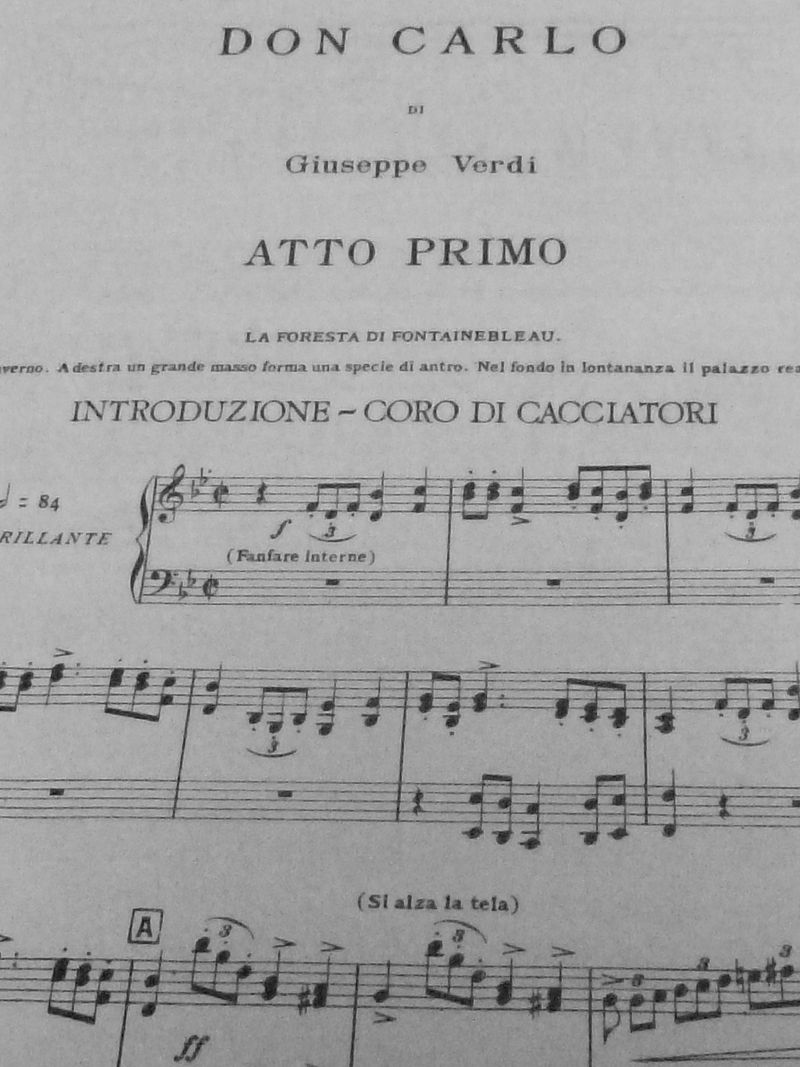
    Monday February 25th, 2013 – A powerful line-up of male principal singers drew me to this performance of Verdi’s DON CARLO at The Met. The women in the cast seemed less interesting by far; having seen the production before – and feeling no need to see it again – I took a score desk and settled in.

    DON CARLO was for years my favorite opera, but then the German repertory began to edge out the Italian in my heart and soul. Now ARIADNE AUF NAXOS, ELEKTRA and DIE WALKURE are in a sort of three-way tie for the top spot. But I still love DON CARLO and always go when it is performed. I’m not crazy about the Fontainebleau scene, and I never watch the Auto da Fe since the sight of people burning other people alive for the greater glory of some fiendish imagined god (or rather, to maintain the power of the men who created him and sustained the myth thru blood and force over the centuries) is revolting.

    Negative reviews of Loren Maazel’s conducting and of Barbara Frittoli’s singing as Elisabetta had me thinking in advance that this might be a partial CARLO for me. Added to the prospect of two Gelb-intermissions, and the fact that I was already feeling tired when I got there, it seemed that a very long evening was loooming ahead. But I found myself drawn in by the opera itself, and I always enjoy the experience of being in the House with the score in front of me. I stayed to the end and on the whole felt it was a very good evening, particularly thanks to the superb performances of Dmitry Hvorostovsky and Ferruccio Furlanetto as Posa and Philip II respectively.

    To be sure, some of Maestro Maazel’s pacing was slow. To me his conducting registered a measured sense of grandeur and dignity, and of events unfolding with a sort of epic inevitability. Often considered Verdi’s most purple opera – the colour of royalty evoked in sound – I felt Maazel’s concept worked well: there were lively passages along the way, and his Auto da Fe scene was amply majestic and well-structured. For the most part he kept his singers at the forefront; in a few places they needed all their reserves of breath to sustain the line thru the slow tempi. But, following the score, I thought the conductor had things well in hand.

    Maazel experienced some boos at his solo bow; I wonder if it was pre-meditated since it seemed to be coming from one area of the Family Circle. Recently while my friend Dmitry and I were having a pre-PARSIFAL supper, I could overhear a woman in the next booth telling her companion that she was planning to boo conductor Daniele Gatti. If she did, it got lost in the cheers. Maazel’s conducting was quirky but worked well to my ears; the only potentially boo-able performance was that of Ms. Frittoli but the audience tolerated her with polite applause.

    I find the Fontainebleau scene a needless introduction to the evening. Verdi sanctioned its elimination for performances in Italy following the premiere in Paris where five-act operas were de rigeur. Some people say, “Oh, it gives the opera context!” Undoubtedly. But we lived without it for years, savoring the gloriouly dark horn theme which opens the four-act version and immeditely sets us in the mood for this opera about royalty and religion. Tonight, with Ms. Frittoli sounding very wary, the scene seemed even more expendable than ever. It makes for such a long night, even under the best of circumstances.

    The soprano’s perilous performance serves as a reminder that a vocal career is short enough without quickening its demise by singing roles that are too heavy. Ms. Frittoli will be remembered in New York City for her exquisite singing as Desdemona in 1999; she was also a particularly fine Mimi, and as recently as 2005 she managed an impressive Fiordiligi by manipulating the dynamics to control the effects of a widening vibrato. But singing things like the Verdi REQUIEM and Donna Anna have taken their toll on her lyric instrument. Tonight the vibrato was painfully evident even at the piano level. She managed to avert disasters, though a high B-flat in the quartet was scary and she could not sustain the floated B-natural in the final duet, on “…il sospirato ben”, one of the role’s most affecting moments. Overall it was sad to experience this voice in its current state. The news that she’ll be singing Tosca later this year in Europe does not bode well.

    These performances of Elisabetta were originallly slated for Sondra Radvanovsky; when Sondra moved to BALLO instead, the Met turned to Ms. Frittoli. They should have cast about for a more appropriate alternative. When I think of the wonderful Elisabettas I have experienced – Caballe, Kabaivanska, Freni, and  Radvanovsky as well as Marina Mescheriakova’s flawless Met debut in the role – Ms. Frittoli’s pales into a haze.

    Anna Smirnova’s voice does not always fall pleasantly on the ear, being rather metallic. But she is a skilled singer who managed the filagree of the Veil Song very well and pulled out all the stops for an exciting “O don fatale” with brazenly sustained high notes. 

    Don Carlo is a bit heavy for Ramon Vargas but this very likeable tenor sang quite beautifully through most of the evening. His voice is clear and plaintive, his singing stylish and persuasive. Only near the end of the opera did a few signs of tiredness manifest themselves. His delicious singing of “Qual voce a me del ciel scende a parlar d’amore?” in the love duet was a high point of the evening.

    Eric Halvarson’s Inquisitor was powerully sung and stood up convincingy against the overwhelming Philip II of Ferruccio Furlanetto. The two bassos had a field day, trading thunderbolts in their great confrontation. Basso Miklos Sebestyen was a very impressive Friar (the Ghost of Charles V), drawing a round of applause fo his sustained low F-sharp in the St. Juste scene of Act I. Jennifer Holloway was a very fine Tebaldo but Lori Guilbeau, who has a pretty sound, seemed not to be well-coordinated with the pit as she sang her offstage lines as the Celestial Voice.

    The towering magnificence of Dmitry Hvorostovsky‘s Posa and Ferruccio Furlanetto‘s Philip II put the performance on a level with the greatest Verdi experiences of my opera-going years. Dima’s singing was velvety and suave, his breath-control mind-boggling, his singing affecting, elegant and passionate by turns. His high notes were finely managed and marvelously sustained.

    Mr. Furlanetto’s glorious singing is a throwback to the days when great Italian voices in every category rang thru the opera houses of the world.  Now nearing his fortieth year of delivering generous, glorious vocalism, the basso’s dark and brooding tones fill The Met with a special sonic thrill. His singing, so rich and deeply-felt, can thunder forth at one moment and then draw us in with hushed, anguished introspection the next. From first note to last, Furlanetto’s Philip II was simply stunning. His hauntingly tender musing on the phrase “No…she never loved me…her heart was never mine…” just before the epic climax of his great monolog moved me to tears.

    There were huge eruptions of applause and cheers after both the baritone and the basso finished their big arias; but applause nowadays tends to dwindle rather quickly and the days of show-stopping aria ovations are largely a thing of the past. 

    There were lots of empty seats which surprised me: with this starry assembly of male singers and the season’s biggest name from the conducting roster involved, I expected a fuller house.

    Dima2

    Dmitri Hvorostovsky

    Furlanetto

    Ferruccio Furlanetto

    Metropolitan Opera House
    February 25, 2013

    DON CARLO
    Giuseppe Verdi

    Don Carlo...............Ramón Vargas
    Elizabeth of Valois.....Barbara Frittoli
    Rodrigo.................Dmitri Hvorostovsky
    Princess Eboli..........Anna Smirnova
    Philip II...............Ferruccio Furlanetto
    Grand Inquisitor........Eric Halfvarson
    Priest Inquisitor.......Maxime de Toledo
    Celestial Voice.........Lori Guilbeau
    Friar...................Miklós Sebestyén
    Tebaldo................ Jennifer Holloway
    Count of Lerma..........Eduardo Valdes
    Countess of Aremberg....Anna Dyas
    Flemish Deputy..........Alexey Lavrov
    Flemish Deputy..........Paul Corona
    Flemish Deputy..........Eric Jordan
    Flemish Deputy..........Evan Hughes
    Flemish Deputy..........Joshua Benaim
    Flemish Deputy......... David Crawford

    Conductor...............Lorin Maazel

  • Score Desk for LES TROYENS

    Cassandre

    Cassandra:

    “Malheureux roi! dans l’éternelle nuit,
    C’en est donc fait, tu vas descendre!
    Tu ne m’écoutes pas,
    tu ne veux rien comprendre,
    Malheureux peuple,
    à l’horreur qui me suit!”

    Saturday December 29, 2012 – The dilemma of whether or not to attend a performance of Berlioz’s LES TROYENS at the Met concerned me for a few days. This epic masterwork is one of the greatest operas ever written, unique in its structure (it is actually almost like two distinct operas; each could stand on its own), and it is a veritable goldmine of musical marvels. On a personal note, the opera plays a stellar role in my autobiography, since it was after a magnificent 1973 matinee performance of the Berlioz work that I had my long-awaited first homosexual experience. Normally it would be on my highest-priority list of operas to see in any Met season where it’s presented. But the combination of a production that has never really satisfied me visually, a conductor who has seldom – if ever – moved me, and the disastrous casting of two of the opera’s principal roles, I at first wrote it off completely.

    But then the thought that I might never again have an opportunity to hear LES TROYENS in-house decided me in favor of going; not needing to see the production, I bought a score desk and waited for the day with a mixture of excitement and dread. A few days before the performance, one of the singers whose participation was troubling me – Marcelo Giordani – was announced as ‘withdrawing’ from the remainder of the run after a reportedly awful night at the prima folllowed by vocal struggles in the ensuing performances. His announced replacement, Bryan Hymel, has been making a name for himself of late in some of opera’s most demanding roles.
    Elizabeth-bishop

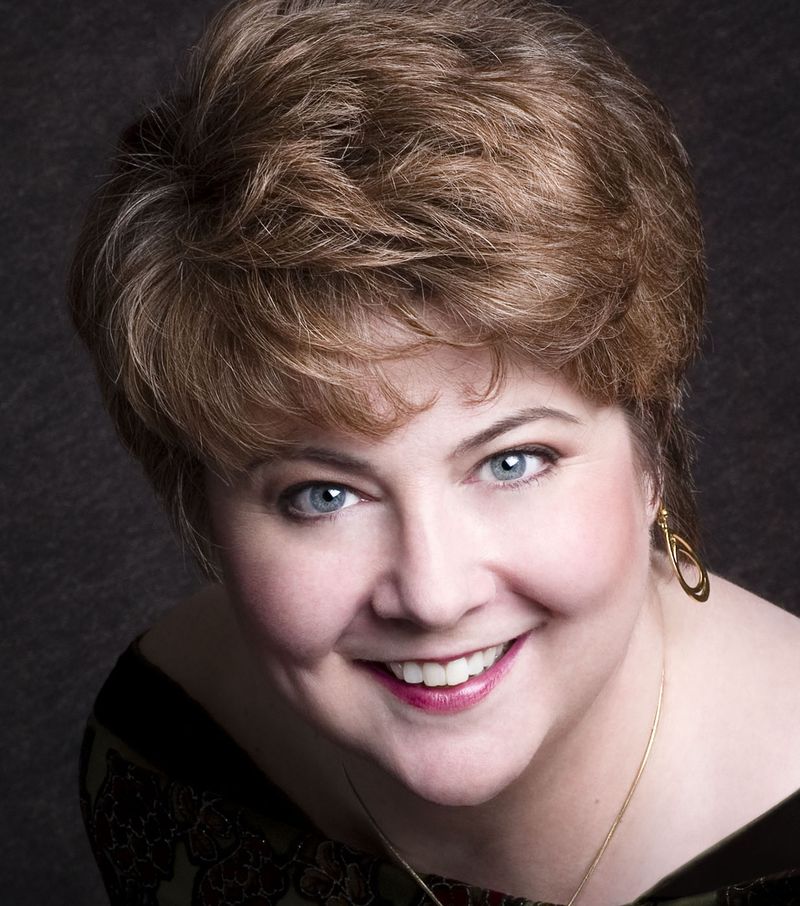
    I arrived at the theatre to find another last-minute cast change: Elizabeth Bishop (above) was to sing Dido instead of Susan Graham. This was my second experience of hearing Ms. Bishop in a performance originally scheduled for Graham, and though I’d been looking forward to Graham’s Dido, Bishop was perfectly fine. So I settled in with my lovely old scores (one for each ”opera’), wishing for a different maestro and different Cassandra, but very much anticipating both the music and the singing of the other cast members. 

    The opera opened impressively with the lively chorus depicting the joy of the Trojan people who have discovered that the Greeks, who have besieged their city for a decade, have suddenly and inexplicably departed. Sadly, the afternoon then took a real slump as Deborah Voigt began Cassandra’s great opening monolog. Voigt’s voice has declined even further than from my last encounter with her in the theatre, and her singing of this iconic role was pallid; the voice is almost unrecognizable as the soprano who once thrilled me with her Ariadne and Elsa. Unsteady and small of scale, her singing seemed apologetic for the most part, with only very few notes that bore any relation to what she once sounded like. Her final high-B in the duet with Chorebus was desperate and unpleasant, and she simply lacked the expressive dramatic thrust for the great scene in which Cassandra tries to prevent the populace from bringing the giant horse within the city walls. And she was ineffectual in the opera’s great final scene. The role calls for forceful declamation and sweeping emotional conviction: a larger-than-life feel. That Voigt could not come within hailing distance of such great interpreters of the role as Shirley Verrett and Jessye Norman was indeed sad. Her shortcomings prevented the first half of the afternoon from making its usual vivid impression. 

    In 1994 Dwayne Croft replaced Thomas Hampson as Chorebus on a Saturday matinee broadcast of TROYENS; he sang superby that day and seemed in fine voice this afternoon until suddenly, near the end of the big duet with Cassandra, his voice seemed to go hoarse. Bryan Hymel made an impressive entry as Aeneas, his singing both beautiful and urgent. In the great scene where Aeneas is warned by the Ghost of Hector of Troy’s impending doom, Hymel and David Crawford were both excellent.

    In the haunting scene where the widowed Andromache brings her young son before the court, her injection of a stifled shriek was perhaps unnecessary in what is written as a silent role. But here Ms. Voigt as Cassandra did have one of her fine moments as she quietly intoned her warning to Andromache: “Save your tears, widow of Hector! Disasters yet to come will make you weep long and bitterly”.

    Though lacking a commanding Cassandra to lead them, the scene of the mass suicide of the Trojan women managed to make a very strong impression. Thus far, as the first part of TROYENS came to a close, Fabio Luisi’s conducting had been ‘factual’, each musical “i” dotted and “t” crossed (as per the score) but lacking in mystery and mythic grandeur. His pacing was on the quick side, which is fine.

    Moving to Carthage, Luisi and his players seemed to find a more congenial glow in the music. I must commend the conductor for making the ballet music (which could just as well have been cut) fully palatable; and from Iopas’ serenade thru the grand septet and on to the end of the sublime love duet, Luisi gave what was for me his finest music-making to date at the Met. 

    Elizabeth Bishop’s voice is not creamy and opulent but she’s a fine singer and not only did she save the day, she did so with distinction. Establishing herself in the opening public scene, it was in the more intimate settings that follow where Bishop made her finest mark: the ravishing duet with her sister Anna and then – impressing in both tonal allure and poetic nuances – from “Tout conspire a vaincre mes remords” straight thru to end end of the “Nuit d’ivresse”. In the anger of the fiery quayside duet, and in her later expressions of regret, and of futile fury, Bishop brought some touches of verismo passion which worked well for her. In the stately, resigned “Adieu fiere cite” she was at her most poignant, then rousing herself yet again vocally to bring the opera to a close with her visionary “Rome!…Rome!…immortelle!” As the afternoon progressed, Bishop dispelled the disappointment of not hearing Ms. Graham, and the audience greeted her affectionately at her curtain calls.

    Bryan-hymel-1340266185-article-0

    Above: Bryan Hymel. Mr. Hymel’s Aeneas was marvelous and his type of voice – a liquid and juicy ‘big-lyric’ with a blooming top – is very well-suited to the music. Wagnerian tenors like Jon Vickers, Gary Lakes and Ben Heppner have often been heard in this role (Vickers managed to make it very much his own), and Placido Domingo handled it impressively despite its being too high for him. But for me the best rendering of this arduous music in living memory has come from Nicolai Gedda on an abridged RAI concert recording. In vocal size and stylistic grace, Hymel comes close to the Gedda ideal. A trace of sharpness crept in here and there, but from his tender farewell to his son Ascagne right thru to his final “Italie!” as Aeneas’ ships cast off for to their destiny, Hymel sang beautifully and had the audience in the palm of his hand.

    He and Ms. Bishop found the magical blend that makes the love duet one of opera’s most memorable, and in his great scena “Inutile regrets” with its remorseful “Quand viendra l’istante” and the high-lying concluding ‘cabaletta’, Hymel was glorious. His singing was full-toned and expressive, encompassing some lovely piano effects, and so moving with his heartfelt “A toi mon ame!”; the audience reacted with excited cheers as the tenor swept to the sensational climax of this great scene, then drew our further admiration as he led his soldiers aboard ship to take leave of Carthage. 
    Cc54e53b-0776-4d1e-9433-8376d0be5f01

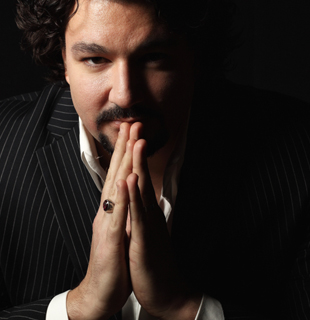
    There are two more tenor roles in LES TROYENS A CARTHAGE and both were ideally sung today. In Iopas’ wondrously evocative (and very exposed) “O blonde Ceres” Eric Cutler (above) gave the afternoon’s most fascinating vocalism, with lovely line and ravishingly heady piano effects, and a spine-tingling ascent to a gloriously lyrical high-C. Bravo!!! 

    PAUL_APPLEBY_93R3775-4WEB

    Above: Paul Appleby. In the homesick song of the young sailor Hylas, Mr. Appleby’s beautifully plaintive timbre and the haunting colours he wove into the words made this another high point of the day.
    Home

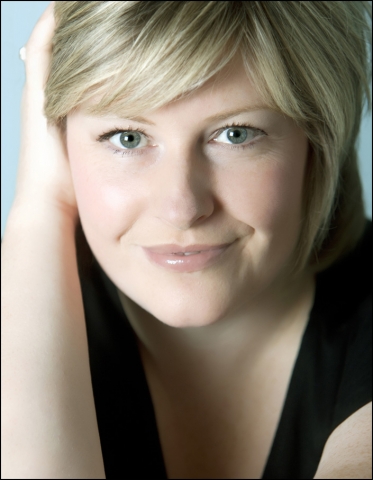
    Above: Karen Cargill. I had very much enjoyed Ms. Cargill’s Waltraute last season and was glad of a chance to hear her again as Anna. There’s a touch of Marilyn Horne in Cargill’s voice and she sang her two big duets (one with Dido, the second with Narbal) most appealingly.

    Kwangchul Youn’s voice is warm and sizeable; his tone seems to have taken on a steady beat now though he handled it quite well. His Narbal was pleasing, and he was also cast as Mercury, his voice bringing an ominous feel as he intones “Italie! Italie!” after the great love duet, reminding Aeneas of his duty and sealing Dido’s fate.

    Richard Benstein was a strong-toned and authoritative Panthus and I very much liked hearing old-stagers Julien Robbins (Priam) and James Courtney (2nd Soldier) again. Julie Boulianne was a fine Ascagne, Theodora Hanslowe was Hecuba, and Paul Corona shared the soldiers’ scene with Mr. Courtney.

    I so enjoyed experiencing this masterwork in-house again; it may not have been a perfect performance, but it certainly made for a very satisfying afternoon. So nice to see my friend Susan there, and – being n a good mood – I even chatted with some people around me: totally out of character. Very much looking forward to my next ‘score desk’ operas: DON CARLO and TRAVIATA (who needs to look at a clock and a sofa?), and then all the RING operas in the Spring. It’s the place to be!

    Metropolitan Opera House
    December 29, 2012 Matinee

    LES TROYENS
    Berlioz

    Part I: La prise de Troie

    Cassandra...............Deborah Voigt
    Coroebus................Dwayne Croft
    Aeneas..................Bryan Hymel
    Ascanius................Julie Boulianne
    Priam...................Julien Robbins
    Hecuba..................Theodora Hanslowe
    Helenus.................Eduardo Valdes
    Andromache..............Jacqueline Antaramian
    Astyanax................Connell C. Rapavy
    Panthus.................Richard Bernstein
    Hector's Ghost..........David Crawford

    Part II: Les Troyens à Carthage

    Dido....................Elizabeth Bishop
    Anna....................Karen Cargill
    Narbal..................Kwangchul Youn
    Iopas...................Eric Cutler
    Ascanius................Julie Boulianne
    Panthus.................Richard Bernstein
    Aeneas..................Bryan Hymel
    Mercury.................Kwangchul Youn
    Hylas...................Paul Appleby
    Trojan Soldier..........Paul Corona
    Trojan Soldier..........James Courtney
    Priam's Ghost...........Julien Robbins
    Coroebus's Ghost........Dwayne Croft
    Cassandra's Ghost.......Deborah Voigt
    Hector's Ghost..........David Crawford

    Laocoön.................Alex Springer
    Royal Hunt Couple.......Julia Burrer, Andrew Robinson
    Dido's Court Duet.......Christine McMillan, Eric Otto

    Conductor: Fabio Luisi

  • Ira Malaniuk

    Image-Kammersangerin

    The contralto Ira Malaniuk (above) was an Austrian singer of Ukranian descent who had a major career in Europe from 1939 to 1976 yet is rarely mentioned today in discussions of great voices from the past. Yet surely she is one of their number.

    Malaniuk appears on several commercial recordings, some of which I have heard, yet it is a 1953 live recording of GOTTERDAMMERUNG from the 1953 Bayreuth Festival in which she sings Waltraute that made me sit up and take notice of this wonderful singer.

    Malaniuk came to international attention at the 1951 Bayreuth Festival when she stepped in at the last minute for an ailing colleague; here is the story:

    “It was 1951. The Wagnerian Festival at Bayreuth, Germany was taking place for the first time since the end of World War II.

    Herbert von Karajan was the conductor. The opera was Das Rheingold (The Rhine Gold), the first of the four operas that comprise Wagner’s Der Ring Des Nibelungen. A complete Ring Cycle peformance was planned for this innaugural post-war season.

    Elisabeth Höngen, a mezzo-soprano, was scheduled to sing. She had
    performed only a few days earlier. Suddenly on August 11, 1951, Höngen
    came down with an acute case of appendicitis and was hospitalized.

    That fateful day, Ira Malaniuk, a young mezzo-soprano, came into the
    theatre not suspecting that she would be required to sing the part of
    Fricka that night. According to her own autobiography, not only had
    Malaniuk never sung the part, she hadn’t even heard it before.

    And yet, with the assistance of the Bayreuth Festival staff,
    colleagues, prompters and conductor Karajan, Ira Malaniuk went on stage
    that night and sang. The critics raved. Bavarian Radio broadcast the
    production.

    And, Ira Malaniuk went on to become a famous opera singer – a Kammersängerin – in both Germany and Austria.”

    Malaniuk had studied with the great basso Adamo Didur, and opera was always in her heart, as she relates in this charming story:

    “I cannot say, where the beginnings of my love of opera were. Already in
    childhood, they shone for me like a guiding star. Although, in all
    truth, there was a female opera singer in our family, that reached world
    wide fame – Salomea Kruszelnicka. She was the daughter of my paternal
    grandmother’s brother, in short my father’s cousin. Our paths never
    crossed – I never met Kruszelnicka, never saw her peform on stage, but
    perhaps some drop of her artistic blood courses through my veins.”

    Image-Ira-Malaniuk-Lisa-Della-Casa

    Above, Ira Malaniuk with her soprano colleague, the radiant Lisa Della Casa.

    Listen to Ira Malaniuk singing the Second Norn in this document from the Bayreuth Festival’s 1953 GOTTERDAMMERUNG. Her sister-Norns are Maria von Ilosvay and Regina Resnik (in her soprano days); Clemens Krauss conducts.

  • CLEMENZA DI TITO @ The Met

    Clemenza.0405.01

    Tuesday November 20, 2012 – The Metropolitan Opera’s current revival of their classic Jean-Pierre Ponnelle production of Mozart’s LA CLEMENZA DI TITO is a joy both to the ear and the eye. Marty Sohl’s production photo (above) illustrates the fantasy mixture of ancient Roman and baroque stylistic elements that give the sets and costumes their timeless visual appeal.

    Tonight, Harry Bicket led a sterling performance, with excellent continuo playing from Bradley Brookshire (harpsichord) and David Heiss (cello) as well as spectacular woodwind solos in two of the opera’s iconic arias: Andrew McGill (clarinet, in “Parto, parto”) and James Ognibene (basset horn, in “Non piu di fiori”). Mr. Bicket’s vivid pacing and his sense of the music’s flow put the singers in high relief; there were three outstanding vocal performances and overall it was one of the most satisfying evenings at The Met in recent seasons.

    Kate lindsey

    To think that I almost skipped this revival! But a chance to hear Kate Lindsey as Annio was not to be missed, and the beauteous young mezzo (above) gave an immaculate performance, her lithe figure and ease of movement onstage enhancing her interpretation at every turn. Like many of her predecessors in this fach, Kate spends a lot of her onstage time in trousers (she’ll debut at Glyndebourne as the Composer in ARIADNE AUF NAXOS in the coming year). Her singing tonight was pristine, with a particularly ravishing piano passage in “Tu fosti tradito” that would melt the coldest heart.  

    Gf

    With his noble and expressive face, Giuseppe Filianoti (above) made a splendid impression as Tito. His singing was clear and mellifluous, the words poetically delivered. The tenor finely delineated the emperor’s dilemma in dealing with his betrayal by his friend Sesto: should friendship trump justice? When I last heard Mr. Filianoti in the house, he was dealing with health issues, so it was really very pleasing to hear him on such beautiful vocal form tonight.

    Garanca

    Somehow I’ve managed not to encounter a live performance by the Latvian mezzo-soprano Elina Garanca (bove) up til now. I first heard her voice on a recording my friend Mollie sent me from the 2001 Cardiff Competition. Garanca has since developed into a world-class artist and after hearing her as Sesto tonight, she’s on my A-list of singers. Both in terms of vocal appeal and technical accomplishment, this was a stunning performance: Garanca’s voice is all of a piece, and she moves it thru the registers seamlessly. After a profoundly expressive rendering of the openng passages of the great aria “Parto, parto” Ms. Garanca sailed through the whirlwind coloratura flourishes of the aria’s later pages with nimble assurance. Later, as she knelt to invoke the strength to carry out her assassination of Tito, she summoned an amazing degree of projection, the voice sailing into the hall with startling force. In her second spectacular aria “Deh per questo istante solo”, the mezzo soprano coloured the voice movingly, reflecting the character’s anguish and also his stalwart refusal to implicate Vitellia in the crime. Ms. Garanca’s entire performance was a revelation.

    Barbara Frittoli, an unforgettable Desdemona at the Met in 1999, has more recently found considerable success in singing Mozart since she did her voice some damage during the first decade of the 21st century by singing music that was too heavy for her. Her canny manipulation of dynamics usually prevents her widening vibrato from becoming too prevelant. But for all her attractive qualities, Vitellia’s great aria “Non piu di fiori” simply lies too low for Ms. Frittoli to make her finest effect in the music. Vitellia in fact can be sung by a mezzo, except for that thorny top-D that Mozart threw into the act I trio, a note that eluded Ms. Frittoli tonight. Nevertheless, the soprano kept up her side of things all evening and the audience enjoyed her sometimes over-the-top dramatic portrayal.

    Lucy Crowe as Servilia is a pretty girl with luminous eyes and a pleasing lyric timbre. In his search for a wife, Tito’s first choice – Servilia – might have made him quite happy, especially with Ms. Crowe’s buxom grace and girlish smile.

    A wonderful Met evening, then, and there was every reason to stay to the end and shout’ bravi’ as the singers took their bows to sustained applause.

    Metropolitan Opera House
    November 20, 2012
    LA CLEMENZA DI TITO
    Mozart

    Tito.......................Giuseppe Filianoti
    Vitellia...................Barbara Frittoli
    Sesto......................Elina Garanca
    Servilia...................Lucy Crowe
    Annio......................Kate Lindsey
    Publio.....................Oren Gradus
    Berenice...................Toni Rubio

    Bradley Brookshire, Harpsichord Continuo
    Anthony McGill, Clarinet Soloist
    James Ognibene, Basset Horn Soloist
    David Heiss, Cello Continuo

    Conductor..................Harry Bicket

  • Palazzo Vendramin

    Copy of 7

    Click on the image to enlarge.

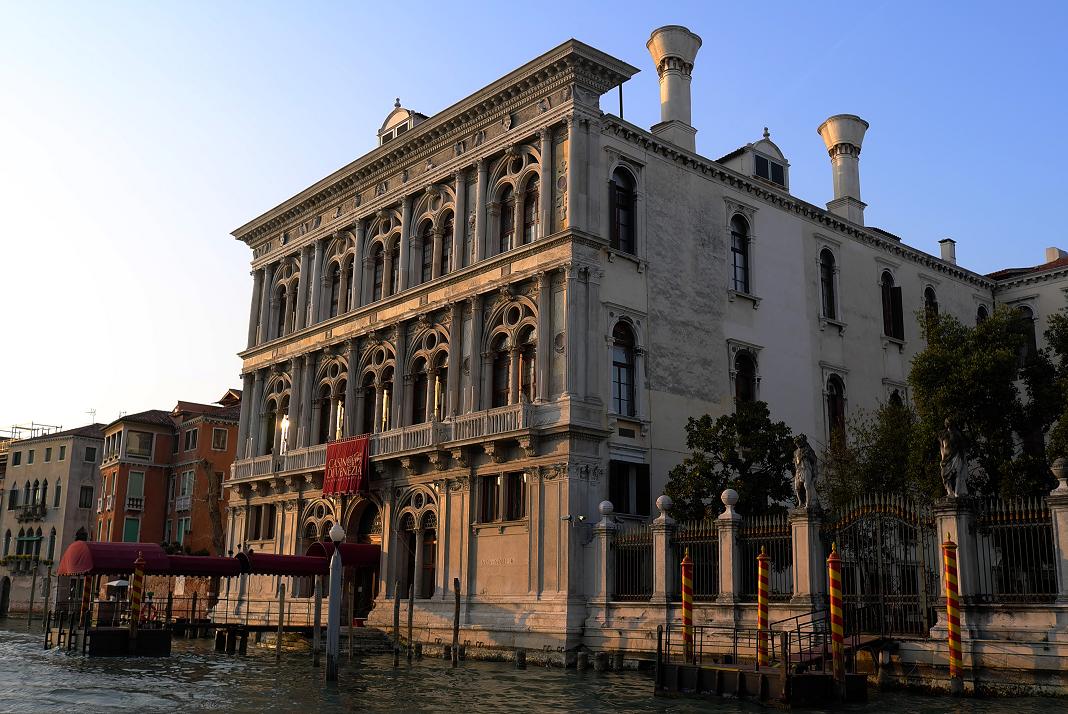
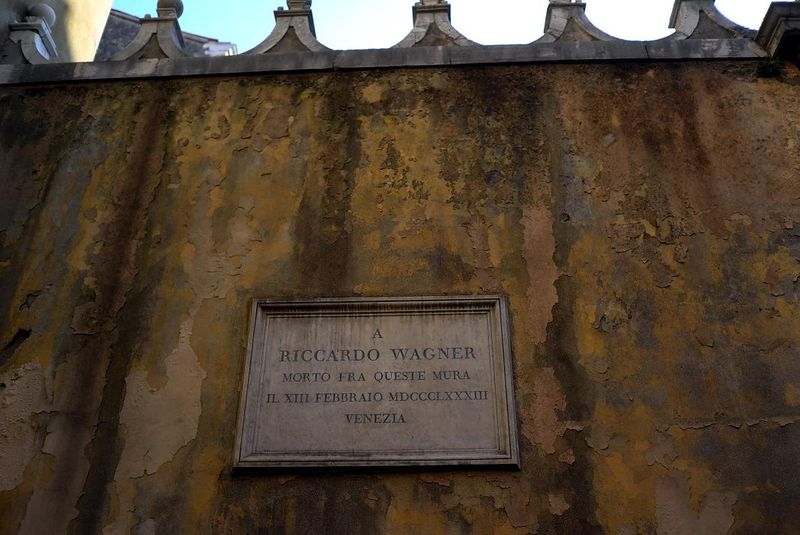
    Late in the evening of February 12, 1883, Richard Wagner sat down at his piano in the Palazzo Vendramin, Venice, and played the Rhinemaidens’ Song from DAS RHEINGOLD. Wagner had been in poor health for weeks, and had come south with his family from Bayreuth following the 1882 festival to recuperate in the warmer climate of Italy. Cosima was with him that night as he finished the Rhinemaiden theme, and he said to her: “I am fond of them, these creatures of the deep with their longings.”

    The next day, February 13th, Wagner felt unwell and decided to stay in his room; Cosima heard him talking to himself and shuffling thru his papers. She went down to luncheon with the children but suddenly the maid rushed in saying that Wagner was calling for his wife. Cosima dashed blindly from the dining room, running head-long into a doorframe which did not deter her. She reached her husband’s side just as he was collapsing of heart failure. His pocket watch fell to the floor. “My watch!” he exclaimed as the life drained out of him. For hours on end, Cosima remained in the room, cradling Wagner’s body. At last she was prevailed upon to return to reality for the sake of her children. Wagner’s coffin was transported back to Bayreuth and he was buried in the garden at Wahnfried. Cosima lived on for nearly fifty years before joining her husband in his resting place.

    Copy of 2

    My friend Kokyat was recently in Venice and he very kindly stopped to photograph the Palazzo Vendramin for me. As someone with a mortal dislike of travel, I’m so grateful to have these images of one of the very few places that I would actually love to visit; Bayreuth is another fantasy destination. If only I could simply be there without having to get there.

    Copy of 1

    The Palazzo Vendramin houses a Wagner museum in the rooms where the composer lived during his last weeks; the main floor of the building is given over to a casino. When Kokyat walked in, he was urged to buy chips and gamble but he declined.

    Copy of 3

    Cosima Wagner kept a detailed diary throughout her marriage to the great composer. The story of his playing of the Rhinemaiden music on the evening before his death marked the journal’s last entry. Although she lived on for decades, her diary ended with her husband’s death.

    All photos by Kokyat.

  • Rita Gorr Has Passed Away

    DSC03642

    Another colossal figure from my early days as an opera lover has passed away: the Belgian mezzo-soprano Rita Gorr died on January 22, 2012 at the age of 85. The great singer had a relatively brief but busy career at the Metropolitan Opera; from 1962 thru 1966 she sang 42 performances in New York City and on tour, including Amneris, Eboli, Dalila, Santuzza, Waltraute in GOTTERDAMMERUNG and Azucena. It was in the last-named role that I heard her live for the only time, at the Old Met:

    Metropolitan Opera House
    November 25, 1965

    IL TROVATORE {350}
    Giuseppe Verdi

    Manrico.................Bruno Prevedi
    Leonora.................Gabriella Tucci
    Count Di Luna...........Robert Merrill
    Azucena.................Rita Gorr
    Ferrando................Bonaldo Giaiotti
    Ines....................Lynn Owen
    Ruiz....................Charles Anthony
    Messenger...............Hal Roberts
    Gypsy...................Luis Forero

    Conductor...............Georges Pretre

    Her singing was powerful and intense, and all evening long she and her colleagues received vociferous applause and bravos. What a great evening for a young opera buff!

    Rita Gorr extended her career into the 21st century; her final stage performances were in 2007 as the Old Countess in Tchaikovsky’s QUEEN OF SPADES at Ghent and Antwerp.

    Only recently I acquired a copy of the Leinsdorf recording of Wagner’s LOHENGRIN and have been listening to it over the past few days. It now takes on greater significance since Ms. Gorr is the majestic Ortrud, singing in the grand manner. In the great duet for husband and wife which open Act II, William Dooley as Telramund expresses his fear that his defeat by Lohengrin in Act I was a sign from God. “Gott????!!” Gorr/Ortrud responds ironically, then lets out a daemonic laugh. Brilliant!

    Rita Gorr’s classic EMI solo disc of arias seems to be unavailable now; I owned it on LP as a young man and literally wore out the grooves. But several tracks can be found on YouTube. Here is her Liebestod from TRISTAN UND ISOLDE, sung with an Old World grandeur that seems to have vanished as opera moves away from its voice-centric uniqueness into a more generalized feeling of being mere entertainment.