Tag: Opera

  • The Angel

    Myrrha01
    December 23, 2011 – Today is the birthday of Mathilde Wesendonck (above) who wrote five poems which Richard Wagner set to music in 1857-1858; the cycle became known as the Wesendonck Lieder. At the time, Wagner and his wife Minna lived together in the Asyl, a small cottage on the estate of Otto Wesendonck, Mathilde’s husband. It is unclear whether Wagner and Mathilde actually had an intimate physical relationship but the composer certainly was infatuated with her, causing his mentally unstable wife to erupt in jealous fits.

    The poems themselves are wistful and dreamlike; their language reflects the emotional intensity of the Romantic style which by that time was highly developed. Wagner called two of the songs in the cycle “studies” for TRISTAN UND ISOLDE: in Träume we hear the roots of the love duet from the opera’s second act, and Im Treibhaus uses themes later developed in the prelude to Act 3. The chromatic-harmonic style of TRISTAN suffuses all five songs and creates the musical unity of the cycle.

    Wagner initially wrote the songs for female voice and piano alone, but later produced a fully orchestrated version of Träume, which was performed by a chamber orchestra under Mathilde’s window on the occasion of her birthday in 1857. The orchestration of the whole cycle was later completed by Felix Mottl, the famed Wagnerian conductor.

    Tiana Lemnitz sings the cycle’s opening song, Der Engel here.

    “An angel came down to me   
    on shining wings  
    and bore my spirit  heavenward.”

  • HANSEL & GRETEL at The Met

    KLsideshot

    Wednesday December 21, 2011 – The presence of a number of intriguing names in the cast (led by Kate Lindsey, above, as Hansel) drew me back to the Met’s dark and not very pleasing production of HANSEL & GRETEL which is playing during the holiday season. It’s a far cry from the Met’s older production with its fanciful gingerbread house and jolly, green-tongued witch, Rosina Daintymouth. In the current incarnation the characterizations of both the witch and the parents are based on infamous British serial killers. There’s little magic to be found visually…

    Met_Opera_Hansel_Gretel_31_medium

    …though a couple of nice images crop up here and there, like the phalanx of chefs (above) who serve a feast to the starving children. But for the most part the production is earthbound and lacking in fantasy.

    What drew us to see it again – in addition to the singers – was the music itself (Humperdinck greatly admired Wagner), as well as a conductor new to the Met podium: Robin Tacciati . He provided appealing orchestral textures all evening and his interpretation brimmed over with emotionally satisfying colours. Unfortunately, his first act seemed rushed and he often let the large orchestra overwhelm the voices.

    HanselGretel1112.06

    As the two children, Alexandra Kurzak and Kate Lindsey (above) entered fully into the demanding staging of the work which calls for lots of physicality, dancing and mime…and getting plastered from head to toe with foodstuffs from the witch’s kitchen. Kate was virtually slathered in pudding and jam, then plentifully dusted with cocoa and powdered sugar. Alexandra staggered around the set with a huge platter of melting chocolate cookies and a bowl of custard. She continues to sing while stuffing various sweets into her mouth. Sticky fingers? Who needs Mick Jagger? 

    Despite all the things they are called on to do and eat, both Alexandra and Kate managed to sing very well into the bargain. Alexandra’s voice has girlish, lyrical appeal and even though the orchestral volume forced her to push the voice in a couple of spots, her Gretel was very prettily sung, especially in her exquisite vocalizing of the famous prayer. Kate has one of the truly distinctive voices in the opera business these days and her singing is impeccably tailored, warm and clear. As hansel, she is a truly convincing boy onstage, expanding her repertory of trouser roles: her Cherubino and Nicklausse were perfect, her Siebel’s coming up, and I’m longing for her Octavian. But she shouldn’t spend her whole life in pants, she’s far too pretty: so I hope we will have her Rosina and Dorabella soon, and I’d love to see her as Berlioz’s Beatrice.

    HanselGretel1112.09

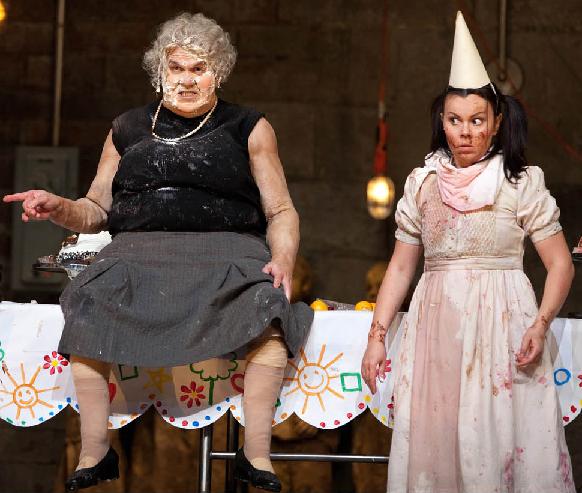
    Robert Brubaker, a teriffic Mime in SIEGFRIED at the Met a couple of seasons back, was a huge-voiced and creepy Witch. It’s so eerie to hear his voluminous character-tenor sound emanating from the frumpy old biddy in a fat-suit. Robert was superb and, like Kate and Alexandra, simply threw himself into the production’s food fantasy. Photo above: Robert Brubaker and Alexandra Kurzak.

    HanselGretel1112.02

    As the parents Peter and Gertrude, Dwayne Croft and Michaela Martens (above) excelled. They have authentic Met-size voices and took the waves of sound coming up from the pit in their stride. I’ve always loved Dwayne Croft’s voice since I first heard him as Puccini’s Marcello at Glimmerglass many moons ago. He sounded fabulous tonight. Dmitry and I are very fond of Ms. Martens and she sang with power and attractive tone as the desperate mother. If the Met management had any imagination, Michaela would be doing roles like Fricka, Venus, Brangaene and the Berlioz Cassandra here. I could even imagine her as a very fine Sieglinde.
    HanselGretel1112.07

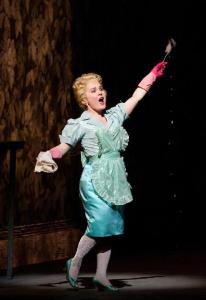
    Ashley Emerson (above) was a delicious Dew Fairy, a petite elfin maiden with tiny Sylphide wings. Her singing was bright and light-filled, a perfect wake-up call. She carries on a tradition – both in-house and on recordings – of casting wonderful singers in the opera’s two cameo solo roles. Her evening counter-part was the Sandman of Jennifer Johnson Cano who sang very nicely indeed.

    The musical pleasures of the evening were offset by the overall drabness of the production. There were lots of empty seats throughout The Met so word must have gotten out that this is not a festive holiday treat with an underlying moral message but rather a grotesque take on a story and score which should be heart-warming but instead leaves us slightly nauseous.

    A major failure of stagecraft comes hear the end when the many children who had been under the witch’s spell are set free. The director apparently couldn’t think of any better way to handle this than to lower the curtain on an empty set and then bring it up again 30 seconds later on a stage filled with two dozen urchins. Then the uplifting melodic benediction launched by Peter as the work comes to an end failed to resonate because there was no context of religiosity anywhere else in the production.

    Act I takes place in a desolate kitchen where Hansel and Gretel seem like manic-depressives and where Gertrude is on the verge of committing suicide. The scene in the forest is instead set in a large empty hall with green-leaf wallpaper. It’s too dim, and nothing seems to be happening til the old Sandman and  – later – the chefs arrive. The witch’s kitchen is drably industrial and she is played like an over-the-top drag version of Julia Child, flingling flour and powdered chocolate all over the place. Candy, pudding and strawberry preserves are smeared on Hansel and Gretel, and Hansel is trussed up for roasting. The scene is vulgar and not funny in the least though it is broadly played. 

    The English translation is very Brit-oriented and, thanks largely to the over-enthusiastic conducting, much of it didn’t register. I’d like to see the Met dump this production and give us a more attractive, kid-friendly look at this opera. It should cast a Christmastime spell of hope and familial love; instead it only reminds us of the American knack for wasting food while children right here in Gotham don’t have enough to eat.

    Production photos: Mary Sohl/Metropolitan Opera.

    Metropolitan Opera House
    December 21, 2011
    In English

    HANSEL UND GRETEL
    Humperdinck

    Hansel..................Kate Lindsey
    Gretel..................Aleksandra Kurzak
    Gertrud.................Michaela Martens
    Peter...................Dwayne Croft
    Witch...................Robert Brubaker
    Sandman.................Jennifer Johnson Cano
    Dew Fairy...............Ashley Emerson

    Conductor...............Robin Ticciati

    The evening ended on a sweet note when I went backstage to see Kate and Ashley; I met both of them when they were in the Lindemann Young Artists Development Program at the Met and I’m very pleased to be following their successful careers. It was also nice to wish happy holidays to Michaela Martens and Dwayne Croft.

  • Met’s 1961 TROVATORE on SONY

    886979100626

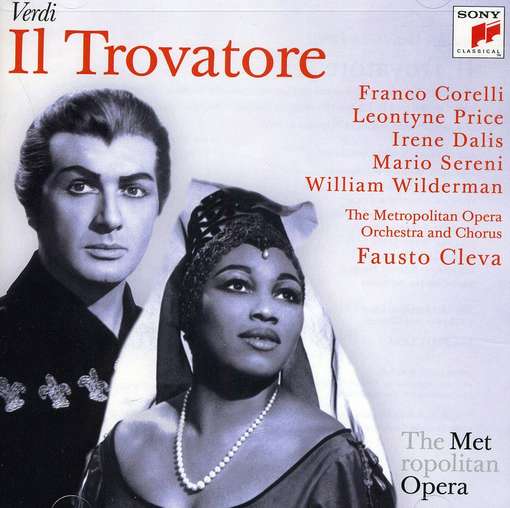
    The Metropolitan Opera on SONY series recently issued the famous February 4, 1961 TROVATORE broadcast with Leontyne Price and Franco Corelli which followed by a week their wildly acclaimed joint Met debut in the Verdi opera. The 1960-61 Met broadcast season was happening without my knowledge, otherwise I would certainly have been glued to my radio. But I did not discover the Met broadcasts until the following season when the fabled Sutherland ‘debut’ LUCIA was the first time I tuned in. From then until just a couple of years ago, I hardly ever missed a broadcast.

    I heard Price and Corelli many times at The Met – Leontyne I actually heard at the Old Met as Fiordiligi in COSI FAN TUTTE (in English) and Franco sang in the first performance I saw at the New Met (as Calaf in TURANDOT). I loved them both in those golden years though I knew Franco could be sloppy at times and Leontyne, over the years, developed some annoying idiosyncrasies. I’d never heard the 1961 TROVATORE so I set aside time to concentrate on it; I must say, it is a very erratic performance.

    Fausto Cleva, a favorite conductor of Renata Tebaldi, takes much of TROVATORE at a breathless clip. For the most part the singers manage to keep up though there’s some scrambling here and there. Aside from Leontyne Price, who strives throughout for thoughtful musicality, the principal quartet of singers tend to sing TROVATORE in verismo style rather than treating it like a god-child of the bel canto era. I suppose there’s a temptation to snarl and bluster in the opera’s dramatic utterances and in a live performance there is no recourse other than to let the singers do what they will in declaiming the text. But it becomes a bit tiresome after a while.

    Corelli is the most lachrymose Manrico I ever heard; he gives the same impression on his commercial recording of the role for EMI, though that is more artfully sung. Of course there is a lot of very powerful and exciting vocalism in his interpretation, but this is somewhat compromised by his melodramatic excesses. Upon receiving news that Leonora is to take the veil, Corelli has a little mad scene which wanders right off the musical map. But despite some slight variability of pitch at times, the utterly distinctive Corelli timbre and his sheer generosity of voice make him a Manrico on the grand scale. Interestingly, Corelli only sang this opera at the Met eleven times, retiring it from his repertory at the House in 1964. A new production in 1969 was reportedly planned for Corelli but in the event Placido Domingo was the Manrico.

    Leontyne Price on the other hand kept Leonora in her repertoire for over twenty years; the great aria “D’amor sull’ali rosee” might be considered the soprano’s theme song and she sang it superbly at the gala that closed the Old Met in 1966. The warmth and shimmering beauty of her timbre provide the vocal high points of this 1961 broadcast where she manages to maintain the Verdian line while her colleagues wander into melodramatic over-accenting of certain passages. For my money, Price was not a soprano with a first-rate forte top; she was best in the floating upper phrases of a role. Corelli drowns her out on the final D-flat of Act I, and her high-C at the climax of the Act IV duet with di Luna doesn’t have any zing to it. But overall it’s wonderful to hear the soprano in all her freshness in this music. Over the ensuing years Price developed a vocal ‘style’ that could be off-putting: growling in the lower register and introducing some bluesy mannerisms that could spoil her performances for me. You don’t hear these on her commercial recordings so much, but in the House she could be very self-indulgent. Nevertheless her singing could still thrill, right to her farewell operatic performance.

    I always loved the sound of Mario Sereni’s voice, so warm and attractive. For me he was at his best in verismo: his Marcello, Carlo Gerard and Tonio (PAGLIACCI) were all very fine; he did leave behind some wonderful studio recordings too, notably his Germont with de los Angeles and his Enrico on the RCA/Moffo LUCIA. But in this TROVATORE he seems way off form. I wonder in fact if he was actually originally scheduled for this  broadcast since Robert Merrill had sung di Luna in the Price/Corelli debut performance and sang it again in the next performance following the broadcast. Whatever the case, Sereni seems unprepared. He sings the wrong entry line in the first scene of Act III and gets lost in the recitative on his entry in Act IV. Some handsome singing along the way is offset by serious pitch problems in the great aria “Il balen”. It’s sad that this particular broadcast should be chosen as a document of Sereni’s live Met performances; I know I can never listen to it again.

    Irene Dalis was a great favorite of mine. She was a powerful stage presence and a singer who could be both passionate and subtle. Her performance is exciting but I feel of all the singers she may have been most put-off by Cleva’s fast tempi. In the Act III, Scene 1 finale Irene is pushed to the limits by the conductor’s absurdly rapid pace and it seems to me that she simply stops singing during the final bars of music. Her final scene is very impressive, though, with the quiet calm of her “Ai nostri monti” and a sustained high B-flat in her last triumphant, vindictive phrase. Ten years after this broadcast, I saw Irene’s Azucena at the Met during a June Festival performance. Despite the intervening decade of singing some of opera’s most demanding roles, she was in fact far more thrilling and vocally secure than on this 1961 broadcast.

    It’s good to have a document of William Wilderman’s performance of Ferrando; his ample and darkishly dramatic singing gets the opera off to a strong start. Teresa Stratas sings the brief role of Inez and there is no mistaking her voice. She strives to make something lovely of her phrase bidding farewell to Leonora at the convent, but Price trumps her by coming in a shade early and stepping on the younger soprano’s tapering piano.

    For all its flaws, listening to this recording reminded me of how much I love this opera. Despite its improbable plot, the vast treasury of Verdi melody makes TROVATORE essential.

  • Giorgio Tozzi Has Passed Away

    Tozzi_pic2
    I’m very sorry to learn of the death of Giorgio Tozzi, the basso whose voice was among the first that I became familiar with when I started listening to opera at a very early age.

    My parents had presented me with a prophetic birthday gift: a two-LP set of Verdi and Puccini arias culled from various RCA Victor recordings. Tozzi was the featured basso (the other singers were Milanov, Albanese, Peters, Bjoerling, Peerce, Merrill and Warren…what a collection of voices to cut one’s operatic teeth on!) and I literally wore out the tracks of his performances of arias from NABUCCO and SIMON BOCCANEGRA. Once my voice changed I would try to sing along with Tozzi in these arias, and also with his rendition of “Some Enchanted Evening” which my mother loved so.

    IMG_0002
    Giorgio Tozzi sang Don Giovanni in the very first performance I ever attended at the (Old) Met…

    IMG_0001
    …and he was my very first Hans Sachs (at the ‘new’ Met). I saw him so many times over the years: as Daland, as Philip II, as Fiesco, as Colline, Mozart’s Figaro, Ramfis and and as Count Rodolfo in LA SONNAMBULA. He sang more than 500 performances with the Metropolitan Opera (in-House and on tour) between 1955 and 1975. He created the role of the Old Doctor in Samuel Barber’s VANESSA and sings in the classic recording of that opera. Tozzi sang in the final trio from LA FORZA DEL DESTINO during the gala concert that marked the end-of-an-era closing of the Old Met in 1966.

    In 1978, a few years after he had left The Met, I saw Giorgio Tozzi onstage for the last time. He sang (an acted) grandly as Oroveso in Bellini’s NORMA in a performance at Hartford CT opposite the thrilling Cristina Deutekom as Norma.

    Giorgio Tozzi’s voice became widely known outside the world’s opera houses when he sang the music of Emil de Becque for the soundtrack of the film SOUTH PACIFIC (Rossano Brazzi portrayed de Becque on-screen). Tozzi later appeared in stage productions of the musical and on Broadway in MOST HAPPY FELLA.

    Giorgio Tozzi sings the Old Doctor’s aria from VANESSA here: “For every love there is a last farewell; for each remembered day an empty room.”

  • John Mark Owen’s Sonatae II

    Copy of 1

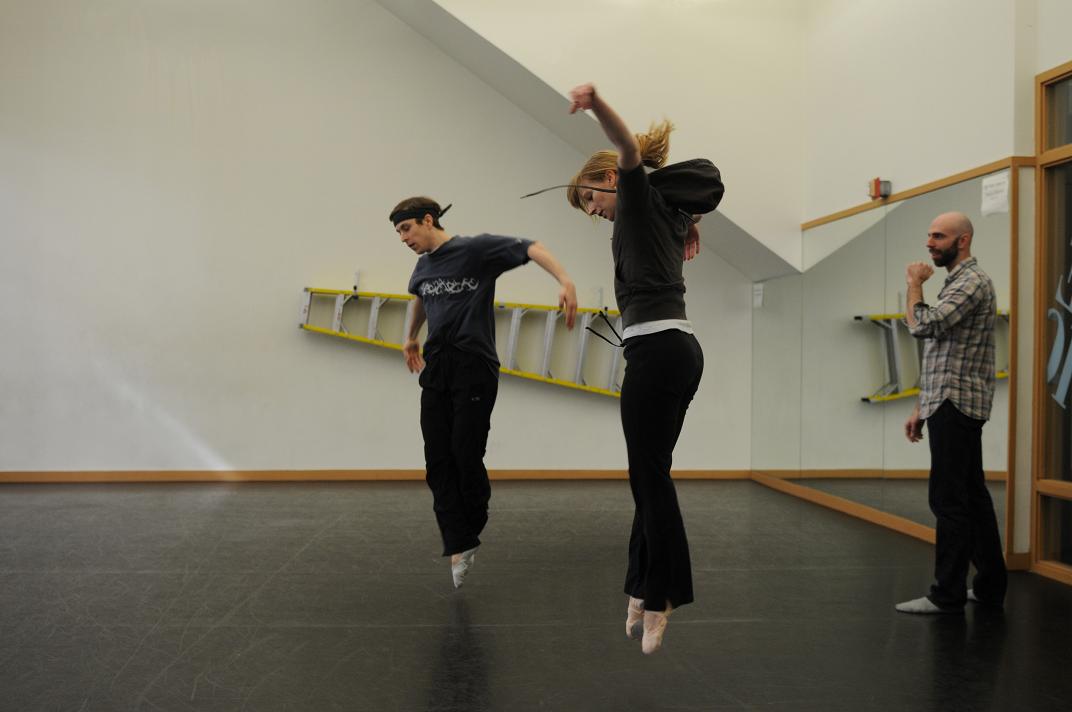
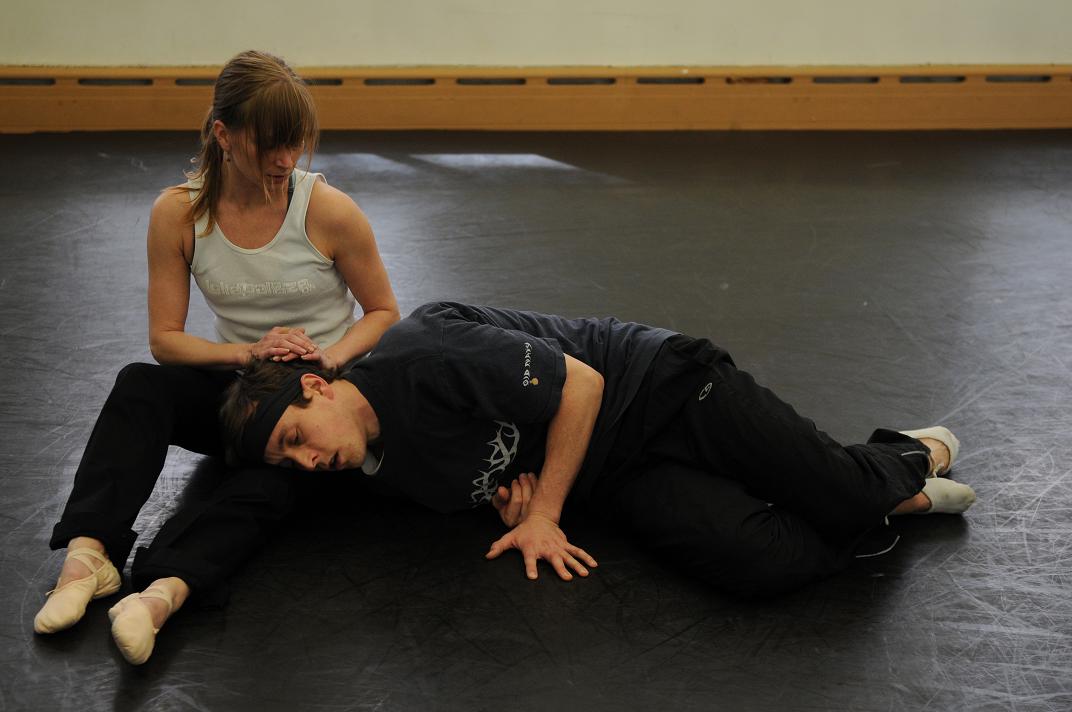
    Saturday March 26, 2011 – Choreographer John-Mark Owen invited us to watch a rehearsal of his newest work, Sonatae II, set to music of Alexander Balanescu. The duet will be shown at the 92nd Street Y on Sunday March 27th at 3:00 PM. The dancers are Jennifer Goodman and Josh Christopher, above in Kokyat’s photo.

    Copy of 2

    When Kokyat and I arrived at the studio, Jennifer and Josh were putting the finishing touches on the duet.

    Copy of 13

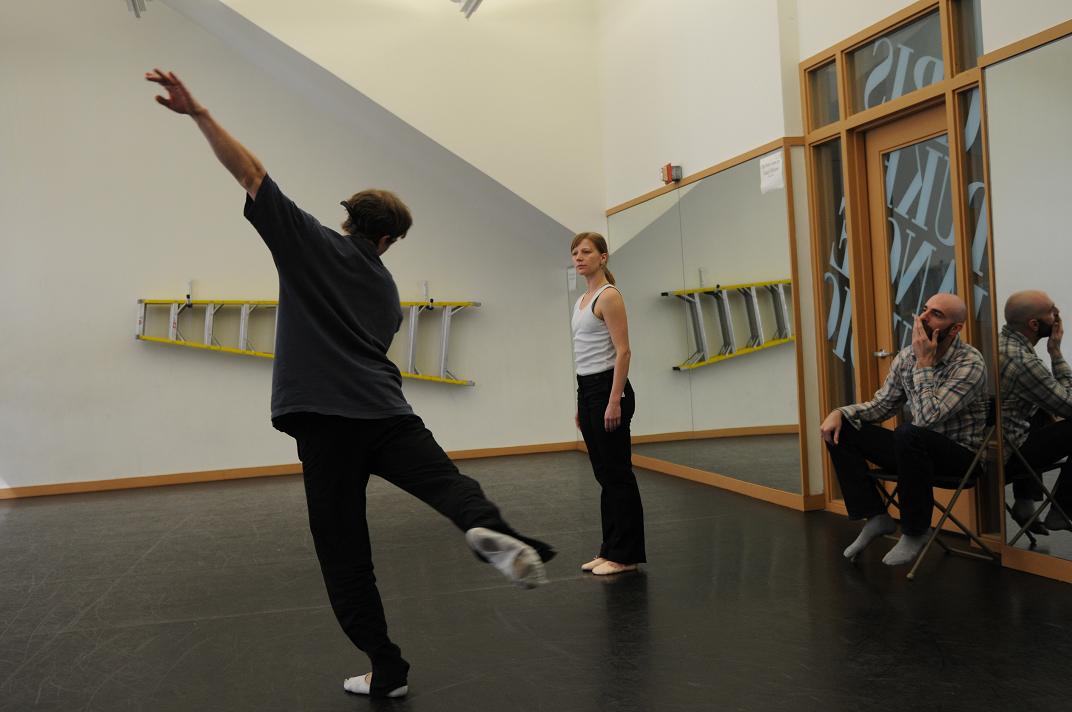
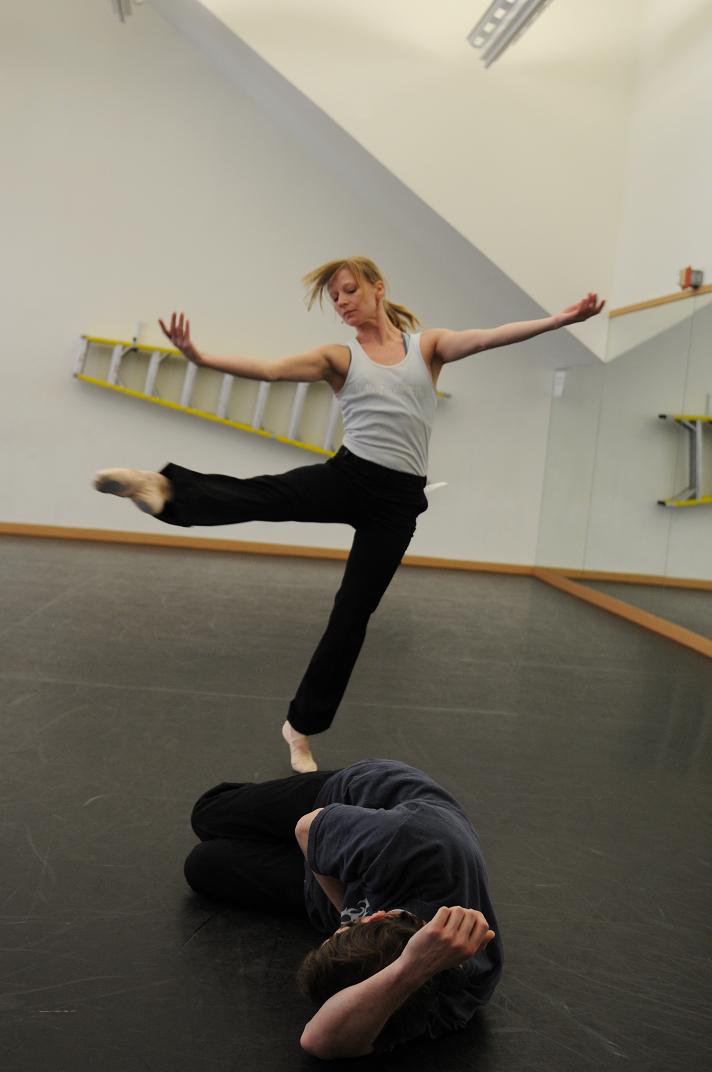
    They worked in silence with John-Mark and all the movement seemed so expressive. With a performance scheduled for the following afternoon one might have expected an atmosphere of urgency or even panic in the studio but instead there was an air of calm with the dancers taking their time to perfect the small nuances of gesture and expression that John-Mark was looking for.

    Copy of 24

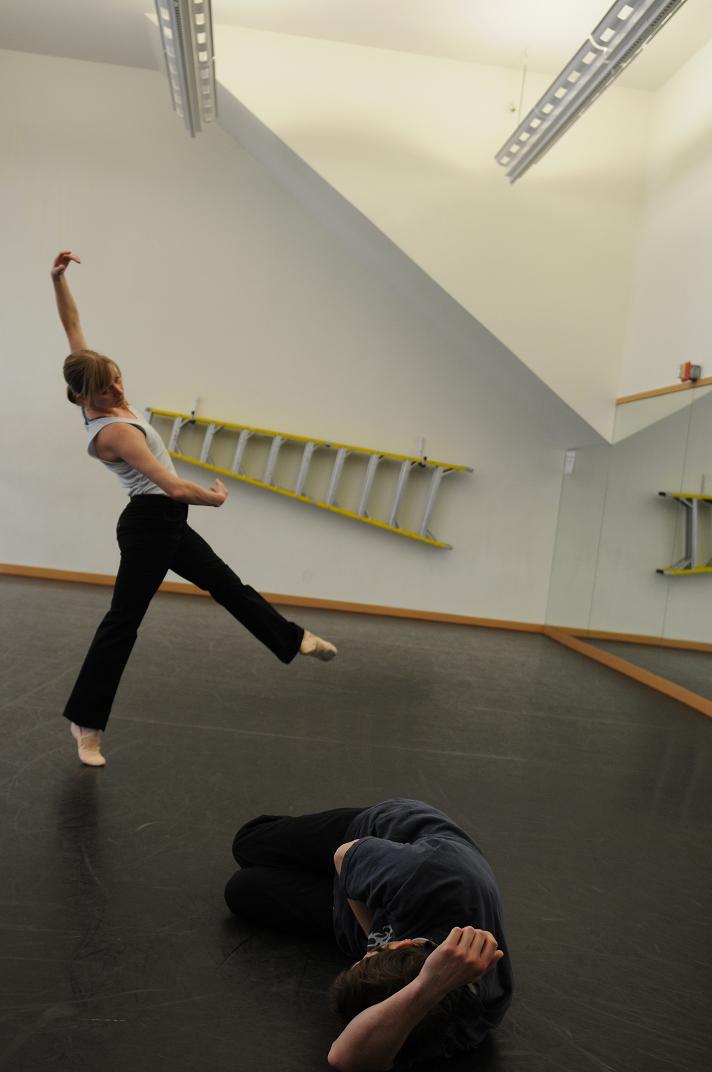
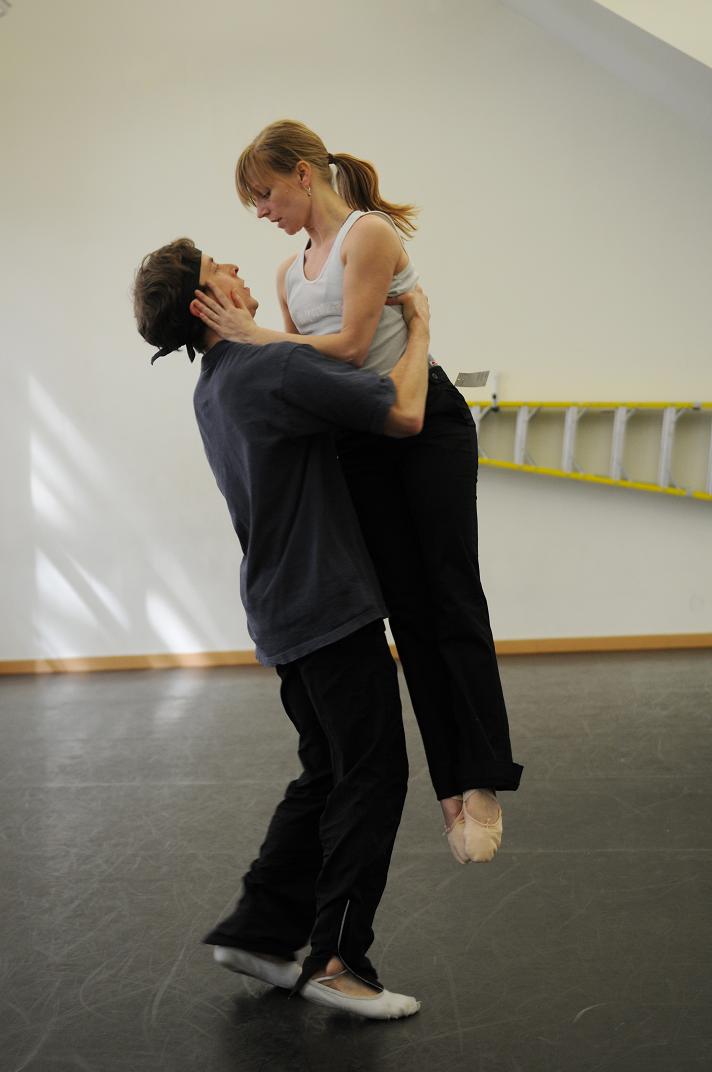
    With the studio time running out, John-Mark played the Balanescu music and what had been an attractive series of danced passages took on a deeper and more intense feeling altogether.

    Copy of 19

    The music is just so poetic, and the dancing took wing on it. 

    Copy of 17

    Copy of 26

    Copy of 20

    As soon as the run-thru finished the dancers quickly bundled up and packed off to the Y for further rehearsing. All photos: Kokyat.

    Jennifer Goodman is currently dancing a featured role in performances of Strauss’ CAPRICCIO at the Metropolitan Opera.

    On May 6th and 7th, John-Mark Owen’s Sonatae I will be performed by Jesse Marks at Manhattan Movement and Arts Center on a programme shared with the Island Moving Company of Newport, RI.

  • A Winter Sunday At the Met Museum

    P1170650

    Sunday January 30, 2011 – Met Kokyat at the Met Museum today. For some reason, depite huge crowds in general, certain galleries were rather quiet. We saw lots of things we hadn’t seen before. Above: Sleeping Muse (bronze 1910 by Constantine Brancusi).

    P1170557

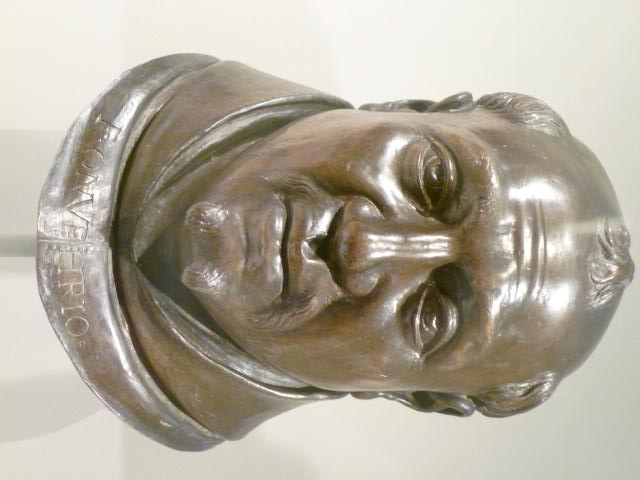
    Head of Brother Onufrio by Girolamo Campagna c. 1615-1620

    P1170560

    Madonna (detail from larger canvas) by Ettore Crivelli, late 15th century

    P1170563

    Back panel for a church choir stall, Mainz 1723-1736. This piece was a gift to the Met in 1952 from the great Wagnerian tenor Lauritz Melchior.

    P1170566

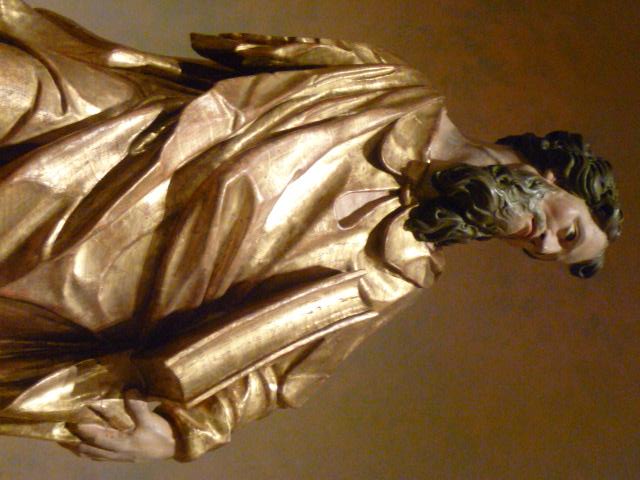
    Saint Mark, gilt wood Germany mid-18th century

    P1170575

    Winter, or La Frileuse, bronze by Jean-Antoine Houdon 1789.

    P1170581

    Lucretia by Philippe Bertrand c. 1700

    P1170602

    Portrait of a Woman, marble medallion by Henri, Baron de Triquenti 1850.

    I’ve put several images from today’s Met visit in a Facebook photo album here.