Tag: Patricia Brooks

  • Patricia Brooks as Mélisande

    Brooks 2

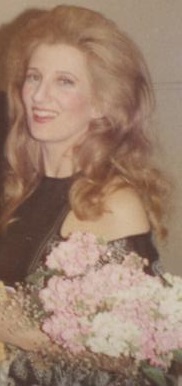
    Above: Patricia Brooks

    One of my dearest memories from my early opera-going experiences is of my first PELLEAS ET MELISANDE, in a lovely production at New York City Opera in 1970. Debussy’s haunting score moved me, even though it was not always easy to comprehend. And the poetry of the words conveyed a sense of mystery; since I had studied French in high-school (with a native-born Frenchwoman as my teacher) it was engrossing to listen to the language being sung.

    One of the most memorable portrayals in the superb cast was that of the mysterious, fragile Mélisande by Patricia Brooks. Apart from her iconic Violetta, Mélisande was the Brooks role that I recall most vividly. I was so excited to find this recording on YouTube.

    Read more about this soprano here.

    Julius Rudel is the conductor, with the following cast:

    Arkel – Malcolm Smith; Geneviève – Francis Bible; Golaud – Louis Quilico; Pelléas – André Jobin; Mélisande – Patricia Brooks; Yniold – Robert Puleo; Physician – Don Yule; Shepherd – William Ledbetter

    The above names may be largely forgotten by now, some 55 years on. To me they were remarkable artists who played a part in my abiding passion for opera.

    If you are not familiar with the Brooks voice, this will give you an idea of her unique qualities as a singer:

    Patricia Brooks as Violetta – w Molese – NYCO – 9~28~69
     

  • Patricia Brooks as Violetta

    6a00d8341c4e3853ef00e54ff4f69f8833-800wi

    I’ve seen more than a eighty different sopranos in the title-role of Verdi’s TRAVIATA over the years. Patricia Brooks’s interpretation of the role of Violetta in Frank Corsaro’s memorable production for the New York City Opera in 1966, with Placido Domingo as Alfredo, remains at the top of the list. Employing her rather slender and agile voice to optimum effect, she created a portrait of the doomed courtesan that has resonated over the decades. Paradoxically feverish and fragile, Brooks moved audiences – literally – to tears.

    Listening again, nearly fifty years on, to my in-house recording of the Act I scena brings back a flood of memories of the myriad nuances – both vocal and dramatic – that gave the Brooks Violetta its unique place in the opera’s performance history.

    One thing about Ms. Brooks in this role: she was forever making tiny changes in both her singing and her acting of the role, maintaining its freshness over the half-dozen times I saw her in the role. As Matthew Epstein, a great Brooks admirer, said: “No two Brooks Violettas are alike!”

    Patricia Brooks as Violetta – w Molese – NYCO – 9~28~69

    There were other Violettas who moved and thrilled me, but none quite reached the soul of the desperate woman who sacrifices her own happiness so that someone else may be happy.

  • Gertrude Grob-Prandl

    Gertrude grob-prandl

    While I was working at Tower, I got into a discussion one day with my boss and a couple of the other ‘opera people’ who worked there. We were naming favorite singers and in one breath I mentioned Nilsson, Rysanek, Behrens and Dame Gwyneth Jones. “Oh, so you’re a size queen!”, Bryan laughed. Well, not really…since I also loved people like Reri Grist, Patricia Brooks, Lucia Popp and Kathleen Battle. But if you want to stereotype me, go right ahead: because I do love big voices.

    The four ‘loud ladies’ I mentioned above were among the largest voices I ever heard live. I guess Dame Gwyneth’s was the biggest of all though I’d also have to mention Angeles Gulin who, in a concert performance of LES HUGUENOTS at Carnegie Hall (1969) unleashed an enormous voice in Valentine’s music. But there was one voice, often described as the largest of all operatic voices in living memory, that for some reason I had never heard: that of the soprano Gertrude Grob-Prandl.

    Of course I’d heard people talking about her, and I read the article about her in Lanfranco Rasponi’s excellent book The Last Prima Donnas. But I’d never heard her sing a note until about a week ago when I was sampling different versions of Ortrud’s Invocation from LOHENGRIN on YouTube. Grob-Prandl’s rendition blew me away both in terms of the dimensions of the voice and the easy top.

    So I ordered a Myto recital disc by the soprano on which she sings music of Weber, Halevy, Meyerbeer, Wagner and Strauss and it’s all pretty glorious. Now I’m trying to locate her complete recording of TURANDOT. The voice does tend to go off-pitch slightly here and there, and a few notes take a split second to tonalize after she hits them – an endearing quality she shared with Leonie Rysanek.

    Grob-Prandl sings Isolde’s Narrative and Curse here.