
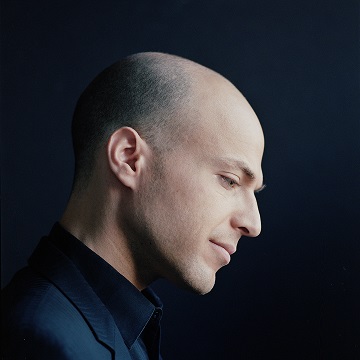
Above: violinist Paul Huang
~ Author: Oberon
Sunday January 26th, 2020 – As darkness continues to settle over the world at an alarming rate, the reassurance of great music, poetry, and art becomes increasingly essential in keeping our spirits from being battered down beyond repair. Tonight’s program of music by three French masters, played with elegance and passion by a quartet of extraordinary artists, was an uplifting experience such as Chamber Music Society of Lincoln Center are wont to offer us.
In her enlivening and reassuring speech of welcome, the Society’s co-Artistic Director (and tonight’s pianist) Wu Han spoke of the connection between the program’s three composers: Camille Saint-Saëns was the teacher of Gabriel Fauré, who in turn taught Maurice Ravel. Though the perfume of each work is distinctive, the feeling of a continuum was a key element as the evening progressed.
Saint-Saëns’ Trio No. 1 in F-major for Piano, Violin, and Cello, Op. 18 (1864) opened the program, played to perfection by Wu Han (piano), Paul Huang (violin), and Clive Greensmith (cello). It is a work full of mood swings. The work’s opening Allegro vivace has a playful, exhilarating, dance-like feeling. Briefly rhapsodic, the music mostly maintains a lightness which the three players seemed to revel in. At the Steinway, the virtuosic keyboard passages were given a quicksilver feeling by Wu Han. The silent communication between the musicians was charming to behold as the work unfurled with a lively sense of optimism.
A sustained tone from Mr. Huang’s 1742 “ex-Wieniawski” Guarneri del Gesù is heard over Wu Han’s mysterious pacing motif as the Andante commences. The violin’s wistful song leads the music to a darker, more dramatic place. Clive Greensmith’s rich cello tone is heard in an exchange of phrases with the Huang violin, building to arching, gorgeous harmonies. Twinkling sounds from the piano underscore an à la Russe passage from the cellist which is taken up by the violin, Mr. Huang’s tone at its most alluring and silken. Fascinating subtle sounds shine from the keyboard; the violin has a sweetly rambling paragraph which morphs into a cello cadenza. In a da capo, the movement’s feeling of mystery returns, but is even more pronounced. The music, played with captivating nuance, moves to a fading end. As silence fell, my companion and I sighed from the sheer beauty of it all.
The plucking, prancing Scherzo – alive with syncopated staccati – transforms into a swaying dance. The music romps along, witty and exuberant, with a da capo that leads to a false ending – the applause charmingly vetoed as the players hastily resumed in a dash to the actual finish line.
The trio’s final Allegro opens with the violin and cello trading very brief phrases over a sparkling piano accompaniment. A unique series of slides up-and-down the scale becomes emblematic here: first played by violin and cello, and later by the piano, they create a slightly woozy effect. With a sense of hustle and flow, this Saint-Saëns masterpiece concluded, igniting the first of the evening’s enthusiastic ovations.
Mssrs. Huang and Greensmith returned for Maurice Ravel’s Sonata for Violin and Cello. In 1920, Ravel was asked by his publisher Durand to contribute to an issue of “La Revue Musicale“, dedicated to Claude Debussy. Included were the first movement of Ravel’s Sonata for Violin and Cello, as well as works contributed by Debussy’s friends Stravinsky, Satie, Dukas, Bartok and de Falla. This first movement of Ravel’s Sonata, of which the autograph is lost, was later expanded upon by the composer into a four-movement work which includes some tantalizing modernities in the writing.
This Ravel work is rarely heard, and it seemed so fresh and contemporary in the hands of our two outstanding players this evening. Clocking in at twenty minutes, the sonata is in four brief movements. A touch of jazz can be felt in the opening Allegro, wherein the two impeccable musicians treated us to music with a feel of perpetual motion. Très vif describes the second movement, a pluck-fest that evolves into swift bowing. A bit of slashing is heard, followed by an almost boogie-woogie cello line and some delicious trills from the violin. After a slight lull, things pulse up again for a jazzy finish.
Marked Lent, the third movement opening with a deep, searching cello passage. Following this is a pensive duet that has an oddly liturgical feel, and gets quite eerie. A rise in passion is temporary, for the movement ends with a air of quiet sadness; Mssrs. Huang and Greensmith displayed consummate control in sustaining the atmosphere here. The final movement, established by the rhythmic cello, is dancelike and fun; at its end, the two players were heartily cheered as they bowed to the house, and to one another. Excellent!
Following the interval, violist Matthew Lipman joined his colleagues in a gorgeous performance of Gabriel Fauré’s Quartet No. 1 in C-minor for Piano, Violin, Viola, and Cello, Op. 15 (1876-79).
The rich opening of this piano quartet has a dramatic feeling, with the strings in unison. Mr. Lipman’s viola takes up a dipping motif, which is passed about as melodic strands develop. From the pianist, a solo is heard over sustained strings. Mr. Huang pursues the melody, so persuasively, as the movement flows along lyrically. Plucking sprightliness and brief disputes of rhythm mark the Scherzo, with its trio section offering a change of pace.
Wu Han’s magical mastery of the softest dynamics becomes a key element in the Adagio. Cello, viola, and violin in turn are each heard in a rising passage before meshing in somber harmonies. An interlude, tinged with regret, is finely rendered. Again Wu Han’s exquisitely delicate lyricism can be savoured, drawing us into the poignant sadness that permeates this movement: the composer’s reaction to having been rejected in his romantic pursuit of Pauline Viardot’s daughter.
The energetic Allegro molto is not the music that concluded this work when it was premiered in 1880. Fauré replaced the movement in 1883, prior to the piano quartet’s publication in 1884. The replacement offers a rising motif which the string players constantly return to, and makes for an enjoyable finale. Still, we are left wondering what the original final movement was like.
A packed Alice Tully Hall reverberated with applause and cheers as the musicians took their bows to a full-house standing ovation. The players responded to our acclaim by offering a lovely Schumann encore before sending us forth to face the realities of life with a renewed sense of hope.
~ Oberon

 Oberon's Glade