Tag: Paul Kolnik

  • Balanchine Classics @ NYC Ballet

    4852307_orig

    Above: Ashley Bouder and Andrew Veyette in DONIZETTI VARIATIONS; photo by Paul Kolnik

    Wednesday January 28th, 2015 – So pleasing to savour another all-Balanchine programme at New York City Ballet. Tonight’s line-up featured some prominent debuts, and there was excellent work from the soloists and corps. The audience, perhaps affected by the winter chill, didn’t seem to display the enthusiasm that the performance merited, and it wasn’t til the end of the evening that they finally roused themselves from their lethargy to give Teresa Reichlen and Adrian Danchig-Waring a well-deserved round of cheers for their joint debut in CHACONNE.

    DONIZETTI VARIATIONS is always a joy to experience, especially when it is danced with such flair and fabulousness as it was tonight by Ashley Bouder and Andrew Veyette. Ashley was beyond awesome and amazing (those two over-used words, but here thoroughly apt). Her dancing has reached a pinnacle of technique, artistry, and grace; but since she seems to take herself to ever-higher levels from season to season, it won’t surprise me if she continues to ascend. Tonight she was thrilling in her fluent rendering of the steps, her innate sense of stagecraft, and her sheer joy at being able to dance like this.

    Few danseurs could hold their own onstage with such a paragon, but Andrew Veyette managed to do just that, filling the space with his virtuoso feats yet also displaying a cordial lyricism in his partnering as well as a wry bit of humour when inter-acting with the corps. Team Bouder-Veyette simply danced up a storm.

    Outstanding corps dancing in DONIZETTI tonight: Mr. B gives them a lot to do and they went at it with élan. Caught without my opera glasses, I was left to admire their dancing from a distance: Mllles. Adams, Dronova, Gerrity, Johnson, Kretzschmar, and Segin along with those three genial virtuosos: Alberda, Applebaum, and Schumacher.

    LA VALSE looks gorgeous with its recently-freshened costumes. It opens with a delectable trio of “Fates” – Marika Anderson, Gretchen Smith, and Lydia Wellington; they immediately drew us into the ballet’s atmosphere with their glamorous mystique. 

    Three pairs of soloists then engage us with some marvelous dancing: Lauren King and Antonio Carmena are suave and lyrical whilst the vibrant partnership of Georgina Pazcoguin and Sean Suozzi generated a very special electricity. Ashley Laracey (surely a candidate for the leading role in this ballet) was so lovely in her solo, and she and Zachary Catazaro were another marvelous match-up. Zachary, with the poetic appearance of a 19th century romance-novel heart-throb, really commanded the stage in his extended scene with Marika, Gretchen, and Lydia.

    Sara Mearns brought a voluptuous quality to the role of the doomed girl; any ballerina taking on this iconic part must contend with memories of Rachel Rutherford and Janie Taylor, each of whom owned it during their NYCB careers. Sara, ever-lovely to watch, already draws a convincing portrait of the girl’s mixture of vanity, vulnerability, and palpitating curiosity. More nuances will doubtless develop as she goes deeper into the role (this was her debut). Tyler Angle was pale and distraught as her lover – what a courtly presence he can create – and Justin Peck, livid of visage, portrayed Death in a tour de force performance of frightening stillness and surety of domination.

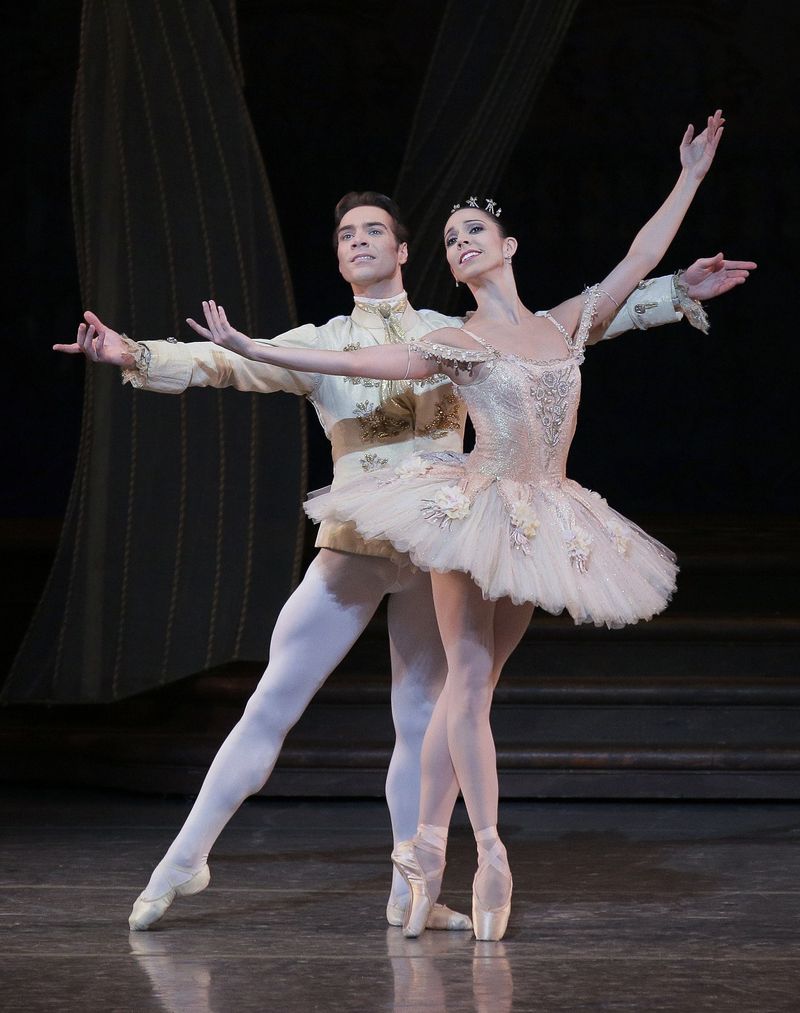
    In CHACONNE we could welcome the debuts of Teresa Reichlen and Adrian Danchig-Waring, those gorgeous creatures. As a counter-poise to SERENADE, the ballerina in CHACONNE first appears with her hair down, a Grecian goddess wandering through Elysium; later she reappears in full ballerina mode: hair up, and wearing a bejeweled wisp of a frock. Tess was radiant throughout: so expressive, and with her revelatory extension. Adrian looks like Apollo re-incarnated.

    The two dancers experienced a minor partnering glitch late in their first duet, a spot where others have glitched before. They covered it beautifully, but it left me wondering what is happening here choreographically that causes the problem (my fourth time to see it happen, in exactly that same spot) and whether it might be altered slightly to assure a smooth transition.

    Thereafter Tess and Adrian were truly splendid: wonderful mutual rapport, with their dancing elegant and so musically inspired. They built their duet – where they exchange solo passages while the other observes – with dazzling assurance and together they shook the audience out of its collective winter dream into a well-deserved round of cheers.

    In the pas de trois, Aaron Sanz re-affirmed his nobility and long-limbed grace, dancing with the queenly Gwyneth Muller and – a rising favorite of mine – Claire Kretzschmar: all three so appealing to behold. Lauren King and Antonio Carmena sustained the excellent impression they’d made in LA VALSE with a polished performance of their CHACONNE pas de deux which features fast-paced, rather tricky partnering elements. In the pas de cinq, Indiana Woodward brought a light freshness to her supple dancing. And in the finale, some expert demi-soliste dancing from Ashley Hod, Unity Phelan, Devin Aberda, and David Prottas. 

    So nice to run into Jessica (Sand) and Casey Blonde, and Carol Weil tonight!

    DONIZETTI VARIATIONS: Bouder, Veyette

    LA VALSE: *Mearns, *T. Angle, *J.Peck, Kayali, King, Carmena, Pazcoguin, Suozzi, Laracey, Catazaro, Smith, Wellington, Anderson

    CHACONNE: *Reichlen, *Danchig-Waring, King, Carmena, Muller, Kretzschmar, Sanz,*Woodward, Hod, Phelan, Alberda, Prottas

  • Balanchine’s “Davidsbündlertänze” @ NYCB

    C37708-3_Davidsb_LaraceySuozzi

    Above: Ashley Laracey and Sean Suozzi in Robert Schumann’s Davidsbündlertänze, photo by Paul Kolnik

    Tuesday May 20, 2014 – Created in 1980, George Balanchine’s setting of Robert Schumann’s Davidsbündlertänze was one of the choreographer’s last works. It’s a unique ballet, deeply moving in its depiction of the composer Robert Schumann’s descent into madness. 

    During the winter of 1854, Schumann’s developing insanity took a dramatic turn: he began hearing “angelic” voices which evolved into the bestial cries of wild animals. One February morning he walked to a bridge over the Rhine and threw himself in; he was rescued by fishermen. Schumann himself asked to be institutionalized, to prevent his becoming a burden on his wife, Clara. He was placed in a sanatorium. His doctors prevented Clara from seeing him for more than two years, until days before his death.

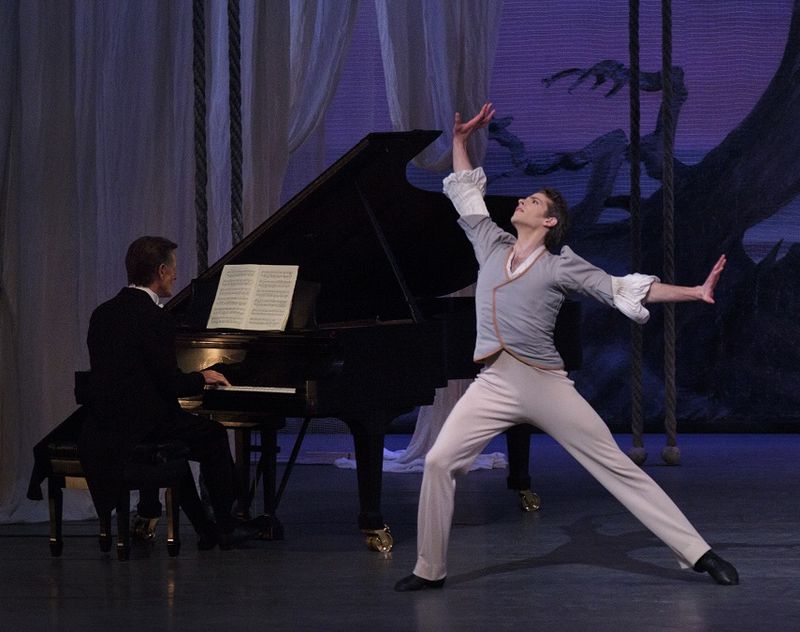
    The Rouben Ter-Arutunian setting for this ballet, which has an antique look, surrounds the dancing area with gauzy curtains. The backdrop shows a body of water – perhaps alluding to Schumann’s attempt to drown hmself – and a far-shining cathedral hovering in the sky, the source perhaps of the “angelic” voices summoning the composer. At one point, mysterious figues all in black and holding large quill pens appear: these represent the Philistines, whose admonishing writings were poised to oppose art or innovation in the arts and against who the Davidsbündler (the League of Davidthe composer’s imaginary society of artists) took a firm stance.

    The ballet, danced by four couples, seems to depict various phases of the relationship between Schumann and Clara; it may also hint as certain aspects of Balanchine’s many romances. In Suzanne Farrell’s book, Holding Onto The Air, the great ballerina says that Balanchine never told her what Davidsbündlertänze was “about” during the course of the ballet’s creation. It wasn’t until later that she made the connection to Schumann’s own life.

    Suzanne Farrell came very much to mind tonight in the ballet’s opening duet, for Rebecca Krohn reminded me more than ever of Farrell, who was of course Balanchine’s longtime muse. Partnered by the dashing Zachary Catazaro, Rebecca’s sweeping lyricism and the communicative range of her expressions and gestures kept me riveted to her throughout the ballet. This was Farrell’s role (the girl in blue) at the ballet’s premiere and – like Suzanne – Rebecca may eventually take on the “Clara” role (the woman in white). Tonight her dancing was spell-binding.

    C37699-15_Davidsb_Krohn

    Above: Rebecca Krohn in Robert Schumann’s Davidsbündlertänze, photo by Paul Kolnik

    This evening’s entire cast in fact were new to this ballet, having all debuted in it together the previous week. Continuing to make a vibrant effect in each new assignment, Ashley Laracey was at her most delightful here…impetuous, charming, and dancing so very well. Sean Suozzi, who always brings his own distinctive energy to each role he undetakes, was her excellent cavalier. Tyler Angle, dancing with space-filling generosity and fineness of line, courted Tiler Peck with gentle urgency. Tiler, who to my mind seems to move from one pinnacle to another in the progress of her career, was just spectacular, her lush swirls of pirouettes radiating confidence and grace.

    In her portrait of Clara, Teresa Reichlen, so elegant in her presence and so refined in her line and port de bras, strove poignantly to comprehend the changes that were overtaking her beloved. Her attempts to draw him back to her embracing tenderness became increasingly desperate, and Tess at the end must finally accept their parting: in an exquisite moment, she bows her head in silent grief as the light fades.

    In a major career leap, the tall and poetic Russell Janzen’s portrayal developed a melancholy acceptance of Schumann’s tragic destiny. At the end of his very first duet with Tess, Russell’s visage showed an early indication of madness with a far-away look. These momentary drifts away from reality eventually overtake him, and at the end of the ballet he withdraws with an expression mingling fear and resignation. Earlier, Russell’s solo – set to the score’s most haunting melody – was beautifully danced.

    C37701-8_Davidsb_Janzen_Crop1

    Above: Russell Janzen, with Cameron Grant at the piano, in Robert Schumann’s Davidsbündlertänze, photo by Paul Kolnik

    Cameron Grant, seated at the onstage grand piano, played the Schumann score with clarity and with tempos that seemed to propel the dancers while allowing them opportuniy for nuance. 

    Just as singers have sometimes told me they can’t sing anything after performing Franz Schubert’s “An die Musik”, it’s difficult to imagine watching (or dancing in) another ballet after Davidsbündlertänze, such is the haunting atmosphere it creates. And so I didn’t stay beyond the intermission: even going out to the Promenade seemed too hasty a return to reality. I was in a very subdued mood, and glad of a peaceful train ride home to reflect on the beauty of Schumann and touching artistry of tonight’s dancers.     

    ROBERT SCHUMANN’S “DAVIDSBÜNDLERTÄNZE”: Reichlen, Krohn, Laracey, T.Peck; Janzen, Catazaro, Suozzi, T. Angle [Solo Pianist: Grant]

  • Images from NYC Ballet’s Balanchine Evening

    C36439-15_Duo_MFairJAng_1

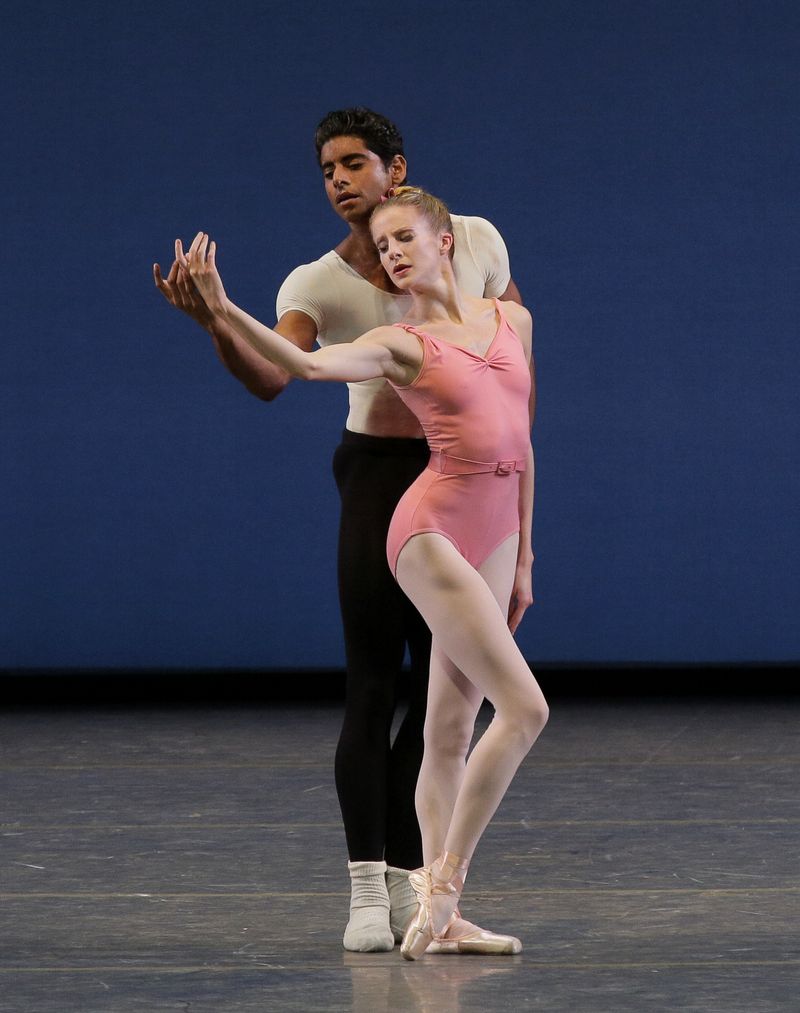
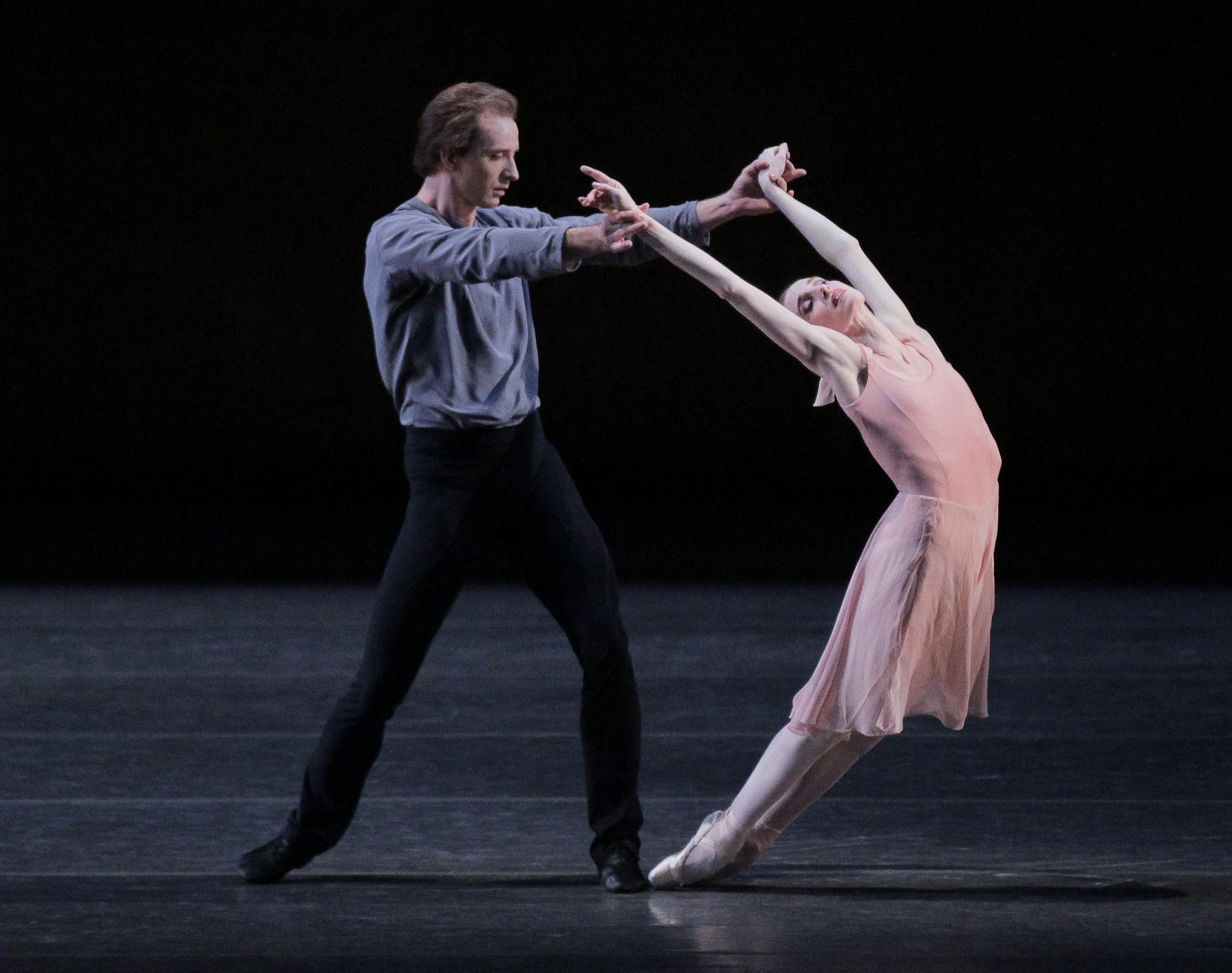
    A series of Paul Kolnik’s photographs from last night’s Balanchine programme at New York City Ballet. Above: Jared Angle and Megan Fairchild in DUO CONCERTANT.

    C34660-9_Sym3_HyltinRama

    Amar Ramasar & Sterling Hyltin in SYMPHONY IN THREE MOVEMENTS.

    C36436-12_Episodes

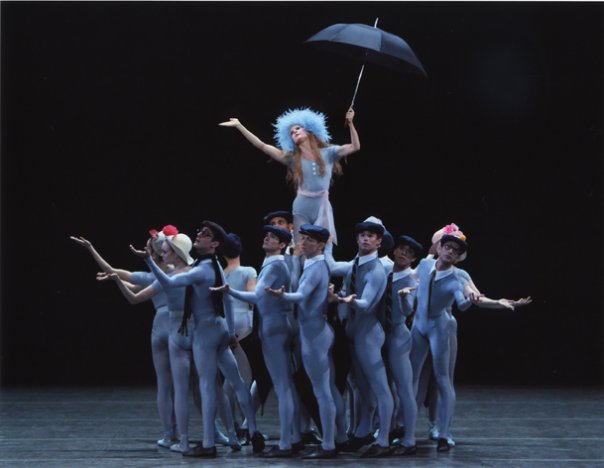
    Janie Taylor & Sebastien Marcovici with the corps de ballet in EPISODES.

    C36429-16_4Temp

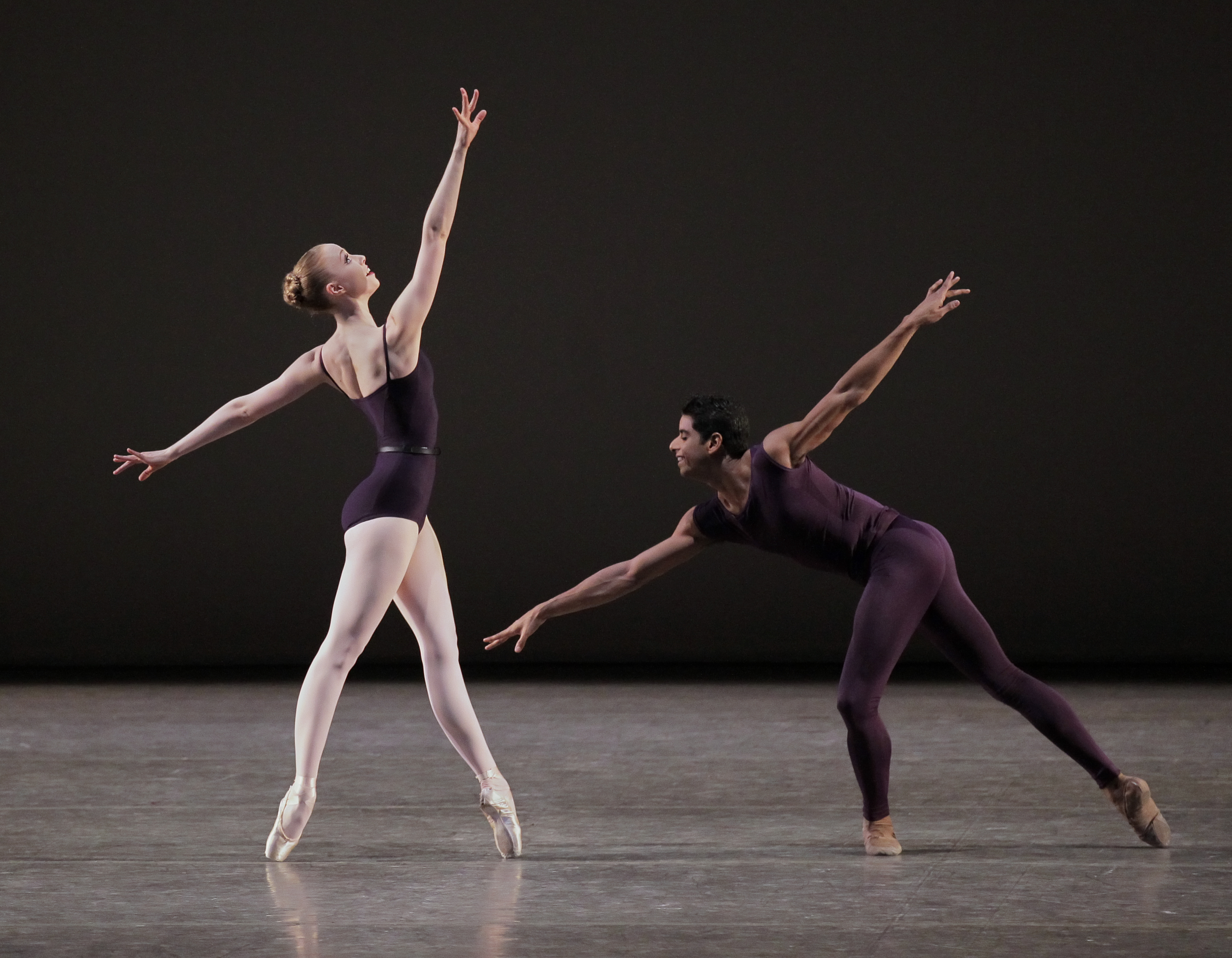
    Tyler Angle & Ashley Bouder in THE FOUR TEMPERAMENTS.

    My thanks to Mr. Kolnik and the NYCB press office for providing these photos

  • Bouder/Veyette SWAN LAKE @ NYCB

    C31750-6_Swan_BouderVeye (2)

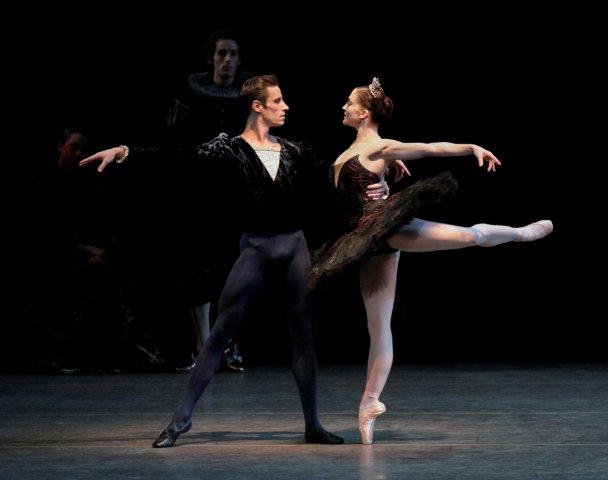
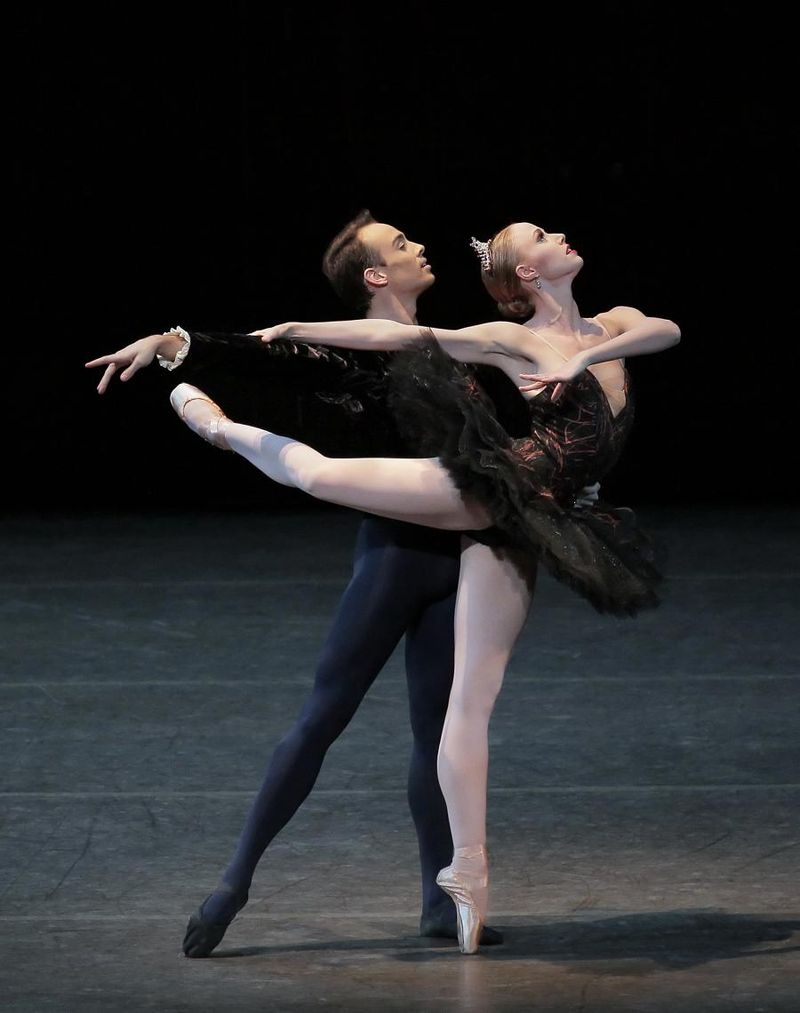
    Above: New York City Ballet principal artists Andrew Veyette and Ashley Bouder in SWAN LAKE; photo by Paul Kolnik

    Saturday evening September 21, 2013 – When New York City Ballet announced Peter Martins’ SWAN LAKE for their Autumn 2013 season I was hoping we’d have a 2-week run with some new Swan Queens; but instead there were only six performances (all, seemingly, sold out) and the dual role of Odette/Odile remained the property of three of the Company’s top interpreters: Sara Mearns, Teresa Reichlen, and Ashley Bouder.

    Tonight was an opportunity to re-visit the Bouder traversal of this very demanding dual role. In this video, Ashley speaks of her constant work in the studio, endeavoring to bring her interpretation of Odette up to the level of her Odile. Tonight she seemed to have reached – and even surpassed – her goal.

    A key element in making tonight’s performance so enjoyable was the lack of audience distractions, which so plagued the first half of the previous evening’s SWAN LAKE. Tonight we were seated amongst well-behaved folks who seemed keenly focussed on the stage throughout the performance; even the annoying late-seating was far enough away from us to be tuned out. It makes an enormous difference in one’s appreciation of the performance when there’s nothing to infringe on the powers of concentration.

    And so from the very first notes of the prelude to the final heart-rending departure of the doomed Odette, the evening was among the most enjoyable I have spent at NYCB in recent seasons.

    Clothilde Otranto paced the music beautifully: full-speed ahead when the drama called for propulsion; tenderness and a sense of lingering when love – or the loss of it – was the theme. The powerful ending of this SWAN LAKE – from both a visual and emotional standpoint – hits home every time, and Peter Martins’ remarkable vision of the ballet’s final moments tends to make me forgive some of his lapses in other productions.

    For people like me who simply adore the NYCB dancers, this ballet affords one of the most satisfying ways of savoring so many favorites all at once: from well-established principals to the newest apprentices, SWAN LAKE is a chance to revel in the enormous variety of faces, forms and personalities who make up this phenomenal Company. And so from curtain-up to curtain calls we are immersed in NYCB on a personal level.

    The sixteen corps dancers and the flock of small children who appear in the Prince’s Act I birthday festivities have plenty to dance, and they danced up a storm. As the opera glasses wander about the scene, you can pause anywhere and watch someone like Likolani Brown or David Prottas exuding their talents – both in terms of technique and stage-craft. This is not an anonymous bunch of automatons going thru the motions, but lively individual personalities doing what they love.

    Troy Schumacher gave a dazzling virtuoso display as the Jester – a demanding role in which the character, in this production, never overstays his welcome. Antonio Carmena as Benno danced with generous spirit and space-filling bravura: his jumps and turns clear and vivid. He shared the pas de trois with two of our recently-promoted soloists: Ashley Laracey and Lauren King, both dancing with sweet assurance. Marika Anderson’s Queen was excellent: her distinctive features reacting to the dramatic situation, her height and bearing setting her apart from her subjects.

    Andrew Veyette’s Siegfried was both impressively danced and instinctively well-acted; his portrayal of the lonely boy facing a destiny that doesn’t suit him was remarkably resonant. It’s no wonder that in his magical encounter with equally unhappy Odette he seems to have found his soulmate. That his love for her is her eventual undoing is the basis of the tragedy; his unwitting duplicity, concocted by Rothbart, leaves the bereft Prince on the brink of suicide at the end of the ballet. Andrew moved thru the events of the prince’s coming-of-age – his discomfort at having to choose a bride, his joy when his beloved suddenly appears in the ballroom, his desperation when Rothbart’s ploy is revealed – with a sense of natural nobility mixed with hapless naïveté; his final collapse in a state of deepest despair was so moving. All evening Andrew’s dancing – his lithe and effortless virtuosity – was aligned to his masculine grace and skillful partnering, making for a portrayal that was thoroughly satisfying in every way,

    Ashley Bouder’s technical sorcery and her sense of theatrical vitality have always made her Odile an exciting event. Not only is she undaunted by the role’s virtuoso demands, she simply revels in them – and she even adds her own flourishes. The character – sly, enticing, peerlessly confident – has always been a triumphant Bouder realization. Meanwhile, Odette – despite Ashley’s impeccable dancing – has seemed to just slightly elude the ballerina in terms of poetry and expressive nuance. Tonight she seemed to have moved deeper into Odette’s soul and found the needed resonance there: this seems to have come about both thru hard work and thru the natural virtue of the ballerina’s maturing into womanhood. Her Odette tonight was moving, passionate, tragic. Her performance of the iconic dual role is now a complete work of art, though I feel with certainty that she’s not one to rest on her laurels: I suspect the next time we see Ms. Bouder in this ballet she will have taken things to yet another level. But for now: a triumph.      

    As I remarked earlier, the evening was a feast for devotees of the Company: the Four Cygnets were especially well-matched and accomplished tonight: Sara Adams, Alexa Maxwell, Sarah Villwock and Kristen Segin were among the finest teams I’ve ever seen in this tricky piece.

    Presenting themselves as candidates for marriage to the Prince, six ballerinas dance a lovely set-piece in which each steps forward in turn to make her mark: Faye Arthurs, Likolani Brown, Meagan Mann, Jenelle Manzi, Mary Elizabeth Sell and Lydia Wellington all looked lovely in this piece, one of my favorite passages in the production. Faye, of the lyrical extension, was also seen as the Vision of Odette.

    Megan LeCrone looked superb in the pas de quatre, with Ana Sophia Scheller and Erica Pereira completing the trio of dark-haired beauties, and the amiable partnering and handsome virtuosity of Gonzalo Garcia making me wish he’d been cast as Siegfried this season (could we not have a Scheller/Garcia SWAN LAKE next time around?) 

    Georgina Pazcoguin gave off incredible star-power in the Hungarian dance, and the handsome and rather rare Craig Hall matched her for intensity and charisma. Janie Taylor’s intoxicating presence lured my opera glasses in the Russian dance, with Ask LaCour looming over her, part predator and part slave. In the Spanish quartet, Gretchen Smith and Gwyneth Muller imbued their steps wth a flamenco flourish, their yellow fans a decorative asset; Andrew Scordato and Taylor Stanley looked dashingly sexy. Allen Peiffer, always a handsome Neapolitan lad, now has a new village lass to charm: Kristen Segin was excellent and she and Allen are a delightful match-up.

    As the Black Swan pas de deux unfolded, brilliantly danced by Bouder and Veyette, a tall newcomer to the stage, Silas Farley, showed an already keen flair for stagecraft with his manipulative, faux-courtly Rothbart.

    And so we come to the end: at the lakeside where they had met, Odette and Siegfried are now torn asunder. The power of their love has vanquished Rothbart, but his curse endures. Odette vanishes amidst the swans, and Siegfried collapses in remorseful despair.

    ODETTE/ODILE: Bouder; SIEGFRIED: Veyette; VON ROTBART: Farley; QUEEN: Anderson; JESTER: Schumacher; BENNO: Carmena; PAS DE TROIS: Laracey, King; PAS DE QUATRE: LeCrone, Scheller, Pereira, Garcia; HUNGARIAN: Pazcoguin, Hall; RUSSIAN: Taylor, laCour; SPANISH: Smith, Stanley, Muller, Scordato; NEAPOLITAN: Segin, Peiffer; PRINCESSES: Manzi, Mann, Sell, Brown, Wellington, Arthurs

  • Reichlen/T Angle SWAN LAKE @ NYCB

    6a00d8341c4e3853ef014e5f6b6b16970c-800wi

    Above: New York City Ballet principal artists Tyler Angle and Teresa Reichlen in SWAN LAKE; photo by Paul Kolnik

    Friday September 20, 2013 – I’m an admirer of the New York City Ballet‘s Peter Martins production of SWAN LAKE, even though the first time I saw it (with Kyra Nichols in her only performance of it) I found it a great eyesore. I had vowed never to see it again but of course, this Company is my Company and how could I let anything deter me from seeing such Swan Queens as Miranda Weese, Wendy Whelan, Jenifer Ringer, Maria Kowroski, Jennie Somogyi and Sara Mearns? I soon made peace with the sets and costumes (basically by simply tuning them out), and on second seeing realized that there is no more potent ending for this ballet than that which Peter has crafted.

    Non-stop dancing and just enough mime propel the ballet forward. The familiar set-pieces are there, and Peter brings especial vitality to the villager’s dance in the opening scene and (truly lovely) the would-be-brides set piece which just precedes the arrival of Odile.

    This evening’s performance had its ups and downs. There was a bit of ragged playing from the pit here and there, and it seemed to me that Daniel Capps’ tempo for the White Swan pas de deux was just a bit too fast for Teresa Reichlen and Tyler Angle to make the maximum poetic effect. But much of the first lakeside scene was nullified for me by audience distractions (whispering mother and child behind me; a woman munching on cashews from a plastic cup; someone texting). I retreated to the 5th Ring for the second half of the evening and was far better able to concentrate there.

    The opening scene, where Siegfried’s friends from the village have come to celebrate his birthday with a party of the castle terrace (they’d never be allowed inside the royal residence per se) is one long dance-a-thon and the sixteen corps dancers were a pleasure to observe thru my opera glasses: corps-watching heaven. But apparently many in the audience had never seen chidren onstage so there was a lot of ooohing and aaaahing when the small fry appear (they danced very nicely).

    BallHarrison

    Harrison Ball (above, headshot by Paul Kolnik) scored a hit as the Jester; he was one of several dancers making role-debuts tonight. Lithe and agile, Harrison moved thru the virtuoso demands of the choreography with flair. Later, at the ‘official’ birthday party of his master, I very much liked Harrison’s facial acting throughout the Black Swan pas de deux: he seemed to be the only person at court to sense that something was amiss with this Odile woman and her sinister escort.

    Amanda Hankes, a natural aristocrat, made a youthful Queen. Taylor Stanley’s handsome Benno (debut) was another feather in this dancer’s cap; watching the vivacious Lauren Lovette in the pas de trois was a treat, and I liked the touch of rubato Ashly Isaacs brought to this attractive set piece.

    As the partiers went romping off, leaving the Prince, Benno and the Jester frozen in a gesture of farewell, the stage was set for the drama to begin. At this moment, NYCB decided it was time for a round of late seating, so we had the patter of feet, the urgent whispers, the bright glare of flashlights. The mood of the ballet was successfully broken.

    Teresa Reichlen’s opening jeté seemed to proclaim that the ballet could now move into the realm of poetry, but it was at this point that the distractions all around me commenced. Restive audience members are the bane of ballet-going: if you prefer to chat with your daughter, eat, or text, why did you come to the theatre?

    So despite being aware of Tess’s lovely attitude poses and deep back bends, and of Tyler’s pale and urgently tender personification of the Prince, much of this scene went for nought. I couldn’t wait to escape; I even thought of simply going home, but it seemed so unfair – this triumph of indifference – and there were dancers coming up in the second half that I really wanted to see.

    Tess was at her grandest as Odile, wonderfully predatory as she manipulates the hapless Tyler. Coached by the ultra-tall and sinister Ask LaCour as Rothbart, Tess used the role’s faux-Odette motifs with canny skill: a mistress of deceit. Her solo was gorgeously danced and she whipped off a blazing set of fouettés, followed by the sustained balances up the diagonal. Tyler’s solo was a beautiful paragraph of polished bravura. The pledge…the shock of  betrayal…the desperate rush to the lake…

    The final scene, built on the prince’s hopeless notion the damage could be repaired, was movingly played by Tess and Tyler. Odette knows her chance has been lost; when the Prince again raises his hand in pledge, she pulls his arm down and wraps it around her torso. This will be their last moment together. But now Rothbart must be defeated: in the brilliant coup de foudre the couple make a last stand for love and Rothbart is destroyed. But the curse has not been broken. In those last heart-rending moments, Siegfried tries in vain to forestall Odette’s transformation. But she vanishes among the ranks of the swans, leaving him to contemplate his failure. In this final parting, Tess and Tyler personified the despair of shattered hope.

    Back-tracking to the ballroom, there was lots of fine dancing – commencing with Harrison Ball’s playful number with three small jesters. The prospective brides arrive: in pastel frocks, the girls weave solo passages into a very charming ensemble: Sara Adams, Likolani Brown, Megan Johnson, Jenelle Manzi, mary Elizabeth Sell and Lara Tong each took the opportunity to shine. But despite this bevy of beautiful choices, the Prince demurs.

    The pas de quatre, a virtuosic set-piece, brought forth Savannah Lowery, Rebecca Krohn and Ashley Laracey each looking lovely and with accomplished dancing. But something was amiss: Chase Finlay, after squiring the girls thru the opening segment, did not perform his variation. And in the coda, Chase seemed to be marking. If Chase had sustained an injury, let’s hope it’s quickly remedied. I was left wondering how the conductor knew to skip the male variation music. 

    In the swirling Hungarian number, Gretchen Smith threw a dash of paprika into her role-debut dancing; Justin Peck was her rather somber and very impressive beau: now that Justin is taking the choreographic world by storm, we sometimes forget what a great presence he has as a dancer. Jennie Somogyi and Adrian Danchig-Waring (another newcomer to his role) were daringly provocative and physically fearless in the steamy Russian dance. New senoritas in Spanish – Meagan Mann and Lydia Wellington – vied for our attention with their footwork and their yellow fans; Daniel Applebaum and Zachary Catazaro (debut) were the dashing toreros, In a particularly appealing match up, Lauren Lovette and Devin Alberda (his debut) were the Neapolitan dancers, displaying Lauren’s piquant charm and a touch of devilry from Devin.

    The House was full to the rafters, and Tess, Tyler and Harrison were strongly cheered. Ask’s curtain call, drawing the villain’s booing, recalled Albert Evans in the same role: a glacial staredown, and a swirl of the cape. I ran into Albert during the intermission, handsome as ever.      

    ODETTE/ODILE: Reichlen; SIEGFRIED: T. Angle; VON ROTBART: la Cour; QUEEN: *Hankes; JESTER: *Ball; BENNO: *Stanley; PAS DE TROIS: *Lovette, Isaacs; PAS DE QUATRE: Laracey, Lowery, Krohn, Finlay; HUNGARIAN: *Smith, J. Peck; RUSSIAN: Somogyi, *Danchig-Waring; SPANISH: *Wellington, Applebaum, *Mann,*Catazaro; NEAPOLITAN: Lovette, *Alberda; PRINCESSES: Manzi, Sell, Johnson, Brown, Adams, Tong

  • Images from NYCB’s SLEEPING BEAUTY

    SleepingBeauty_Anderson

    Photos by Paul Kolnik from the New York City Ballet‘s performances of the Peter Martins production of SLEEPING BEAUTY, Winter 2013 season. Above: Marika Anderson as Carabosse. Click on the image to enlarge.

    Beauty_BouderVeyette

    Ashley Bouder and Andrew Veyette

    C35603-14_Beauty_HyltinKrohnRFair

    Robert Fairchild, Rebecca Krohn and Sterling Hyltin…click on the image to enlarge.

    C35642-1_Beauty_SchellerGarcia

    Gonzalo Garcia and Ana Sophia Scheller

    I think this production should become an annual Wiinter-season tradition at NYCB: full houses, beautiful sets and costumes, a great score and…wonderful dancers.

    Henning Rubsam reflects on the performances he saw here.

    My thanks to Mr. Kolnik and the NYCB press department for providing these photographs.

  • Images from Wheeldon’s LES CARILLONS

    C33333-13_Carillons

    These photographs by New York City Ballet’s Paul Kolnik are from the new Christopher Wheeldon ballet LES CARILLONS which premiered on January 28th, 2012. Above: Wendy Whelan and Robert Fairchild. Click on each image to enlarge.

    C33331-1_Carillons.

    Ensemble of stars: Tyler Angle. Maria Kowroski, Amar Ramasar, Sara Mearns, Robert Fairchild, Wendy Whelan, Daniel Ulbricht.

    C33333-2_Carillons_PeckGarcia

    Above: Tiler Peck and Gonzalo Garcia. Tiler had a heroic evening, dancing superbly in both LES CARILLONS and DANSE A GRANDE VITESSE as well as stepping in mid-ballet in POLYPHONIA for her injured colleague, Jennie Somogyi. 

    Read about this all-Wheeldon evening here. My thanks to the NYC Ballet press office for providing these photographs.

  • Three Robbins Ballets @ NYCB

    C33283-11_InMemory_WhelJAngCour

    Tuesday January 24, 2012 – Three works by Jerome Robbins, each featuring an ideal ballerina in its central role, were performed tonight at New York City Ballet. The music? Ravel, Berg, Chopin. What a great way to spend a cold Winter’s evening! In the Paul Kolnik photo at the top, Wendy Whelan borne aloft by Jared Angle and Ask LaCour at the end of IN MEMORY OF…

    Robbins600

    The evening opened on a beach where the dancers, in pastel 1920s beachwear, cavorted to the Ravel piano concerto IN G MAJOR. Maria Kowroski (above in a Paul Kolnik) gave a radiant performance and Tyler Angle was a frisky young god in his solo. In the ballet’s central adagio, the two dancers found a fine rapport and a sense of freshness that kept the audience spellbound as they shaped their long limbs into a series of beautiful snapshots. The final lift, as Maria’s leg sweeps heavenward and her pointed foot seems to brush the sky, was thrilling. Excellent corps dancing: a neat moment when Maria is partnered by the tall and slender Austin Laurent made me wish that principals and corpsmen could dance together more extensively. IN G MAJOR has a striking backdrop by Erté, a designer perhaps forgotten nowadays but whose work resonates with Art Deco elegance. His set features a fanciful sunburst and dark outlines suggesting clouds and waves: a remarkably classy beachscape.

    With George Manahan (of New York City Opera) as a guest conductor bringing out some lovely nuances in the score and pianist Susan Walters giving a polished performance at the keyboard, the musicians and dancers conspired to make this a wonderfully gratifying performance in every regard.

    Mr. Manahan also took up the baton for IN MEMORY OF…, the poignantly dramatic work that Robbins set to the violin concerto of Alban Berg. The composer crafted this, his only concerto for solo instrument, in reaction to the death from polio of Manon Gropius (daughter of Alma Mahler and Walter Gropius) at the age of 22. Berg was deeply shaken by the girl’s demise and wrote “To the Memory of an Angel” on the score’s title-page. Tonight the City Ballet‘s concertmaster Kurt Nikkanen gave the work a lustrous performance.

    Robbins sets the ballet in a three-part narrative where we first see the young woman dancing with her beau, later joined by friends. Signs of the girl’s illness begin to manifest and as the corps stride in unison across the stage, the figure of Death appears.

    C33281-14_InMemory_WhelCour

    In a long and intense pas de deux, Death stalks the girl (Ask LaCour and Wendy Whelan, above). She puts up a mighty struggle but in the end she is bested by his implacable strength. Her crumpled body is borne away as the stage fills with the corps, now white-clad angels, who eventually welcome the young woman to the celestial realm.

    Of the many and varied roles in Wendy Whelan’s repertory, the central character in Robbins’ dramatic IN MEMORY OF… suits her most particularly well. Here she is able to convey the girl’s passionate love of life, her confused state as Death begins to attack her, her frantic attempts to stave off the inevitable, and her luminous vulnerability as she succumbs. In the ballet’s final moments, Wendy re-appears, now in virginal white with her hair down, moving among the spirits. Every element of technique, dramatic instinct and expression that Wendy embodies are filtered into this character and her performance is a complete marvel in every sense.

    Ask LaCour, towering over the ballerina, brings an interesting sense of nobility to the Death figure. As he gains control over the girl’s soul, Ask uses his long arms and expressive hands to keep her in his thrall even as she tries to escape. An excellent portrait. Jared Angle was handsome and gently ardent as Wendy’s mortal lover, and I was especially happy to see Faye Arthurs back onstage – after a long hiatus – dancing with the very attractive corps ensemble.   

    20432_636712076840_10906551_36867859_7700456_n

    Sterling Hyltin talks about her role in THE CONCERT here.

    No performance at the ballet or opera these days can ever be free of audience distractions. I had such a nice seat for the evening but on returning from the intermission two idiot girls sitting a couple of seats away had brought in snacks and a bottle of water which they decided to enjoy during IN MEMORY OF… they were just far enough away so that shushing them was to no avail.

    I therefore decided to move for the closing ballet; but having heard that the ushers now don’t allow people to move to another part of the house (even if you’ve paid $100 and want to sit in an unused $29 seat), I decided to try watching THE CONCERT on the screen on the Promende. This did not work out too well, but at least got to watch Sterling and Joaquin de Luz for a while. 

    The saddest aspect of the evening was seeing the vast emptiness of the 4th Ring which was open but occupied by only 2 or 3 spectators. I’m simply at a loss to comprehend what the administration is doing to my favorite dance company. It’s disheartening and alienating. They can spin it however they want, but empty seats are empty seats. It’s especially depressing because the Company are dancing so well. 

  • Sara Mearns in CORTEGE HONGROIS

    Sara

    Paul Kolnik’s photograph of New York City Ballet principal dancer Sara Mearns in Balanchine’s CORTEGE HONGROIS. Read about the performance here.

    Click on the image to enlarge.

  • Images from POLYPHONIA

    858_RechRama_Poly

    Photographs by Paul Kolnik from the current revival of Wheeldon’s POLYPHONIA at New York City Ballet. Read about it here. Above: Teresa Reichlen and Amar Ramasar.

    597_WhelTang_Poly

    Above: Wendy Whelan and Tyler Angle.

    My thanks to the folks at NYCB for their swift photo service!