Tag: Paul Watkins

  • Brahms & Fauré @ Chamber Music Society

    Paul Watkins

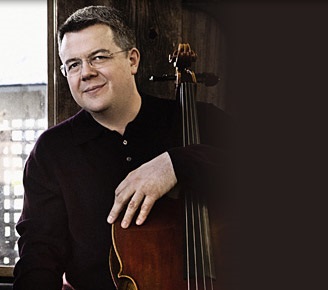
    Above: cellist Paul Watkins

    Sunday January 29th, 2017 – Following an unsettling week, it was particularly reassuring to settle into the embracing space of Alice Tully Hall this evening and be serenaded by four estimable musicians in Chamber Music Society of Lincoln Center‘s program of works by Johannes Brahms and Gabriel Fauré. 

    In 1853, Robert Schumann and Johannes Brahms teamed up with Schumann’s student, Albert Dietrich, to write a “welcome home” sonata for violinist/composer Joseph Joachim, whose travels had kept him away from Düsseldorf for several weeks. The music was set around the notes F-A-E, which stood for Joachim’s personal motto, “Frei, aber einsam” (‘Free, but lonely’). Dietrich wrote the first movement, with Schumann taking on the second and fourth, leaving Brahms with the third.

    Joachim retained the sole copy of the score after performing it; he had the Brahms Scherzo published in 1906, after the composer’s death; the full sonata was not published until much later.

    The complete ‘FAE Sonata‘ is rarely heard these days, but the Brahms Scherzo has become a popular stand-alone work in the chamber music repertoire. It commences in a brisk, passionate mode which returns following an affettuoso interlude. Tonight, violinist Ani Kavafian and pianist Alessio Bax brought great energy to the opening paragraph, subsiding to a gently rhapsodic state in the calm of the central section before setting up a spirited drive to the finish.

    Violist Yura Lee and cellist Paul Watkins then joined Ms. Kavafian and Mr. Bax for the Fauré. A unison string theme opens the quartet, with the entrance of the piano filling out the sonic texture that will keep us enchanted for the next half-hour. Ms. Lee’s wonderfully sensitive playing – a hallmark of the evening – meshed lyrically with the sweetness of Ms. Kavafian’s violin, the quiet rapture of Mr. Watkins’ cello, and the elegant romance of Mr. Bax’s phrasing from the Steinway. The music veers briefly to the dramatic before subsiding into a cushioning warmth from viola and cello whilst the violin wafts on high.

    Plucking strings and a rolling theme from Mr. Bax open the second movement. Later, the piano comments ironically as the strings try to revive the first movement’s main theme in a rather off-kilter manner; the music slows, and then steals away.

    In the Adagio third movement, Yura Lee’s dreamy playing had a transportive quality; Fauré’s student Charles Koechlin has written that “…the viola would have to be invented for this Adagio if it did not already exist…”, and Ms. Lee’s playing underlined the truth of that notion. Moving forward, violin and piano achieve a lovely blend and the music begins to turn passionate; Fauré manages a balance of intensity and calm in this movement that is quite unique.

    A darker and somewhat turbulent mood is created at the start of the quartet’s concluding Allegro molto: Ms. Lee and Mr. Watkins sing a deep theme together before a more lilting quality begins to rise. Mr. Bax commences a dance, drawing the string players in with his rhythmic emphasis as the music builds and dances on to an exuberant end.

    Following the interval, the performance of the Brahms second quartet was somewhat compromised by the high-pitched sound of a faltering hearing-aid battery. After the quartet’s first movement, Ms. Kavafian asked the audience if they were hearing it too, and several people replied in the affirmative. The players took a moment to gather their concentration before proceeding. Annoying as such disruptive sounds are to the audience, it must be doubly difficult to play in such circumstances as the musicians are always listening for one another and the extraneous sound must be particularly jarring. They played on, admirably, and the noise seemed to subside as the performance evolved.

    It was in the Brahms quartet that Mr. Bax seized upon the prominence the composer assigned to the piano’s role and delighted us with truly gorgeous playing; my notes are full of little stars and exclamation marks, and scrawls of “Bax…Bax…Bax!”

    Rhythmic distinctiveness marks the first movement, the four players ever-alert to nuance as cello and violin each have a passage of stepping forward. And then, it’s in the Adagio that we get to the heart of the matter: commencing as a lullaby, the piano’s tranquil, song-like theme was an outstanding Bax passage. The string voices murmur deeply and the piano replies; passions ebb and flow, and the strings unite in a brief trio. Ms. Kavafian and Mr. Watkins play in unison, leading to the development of a big song from which the violinist eventually shimmers upward; a hushed coda aptly rounds out this Adagio dream.

    A simple song opens the Scherzo, which moves on thru various permutations. A transition to a more energetic passage leads to more animated playing, with a Hungarian lilt. This gypsy colouring extends into the quartet’s concluding Allegro, with Ms. Kavafian and Mr. Bax leading the way. The folksy dance motifs, however, are tempered by an unhurried feeling. The music becomes almost gentle at times, before a final build-up.

    We emerged into the cold chill of impending February, jolted back to the realities of life. Now – more than ever – we will seek solace in great music, art, poetry, and dance, looking to concert halls and museums as sanctuaries of reason and compassion.  

    • Brahms Scherzo, WoO 2, from “F-A-E” Sonata for Violin and Piano (1853)
    • Fauré Quartet No. 2 in G minor for Piano, Violin, Viola, and Cello, Op. 45 (1885-86)
    • Brahms Quartet No. 2 in A major for Piano, Violin, Viola, and Cello, Op. 26 (1861)
  • Brahms & Fauré @ Chamber Music Society

    Paul Watkins

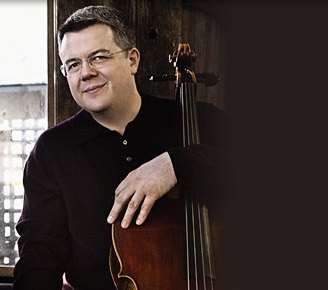
    Above: cellist Paul Watkins

    Sunday January 29th, 2017 – Following an unsettling week, it was particularly reassuring to settle into the embracing space of Alice Tully Hall this evening and be serenaded by four estimable musicians in Chamber Music Society of Lincoln Center‘s program of works by Johannes Brahms and Gabriel Fauré. 

    In 1853, Robert Schumann and Johannes Brahms teamed up with Schumann’s student, Albert Dietrich, to write a “welcome home” sonata for violinist/composer Joseph Joachim, whose travels had kept him away from Düsseldorf for several weeks. The music was set around the notes F-A-E, which stood for Joachim’s personal motto, “Frei, aber einsam” (‘Free, but lonely’). Dietrich wrote the first movement, with Schumann taking on the second and fourth, leaving Brahms with the third.

    Joachim retained the sole copy of the score after performing it; he had the Brahms Scherzo published in 1906, after the composer’s death; the full sonata was not published until much later.

    The complete ‘FAE Sonata‘ is rarely heard these days, but the Brahms Scherzo has become a popular stand-alone work in the chamber music repertoire. It commences in a brisk, passionate mode which returns following an affettuoso interlude. Tonight, violinist Ani Kavafian and pianist Alessio Bax brought great energy to the opening paragraph, subsiding to a gently rhapsodic state in the calm of the central section before setting up a spirited drive to the finish.

    Violist Yura Lee and cellist Paul Watkins then joined Ms. Kavafian and Mr. Bax for the Fauré. A unison string theme opens the quartet, with the entrance of the piano filling out the sonic texture that will keep us enchanted for the next half-hour. Ms. Lee’s wonderfully sensitive playing – a hallmark of the evening – meshed lyrically with the sweetness of Ms. Kavafian’s violin, the quiet rapture of Mr. Watkins’ cello, and the elegant romance of Mr. Bax’s phrasing from the Steinway. The music veers briefly to the dramatic before subsiding into a cushioning warmth from viola and cello whilst the violin wafts on high.

    Plucking strings and a rolling theme from Mr. Bax open the second movement. Later, the piano comments ironically as the strings try to revive the first movement’s main theme in a rather off-kilter manner; the music slows, and then steals away.

    In the Adagio third movement, Yura Lee’s dreamy playing had a transportive quality; Fauré’s student Charles Koechlin has written that “…the viola would have to be invented for this Adagio if it did not already exist…”, and Ms. Lee’s playing underlined the truth of that notion. Moving forward, violin and piano achieve a lovely blend and the music begins to turn passionate; Fauré manages a balance of intensity and calm in this movement that is quite unique.

    A darker and somewhat turbulent mood is created at the start of the quartet’s concluding Allegro molto: Ms. Lee and Mr. Watkins sing a deep theme together before a more lilting quality begins to rise. Mr. Bax commences a dance, drawing the string players in with his rhythmic emphasis as the music builds and dances on to an exuberant end.

    Following the interval, the performance of the Brahms second quartet was somewhat compromised by the high-pitched sound of a faltering hearing-aid battery. After the quartet’s first movement, Ms. Kavafian asked the audience if they were hearing it too, and several people replied in the affirmative. The players took a moment to gather their concentration before proceeding. Annoying as such disruptive sounds are to the audience, it must be doubly difficult to play in such circumstances as the musicians are always listening for one another and the extraneous sound must be particularly jarring. They played on, admirably, and the noise seemed to subside as the performance evolved.

    It was in the Brahms quartet that Mr. Bax seized upon the prominence the composer assigned to the piano’s role and delighted us with truly gorgeous playing; my notes are full of little stars and exclamation marks, and scrawls of “Bax…Bax…Bax!”

    Rhythmic distinctiveness marks the first movement, the four players ever-alert to nuance as cello and violin each have a passage of stepping forward. And then, it’s in the Adagio that we get to the heart of the matter: commencing as a lullaby, the piano’s tranquil, song-like theme was an outstanding Bax passage. The string voices murmur deeply and the piano replies; passions ebb and flow, and the strings unite in a brief trio. Ms. Kavafian and Mr. Watkins play in unison, leading to the development of a big song from which the violinist eventually shimmers upward; a hushed coda aptly rounds out this Adagio dream.

    A simple song opens the Scherzo, which moves on thru various permutations. A transition to a more energetic passage leads to more animated playing, with a Hungarian lilt. This gypsy colouring extends into the quartet’s concluding Allegro, with Ms. Kavafian and Mr. Bax leading the way. The folksy dance motifs, however, are tempered by an unhurried feeling. The music becomes almost gentle at times, before a final build-up.

    We emerged into the cold chill of impending February, jolted back to the realities of life. Now – more than ever – we will seek solace in great music, art, poetry, and dance, looking to concert halls and museums as sanctuaries of reason and compassion.  

    • Brahms Scherzo, WoO 2, from “F-A-E” Sonata for Violin and Piano (1853)
    • Fauré Quartet No. 2 in G minor for Piano, Violin, Viola, and Cello, Op. 45 (1885-86)
    • Brahms Quartet No. 2 in A major for Piano, Violin, Viola, and Cello, Op. 26 (1861)
  • Chamber Music Society’s Season Finale

    Banner1

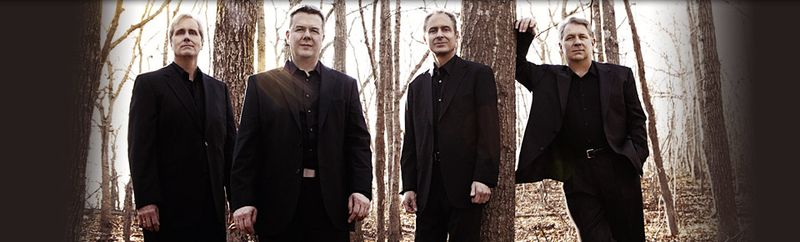
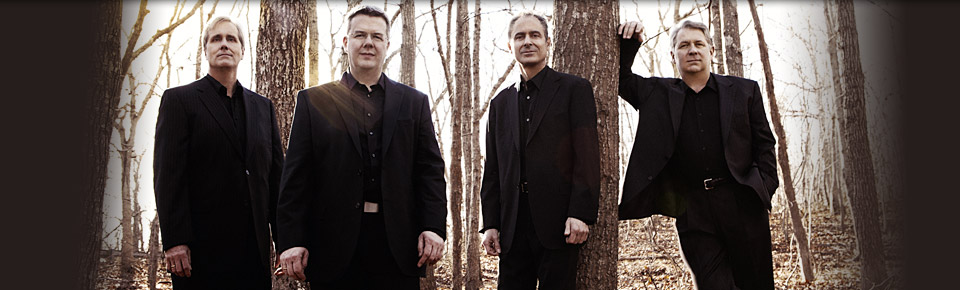
    Above: The Emerson String Quartet (Lawrence Dutton, Paul Watkins, Eugene Drucker, Philip Setzer) in a Lisa Mazzucco photo

    Tuesday May 19th, 2015 – Marking the end of their wonderful 2014-2015 season, Chamber Music Society of Lincoln Center presented the Emerson String Quartet, joined by violist Paul Neubauer and cellist Colin Carr, in a programme featuring the New York City premiere of a Lowell Liebermann work plus classics from Mozart and Tchaikovsky.

    It seems like only yesterday that I opened the CMS 2014-2015 season brochure and found myself anticipating every single one of the concerts listed; how quickly the months have flown by! But a few weeks ago, the Society announced their first Summer Season, and so now we will not have to wait until Autumn to be back at Tully Hall, hearing the great music and incredible artists who make the Society such a valuable part of our lives. 

    Tonight Alice Tully Hall was packed for this, the second performance of this programme. The Emerson String Quartet, surely one of the greatest chamber ensembles of all time, showed their mastery in works of contrasting styles; their marvelously integrated sound has a richness all its own: there are times you’d swear you’re listening to larger orchestra.

    Lowell Liebermann’s String Quartet No. 5 is one of the finest new works I have heard in recent years; not only is it superbly crafted, but it also draws a deep emotional response – something you can’t honestly say about a lot of newer music. Mr. Liebermann, who was seated directly behind us, wrote this brief note for the Playbill: “…I have no doubt that my mindset composing the piece and its resultant overriding elegiac tone was at least partly influenced by any number of depressing/terrifying events of the kind with which we are bombarded daily, in what seems more and more like a world gone mad.”  That sentence encapsulates to perfection my own feelings as I turn to the news each day and think “Can these things really be happening? Can people really have become so vain, shallow, and heartless? Has humanity lost its soul?” And so we turn to great music, both for consolation and also – sometimes – to weep with us. And that’s exactly what this quartet does.

    The music wells up from a deep cello phrase to eerie murmurings and a mournful viola theme. There’s a muted lullabye and a lamenting theme passed from viola to violin 2. Poignant textures draw us deeper and deeper into the music, and then it starts to scurry. A dance for viola is taken up by the violin; agitation builds. A full-scale canon develops, then more swirling dance music. A buzz, a violin duo, and then calm is restored with a yearning theme. A simply gorgeous violin solo is passed to violin 2 and then to the viola, which sings of anguish. A plucked passage from violin and viola takes us to a violin solo of pristine sadness before the music starts to echo its beginnings, fading in a ghostly glimmer. A profound silence filled the hall as the musicians finished: this evocative and thought-provoking piece had clearly made a deep impression. The composer was called to the stage, as bravos resounded. Both the music and the playing of it left me spell-bound.

    I kind of wished there’d been an intermission at that point, the better to remain in reverie; but Mozart’s Quintet in E-flat major K 614 brought the esteemed violist Paul Neubauer to the stage with the Emerson for music that was an antidote to the Liebermann and, almost against my will, I was drawn out of my pensive state into a sunnier place.

    Though written in Mozart’s last year, this Quintet is optimistic in tone and quite jolly in its dance motifs. Its elegant andante, prancing minuet, and jaunty finale were all played with spirit and grace, with much lovely ‘communicating’ between the players.

    For the evening’s concluding performance of Tchaikovsky’s Souvenir de Florence, Philip Setzer took the 1st violin stand with Mr. Neubauer and cellist Colin Carr adding their rich voices to the Emerson’s choir. The sound of this ensemble was really phenomenal, of symphonic resonance.

    The Souvenir is a pleasure from first note to last, but just as Tchaikovsky’s adagios in Swan Lake and Sleeping Beauty strike us most deeply in the heart, it’s the second movement of Souvenir that speaks directly to the receptive spirit. It reminded me so much of the composer’s Serenade for Strings which Balanchine transformed into his remarkable and eternal ballet masterpiece Serenade. Tonight’s performance of this Adagio cantabile was so richly played and so moving: music as consolation.     

    The Repertory:

    The Participating Artists:

  • Chamber Music Society’s Season Finale

    Banner1

    Above: The Emerson String Quartet (Lawrence Dutton, Paul Watkins, Eugene Drucker, Philip Setzer) in a Lisa Mazzucco photo

    Tuesday May 19th, 2015 – Marking the end of their wonderful 2014-2015 season, Chamber Music Society of Lincoln Center presented the Emerson String Quartet, joined by violist Paul Neubauer and cellist Colin Carr, in a programme featuring the New York City premiere of a Lowell Liebermann work plus classics from Mozart and Tchaikovsky.

    It seems like only yesterday that I opened the CMS 2014-2015 season brochure and found myself anticipating every single one of the concerts listed; how quickly the months have flown by! But a few weeks ago, the Society announced their first Summer Season, and so now we will not have to wait until Autumn to be back at Tully Hall, hearing the great music and incredible artists who make the Society such a valuable part of our lives. 

    Tonight Alice Tully Hall was packed for this, the second performance of this programme. The Emerson String Quartet, surely one of the greatest chamber ensembles of all time, showed their mastery in works of contrasting styles; their marvelously integrated sound has a richness all its own: there are times you’d swear you’re listening to larger orchestra.

    Lowell Liebermann’s String Quartet No. 5 is one of the finest new works I have heard in recent years; not only is it superbly crafted, but it also draws a deep emotional response – something you can’t honestly say about a lot of newer music. Mr. Liebermann, who was seated directly behind us, wrote this brief note for the Playbill: “…I have no doubt that my mindset composing the piece and its resultant overriding elegiac tone was at least partly influenced by any number of depressing/terrifying events of the kind with which we are bombarded daily, in what seems more and more like a world gone mad.”  That sentence encapsulates to perfection my own feelings as I turn to the news each day and think “Can these things really be happening? Can people really have become so vain, shallow, and heartless? Has humanity lost its soul?” And so we turn to great music, both for consolation and also – sometimes – to weep with us. And that’s exactly what this quartet does.

    The music wells up from a deep cello phrase to eerie murmurings and a mournful viola theme. There’s a muted lullabye and a lamenting theme passed from viola to violin 2. Poignant textures draw us deeper and deeper into the music, and then it starts to scurry. A dance for viola is taken up by the violin; agitation builds. A full-scale canon develops, then more swirling dance music. A buzz, a violin duo, and then calm is restored with a yearning theme. A simply gorgeous violin solo is passed to violin 2 and then to the viola, which sings of anguish. A plucked passage from violin and viola takes us to a violin solo of pristine sadness before the music starts to echo its beginnings, fading in a ghostly glimmer. A profound silence filled the hall as the musicians finished: this evocative and thought-provoking piece had clearly made a deep impression. The composer was called to the stage, as bravos resounded. Both the music and the playing of it left me spell-bound.

    I kind of wished there’d been an intermission at that point, the better to remain in reverie; but Mozart’s Quintet in E-flat major K 614 brought the esteemed violist Paul Neubauer to the stage with the Emerson for music that was an antidote to the Liebermann and, almost against my will, I was drawn out of my pensive state into a sunnier place.

    Though written in Mozart’s last year, this Quintet is optimistic in tone and quite jolly in its dance motifs. Its elegant andante, prancing minuet, and jaunty finale were all played with spirit and grace, with much lovely ‘communicating’ between the players.

    For the evening’s concluding performance of Tchaikovsky’s Souvenir de Florence, Philip Setzer took the 1st violin stand with Mr. Neubauer and cellist Colin Carr adding their rich voices to the Emerson’s choir. The sound of this ensemble was really phenomenal, of symphonic resonance.

    The Souvenir is a pleasure from first note to last, but just as Tchaikovsky’s adagios in Swan Lake and Sleeping Beauty strike us most deeply in the heart, it’s the second movement of Souvenir that speaks directly to the receptive spirit. It reminded me so much of the composer’s Serenade for Strings which Balanchine transformed into his remarkable and eternal ballet masterpiece Serenade. Tonight’s performance of this Adagio cantabile was so richly played and so moving: music as consolation.     

    The Repertory:

    The Participating Artists: