Tag: Philharmonic Ensembles

  • Philharmonic Ensembes~Ewazen/Stravinsky/Dvořák

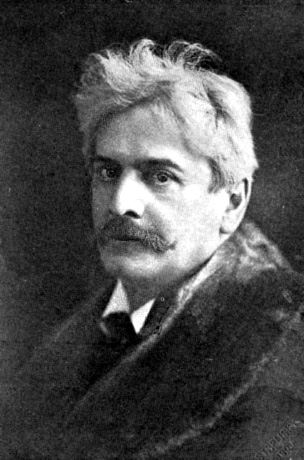
    Ewazen

    Above: composer Eric Ewazen

    Author: Oberon

    Sunday March 27th, 2022 matinee – I always enjoy the Philharmonic Ensembles series at Merkin Hall, and I was very glad to be there this afternoon for an excellent program. The players of the New York Philharmonic love playing chamber music together when time allows, and this afternoon’s lineup of artists was really impressive.

    Composer Eric Ewazen greeted us prior to the program’s opening work: his Ballade, Pastorale, and Dance for the unusual combination of flute, horn, and piano. The last time I heard an Ewazen score was in 2018, when the composer’s violin concerto was used by the great choreographer Paul Taylor for his last major work: Concertiana. Today, introducing his Ballade, Pastorale and Dance, Mr. Ewazen touched on his Ukrainian heritage, and then the performance began.

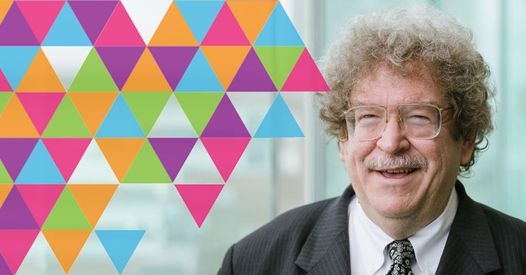
    William_wolfram

    For the Ewazen trio, the tall and distinguished pianist William Wolfram (above) was joined by the Philharmonic’s stellar flautist Mindy Kaufman, and the orchestra’s current Acting Associate Principal Horn, the radiant Leelanee Sterrett.

    The opening Ballade begins with a darkish motif from the piano, soon joined by the mellow depth of the horn and the gleaming upper range of the flute. The blend of these three voices was really delectable, making me wish other composers would write for this particular combination. From a long flute trill and spiraling piano figurations, the music turns animated, and then calms for a really gorgeous andante. Then another burst of vigor, and another contrasting slower passage before a brisk final statement.

    Rippling sounds from Mr. Wolfram keyboard introduced a lovely Pastorale theme from Ms. Sterrett’s horn, which is then harmonized by Ms. Kaufman’s flute. Here, the contrast between burnished richness of the horn with the silvery sweetness of the flute truly delighted the ear. Lovely phrases follow, one after another, and then Ms. Sterrett’s horn sings a lyrical theme over the warbling flute and the piano’s arpeggios. A feeling of hope seems to rise within us as the Ballade reaches its solemn end.

    With sparkling sounds from Ms. Kaufman’s flute, and with Mr. Wolfram’s piano sounding in the upper octaves, we are ready to Dance. Ms. Sterrett’s summoning horn draws us in to this lively and tuneful music, which gets quite grand as the work comes to its close.  Such a unique treat this music is! Other choreographers might do well to follow Paul Taylor’s lead and have a listen to Mr. Ewazen’s music.

    More music I’d never heard before – Igor Stravinsky’s Octet for Winds – came next. For this, a brilliant ensemble drawn from the ranks of the Philharmonic’s wind sections were gathered: Robert Langevin, flute; Pascual Martínez Forteza, clarinet; bassoonists Judith LeClair and Kim Laskowski; trumpeters Christopher Martin and Thomas Smith, with Colin Williams on trombone and George Curran on bass-trombone. Mr. Langevin, in his introductory remarks, told us a story about a dream Stravinsky had had in which this particular set of instruments were playing together, and he wrote this octet to try to capture what he’d heard in his dream.

    The Octet is in three movements, though there was no discernible break between the second and third. A trumpet note introduces the Sinfonia, followed by a blending of woodwind voices. The full ensemble engage in music that is wittily paced and harmonized. A brassy march springs up, with trumpet calls and chuckling bassoons. The Sinfornia comes to a sudden halt.

    The Theme and Variations, which runs directly into the Finale, starts out with plodding brass and unison woodwinds; they then switch roles. Scurrying bassoons herald a military brass band passing by, and everyone falls in. Suddenly, I hear a waltz, with Mssrs. Langevin and Martínez Forteza taking the lead. Brilliant rhythms briefly take over, then there’s a slow bassoon passage, taken up by the clarinet and the brass. The music becomes chorale-like, before the flute and clarinet have a dialogue. The bassoons, sounding jolly, are joined by the clarinet; shifting rhythms carry us to the Octet‘s finish.     

    The afternoon’s program ended with a magnificent performance of Antonín Dvořák’s beloved Piano Quintet in A-major, Op. 81, one of his most familiar and oft-played works. The musicians here were violinists Kuan Cheng Lu and Su Hyun Park, violist Rebecca Young, and cellist Ru-Pei Yeh, with Mr. Wolfram returning to the piano. Ms. Young introduced the piece, and then took up her viola to regale us in the numerous opportunities Dvořák provides for the instrument. Kuan Cheng Lu played the many magical violin melodies with Olde World sweetness, warmth, and emotion; and the composer has also been generous to the second violinist: Su Hyun Park, playing beautifully this afternoon. And the cello is prominent throughout, with Ru-Pei Yeh providing cordial tone and rhythmic finesse. At the piano, Mr. Wolfram sustained the excellent impression he made in the Ewazen, making me wish to hear him in a solo recital.

    The applause throughout the afternoon was rather subdued; the audience consisted largely of senior citizens (anyone older than me is a senior citizen!) and perhaps they lack the stamina to clap for a long time. I honed my applauding skills during the 20-minute ovations that often ensued during the last Golden Age at the opera, which ended years ago. These days, applause lasting more than five minutes is extremely rare. Well, we live in different times now: everyone’s constantly in a rush – to get to the theatre, and then to get home. As my commadre used to say, “No time for love.” 

    ~ Oberon
  • Philharmonic Ensembles ~ Season Finale

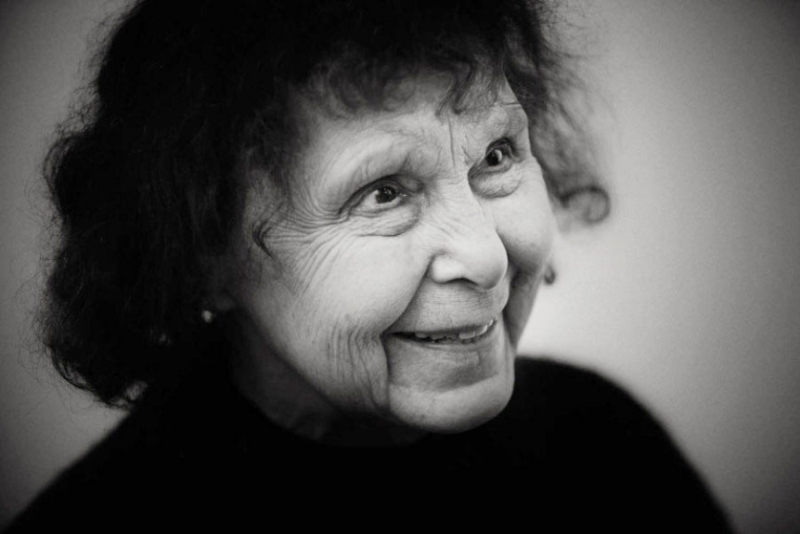
    NEWS-862x575

    Above: composer Sofia Gubaidulina

    ~ Author: Oberon

    Sunday May 26th, 2019 matinee – This afternoon’s Merkin Hall concert by musicians from The New York Philharmonic marked the season finale of the Philharmonic Ensembles series. These programs invariably mix new or off-the-beaten-path works with classics from the chamber music repertoire.

    Both in the choice of repertory and in the superb playing of the musicians, today’s concert was one of the finest I’ve ever experienced. The audience seemed enraptured; wonderfully silent and attentive, they created an atmosphere which doubtless inspired the players to outdo themselves. No coughing, no cellphones, no one dropped anything; there were a number of small children in the audience, but none of them made a peep. What an opportunity for blissful immersion in the music!

    An infrequently-performed work by Franz Schubert, Notturno, opened the concert. I greatly enjoyed hearing pianist Hélène Jeanney again, having previously heard her playing Zwilich and Debussy at these concerts. For today’s Schubert, she was joined by Na Sun (violin) and Qiang Tu (cello).

    Found among some of Schubert’s papers after his death, the Notturno is a work of timeless beauty and contemplation, commencing with harmonizing strings which pass through lovely modulations in which the piano sets a pace that feels like a slow waltz. Mlle. Jeanney then takes the lyrical lead with a gracious piano melody as the strings are plucked. In a role reversal, the pianist then assumes the role of a harpist, with gentle accents supporting the melodious strings.

    In a contrasting section, we move into a minor phase; there is a rising intensity and the music becomes quite passionate, with swirling cascades of notes from the keyboard. A sense of longing rises from the violin and cello, underscored by the restless piano. Na Sun and Qiang Tu then beautifully resume the original theme, the harmonies seeming even more poignant now. Following a rather sudden crescendo, the music rises to a calm finish. How poetic the atmosphere our three players conjured: simply sublime.

    The music of Sofia Gubaidulina always intrigues me, and today her Piano Quintet proved fascinating. This quintet is one of her earliest works, written in 1957 while she was still a student at the Moscow Conservatory. Several influences are in play in this quintet: Shostakovich, for sure, but maybe – even more – Prokofiev. And, strangely enough, there are also tinges of the French composers of the Impressionist school along the way. But Gubaidulina manages to weave these threads together convincingly. The quintet  sounds really original.

    Pianist Eric Huebner joined the Philharmonic’s Qianqian Li and Joo Young Oh (violins), Peter Kenote (viola), and Nathan Vickery (cello) for music-making of the highest order.  The composer gives the 2nd violinist a great deal to do in the quintet, and Joo Young Oh (his hair now blonde, and wearing a spiffy golden-tone jacket) played it all superbly.

    The opening Allegro has a rhythmic, fun start, with the music driven by Eric Huebner’s lively playing at the Steinway. Throughout, Mr. Huebner constantly reminds us of why it’s called a “piano quintet”: he’s a wonderful pianist. The music, accented, brings forth string harmonies as the piano comments. The second violin has his first chance to shine; his theme is then taken up by first violinist Quinquin Li. A long piano solo has an almost furtive quality, and then things become insistent and sonically dense. Nathan Vickery’s cello sings over pulsing motifs from the piano. The melody is passed about, then the strings assume a high, shimmering blend before the Allegro’s amusing ending.

    Peter Kenote’s viola takes the lead in the Andante marciale, which soon gets a swagger on. Laying back a bit, there’s a violin passage and the music turns fragmented. The march then picks up again, reminiscent of the its famous counterpart in Prokofiev’s L’Amour des Trois Oranges. The violin plays on high as the music strides away into the distance.

    Yearning strings and the quiet piano mark the start of the Larghetto sensibile, with the violin in a sad song that the cello joins; the piano however seems to hint at a jest. As the viola and 2nd violin blend, there’s a trace of exoticism. Syncopation rises up, becoming insistent until the viola leads us back to some searing harmonies. Mr. Kenote’s viola sounds alone, and Mr. Oh takes his violin on high in a solo passage. Harmonies shift, and Mr. Huebner at the Steinway has a final solo opportunity.

    To a bustling piano rhythm, Mr. Kenote leads off the concluding Presto. The music romps along, with momentary calmings along the way. Mr. Huebner continues to shine in the demanding piano music. After simmering down again, the cello begins to pulse and the cello and viola start buzzing in an ascent to the heights where the quintet finds its finish.

    25E4BB63-9DE4-4BCD-80B9-6AAFB6C0846F

    Above: cellist and composer David Popper

    An unusual work by David Popper, Requiem, was originally composed for three cellos and orchestra; it was later transcribed for three double-basses and piano, which is how it was presented today (apparently there is also an arrangement for three trombones!).

    It’s a terrifically original work, and the three bass players – Blake Hinson, Satoshi Okamoto, and Rion Wentworth – were clearly savouring this opportunity show off what the double-bass can do, whilst pianist Steven Beck played an integral role in this gem of a piece. The doleful depths of the three basses, both in harmonies and in solo passages, continually evoked shivers as the resonances seem to invade the very soul. Passages for solo piano gave contrast; at one point, a trace of the Ave Maria was heard. The basses meanwhile made me think of the profound beauty of the opening of the “Hymn to the Sun” from Mascagni’s Iris.  

    I enjoyed the Popper rarity immensely: kudos to the bassists for bringing it to us in all its richness.

    To close the performance, Piano Trio #2 by Dmitri Shostakovich was given a sterling rendition by Yulia Ziskel (violin), Mr. Vickery (cello), and Jonathan Feldman (piano).

    This was by far the most familiar work on the program, so I put away my note pad and let the music dazzle and move me in this performance by three exceptional artists. Ms. Ziskel is a violinist who always maintains an alluring gleam on her tone; her playing could be at once ethereal and heart-wrenching. Following her poignant solo in the Largo, Mr. Vickery’s cello joined her in music that is achingly beautiful and deeply moving. Their playing reached the heights of expressiveness.

    The dazzling dance of the concluding Allegretto was so thrilling to experience today. Here Mr. Feldman’s brilliance and irresistible vitality were a pure joy, whilst Ms. Ziskel and Mr. Vickery continued to astonish. The quintet ends as the dance gives way to a reprise of the chorale of the Largo, providing a reassuring comfort which we so desperately need in these troubled times.

    As the Shostakovich progressed today, the world around me seemed to vanish; both the music the musicians reached me on a level that is rarely attained. For such moments in life, how can we express our gratitude?

    ~ Oberon

  • Philharmonic Ensembles|Reinecke Rules!

    Reinecke-770x470

    Above: composer Carl Reinecke (1824 – 1910)

    ~ Author: Oberon

    Sunday May 27th, 2018 – The last in this season’s Philharmonic Ensembles series at Merkin Hall. These concerts, in which artists from the New York Philharmonic perform masterpieces, rarities, and contemporary works from the chamber music repertory, are always highly enjoyable. Today’s expertly-devised program introduced me to the delightful music of Carl Reinecke, and works by Vivaldi, Penderecki, and Brahms were also superbly played.

    Harpsichordist Paolo Bordignon introduced the opening work, Vivaldi’s Trio Sonata, Op.1, No. 3, in which he was joined by Duoming Ba (violin), Peter Kenote (viola) and Satoshi Okamoto (bass). Hearing this music on a gloomy day, following a distressing week, was a perfect palliative. In this four-movement work (the third being very brief), both the playing and the communication between the musicians drew us immediately into the elegant and lively world of Vivaldi, far from the madding crowds and disconcerting headlines of daily life.

    I was particularly intrigued by the beautiful instrument Mr. Okamoto was playing with such agility and charm. You can see it, and hear him playing, in this brief film.

    In a striking contrast, we next had Krzysztof Penderecki’s Duo concertante for violin and double bass, which was composed in 2010 on a commission from violinist Anne-Sophie Mutter. It was played this afternoon by Kuan Cheng Lu, violin, and Rion Wentworth, bass. The composer devised the piece as a sort of conversation between the two instruments; Ms. Mutter described it as two voices “evading each other”: while one soloist is developing a musical theme, the other falls nearly silent.

    With their expert timing, and a clear sense of enjoyment in what they were doing, the two musicians gave a performance full of vitality, precision, and wit. Among the words I jotted down along the way: agitation, brooding, mini-scherzo, jazzy bass, plodding, shimmering, almost a march, soft and high, ultra-sustained bass note, pensive violin, a dance, tapping and stamping at the end. The audience were clearly much taken with this piece, and the playing of it: loud, enthusiastic applause followed.

    The afternoon provided an opportunity to make the acquaintance of a composer new to me, Carl Reinecke. How his music has eluded me until now is inexplicable. He was a prolific composer of operas, symphonies, concertos, and chamber music, as well as a highly regarded conductor, pianist, and pedagogue. Franz Liszt hired Reinecke as piano teacher for his daughter, Cosima, who later married Richard Wagner. In 1904, at the age of 80, Reinecke made recordings of seven works playing on a piano roll; thus he was the earliest-born pianist to have his playing preserved in any format.

    Reinecke’s Trio for oboe, horn, and piano was composed in 1886. The Philharmonic’s principal oboist Liang Wang was joined by Howard Wall, horn, with Zhen Chen at the piano for today’s performance of this work, steeped in the Romantic spirit. This is music that’s terrifically appealing. 

    The piece also moved me on a personal level, for my sister played oboe and I the horn back in our youthful years in the little town. The sounds of these two instruments today, played with such tonal richness and impeccable musicality by Mssrs. Wang and Wall today, pleased me deeply.

    The composer’s cordial theme for the opening Allegro moderato must have greatly pleased the composer, for he repeats it over and over. Gorgeously played by Mr. Wang, the melody has an exotic feel. The horn joins and the music expands. A romance-tinged piano solo brings Mr. Zhen into the mix, his playing colourful and alert. A great horn theme, abundantly toneful in Mr. Wall’s ‘singing’ of it, leads to a grand passage. The voices entwine, and after a martial bit, melodies flow on with increased drama. A da capo develops a sense of urgency, which eventually subsides.

    The Scherzo, Molto vivace has charm of its own; it’s witty and bubbly, and gets a five-start rating as scherzi go. The players relished every turn of phrase, with the pianist having a lot to do. This scherzo has a sudden end; you could almost hear the audience smiling.  

    The melodic warmth of the cavatina-like Adagio brought forth a rich horn theme upon which Mr. Wall lavished the kind of tonal plushness that turned a frustrated horn player like me green with envy. And he has such prodigious reserves of breath at his command. When Mr. Wang joined, a fabulous tone-fest filled the hall. More sonic glamour from Mr. Wall in a glorious mix with the piano followed; sumptuous harmonies abounded as the movement came to its conclusion.  

    In the opening passages of the Rondo finale, Mr. Zhen had just the right feeling for what sounds like a forerunner of the piano rag. The music, full of mirth and magic, gave all three players abundant opportunity to shine, singly and as a collective. The audience response was heartfelt, as the music and playing merited. This was one of the great musical treats of the season which is now nearing its end.

    Sustaining the Romantic aura of the Reinecke, the concert concluded with the Piano Trio No. 1 of Johannes Brahms, played by Hannah Choi, violin, Patrick Jee, cello, and Steven Beck, piano. Mr. Jee spoke with great affection of this music, which clearly means so much to him. When the performance ended, he seemed in a highly emotional state – a state reflected in his rich, resonant playing. 

    The work begins pensively. After a brief piano introduction comes the marvelous cello solo theme of which Mr. Jee had spoken. His playing of it reflected what the music means to him: sheer beauty. Ms. Choi and Mr. Back prolonged the atmosphere which the cellist had established, savouring the themes and reveling in the the blendings of their voices. This long first movement, with its achingly lovely melodies and modulations, gave a great deal of pleasure.

    The Scherzo made me think of hunters on the chase; it becomes exuberant before being overtaken by an almost pastoral theme which becomes quite grand before a da capo takes us back to the hunt.

    The Adagio is like a meditative dream from which we don’t want to awaken. Woven in are luminous solo passages for each of the three instruments whilst in blended passages their tonal appeal was most affecting.

    The final Allegro is waltzy and minorish, a perfect opportunity to cease note-taking and just enjoy watching Ms. Choi and Mssrs. Jee and Beck playing their way thru this melodious music. How can we thank such artists? Only by standing and cheering.

    Emerging from the hall, the wind had kicked up – brisk and refreshing. The afterglow of this concert is strong and lasting.

    ~ Oberon

  • Philharmonic Ensembles: In A Fishbowl

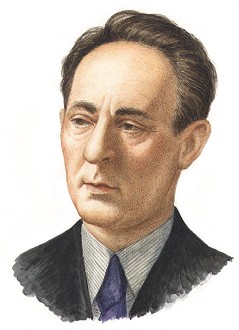
    Martinu
    Above: composer Bohuslav Martinů

    Sunday January 17th, 2016 matinee – Yet another highly enjoyable concert in the Philharmonic Ensembles series at Merkin Hall: artists from The New York Philharmonic performing chamber music in an intimate setting.

    These days, more than ever, I am looking to music to lift my spirits and help alleviate the symptoms of weltschmerz that threaten to overwhelm me. Feeling particularly low this morning, part of me wanted simply to stay home; but I headed down to Merkin and just a few moments into the opening Martinů, the dark pall began to lift. By the end of the concert, I felt fortified and ready to face another week. 

    MARTINŮ  –  Duo No. 1 for Violin and Cello, H.157
    Joo Young Oh, violin; Alexei Yupanqui Gonzales, cello

    The afternoon’s opening work was composed by Bohuslav Martinů in 1927 while he was living in Paris, studying with composer Albert Roussel. It’s a delightful two-movement piece – the first soulful, the second a lively dance. Superbly performed by violinist Joo Young Oh and cellist Alexei Yupanqui Gonzales, the slow movement impelled my rejuvenation process after just a few bars with its heartfelt melodies and lovely meshing of the two voices. In the second movement, a long cello solo was really a joy to hear; I thought the violin might have an equal opportunity, but instead the piece danced on to its ending. The two players had a fine rapport, the violinist reaching over to shift the cellist’s score as the cello ‘cadenza’ was launched. 

    John SICHEL  –  Fishbowl Diaries No. 3
    Vladimir Tsypin, violin; Blake Hinson, bass; John A. Sichel, narrator

    In something of a departure, John Sichel’s Fishbowl Diaries #3 featured a spoken narrative, delivered by the composer himself. The three short vignettes were accompanied by the Philharmonic’s Vladimir Tsypin, violin, and  Blake Hinson, bass. The first tale, entitled Heather From Card Member Services, was truly droll and had the audience laughing aloud. Juliet of The Rats, a story of thwarted infatuation in a laboratory setting, had Shakesperian allusions. The third and final setting, Dolphin Man: Mwa-ha-ha-ha-ha, struck close to home: it tells of that moment in childhood when those of us who are ‘different’ realize that people are laughing at us, either gently or cruelly. Mine happened when I was nine or ten years old, and it put a damper on my self-confidence that has stayed with me to this day. It’s kind of amazing that Mr. Sichel has hit this nail so perfectly on the head.

    DVOŘÁK  –  Piano Trio in E minor, Op. 90, Dumky
    Anna Rabinova, violin; Patrick Jee, cello; Wei-Yi Yang, piano 

    Totally engrossing, uplifting, and thought-provoking was the experience of hearing today’s playing of the Dvořák Dumky trio. “Dumka” literally means “thought”, and the word also refers to a type of Slavic folk-song that veers in mood from mournful to euphoric. Each of the six dumka that Dvořák has strung together for us in this imaginative and marvelous work is a feast in and of itself: poignant melodies abound, only to swirl unexpectedly into vigorous dance passages. 

    The music calls for both deeply emotional colours and exuberant virtuosity. Anna Rabinova’s passionately expressive playing of the violin line found a complimentary spirit in the rich piano textures of Wei-Yi Yang, whilst heart-stoppingly gorgeous tone from cellist Patrick Jee gave the music its soulful core. The three musicians moved me deeply in this fantastic performance. Bravi, bravi, bravi
         
    BEETHOVEN  –  Quintet for Piano and Winds
    Sherry Sylar, oboe; Pascual Martínez Forteza, clarinet; Kim Laskowski, bassoon; R. Allen Spanjer, horn; Yi-Fang Huang, piano

    Still more delights followed the interval with a performance of the Beethoven Quintet for Piano and Winds. Here, Yi-Fang Huang was the lyrically deft pianist, and the wind voices gave us an especially mellow blend in the Andante cantabile. R. Allen Spanger, who I met and enjoyed chatting with often while I was working at Tower (he’s an avid opera fan) produced that autumnally luminous sound that I always strove for in my horn-playing years but never achieved. The three reed players were congenially matched: Sherry Sylar (oboe), Pascual Martinez Fortenza (clarinet), and Kim Laskowski (bassoon) traded melodies and mingled their timbres in a performance rich in sonic rewards.

    We emerged from the hall into a gentle snowfall. The music had worked its magic. My sincere gratitude to all the participating artists.