
A performance of Philip Glass’s String Quartet #3 by Le Quatuor Tana, from a concert given in June 2019. The players are Antoine Maisonhaute and Ivan Lebrun (violins), Olivier Marin (viola), and Jeanne Maisonhaute (cello).
Watch and listen here.
A performance of Philip Glass’s String Quartet #3 by Le Quatuor Tana, from a concert given in June 2019. The players are Antoine Maisonhaute and Ivan Lebrun (violins), Olivier Marin (viola), and Jeanne Maisonhaute (cello).
Watch and listen here.
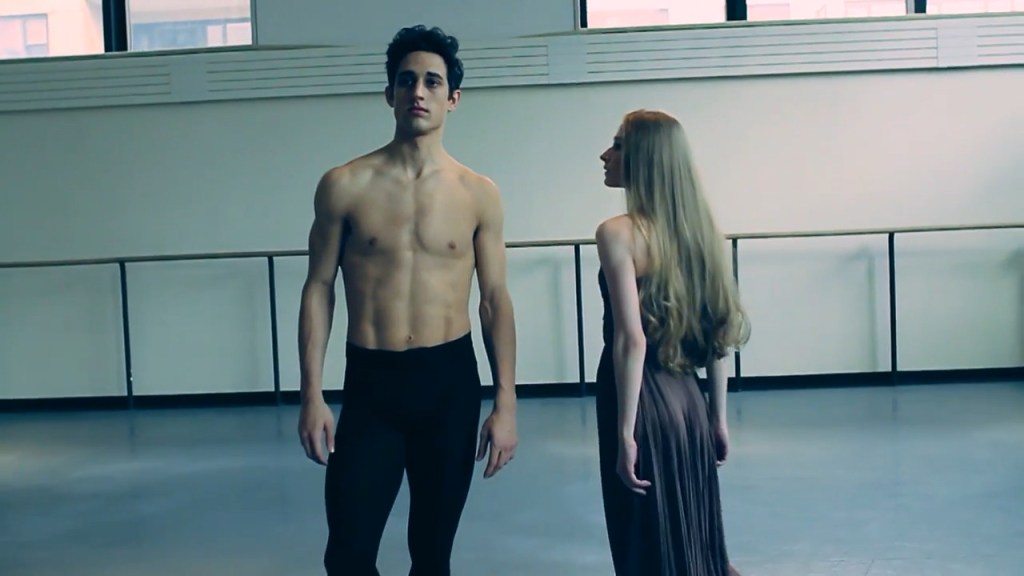
Janie Taylor and Justin Peck dance to music by Philip Glass in this brief film, made for The Block magazine .
Watch and listen here.
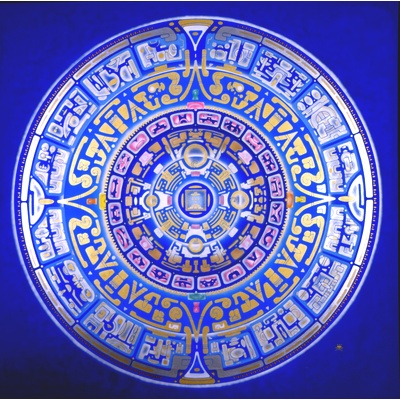
Above: A Toltec star-shield
Wednesday February 27, 2013 – A few minutes into this concert by the Collegiate Chorale, an expression from the 60’s came to me: “Mind-blowing!” The evening, one of the most purely pleasurable I have ever spent in a concert hall, featured two great contemporary works: the Toltec Symphony (#7) of Philip Glass, and OCEANA, a marvel-filled cantata by Osvaldo Golijov. The cumulative sonic effect of this music was like that of a mystical drug: I felt both vividly stimulated and wonderfully relaxed: a paradox, but there it is.
The Glass dates from 2005 when it was commissioned by the National Symphony Orchestra to honor the 60th birthday of conductor Leonard Slatkin. The composer was inspired by the ancient culture of the Toltecs, remnants of which may still be found in Northern Mexico. Like many wise peoples, the Toltecs lived in close harmony with nature; the symphony evokes not only that link but the mysterious harmonies of forgotten rituals.
The term Minimalist doesn’t really apply to Philip Glass; his view of music is in fact panoramic and the Toltec is universes away from Minimalism. It’s a vast and grand piece. The composer’s signature motif of repeated rhythmic patterns is very much in play, but there are layers of sound bulit on that foundation.
The work opens subtly, with harp, maracas and celeste; as the first movement (entitled The Corn) develops, there is a spine-tingling ebb and flow of dynamics and textures from huge tutti passages that pulsate thunderously to trancelike delicacies that float on air. The second movement (The Sacred Root) is a grand choral tapestry, veering in song from seductive sway to hypnotic chant; at one point four singers step forward to deliver a counter-song. The chanting, sustained over timpani, finally dwindles magically into silence.
The symphony’s final movement opens with a chorale of brass and violins into which the woodwinds and harp soon join. At this point there was an annoying late seating which broke the mood of the piece; with only a few minutes of music left, was it really necessary to seat people at that point? Better to have taken a pause between the second and third movements and gotten the stragglers in place before continuing.
Trying to recover my focus, I was intrigued by a passage for harp and strings, interrupted twice by the timpani. The winds join in a grand welling-up only to subside again. A four-square rhythmic, benedictive choral finale develops with halting pauses between segments, inducing an ecstatic feeling. With luminous high-flutes sounding over gently rocking strings, the Toltec vanishes into the mist like a lost civilization.
There was no intermission but rather a longish pause in which the stage was re-set for the Golijov. I’ve recently become fascinated with this composer thanks to hearing his music used by choreographer Lydia Johnson. For OCEANA, the brass and woodwinds leave us as do the percussionists: aside from a quartet of flautists and three musicians playing small percussion instruments, OCEANA is all-strings – including guitars – and singing.

The enigmatic and perfumed poetry of Pablo Neruda (above), from Cantos Ceremonial, gives wing to Osvaldo Golijov’s matchless musical imagination. In this cantata, modeled on Bach, the illusive words of the poet will rise up from the mystic murmurs of harp and guitar and the sounds of the rainforest which open the work.

The sensational Venezuelan vocalist Biella Da Costa (above) revealed a mellow, sultry voice of huge range and capable of entrancing vocal effects woven into her alluring sound. Wow! As the work progressed from one movement to the next, I found myself thinking: “What sonic magic will we experience next?” Between the orchestra, the chorus and the soloist, the ear is constantly seduced while the soul veers madly from the realms of the spiritual to the sensual.
In a splendid aria, the jazzy singer bounces her voice around a big range, joyously carefree in this litling vocalise which percolates over guitar, bass and flutes. Then the chorus takes over, rocking and rolling like a sailing ship on a breezy day. Folkish percussion with harp and guitar tingle as a group of young women from the Manhattan Girls Chorus join in the music-making: wind and waves carry us forward, making me want to dance.
Finally we reach the choral finale: the Oceana chant, a dreamlike invocation, makes us feel like we’re in church. The vision of the sea and the clouds fades like a dream as the music evaporates into a hush.

Conductor James Bagwell (above, in an Erin Baiano photo) is to be praised not only for his steering of the musical ship tonight but for this imaginative and wonderfully satisfying programming. Ms. Da Costa was nothing short of a revelation, and let’s have some special roses for harpist Sara Cutler who played so marvelously all evening.
Osvaldo Golijov susrprisingly joined the singers and musicians onstage during the applause; I’m not sure the audience recognized him though.
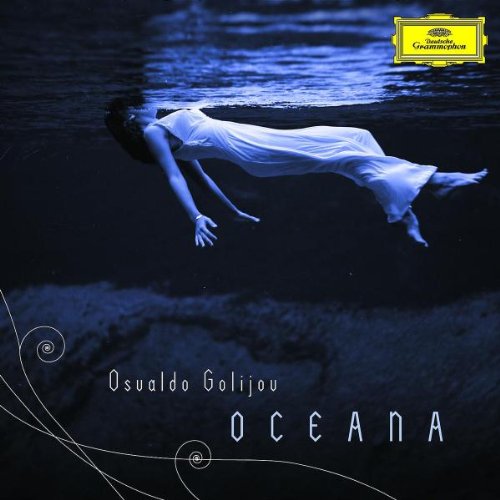
OCEANA is available on CD…

…as is Glass’s Toltec Symphony.

Above: Max van der Sterre and Kerry Shea in Lydia Johnson’s FALLING OUT, photo by Kokyat. This dancework, set to Philip Glass’s 3rd Symphony, was created in 2006 and revived for Lydia’s 2012 season at Peridance. FALLING OUT centers on a romantic triangle in which the tranquility of a domestic relationship is threatened by the appearance of another woman who captures the roving eye of Max van der Sterre.
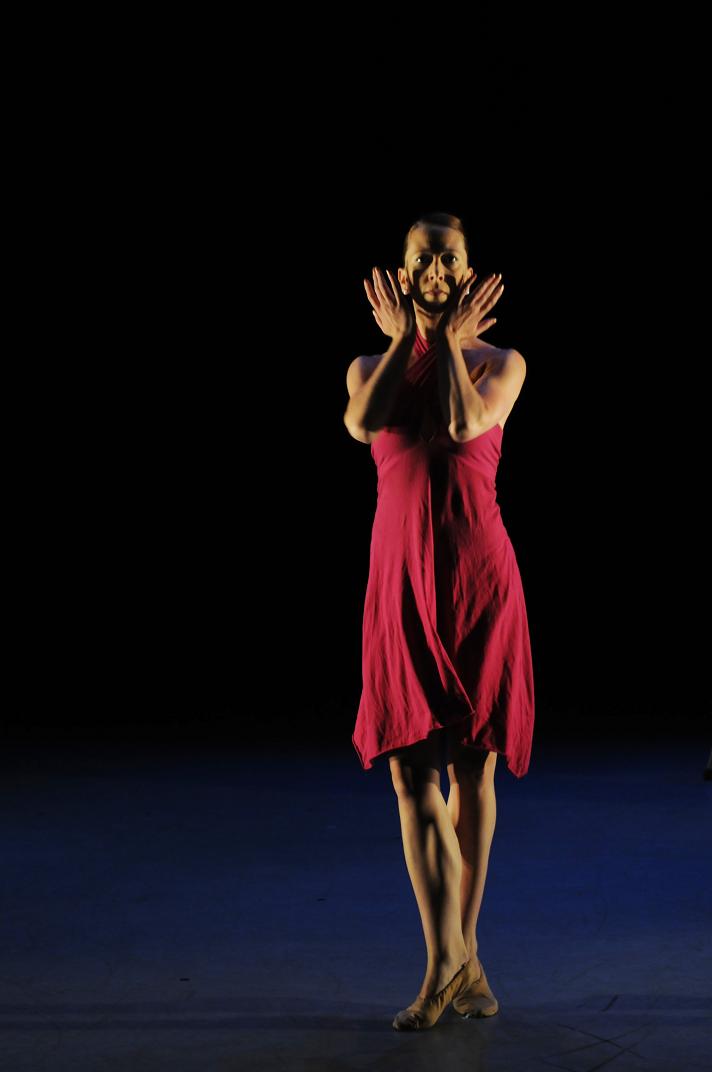
Kerry Shea (above) portrays Max’s established lady love…

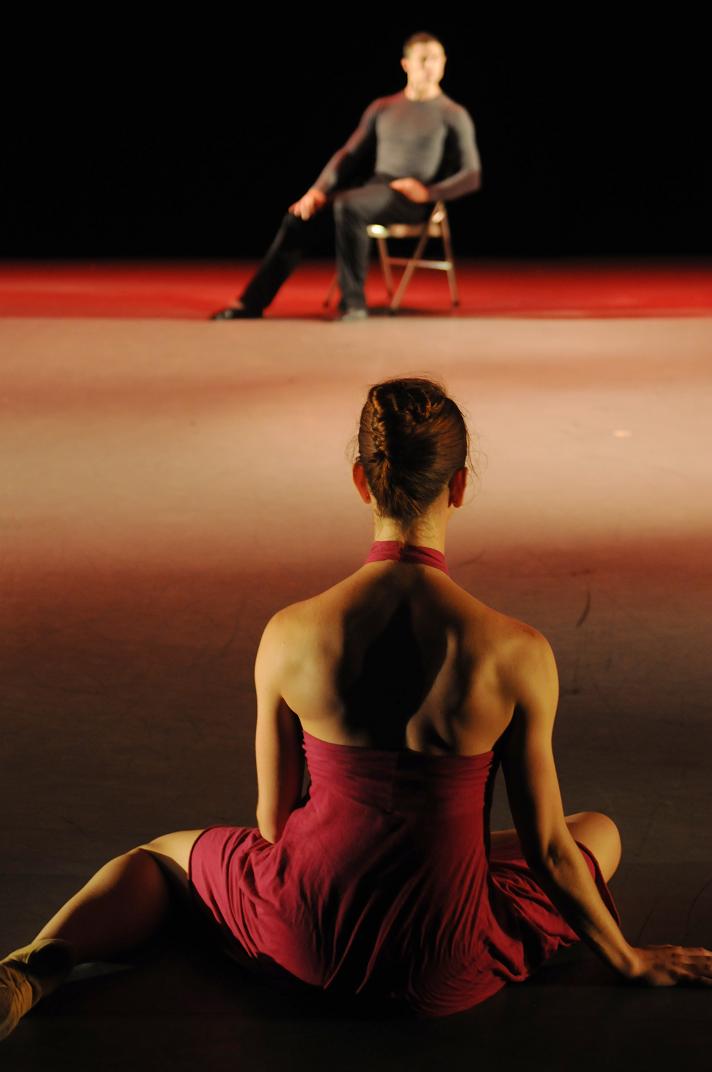
…and Jessica Sand (above) is the woman who, at first perhaps unwittingly, causes the disruption by her mere presence.
In a complex pas de deux which is a continuous thread throughout the work, the central couple veer from tenderness to outright antagonism.
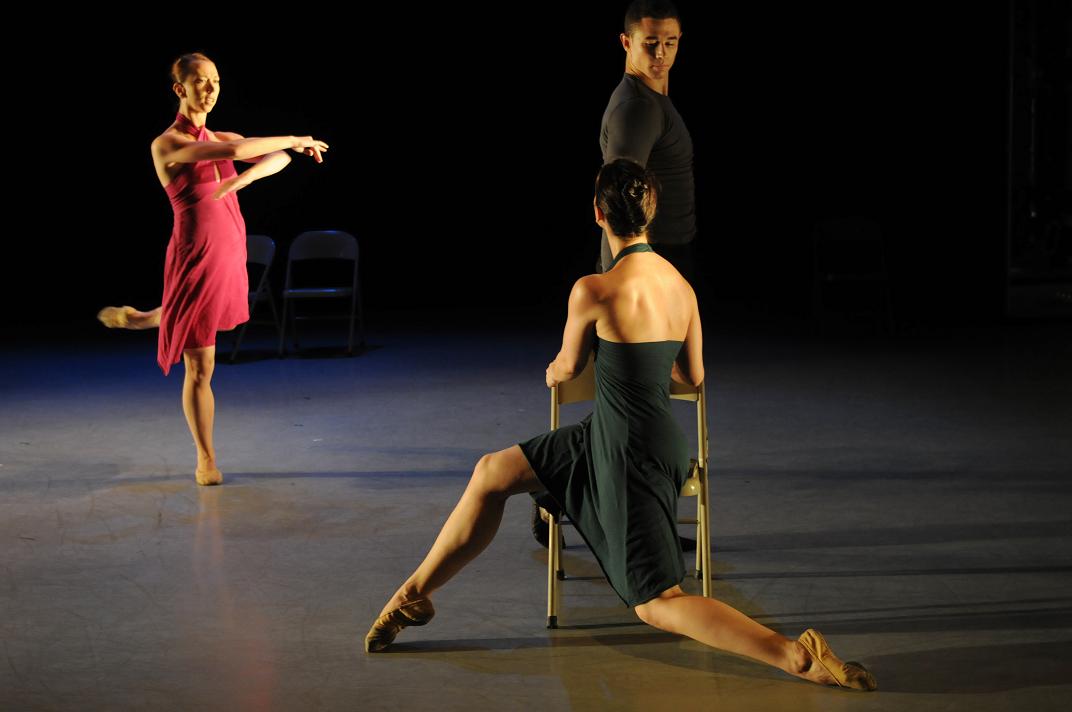
For a brief moment the man seems close to making a choice, yet he is continually drawn back to his longtime lover.
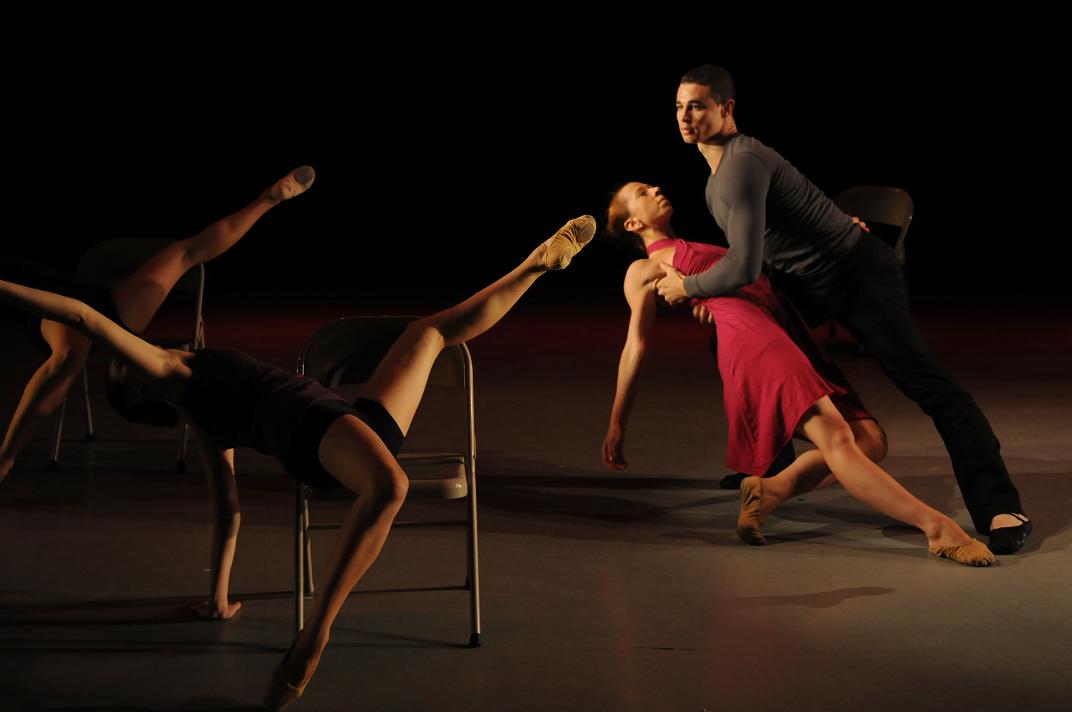
In the end, though Max and Kerry are still together, the situation remains unresolved.
FALLING OUT provides a sustained and demanding central role for the male dancer in which Max van der Sterre’s magnetic stage presence and the compelling security of his partnering make a vivid impression. Kerry Shea, looking striking in a cerise frock, captures both the strength and vulnerability of the woman whose peace of mind is threatened: beautifully danced, Kerry’s performance is marked by subtle shifts in facial expression that reveal the insecurities beneath the surface of a long-established relationship. Jessica Sand, in the physically demanding role of the ‘other woman’, spends quite a bit of the piece facing upstage; her upper back, shoulders and neck become expressive instruments even when we cannot see her face.
A quartet of women provide a sort of chorus for the work; at first they remain on the sidelines doing synchronized moves either prone or seated. Later they take a more active part in the drama. They seem to represent the man’s past loves – no longer essential to him, but still unforgotten.
More of Kokyat’s images from FALLING OUT:
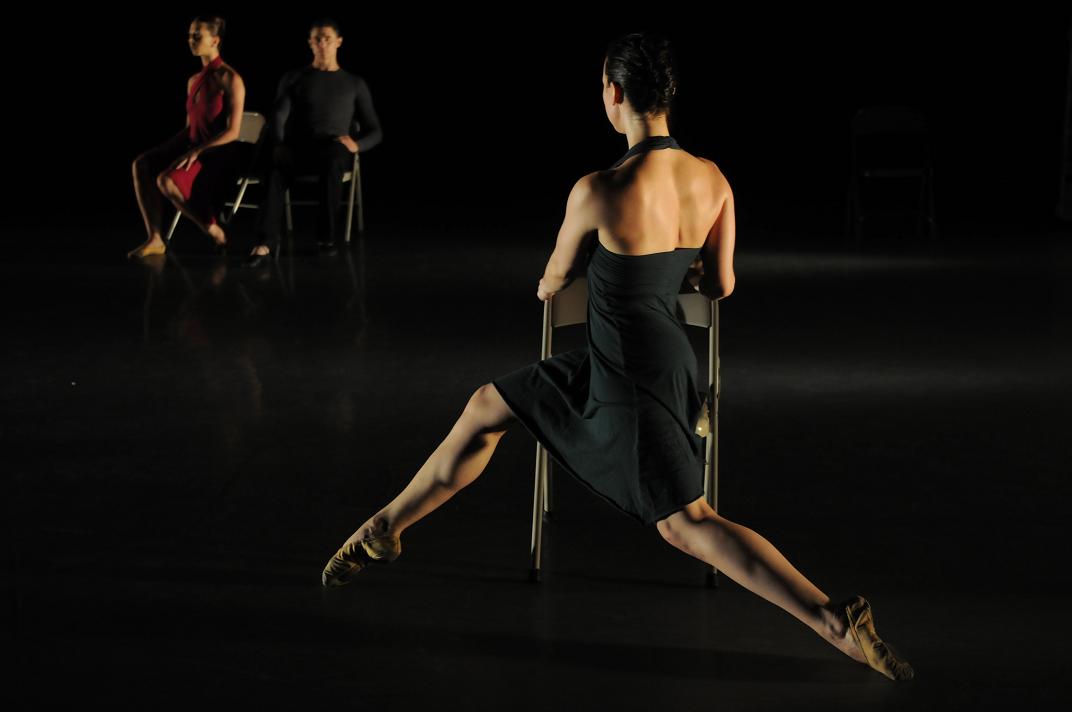
Jessica Sand


All photography by Kokyat. Read more about this performance here, with more to follow.

The second work on the program at Lydia Johnson Dance‘s February 26th, 2012 matinee at Peridance was FALLING OUT, a 2006 dancework set to the 3rd Symphony of Philip Glass. Above: dancer Jessica Sand photographed by Kokyat.

FALLING OUT is a dramatic dancework revolving around the tempestuous relationship of a man and a woman (Max van der Sterre and Kerry Shea); their moody encounters range from tender to combative over the course of the piece.

A second woman (Jessica Sand, seated right above) creates the third corner of a romantic triangle. She remains an alluring object of desire for the man, though they never touch.

Meanwhile, a chorus of women remain on the sidelines; their synchronized movements rarely infringe oin the central drama yet they appear as additional enticements for the man…or possibly as lovers from his past.
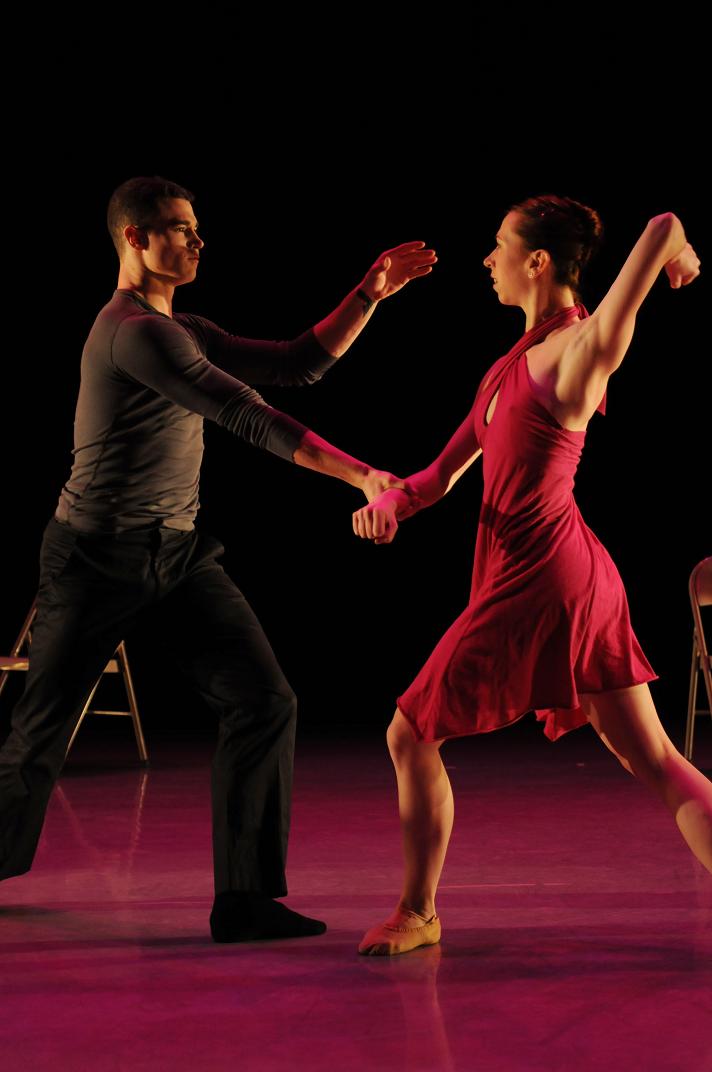
The tension rises as the women observe each other warily; at last the central couple actually come to blows.

Things seem to resolve, and harmony is restored.

Yet in the work’s final moment, Max’s gaze is again captured by an elusive vision.
Read about the other work on this program here.
All photography by Kokyat.
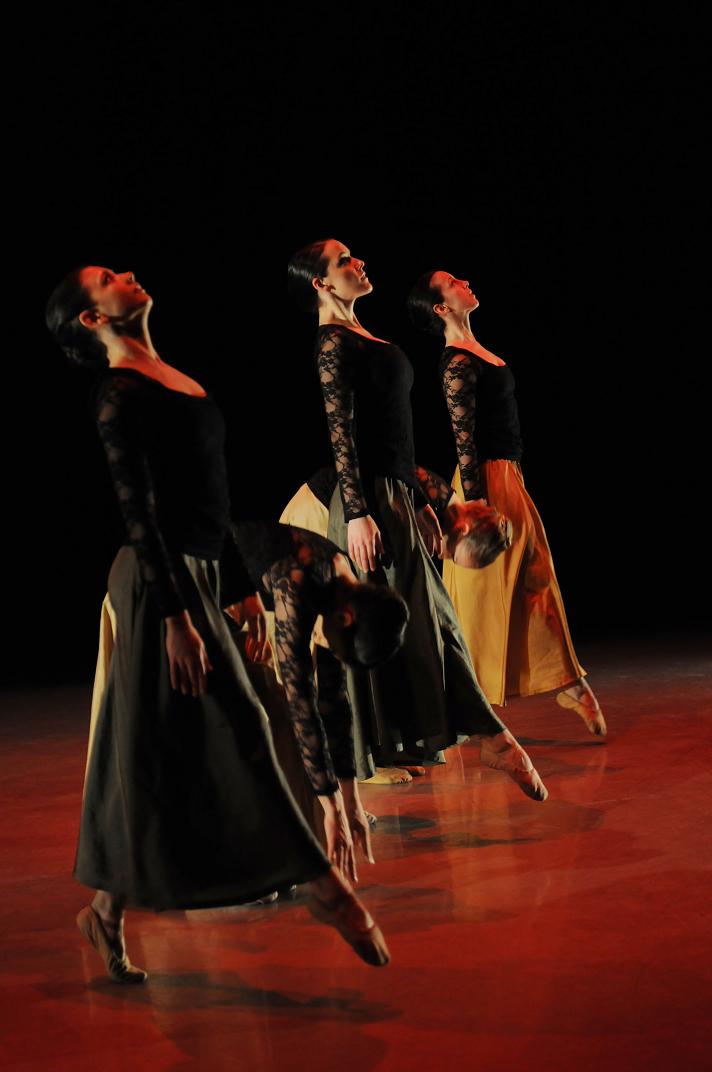
Sunday February 26, 2012 matinee – Lydia Johnson Dance presented two works at Peridance this afternoon. The performance marked the first full presentation of Lydia’s new, as-yet-untitled work to music of Osvaldo Golijov as well as a revival of her 2006 piece to music of Philip Glass: FALLING OUT.
Kokyat and I have been following the creation of the Golijov work from its earliest days, visiting the studio periodically to view the work’s progress. Lydia is so generous in sharing her creative process, giving us an extraordinary insight into how ideas become danceworks.
Click on each image to enlarge:

In the Golijov, a trio of women first appear in soft golden gowns; their black-lace bodices provide a Spanish feel. Remaining in place, they perform a gestural ritual implying both spirituality and cleansing.
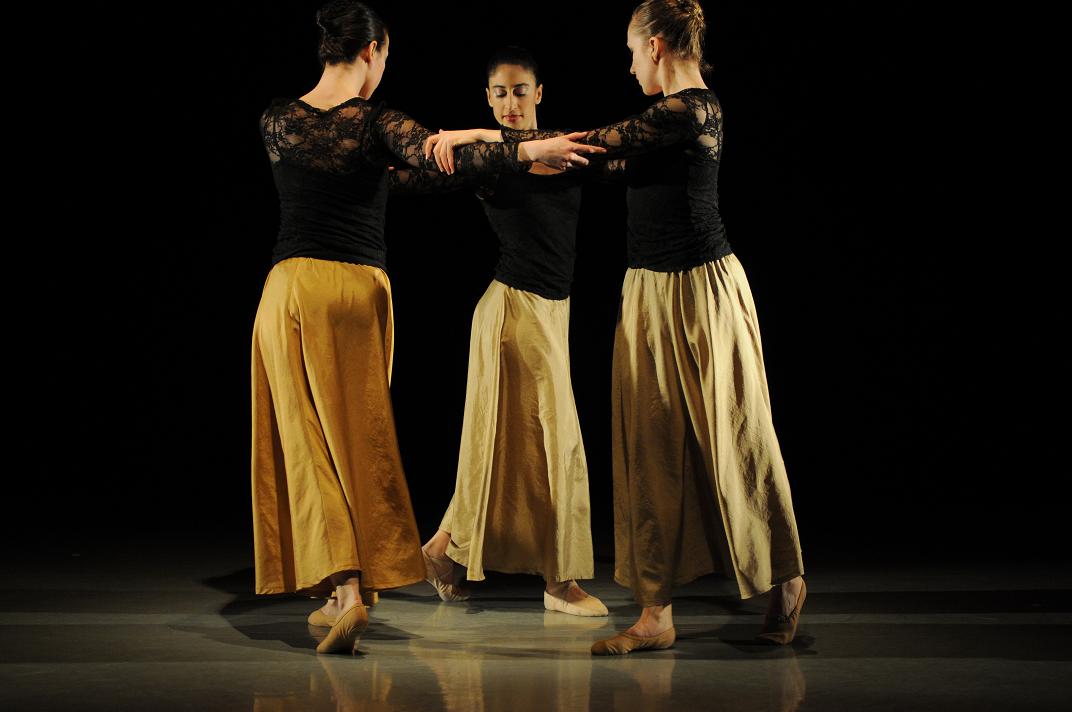
Quietly they move in a circular pattern…

…which is expanded by the entry of two more women.

With an unexpected juxtaposition of calm and urgency, the women continue their mysterious rites as the music takes on a soulful expression.

Images of silent despair and of consolation are evoked…
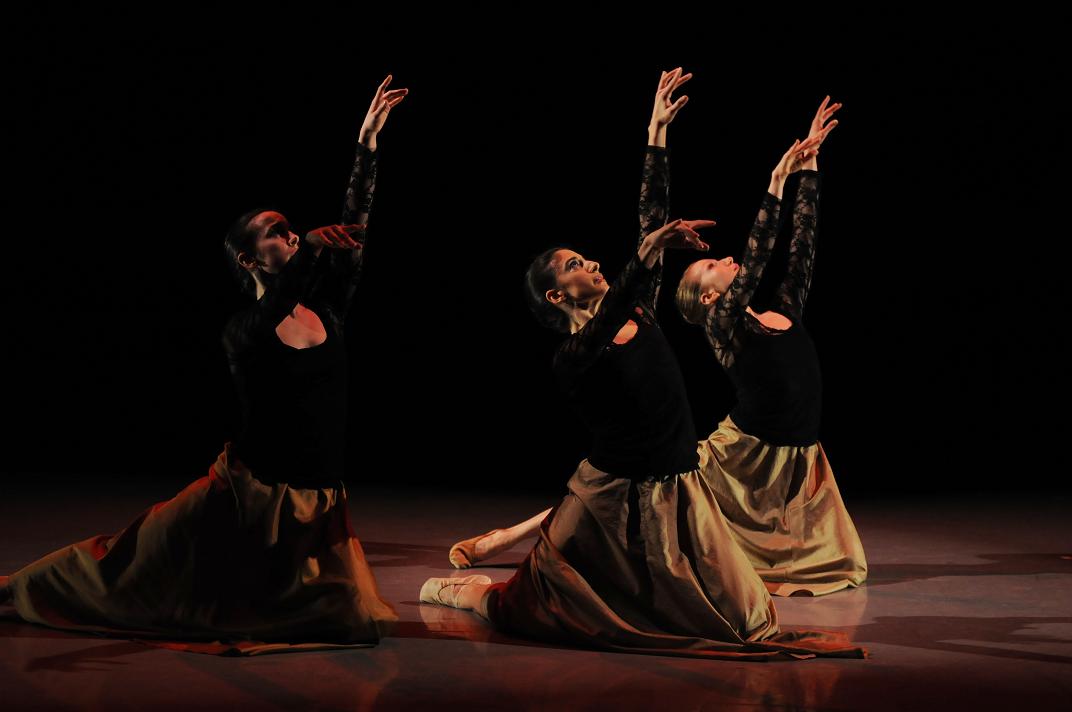
…blended with uplifting gestures of unity and hope.

The final movement of the Golijov is marked by themes of rocking as each girl in turn swoons into the arms of her sisters to be gently lulled.

In this work, choreographer Lydia Johnson seems to be telling a story yet the mystique of the five women – who they are and what their rituals mean to them – is left to the imagination of each viewer. One of the things about Lydia’s work that I most appreciate is her unerring taste in music: she always seeks out the best, whatever genre she might decide to work in. Here, the religious themes of the Golijov pieces she uses offer a wide range of interpretative images, from the earthy to the sublime. Darkly handsome in atmosphere, this dancework resonates with the bonds of sisterly unity and affection; it steers clear of sentimentality, thus striking a deeper chord.
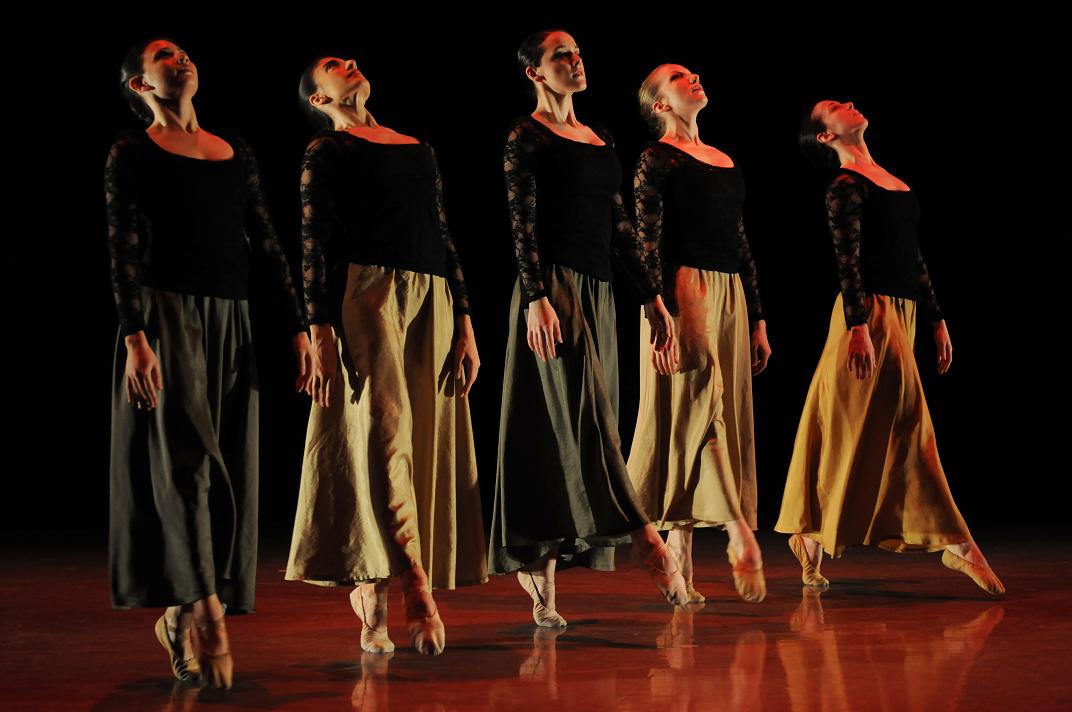
Always a choreographer’s greatest good fortune: to have dancers who understand and communicate the imagined nuances of a given work. The lyricism and grace of the five women dancing in the Golijov maintained the spirit of the music and movement from first note to last. They are (above): Sarah Pon, Lisa Iannacito McBride, Kaitlin Accetta, Laura DiOrio, and Jessica Sand.
Details of the afternoon’s second work, set to music of Philip Glass, will appear here shortly.
All photographs by Kokyat.
Friday January 27, 2012 – Today at the Battery Dance studio, Lydia Johnson’s dancers were rehearsing her 2006 dancework FALLING OUT. Set to music of Philip Glass (his 3rd Symphony) FALLING OUT will be performed at a special matinee at Peridance on Sunday February 26th. In Kokyat’s image at the top, Max van der Sterre and Kerry Shea.
The work is essentially plotless but the theme of a romantic triangle is clearly established: the relationship between Kerry and Max is a tempestuous one in which moments of harmony (above) alternate with fiery outbursts. The ‘other’ woman, danced by Jessica Sand (seated at right in the photo above) remains an enigmatic figure in the piece. Jessica and Max never dance together; we can never be sure if Jessica is real or an idealized vision in Max’s mind that lures his attentions away from Kerry.
Meanwhile a female chorus, at first indifferent to the central conflict but later drawn into it, dance in stylized a commentary on the action. The dancers are Lisa Iannacito McBride, Kaitlin Accetta, Sarah Pon and Laura Di Orio.
It was an overcast day, but from time to time the sun broke thru the clouds and the studio was illuminated. Above: Laura and Kaitlin.
Dramatic structure: the elements of FALLING OUT are brilliantly sorted in Lydia’s choreography which seems like a play without words. She uses the Glass score with deft imagination, balancing speed and stillness, contemplation and action.
Max and Kerry have developed an impressive partnership in which Max’s strength and skill allows Kerry complete freedom to simply be her beautiful self. They have all the moves down pat and spent the rehearsal mainly working on exploring nuances of gesture and expression. Lydia’s style of encouraging her dancers to paticipate in the process of refining the movement makes her rehearsals unusually satisfying to watch.
Star power: Max’s t-shirt says it all. Great presence, and a real force in the studio.
Max and Kerry
Mood swings: the couple go from tender…
…to turbulent in a flash.
Mysterious force: Jessica Sand keeps us wondering exactly who this woman is, interloper or silent muse? The questions that FALLING OUT raises about the idea of devotion vs desire give us pause to contemplate the realties and illusions of romantic relationships.
Sleeping beauties
FALLING OUT, along with Lydia’s as-yet-untitled new Golijov piece, will be shown at Peridance on Sunday February 26th at 2:30 PM. $10.00 donation-based admission.
All photos by Kokyat. His Leica images from this rehearsal are here.
Sunday November 21, 2010 evening – The culmination of one of my busiest fortnights since I started blogging: a truly enjoyable evening of works by Lar Lubovitch, beautifully danced by his beautiful dancers. This was the Company’s final performance of a sold-out run at the Baryshnikov Arts Center.
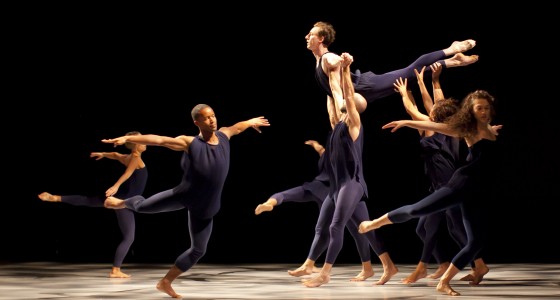
I suppose North Star would be considered early Philip Glass. He’d been composing for about ten years when he wrote this in 1977. (The ballet premiered in 1978). The music seems denser and less ethereal than many of Glass’s later works, but still very enjoyable to hear. The dancers swirl and flash about the stage individually or in quartets which join and then splinter as the music ebbs and flows. The restless energy of the score is visualized by the choreographer to perfect effect. Photo above: Todd Rosenberg.

Katarzyna Skarpetowska and Brian McGinnis (above, Christopher Duggan photo) performed the duet from MEADOW. Dating from 1999 and originally set on ABT, this work is set to an intrinsically luminous work by Gavin Bryars entitled Incipit Vita Nova.To the uneartly sounds of the counter-tenor voice, the dancers create sculptural shapes as one pose flows into another with silken smoothness. For the perfection of their performance, Skarpetowska and McGinnis were warmly cheered.

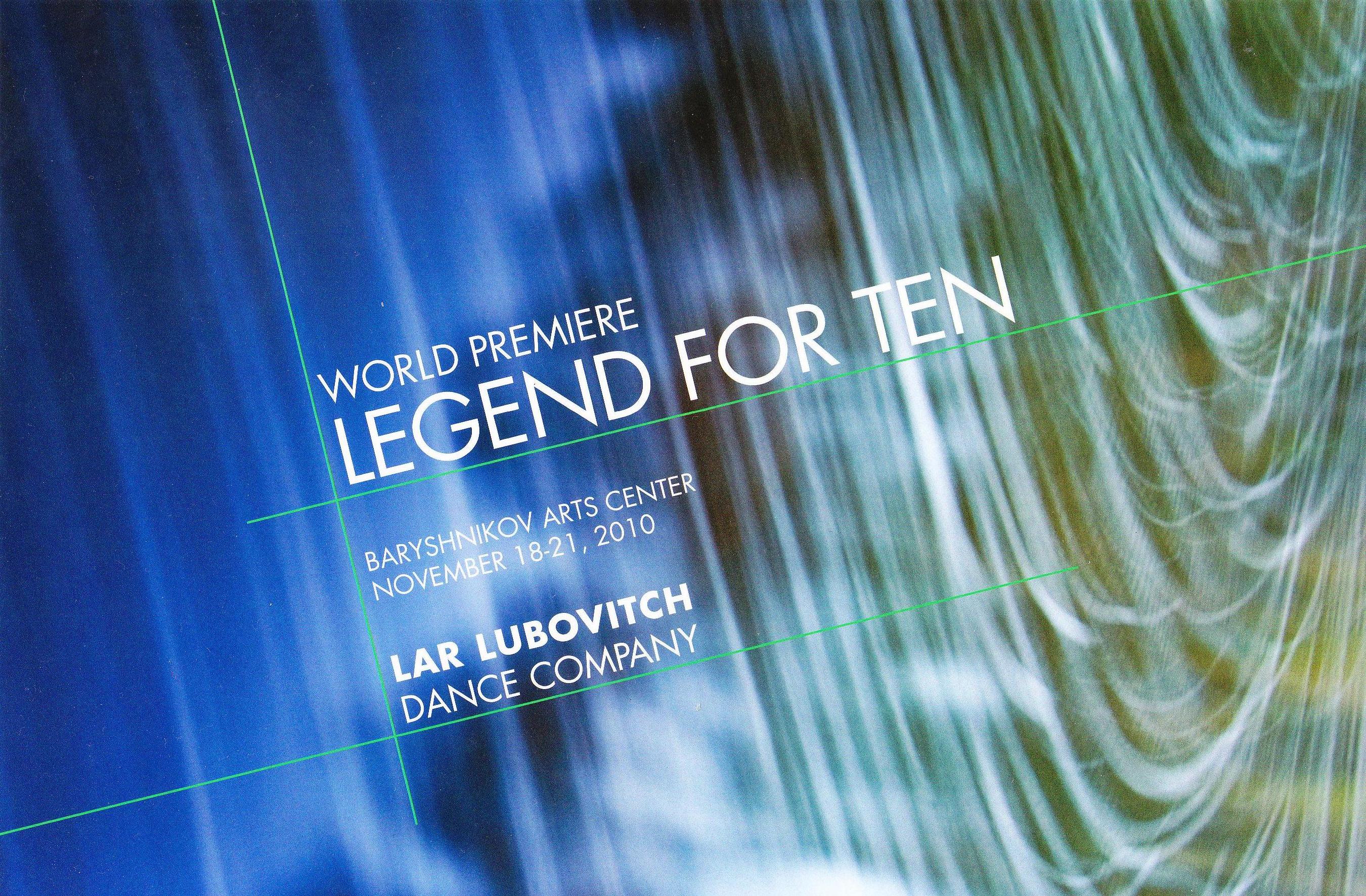
THE LEGEND OF TEN is a tribute to the ten members of the Company and – all clad in somewhat ominous but elegant black – the dancers turned it into a tribute to Lubovitch who is surely the king of lyricism among current choreographers. With a central adagio couple (Jenna Fakhoury and Reid Bartelme) surrounded by a lively octet of dancers who often step in unison and sometimes bring gypsy flourishes to their movements, the piece is structurally propelled by the music of the Brahms piano quintet Opus 34. The Lubovitch dancers mesh into a cohesive ensemble but the individual personalities of the dancers also shine thru in this, the latest success in the choreographer’s long catalog of works. (Photo above: Sasha Fornani)
All was going well as I saw the finish line of my 2-week dance marathon approaching, but on standing up for the second intermission tonight, my left knee finally rebelled in earnest. I realized that if I sat for another twenty minutes it would tighten further so I hobbled down to the street and after a few minutes of walking it loosened up enough to limp to the subway. I felt bad missing the last piece on the Lubovitch programme though it was one (Coltrane’s Favorite Things) I’d seen not long ago. My grandmother always told me: “It’s hell to grow old!”







 Oberon's Glade