Tag: Piano Concerto
-
Evgeny Kissin ~ Beethoven Piano Concerto #1
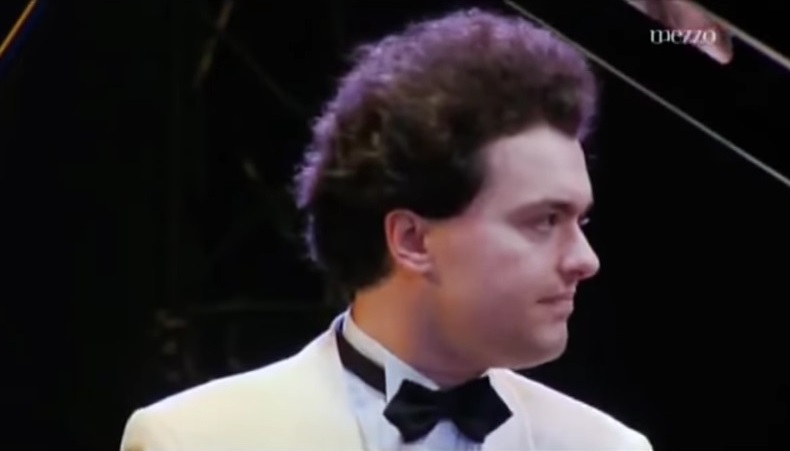
Evgeny Kissin (above) plays Beethoven’s Piano Concerto #1 in a 2007 performance with the Verbier Festival Orchestra conducted by Esa-Pekka Salonen.
Watch and listen here.
I first fell in love with this concerto when Helgi Tomasson set his ballet PRISM to it for the New York City Ballet in 2000.
-
Gerstein|Langrée @ Mostly Mozart
Author: Oberon
Wednesday August 16th, 1017 – How doubly grateful I felt when I saw that Kirill Gerstein (above, in a Marco Borggreve portrait) would be playing the Schumann Piano Concerto at tonight’s Mostly Mozart concert; grateful first of all because I greatly admire Mr. Gerstein as an artist, and grateful yet again for the opportunity to finally hear this concerto played live. It seems that it is not programmed all that often these days.
It’s rather unusual to find an extended solo piano work included on an orchestral program, but Mr. Gerstein’s rendering of Brahms’ Variations on a Theme by Robert Schumann was a wonderful prelude to his performance of the Schumann concerto…or rather, it would have been, had not audience distractions nearly ruined it. The pianist’s lyric warmth and a beautiful modulations of dynamic were truly congenial, but he had no sooner commenced to play than a loud thudding noise spoiled the music: someone among the stage audience had dropped something – something heavy.
Mr. Gerstein soldiered on, but as the variations continued a plague of coughing swept thru Geffen Hall. Hardly a bar of music went by without a cough, snort, clearing of throat, or other upper-respiratory distraction. After a while it became comical; I gave up thinking I could derive any real enjoyment from Gerstein’s playing, and I have to congratulate him for maintaining his focus: there’s no way he could have been unaware of these annoyances. Before the piece was over, something else had been dropped, and a cellphone went off. As the pianist took his bows, my friend Dmitry and I rolled our eyes; but we were determined that our evening would not be spoilt.
The Mostly Mozart Festival Orchestra players then took their seats, and Mr. Gerstein returned with Maestro Louis Langrée for the Schumann concerto. I became intrigued with this with this work years ago thru the film Madame Sousatzka, and have waited literally decades to hear it played live. I once asked a pianist/friend why it is not performed more often, and he replied: “It’s too easy.” It may be ‘easy’ to play, but it pleases audiences and was tonight given a top-notch performance by Gerstein, Langrée, and Company.
The first movement opens with a dramatic outburst from the soloist, followed by a simple, expressive melody played by the woodwinds; this theme will re-appear in various guises in the first and last movements. The second movement is referred to as an Intermezzo, and it is perhaps here that the real reason pianists choose other concertos over Schumann to display their artistry is to be found: without a real adagio or andante, expressive possibilities might be considered limited. For all that, Mr. Gerstein found much to be savoured here, and his playing was clear and shining. The final movement is full of vitality and sweeps us along in its dancing rhythms, with enjoyable references back to the concerto’s opening movement.
The Mostly Mozart woodwind players relished their opportunities here: Jon Manasse’s dulcet clarinet was a sheer balm to the ear, and Dwight Parry is a remarkable oboist. Their highlights, and the beautiful flow of Gerstein’s playing of the piano part – which includes a passage of shimmering light over delicate accompaniment – were simply the outstanding moments in a superb performance.
For an encore, Mr. Gerstein chose an arrangement of the Romanze: Andante non troppo, con grazia from Clara Schumann’s piano concerto, opus 7, composed when Fräulein Wieck was only 13 years old. Robert Schumann later devised a setting of the Romanze for piano and cello, with just a touch of timpani at the end. It was this musical love letter we heard tonight, ravishingly played by Mr. Gerstein and Mostly Mozart’s principal cellist Ilya Finkelshteyn. Markus Rhoten’s gentle sounding of the timpani had the magical effect of a heartbeat: the heartbeat of Clara’s love for her Robert. The overall effect of this encore was truly touching.
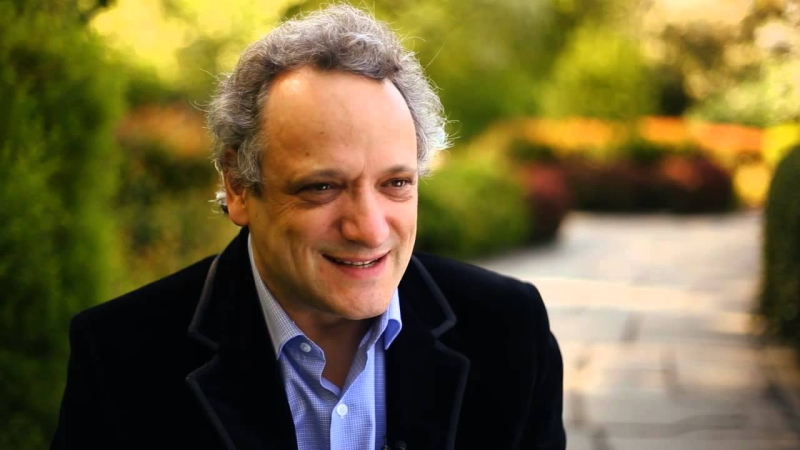
The evening concluded with Maestro Langrée (above) conducting the Brahms 1st Symphony. The composer declared that this symphony, from sketches to finishing touches, took 21 years – from 1855 to 1876 – to complete.
Tonight’s performance was rich-textured and lovingly paced, giving its 40-minute span a Beethovian air. The inner movements were particularly pleasing: the tender Andante sostenuto and the charming Allegretto. Throughout, the Mostly Mozart wind soloists gave ample pleasure – Jasmine Choi’s flute playing is priceless in it’s clarity and sheen. The symphony swept by, an affirmation of faith in the enduring power of great music as the world around us darkens.
~ Oberon
-
New York Philharmonic: Bronfman/Valčuha

Above: pianist Yefim Bronfman
Thursday February 18th, 2016 – In recent seasons, as I’ve gradually moved away from opera and dance and into the realm of symphonic and chamber music, concerts featuring the great pianist Yefim Bronfman have consistently been outstanding events; we still talk about these evenings – and about the pianist – with great admiration and affection. To me, Mr. Bronfman is a unique musician: an artist in the highest echelon of great performers today.
This evening’s concert at The New York Philharmonic is something my friend Dmitry and I have been looking forward to since it was announced. Maestro Juraj Valčuha was on the podium tonight as Mr. Bronfman performed Liszt’s Piano Concerto #2 on a program that further featured works of Kodály, Dvořák, and Ravel.
Opening the concert with Kodály’s Dances of Galánta; the Philharmonic had played this piece in 2013 and I was happy to experience this music again: it’s happy music! Zoltán Kodály wrote his Dances of Galánta to celebrate the 80th anniversary of the Budapest Philharmonic Orchestra. Galánta is a small village in Hungary where the composer spent seven years of his childhood and where, thanks to the town’s popular gypsy band, the young Kodály became aware of of the style and motifs of gypsy music.
Launched by a clarinet tune from the Philharmonic’s inimitable Anthony McGill, Dances of Galánta has a wonderful lilt and swagger. Flautist Robert Langevin and oboist Liang Wang pipe up charmingly, and the big, passionate main theme is irresistible. Maestro Valčuha – tall, handsome, and with an elegant baton technique – drew out all the vivid colours of the score, which ends with a romping folk dance.
Mr. Bronfman then appeared, to a congenial welcome from the Philharmonic audience. Meticulous of technique and warmly confident in stage demeanor, the pianist’s performance of the Liszt Piano Concerto No. 2 was impressive in its virtuosic clarity and in its meshing of the piano line with the orchestra. Maestro Valčuha’s feeling for balance and pacing was spot-on.
The concerto, which Liszt tinkered with endlessly between 1839 and 1861, is particularly congenial to experience as it sweeps forward in one continuous movement over a span of about 20 minutes; yet it has the feel of a more traditionally structured concerto. Along the way, Liszt pairs the piano with various orchestral voices – a gorgeous piano/cello lullabye; rippling piano motifs as the oboe sings; high and delicate piano filigree over gentle violins; horns and cymbals sounding forth as the piano flourishes triumphantly.
Mr. Bronfman’s fluency in the rapid passages was a delight: sprightly in a high-lying scherzo passage, then swirling and cascading up and down the keyboard with joyous bravado. The concerto further alternates moments of big drama with passages of sheer melodic glow, all of which Mr. Bronfman delivered to us with his customary assurance and polish.
Audience and orchestra alike embraced the pianist with a prolonged ovation; an encore was given which elicited even more applause, and the affable Mr. Bronfman was called out twice again. Next season, he’s down for the Tchaikovsky 2nd with The Phil: it’s already on my calendar, circled in red.

Following the interval, Maestro Valčuha (above) and the Philharmonic players further displayed their cordial rapport in two well-contrasted “tone poems”: Dvořák’s folkish and finely-orchestrated The Water Golbin (curiously enough, having its Philharmonic premiere tonight – some 120 years after it was written) and Ravel’s darkly magical La Valse, which always makes me think of Rachel Rutherford and Janie Taylor.
While it seemed a bit odd not to have a symphony on the program, the two shorter works in the second half of the evening worked well together, were beautifully played, and allowed us to savor Maestro Valčuha‘s conducting from both a musical and visual standpoint.
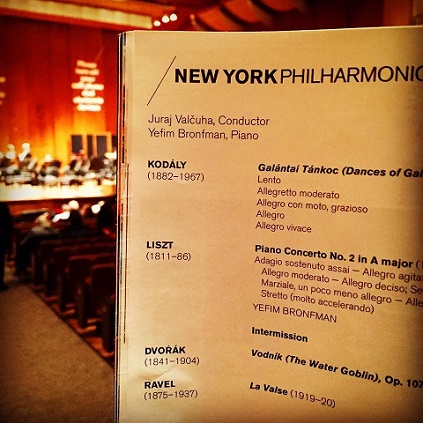
Photo by Dmitry.

 Oberon's Glade
