Tag: Renata Tebaldi

  • It’s All Because of Renata Tebaldi

    (One of my earliest long articles for Oberon’s Grove: the story of how my obsession with opera started.)

    tebaldi copy

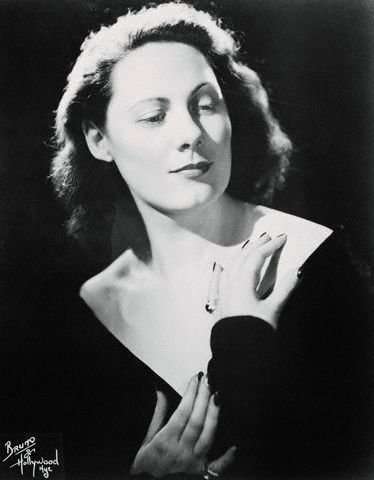
    In a way, I could say that I am where I am today because of Renata Tebaldi. It’s simplistic, and of course there are a million things which influence our choices as time goes by. But it was Tebaldi who made me fall in love with opera; it was opera that brought me to New York City on my own for the first time in 1966;  it was in New York City that I – the proverbial small town boy – discovered that I was not the only male in the world attracted to other men; it was a fellow opera fan who introduced me to New York City Ballet; it was my devotion to opera and ballet that kept me coming to NYC from Connecticut for 22 years – and spending a fortune.  And finally it was the desire to have opera & NYCB at my fingertips that finally got me to move here in 1998. And once I did, I met Wei. So, I owe it all to Renata!

    It was on January 12, 1959 that I happened to watch the Bell Telephone Hour; Tebaldi sang excerpts from MADAMA BUTTERFLY. I know the exact date because the performance has been released on video. This was not my first exposure to operatic singing; my parents had some classical LPs in their collection and there were snippets of Flagstad and Lily Pons on these. But nothing that moved me or drew me in like watching Tebaldi’s Cio-Cio-San. That was the beginning.

    My parents bought me my first 2-LP set of opera arias; I found out about the Saturday afternoon Met broadcasts; I subscribed to OPERA NEWS; I wrote fan letters to singers I heard on the radio. I used my tiny earnings from my paper route and working in my father’s store to buy a few more LPs. I plastered a big bulletin board in my room with pictures of singers. My parents took me to my first opera at the Cincinnati Zoo. Then they took me to the Old Met.  But it was a lonely obsession; I had no one to share it with.

    In 1966 when the new Met opened, I was allowed (freshly out of high school) to make my first trip to NYC alone. I got a room at the Empire Hotel and timidly went across the street to Lincoln Center.

    tebaldi ticket line c

    There I found a group of people sitting outdoors along the North side of the Opera House. “Sign in and take a number,” said a girl who was minding the line. Somewhere I still have my tag; I think I was number 57. I sat down and soon people started talking to me; I suppose to the many gay men the sight of a novice seventeen-year-old must have been tantalizing even though I was pretty ordinary looking. But people were so nice: what operas did I want to see? What singers did I like? After 5 years of having no one to talk about opera to, I thought I was in heaven. I shyly mentioned liking Gabriella Tucci, who I had seen at the Old Met. So the Tucci fans gathered and we talked about her.

    I ended up not leaving the line for 3 days and 2 nights. The late summer air was comfortable; we slept (or stayed awake) on the pavement. We sang thru complete operas: we sang all of TOSCA and someone jumped into the (empty) fountain at the end. People gave me soda, a few of the girls brought home-made baked goods. Pizzas were ordered, and Chinese take-out. Someone smuggled out a recording of a rehearsal of FRAU OHNE SCHATTEN  – a work most of us were totally unfamiliar with. I was devastated hearing the voice of Rysanek in that music for the first time. Franco Corelli served coffee one night; Franco Zeffirelli came out and got in someone’s sleeping bag. News filtered out about the new productions that were being rehearsed. There was a flurry of excitement when Leonie Rysanek was spotted at the far end of the Plaza. The crowd, now hundreds strong, surged around her. In a panic, she gestured for security guards from the House to come to her aid. Once inside, she turned and waved to us.

    Finally the box office opened; I got my tickets: TURANDOT, TRAVIATA, GIOCONDA, ANTONY & CLEOPATRA, RIGOLETTO. I had made my first friends in NYC; I had addresses and phone numbers of people who would send me tapes and get more tickets for me.

    Grubby and ecstatic, I went back to the Empire. My pants were slipping down: I hadn’t been eating. I took the bus back to Syracuse, asleep. My parents picked me up and took me home. I fell asleep in the bathtub.

    Soon after, I was back in NYC for the performances I had bought. For some strange reason, I had also stopped by the New York State Theatre and bought a ticket for their Opening Night of Handel’s GIULIO CESARE. Beverly Sills was singing Cleopatra. I had heard her already when NYCO toured to Syracuse and she sang Rosalinda in FLEDERMAUS. The CESARE was of course Beverly’s “big bang”.

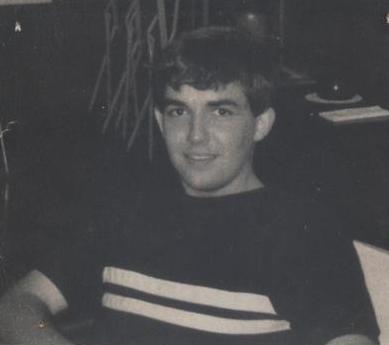
    This was what I looked like during that summer of 1966; I loved this t-shirt and wore it literally every day until it wore out. My sweet Jeanette says I was “embedded in it.”
    tebaldi me
  • Tebaldi/Simionato ~ GIOCONDA Duet

    Tebaldi simionato

    Renata Tebaldi and Giulietta Simionato (above) sing the great duet “L’amo come il fulgor del creato” from Ponchielli’s LA GIOCONDA at a Chicago Lyric Opera gala in 1956. Sir Georg Solti conducts.

    Listen here

  • Tebaldi @ Buenos Aires ~ 1953

    Renata

    Renata Tebaldi is at her most sumptuous in arias from two concerts given at Buenos Ares in 1953.

    Listen here.

  • Gabriella Tucci ~ “Vissi d’arte”

    Gabriella_Tucci

    While it was the voice of Renata Tebaldi that initiated my lifelong obsession with opera, it was her compatriot, Gabriella Tucci, who was my favorite soprano during the 1960s when I was glued to the radio for every Met matinee radio broadcast. Tucci’s singing of Aida, both Leonoras, Violetta, Desdemona, Cio-Cio-San, Alice Ford, and Marguerite in FAUST on these broadcasts captivated me, and thru her I developed a love for hearing the words sung with such colour and feeling.

    Seeing Gabriella Tucci in TROVATORE at the Old Met was a very special experience for me. I went on to see her in more roles – Liu, Elisabetta, Mimi – at the New Met, and enjoyed her so much, yet it was those formative Old Met broadcasts that linger in my mind to this day: I was learning these great operas at the time, and she taught me how beautifully they could be sung.

    I’ve just come upon this video of Ms. Tucci singing Tosca’s “Vissi d’arte” on the Ed Sullivan Show in 1962, and it reminds me of everything I loved about her.

    Watch and listen here.

  • Tebaldi/Bergonzi ~ TOSCA – Act I scene – Buenos Aires 1953

    Renata tisca

    A scene from Act I of Puccini’s TOSCA with Renata Tebaldi (above) and Carlo Bergonzi from Buenos Aires 1953. This was Bergonzi’s role debut as Cavaradossi.

    Listen here.

  • 50 Years Ago ~ Fabulous FALSTAFF!

    Evans and tebaldi

    Above: Sir Geraint Evans and Renata Tebaldi in FALSTAFF

    February 23, 2022 – Fifty years ago this evening, the Metropolitan Opera presented a memorable performance of Verdi’s FALSTAFF. The evening marked the first time Renata Tebaldi sang Alice Ford in New York City; beloved Met luminaries Regina Resnik and Sir Geraint Evans sang Dame Quickly and Sir John Falstaff, and Christoph von Dohnanyi made his Met debut on the podium. Of key interest for me was the beauteous Jeannette Pilou, a great favorite of mine, in the role on Nannetta.

    This was my diary entry, written right after the performance:

    “A great performance in every way. Christoph von Dohnanyi’s Met debut was a success, despite some moments that seemed under-rehearsed. When the curtain rose on the opera’s second scene and the audience caught sight of La Tebaldi, a sustained round of applause caused the opera to come to a halt. For a moment, no one seemed quite sure what to do, til someone yelled “Start over!”, and that’s what Maestro von Dohnanyi did.

    The cast was incredibly good. Two de luxe character tenors – Paul Franke (Dr. Caius) and Andrea Velis (Bardolfo) – scored numerous verbal points at the opera progressed. And…they can sing! Richard Best was a sturdy-voiced Pistola and Joann Grillo a comely, warm-toned Meg Page.

    Kostas Paskalis sang splendidly as the jealous Master Ford, his monolog being one of the vocal highlights of the performance. His voice is huge, with a darkish tint. Luigi Ava was a sweetly lyrical Fenton, and he played the role of the love-struck youth well. Regina Resnik was a fabulous, genuinely funny Dame Quickly. The voice is not really very attractive these days, but she knows how to sing, and she uses her voice as a dramatic instrument. She is, in every respect, a great Dame.

    Jp nannetta

    Jeannette Pilou (above, as an enchanting Nannetta) seemed so alive, so real, no mannerisms. Her voice is so pretty and clear, and she brought some very appealing pianissimo effects to her Act III aria. Pilou is such a beautiful woman; her arrival on a white Shetland pony as Hearne’s Oak was a lovely moment. Bravissima! 

    Renata Tebaldi enjoyed an immense success in her first Met appearance as Alice Ford. The voice seemed fresher than in recent seasons: very sweet and warm. Her high notes came quite easily tonight. On the last top-C, she really sailed, whilst Pilou tossed her head back and joined her, bringing this romp of an opera to a joyous end. Tebaldi’s sensational good looks, her charm and humor, and her lively entrance into the spirit of the evening made for another triumph for the great diva. Bravissima!

    Towering above all others was that magnificent singing-actor, Sir Geraint Evans, as Sir John Falstaff. In his revelatory portrayal, one sees every aspect – the comic and the tragic – of this incredible character. So pompous at first, so funny and full of himself at Alice’s, so frighteningly degraded as he runs to the Garter Inn at the start of Act III, so touchingly terrorized at Hearne’s Oak, and so human in the opera’s final moments. I’ve heard the role sung with more sheer voice, but never with such flair and nuance. Bravissimo, Sir Geraint: you are Falstaff!    

    Scanned Section 1-1

    The final ensemble was so much sheer fun: the singers lined up along the footlights and mocked the audience…and themselves. And then that great dual-high-C. The curtain calls were numerous, with everyone staying on, and a big gathering at the orchestra rail where flowers were thrown and we all yelled ourselves hoarse.”

    Lois & jp

    Above: Jeannette Pilou with New York’s most famous opera fan, Lois Kirschenbaum

    ~ Oberon

  • Tebaldi/Poggi/Guelfi ~ TOSCA

    Tebaldi tosca

    Renata Tebaldi (above), Gianni Poggi, and Giangiacomo Guelfi star in a televised performance of TOSCA from Tokyo 1961. Arturo Basile conducts. 

    Watch and listen here.

  • OTELLO ~ Tebaldi/Beirer/Dooley – Berlin 1962

    Snapshot otello

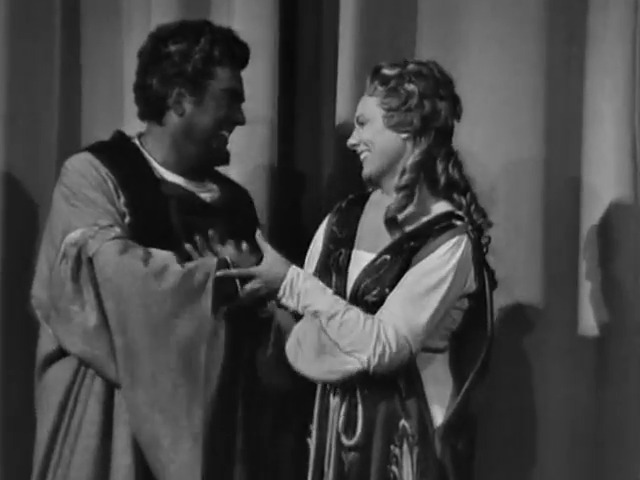
    Above: Hans Beirer and Renata Tebaldi taking a curtain call after a performance of Verdi’s OTELLO from the Deutsche Oper, Berlin, televised in black-and-white in 1962.

    Watch and listen here.

    Renata Tebaldi, Hans Beirer, and William Dooley have the principal roles, and Giuseppe Patané conducts.

  • OTELLO ~ Tebaldi/Beirer/Dooley – Berlin 1962

    Snapshot otello

    Above: Hans Beirer and Renata Tebaldi taking a curtain call after a performance of Verdi’s OTELLO from the Deutsche Oper, Berlin, televised in black-and-white in 1962.

    Watch and listen here.

    Renata Tebaldi, Hans Beirer, and William Dooley have the principal roles, and Giuseppe Patané conducts.

  • Renata Tebaldi in LA FANCIULLA DEL WEST

    Hqdefault

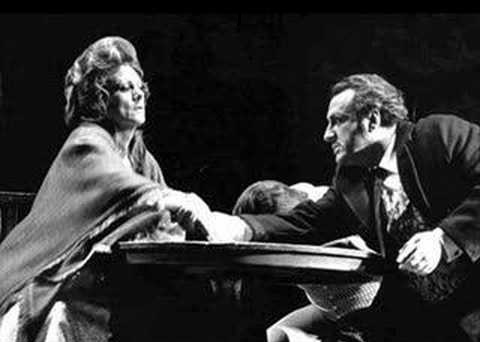
    Above: the Poker Scene from Puccini’s LA FANCIULLA DEL WEST with Renata Tebaldi and Giangiacomo Guelfi

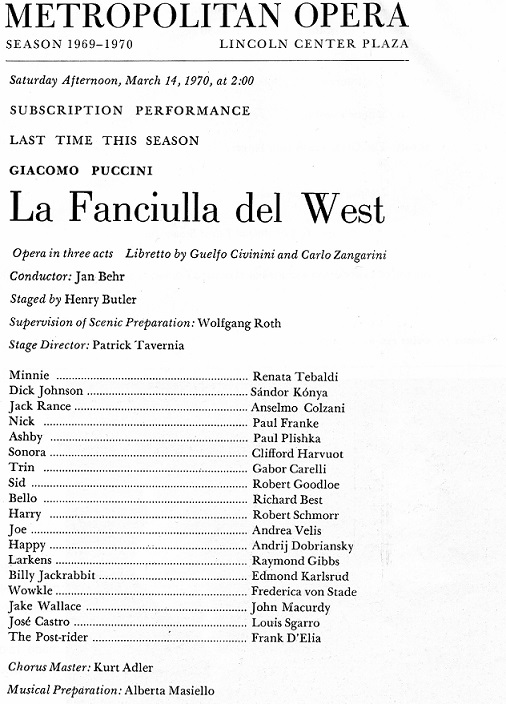
    One of the most memorable operatic experiences of my life was seeing Renata Tebaldi as Minnie in LA FANCIULLA DEL WEST in a Saturday matinee performance at The Met:

    Scanned Section 8-1

    Tebaldi was so fascinating that afternoon. Always known as a diva with a great sense of personal dignity, she really let her hair down as Puccini’s Girl of the Golden West. And her voice was huge, with a radiant warmth in the middle register and a chest voice to shame most contraltos, and her characterization of the saintly but sublimely human tavern-keeper who cheats at cards to save her lover’s life was rich in detail and extremely moving in its sincerity and humanity. Phrase after phrase and gesture after gesture from that portrayal are totally etched on the memory: I don’t need to listen to it – every nuance is unforgettable.

    By that point in her career, Tebaldi’s highest notes were sounding rather strained and on the flat side. That was a small price to pay for so much beautiful, touchingly expressive singing and such a vivid characterization.

    Set in a California mining town during the Gold Rush, the opera tells the story of Minnie, a big-hearted woman living among a rough-and-tumble band of miners. Minnie is a mother figure to these ragtag men, but she is also a woman both passionate and vulnerable. And when the chips are down, she is not above bending her own rules to get the one thing she has ever wanted. In essence, she is Puccini’s most human heroine.

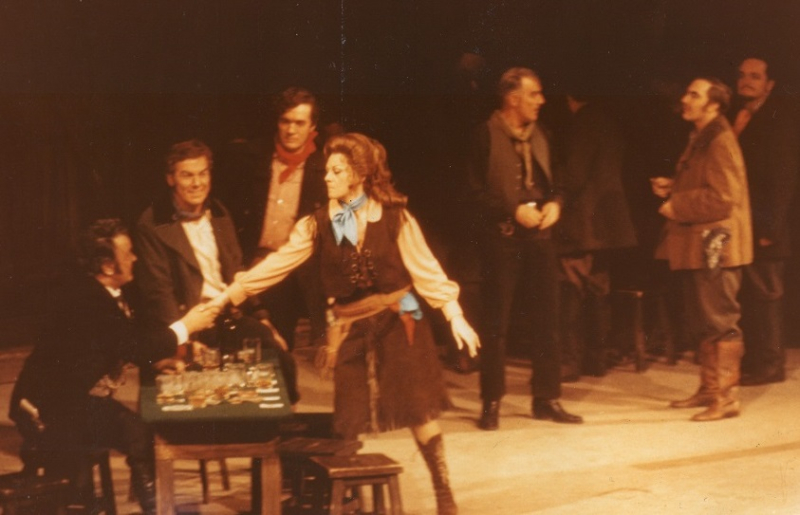
    The opera opens as the miners come in to The Polka, Minnie’s saloon, at the end of a day of panning and digging. Each of these men loves Minnie in his own way, and soon she makes a spectacular entrance, firing off her rifle to quell a near-brawl among her admirers; among them is the local sheriff, Jack Rance.

    After order is restored, Minnie morphs from barmaid to schoolmarm as she reads to the miners from the Psalms:

    Purge me with hyssop, and I shall be clean: wash me, and I shall be whiter than snow.

    Make me to hear joy and gladness; that the bones which thou hast broken may rejoice.

    Hide thy face from my sins, and blot out all mine iniquities.

    Create in me a clean heart, O God; and renew a right spirit within me.

    Cast me not away from thy presence; and take not thy holy spirit from me.

    Restore unto me the joy of thy salvation; and uphold me with thy free spirit.

    Then will I teach transgressors thy ways; and sinners shall be converted unto thee.

    Deliver me from blood-guilt O God, thou God of my salvation: and my tongue shall sing aloud of thy righteousness.

    O Lord, open thou my lips; and my mouth shall shew forth thy praise.”

    Renata Tebaldi – La Fanciulla del West ~ The Bible Lesson

    The point of this lesson, Minnie says, is that every man, even the worst sinner, can be redeemed thru love. This turns out to be the essence of the opera.

    Scanned Section 7-1

    Above: Minnie (Renata Tebaldi) greets the sheriff Jack Rance (Anselmo Colzani)

    Rance is mad with desire for Minnie. When he offers her a thousand dollars down if she will kiss him, Minnie says she will wait for true love to come along. She sings of being a small girl growing up in her parents’ tavern in Soledad, and of how much her parents loved each other:

    Renata Tebaldi – La Fanciulla del West ~ Laggiù nel Soledad

    A gentleman describing himself as “Johnson from Sacramento” comes in, asking for whiskey and water. This causes much mirth among the miners; “Here at The Polka…” laughs Minnie, …”we drink our whiskey neat.” Rance is suspicious of the stranger, but Minnie vouches for him: she had met him by chance once before, when he came upon her picking wildflowers in a meadow.

    Scanned Section 6-3

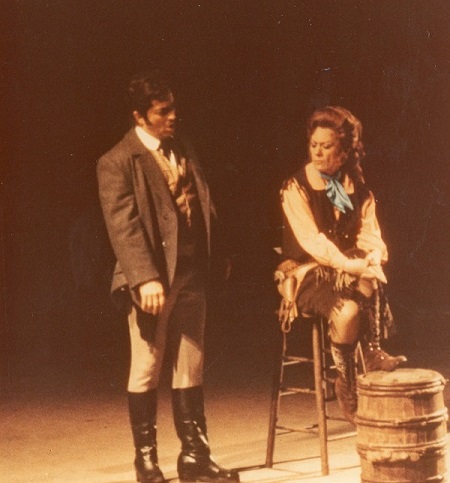
    What Minnie doesn’t know is that Johnson is really Ramirez, a notorious bandit, who has come to rob the Polka, aided by his gang of thieves; they are stationed outside, waiting for Johnson’s signal. Left alone with him, Minnie tells of her simple life in a cabin on the mountainside. Charmed by her beauty, courage, and modesty, Johnson forgets all thought of the robbery and asks if he may come to visit her that evening. “Don’t expect fancy conversation,” she tells him. “‘I’m a simple girl, obscure and good for nothing.” “No, Minnie…you have a good and pure soul…and the face of an angel.”

    Scanned Section 22-1

    Above, Sandor Konya and Renata Tebaldi as Johnson and Minnie. As the Act I curtain falls, Tebaldi as Minnie quietly repeats his words – ” …un viso d’angelo!” with a deep sigh. The audience applauded long and loud for the many curtain calls, with Tebaldi, Konya, and Colzani sharing the ovation.

    Scanned Section 6-1

    Act II: At her little cabin, Minnie anticipates her visitor by putting on her finest outfit, including high-heels, which she rarely wears (above)…during this dressing scene, Tebaldi was briefly seen in a corset and pantalettes, her lovely, long legs getting a wolf-whistle from some fan up in standing room. 

    Minnie and Johnson warily confide in one other, and at last, after much persuasion, he wins a kiss from her: her first kiss. He had been prepared to leave, but a violent snowstorm has swept across the mountain. “Then stay!”, Minnie cries spontaneously.

    Minnie assigns Johnson the bed; she will curl up in a bearskin before the fire. The wind whistles outside. Suddenly voices are heard; Johnson hides in the loft while the sheriff and some on the miners enter, certain they have tracked Johnson to Minnie’s door. They tell her that he is in fact the bandit Ramirez; they have had this information from the notorious Nina Micheltorena, a woman of ill-repute and Ramirez’s mistress.

    Minnie scoffs at the story, but when the men have left she calls Johnson out and reads him the riot act. She can forgive him the wrongs he has done, but she can’t forgive herself for giving him her first kiss. Angrily, she sends him out into the storm. But the sheriff is watching nearby. A shot rings out; Johnson has been hit; he staggers back into the cabin, and Minnie again hides him in the loft.

    Rance now confronts Minnie but she swears Johnson is not there. She and the sheriff tussle briefly, and he is about to leave when, from above, a drop of blood falls on his hand. He orders the wounded Johnson down from his hiding place and is about to haul him off to jail when Minnie makes an offer: she and Rance will play poker. At stake is the life of the man she loves.

    Tebaldi had gone to a casino to learn the art of card shuffling and dealing from a professional. In the House, and on recordings of that broadcast the sound of the cards being shuffled and dealt creates a palpable effect as Minnie and the sheriff Jack Rance play the three hands of poker that will decide the fate of the outlaw. One of the best exchanges in the opera comes as Rance, looking at the injured Johnson slumped at the table, asks Minnie: “What do you see in him?”, to which she quietly replies: “What do you see in me?”

    Moments later, having been dealt a bad hand in the final game, Minnie feigns a fainting spell. While Rance gets her a glass of water, she pulls out winning cards that she had secretly stashed in her stocking. Rance lays down his cards – three kings – saying: “I know why you’ve fainted: you’ve lost!” But Minnie defiantly stands up and replies: “No! I’ve deceived you! It’s from joy! I have won!!” and there Renata Tebaldi slapped her cards onto the the table and in an adrenalin-charged chest voice shouted: “Tre assi e un paio!!” The furious sheriff stalks out as Tebaldi embraces her wounded lover “He’s mine!!!” she cries out. Then, just as the curtain falls, she flings the entire deck of cards into the air. The ovation was unbelievable, and went on for several minutes.

    Here’s the scene, from Tebaldi’s commercial recording; Cornell MacNeil is Jack Rance:

    Renata Tebaldi & Cornell MacNeil – La Fanciulla del West ~ The Poker Game

    Act III: Though Minnie won Johnson’s life, eventually he has to leave the cabin on the mountainside. The miners have taken turns watching nearby, and at last the bandit is caught and hauled off to be hung. Johnson  sings a passionate farewell to Minnie, begging the men not to tell her of his fate. The noose is placed around his neck, but suddenly Minnie rides in, firing her gun into the air. There’s a standoff, as none of the miners would ever harm Minnie.

    In a great ensemble, Minnie now walks among the men and, one by one, reminds them of all she has done for them; she literally says, “I’ve given you the best years of my life.” Now she asks them to spare Johnson for her sake. She reminds them of the Bible’s lesson of forgiveness and redemption. This is the most moving part of the whole opera.

    Renata Tebaldi – La Fanciulla del West ~ E anche tu lo vorrai (Minnie and the miners)

    The men struggle with their emotions, but at last Sonora – the gentle miner who has long loved Minnie without hope – persuades his mates that they must do what she asks: “Minnie, your words come from God…in the name of all, I give this man to you.”

    Minnie and Johnson leave, arm in arm, singing “Addio mia California!” as the miners weep.

    The curtain calls after the Met matinee were spectacular. Tebaldi received enormous roars of applause and eventually drew her gun and began ‘firing’ it at the audience. Afterwards, she was mobbed at the stage door.

    Scanned Section 5-1

    This article is written in honor of Craig Salstein, my longtime friend. It was Tebaldi’s voice that turned Craig into an opera fan at an early age. She had that effect on people, including myself.

    ~ Oberon