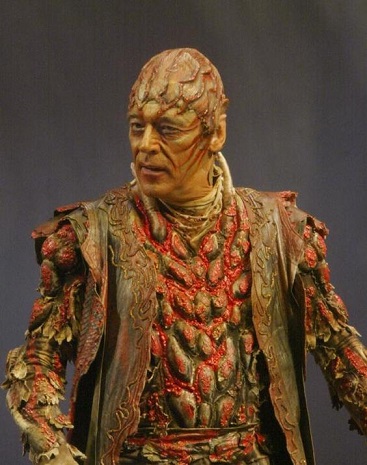
Tag: Ring Cycle

  • Remembering Hildegard Behrens

    behrens c

    (This article appeared on Oberon’s Grove in 2009, following Ms. Behrens’ death at the age of 72.)

    “It is so difficult for me to comprehend that Hildegard Behrens has died. She was only 72 and it seems not all that long ago that my friend Bryan and I visited her in her dressing room after what was to be her penultimate Met performance: as Marie in Berg’s WOZZECK.

    Hildegard Behrens was one of a half-dozen singers who, in the nearly half-century that I’ve been immersed in the world of opera, made an impression that transcended mere vocalism and acting. Her voice was utterly her own: a ravaged, astringent quality often beset her timbre – the price of having given so unsparingly of her instrument in some of opera’s most taxing roles. And yet she could produce phrases of stupendously haunting beauty, and she could suddenly pull a piano phrase out of mid-air. Her unique mixture of raw steely power, unmatched personal intensity and a deep vein of feminine vulnerability made her performances unforgettable even when the actual sound of the voice was less than ingratiating.

    So many memories are flooding back this morning while I am thinking about her: the Wesendonck Lieder she sang at Tanglewood during my ‘Wagner summer’…a rare chance to hear her miscast but oddly moving singing of the Verdi REQUIEM…her televised RING Cycle from the Met…her wildly extravagant ‘mad scene’ in Mozart’s IDOMENEO…her passionate Tosca and Santuzza, cast against the vocal norm…a solo recital at Carnegie Hall…the dress rehearsal of the Met revival of her ELEKTRA  where she made up (and how!) for an off-night at the premiere. Hildegard Behrens was also the holder of the Lotte Lehmann Ring, which was left to her by her great colleague Leonie Rysanek upon Rysanek’s untimely death in 1998.

    behrens 2

    It was in fact the Behrens Elektra, sung in concert at Tanglewood with the Boston Symphony Orchestra under Seiji Ozawa in August 1988 that has always seemed to me the very epitome of what an operatic portrayal can be. In a black gown and violently teased hair, the soprano (announced as being indisposed by allergies) transformed a stand-and-deliver setting into a full-scale assault on the emotions. I’ll never forget that performance and I was fortunate a week later to record it from a delayed broadcast.

    In the great scene in which Elektra recognizes her long-lost brother, Behrens transported me right out of this mortal world. Here it is, from her 1994 Met performance with Donald McIntyre.

    It’s going to be hard for me now to listen to Hildegard – her Berlioz Nuits d’Ete is my favorite recording of those beloved songs, unconventional as her voice sounds in that music – or to watch her on film as Brunnhilde or Elektra. For a while I will just let the memories play.”

    behrens tosca

    Above: Ms. Behrens as Tosca

    behrens 4

    Above: the soprano in concert with Daniel Barenboim

  • TRISTAN UND ISOLDE: Jones & Kollo

    Scanned Section 31-1

    ~ Author: Oberon

    Recalling the day I spotted this DVD of TRISTAN UND ISOLDE on the shelf at the Library of the Performing Arts. The production is from the Deutsche Oper Berlin, filmed on tour at Tokyo in 1993. It stars Dame Gwyneth Jones and Rene Kollo (photo above), two veteran Wagner specialists who were in their mid-50s at the time. During a few days of break from live opera and symphonic performances, I watched this TRISTAN one act at a time on three successive days of bitter cold weather. Despite flaws, I found it to be a moving experience.

    TRISTAN is an opera that took me a long time to embrace. Following my first live performance of it – the thrilling prima of a new production at The Met in 1973 with Birgit Nilsson and Jess Thomas in the name roles – I still found myself shying away from repeated viewings. It was the Dieter Dorn/Jürgen Rose Met production that finally brought me under the spell of this great opera; unfortunately, that gorgeous setting has since been discarded for a tedious updated production – set on a 20th-century battle cruiser – that makes little dramatic sense. Who knows when I’ll see TRISTAN in the theatre again?

    On the DVD, I found the Deutsche Oper’s simple and spare Götz Friedrich production serviceable – though lacking in poetry – in the first two acts. There’s a lot of standing about, but perhaps that’s the nature of the piece. One exciting moment comes at the close of the Liebesnacht, when the stage is flooded with light at King Marke’s return. And I was deeply moved that it is Kurwenal, not Isolde, who collapses in despair over the mortally wounded Tristan as the curtain falls on Act II.

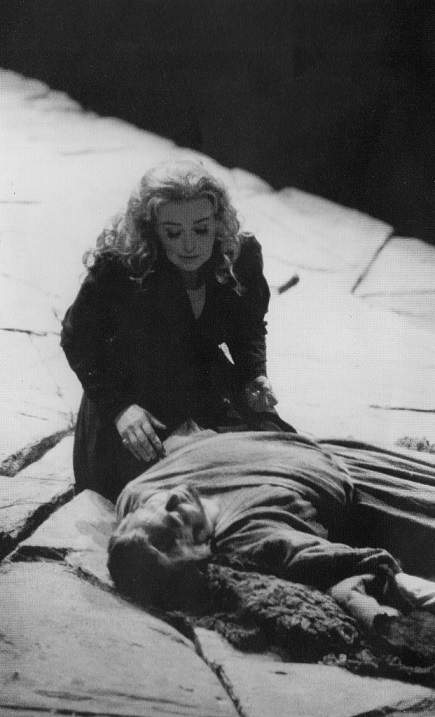
    In the third act, the production reaches its zenith. On an outcropping of rock at Castle Kareol, bathed in silvery light from a desolate sun, Tristan lies near death. During the long scene between Tristan and his faithful retainer Kurwenal, the relationship between the two men has never seemed so poignant (this is thanks in part to Gerd Feldhoff’s splendid acting as Kurwenal). Isolde arrives, her auburn hair now streaming loose, and seeks to revive her lover. The confusion of the arrival of the second ship is well-handled: Kurwenal slays Melot, but then he too meets his death. King Marke’s lamenting words are unheeded by Isolde, who has left earthly matters behind.

    Maestro Jiří Kout shapes the yearning prelude thoughtfully; his conducting throughout the long opera manages to be both passionate and respectful of the singers. At curtain-rise, Clemens Bieber’s singing of the Sailor’s plaintive song is very effective.      

    Dame Gwyneth Jones, possessor of one of the biggest voices ever unleashed in an opera house, shows off that power to fine effect when she chooses; but much of the music is quietly and expressively sung, displaying the soprano’s incredible control. Her highest notes are steady and strong. Annoyingly and inexplicably, the filming continually shows us Tristan rather than Isolde during her Act I Narrative and Curse. While Dame Gwyneth looks rather mature – the costuming in Acts I and II is a bit dowdy – she is entirely credible. Her Liebestod is not vocally perfect, but it moved me deeply. A year after this performance was filmed, I saw the soprano as Elektra at The Met where her singing had staggering force and brilliance.

    Rene Kollo’s experienced Tristan is cannily sung; his tone can display a steady beat, but he is nonetheless vocally persuasive throughout. His third act is truly impactful; passing moments of vocal strain can be overlooked in view of the power and commitment of Kollo’s singing and acting. 

    Hanna Schwarz, Chereau’s Fricka and a splendid Met Klytemnestra in 1999 and 2002, is a bewitching Brangaene; her voice is lyrical yet well-pointed. Ms. Schwarz, slender and graceful, appears to have materialized from out of the Mists of Avalon. Magnificent singing, awash with heartbreak, sets Robert Lloyd among the finest of King Markes.

    5a9227538e4ebb2db0d340baa39aefb5

    I’ve seen some mighty impressive Kurwenals in my day, but I think Gerd Feldhoff (above) takes the prize – not only for his the clumsy sincerity of his declarations of love for and loyalty to Tristan, but also for his truly beautiful and moving vocalism. His performance makes the third act unforgettable.

    Maestro Kout gives us an expressive rendering of the “Wesendonck” prelude to Act III. Also making a strong mark in the final act are the superb English horn player, tenor Uwe Peper’s crippled and touchingly voiced Shepherd, and Ivan Sardi’s Steersman.

    Peter Edelmann, whose father Otto was an iconic Baron Ochs, beams with smug self-satisfaction as he betrays Tristan: a small but telling bit of characterization.

    I’ll be returning to this DVD in future, for so many reasons.

    ~ Oberon 

  • CMS: Beethoven Quartet Cycle ~ Finale

    Calidore_Beethoven

    Above: the Calidore String Quartet, photo by Frank Impelluso

    ~ Author: Ben Weaver

    Sunday May 18th, 2025 – Chamber Society of Lincoln Center reached the end of its 2024-25 Beethoven String Quartets cycle, performed by the the outstanding Calidore String Quartet. For the sixth and final concert the quartet – violinists Jeffrey Meyers and Ryan Meehan, violist Jeremy Berry, and cellist Estelle Choi – performed Beethoven’s quartets Nos. 14 and 16.

    String Quartet No. 14 in C-sharp minor, Op. 131, composed in 1825-1836, and has been studied and individually praised by the likes of Richard Wagner, Robert Schumann, and Franz Schubert – who had it played for him privately a week before his death. Composed in seven movements played without a break, it opens with a somber melody on the first violin. The rest of the musicians enter one by one, the music remaining austere and calm, perhaps reflecting Beethoven’s deep faith as it resembles parts of his earlier Missa Solemnis. Wagner once wrote that this was “the saddest thing ever said in notes.” The Calidores played this beautifully, with extreme care and dedication. The music shifts to a playful dance and then back to darkness, and then back again and again. The playful Scherzo (marked Presto), with its charming melody, zooms around like a playful puppy, lovingly played by the Calidores. There’s a memorable moment towards its conclusion where all four instruments play pianissimo in their highest registers, then the volume is quickly raised, which felt like being suspended in zero gravity and then quickly falling down. The Finale is a violent march with occasional soaring melodies to break up the clouds.

    The Quartet No. 16 in F major, Op. 135 ended up being Beethoven’s almost-last composition for the string quartet. (The only thing remaining was the new final movement for Quartet No. 13, which ended up being the very last piece Beethoven ever composed.) It opens once again with a somber melody, but unlike the darkness of the earlier quartets, this one is simply mournful and lovely. The Calidores held the audience in thrall with the beauty of their playing. The second movement, Vivace, is wonderfully chaotic, as if ready to unravel at any point. The following Lento assai, cantabile e tranquillo is Beethoven at his most lyrical, full of stops and starts, like breathing of a dying man. And the Finale: Grave, ma non trope tratto, begins ominously and violently, but ends on a lighter, even triumphant, note.

    The terrific musicians of the Calidore Quartet undertook a monumental challenge, performing all sixteen of Beethoven’s String Quartets in a single season. The works themselves are the Mount Everest of the string quartet repertoire and the challenges are enormous. Beethoven wrote his string quartets in three batches of his life and career: early, middle, and late. They show a profound progress of an artist who became the leading figure of Romanticism, sturm und drang; but also a musician of frequently surprising humor. Mssrs. Meyers, Meehan, Berry, and Ms. Choi combine all the elements needed to bring these million faces of Beethoven to life.

    ~ Ben Weaver

  • Jadwiga Rappé Has Passed Away

    Rappe

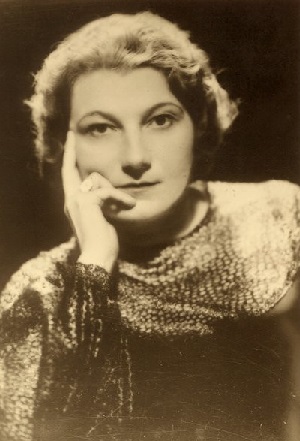
    One of my favorite contraltos, the Polish concert and opera singer Jadwiga Rappé (above), has passed away at the age of 73. Ms. Rappé performed at the most prestigious venues in Europe, Asia, and North America, and she leaves behind more than fifty recordings. She worked with such illustrious conductors as Chailly, Sir Colin Davies, Harnoncourt, Nagano, Janowski, and Antoni Wit.

    I first became intrigued by Ms. Rappé’s voice after hearing a recording of her singing in Krzysztof Penderecki’s Seven Gates of Jerusalem – a work in which she had sung the world premiere performance at Jerusalem in 1997 under the baton of Loren Maazel. In 2001, she sang the premiere performance of Wojciech Kilar’s Missa pro pace at Warsaw, conducted by Kazimierz Kord. Works were composed specially for her contralto voice by Juliusz Łuciuk, Piotr Moss, and Krzysztof Baculewski. In 2008, in Prague, she took part in the world premiere of Ladislav Kubik’s Gong ~ Sinfonietta for solo mezzo-soprano, Mixed choir and orchestra, and in July 2011 she premiered Paweł Mykietyn’s Symphony no.3 at the National Philharmonic in Warsaw.

    Jadwiga Rappé’s operatic repertoire included works by Gluck, Handel, Ponchielli, Verdi, Wagner, and Richard Strauss. Erda in Wagner’s RING Cycle was her most frequent stage role: she appeared in nine different premiere productions of the cycle at opera houses around the world, and she recorded the role for EMI under the baton of Bernard Haitink. She scored  successes as Gaea in Strauss’s Daphne, and as Clytemnestra.

    Her discography includes recordings on several labels: BMG Music, Teldec, Erato, Denon, Orfeo, Philips, Decca, Chandos, CD-Accords, and Naxos.

    After retiring from performing, Jadwiga Rappé taught at the Fryderyk Chopin University of Music, and later headed the board of the Witold Lutosławski Society.

    Ms. Rappé sings the aria “Weh ihnen, dass sie von mir weichen” from Mendelssohn’s ELIAS here.

    And here is “Zasmuconej” by Mieczysław Karłowicz.

    The contralto sings Cagion son io del mio dolore” from Handel’s SERSE here.

  • Remembering Sixten Ehrling

    Ehrling

    When I had moved to New York City in 1998 and was working at Tower Records, Maestro Sixten Ehrling came in frequently. He was rather cranky the first time I met him: he did not guess that I knew who he was, and he barked at me that no one on the store staff had offered to help him. I let him cool down for a couple of seconds, then I made a small bow, and said: “You conducted my first RING operas, Maestro!”

    From then on, and for years to come, Maestro Ehrling was a customer I always looked forward to seeing. He had a million stories, including tales of how antagonistic the Met musicians were towards him during those RING performances. He taught me how to pronounce the names of the RING characters: “…say ZEEEG-lin-da, not See-GLIN-da!”)

    Then there was his tale of a recording session he had scheduled with Victoria de los Angeles on the day after her marriage. A couple of times, I forfeited my lunch hour just to stay and chat the Maestro up.

    Maestro Ehrling was married to a former ballerina, a very kind woman with Old World manners. As time went by, the Maestro became increasingly feeble and unsteady. He sometimes came in unshaven, wearing rumpled clothing. Then, for a while, Madame would come in alone to get CDs for him, saying he was under the weather but slowly on the mend. For a few weeks, she too stopped coming in. I sensed that Mr. Ehrling had taken a turn for the worse.

    The news came out that Maestro Ehrling had passed away. I wondered if Madame would remain in New York City (I believe they had a daughter living here). Then one day, she came in. She walked up to me with a gentle smile, saying, “I wanted to thank you for always being so kind to Sixten!”  I almost burst into tears. She became teary also. There was nothing more to be said. She held out her hand, which I kissed, and then she left.

  • BSO x 2 ~ Mostly Shostakovich

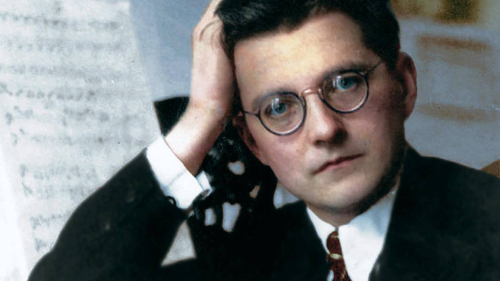
    Dimitri-Shostakovich

    Above: Dimitri Shostakovich

    ~ Author: Ben Weaver

    Wednesday April 23rd and Thursday April 24th, 2025 – Dmitri Shostakovich was the focus of Boston Symphony Orchestra’s two-concert visit to Carnegie Hall this week, under the leadership of its music director Andris Nelsons. Shostakovich’s son Maxim, dedicatee and first performer of the Second Piano Concerto, was in attendance on the second evening.

    Shostakovich died 50 years ago, and his famous struggles living and composing in a totalitarian regime, always one offense away from the gulag, sadly remain relevant today – not just in Russia, but in the United States as well. Cellist Yo-Yo Ma made a brief statement from the stage, quoting Josef Stalin’s famous line: “A single death is a tragedy, a million deaths are a statistic.” Ma pleaded that no death should ever be a statistic, and he wanted to honor anyone suffering loss of life or dignity. Ma did not name any names, but the meaning is loud and clear as our own US government is disappearing human beings into foreign gulags. For anyone who argues that artists should stay out of politics, people like Shostakovich remain an important reminder that art has launched revolutions, and if art was not political, it would never be banned.

    Ma Cello-Concerto-No.-1-Robert-Torres

    Above: Yo-Yo Ma, photo by Robert Torres

    Cello Concerto No. 1 in E-flat major, Op. 107, composed in 1959, was dedicated to Mstislav Rostropovich (as was, incidentally, the 2nd.) Yo-Yo Ma has been performing it for much of his career and his deep affection for it is clear. His warning about tyranny just before the performance was reflected in his approach to the jolly opening tune, which Ma played with a rawness that made it darker and more sinister. Irony and the grotesque are deeply ingrained in Soviet art, a tool for plausible deniability which anyone who wished to survive purges needed to master. The Playbill notes by Harlow Robinson point out that Shostakovich buried in the score a small, distorted fragment from Josef Stalin’s favorite Georgian folk song, “Suliko” – something even Rostropovich did not spot until Shostakovich finally pointed it out. (Stalin died in 1953, six years before the Concerto was composed.) As an encore Ma joined Boston Symphony’s entire cello section and they delivered a jaunty version of a traditional Yiddish tune “Moyshele,” arranged for a cello ensemble by BSO’s principal cellist Blaise Déjardin, who also contributed magnificent solo playing.

    Two late symphonies by Shostakovich received searing performances under Andris Nelson’s leadership. Over the last few years maestro Nelsons performed and recorded all of Shostakovich’s symphonies with the Boston Symphony Orchestra for Deutsche Grammophon. It is an excellent cycle (which also includes the Piano Concertos with Yuja Wang, Violin Concertos with Baiba Skride, Cello Concertos with Mr. Ma, and the opera Lady Macbeth of Mtsensk District. I have found much of these performances excellent.)

    Shosty

    Above: Maestro Nelsons, photo by Chris Lee

    Symphony No. 11 in G minor, Op. 103 (composed in 1956-57) carries the subtitle “The Year 1905.” The work depicts the failed revolution against the Russian monarchy and earned Shostakovich the Lenin prize.

    The opening movement Adagio, subtitled “The Palace Square,” is dark and gloomy, with dull strikes from the timpani foreshadowing events to come. Nelsons’s deliberate tempo set the mood well, building tension to the bloodshed to come. (I also noticed there is a section here John Williams “borrowed” for T-Rex in the score for “Jurassic Park.”) The brutal second movement (Allegro, “The 9th of January”) depicts the “Bloody Sunday” at the Winter Palace where peaceful protesters were massacred by the guard. The pounding march depicting the assault was led by BSO’s excellent percussion section. A mournful “Memory Eternal” and defiant “Tocsin” movements (a celesta taking the place of a tocsin bell) were emotionally shattering under maestro Nelson’s leadership.

    Shostakovich’s last Symphony, No. 15 in A major, Op. 141 (composed in 1970-71) was originally intended to celebrate his own 65th birthday. Several medical emergencies, including a heart attack, delayed its composition and premiere, which finally took place under his son Maxim’s direction in 1972. It’s most unusual aspect is presence of extensive unaltered quotations from Rossini’s William Tell Overture and Wagner’s Götterdämmerung and Tristan und Isolde, composers and works not immediately identified with Shostakovich. The full mystery of why he included these specific quotations remains a matter of speculation. I’ve always found the “Lone Ranger” theme to be especially jarring, but it’s important to note that Shostakovich is highly unlikely to have been familiar with that American TV series, so his point of reference to that music would have been very different from ours. Musically the choices do fit into the fabric of the symphony. The raucous opening movement – which Shostakovich ones called a “toy shop” – is a perfect place for the galloping Rossini tune. And Wagner’s music is a perfect fit for the stillness of the symphony’s latter movements. Shostakovich also quotes some of his own music. The closing percussion – like tickings of a clock – immediately remind one of the ending of the second movement of his Symphony No. 4. Andris Nelsons and his Boston forces delivered a largely superb performance, although I think maestro Nelsons’ lethargic take on the Adagio (second and fourth movements) was a misstep. They dragged and lost focus, no matter how beautifully the orchestra played. But special mention to concertmaster Nathan Cole, principal cellist Blaise Déjardin, and flautist Lorna McGhee for superb solo contributions.

    Bso uchida


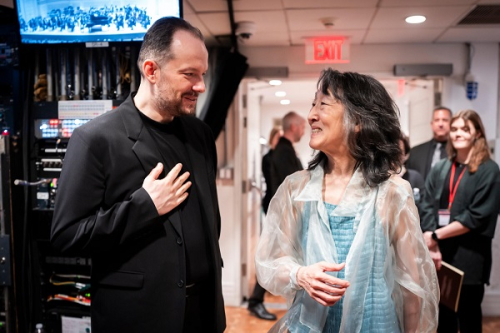
    Above: Maestro Nelsons and Mitsuko Uchida take a bow; photo by Chris Lee


    Ludwig van Beethoven’s Piano Concerto No. 4 in G major, Op. 58 opened BSO’s two-night residence at Carnegie, with the always brilliant Mitsuko Uchida as soloist. The concerto has often been interpreted as Orfeo calming the furies (particularly in the magical second movement, where calmness by the soloist is interrupted by angry strings) – and so Ms. Uchida bravely faced a consumptive audience member who began proudly coughing as Ms. Uchida began to play. After a few calming chords, Ms. Uchida stopped and held up her hands in the direction of the patient. The offender took her time exiting the auditorium, coughing non-stop. We could still hear her coughing up a lung from the hallway, but that’s the most we could hope for.


    Finally the performance resumed with Ms. Uchida delivering an deeply moving performance. The work is full of conflict, but – somewhat unusual for Beethoven – if his voice its the soloist, he calms the other side instead of fighting it. Such dignified understatements were presented by Ms. Uchida with unaffected dignity and charm. That stunning second movement, with angry strings being repeatedly silenced by the soothing soloist, is among Beethoven’s most powerful and beautiful statements, and Ms. Uchida is simply second-to-none with sincerity and beauty. The rollicking Rondo: Vivace that closes the concerto is Beethoven’s victory over adversity dance, but one filled with humor. Here, too, Ms. Uchida played with unabashed, contagious joy.


    Uchida 2


    Backstage: Maestro Nelsons and Ms. Uchida; photo by Chris Lee


    Andris Nelsons is an excellent accompanist, which I’ve had a chance to note many times. His respect for his soloists, keeping the orchestra from burying them, is an admirable trait – one I wish a few other notable conductors would also acquire.

    ~ Ben Weaver

    (Chris Lee’s performance photos courtesy of Carnegie Hall)

  • Gertrud Rünger

    G runger

    Gertrud Rünger (1899-1965) sang both mezzo-soprano and dramatic soprano roles during her career. She began as a choral singer, moving on to solo roles in smaller German houses in 1923.

    In 1930, she joined the ensemble of the Vienna State Opera, and in 1934 came to the Berlin Staatsoper. She sang Verdi’s mezzo roles in German, and developed a reputation as a Wagnerian soprano, singing in Paris, London, Amsterdam, Dresden, and Munich.

    Ms. Rünger sang the Nurse in FRAU OHNE SCHATTEN at the Salzburg Festival in 1932-1933, and later appeared there as Klytemnestra and as Beethoven’s Leonore. She sang briefly at The Met in 1937, as the WALKURE and GOTTERDAMMERUNG Brunnhildes, Fricka in RHEINGOLD, and as Ortrud opposite Kirsten Flagstad’s Elsa.

    Designated as Kammersängerin, Gertrud Rünger continued to perform into the 1950s, whilst also teaching voice. She passed away at Berlin in 1965.

    Gertrud Rünger – Sleepwalking Scene ~ MACBETH – in German

    Gertrud Rünger – DON CARLO aria – in German

    And here is Ms. Rünger live in a thrilling rendition of Ortrud’s Invocation.

    ~ Oberon

  • Donner Summons the Mists

    donner

    Dwayne Croft as Donner summons the mists as Wagner’s DAS RHEINGOLD draws to its finish. I vividly recall how thrilling this was in the House as the baritone strode up the inclined stage and deployed his powerful voice into the great cavern of The Met.

    The performance dates from 2010 and is conducted by James Levine.

    Watch and listen here: https://www.youtube.com/watch?v=bBETnbgm6sE

  • RHEINGOLD @ THE MET ~ 25 YEARS AGO

    langridge loge

    Reading thru some of my hand-written diaries from a quarter-century ago, this entry about a tremendous performance of DAS RHEINGOLD brought back vivid memories.

    “Wonderful to see this opera again, and the cast of (mainly) RING veterans gave a superbly confident and nuanced performance. Levine had the huge orchestra under finger-tip control…there were passages of great beauty and lyricism, along with the unleashing of massive sound at times.  Although the lighting seems less evocative now, the production is still quite effective, though the first scene could use some freshening: the Rhinemaidens don’t always remember that they are underwater, and the rock pinnacle holding the gold wavered as Alberich clambered up.

    To start from the beginning: lovely lyricism from the Rhnemaidens: Joyce Guyer, Kristine Jepson, and Jane Bunnell each sang well in their solo lines, and their voices blended beautifully.

    Ekkehard Wlaschiha remains a powerful, vivid Alberich…his voice is now sketched indelibly on this music: magnificent in defeat, and in his vibrant, chilling curse. Hanna Schwarz brought her personal allure and great vocal authority to her interpretation of Fricka. She spun out some lovely soft phrases, creating a sensuous appeal that is not always heard in this music.  James Morris shows some vocal wear and tear as Wotan, but he is still able to hurl out vocal thunderbolts (especially at the end) as well as many pages of wonderfully musing soft singing. Very much a god to be reckoned with…bravo!

    Hei-Kyung Hong’s vocal radiance and sheer physical beauty made Freia a major role. She’s at her peak now, and I’m so lucky to be living here in NYC to witness it!  Mark Baker brought wafting lyricism as well as power to Froh’s music, and Alan Held’s darkish baritone produced a steady stream of well-inflected singing as Donner – his “Heda! Hedo!!“was a vocal high-point. 

    Splendid giants: the flowing depths of tone from Eric Halvarson perfectly complimented the more gritty, malevolent sound of Sergei Koptchak…bravissimi, gentlemen!! Graham Clark has a perfect role in Mime, where he is able to bring some “real” singing to a part that doesn’t always get it. His incisive diction was crystal clear. Brigitta Svendén  sounded simply gorgeous, and she makes Erda the alluring, mysterious icon she must be. 

     Dominating the stage and the music, Philip Langridge as Loge  (photo at the top) used his multi-coloured “big lyric” voice with the finesse of a poet. Langridge created the enigmatic character in purely musical terms whilst the added physical dimension of his portrayal (the grace of a ballet dancer, the gestures of a skilled magician) simply clinched the evening for this great singing-actor. He was greeted with a massive ovation at his bows.

    The entire cast was deservedly hailed by the Houseful of avid Wagnerites, and Levine and his orchestra were given a rousing ovation. A very stimulating evening!

    2000 rheingold-1jpg

  • Premiere: Levine/Schenk GÖTTERDÄMMERUNG

    Scanned Section 6-1

    (NOTE: this was originally published during the pandemic…)

    During these endless days of being at home, I’ve been reading thru my opera diary, a hand-written document I started in 1962 and which now fills numerous file folders. So many wonderful memories of the great performances I saw over the years were stirred up by reading about them.

    One such exciting night was the 1988 premiere of the Otto Schenk GÖTTERDÄMMERUNG, the closing opera of Wagner’s epic RING Cycle. Often referred to affectionately as “the Levine RING”, full cycles of the production in the ensuing seasons created a great international buzz; Wagnerites from all over the globe gathered in New York City to witness this classic staging.

    Having already seen the RHEINGOLD, WALKURE and SIEGFRIED, I had a pretty good idea of what to expect; still, when the Gibichung Hall loomed into view, it took my breath away. Levine was mostly magnificent, though there were moments when he let things drag a bit; his orchestra gave it their all, and the chorus sounded sensational as they gathered in lusty expectation of the double wedding.

    As to the singers, here’s what I wrote upon returning to my room at the Colonial House after the performance: 

    “Casting was strong, with pretty singing from the Rhinemaidens – Joyce Guyer (in her Met debut), Diane Kesling, and Meredith Parsons – and Franz Mazura made an astoundingly vivid Alberich, singing with oily malice. The opening scene of Act II, with Alberich pawing at the sleeping Hagen, was very atmospheric.

    The Gibichung brother and sister were rather curiously cast: as Gunther, Anthony Raffell’s voice sounded veiled and throaty, and Kathryn Harries’ beautiful (and beautifully acted) Gutrune was undone by effortful singing and a prominent vibrato. [I mentioned that Cornell MacNeil and Lucine Amara could have made for far more interesting casting in these roles!].

    The Norn Scene, which I have always loved, benefited from the super casting of Mignon Dunn as 1st Norn, sung with richly doom-ladened tone. Hanna Schwarz (2nd Norn) had a couple of husky moments, but overall sang vividly, with excellent diction. As the 3rd Norn, Marita Napier sometimes sounded a bit insecure, but she did not let down the side. These three really made something of their opening discussion. 

    Toni Kramer sang erratically but acceptably in the torturous role of Siegfried. He seemed to be husbanding his powers, doing his best singing in Act III.

    C l + h b

    Above: Christa Ludwig as Waltraute and Hildegard Behrens as Brunnhilde

    The divine Christa Ludwig made a thrilling Waltraute, singing with great clarity and verbal point. The distinctive Ludwig tone – that cherished sound – drew the audience in to her every phrase. Add to this the anguished urgency of her delivery, and the result was a veritable triumph.

    The Ludwig Waltraute produced one of my all-time favorite curtain calls: stepping before the gold curtain for her first solo bow, she was greeted by such a din of applause and shouting that she halted in her tracks; her eyes opened wide in amazement, and she broke into a huge smile. It seemed to me that she had not expected such an avalanche of affection. She bowed deeply, clearly savoring this outpouring of love from the crowd.

    Matti

    The towering magnificence of Matti Salminen as Hagen (above) produced tremendous excitement in the House. His huge voice was at peak form, effortlessly filling the hall with sinister sound. In the scene where Hagen’s father appears to him in a dream, Salminen and Franz Mazura matched one another in both power and eerily expressive subtlety: thoroughly engrossing. The basso’s portrayal as the drama of Act II unfolded was towering in its epic nastiness and in his manipulation of the situation to attain the character’s sole goal: to regain the ring. This was a performance thrilling to behold, and to hear. 

    The roar of applause for each of Salminen’s solo bows was thunderous, and I was so excited to be part of it, shouting myself hoarse.

    ~ Sample the Salminen Hagen, from a later broadcast…it gives me he chills: 

    Matti Salminen as Hagen – Met 1993
    Snapshot

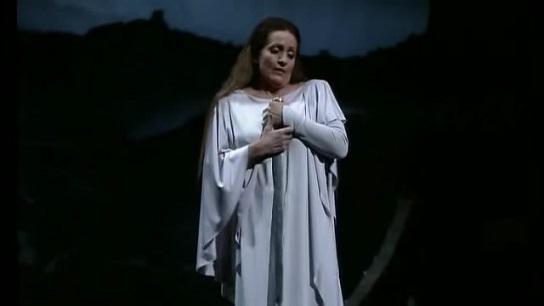
    Hildegard Behrens (above) was a Brunnhilde of terrifying intensity and incredible feminine strength. This was an overwhelming interpretation, in which voice and physicality combined to transcend operatic convention, reaching me on the deepest possible level. Behrens lived the part, in no uncertain terms.

    The Dawn Duet found Behrens portraying the tamed warrior maid to perfection, savoring her domestic bliss but eager that Siegfried should go out into the world and do great deeds. Her unconventional beauty and her inhabiting of the character were so absorbing to behold. Later, In the scene with Waltraute, Behrens as Brunnhilde listened anxiously to all her sister’s words and she began to grasp the first signs of the downward spiral that would culminate with Siegfried’s betrayal and her own sacrifice. Even so, she dismissed Waltraute with fierce disdain. Behrens’ vivid depiction of Brunnhilde’s terror and helpless dejection as the false Siegfried wrested the ring from her was palpable.

    Scanned Section 1-1

    In one of the evening’s most gripping moments, Behrens – having become possessed by Brunnhilde’s plight in Act II – responded to Siegfried’s oath by snatching Hagen’s spear away him and singing her own oath with blistering abandon. Totally immersed in the character, her pain was painful to behold. In the powerful trio that ends Act II, Behrens, Raffell, and Salminen were splendid.

    Behrens GOTTER

    Above: Hildegard Behrens as Brunnhilde ~ Immolation Scene

    In the Immolation Scene, the great strength of Brunnhilde’s love for Siegfried, and her determination to perish in the flames of his funeral pyre, marked the culmination of Hildegard Behrens’ sensational performance. Her singing was powerful, with unstinting use of chest voice and flaming top notes; there were moments when expressionistic effects crept in but it all seemed so right. The amazing thing about Behrens’ singing and acting here was that it all seemed spontaneous…she seemed to be living it all in the moment. One cannot ask more of an operatic portrayal.

    The curtain calls went on and on, the audience eager to show their appreciation with volleys of bravos as the singers stepped forward time and again. Here we must also thank James Levine, whose grand design underlies the great success to date of the individual operas. Ahead, in the Spring, seeing the full cycle in a week’s time is already on my calendar. My dream will come true!” 

    ~ Oberon