
Aase Nordmo Løvberg sings “Dich, teure halle” from Wagner’s TANNHAUSER.

Above: baritone Thomas Hampson
Friday April 22nd, 2016 matinee – A matinee performance by The New York Philharmonic pairing the Sibelius seventh symphony with Mahler’s Das Lied von der Erde. Alan Gilbert was on the podium, with soloists Stefan Vinke and Thomas Hampson singing the solo parts in the Mahler.
The two works made an ideal pairing; the Sibelius 7th (first performed in 1925 under the title Fantasia Sinfonica) lasts only about 20 minutes and is written as a single-movement. From its opening rising scale which blooms into regal theme, the symphony compensates for its relative brevity with music of almost cinematic breadth. Abundant in melody, the piece has an Autumnal quality; though Sibelius would live until 1957, he wrote very little music after 1926. This last symphony is both serene and passionate; it leaves us wondering ‘what might have been’ if he had continued writing.
The Sibelius was played with savourable richness by the Philharmonic artists today, and Maestro Alan Gilbert was very much in his element here; following the interval, players and conductor were joined by the two vocal soloists and a thrilling performance of Mahler’s Das Lied von der Erde commenced.
Still recovering from the sorrow of his daughter’s death, Mahler learned in 1907 that he was suffering from a heart condition that would, within four years, prove fatal. In The Song of the Earth, the composer’s awareness of the possibility of an approaching end prompted the composition of a great hymn to Nature and to the sheer ecstasy of living. Drawn from The Chinese Flute, a collection of ancient Chinese poems translated by Hans Bethge, the six ‘songs of the Earth’ speak of drunken defiance of impending death, of the solitary life, of the transience of youth and beauty, and of a friendship which endures beyond parting and into eternity.
The tenor is allotted the more extroverted songs; the first, third, and fifth. Stefan Vinke’s formidable power and stamina proved equal to the fierce demands Mahler’s vocal writing places on the singer: high in tessitura and including exposed, sustained notes in the topmost range, the tenor’s muscular singing was just what’s needed. An occasional trace of pitchiness didn’t detract from Mr. Vinke’s generous singing. And I must note the lovely violin theme from Frank Huang in the fifth song, “The Drunkard in Spring“.
(Note: it’s just been announced that Stefan Vinke will be replacing Johan Botha when James Levine and The Met Orchestra perform excerpts from Wagner’s RING Cycle at Carnegie Hall on May 26th. Christine Goerke is the soprano soloist.)
Both mezzo-sopranos and baritones have performed the ‘other’ solo role in Das Lied von der Erde – the formidable Margarete Matzenauer sang it at the NY Philharmonic premiere in 1929. Today, it was baritone Thomas Hampson whose strikingly expressive singing moved me and my companion to a tearful state as the work came to an end.
I have admired Thomas Hampson since his Met Auditions win in 1981; among his many Met roles that have particularly impressed me have been: Count Almaviva, Billy Budd, Posa in DON CARLO, Werther, Eugene Onegin, Wolfram in TANNHAUSER, Amfortas, Iago, and – most surprisingly and most recently – Wozzeck. He walked onstage today – tall, handsome, and elegant in a tux – with an amiable self-assurance that made me think we were in for something special; Hampson delivered an intensely satisfying performance.
Liang Wang’s oboe solo at the start of “The Solitary One in Autumn” signaled a turn of mood from the boisterous drinking song with which Mr. Vinke had launched the cycle. As Mr. Hampson began to sing of his loneliness and weariness of spirit, his marvelous gift for poetic expression as well as the inherent beauty of his vocal timbre drew me into the music; the external world faded, and the music became the reality.
Midway thru the fourth song, “Of Beauty“, a big dance-like theme erupts, and the baritone seemed ready to dance himself. His singing was characterful and, as the music simmers down, he did some lovely heady effects as well an plunging into basso territory briefly.
It was in the final song, “Farewell”, that Mr. Hampson’s performance put me over the edge. Liang Wang’s oboe and Robert Langevin’s flute establish a wistful mood. The baritone’s thoughtful and sustained singing is beautifully enmeshed in some wonderful playing from the winds; oboe and harp unite; horn, cello, bassoon, and bass clarinet add poignant colours to the canvas. “All longing has become a dream,” sings the poet.
In a spine-tingling moment, Mr. Hampson’s tone adopts a ‘dead’ emptiness, matched by plaintive flute. “I wanted to bid my friend a last farewell!” – how many of us have sadly been deprived of just such an opportunity! Mandolin and celeste are heard, as if from out of a dream of past happiness. “Where are you going, and why must it be?” asks the forlorn friend as the parting draws nigh, and they share the stirrup cup. The song ends with an affirmation of faith in life’s renewal, but even here there’s an illusive feeling. Nature holds sway with the “…luminous blue of distant space…everywhere, forever… forever and ever….”
Alan Gilbert’s baton was suspended in air as the music faded to silence. An ovation of particular warmth ensued, with the maestro, the singers, and the musicians basking in the joy of having shared in a magnificent collaboration.

Above: the Danish String Quartet, photo by Caroline Bitten
Sunday February 21st, 2016 – Chamber Music Society of Lincoln Center‘s festival performances of the Beethoven string quartets drew to its close today with the Danish String Quartet playing the last music Beethoven ever wrote.
This was my first encounter with The Danish. Their story is probably unique among music-making ensembles, for three of them met as kids and fellow foot-ballers: so they literally grew up together. This may account for their wonderfully integrated sound. Along the way, a Norwegian cellist joined the family, fitting in perfectly.
This evening, as each voice was introduced to us at the start of the C-sharp minor quartet, I felt transfixed. I suddenly didn’t want to take notes, but rather to immerse myself in the music that was casting a spell over the wonderfully hushed, packed-to-the rafters Tully Hall.
The C-sharp minor quartet evidently seemed incomprehensible when it was first heard publicly in 1835, after the composer had already passed away. Certainly a first glance at the Playbill listing strikes one as very odd: seven movements? But Beethoven had been experimenting with structure over the years, and so she set this Opus 131 in seven sections, to be played without pause.
Richard Wagner, reflecting on the first of these seven movements, said that it “reveals the most melancholy sentiment expressed in music”. Today it perhaps seems more pensive than sorrowful. The second movement, marked Allegro molto vivace, is lively and extroverted. Following a brief ensemble recitative, we come to the slow movement, so expressive of yearning and tenderness.
In the Presto that follows – a whirlwind scherzo really – wit prevails in a lively, scurrying mode: here the Danes were at their most charming, and as this merry movement raced to its conclusion, the audience, thinking an end had been reached, were on the verge of unleashing a gust of applause. Then, with tongue-in-cheek irony, the players go on to a brooding Adagio and then a brilliant finale.
Upon finishing, the members of the Danish String Quartet were engulfed in a flood of applause and cheers. They were called out three times, a rather unprecedented happening.
During the intermission, I sat thinking about how – from my eleventh year until rather recently – so much of my musical focus has been on opera. Beethoven’s FIDELIO has never really attracted me – aside from Leonore’s glorious “Abscheulicher!” – and so the composer’s other works, iconic as they might be, have never really lured me. In fact, it’s only in the past three or four years – since I started attending Chamber Music Society and The New York Philharmonic regularly – that Beethoven’s music has begun to attract me. Better late than never!
Earlier in this CMS Beethoven cycle, the Miró Quartet’s playing of the “Razumovsky” quartets was a revelation. Of the symphonies, I’m most enamored of the 4th at present…something other music-lovers will find odd, I’m sure. But: enough rambling. Back to the matter at hand!
Of his final completed full work – the F-major quartet, Opus 135 – Beethoven reportedly stated that it was short because the commissioning fee was ‘short’; the sponsor would get what he paid for. And it was here, in the third movement marked Lento assai, cantante and tranquillo, that I found the Beethoven I’ve been searching for all these years – without knowing it. This music, which The Danish played so lovingly, really spoke to me. The entire piece, more traditional in both its structure and style than Opus 131, held the Tully audience in a state of rapt attentiveness: and the playing was marvelous throughout.
The concert concluded with the last music Beethoven ever completed: a ‘Finale: Allegro‘ which would serve as an alternate ending for the B-flat major quartet Opus 130. Here the players of The Danish were at full sail, clearly savouring both the music and the audience’s delight in listening to them.
The triple curtain call after Opus 131 was not a fluke, for the four blonde members of the Danish String Quartet reaped a full-house standing ovation at the close of this grand evening.
As so often happens nowadays, this great music – and the Quartet’s playing of it – turned gloomy thoughts of a world full of strife and woe into an optimistic notion that there’s still hope for humanity.
Meet The Danish String Quartet here.
The Artists:
Violin: Frederik Øland and Rune Tonsgaard Sørensen
Viola: Asbjørn Nørgaard
Cello: Fredrik Schøyen Sjölin
The Repertory:

Above: a Met TURANDOT blast-from-the-past with Birgit, Franco (Z, not C), Jimmy, Eva, Liz, and Placi
Saturday January 30th, 2016 matinee – I took a score desk this afternoon to hear the fourth of four sopranos who have sung the role of Turandot during the current Met season. My history of Turandots at The Met goes back to the Old House, where Mary Curtis-Verna was the first soprano I heard in the role. Since then, I have witnessed almost every singer to tackle this part in New York City, from The Big B (Birgit Nilsson) to sopranos you never heard of, several of them at New York City Opera where a perfectly nice Beni Montresor production held forth for many seasons.
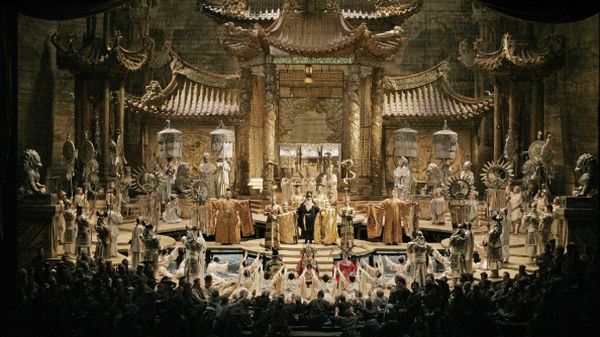
At The Met, where Franco Zeffirelli’s extravaganza (which replaced Birgit’s Cecil Beaton setting in 1987) has been home to such post-Birgit divas as Eva Marton, Dame Gwyneth Jones, Ghena Dimitrova, and Jane Eaglen, audiences still cheer – as they did today – the massive vision of the royal palace as it comes into view midway thru Act II.
Act I today was very pleasing to hear: after a dragging tempo for the opening scene of the Mandarin’s address (grandly declaimed by David Crawford, who had the breath control to fill out the slo-mo phrases), conductor Paolo Carignani had everything just about right. The score is a marvel of orchestration: so much detail, so many textured layers of sound. I simply love listening to this music, especially passages like “O taciturna!” where Carignani drew forth such evocative colours from his players.
Anita Hartig sang very attractively as Liu, her voice reminding me just a bit of the wonderful Teresa Zylis-Gara’s. Hartig did not do a lot of piano/pianissimo singing, which can be so very appealing in this music, but she had the power to carry easily over the first act’s concluding ensemble. The Romanian soprano’s concluding B-flat in “Signore ascolta” was first taken in straight tone; she then allowed the vibrato to seep in: quite a lovely moment. Hartig’s voice has an unusual timbre and just a touch of flutter to bring out the vulnerability of the character.
I was likewise very impressed and moved by the singing of Alexander Tsymbalyuk as Timur: mellow and warm of tone, and with a deep sense of humanity.
Whilst not holding a candle to such past Calafs as Corelli, Tucker, McCracken, Domingo, or Pav, Marco Berti did very well in Act I: his idiomatic singing carried well (though Carignani swamped him a couple of times, unnecessarily), and his piano approach to the opening phrases of “Non piangere, Liu” was finely judged. Berti firmly sustained his final call of “Turandot!” at the act’s conclusion.
The three ministers – Dwayne Croft, Tony Stevenson, and Eduardo Valdes – did well, especially as they reminded Berti/Calaf that La vita è così bella! These three singers, as far as I know, sang these trio roles at every performance of TURANDOT this season and made a fine job of it; but a ‘second cast’ might have been given an opportunity. Variety is the spice of operatic life, after all.
After the ridiculously long intermission, Act II started well but then things began to unravel a bit. Mr. Croft experienced some hoarseness, and Mr. Berti didn’t sound solid in the vocally oddly-placed lines at “Figlio del cielo!” where he re-affirms to the old Emperor his desire to play Turandot’s riddle game. A silence of anticipation filled the house just as Nina Stemme was about to commence “In questa reggia“, but the moment was spoilt by voices from the lighting bay at the top of the hall shouting “Have you got her?” The chatter continued through the opening measures of the aria.
Ms. Stemme’s now-prominent vibrato sounded squally at first; the phrasing was uneven and frankly the singing had a rather elderly quality. The top notes were rather cautiously approached and seemed a bit unstable, though she was mostly able to disguise the effort. Concerns about producing the tone seemed infringe on her diction, with some odd results. The opening challenge of the riddle scene – “Straniero! Ascolta!” – did not have the desired ring.
Stemme’s posing of the riddles was a mixed bag vocally – and Berti’s responses were clipped, with traces of hoarseness creeping in. By the third riddle, the soprano seemed to be gaining steadiness. In the great moment after her defeat when Turandot is called upon by Puccini to blaze forth with two high-Cs over the chorus, Stemme made no impact on the first one and was assisted by the chorus soprani for the second. Berti responded with a skin-of-his-teeth high-C on “…ti voglio tutto ardente d’amor!” but the tenor came thru with a pleasingly tender “…all’alba morirò…” before the chorus drew the act to a close.
I debated staying for the third act, mainly to hear Hartig and Tsymbalyuk, but the thought of another 40-minute intermission persuaded me otherwise. Returning home, I found a message from a friend: “So, who was the best of the Met’s four Turandots?” The laurel wreath would go to Lise Lindstrom. Jennifer Wilson in her one Met outing was vocally savvy but it would have been better to have heard her a few years earlier. The role didn’t seem a good fit for Goerke or Stemme, who expended considerable vocal effort to make the music work for them (Goerke more successfully, to my mind) but both would have perhaps been wiser to apply their energy to roles better suited to their gifts (namely, Wagner and Strauss). Still, it was sporting of them to give La Principessa a go.
As with the three earlier TURANDOTs I attended this season, and the many I’ve experienced in this Zeffirelli setting over the years, the house was packed today. Even Family Circle standing room was densely populated. To me, this indicates the opera-going public’s desire for the grand operas to be grandly staged.
There’s a rumor circulating that today’s performance marked the final time this classic production will be seen. It seems a mistake to discard it, since it originated fully-underwritten by Mrs. Donald D. Harrington, revivals have always been generously supported by major Met donors, and it obviously does well at the box office. Why put a cash cow out to pasture? It’s already been suggested that the next Met TURANDOT production will be set in Chinatown in the early 1900s and will star Anna Netrebko and Jonas Kaufmann (who will cancel), with Domingo as Altoum.
Metropolitan Opera House
January 30th, 2016 matinee
Giacomo Puccini's TURANDOT
Turandot................Nina Stemme
Calàf...................Marco Berti
Liù.....................Anita Hartig
Timur...................Alexander Tsymbalyuk
Ping....................Dwayne Croft
Pang....................Tony Stevenson
Pong....................Eduardo Valdes
Emperor Altoum..........Ronald Naldi
Mandarin................David Crawford
Maid....................Anne Nonnemacher
Maid....................Mary Hughes
Prince of Persia........Sasha Semin
Executioner.............Arthur Lazalde
Three Masks: Elliott Reiland, Andrew Robinson, Amir Levy
Temptresses: Jennifer Cadden, Oriada Islami Prifti, Rachel Schuette, Sarah Weber-Gallo
Conductor...............Paolo Carignani

The inimitable Tatiana Troyanos as Venus in Wagner’s TANNHAUSER, photographed by Winnie Klotz.
Tatiana Troyanos – Geliebter komm! from TANNHAUSER – Met bcast 1992
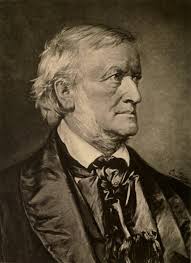
What looked quite enticing on paper – a 1963 WALKURE from Stockholm – proved frustrating, not because the performance was sub-par in any way, but because it turned out to be mis-labled and incomplete.
The recording starts mid-way thru Act I. Michael Gielen, a conductor I know little about, has the score well in hand although the orchestra isn’t always up to Wagner’s demands. Arne Tyrén is a less boisterous Hunding than some I have heard, and his voice can take on a wonderfully spooky quality. Birgit Nilsson’s ‘Ho-Jo-To-Ho’ is a marvel, her voice bright and fresh: she makes this daunting opening passage sound easy. Unfortunately, there’s not much more to be said of her performance here, since the Todesverkundigung is ruined by what seems to have been the wayward speed of the source machine used to tape the performance. The pitch rolls up and down with a seasick effect. Then, the third act is missing entirely!
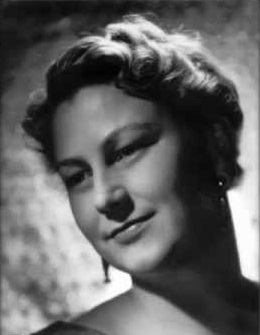
The Wälsung twins are appealingly sung by Aase Nordmo-Lövberg (above) and Kolbjörn Höiseth. Ms. Nordmo-Lövberg, a very fine Elsa in Nicolai Gedda’s only performances of Lohengrin, brings poised lyricism and a fine sense of the words to the role of Sieglinde.
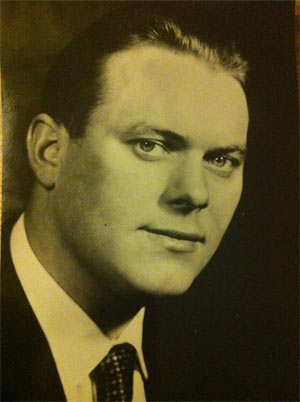
Mr. Höiseth (above) sang briefly at The Met in 1975: he debuted as Froh in RHEINGOLD and repeated that role once; then he stepped in once for an indisposed colleague as Loge and once for an ailing Jon Vickers as Siegmund. I saw him in both the RHEINGOLD roles and he made a favorable impression. Here, as Siegmund, he is a good match for Nordmo-Lövberg – their voices are lyrically compatible. The tenor does experience a couple of random pitch problems, and seems just a shade tired vocally at the end of Act I – understandable, after such a taxing sing. But he makes a good effect in both the Sword Monologue and in the Winterstürme and also in the Act II scene where he attempts to calm to delirious Sieglinde as they flee from her pursuing husband. It’s a pity that the Todesverkundigung is so garbled: I would like to have heard Nilsson and Höiseth in this scene which is my favorite part of the opera.

The mezzo-soprano Kerstin Meyer (above) had a more extensive Met career than her tenor colleague: she sang the Composer in the Met premiere of ARIADNE AUF NAXOS and also appeared as Carmen and Gluck’s Orfeo at the Old House. Here, as Fricka, she is impressive indeed: she begins lyrically – subtle and sure – and soon works herself into a state of righteous indignation. Her victory over Wotan is a triumph of will. Meyer sings quite beautifully, with clear expressiveness.

Beautiful vocalism also marks the Wotan of Sigurd Björling (above). The voice is not stentorian, though he can punch out some impressive notes; the monologue is internalized, sung with a sense of hopelessness that is quite haunting. Despite errant pitch at times, Björling’s performance is moving and makes me truly regret that the third act is missing.
~~~~~~~~~~~~~~~~~~~~~~~~~~~~~~~~~~~~~~~~~~~~~~~~~~~~~~~~~~~~~~~~~~~~~~~~~~~~~~~~~~~~~~~~~~~

Above: Wolfgang Sawallisch
A tremendous performance of GÖTTERDÄMMERUNG from Munich 1977 gave me a great deal of listening pleasure. I spent several hours with this recording, listening to whole acts repeatedly and zeroing in on favorite scenes to savor the individual characterizations of the very fine cast. Maestro Wolfgang Sawallisch’s shaping of the glorious score had a great deal to do with sustaining the air of excitement around this performance.
This GÖTTERDÄMMERUNG was clearly recorded in-house; the sound of the microphone being fumbled with sometimes intrudes, and there are passages where a singer is too far off-mike to make a vocal impact…and other times when the recordist seems to be sitting literally in the singers’ laps.
The first voice we hear is – incredibly – that of Astrid Varnay; essaying the role of the First Norn, Varnay sounds a bit matronly at times, but she is so authoritative and dramatically alert that it hardly matters. Her diction and word-colourings are endlessly admirable, and her low notes have deep, natural power – most especially on her final “Hinab!” As the Second Norn, Hildegard Hillebrecht is a bit unsettled vocally at times (the role lays low for her). Ruth Falcon’s singing of the Third Norn is more lyrical than some who have essayed the role.
Sawallisch’s forward flow provides a nice build-up to Brunnhilde’s first entry; off-mike at first, it soon becomes evident that Ingrid Bjoner is on peak form for this performance. The voice won’t be to all tastes, but its silvery power, impressive lower range, and sustained phrasing which Bjoner brings forth are thrilling to me, a long-time fan. Jean Cox as Siegfried doesn’t quite equal his 1975 Bayreuth performance of the role, but he’s so sure of himself and has both the heft and the vocal stamina that’s needed. As Sawallisch builds the Dawn Duet with passionate urgency, Bjoner spears a couple of splendid high B-flats before her brightly attacked, sustained climactic high-C.
At the Gibichung Hall we meet the excellent Gunther of Hans Günther Nöcker and the vocally less-impressive but involved Gutrune of Leonore Kirchstein (near the end of the opera, she emits a gruesome scream on discovering the truth about Siegfried’s death). The dominating vocal force of the opera from here on in – along with Bjoner – is the resplendently sung and theatrically vivid Hagen of Karl Ridderbusch. The basso’s rendering of ‘The Watch’ is simply incredible.

Another potent performance is the splendid Waltraute of Ortrun Wenkel, who attained international fame for her remarkable performance as Erda in Pierre Chéreau’s 1976 production of the RING Cycle for Bayreuth which was telecast in its entirety and is preserved on DVD. Wenkel’s abundant tone and vivid sense of the character make her scene with the equally thrilling Bjoner Brunnhilde an outstanding part of this performance. If Waltraute’s parting high-A – always a thorny note for a contralto essaying this role – is cut short, it scarcely distracts from the excitement the Bjoner/Wenkel sister-scene has generated.
Bjoner is staunch in her defense of the ring from the attacking Gunther-Siegfried; abetted by Sawallisch and Mr. Cox, the soprano brings the first act of this performance to an exciting close.
But then things soar even higher, for in an Act II that borders on insanity, the maestro and his cast all seemed to be in the grip of madness. The act begins with the eerie scene where Alberich (creepy singing from Zoltan Kelemen) appears as a vision to the sleeping Hagen. The summoning of the vassals is massively impressive, and later, in the great scene of oath-swearing, Cox and Bjoner blaze away. Throughout the act, the ever-keen Sawallisch guides his forces with a masterful hand. Simply thrilling.
A nicely-blended trio of Rhinemaidens (Lotte Schädle, Marianne Seibel, and Liliana Netschewa) give us a lyrical interlude at the start of Act III: all three vocal parts are clearly distinguishable and they are finely supported by the atmospheric playing of the orchestra, with the horn calls very well-managed. Jean Cox is very much on-mike as he encounters the girls: his big, leathery high-C is sustained…and then he chuckles to himself.
Following Hagen’s betrayal, Cox’s farewell to life and to Brunnhilde is wonderfully supported by Sawallisch: the orchestra playing here is so impressive, the tenderness of the final greeting so lovingly conveyed.
Now Sawallish takes up a deep, glowering rendition of the prelude to the Funeral March; contrasts of weight and colour add to the sonic build-up until the great theme bursts forth in its full-blown grandeur. The spot-on trumpet fanfare and the solid assurance of the horns are a great asset here.
Ridderbusch is terrifying in vocal power and cruelty as he seizes control of the scene, but the raising of the hand of the dead Siegfried when Hagen goes for the ring puts Alberich’s son in his place at last. The cleansing descending scale sets the scene for Brunnhilde, and even though Bjoner is off-mike for the opening of the Immolation Scene, she is vocally unassailable: by “Wie sonne laute…” the mike has found her and she shows both great power and great subtlety in this music. Bjoner’s low notes are vivid, her sustained, lyrical thoughts of the ravens imaginatively expressed, and her noble “Ruhe…ruhe, du Gott!” has a benedictive quality and is very moving. Following her passionate disavowal of the ring, the soprano surges forward with a thrilling greeting of Grane and some exalting top notes to seal her great success in this arduous role. Then Sawallisch and the orchestra bring the opera to a mighty close.

Above: Jean Cox and Ingrid Bjoner
Wednesday September 23rd, 2015 – At a score desk this evening for the prima of TURANDOT at The Met; I’ll be attending a performance by each of this season’s four Turandots.
The first act of tonight’s performance was stunning; the conductor, Paolo Carignani, molded the huge choral and orchestral forces into a vibrant sound tapestry and his reading of the score was dynamic, whilst also allowing the necessary moments of poetry to shine thru.
Patrick Carfizzi got the evening off to an excellent start with his authoritative declamation of the Mandarin’s decree. Hibla Gerzmava’s full-bodied lyric soprano sounded luxuriant in Liu’s music; although she did not go in for the many piano/pianissimo effects that some singers have brought to this music – Gerzmava ended “Signore ascolta” with a crescendo on the final B-flat rather than a tapering of the tone – her gleaming sound was a welcome element to the performance. Marcelo Alvarez as the Unknown Prince sang with appealing lyricism, pacing himself wisely for the vocal rigors which lay ahead. James Morris was an affecting Timur, drawing upon his long operatic experience to create a touching vocal characterization of the old king. Dwayne Croft, Tony Stevenson, and Eduardo Valdes were a first-rate trio of court ministers.
As the first act ended, I felt the old elation of being at the opera. But the ‘Gelb-intermission’ which followed totally destroyed the impetus of the evening. As is so often the case at The Met these days, the interval stretched to 40 minutes, the last ten of which found the entire audience back in their seats and raring to go while the musicians sat in the pit doodling idly.
At last the conductor re-appeared and we had a delightful rendering of the Ping-Pang-Pong scene with Mr. Croft and his two tenor sidekicks successfully mining both the wit and the nostalgia of the music, one of Puccini’s most delectable creations – and superbly orchestrated into the bargain.
I was looking forward to hearing Ronald Naldi – a long-time favorite of mine – as the Emperor Altoum but he was replaced by Mark Schowalter, who projected well from his distant throne. The exchange between the aged monarch and the Unknown Prince was interesting in that Mr. Alvarez eschewed the usual stentorian delivery of “Figlio del cielo…” (three times) for a more pensive vocal quality.
Christine Goerke’s Turandot did not make the vocal impression I was hoping for; the uppermost notes in the princess’s treacherous music seemed slightly out of Goerke’s comfort zone. She managed well enough, and used a darkish middle and lower range to good effect. But the trumpeting brilliance of the tones above A, which we have come to expect from our Turandots, was not really forthcoming. I am not sure why she wished to sing this role, since Wagner and Strauss are now her natural habitat.
Faced with yet another stupor-inducing intermission, I left during the Act II curtain calls.
Metropolitan Opera House
September 23rd, 2015
TURANDOT
Giacomo Puccini
Turandot................Christine Goerke
Calàf...................Marcelo Álvarez
Liù.....................Hibla Gerzmava
Timur...................James Morris
Ping....................Dwayne Croft
Pang....................Tony Stevenson
Pong....................Eduardo Valdes
Emperor Altoum..........Ronald Naldi
Mandarin................Patrick Carfizzi
Maid....................Anne Nonnemacher
Maid....................Mary Hughes
Prince of Persia........Sasha Semin
Executioner.............Arthur Lazalde
Three Masks: Elliott Reiland [Debut], Andrew Robinson, Amir Levy
Temptresses: Jennifer Cadden, Oriada Islami Prifti, Rachel Schuette, Sarah Weber-Gallo
Conductor...............Paolo Carignani

Wednesday September 23rd, 2015 – At a score desk this evening for the prima of TURANDOT at The Met; I’ll be attending a performance by each of this season’s four Turandots.
The first act of tonight’s performance was stunning; the conductor, Paolo Carignani, molded the huge choral and orchestral forces into a vibrant sound tapestry and his reading of the score was dynamic, whilst also allowing the necessary moments of poetry to shine thru.
Patrick Carfizzi got the evening off to an excellent start with his authoritative declamation of the Mandarin’s decree. Hibla Gerzmava’s full-bodied lyric soprano sounded luxuriant in Liu’s music; although she did not go in for the many piano/pianissimo effects that some singers have brought to this music – Gerzmava ended “Signore ascolta” with a crescendo on the final B-flat rather than a tapering of the tone – her gleaming sound was a welcome element to the performance. Marcelo Alvarez as the Unknown Prince sang with appealing lyricism, pacing himself wisely for the vocal rigors which lay ahead. James Morris was an affecting Timur, drawing upon his long operatic experience to create a touching vocal characterization of the old king. Dwayne Croft, Tony Stevenson, and Eduardo Valdes were a first-rate trio of court ministers.
As the first act ended, I felt the old elation of being at the opera. But the ‘Gelb-intermission’ which followed totally destroyed the impetus of the evening. As is so often the case at The Met these days, the interval stretched to 40 minutes, the last ten of which found the entire audience back in their seats and raring to go while the musicians sat in the pit doodling idly.
At last the conductor re-appeared and we had a delightful rendering of the Ping-Pang-Pong scene with Mr. Croft and his two tenor sidekicks successfully mining both the wit and the nostalgia of the music, one of Puccini’s most delectable creations – and superbly orchestrated into the bargain.
I was looking forward to hearing Ronald Naldi – a long-time favorite of mine – as the Emperor Altoum but he was replaced by Mark Schowalter, who projected well from his distant throne. The exchange between the aged monarch and the Unknown Prince was interesting in that Mr. Alvarez eschewed the usual stentorian delivery of “Figlio del cielo…” (three times) for a more pensive vocal quality.
Christine Goerke’s Turandot did not make the vocal impression I was hoping for; the uppermost notes in the princess’s treacherous music seemed slightly out of Goerke’s comfort zone. She managed well enough, and used a darkish middle and lower range to good effect. But the trumpeting brilliance of the tones above A, which we have come to expect from our Turandots, was not really forthcoming. I am not sure why she wished to sing this role, since Wagner and Strauss are now her natural habitat.
Faced with yet another stupor-inducing intermission, I left during the Act II curtain calls.
Metropolitan Opera House
September 23rd, 2015
TURANDOT
Giacomo Puccini
Turandot................Christine Goerke
Calàf...................Marcelo Álvarez
Liù.....................Hibla Gerzmava
Timur...................James Morris
Ping....................Dwayne Croft
Pang....................Tony Stevenson
Pong....................Eduardo Valdes
Emperor Altoum..........Ronald Naldi
Mandarin................Patrick Carfizzi
Maid....................Anne Nonnemacher
Maid....................Mary Hughes
Prince of Persia........Sasha Semin
Executioner.............Arthur Lazalde
Three Masks: Elliott Reiland [Debut], Andrew Robinson, Amir Levy
Temptresses: Jennifer Cadden, Oriada Islami Prifti, Rachel Schuette, Sarah Weber-Gallo
Conductor...............Paolo Carignani

News of the death of Camellia Johnson (above) eerily came on a day I had just been listening to her voice. In the course of my Summer project of transferring some of the rare items in my cassette collection to MP3, I had just come across a tape of parts of the Verdi REQUIEM in which Ms. Johnson is the soprano soloist.
The broadcast of this REQUIEM was something I came upon quite by chance; as the announcer was introducing the performance, I found myself with only one blank side of one tape to hand. I slipped it into the deck and decided to concentrate on recording excerpts in which the two women are prominent, Florence Quivar being a particular favorite of mine. Listen to what I preserved here:
Verdi REQUIEM – excerpts – Baltimore 1994 – C Johnson Quivar Heppner G Relyea – Zinman
In 1995, I had the good fortune to hear Camellia Johnson live at two different, wonderful venues. She sang with the Philharmonia Virtuosi at the Met Museum, and she gave a recital at Alice Tully Hall accompanied by Neal Goren. I remember being blown away by both the velvety warmth of her tone and her gift for finding a direct communicative channel to the audience. On both evenings she programmed Wagner’s Wesendonck lieder; at the Met concert, she gave a stunning performance of “To This We’ve Come” from Menotti’s THE CONSUL whilst with Mr. Goren she sang a lushly resonant “Du bist der lenz” from DIE WALKURE.
Camellia Johnson sang at The Met from 1985 thru 1994, debuting there as Lily in PORGY AND BESS. Her most frequent Met role was the Priestess in AIDA; she also scored a personal success with her sumptuous and emotionally charged singing of Madelon’s aria in ANDREA CHENIER.
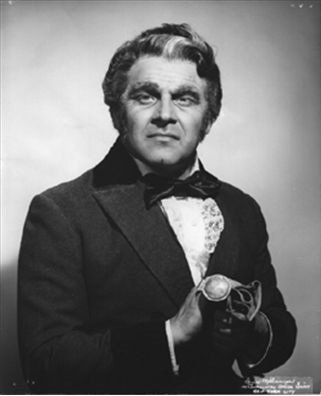
Above: Mario Sereni as Giorgio Germont in Verdi’s LA TRAVIATA
Mario Sereni, the Italian baritone who sang over 550 performances with The Metropolitan Opera between 1957 and 1984, has reportedly died at the age of 87.
Sereni had a warm, rich sound with an easy top, and an instinctive feel for phrasing off the words of his native language. I first saw him at the Old Met as Belcore in L’ELISIR D’AMORE (with Freni, Gedda, and Corena, no less!); once the new House opened and I was going to the opera frequently, Sereni was a singer I saw often. He was popular with the fans, and always very cordial when we greeted him after a performance.
Although he sang many of the great Verdi roles – Germont in TRAVIATA being particularly well-suited to his voice, and he also appeared as Amonasro, Count di Luna, Posa, Ford in FALSTAFF and Don Carlo in LA FORZA DEL DESTINO – it was in the more verismo-oriented operas that Sereni made his best impression, at least for me. His Tonio in PAGLIACCI was outstanding, and he was often cast in the sympathetic roles of Sharpless (MADAMA BUTTERFLY) and Marcello (LA BOHEME). One performance that I recall with special affection was his Carlo Gerard in ANDREA CHENIER, where he appeared opposite Raina Kabaivanska in her only Met performance as Maddalena. In the French repertoire, Sereni sang Valentin in FAUST and Escamillo in CARMEN; he even made a foray into Wagner, as the Herald in LOHENGRIN. Among other Sereni roles were Rossini’s Figaro, Donizetti’s Malatesta (DON PASQUALE) and Enrico (LUCIA), and Lescaut in the Puccini opera. Near the end of his Met career, he sang several performances of Schaunard in BOHEME, and that was the role of his final Met performance in 1984.
Mario Sereni appears on several complete opera recordings; my personal favorite is (again) his Carlo Gerard in CHENIER on EMI, opposite Antonietta Stella and Franco Corelli. Also on EMI, he sings with Victoria de los Angeles on her classic recordings of BUTTERFLY and TRAVIATA. And he is in fine fettle on the RCA recording of LUCIA DI LAMMERMOOR, with Anna Moffo and Carlo Bergonzi. Here is the Wolfscrag Scene from that recording, in which Bergonzi and Sereni make such a vivid impression, both vocally and dramatically.
 Oberon's Glade