Tag: Ring Cycle

  • Waiting for Elisabeth Grümmer

    The most-read article from Oberon’s Grove:

    Gruemmer

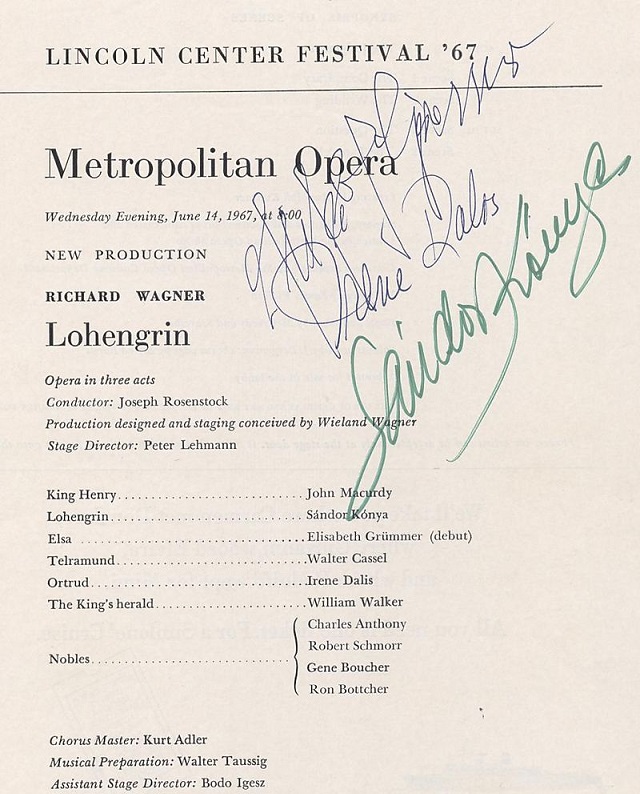
    ~ In 1967 the Metropolitan Opera held its first June Festival. Having just opened the ‘New Met’ in September 1966, ticket demand for the premiere season at Lincoln Center had been phenomenal and the Company seized the opportunity to add several performances in the month of June. This was a bonanza for the fans and also provided the general public, who were curious to see the interior of the new opera house, expanded possibilities. The Met offered some very fine casting that June, and topping the list of exciting events (at least from the fans’ point of view) was the belated Met debut of the German soprano Elisabeth Grummer. 

    Grümmer was 57 at the time, and had already had a very successful career in Europe and had made several top-class recordings, working with Europe’s finest conductors. She had made her debut with the Met on tour in Boston earlier that Spring and was now coming to the House in the role of Elsa in Wieland Wagner’s production of LOHENGRIN.

    This was my first chance to see this opera; Sandor Konya was at that time the leading exponent of the title role, and my beloved Irene Dalis was singing her venomous Ortrud. Stalwarts Walter Cassel, John Macurdy and William Walker completed the cast. Andre Cluytens, who was to have conducted this production of LOHENGRIN, had died the previous summer and so Joseph Rosenstock was on the podium. I suppose by international standards that Rosenstock was considered a routinier but – inexperienced as I was – I was simply thrilled to be there.

    Grümmer made her entrance, and I recall the entire phalanx of Family Circle standees were waiting with collectively bated breath for her first line, which she deployed with a silvery pianissimo: “Mein armer bruder!”  We were under her spell immediately and she went on to sing a really thrilling Elsa and to win a very warm acclaim from the packed house. Although nearing the end of her career, Grümmer had maintained her clarity of sound; the voice had a lyrical feeling but she was able to ride the ensembles  with a bit of metallic thrust. It was an exciting debut but after repeating the role once, she never sang at the Met again. (She did appear as the Marschallin at the New York City Opera the following season.)

    A large contingent of fans gathered at the stage door. Sandor Konya came out and was so kind; aside from signing my programme he gave me a beautiful photo of himself as Lohengrin. Irene Dalis  appeared and she even remembered me and thanked me for coming. Then the crowd began to drift away. I knew Grümmer hadn’t left yet and I couldn’t imagine why no one wanted her autograph after such an exciting debut.

    After a few moments only a half-dozen of us remained. A chorister walked out and someone asked him if Miss Grümmer was coming out soon: “Oh, she doesn’t sign autographs!” Someone else emerged and saw us: “You waiting for Grümmer? She won’t sign.” The other fans left. I figured at least I would get a glimpse of her. It had been an hour since the curtain had fallen, and I was exhausted. But something kept me there.

    A car pulled up; the driver got out. He looked at me and said, “If you’re waiting for Elisabeth Grümmer, you’re wasting your time.  She doesn’t like giving autographs.”  I shrugged, trying to pretend that I WASN’T waiting for Elisabeth Grümmer.

    Finally the stage door opened and Ms. Grümmer walked out with a gentleman. They got in the car and closed the doors. But they didn’t leave. I stood by the stage door holding my program and pen, looking as forlorn as I could. I was 19 but looked younger, and I hoped she would take pity on me. The driver was pointing at me and the soprano looked my way hesitantly. Then she suddenly rolled down her window and gestured to me. Neither of us spoke, but I handed her the program. She briskly wrote her name and handed it back to me with just a trace of a smile. I thanked her and made a little bow; she rolled up the window and the car pulled away.

    Click to enlarge:
    6a00d8341c4e3853ef00e553e3255c8833-800wi
  • The Wanderer Summons Erda

    Zhang Nikitin_yevgeny

    Above: contralto Qiu lin Zhang, basso Yvgeny Nikitin

    In this scene from the final act of Wagner’s SIEGFRIED, Wotan (in his guise as The Wanderer) wakens the Earth Mother Erda from her deep slumber. She wearily evades his questions, and it becomes clear that the doom of the gods is at hand.

    SIEGFRIED – Act III scene- Evgeny Nikitin – Qiu Lin Zhang – Eschenbach – BBC Proms 2006 

  • TRISTAN UND ISOLDE ~ Act II ~ Auckland Philharmonia

    Karneus

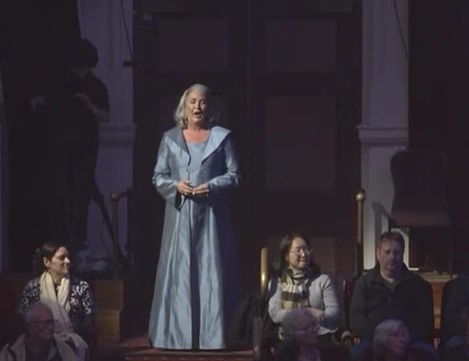
    Above: Katarina Karnéus singing Brangäne in a concert performance of Act II of Wagner’s TRISTAN UND ISOLDE by the Auckland Philharmonia, conducted by Giordano Bellincampi.

    CAST:

    Tristan – Simon O’Neill; Isolde – Ricarda Merbeth; Brangäne – Katarina Karnéus; Kurwenal – Johan Reuter; King Marke – Albert Dohmen; Melot – Jared Holtin

    Watch and listen here.

  • Wagner: Siegfried Idyll ~ Toronto Symphony Orchestra

    Snapshot si 2

    A performance of Richard Wagner’s SIEGFRIED IDYLL by the Toronto Symphony Orchestra conducted by Peter Oundjian.

    Watch and listen here.

  • Boulez Conducts TRISTAN & ISOLDE

    Pierre-boulez

    Above: Pierre Boulez

    In April of 1967, the Bayreuth Festival’s Wieland Wagner production of TRISTAN UND ISOLDE was brought to Osaka, Japan, for three performances, featuring a stellar cast: Wolfgang Windgassen (Tristan), Birgit Nilsson (Isolde), Hertha Töpper (Brangäne), Frans Andersson (Kurvenal),  Hans Hotter (King Marke), Sebastian Feiersinger (Melot), Georg Paskuda (Young Sailor/Shepherd), and Gerd Nienstedt (Steersman).

    These performances marked the only time Pierre Boulez conducted this Wagner masterpiece.

    Watch and listen here.

    For me, this recording captures, perhaps more truly than any other, the way Birgit Nilsson sounded live in the performances of hers that I heard at The Met.

  • Scenes from a Munich WALKURE

    Scanned Section 15-1

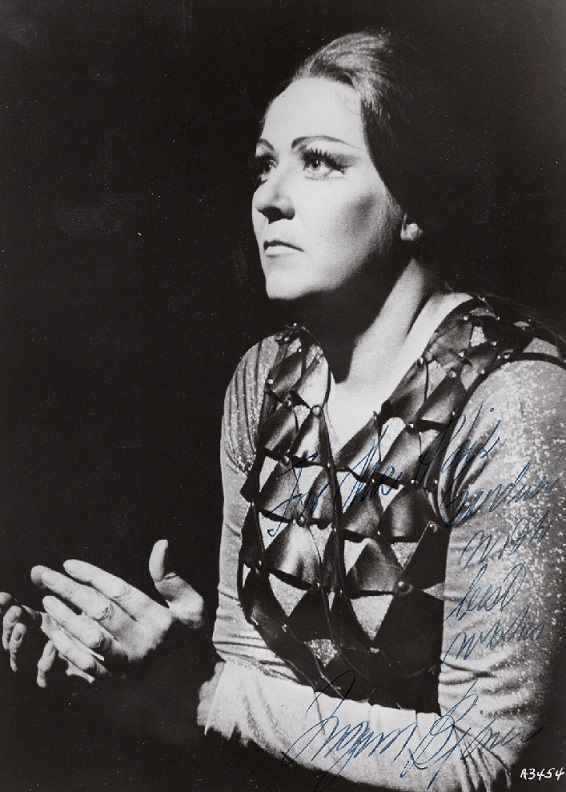
    Ingrid Bjoner (above) is Brünnhilde in these scenes from a performance of Wagner’s DIE WALKURE from Munich, 1972. The in-house sound quality leaves much to be desired, but I’ve always loved this rendering of the Todesverkündigung as sung by Bjoner and James King.

    There are also three brief excerpts from Act III, with Claire Watson as Sieglinde and Heinz Imdahl as Wotan joining Ingrid Bjoner. Rudolf Kempe’s conducting strikes me as just about ideal.

    WALKURE exc – Munich 1972 – Bjoner King Watson Imdahl – Kempe cond

  • Dances We Dance @ Graham Studio Theatre

    DWD_FS-20241121-DSC00027

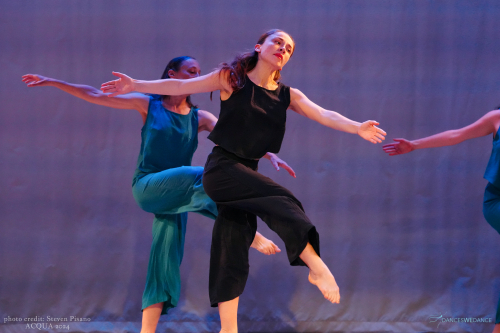
    Above: dancer Kathleen Caragine in Water Study, photo by Steven Pisano

    ~ Author: Oberon

    Sunday November 24th, 2024 matinee – Francesca Todesco’s company Dances We Dance presenting ACQUA, a program of danceworks inspired by water. This evening’s afternoon’s was a performance that celebrated sisterhood and helped ease the after-effects of a painful recent election, in which women’s causes that seemed set to flourish under a Harris administration now seem destined for setbacks in the years ahead.

    DWD_FS-20241121-DSC00973

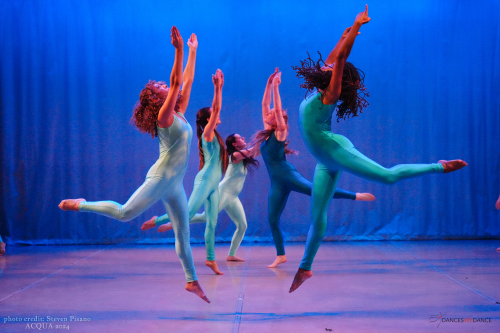
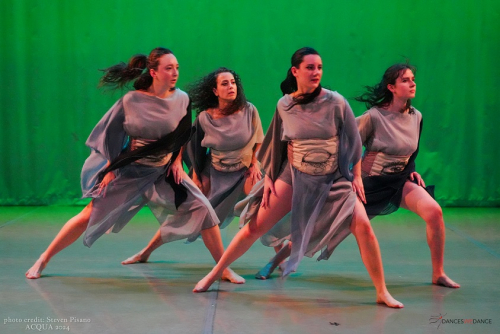
    Above: the ensemble in Water Study, photo by Steven Pisano

    The program presented a set of dances inspired by or alluding to themes relating to water, which – since the earliest beginnings of dance –  have evoked or reveled in this essential element. From the rain dances of the ancient tribes to Chris Wheeldon’s After The Rain… and Caterina Rago’s Alta Marea, water has been a constant source of inspiration in the dance community.

    As part of this exploration, the audience today experienced the re-staging of Doris Humphrey’s renowned 1928 choreography Water Study, performed by a cast of 11 dancers under the direction of master teacher Gail Corbin. This was preceded by a showing of Isadora Duncan’s 1905 piece Water Study, which has an improvisational feeling. As staged by Francesca Todesco, this opens to the sound of dripping water.

    As music of Schubert sounds, the lights slowly come up to reveal the dancers prone on the floor. Wearing blue/green costumes, they slowly rise and – as projections of the sea appear on screen – they come and go, executing fleeting steps and creating waves of movement suggesting the ebb and flow of the sea. A Schubert waltz sounds, and the dancers assume an ecstatic pose.

    DWD_FS-20241121-DSC01346

    Above: the dancers in Doris Humphrey’s Water Study; photo by Steven Pisano

    Silence falls as the Humphrey piece commences: the kneeling dancers awaken, the sound of their breathing hangs gently on the air. One by one they rise. Forming opposing lines, they race towards each other like tempest-tossed waves converging. They run en masse from corner to corner, as if crashing against sea walls. Standing, they sway from side to side to the sounds of their own breath. Then they fold into kneeling poses and the ballet ends as it began. Kudos to Ms. Corbin for bringing the fascinating work to currency. 

    DWD_FS-20241121-DSC01850

    Above: from Catherine Gallant’s Wave; the dancers are Colleen Edwards, Rosey Gentle, and Kathleen Caragine; photo by Steven Pisano

    The next three works were finely contrasted but they had one thing in common: each was so visually and musically enjoyable that they felt too short!     

    Wave, a 2001 work choreographed by Catherine Gallant, is an homage to Isadora with a contemporary touch. Three dancers – Kathleen Caragine, Colleen Edwards, and Rosy Gentle – are posed in a pool of light at the start. To the sounds of a Chopin mazurka, these beauties dance nobly and expressively in tunic-like costumes. They collapse and rise, evoking visions of Wagner’s Rhinemaidens, their faces are at once youthful and ancient: a sisterhood of goddesses. As the light fades, they return to their opening pose.

    Gallant

    Above: choreographer Catherine Gallant in an iconic photo

    I was ever so happy to see Catherine this evening; I felt reassured after speaking with her: now more than ever we must be there for one another. I told Catherine of the beautiful “Isadora” photo I have of her on my bookcase shelf (above); I can look up from my desk all thru the day and see her in that ecstatic pose.

    DWD_FS-20241121-DSC02476

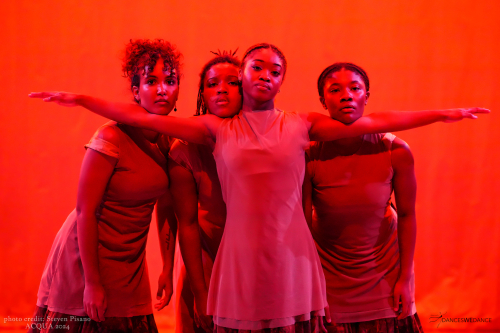
    Above: from Crosscurrents; the dancers are Jada Alfred, Marley Poku-Kankam, Autumn Rodrigue, and Alana Averett; photo by Steven Pisano

    Crosscurrents, choreographed by Hannah Howell, brought forth four lovely young ladies, each with a distinctive personality. To a wonderfully weird and quirky score by Angel Bat David, the dancers create movement patterns and dance in diagonal formations. The sound of the clarinet takes over – I love it! – and standing in a line up, each dancer has a brief solo. The music is incredibly evocative, it sings of solidarity. The stage becomes sun-drenched as the dancers fall and then resume their initial pose. 

    DWD_FS-20241121-DSC03010

    Above: Lana Hankinson in Tidal Pool; photo by Steven Pisano

    Tidal Pool, set to deeply lyrical music by Yumira and choreographed by Rae Ballard, was danced by a quintet that featured Mlles. Caragine, Edwards, and Gentle joined by guest dancers Lana Hankinson and Lauren Naslund. The gentle flow of the dance created a sense of quiet serenity whilst the music evokes a luxuriant feeling of peace. Nearing the end, Ms. Naslund walks slowly forward center-stage while one by one the other dancer cross her path and depart, leaving her alone onstage with an expression of quiet wonderment. I’ve always been an admirer of Ms. Naslund, more so today than ever. Her calm beauty has the enviable gift of timeless grace. 

    DWD_FS-20241121-DSC03607

    Following the interval, Francesca Todesco’s brand new Cherchez La Femme (above photo by Steven Pisano) was danced by Mlles. Edwards, Gentle, and Caragine.These three women have developed into artists of high quality, thoroughly comfortable and assured onstage. Each has something personal to say, making their dancing really fascinating to watch.

    DWD_FS-20241121-DSC04519

    Colleen Edwards (above, photo by Steven Pisano), so impressive in the Gallant piece earlier in the program, was riveting here. As the Todesco trio commenced against a golden backdrop, the white-clad Ms. Edwards stood in the light, casting her shadow. She is joined by the other two, and shadow-play becomes a part of their movement.

    Ms. Edwards has the first solo: each character has a name, and she is Simonetta. To softly cascading piano motifs, her dancing is truly mesmerizing. She rushes about the space and finally withdraws as Ms. Gentle, clad in red as Camille, enters frantically, as if being pursued…she immediately collapses. A questing search and a plea reveal her desperation. Rising, she appears hesitant, as if seeking something…or someone. To music of Chopin, the search becomes a plea. Ms. Gentle’s dancing seemed to reveal her heart and soul to us.

    Now we meet Artemisia: fair of face, Ms. Caragine’s black hair sets off her expressive eyes; she moves beautifully, with a ballerina’s poise, as the steps and gestures flow on the music. The trio re-unite, Ms. Gentle now back in her white frock, as the dance moves to its finish.

    Here are more images from Cherchez la femme, photos by Steven Pisano:

    DWD_FS-20241121-DSC04747

    Rosy Gentle

    DWD_FS-20241121-DSC05113

    Kathleen Caragine

    DWD_FS-20241121-DSC03930

    Mlles. Edwards, Gentle, and Caragine in Cherchez La Femme 

    DWD_FS-20241121-DSC05679

    Above: Francesca Todesco in Memories; photo by Steven Pisano

    Ms. Todesco then took the stage alone to premiere a new solo choreographed by Rae Ballard to the always welcome music of Astor Piazzolla. Entitled Memories, this solo finds the dancer clad in severe black with black pumps; she seems like a widow, alone in her grief, recalling happier times The music has a lamenting feeling and becomes quite lush; a hint of a tango is woven in. Francesca’s innate musicality, with her expressive hands and face, creates a mood of longing. At times, she seemed to be dancing just for me.

    DWD_FS-20241121-DSC06615

    Above, the sirens of Haunted Echoes: Colleen Edwards, Margherita Tisato, Kathleen Caragine, and Rosy Gentle; photo by Steven Pisano

    Closing the program was a newly commissioned work choreographed by the beloved former Paul Taylor star Annmaria Mazzini. This is Haunted Echoes, set to musical collage which propels a dance of the sirens – bewitching creatures all in sea-green. Drifting about the space, they pause to sing their alluring song. A big beat springs up and the dancing turns wild. And then the music becomes a bluesy lullaby, and the dancers drift off, a sisterhood lost at sea.

    On an evening that meant a lot to me, it was especially nice to greet the inimitable Jim May, who I’d only met once before, many, many moons ago at a Sokolow rehearsal. Tonight, it felt like a reunion of long-lost brothers.

    Performance photos by Steven Pisano.

    ~ Oberon

  • Jaap van Zweden ~ PARSIFAL Act III

    Parsifal chorus

    Jaap van Zweden conducts the Netherlands Radio Philharmonic Orchestra and Chorus in a concert performance of Act III of Wagner’s PARSIFAL given at the Concertgebouw, Amsterdam, in 2010. Klaus Florian Vogt is Parsifal, Falk Struckmann is Amfortas, Robert Holl is Gurnemanz, and Katarina Dalayman is Kundry.

    Watch and listen here.

  • Jard van Nes: Wagner ~ Wesendonck Lieder

    Jard van nes

    The Dutch mezzo-soprano Jard van Nes (above) sings Wagner’s Wesendonck Lieder with the Northern Symphony conducted by Richard Hickox.

    Listen here.

  • 50 Years Ago Today: My First PARSIFAL

    Parsifal - 1st time-1 jpg

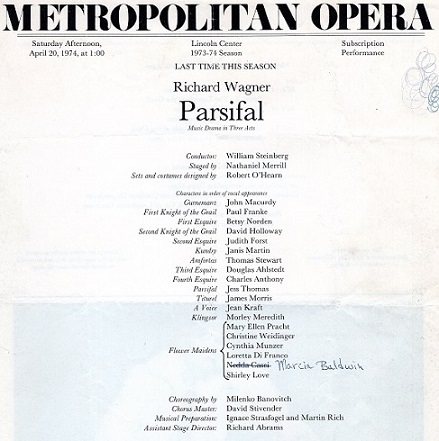
    Fifty years ago today, on April 20th, 1974, I saw my first performance of Wagner’s PARSIFAL  I was in my twelfth year of being an opera-lover, and I understood the importance of seeing this opera for the first time. I’d heard it twice already on Met Texaco Saturday broadcasts: the first in 1966 with Régine Crespin, Sándor Kónya, Walter Cassel, and Jerome Hines, conducted by Georges Prêtre, and the second in 1971, with Irene Dalis, Mr. Kónya, Thomas Stewart, and Cesare Siepi, conducted by Leopold Ludwig. The music seemed way beyond me at the first hearing, though – having been raised in a devout Christian household – I found a lot of it very moving; in fact, I was sometimes moved to tears, though I was not sure why. By 1971, the music seemed much more immediate and the characters – and their stories – began to seem more meaningful. 

    A lot had happened to me between that 1971 broadcast and the afternoon in 1974 that I walked into The Met for my first live performance of this mythic opera. I was, in fact, pretty down at the time. I’d had my first gay sexual experience in October 1973, only to be dumped by the object of my affection soon after. We’d been friends up until our night together, and it wasn’t until a few weeks after that I found out he already had a serious relationship going.

    Uncharacteristically, I stayed away from Gotham for a while, but I kept in touch with another boy in our group, TJ. I had turned to him for solace, and we grew very close, though our ‘first night’ was a disaster. But we really liked each other, so we eventually got on the same groove. As I recall, it was the day after the PARSIFAL that we went to The Frick and it was there, in the Atrium, that we revealed our feelings and decided to make a go of it. A few weeks later, I went up to The Cape to spend the Summer with him. At the end of the Summer, we tried to resume our lives apart, but we missed each other so much that I moved down to live with him in his dorm room at Sarah Lawrence College.

    Anyway, my diary entry about my first PARSIFAL is much briefer than my usual performance notes. As a rule, my diary was hand-written; I am not sure why I typed this entry: Parsifal 2-1 jpg

    I should perhaps clarify that Ms. Martin soon found the ‘staircase’ to her upper register and went on to be a very fine Sieglinde, Ortrud, Dyer’s Wife, and Tosca. Mr. Thomas, who had been my first Calaf and Tristan, went on singing for another eight seasons, with mixed results. Mr. Macurdy continued to develop and refine his Gurnemanz, and it became one of his greatest roles. 

    15747816_10209586751519649_7050039478046055439_n

    The next opera I saw came five months later; by then, I was happily living on campus at Sarah Lawrence with my bookish boyfriend, and posing as a student. Photo by TJ.

    ~ Oberon