Tag: Robert Langevin

  • The Labèque Sisters|van Zweden|NY Philharmonic

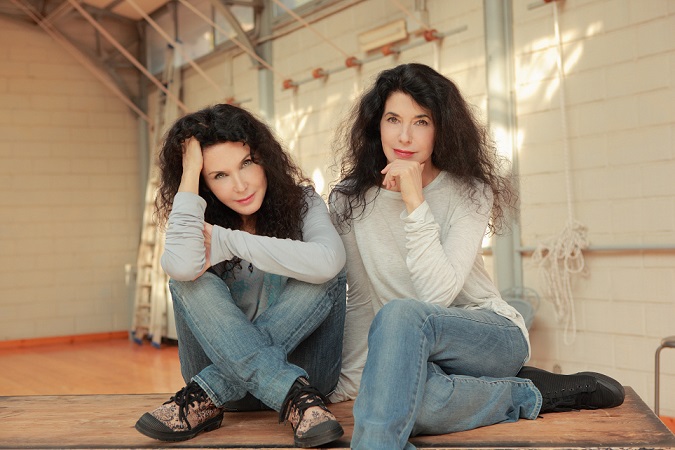
    Labeque-01

    Above: Katia and Marielle Labèque

    Author: Oberon

    Saturday September 23rd, 2017 – The first thing we noticed upon taking our seats at The New York Philharmonic this evening was that the seating arrangement for the orchestra had changed: risers are now in use. Hopefully this is a permanent enhancement, as it is so pleasing to be able to actually see people like Judith LeClair, Robert Langevin, Anthony McGill, and Liang Wang while they are playing. 

    This week has marked the start of the Jaap van Zweden era at the Philharmonic, even though it’s not until next season that the appendage “Designate” will be dropped from the title “Music Director”.  The orchestra played superbly for the Maestro, and if the vociferous standing ovation that erupted the moment the Mahler 5th ended is any indication, the audience is embracing Mr. van Zweden in no uncertain terms.

    The New York premiere of Philip Glass’s Concerto for Two Pianos and Orchestra opened the program. The Labèque sisters, in fitted black trousers and be-spangled sweaters, were warmly greeted by the crowd; they have been top-rank musicians for a long time and they still look sensationally slender and attractive…and their playing retains its accustomed verve and grace.

    Glass calls for a huge orchestra for this most recent of his creations; no fewer than seven percussionists take part, along with vast troupes of string, wind, and brass players. The concerto is in three movements and sets out from a jazzy opening that develops into a feeling of a giant hurdy-gurdy playing as a kozmic merry-go-round swirls madly. Pulsing waves of sound, in dense textures, wash over us.  From this turbulence, a lovely misterioso motif for the pianos emerges, with a gong struck softly as an undertone.

    The pianists playing in their lower ranges open the second movement, with wooden clappers beating time. The trumpets and flutes join voices; at this point a cellphone went off in the audience but it merged into the musical texture. Rhythmic and textural variety sustain this central movement. The concerto concludes with a sort of adagio of somewhat darkish hues.

    The new concerto is appealing in its way, but I can’t say it’s particularly distinctive or memorable. The pianos do not take the prominence one might expect in a concerto setting, but rather they are simply one constant voice in the overall chorus of instruments, given a few solo/duo passages along the way. I was hoping for an encore from the Labèque sisters, or possibly an appearance by Philip Glass, but after a couple of bows, the intermission commenced.

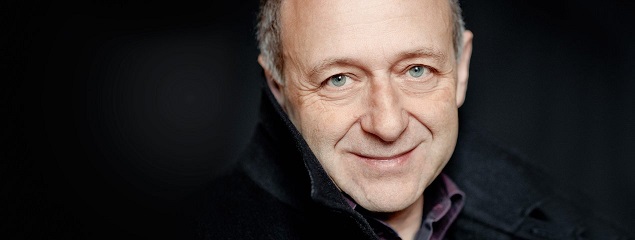
    Van-zweden-jaap-banner

    Above: Jaap van Zweden

    Mahler’s Fifth Symphony was composed during the summers of 1901 and 1902, during his annual holiday from his job as director of the Vienna Court Opera. It was in Vienna the winter prior to beginning his fifth symphony that Mahler had met Alma Schindler, the beautiful daughter of a famous landscape painter. Mahler proposed to her in the Autumn of 1901, and the symphony, with its journey from mourning thru the dreamworld of the Adagietto to happy triumph seems to mirror the composer’s state of mind with his new-found love.

    The symphony’s brilliant opening trumpet fanfare was excitingly introduced by Christopher Martin. As the first three movements of this very long symphony progressed, the Philharmonic players responded thrillingly to Maestro van Zweden’s intense, almost daemonic vision of the score. In the beloved Adagietto, for strings and harp, the conductor’s gentle pace and his summoning of luminous textures from the musicians created a depth of beauty in which we could – for a few minutes – forget the dark dangers of living in today’s uncertain world. In the grandeur of the symphony’s dazzling Rondo-Finale, the maestro and his musicians swept the celebratory feeling forward, pausing only for a couple of momentary roundabouts, and on to its epic conclusion. The audience went wild.

    ~ Oberon

  • Nikolaj Znaider|Iván Fischer|NY Phil

    Znaider_0

    Friday November 25th, 2016 – Tonight, Nikolaj Znaider (above) played the Beethoven violin concerto with The New York Philharmonic under the baton of Iván Fischer; the second half of the program was given over to the Dvořák 8th symphony.

    The first thing we noticed when entering the hall tonight was the configuration of the orchestra, most especially the welcome addition of risers for the wind players, and the basses (they were on the highest platform). This is something I have always wished to see at Philharmonic performances: up til this evening, it was nearly impossible to determine who was playing solo wind passages during a symphony. Now there’s a better opportunity to watch people like Robert Langevin, Liang Wang, and Anthony McGill: to savor them as individuals and not just as sounds emanating from behind 2 rows of string players and 3 of music stands. It’s unclear whether the risers are going to continue to be in regular use now or whether it’s just something Maestro Fischer asked for. But this set-up really enhanced my enjoyment of the evening, especially given Mr. Langevin’s prominence in the Dvořák: how wonderful to not only hear his magic flute but to actually watch the magician at work. 

    Nikolaj Znaider is one of those many musicians whose discs I used to hear being played when I worked at Tower Records; at that time, I was still very much immersed in opera and ballet, and I rarely focused on symphonic or chamber music. So now I am making up for lost time, and hearing Mr. Znaider perform live tonight for the first time was genuinely enjoyable.

    The violinist is very tall, with courtly manners to the fore as he kissed the hands of violinists Sheryl Staples and Michelle Kim after his triumphant performance of the Beethoven.

    The music begins with five soft beats on the kettledrum; this leads to a rather long opening ‘prelude’, commencing in the winds and flowing onward to the violins. Mr. Znaider’s entrance really pricked up my ears, for his timbre is quite striking. My first thought was that his sound had a trace of astringency, a piquant tartness that gives it a particular appeal. As the concerto progressed, his playing took on a silvery aspect. Clarity of articulation and a mastery of dynamics are among Znaider’s most appealing gifts, and – greatly needed in the Beethoven – the control and tonal sheen he displayed in the highest range is really impressive. He also showed off a deliciously shimmering trill. 

    High, plaintive themes are poignantly set forth, whilst there is a flowing naturalness in his scale passages. Using the Kreisler cadenzas, Mr. Znaider arrived at one of his most compelling moments: a series of trills on various pitches, honed down in the end to a whisper. I must mention here, too, the expressive playing from Kim Laskowski’s bassoon.

    Displaying a full range of degrees of piano/pianissimo playing, made Mr. Znaider’s performance in the playing of the Larghetto was truly captivating. Again, roses for Ms. Laskowski – in fact, there was page after page of lovely playing from all the Philharmonic artists under Maestro Fischer’s gentle baton. As Mr. Znaider spun out a long melodic line over plucked strings, his superb control of pianissimo nuances was outstanding.

    As the final Rondo: Allegro rolls forward, we are are treated to further adventures as Mr. Znaider continues to explore a vast dynamic range; conductor and ensemble are with him every step of the way, with the brilliant conclusion prompting an immediate and fervent response from the audience. The violinist seemed genuinely pleased with the warm reception, his hand-to-heart gesture sending the affection back to the cheering crowd whilst the musicians onstage applauded him vigorously. A subtly played Bach encore, offered up with captivating delicacy and grace, drew the audience even deeper into Znaider’s artistry.

    Fischer_ivan foto_marco_borggreve

    Above: Iván Fischer, in a Marco Borggreve portrait

    The Dvořák 8th symphony abounds in folkish themes and ‘nature’ sounds that summon up visions of the Czech countryside, and I truly enjoyed Maestro Fischer’s interpretation in every regard. Robert Langevin’s flute solo early on was a limpid delight, and soon oboist Liang Wang and clarinetist Anthony McGill were piping up with sweetly evocative birdcalls. Phil Myers’ signature “big horn” sound was at its most congenial tonight, and the cellos sounded warmly lyrical.

    The symphony’s most familiar theme comes in the Adagio as flute and oboe entwine and then send the melody forward to tonight’s concertmaster Sheryl Staples who shapes the phrases with silken assurance. Things turn rousing; the proverbial “big theme” embraces us. Trumpets sound, and then things recede to a gracious clarinet duo which eventually fades away.

    An amiable waltz looms up in the Allegro graziosa, and Liang Wang’s oboe leads off some brief wind passages that move from voice to voice. An expansive song emerges, then the waltz re-bounds. An unusual coda concludes the movement.

    Trumpet fanfares introduce the symphony’s finale; a handsome cello tutti leads to a proud dance and Mr. Langevin’s flute replies to the cellos with a variation on their theme. The other wind soloists have their final say before a grand acceleration speeds the symphony to its end. The audience seemed really taken with the entire concert, and the applause was generous and sincere.

    To me, it was a perfect evening; my friend Dmitry was less enthusiastic, having some issues with tempi in the Beethoven and transitions in the Dvořák. His familiarity with the symphonic and chamber repertoire vastly surpasses my own, for he was immersed in the Mahler symphonies and Beethoven quartets while the first half-century of my musical ‘career’ was almost exclusively devoted to opera. But for all that, tonight’s concert was an unalloyed pleasure for me and left me in a really good mood.