Tag: Robert Merrill

  • Björling & Merrill: FORZA DEL DESTINO ~ Duet

    Merrill & bjorling

    Jussi Björling and Robert Merrill sing the great duet “Solenne in quest’ora” from Verdi’s LA FORZA DEL DESTINO.

    Listen here.

    These two voices were among the first I became familiar with in the early 1960s when I was discovering opera. It became my lifelong obsession.

  • Björling & Merrill: FORZA DEL DESTINO ~ Duet

    Merrill & bjorling

    Jussi Björling and Robert Merrill sing the great duet “Solenne in quest’ora” from Verdi’s LA FORZA DEL DESTINO.

    Listen here.

    These two voices were among the first I became familiar with in the early 1960s when I was discovering opera. It became my lifelong obsession.

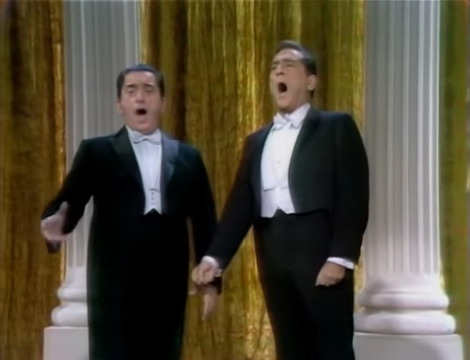
  • Jan Peerce & Robert Merrill ~ FORZA Duet

    Snapshot jp rm 2

    Jan Peerce and Robert Merrill sing the duet “Invano Alvaro” from Verdi’s LA FORZA DEL DESTINO.

    Watch and listen here.

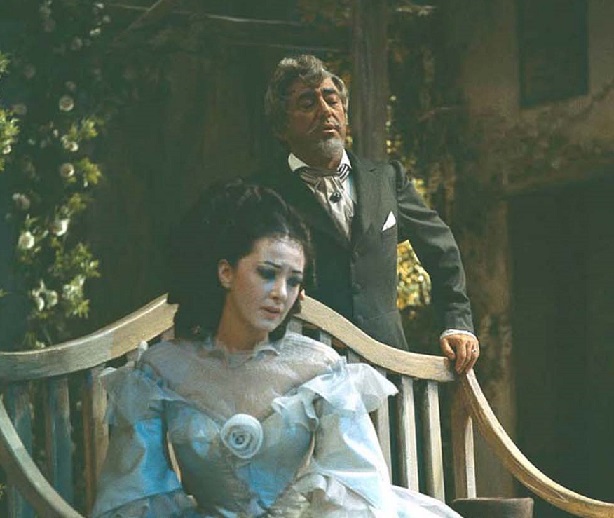
  • Moffo & Merrill ~ LA TRAVIATA @ The Met

    Moffo Merrill

    ~ Author: Oberon

    By chance, I came upon this lovely Louis Melançon photo (above) of Anna Moffo and Robert Merrill in Verdi’s LA TRAVIATA in the Met’s 1966 Cecil Beaton production of the Verdi classic, which evoked in me memories of their partnership in this opera. From Moffo”s debut in 1959 til her final Met appearance in a staged opera there in 1976, they sang these roles together 50 times with the Company, in New York and on tour. They also made a beautiful recording of the opera together for RCA. Listen to a portion of their Act II duet here.

    Moffo’s 1959 Met debut came at The Old Met in the Tyrone Guthrie production. On September 24th, 1966, during the second week at the New Met, Cecil Beaton’s lavish production opened with Moffo, Merrill, and tenor Bruno Prevedi in the leading roles. Georges Prêtre was on the podium. I saw the Moffo Violetta four times, twice with Merrill as Germont, and twice with Mario Sereni, who was very good in the role, and a less ‘wooden’ actor than Merrill.  

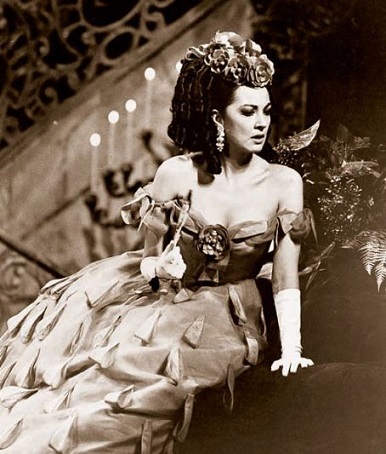
    Moffo Violetta

    Above: Moffo as Violetta in the scene at Flora’s party

    Anna Moffo had two Saturday matinee broadcasts of TRAVIATA in the Beaton production, nine months apart. For me, they offered tell-tale signs of what would be the diva’s eventual vocal decline. In the first broadcast, on March 25th, 1967, she sounded fantastic: the voice lyrical and free-flowing, the top gorgeous, the drama expressed thru colour rather than force: in sum, one of her great performances.

    During June, 1967, I saw two more Moffo Violettas (one with Merrill, the second with Sereni) and she was very impressive indeed, receiving huge ovations. I met her at the stage door; she was extremely beautiful in person, and very kind. 

    On December 30, 1967, Moffo had her second matinee broadcast in the Beaton production. I was very excited to be seeing her onstage again, but from her very first line – “Flora, amici, la notte che resta...” – something had changed.  On “…che resta..” she really leaned heavily on the low notes, sounding almost chesty. I was still a novice opera-lover at that time, but alarm bells went off. Moffo continued to pressurize her lower notes throughout the first act, but the coloratura and high notes of “Sempre libera” seemed fine.

    During the intermission, I asked a fellow Moffo fan if her vocalism that day was worrisome to him; he felt she was making an effort to sound more ‘dramatic’, and he didn’t feel panicky about it. The soprano continued singing in this manner for the rest of the opera, and – since the drama gets increasingly intense as the story unfolds – we heard these big, juicy lower notes from Moffo throughout the afternoon.

    As it turned out, I never saw Anna Moffo on The Met stage again after that, though she continued singing there for nearly a decade. On February 1, 1969, came the disastrous LUCIA DI LAMMERMOOR broadcast, which I listened to in disbelief, which gave way to despair. The voice was wildly unpredictable: woozy in the middle, over-ripe in the lower range, and screamy at the top. Awkwardly, I ran into her in the Met lobby a couple of weeks afterward and she recognized me; she asked if I had heard the LUCIA broadcast, and I gave a neutral response. She said she had been ill that day, but that now things were back to normal.

    I cannot say for certain whether she ever regained peak form again, but from reports from friends, she was not singing with the lustre and ease we’d come to expect from her. Her later recordings are so sad…I cannot listen to them. 

    In 1975, TJ and I – living in Hartford – tuned in for her broadcast of Nedda in PAGLIACCI. Moffo sounded dreadful, the voice unsupported. “What is she thinking?” I asked TJ. “I guess she feels she still has something to offer,” he replied.

    In 1979, I was still living in Hartford (but no longer with TJ) when Moffo came to The Bushnell to sing MERRY WIDOW in English. I decided to go, and always regretted it afterwards.

    Anna Moffo and Robert Merrill reunited on the Met stage one last time for the Met’s 100th Anniversary Gala on October 22, 1983. They sang the duet Sweethearts from Sigmund Romberg’s MAYTIME. The audience greeted them affectionately, and they managed to get thru their duet without mishap.

    I hadn’t intended to delve into the story of Moffo’s decline when I posted the photo at the top of the article; I prefer simply to remember her lovely performances from the first decade of her Met career. But one thing led to another once I started writing.

    One of the most moving passages in her performances as Violetta was her farewell to Alfredo in Act II, when she thinks she will never see him again. In the Beaton production, this was staged so that Violetta came downstage while sustaining the top B-flat and sank to her knees, clasping Alfredo’s hand. Here is the phrase – “Amami, Alfredo…!” as Ms. Moffo sang it at La Scala in 1964:

    Anna Moffo – Amami Alfredo! ~ TRAVIATA (Live)

    And here is Moffo at her best, from a commercial arias compilation, conducted by Sir Colin Davis:

    Anna Moffo – TRAVIATA ~ Act I scena (commercial recording)

    ~ Oberon

  • Moffo & Merrill ~ LA TRAVIATA @ The Met

    Moffo Merrill

    ~ Author: Oberon

    By chance, I came upon this lovely Louis Melançon photo (above) of Anna Moffo and Robert Merrill in Verdi’s LA TRAVIATA in the Met’s 1966 Cecil Beaton production of the Verdi classic, which evoked in me memories of their partnership in this opera. From Moffo”s debut in 1959 til her final Met appearance in a staged opera there in 1976, they sang these roles together 50 times with the Company, in New York and on tour. They also made a beautiful recording of the opera together for RCA. Listen to a portion of their Act II duet here.

    Moffo’s 1959 Met debut came at The Old Met in the Tyrone Guthrie production. On September 24th, 1966, during the second week at the New Met, Cecil Beaton’s lavish production opened with Moffo, Merrill, and tenor Bruno Prevedi in the leading roles. Georges Prêtre was on the podium. I saw the Moffo Violetta four times, twice with Merrill as Germont, and twice with Mario Sereni, who was very good in the role, and a less ‘wooden’ actor than Merrill.  

    Moffo Violetta

    Above: Moffo as Violetta in the scene at Flora’s party

    Anna Moffo had two Saturday matinee broadcasts of TRAVIATA in the Beaton production, nine months apart. For me, they offered tell-tale signs of what would be the diva’s eventual vocal decline. In the first broadcast, on March 25th, 1967, she sounded fantastic: the voice lyrical and free-flowing, the top gorgeous, the drama expressed thru colour rather than force: in sum, one of her great performances.

    During June, 1967, I saw two more Moffo Violettas (one with Merrill, the second with Sereni) and she was very impressive indeed, receiving huge ovations. I met her at the stage door; she was extremely beautiful in person, and very kind. 

    On December 30, 1967, Moffo had her second matinee broadcast in the Beaton production. I was very excited to be seeing her onstage again, but from her very first line – “Flora, amici, la notte che resta...” – something had changed.  On “…che resta..” she really leaned heavily on the low notes, sounding almost chesty. I was still a novice opera-lover at that time, but alarm bells went off. Moffo continued to pressurize her lower notes throughout the first act, but the coloratura and high notes of “Sempre libera” seemed fine.

    During the intermission, I asked a fellow Moffo fan if her vocalism that day was worrisome to him; he felt she was making an effort to sound more ‘dramatic’, and he didn’t feel panicky about it. The soprano continued singing in this manner for the rest of the opera, and – since the drama gets increasingly intense as the story unfolds – we heard these big, juicy lower notes from Moffo throughout the afternoon.

    As it turned out, I never saw Anna Moffo on The Met stage again after that, though she continued singing there for nearly a decade. On February 1, 1969, came the disastrous LUCIA DI LAMMERMOOR broadcast, which I listened to in disbelief, which gave way to despair. The voice was wildly unpredictable: woozy in the middle, over-ripe in the lower range, and screamy at the top. Awkwardly, I ran into her in the Met lobby a couple of weeks afterward and she recognized me; she asked if I had heard the LUCIA broadcast, and I gave a neutral response. She said she had been ill that day, but that now things were back to normal.

    I cannot say for certain whether she ever regained peak form again, but from reports from friends, she was not singing with the lustre and ease we’d come to expect from her. Her later recordings are so sad…I cannot listen to them. 

    In 1975, TJ and I – living in Hartford – tuned in for her broadcast of Nedda in PAGLIACCI. Moffo sounded dreadful, the voice unsupported. “What is she thinking?” I asked TJ. “I guess she feels she still has something to offer,” he replied.

    In 1979, I was still living in Hartford (but no longer with TJ) when Moffo came to The Bushnell to sing MERRY WIDOW in English. I decided to go, and always regretted it afterwards.

    Anna Moffo and Robert Merrill reunited on the Met stage one last time for the Met’s 100th Anniversary Gala on October 22, 1983. They sang the duet Sweethearts from Sigmund Romberg’s MAYTIME. The audience greeted them affectionately, and they managed to get thru their duet without mishap.

    I hadn’t intended to delve into the story of Moffo’s decline when I posted the photo at the top of the article; I prefer simply to remember her lovely performances from the first decade of her Met career. But one thing led to another once I started writing.

    One of the most moving passages in her performances as Violetta was her farewell to Alfredo in Act II, when she thinks she will never see him again. In the Beaton production, this was staged so that Violetta came downstage while sustaining the top B-flat and sank to her knees, clasping Alfredo’s hand. Here is the phrase – “Amami, Alfredo…!” as Ms. Moffo sang it at La Scala in 1964:

    Anna Moffo – Amami Alfredo! ~ TRAVIATA (Live)

    And here is Moffo at her best, from a commercial arias compilation, conducted by Sir Colin Davis:

    Anna Moffo – TRAVIATA ~ Act I scena (commercial recording)

    ~ Oberon
  • Anna Maria Rota

    A-1919174-1451049234-1126.jpeg

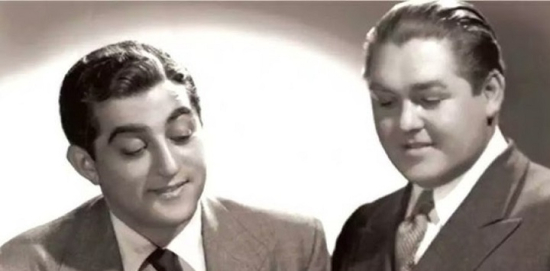
    Anna Maria Rota is perhaps best known to opera-lovers for her appearance as Maddalena on the old, classic RCA recording of Verdi’s RIGOLETTO, with Roberta Peters, Jussi Bjoerling, and Robert Merrill. It was one of the first LP opera sets I owned as a youngster. I loved it, and played it til it wore out, though I was somewhat put off by what seems to be the noticeable sound of the conductor Jonel Perlea breathing heavily much of the time.

    Lately, in a quest for tracking down souvenirs of some of the voices I enjoyed in my earliest days of listening to opera, I found some good Rota-rarities, such as these:

    Anna Maria Rota – Liber Scriptus~Verdi REQUIEM – RTF 1960

    Anna Maria Rota – O don fatale ~ DON CARLO 1961

    {Note: It takes a few moments for the “O don fatale” to start playing.}

  • The Young Björling

    1467513_330_449

    Jussi Björling’s was the first tenor voice I fell in love with. After I had discovered opera in 1959, my parents gifted me with a two-LP set of excerpts from RCA’s Verdi and Puccini catalog. The singers on those records –  Licia Albanese, Roberta Peters, Zinka Milanov, Jan Peerce, Robert Merrill, Leonard Warren, and Giorgio Tozzi, in addition to Björling – assumed god-like status for me.

    It was the plaintive sweetness of Björling’s voice that really ignited my imagination; and thru the ensuing years, it has often been the tenors – Tucker, Bergonzi, Corelli, Vickers, Pavarotti, Domingo – who provided the greatest thrills and chills in the many performances I have seen and heard.

    In the early 1930s, Björling made his first aria recordings, in Swedish. On a quiet afternoon yesterday, I was listening to – and savoring – the youthful lyricism of this remarkable voice; he had turned twenty in 1931:

    Jussi Björling – TOSCA aria – in Swedish

    By the end of that decade, Björling’s career was well underway, his voice was in full bloom, and he was singing in Italian:

    Jussi Björling – O Paradiso – L’AFRICANA

    He made many recordings in the ensuing years, including the Verdi REQUIEM under Fritz Reiner, which was recorded in June 1960; three months later, Björling died.

    Björlings_grav

    The great tenor was buried at Stora Tuna in the Dalarna province of his native land.

    Two decades before the Reiner recording of the REQUIEM was made, Björling recorded the Ingemisco from the Verdi masterpiece:

    Jussi Björling – Ingemisco – from Verdi REQUIEM