Tag: Robert Schumann

  • Brahms & The Schumanns @ Merkin Hall

    214053_750

    Above: pianist Pedja Mužijević, photographed by Jacob Blickenstaff

    ~ Author: Oberon

    Tuesday June 12th, 2018 – Works by Johannes Brahms, Robert Schumann, and Clara Schumann were on offer as musicians from the Orchestra of St Luke’s joined pianist Pedja Mužijević in this concert at Merkin Hall which is part of a series entitled Facets of Brahms.

    Johannes Brahms, Clara Schumann, and Robert Schumann were close friends and confidantes. Schumann had pronounced Brahms the heir of Beethoven, marking him out as third of the Three Bs. Following Schumann’s mental deterioration and his eventual death in an asylum, Brahms and Clara continued a flirtatious friendship that endured for many years.

    Johannes Brahms’ Scherzo from the Sonatensatz in C-Minor was the composer’s share in an 1863  collaborative musical gift for the violinist Joseph Joachim; Robert Schumann and Albert Hermann Dietrich each contributed movements of their own.

    In this evening’s performance, violinist Krista Bennion Feeney joined Mr. Mužijević. We were seated very close to the stage, and at the Scherzo‘s animated start, the sound of the piano seemed often to overwhelm the violin. Ms. Bennion Feeney is a subtle artist, and it took a few moments for the balance between the two instruments to be achieved. Thereafter, the performance became distinctive, with alternating currents of passion and lyricism. Ms. Bennion Feeney’s arching tonal glow in the central violin theme was most appealing; the piece then moves on to a big finish. 

    Returning with cellist Myron Lutzke – whose playing with the St Luke’s orchestra has often endeared itself to me – the violinst and pianist gave a wonderfully simpatico rendering of the Schumann Piano Trio No.1, Op. 63. Mr. Lutzke’s dusky timbre and his Olde World cordiality of style seemed beautifully matched to Ms. Bennion Feeney’s superb control of dynamics whilst Mr. Mužijević at the Steinway reveled in the many marvelous piano passages Schumann has provided.  

    The opening movement is marked, “Mit Energie und Leidenschaft” (‘With energy and passion’). Throughout the first movement, achingly expressive passages from the violin over piano arpeggios alternate with dramatic outbursts. The cello’s incursions are relatively brief but telling. A change of mood near the end builds slowly to a kind of grandeur. Deep tones from the cello then have a calming effect, before another build-up leads to a return to the first theme, now altered and lovingly styled by Ms. Bennion Feeney. The music flows on to a rather unusual minor-key finish. 

    The second movement has a lively, scherzo-like quality. Its repeated rising theme and sense of rhythmic drive have a wonderfully familiar feeling. The rising motif returns in the Trio section, although here it is slower and more thoughtful. Violin and cello sing up and down the scale, then we zoom back to the original ascending theme, to a sudden ending.

    Marked “Langsam, mit inniger Empfindungen” (‘Slowly, with inner feeling’), the third movement ravishes with a poignant violin melody, the cello providing a tender harmony. Things grow more animated; the violin hands over the melody to the cello and their voices entwine. This music drew me in deeply as it lingered sadly, with sustained low cello notes. The movement ends softly, and the three musicians went directly into the Finale, with its joyous song. An exhilarating rush to the finish brought warm applause for the three players.

    As the audience members returned to their seats after the interval, it was apparent that our neighbors had stepped out for a cigarette: the smell was dense and unpleasant. We made a quick dash to the balcony where the usher was welcoming. We found a quiet – though chilly – spot from which to enjoy the concert’s second half.

    Ms. Bennion Feeney and Mr. Mužijević’s radiant performance of Clara Schumann’s Romances for Violin, Op. 22, assured that Frau Schumann’s music more than held its own when set amidst that of her more celebrated husband and the masterful Brahms.

    From its lovely start, the first Andante molto has a sense of yearning, the violinist bringing both depth of tone and gentle subtlety. Lightness of mood marks the Allegretto, with its passing shifts to minor, decorative trills, and a wry ending. A lilting feeling commences the final movement, melodious and – again – modulating between major and minor passages. The piano takes up the melody, and all too soon the Romances have ended.

    Ms. Bennion Feeney and Mr. Mužijević rounded out their busy evening with the Brahms Horn Trio, Op. 40, joined by Stewart Rose. Mr. Rose’s tone can be robust or refined, depending on the musical mood of the moment. A few passing fluffed notes go with the territory: as a frustrated horn-player, I know it all too well.

    I did find myself wishing that the violinist and horn player had been seated during this piece; I think it makes for a more intimate mix with the piano. The music veers from the pastoral to the poignant, from rich lyricism to sparkling liveliness, and the ‘hunting horn’ motifs in the final Allegro con brio always give me a smile. The three players made this quintessential Brahms work the crowning finale of a very pleasing evening.

    ~ Oberon
  • Catherine Robbin

    Robbin-Catherine-8

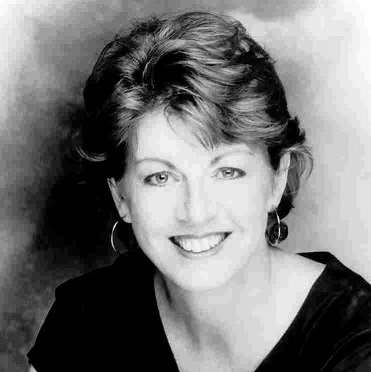
    Canadian mezzo-soprano Catherine Robbin sing’s Robert Schumann’s atmospheric ‘Mondnacht’ (‘Moonlit Night’).

    Catherine Robbin sings Schumann’s Mondnacht

    “It was as if the heavens
    Had silently kissed the earth,
    So that in a shower of blossoms
    She must only dream of him.

    The breeze wafted through the fields,
    The ears of corn waved gently,
    The forests rustled faintly,
    How starry was the night.

    And my soul spread
    Far its wings
    And sailed o’er the hushed lands
    As if gliding homeward.” 

  • Carter Brey: Schumann @ The NY Phil

    Tumblr_m2ozpelCxd1qa028to1_1280

    Above: NY Philharmonic principal cellist Carter Brey, with his colleague Eileen Moon

    Thursday April 28th, 2016 – Performances of Robert Schumann’s cello concerto seem to be something of a rarity, so I was glad of an opportunity to hear it at The New York Philharmonic tonight. I always love to see the orchestra’s principal players stepping out for a soloist turn. Carter Brey’s playing was most enjoyable, as was watching him play; his colleagues swamped him with affectionate applause as he took his bows.

    A new work by Franck Krawczyk opened the concert. I’m fairly open to new music; when new works are programmed, I am always hoping for two things: that the composer might go beyond good craftsmanship and somehow touch the soul, and that there would be something to remember in the music. I found both tonight in Mr. Krawczyk’s Après, having its world premiere in these performances.

    Both my companion and I felt a sense of narrative in Après: she envisioned a scene in nature with large trees and roaming beasts while I imagined the final days of a war and its immediate aftermath. The program notes imply no story of any kind, but the composer does pay homage to Beethoven, Kurtag, and Dutilleux. 

    Après commences with a poignant, intense theme, the lower voices glowering. A big passage for strings, with the violins soaring upward and the violas then exuding calm follows; a single sustained note from the clarinet introduces somber winds, and things turn ominous. For a few seconds the music ambles restlessly, with percussive effects introduced quietly: chimes, cymbals, snare drum. 

    Suddenly, a clattering arises: all the musicians begin to drum on their stands or tap their instruments. The horns herald an odd dance. An unsettled feeling – almost of being trapped – develops and there’s a huge build-up which evaporates to a single note from the piano.

    The crack of a whip sparks a march-like section, with loud chimes. The lower winds darken, only to give way to the work’s most fantastical passage: the mingling of solo harp and piano creates an eerie tranquility. So atmospheric! The winds re-enter, the violins lament, the harp and piano sound together again. Brass and percussion swell to a great loudness, the violas are plucked, and then, in a wisp, the harp gives us a mysterious ending.

    The youthful-looking composer appeared for a bow; having heard Après – with that bewitching harp and piano motif – and having read of Mssr. Krawczyk’s musical roots (he was an accordionist), I’ll be finding more of his music to explore in the less hectic days of Summer. Of the new works presented in recent months by the Philharmonic, I rate Après very highly indeed.

    Mr. Brey then appeared for the Schumann concerto. Both the work and his playing of it were thoroughly pleasing, as was the feeling he conveyed of truly enjoying the music and of listening to his colleagues attentively in those moments when the soloist is silent. 

    Three movements are listed for this concerto, but they are played without pauses in between so that it becomes an arc, a sort of cello tone-poem. It opens with a heartfelt, rather sad theme. Even when things become more animated, there is a sense of longing. Mr. Brey’s playing is subtle and refined in the more sustained passages: there’s a constant stream of melody for the cello over commenting strings. Rising scales recur, and the French horn has some lovely moments.

    There’s an ironic waltz, with the pensive cello playing deep and lulling as the violins and violas are gently plucked. A tender cello theme leads to what ‘should be’ a cadenza, but the orchestra continues to play a part.

    Suddenly a dance erupts, and Mr. Brey’s animated fiorature cover a wide range at high speed. The virtuosity continues, with the orchestra stately or turbulent by turns, to the end; the audience couldn’t restrain their applause, breaking in before the final note had faded away. The tall cellist was warmly hailed, embraced by the conductor, and lionized by his colleagues.

    The program concluded with the Brahms 2nd symphony; it was (needless to say) gorgeously played, and Alan Gilbert’s vision of it is most congenial. I very much enjoyed watching the Maestro’s podium choreography tonight.

    In a letter on his second symphony, written around the time of its premiere, Brahms apparently referred to the state of melancholy as a signature of this work. There is, to be sure, a tinge of sad regret that runs thru the music, but also passages of hope, romance, affirmation. Overall, it is a warmly wonderful infusion for the spirit.

    The Brahms Second is rather front-loaded; the first two movements together last about 30 minutes while the final two together take less that half that time. The third and fourth movements – for all their  appeal and zest – seem somewhat light-weight after the riches of the first two. Of course, everyone is listening for the famous “lullaby” – which my grandmother actually sang to us when we were small: “Go to sleep, go to sleep, it is night-time for baby.” I also remember Christa Ludwig singing the ‘Brahms Lullaby’ as an encore at a recital she gave in this very hall many moons ago. The theme recurs in various guises throughout the opening movement of the 2nd symphony.

    Horns and winds welcome us, and a unison violin theme develops grandly and spreads thru the orchestra; the playing is resplendent. A horn solo lingers in the memory. The cellos play a lovely theme at the start of the second movement; horns and winds again mingle voices and the adagio moves opulently forward. Winds play over plucked celli, dancing thru the third movement towards a presto finish, and in the fourth movement a gentle start soon goes grand…and oddly Russian. The broad flow of melodies is simply delightful to bask in as the symphony sails to a spirited finale. Maestro Gilbert and his players were at their very finest here (all evening, actually) and the applause was still echoing as I walked up the aisle. 

    Tonight’s concert honored The Philharmonic’s retirees – four who are currently playing their final season, and several former members who were in the audience tonight and who stood for a bow. Retiring violist Irene Breslaw and violinist Carol Webb each made heartfelt speeches, recalling the high points of their years with the orchestra and speaking fondly of their colleagues. Their words were very moving.

    Flautist Sandra Church and violinist Newton Mansfield (a 55-year Philharmonic veteran!) are also in their final season; and violist Katherine Greene was honored tonight as she is celebrating her 25th anniversary with the orchestra.

  • Balanchine’s “Davidsbündlertänze” @ NYCB

    C37708-3_Davidsb_LaraceySuozzi

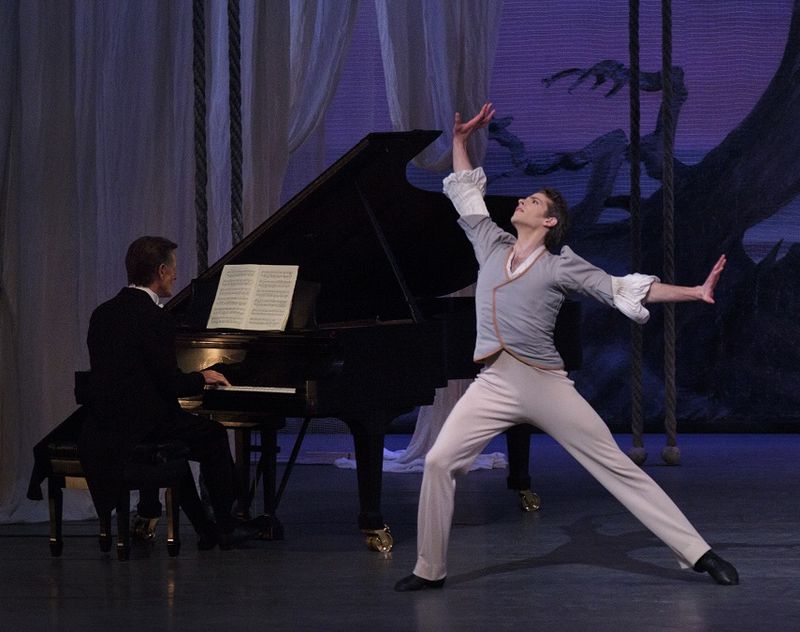
    Above: Ashley Laracey and Sean Suozzi in Robert Schumann’s Davidsbündlertänze, photo by Paul Kolnik

    Tuesday May 20, 2014 – Created in 1980, George Balanchine’s setting of Robert Schumann’s Davidsbündlertänze was one of the choreographer’s last works. It’s a unique ballet, deeply moving in its depiction of the composer Robert Schumann’s descent into madness. 

    During the winter of 1854, Schumann’s developing insanity took a dramatic turn: he began hearing “angelic” voices which evolved into the bestial cries of wild animals. One February morning he walked to a bridge over the Rhine and threw himself in; he was rescued by fishermen. Schumann himself asked to be institutionalized, to prevent his becoming a burden on his wife, Clara. He was placed in a sanatorium. His doctors prevented Clara from seeing him for more than two years, until days before his death.

    The Rouben Ter-Arutunian setting for this ballet, which has an antique look, surrounds the dancing area with gauzy curtains. The backdrop shows a body of water – perhaps alluding to Schumann’s attempt to drown hmself – and a far-shining cathedral hovering in the sky, the source perhaps of the “angelic” voices summoning the composer. At one point, mysterious figues all in black and holding large quill pens appear: these represent the Philistines, whose admonishing writings were poised to oppose art or innovation in the arts and against who the Davidsbündler (the League of Davidthe composer’s imaginary society of artists) took a firm stance.

    The ballet, danced by four couples, seems to depict various phases of the relationship between Schumann and Clara; it may also hint as certain aspects of Balanchine’s many romances. In Suzanne Farrell’s book, Holding Onto The Air, the great ballerina says that Balanchine never told her what Davidsbündlertänze was “about” during the course of the ballet’s creation. It wasn’t until later that she made the connection to Schumann’s own life.

    Suzanne Farrell came very much to mind tonight in the ballet’s opening duet, for Rebecca Krohn reminded me more than ever of Farrell, who was of course Balanchine’s longtime muse. Partnered by the dashing Zachary Catazaro, Rebecca’s sweeping lyricism and the communicative range of her expressions and gestures kept me riveted to her throughout the ballet. This was Farrell’s role (the girl in blue) at the ballet’s premiere and – like Suzanne – Rebecca may eventually take on the “Clara” role (the woman in white). Tonight her dancing was spell-binding.

    C37699-15_Davidsb_Krohn

    Above: Rebecca Krohn in Robert Schumann’s Davidsbündlertänze, photo by Paul Kolnik

    This evening’s entire cast in fact were new to this ballet, having all debuted in it together the previous week. Continuing to make a vibrant effect in each new assignment, Ashley Laracey was at her most delightful here…impetuous, charming, and dancing so very well. Sean Suozzi, who always brings his own distinctive energy to each role he undetakes, was her excellent cavalier. Tyler Angle, dancing with space-filling generosity and fineness of line, courted Tiler Peck with gentle urgency. Tiler, who to my mind seems to move from one pinnacle to another in the progress of her career, was just spectacular, her lush swirls of pirouettes radiating confidence and grace.

    In her portrait of Clara, Teresa Reichlen, so elegant in her presence and so refined in her line and port de bras, strove poignantly to comprehend the changes that were overtaking her beloved. Her attempts to draw him back to her embracing tenderness became increasingly desperate, and Tess at the end must finally accept their parting: in an exquisite moment, she bows her head in silent grief as the light fades.

    In a major career leap, the tall and poetic Russell Janzen’s portrayal developed a melancholy acceptance of Schumann’s tragic destiny. At the end of his very first duet with Tess, Russell’s visage showed an early indication of madness with a far-away look. These momentary drifts away from reality eventually overtake him, and at the end of the ballet he withdraws with an expression mingling fear and resignation. Earlier, Russell’s solo – set to the score’s most haunting melody – was beautifully danced.

    C37701-8_Davidsb_Janzen_Crop1

    Above: Russell Janzen, with Cameron Grant at the piano, in Robert Schumann’s Davidsbündlertänze, photo by Paul Kolnik

    Cameron Grant, seated at the onstage grand piano, played the Schumann score with clarity and with tempos that seemed to propel the dancers while allowing them opportuniy for nuance. 

    Just as singers have sometimes told me they can’t sing anything after performing Franz Schubert’s “An die Musik”, it’s difficult to imagine watching (or dancing in) another ballet after Davidsbündlertänze, such is the haunting atmosphere it creates. And so I didn’t stay beyond the intermission: even going out to the Promenade seemed too hasty a return to reality. I was in a very subdued mood, and glad of a peaceful train ride home to reflect on the beauty of Schumann and touching artistry of tonight’s dancers.     

    ROBERT SCHUMANN’S “DAVIDSBÜNDLERTÄNZE”: Reichlen, Krohn, Laracey, T.Peck; Janzen, Catazaro, Suozzi, T. Angle [Solo Pianist: Grant]

  • Concert at El Museo de el Barrio

    Schumann

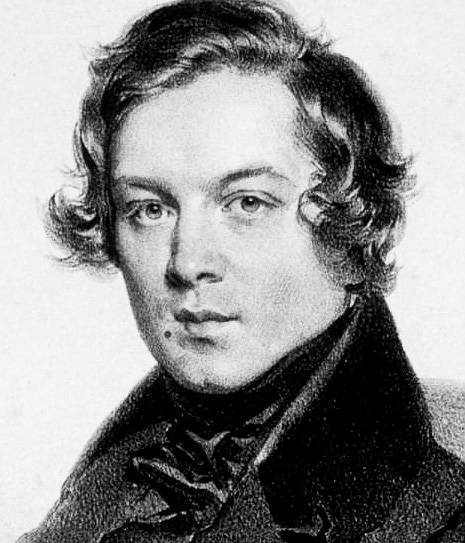
    Above: the composer Robert Schumann

    Saturday June 22nd, 2013 – The Hudson Valley Singers presented a concert entitled HYMN OF LOVE at the Museo de el Barrio this evening. I walked across Central Park North under a beautiful summer sky and met my friend Monica there. The theatre space at the Museo is charming, with its fairy tale murals; it was a full house, or nearly so. 

    One doesn’t expect to hear a piano concerto or an orchestral suite at a choral concert, and the program stretched to two and a quarter hours, what with all the rearranging of the stage to suit the configurations of musicians and singers for each piece. During the longish intermission, Monica and I caught up on ballet gossip.

    Piano Concerto #1 by Carl Maria von Weber opened the evening. Weber has never been high on my list of opera composers: a performance of FREISCHUTZ that I attended decades ago at NYC Opera was a crashing bore, and despite the splendid “Ozean!” aria I have never been able to listen to the whole of OBERON. But beyond opera, his enchanting ‘Invitation to the Dance’ makes a perfect setting for the Fokine ballet SPECTRE DE LA ROSE. And so it was an interesting opportunity to hear the composer’s piano concerto tonight. Eugene Sirotkine both played very well and conducted from the keyboard. The New York Metamorphoses Orchestra is a fine ensemble of young players, notably their flautist and oboist. The concerto might make a first-rate classical ballet, in the right choreographic hands.

    The chorus, with vocal soloists, then took to the stage for two pieces by Roobert Schumann: Adventlied and Requiem fữr Mignon. These two works deal with aspects of parenthood, the first being in anticipation of the birth of a new baby and the second a sad reflecton on the death of a beloved child. The large chorus, a lovely generational mix, sang with fervent lyricism. The music for the trio of women in the Requiem (Eleni Colenos, Liana Brooke Guberman and Alexandra Lushtak) brought to mind the trio of nymphs in Strauss’ ARIADNE AUF NAXOS. Robert Garner was the baritone soloist in both Schumann works, joined in the Adventlied by Mlles. Brooke Guberman and Kushtak along with the appealing tenor sound of David Guzman.

    In a delightful interlude, The Elm City Girls Choir brought us folksongs from America, Russia, Bulgaria and Africa.  Their fresh young voices blended well in surprisingly confident harmonies as they swayed and clapped to the varying rhythms of each song.


    Carl_nielsen_1892_xl

    Above: the composer Carl Nielsen

    From Aladdin Suite by Carl Nielsen – a tuneful colorful compilation of vignetttes composed as incidental music for a play – we heard  an Oriental
    March, a Dance of the Morning Clouds. a delicate Chinese Dance, and the concluding Blackamoor’s Dance. The players of the New York Metamorphoses Orchestra, under Mr. Sirotkkine’s baton, seized on the music’s coloristic opportunities, each instrument having its expressive voice. Seated in the audience, the chorus took up some humming passages, adding to the sonic palette.

    Hymnus Amoris (the title which inspired the programme) by Carl Nielsen, is a large-scale work which the composer crafted as a paean to love after taking his honeymoon. All of the evening’s choral participants took part, along with soloists Ms. Calenos, Mssrs. Guzman and Garner, and bass Emmanuel Mendez-Chumaceiro. The music is celebratory and ecstatic, and voices and instruments joined in a fervent ‘hymn of love’ with Mr. Sirotkine at the helm.