Tag: Rudolf Kempe

  • At Home With Wagner VI

    Richard-wagner-1351529175-view-0

    Wagnerian afternoons in the Summer: from the Bayreuth Festival 1961 comes the prologue and first act of GOTTERDAMMERUNG featuring Birgit Nilsson at her most marvelous. Conducted by Rudolf Kempe, the performance generates tremendous excitement, most notably in the thrilling build-up to the Dawn Duet. Nilsson unleashes her patented lightning-bolt top notes, and hearing her on this form reminds me of my first encounters with her live at The Met where in 1966 she sang a series of Turandots that were simply electrifying.

    Elisabeth Schärtel

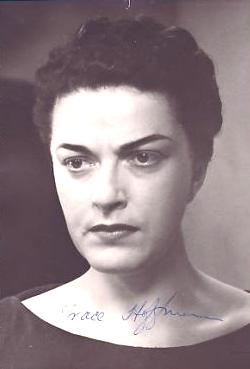
    The performance is very fine all around, opening with a thoroughly absorbing Norn Scene which begins with the richly expressive singing of contralto Elisabeth Schärtel (above) followed soon after by the equally impressive Grace Hoffman. It’s rather surprising to find Regine Crespin singing the Third Norn. She had made a huge success at Bayreuth in 1958 as Kundry, and had repeated that role at the next two festivals. In 1961 she was invited back to the Green Hill for Sieglinde, and thus she was able to take on the Norn as part of her summer engagement. She sings beautifully, with her distinctive timbre, though there is a trace of tension in her highest notes.

    317372_340994792689362_1142580761_n

    Above: Birgit Nilsson; we used to refer to her as “The Great White Goddess” or simply “The Big B”. The thrilling accuracy and power of her singing here, as well as her ability to create a character thru vocal means, is breath-taking.

    Hans Hopf is a fine match for Nilsson in the Dawn Duet; he is less persuasive later on when his singing seems a bit casual. Wilma Schmidt (Gutrune) and the always-excellent Thomas Stewart (Gunther) make vocally strong Gibichungs, and the great Wagnerian basso Gottlob Frick is a dark-toned Hagen with vivid sense of duplicity and menace. Rudolf Kempe again shows why he must be rated very high among the all-time great Wagner conductors: his sense of grandeur and ideal pacing set him in the highest echelon.

    ~~~~~~~~~~~~~~~~~~~~~~~~~~~~~~~~~~~~~~~~~~~~~~~~~~~~~~~~~~~~~~~~~~~~~~~~~~~~~~~~~~~~~~~~~~~ 

    Gerhard Stolze

    Gerhard Stolze (above) is the Loge in a RHEINGOLD from the Bayreuth Festival 1964; I have a special love for Mr. Stolze in this role as he was my first Loge – at The Met on February 22, 1968, a broadcast performance conducted by Herbert von Karajan and my first experience of a RING opera live. Here at Bayreuth, as later at The Met, Stolze brings a wonderfully debauched, almost greasy vocal quality to the vain, spoiled demi-god. The voice is large and effortlessly penetrating, but he can also be tremendously subtle: after screaming “Durch raub!’ (‘By theft!”) when Wotan asks Loge how the Rhinegold might be acquired, Stoltze goes all lyrical as he says: “What a thief stole may be stolen from the thief…” this is but one of Stotze’s countless brilliant passages in the course of his portrayal. At Nibelheim and later, as Loge taunts the captured Alberich, Stolze is simply superb.

    Two other singers who appeared in my Met/Karajan RHEINGOLD are also heard in this Bayreuth performance: Theo Adam has a big, burly voice and sings imposingly if not always with a lot of tonal allure. His Wotan builds steadily throughout the opera to an imposing rendering of Wotan’s greeting to Valhalla and the entire final scene. Zoltán Kelemen is a splendid Alberich; his handsome baritone sound sometimes shines thru in what is essentially a dramatic character role. Power and calculation mark his traversal of the first scene; later, in Nibelheim, Kelemen is wonderfully subtle. Having been tricked by Loge and kidnapped, he’s truly fabulous as he summons his slaves to bring the treasure up as ransom for his freedom. Later, having lost everything, his crushing sense of vulnerability gives way to a violent hurling of the curse at Wotan.

    Z Keleman

    Above: Zoltán Kelemen as Alberich

    Grace Hoffman is a capital Fricka, bringing verbal urgency and vocal attractiveness to her every line, most expressive as she draws Wotan back to her after Erda’s intervention. Jutta Meyfarth, a very interesting Sieglinde on the 1963 Bayreuth WALKURE conducted by Rudolf Kempe, is too stentorian and overpowering as Freia, a role which – for all its desperation – needs lyricism to really convince. Hans Hopf, ever a stalwart heldentenor, probably should not have tried Froh at this point in his career: he sounds too mature. Marcel Cordes is a muscular-sounding Donner; there is an enormous thunderclap to punctuate Donner’s “Heda! Hedo!”

    The estimable contralto Marga Höffgen brings a real sense of mystery to Erda’s warning. Gottlob Frick is a vocally impressive Fasolt, his scene of despair at giving up Freia is genuinely awesome. Peter Roth-Ehrang (Fafner) and Erich Klaus (Mime) are names quite unknown to me; the basso is a bit blustery but has the right feeling of loutishness. Herr Klaus is a first-class Mime, with his doleful singing in the Nibelheim scene giving way to a fine mix of dreamy dementia and raw power as he tells Loga and Wotan of his dwarvish despair. Barbara Holt as Woglinde plucks some high notes out of the air; Elisabeth Schwarzenberg and the excellent Sieglinde Wagner as her sister Rhinemaidens.
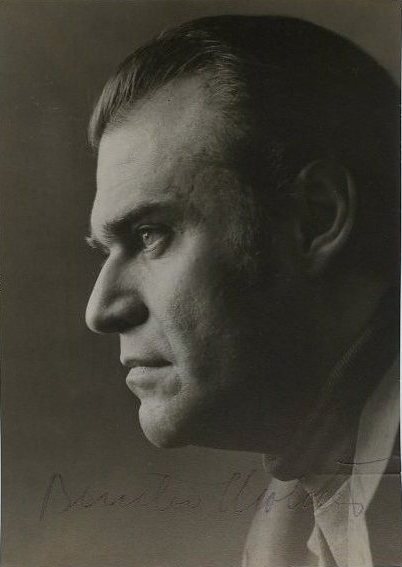
    Klobucar

    Berislav Klobucar (above), who conducted 21 Wagner performances at The Met in 1968 (including taking over WALKURE from Herbert von Karajan when the latter withdrew from his half-finished RING Cycle for The Met) opens this RHEINGOLD with a turbulent prelude. Klobucar has an excellent feel for the span of the opera, for the intimacy of the conversational scenes, and for the sheer splendour of the opera’s finale.

    ~~~~~~~~~~~~~~~~~~~~~~~~~~~~~~~~~~~~~~~~~~~~~~~~~~~~~~~~~~~~~~~~~~~~~~~~~~~~~~~~~~~~~~~~~~~

    1967-rheingold-salzburg-easter-festival-karajan-1967

    Above: a Günther Schneider-Siemssen design for the Herbert von Karajan Salzburg Festival production of the RING Cycle, 1967.

    Thinking of my Karajan/RHEINGOLD introduction to the RING at The Met in 1968 caused me to next take up the conductor-director’s complete WALKURE and GOTTERDAMMERUNG from the 1967 Salzburg Festival where his production of the Cycle originated. Of course, he only ended up conducting RHEINGOLD and WALKURE at The Met though the two remaining operas were staged there in his absence, with the productions credited to him. The settings remained in use at The Met thru 1981, and then the Otto Schenk production commenced in 1986.

    I must admit to never having listened to Karajan’s commercial RING Cycle (maybe a few random scenes but never any of the complete operas); it’s simply one of those inexplicable sins of omission which all opera lovers must eventually confess to. Maybe someday I will get around to it, though I’m so taken up with all these live RING recordings that Opera Depot keep tempting us with.

    At any rate, I must say I don’t much care for Karajan’s first act of WALKURE, at least not as it was performed at Salzburg in 1967. It feels to me terribly slow and overly polite. Gundula Janowitz and Jon Vickers seem much of the time to be vocally walking on eggshells: they whisper and croon gently to one another and the lifeblood seems to drain out of the music. Martti Talvela is his usual excellent self as Hunding; once he has gone to bed, Vickers commences a properly reflective sword monologue (the first orchestral interjection of the Sword motif ends on a cracked note). The tenor is stunning in his prolonged cries of “Wälse! Wälse!”, and then comes Janowitz’s ” Der Männer Sippe” which is verbally alert but there’s a slight tension in her upper notes and a feeling of being a bit over-parted. They sing very successfully thru the familiar “Winterstürme” and “Du bust der Lenz” all filled with attractive vocalism but Karajan maintains a rather stately pacing thru to end end of the act: there’s no impetus, no sense of being overwhelmed by sexual desire. Actually I found it all somewhat boring, and my mind tended to wander.

    A complete volte face for Act II, one of the finest renderings of this long and powerful act that I have ever encountered. Karajan launches the prelude, weaving together the various motifs, and Thomas Stewart unfurls Wotan’s opening lines commandingly. Regine Crespin’s sings a spirited “Ho-Jo-To-Ho!” and then Fricka arrives on the scene…
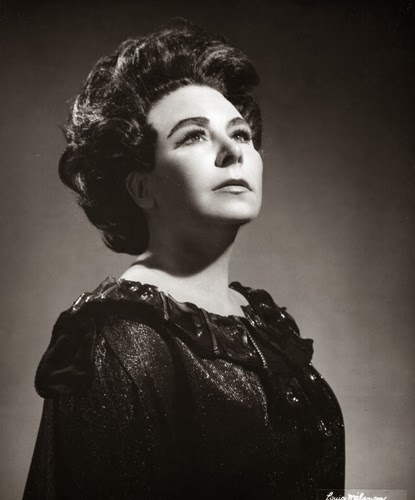
    16 Ludwig Fricka Walkure Melancon 1967

    …in the marvelous person of Christa Ludwig (Louis Melançon photo, above). When people ask me, “Who was the greatest singer you ever heard?” I invariably reply “Christa Ludwig” even though on a given day the memory of some other voice might seem to rival her. But in everything I have heard from her, both live and on recordings, Ludwig seems to have the ideal combination of a highly personal timbre, natural and effortless technical command, a remarkably even range, phenomenal abilities as a word-colorist, and overwhelming warmth and beauty of sound. Her Fricka here is magnificent in every way, and so supremely Christa

    6a00d8341c4e3853ef01901e20b373970b-800wi

    The scene between Fricka and Wotan is so impressive, yet incredibly Thomas Stewart (above, with Karajan) goes on to surpass himself with one of the most thrilling and spine-tingling renderings of Wotan’s monolog that I have ever experienced. Stewart vocally displays every nuance of the god’s emotional state as he confides in his daughter, first in his long ‘historical’ narrative which grumbles and whispers its way into our consciousness. Crespin is an ideal listener, her beauteously sung queries lead her father to divulge more and more. Soon Stewart is pouring out both his vanity and despair; the temperature is at the boiling point when he reaches “Das ende! Das ende!”, overcome by tears of anguish. Instructing Brunnhilde to honor Fricka’s cause and defend Hunding in the impending fight, Stewart crushes Crespin’s protests with a furiously yelled “Siegmund falle!” (“Siegmund must die! That is the Valkyrie’s task!”) and he storms away. I had to stop at this point; Stewart’s performance had both moved and shaken me and I wanted to pause and reflect.

    As beautifully as Crespin and Vickers sing the ‘Todesverkundigung’ (Annunciation of Death), the scene does not quite generate the mysterious atmosphere that I want to experience here. Thomas Stewart’s snarling “Geh!” as he send Hunding to his fate is a fabulous exclamation mark to end the act.

    Act III opens and there is some very erractic singing from the Valkyries in terms of pitch and verbal clarity. Crespin’s top betrays a sense of effort in her scene with Sieglinde, and Janowitz’s voice doesn’t really bloom in Sieglinde’s ecstatic cry ” O hehrstes Wunder!”  Thomas Stewart hurls bold vocal thunderbolts about as he lets his anger pour out on Brunnhilde and her sisters.

    And then at last the stage is cleared for the great father-daughter final scene. Crespin is at her very best here, singing mid-range for the most part and with some really exquisite, expressive piano passages. Only near the end, when the music takes her higher, does the tendency to flatness on the upper notes seem  to intrude. Stewart is impressive throughout. Karajan takes the scene a bit on the slow side, but it works quite well.

    It should be noted that the voice of the prompter sometimes is heard on this recording, especially in Act I.

    ~~~~~~~~~~~~~~~~~~~~~~~~~~~~~~~~~~~~~~~~~~~~~~~~~~~~~~~~~~~~~~~~~~~~~~~~~~~~~~~~~~~~~~~~~~~
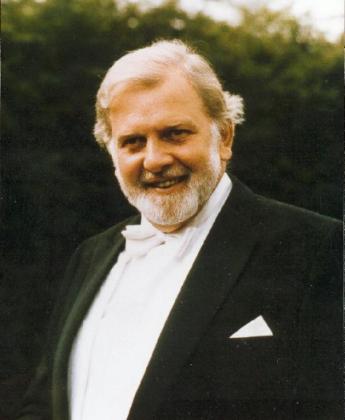
    Ridderbusch

    Above: Karl Ridderbusch, who sang Hagen in the 1967 Salzburg Festival RING Cycle.

    Herbert von Karajan’s GOTERDAMMERUNG, from the Salzburg Festival 1970, starts off with a very fine Norn Scene. Lili Chookasian – after a few warm-up measures – and Caterina Ligendza are authetically Wagnerian as the first and third sisters, with the resplendent Christa Ludwig luxuriously cast as the 2nd Norn. Her superb vocalism is marked by a great lieder-singer’s colourings of the text.

    Helga Dernesch and Jess Thomas give a sturdily-sung rendition of the Dawn duet. Though Dernesch’s highest notes seem somewhat tense, she does sustain a solid high-C at the duet’s conclusion. Karl Ridderbusch is a potent Hagen, able to bring out a softer grain to the tone when he wants to. His sound is somewhat baritonal, but he still hits the lowest notes with authority. Thomas Stewart is an outstanding Gunther, a role that often loses face as the opera progresses. Gundula Janowitz  is not my idea of a good Gutune: she sound mature and a bit tired.

    Christa Ludwig’s Waltraute is a performance of the highest calibre; her superb musicality wedded to her acute attentiveness to the words make this scene the highlight of the performance. Dernesch is good here also, but both she and Jess Thomas seem to flag a bit in vocal energy in the rape scene.

    Act II opens with another of my favorite RING scenes: Alberich (Zoltán Kelemen) appears to his son Hagen (Karl Ridderbusch). Kelemen, so musical in the 1964 Klobucar RHEINGOLD reviewed above, here resorts to sprechstimme and all manner of vocal ‘effects’: I wonder if this is what Karajan wanted, or is this simply what the baritone came up with. Ridderbush sings much of Hagen’s music here in an appropriately dreamy half-voice. A bit later he turns on the power with his “Hoi ho!”, summoning the vassals; the men’s chorus lung it lustily in response. Despite the continued feeling of effort behind Helga Dernesch’s high notes, she hits them and holds them fair and square. Jess Thomas sounds a bit tired as Siegfried; though he manages everything without any slip-ups, the voice just seems rather weary. Gundula Janowitz’s Gutrune is much better in Act II than earlier in Act I, and Thomas Stewart’s Gunther transforms what is sometimes viewed as a ‘secondary’ role into a major vocal force in this performance.

    I had high hopes for the opening scene of Act III: the Rhinemaidens – Liselotte Rebmann, Edda Moser, and Anna Reynolds are all fine singers. Yet they don’t quite achieve a pleasing blend. Jess Thomas sounds brassy and one keeps thinking he might have a vocal collapse, but he stays the course. It is left to Dernesch to be the performance’s saving grace and she nearly accomplishes it: the sense of vocal strain is successfully masked for the most part and she hits and sustains the high notes successfully though it’s clear she is happier singing lower down; she did in fact become a highly successful dramatic mezzo in time. Dernesch gives the Immolation Scene a tragic dimension, and then Karajan sweeps thru the long orchestral postlude with a sense of epic grandeur.

    Overall, Karajan’s GOTTERDAMMERUNG is impressive to hear. Were Helga Dernesch and Jess Thomas thoroughly at ease vocally the overall performance would have been quite spectacular. As it is, it’s Christa Ludwig, Thomas Stewart, and Karl Ridderbusch who make this a memorable Twilight of the Gods.

  • At Home With Wagner V

    Richard Wagner

    These days I hardly listen to anything but Wagner at home, and invariably it’s one of the RING Cycle operas. Thanks to my friend Dmitry I have a stack of CDs as yet un-listened-to. Today I’ve set out on a 1963 Bayreuth WALKURE, led with distinction by Rudolf Kempe, which starts with a truly urgent rendering of the ‘chase’ music that serves as the opera’s prelude. Although the sound quality is erratic, with some over-load and distortion, it’s certainly more than tolerable.

    Jutta_Mayfarth_Gutrune

    Pictured above, soprano Jutta Meyfarth – yet another ‘forgotten’ voice – may not have an ideally warm or expansive voice for Sieglinde’s music: her timbre is a bit hard. But she has a great way with words and she constantly is alert to the dramatic nuances of the music and words. I listened to the last scene of Act I, starting with Meyfarth’s whispered “Schläfst du Gast?”, several times, liking her more and more with each hearing. 

    Anita_iso

    The Finnish soprano Anita Välkki (above) tosses off one of the most brilliant renderings of “Ho-Jo-To-Ho!” that I ever heard. This under-rated soprano, her career overshadowed by the more famous Nilsson, Rysanek, Bjoner and Lindholm, has a bright and at times girlish vocal quality. In the Todesverkündigung” – the great scene in which Brunnhilde announces to Siegmund his imminent death – Välkki shows clarity of expression and considerable beauty of tone.

    Hoffman-Grace-08

    Mezzo-soprano Grace Hoffman (above) rounds out a strong trio of female leads in this WALKURE.  Her wide-ranging voice, her intense sense of Fricka’s wronged dignity, and her verbal and dynamic alertness make a capital effect.

    Hans Hotter was in his mid-fifties at the time of this performance, and he had been singing Wotan for a quarter-century. If vocally he is a bit less fresh than in the 1953 Keilberth/Bayreuth performance, he is remarkably authoritative and relishes both the powerful and subtle moments of this great role.  

    Hans Hotter was vehemently anti-Hitler and when he was queried during the de-Nazification interviews following the end of the war as to why Hitler would have kept his recordings in his private collection, Hotter replied that the Pope had some of them, too.

    Gottlob Frick again fills me with admiration here, singing Hunding. A somewhat less-than-stellar Siegmund – Fritz Uhl – still has his moments, but though I don’t pretend to speak German, some of his diction seemed rather odd.

    The third act is strong, with Meyfarth convincing in Sieglinde’s distress and Välkki doing some warm, espressive singing from “War es so schmälich…” to her final plea with her father to ring the Valkyrie Rock with fire. Hotter is Wotan – yet again – with the power of his wrath slowly subsiding into the tenderness of a father bidding farewell to his beloved child. Perhaps no other singer has such an innate quality of heartbreak in the voice.

    ~~~~~~~~~~~~~~~~~~~~~~~~~~~~~~~~~~~~~~~~~~~~~~~~~~~~~~~~~~~~~~~~~~~~~~~~~~~~~~~~~~~~~~~~~~~~~~~~~

    KONIECZNY_web Lang_Petra

    Above:
    Tomasz Konieczny and Petra Lang

    The Polish bass-baritone Tomasz Konieczny made a magnificent vocal impression when he sang Jochanaan in Strauss’s SALOME in a concert performance by the Vienna State Opera at Carnegie Hall in March 2014. Konieczny is the Wotan in the recently released WALKURE on the Penta Tone label, part of a complete RING Cycle conducted by Marek Janowski and recorded in a series of live concert performances in Berlin starting in 2012.

    Very curious to hear Konieczny’s voice again, but not wanting to delve into the full WALKURE until I’d first had a chance to hear the RHEINGOLD, I listened to the final scene of the WALKURE as a free-standing excerpt. The bass-baritone sings powerfully and is a vibrant, dramatic presence especially as he takes his errant daughter Brunnhilde to task for having disobeyed his direct orders. Konieczny is quite splendid while letting off steam, though the poetry of the later scene where his bids farewell to Brunnhilde and puts her to sleep on the Valkyrie Rock is not quite yet in the singer’s expressive realm. He will doubtless attain that depth of understanding and an ability to communicate it as he sings the role in coming years. Marek Janowski’s conducting is alert and vivid, and Petra Lang – who has given some striking performances as a mezzo-soprano – now sings Brunnhilde. And if she does not seem destined to achieve the exalted echelon occupied by such great Wangeriennes as Nilsson, Behrens and Dame Gwyneth, Lang nonetheless makes a wonderful impression is her moving rendering of “War es so schmählich…” and is perfectly satisfying in the rest of the act.

    **********************************************************************************************************************************

    I acquired the first two acts of a Stockholm WALKURE from 1975 mainly to hear Barbro Ericson’s Fricka and to have a sampling of another voice that had eluded me til now: soprano  Siv Wennberg. Rudolf Kempe’s conducting again seems ideal. 

    Kempe has this music in his blood and gives yet another great reading of the score. Ms. Ericson, one errant top note aside, is a passionate and exciting Fricka. Neither Ms. Wennberg nor her Siegmund, Helge Brilioth, are likely to displace other favorite interpreters of these roles in the Völsungen sweepstakes, but both are very good story-tellers. Thru dynamic and verbal shadings, the soprano gives us quite an intriguing “Der Männer Sippe“, and – earlier – the tenor does likewise as he tells the story of how he came to be under Hunding’s roof. Mr. Brilioth will later have some pitch issues, and his cries of “Wälse!’ Wälse!’” suffer from very bad audio overload. Ms. Wennberg holds steady throughout the first two acts.

    As Brunnhilde, Berit Lindholm lauches a pert, eager “Ho-Jo-To-Ho“, and she makes a good impression in the Todesverkundigung: the very heart of the opera. David Ward, whose Wotan I so thoroughly enjoyed in the 1965 Covent Garden performance conducted by Solti, is understandably a bit less fresh vocally here in Stockholm ten years on, but he is still very impressive and expressive in his long monolog (so well-supportedby Kempe) and he gives a violently dismissive “Geh!” as he dispatches Hunding to his fate at the very end of Act II.

    R_Cederlof_Hunding

    The most surprising aspect of this performance is a superbly sung Hunding from basso Rolf Cederlöf (above). This is a voice I’d never heard before, and even as a name he was unknown to me. It’s a beautiful, deep, voluminous sound, and from his entrance the vocal ‘temperature’ of the first act rises: he seems to inspire Wennberg and Brilioth in their narratives…and in turn they are all inspired by Kempe.

    ~~~~~~~~~~~~~~~~~~~~~~~~~~~~~~~~~~~~~~~~~~~~~~~~~~~~~~~~~~~~~~~~~~~~~~~~~~~~~~~~~~~~~~~~~~~

    Bampton-glam-701475

    Continuing in WALKURE mode, I recently took from the library the 1947 discs of Toscanini rehearsing the first act of the opera for a concert perfomance. This issue is a favorite among collectors as it gives an aural portrait of the fiery conductor at work. The Sieglinde is Rose Bampton (above) and I was very much taken with her interpretation. Wanting to hear more of Bampton, I turned to a 1944 Met broadcast of WALKURE conducted by George Szell. This seventy-year-old performance begins with a breathlessly-paced prelude depicting Siegmund’s rush thru the forest; Szell brings the first act full circle with an equally speedy burst of energy in the postlude as brother and sister rush off to their unknown fate. 

    Lauritz Melchior, that tireless Wagner-machine, is Siegmund. The paragon of heldentenors, Melchior sang over 500 performances at The Met alone; his career there lasted nearly a quarter-century (debut in 1926). Like Toscanini – who keeps admonishing the orchestra players “piano! piano!” during the rehearsal – Szell draws out some remarkably intimate passages from both musicians and singers in Act I. Melchior is able to sing some beautifully supported piano passages, and also to cut loose with sustained powerhouse cries of “Wälse! Wälse!“. Alexander Kipnis growls darkly as an authoritative Hunding.

    Ms. Bampton’s singing sets her firmly alongside my favorite Sieglinde of all time: Johanna Meier. Bampton shares with Ms. Meier a deeply feminine sensibility as well as a feeling of great dignity, despite the hardships she has endured: married off against her will, and ill-treated by her abusive husband. Bampton’s wonderfully vivid diction, her ability to move the voice from subtle inflection to generous outpouring in the twinkling of an eye, and the overall appeal of her sound make for a winning combination in this role.

    One added sonic element is the subtle use of a wind machine during the prelude; and it cunningly is heard again when the doors to Hunding’s hut blow open just before the “Winterstürme”.

    K-Szell-w-manuscript-LR1

    I found myself being drawn deeper and deeper into this performance as Act II unfolded. Szell (above) seems, perhaps more than any other conductor I’ve experienced in the opera, to summon forth the various leitfmotifs and weave them ideally into the sonic tapestry. Thus the introduction to Act II presents the brass heralding the impending presence of Wotan and Brunnhilde whilst the strings yearningly deliver the theme of Sieglinde’s “Du bist der Lenz” (in a minor key) forecasting the theme of the entire act: the fate of the Völsung and his sister/bride; later, as Wotan and Fricka heatedly debate the issue, Szell brilliantly manages to support both sides of their argument thru orchestral underlining.

    07 Traubel in Walkure 1941

    Helen Traubel’s Brunnhilde (above) rings true with rich, warm tone: a lone clapper greets her appearance – a few other audience members gingerly join in (applause during a Wagner opera is pretty much frowned upon) – and she has a fine success with “Ho-Jo-To-Ho” despite a hint of shortness at the top of the range. The sound of her voice at times reminds me, curiously, of Eleanor Steber’s.

    Herbert Janssen’s Wotan is of the baritonal rather than basso persuasion: some of the roles lower notes are a bit of stretch for him. But he’s so completely at home in the role both verbally and vocally that it doesn’t matter. It’s not one of those grandiose Wagnerian voices, but has instead a dimension of the humanity that will eventually be the god’s undoing. Wotan’s monolog has some internal cuts, but Janssen sings it impressively and Traubel’s interjections are beautifully rendered.

    Thorborgfricka

    Kerstin Thorborg’s imperial Fricka (above) is vocally opulent, and she deals from strength in her confrontation with Wotan, thoroughly dismantling his every argument as their scene progresses; a wonderfully sung Wagnerian exchange by two seasoned interpreters. Melchior and Bampton arrive at the mountain pass, fleeing from Hunding. Their scene is vividly urgent and again Szell and his orchestra continually project the dramatic situation; Melchior’s Siegmund is finally able to calm his desparate sister-bride, setting the stage for the heart of the opera: the ‘Todesverkündigung’ (the Annunciation of Death).

    The Todesverkündigung is my favorite scene of WALKURE and my initial reaction on listening to the scene in this performance was of a slight letdown from all that had gone before. Szell and his orchestra did not seem to evoke the dreamlike quality needed (and there are a few bad notes among the brass players) and Melchior’s singing seemed factual and lacking in reverence to the demi-goddess who has appeared before him. I played the scene again a few hours later and found it far more impressive, especially as Traubel is so tonally secure and noble-sounding – at least until her cold façade begins to crumble in the face of Siegmund’s queries and his growing bitterness towards the deception he has been dealt. When the warrior tells Brunnhilde that he carries an invincible sword – Nothung – the Valkyrie replies: “He who bestowed it sends thee now death: for the spell he now takes from the sword!” her warning ricochets back at her when Siegmund cries: “This sword, given by a false man to a true one…!” The atmosphere is palpable, the scene as heart-breakingly beautiful as ever.

    The end of the second act in this performance is somewhat undermined by the voices of Hunding, Brunnhilde and Wotan being too far off-mike to make the needed impact.

    The third act opens with an exciting Ride of the Valkyries and an emotional rendering of the scene where Brunnhilde tells Sieglinde that Siegmund’s death was not in vain: she presents the unhappy widow with the pieces of the shattered Nothung and declares that Sieglinde, miraculously pregnant after only meeting her husband one day earlier, will give birth to the greatest of heroes: Siegfried. Mmes. Traubel and Bampton are very dramatically involved here, and both sing very well. 

    Traubel remains steady and impressive throughout the final scene with Herbert Janssen; the baritone’s voice has a steady beat to the tone – a kind of slow tremelo – that gives his singing of the opera’s heart-rending farewell of Wotan to his favorite daughter a wonderfully human dimension.

    Harshaw

    Among  the Valkyries, the name Margaret Harshaw (above) stands out. She is Schwertleite here, as she was on many a Met evening over the years. In 1949 she moved on to Fricka and in 1954 she took on Sieglinde for the first time. And later in 1954 she assumed the role of Brunnhilde. It was in this last-named role that Harshaw sang in a Met WALKURE for the last time, in 1962. She took over the opera’s title-role that night in place of an ailing Birgit Nilsson. It was quite a night, as this descriptive review attests:

    Soprano Birgit Nilsson, scheduled to sing the role of Brünnhilde, had to bow out the evening before the performance. General Manager Rudolf Bing gave the role to soprano Margaret Harshaw, who was to have sung Sieglinde; into the Sieglinde role went soprano Gladys Kuchta. One of the Valkyries, mezzo Gladys Kriese, was ill with tracheitis: her part went to mezzo Ethel Greene, regularly a member of the chorus.
    Somehow, the opera got started on time. But in Act II, just when baritone Otto Edelmann seemed to be booming along comfortably in the role of Wotan, his voice began to fail. Edelmann withdrew at the end of Act II. He was replaced by baritone Randolph Symonette, who lasted on stage for only four minutes. 'It seemed to me like four hours,' said shaken conductor Erich Leinsdorf, later. It was apparent to Leinsdorf that Symonette 'could not get any music out of his throat.' When Symonette finally croaked out the line 'Aus meinem Angesicht bist du verbannt'('From my presence you are banished'), Leinsdorf ordered the curtain rung down.

    Conductor Leinsdorf started again after a jump of ten pages in the score to cut out some of the more tortuous vocal passages, and baritone Edelmann came on again as Wotan, in brighter voice after his rest. Happily, they all made it to the final curtain.

    "I felt like the pilot who decides on a crash landing," said Leinsdorf. "We made it without the plane going up in flames."