Renata Scotto and Jose Carreras sing the love duet from Act I of Puccini’s MADAMA BUTTERFLY from a live performance given at San Francisco in 1974.
Tag: San Francisco
-
Lucine Amara Has Passed Away

Above: Lucine Amara as Aida; she signed the photo for me after a Met performance of PAGLIACCI
The death of soprano Lucine Amara at the age of 99 has been announced. A native of Hartford, Connecticut, Ms. Amara was raised in San Francisco and sang with the San Francisco Opera chorus from 1944-1946; she made her professional concert debut in 1946.
She made her Metropolitan Opera debut on November 6, 1950, as the Celestial Voice in Verdi’s DON CARLO, a performance that marked the start of Sir Rudolf Bing’s tenure as General Manager of The Met. From that date thru 1991, Ms. Amara sang 750 performances with The Met in New York City and on tour.
The soprano’s vast repertoire included Wellgunde in the RING Cycle, Pamina, Liu, Nedda, Antonia in TALES OF HOFFMAN, both the Verdi Leonoras, Aida, Micaela, Contessa Almaviva, Eva in MEISTERSINGER, Alice Ford, Maddalena (and later, Madelon) in ANDREA CHENIER, Cio-Cio-San, Elsa in LOHENGRIN, Mimi, Donna Elvira, Amelia in BALLO IN MASCHERA, Tchaikovsky’s Tatyana, Ellen Orford, Tosca, Marguerite in FAUST, Fiordiligi, Luisa Miller, Mother Marie in DIALOGUES OF THE CARMELITES, Gertrude in HANSEL AND GRETEL, and Mascagni’s Santuzza.

My first experience of hearing Lucine Amara live was at the Old Met as Liu in TURANDOT in 1965. She sang gorgeously, with a lovely sense of lyricism and some finely-spun pianissimi. I met her after the performance (my only backstage visit at the Old House), and she was very happy to meet a young – but already very keen – opera enthusiast. (I was 16 at the time…)
In the ensuing seasons at the New Met, I enjoyed Lucine’s Aida, Nedda, TROVATORE Leonora, and Cio-Cio-San. On April 22nd, 1972, she returned to her Met debut role as the Celestial Voice in DON CARLO to mark the final matinee broadcast of the Bing Era, which I attended. That evening, she sang the LOMBARDI trio at the Bing farewell gala. Her final Met appearance was as Madelon in 1991.
The soprano left us some very fine recordings: the Verdi REQUIEM conducted by Eugene Ormandy, Musetta in the classic Beecham BOHEME, Nedda in PAGLIIACCI with Franco Corelli, and Elsa in LOHENGRIN under the baton of Erich Leinsdorf.
Here some samplings of Lucine Amara’s singing:
As the TROVATORE Leonora:
Lucine Amara – TROVATORE aria – Met 6~3~71
Tatyana’s Letter Scene (in English) from EUGENE ONEGIN:
Lucine Amara – Tatyana’s Letter Scene ~ ONEGIN – in English – Met 1957
Duet from LA GIOCONDA from The Met’s 100th anniversary gala in 1983, with Bianca Berini:
Lucine Amara & Bianca Berini – GIOCONDA ~ duet – Met Gala 1983
And from her commercial recording of the Verdi REQUIEM:
Lucine Amara – Requiem aeternam ~ Verdi REQUIEM
Watch a video of the final scene of PAGLIACCI with Lucine and Richard Tucker from the Bell Telephone Hour, with Donald Voorhees conducting, here.
One afternoon, while working in the opera room at Tower Records, I was playing the Leinsdorf LOHENGRIN on the overhead speakers. Four rather boisterous opera fans from Munich, who were in town for some Met performances, came in and were browsing the shelves while chatting away. As Lucine’s voice commenced Elsa’s ‘dream’ aria, the four fell silent. They stood listening as if under a spell. Then one of them came over to me and asked: “Who is this soprano?” They’d never heard of Lucine Amara. I told them of her Met career and her extensive repertoire. “This is a perfect Elsa voice! If we had had this singer in Europe, she would have been highly esteemed. It’s a heavenly sound.”
In the months that followed, I kept hoping Lucine might come in the store so I could tell her this story. But I never got the chance.
-
Fedora Barbieri ~ “Mon coeur souvre a ta voix”
Fedora Barbieri sings Dalila’s “Mon coeur souvre a ta voix” at a concert given in 1952 at the War Memorial Opera House in San Francisco.
Listen here.
-
Fedora Barbieri ~ “Mon coeur souvre a ta voix”

Fedora Barbieri sings Dalila’s “Mon coeur souvre a ta voix” at a concert given in 1952 at the War Memorial Opera House in San Francisco.
Listen here.
-
Teresa Zylis-Gara Has Passed Away
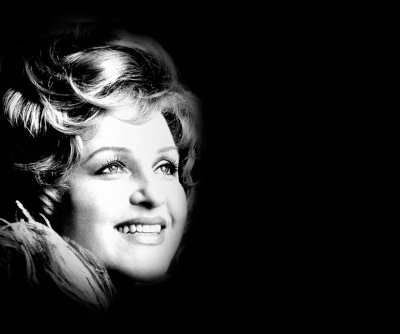
Teresa Zylis-Gara, the Polish soprano who possessed one of the most beautiful voices of my experience, has passed away at the age of 91. From 1968 to 1984, she sang nearly 250 performances with the Metropolitan Opera at Lincoln Center and on tour; I had the good fortune to see her in several roles, and to hear her on a number of live radio broadcasts.
Ms. Zylis-Gara studied at Łódź, and in 1954 won first prize in the Polish Young Vocalists Contest at Warsaw. This led to her operatic debut in 1956. From 1960-1970, the soprano was based in Germany where she sang at Oberhauser, Dortmund, Frankfurt, Frankfurt, Hamburg, Cologne, Munich, and Berlin. She also appeared at Vienna, Glyndebourne, Paris, London, Salzburg, and San Francisco.
ln 1968, Ms. Zylis-Gara made her Metropolitan Opera debut as Donna Elvira; she sang there frequently over the next several seasons. I first saw her as Violetta in TRAVIATA where she made a lovely impression, though hindered by inferior cast-mates and lacklustre conducting. Thereafter, I saw her as Donna Elvira, Elisabeth in TANNHAUSER, Amelia in BALLO IN MASCHERA, Manon Lescaut, Leonora in TROVATORE, Cio-Cio-San, and as Adriana Lecouvreur. In each of these roles, her creamy voice and ultra-feminine persona made a memorable impression.

Above: Teresa Zylis-Gara as Desdemona; photo by Louis Mélançon
Among the roles in which I missed seeing her onstage but greatly enjoyed her singing of on broadcasts included Desdemona (in a new production with James McCracken in the title-role, conducted by Karl Böhm), Mozart’s Pamina and Contessa Almaviva, Marguerite in FAUST, Puccini’s Suor Angelca, Mimi, and Liu, Elsa in LOHENGRIN and – most movingly – as Tatyana in ONEGIN and as the Marschallin.

While I was living in Hartford, Ms. Zylis-Gara came up from New York City to the Bushnell to sing Tosca. Inferior conducting almost ruined the performance, but her singing was luminous.
Leaving The Met in 1984, the soprano settled in Monte Carlo and continued to sing on the Continent, where she took on roles like Maddalena in CHENIER, Ariadne, Sieglinde, and Chrysothemis which had not been offered to her at The Met.
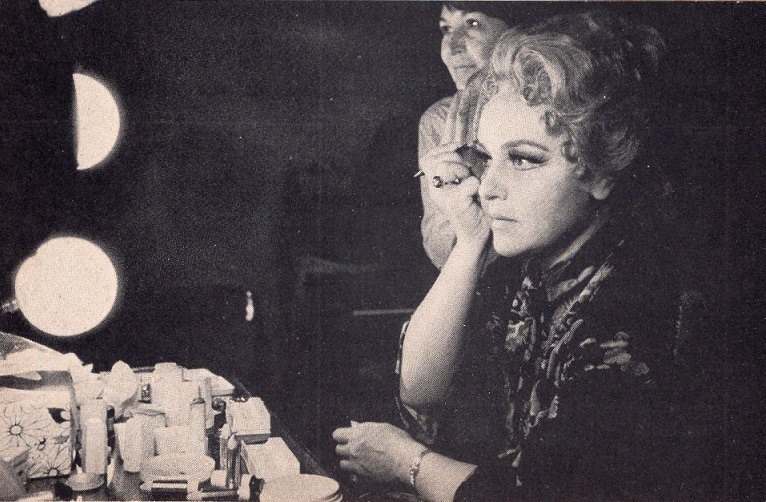
Above: getting ready…I love this photo!
I remember listening to Zylis-Gara’s Four Last Songs for the first time, and thinking: this is perfection. And when the music ended, there was applause; this was recorded live. For me, no other version of these beloved songs compares.

I’ve reached that inevitable point in my life when the great singers who fanned the flames of my passion for opera are passing away, one by one. Thinking of Teresa Zylis Gara, I recall with special affection seeing her in the title-role of Cilea’s ADRIANA LECOUVREUR at a matinee performance given on the Met’s 1983 tour in Boston. It was to be the last time I saw her onstage. And it was a marvelous afternoon, with the soprano and her colleagues all singing divinely: Neil Shicoff as Maurizio, Bianca Berini as the Princesse de Bouillon, and Sesto Bruscantini as Michonnet. For all the glorious sounds that filled the hall that day, nothing sent such a thrill thru me as Zylis-Gara’s gossamer pianissimo on the phrase: “La promessa terrò …” when Adriana vows to save her rival from humiliation in the opera’s second act. It’s of such moments that the fabric of dreams are woven.
~ Oberon
-
Julius Huehn

Born at Revere, Massachusetts in 1904, bass-baritone Julius Huehn’s career centered at the Metropolitan Opera, where he sang over 225 performances with the Company in New York City and on tour. He also appeared with the opera companies of San Francisco, Chicago, and Philadelphia.
His Met debut took place in 1935, as the Herald in LOHENGRIN. His Met roles included Wagner’s Wotan/The Wanderer, Donner, Gunther, Wolfram, Amfortas, Kothner, Kurvenal, and Telramund; Strauss’s Orestes, Jochanaan, and Faninal; Pizarro in FIDELIO, Escamillo, Sharpless, and the High Priest in SAMSON ET DALILA.
Huehn left the Met in 1944 to serve in the Marine Corps during the final year of World War II. He returned in 1946 for a single performance as Wolfram. He subsequently taught at the Eastman School for many years, and passed away at Rochester, New York, in 1971.
Julius Huehn as Kurvenal, with Lauritz Melchior:
Julius Huehn & Lauritz Melchior – TRISTAN UND ISOLDE ~ scene from Act III
Listen to Julius Huehn sing Wotan’s Farewell from WALKURE here, and the duet of Telramund and Ortrud (with Kerstin Thorborg) from the opening of Act II of LOHENGRIN here.
-
Tatiana Troyanos as Giulio Cesare
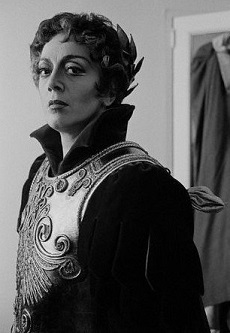
Tatiana Troyanos ~ GIULIO CESARE arias – San Francisco 1982 – in English
I wonder: has any other singer in the history of opera sung both the title-role and Cleopatra in Handel’s masterpiece?
-
Isadora Rediscovered
Isadora Duncan (above, in 1908) is a legendary name in the world of dance. Born in San Francisco in 1877, Isadora moved to Paris in 1900 where she taught a style of dance freed from the constraints of classical ballet technique. She also performed, and her reputation for dancing to classical music wearing a Grecian tunic in her bare feet and with hair down made her a celebrity.
In her private life, Duncan’s affair with Paris Singer (of the sewing-machine Singers), her tempestuous marriage to poet Sergei Yesenin and an affair with the poetess Mercedes de Acosta (as well as a rumoured dalliance with Eleanora Duse) were manifestations of her free-thinking lifestyle. She embraced Communism; she gave birth to three children out of wedlock, though none survived her.
Fatal accidents plagued Isadora to the end: her father died in the sinking of the SS Mohegan in 1898 and her two young children were killed in a bizarre accident in Paris in 1913 when a car in which they were sitting with their nanny rolled into the Seine. Duncan met her own death in an equally strange manner: riding in an open car, her long scarf became entangled in the rear wheel and she was strangled.
People today may be familiar with the tragedies of Duncan’s life and of her pioneering work as a dancer but: what were her dances actually like? The group IsadoraNOW under the direction of Elyssa Dru Rosenberg have invited us to a rehearsal on Halloween evening. Watch a brief video here of dancers from IsadoraNOW performing, and there’s a lovely gallery of photos of the Company here. I’m very much anticipating this experience.


 Oberon's Glade