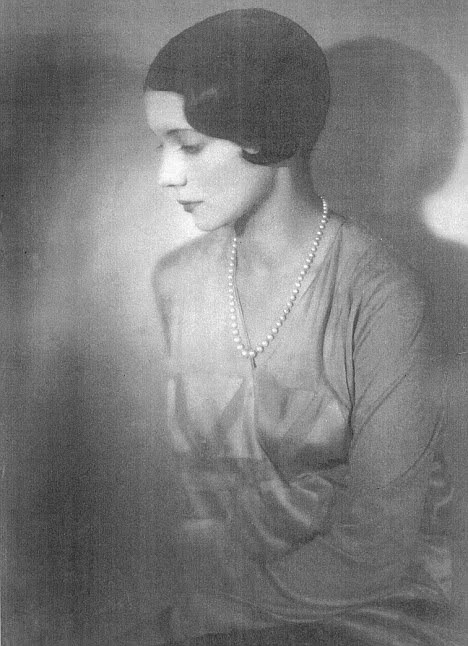
In the film WHITE MISCHIEF – which I have watched a good two dozen times since I first saw it at the cinema in 1987 – the character of Alice de Janzé (above) is played by the English actress Sarah Miles. The film revolves around the still-unsolved murder – in Kenya in 1941 – of Josslyn Victor Hay, 22nd Earl of Erroll.
Lord Erroll was a notorious womanizer and a major player in the Happy Valley crowd – a group of wealthy British ex-pats who came to Africa prior to the start of the second World War and lived as gentlemen farmers: drinking, hunting, playing polo and sleeping with other men’s wives.
During the night of January 24,1941 Joss Erroll was killed by a shot to the head fired by an unknown assailant who had flagged down the Earl’s Buick on the Nairobi-Ngong Road. The car with his Lordship’s body slumped on the floor was found at dawn, stalled in a ditch with its headlights still on.
Suspicion fell on Sir Jock Delves Broughton with whose wife Diana the Earl of Erroll has been carying on a very public and high-profile affair. Sir Jock stood trial for the murder but the case against him was weakened by several factors: he was known to have passed out drunk on the night of the murder, and his physical infirmities (night blindness and a limp caused by an old injury) seemed to preclude the notion that he had walked the two miles from his villa to the murder site (and back home) in the darkness of the African night.
Alice de Janzé was in the courtroom every day of the proceedings. She has been having an off-again-on-again affair with Joss Erroll for a long time and was thought to be deeply in love with him. She was known to have been jealous of Joss’s involvement with Diana Delves Broughton.
In the film, when the case against Sir Jock seems to be unraveling, Jock’s lawyer points to Alice – seated in the gallery – and alludes to the fact that she should in fact be on trial, having both motive and opportunity, as well as a weapon to carry out the crime.
“Has the Countess de Janzé been eliminated as a suspect?” the judge asks the prosecutor.
“She has, your Honor.”
“On what grounds?”
“On the grounds that she was in bed with a gentleman at the time.”
To which Ms. Miles as Alice pipes up: “But we weren’t doing anything!”
The jury acquitted Sir Jock of the murder of his friend the Earl of Erroll; but suspicion clung to him and a year later – his life complicated by financial woes – he committed suicide. The other prospective suspect in the Erroll murder, Alice de Janzé, went on for a few months with her eccentric life; then she too killed herself with a self-inflicted gunshot on September 30th, 1941, shortly after having turned 42 and facing a diagnosis of uterine cancer.
In view of all this, Paul Spicer’s biography of Alice de Janzé, entitled The Temptress, was a fascinating read for me. Alice, an American, became a French aristocrat in 1921 when she married Count Frederic de Janzé. The couple had two daughters – to whom Alice could not relate and turned their upbringing over to an aunt and various governesses – and they lived for a while in Paris before moving to Kenya where Alice was absorbed into Happy Valley set. She met and lunched with Karen Blixen, known by her pen-name Isak Dinesen, perhaps the most famous landowner in Kenya at the time and the subject of the film OUT OF AFRICA.
In 1926 the Count and Countess returned to Paris in an effort to save their marriage following much excessive behavior on Alice’s part in Kenya. But Alice then took up with Raymund de Trafford, with whom she had already started an affair in Kenya, and as this romance became increasingly intense, her husband the Count de Janzé quietly filed for divorce.
On March 25th, 1927, de Trafford informed Alice that their hoped-for marriage would not be possible: he stood to be disinherited if he married her, his family finding Alice not up to their standards. He was being summoned back to London immediately, and Alice went with him to the Gare du Nord to say farewell. As the couple embraced in the train compartment, Alice pulled out a small revolver and shot de Trafford and then herself. They both survived; Alice stood trial, and her shooting of her lover was eventually determined to have been an attempt at suicide gone awry. She had spent time in a mental hospital as she recovered from her gunshot wound; she received a suspended sentence of six months and paid a fine of 100 francs as penance for her crime of passion.

Above: Alice de Janzé at her trial
Incredibly, de Trafford did finally marry Alice in 1932 but the marriage quickly soured. In 1937, following their divorce, Alice resumed her life in Kenya, now heavily addicted to drugs. The Erroll murder and ensuing trial were to comprise the final chapter of her life.
Visiting the morgue where Joss Erroll’s body was laid out, Alice was said to have kissed his lips and said “Now you are mine forever!” In the film WHITE MISCHIEF, this scene takes on a far more graphic, sexual tone.
In THE TEMPTRESS, Paul Spicer is able to convince us that Alice de Janzé was the real murderer of Joss Erroll. She had the motive of jealousy, was known to be capable of shooting someone she loved, and she knew where Joss would be on that fateful night. A set of tire tracks indicating a vehicle heading up the Nairobi road away from the murder scene – and in the direction of Alice’s home – were never thoroughly investigated. The contents of Alice’s suicide notes were never revealed, though the author feels they likely contained a confession.
Alice de Janzé was buried by the river that ran thru her property at Wanjohi Farm in Kenya. Her grave was unmarked to prevent possible looting by the native Kikuyu.
 Oberon's Glade