Tag: Saturday April

  • Mozart & Bartók @ The NY Philharmonic

    Week32-BrandonPatoc_0059

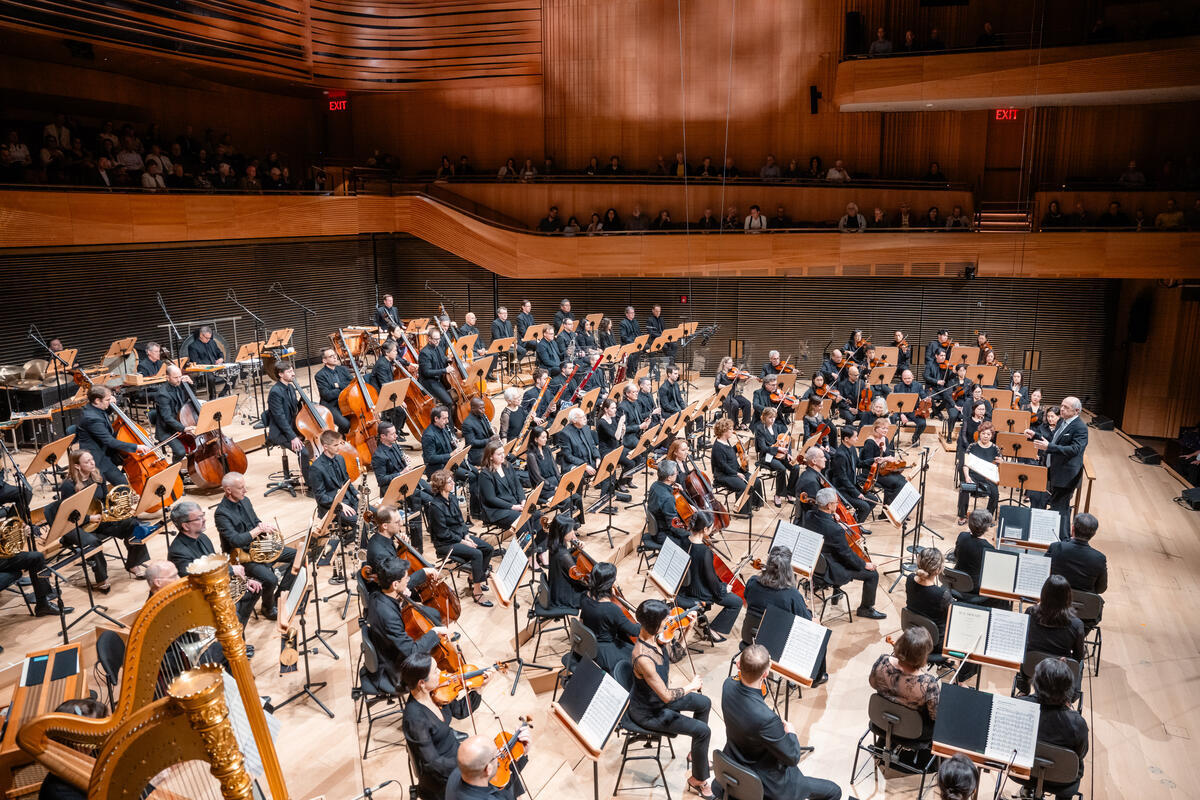
    Above: performance photo by Brandon Patoc

    ~ Author: Mark Anthony Martinez II

    Saturday April 26th, 2025 – The New York Philharmonic played a fantastically curated concert of Mozart and Bartók. Although the throughline of the pieces isn’t immediately apparent, the pairing of Mozart at his most theatrical — with the Magic Flute Overture and his Fifth Violin Concerto — with Bartók’s The Wooden Prince, originally written as music for a ballet, made for a fantastic night of music.

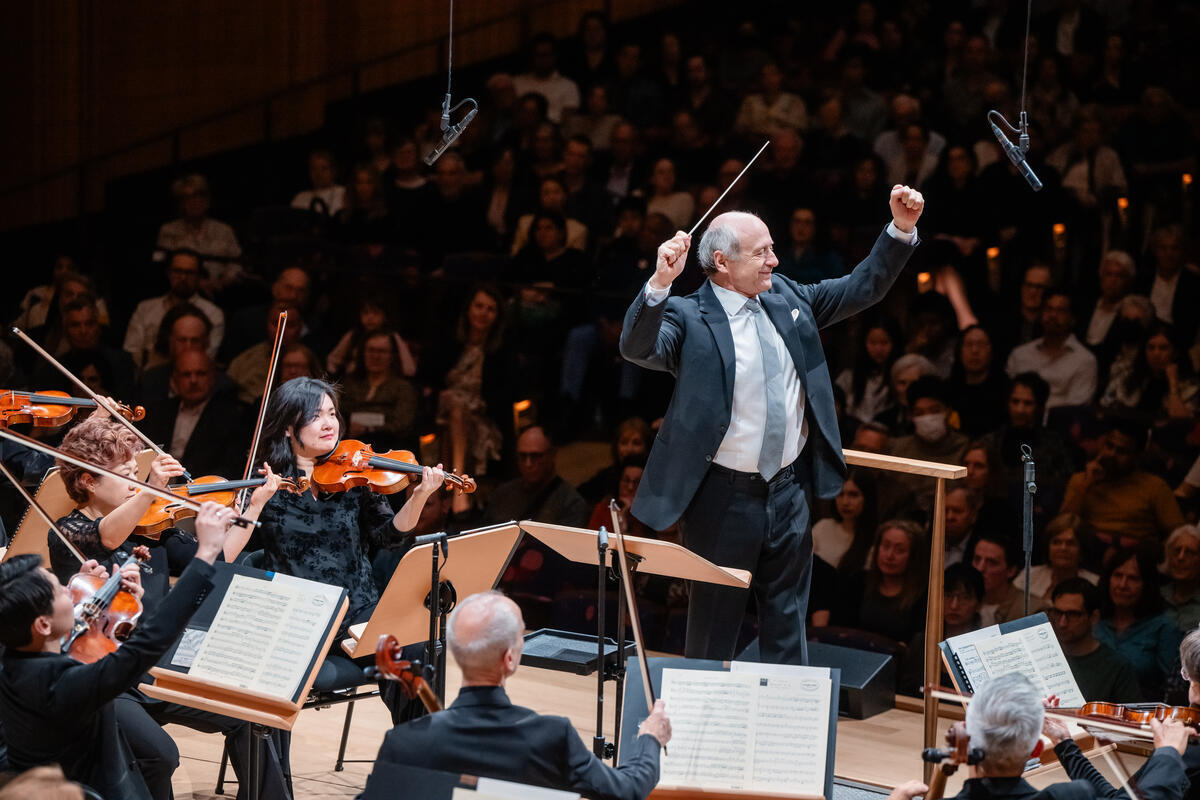
    The guest conductor was Iván Fischer, and he conducted marvelously: at ease in the music while simultaneously seeming to really have fun. Maestro Fischer appeared to conduct The Magic Flute Overture from memory at the podium, moving through the different sections of the piece with wide arm gestures.

    I had just recently seen The Magic Flute at the Metropolitan Opera the week before, so the piece was still fresh in my memory. Something very interesting was that, when I heard it that night at the Philharmonic, the overture seemed more like a symphonic suite than an overture to a stage play. It seemed more related to Mozart’s Jupiter Symphony somehow in this moment, rather than the opening to Così fan tutte. The music was played perfectly, with every dynamic crystal clear in execution. Maybe it was the perfection of how the piece was played that made it seem more symphonic and less like a piece written for the stage, where inevitably something new happens every night.
    Week32-BrandonPatoc_0013

    I particularly liked the restraint that Maestro Fischer (above, photo by Brandon Patoc) showed in the moments of the overture where silence mattered more than sound, such as the callback to the brass opening punctuated with long rests. The rests seemed longer than usual, but the impact was memorable because of it.

    The audience gave a very warm and deserved applause, after which the orchestra reduced in size to prepare for the violin concerto.

    Lisa b

    The soloist, Lisa Batiashvili (above), came out in a very memorable bright yellow dress with a baby blue sash around her waist. Normally, I don’t notice what soloists wear in performances, but this outfit seemed too intentional, almost as if it were making a statement. I thought that the color scheme seemed coincidentally similar to the Ukrainian flag until I saw a giant brooch of the U.S. Stars and Stripes cinching the sash onto her. So whatever the intent was, I’m sure it meant something to those more sartorially inclined.

    Batiashvili played the Mozart with clear familiarity with the style and music. Normally, I feel soloists tend to lean into the fiery, show-stopping nature of concertos, but Batiashvili tended toward austerity and restraint in her playing for the first two movements. The piece was played in a way that seemed courtly: certainly pleasant, but not too forward to draw attention to itself. Things changed when Batiashvili reached the cadenza of the first movement. The cadenza started out seeming to be in a Mozartian style, then veered into the chromatic and atonal. It wasn’t bad by any means, and certainly showcased Batiashvili’s virtuosity. It was just surprising to hear something so very non-classical in such a quintessentially classical piece. I read the program afterwards and saw that the cadenza was composed by a 15-year-old Georgian composer named Tsotne Zedginidze, which made quite a lot of sense in hindsight.

    I quite enjoyed the unconventional cadenza because it made me look forward to hearing the other cadenzas, which were also newly composed, one of them by the soloist herself. The other cadenzas were more traditional in nature though, which maybe was a good pairing with the one anachronistic one.

    The third movement was where Batiashvili took off and seemed to have the typical soloist verve. I had never heard the finale of this concerto before, and I loved the effects that gave the whole piece the moniker of “Turkish.” The sections where Batiashvili played the more exotic melody and the strings played col legno seemed like a vision into the future of where classical music would head with early Romanticism. The sections sounded more like Mendelssohn in one of his symphonic overtures rather than Mozart, and I was thrilled to hear it.

    After the concerto, Batiashvili gave several curtain calls, and it seemed like there was going to be an encore, but in the end, one didn’t come.

    Before the concert began, I overheard some audience members chatting and wondering why the screen normally used for super-titles for lyrics was open. Another audience member joked that it was just so they could make sure to tell people to silence their cell phones before the show.

    During intermission, the size of the orchestra ballooned, and it was almost impossible to fit more musicians on the stage. Before he started the Bartók piece, Maestro Fischer gave a short introduction. He told the audience that the piece was originally written for a short ballet, and — in an unconventional but amazing idea — had the original stage directions for the ballet projected onto the aforementioned screen while The Wooden Prince was being played.

    This piece was another first for me, and it was truly a masterpiece. The piece starts with a humming sound that almost feels like what you’d expect from a movie showing deep space.

    The story of The Wooden Prince follows a prince who falls in love with a princess, who is guarded by a fairy. The prince is blocked from being able to see the princess by the fairy, who enchants the forest in which they are to physically prevent the prince from reaching her.

    The stage directions were such a wonderful idea because they showed where Bartók’s mind went when he was creating the music for each physical gesture. At first, I thought there were going to be instruments tied to each of the characters, but in the end, the entire orchestra was involved in every scene to provide complete sonic storytelling.

    I found myself thinking about how The Wooden Prince compared with some of the other great ballets, like Tchaikovsky’s Swan Lake and Stravinsky’s Rite of Spring. The conclusion I came to was that The Wooden Prince was uniquely its own masterpiece.

    ~ Mark Anthony Martinez II

    (Performance photos by Brandon Patoc, courtesy of the NY Philharmonic)

  • @ My Met Score Desk for ELEKTRA

    Runnicles

    Above: Maestro Donald Runnicles

    Saturday April 16th, 2022 matinee – Feeling no need to again see Patrice Chéreau’s intimate staging of Strauss’s ELEKTRA in the vast space of The Met, I took a score desk this afternoon to hear my ‘second favorite’ opera (my #1 opera remains the same composer’s ARIADNE AUF NAXOS). While the Chéreau production is a misfit at The Met, it is fascinating to watch on DVD: look for it here.

    Today, The Met Orchestra under the baton of Donald Runnicles was the main attraction. They played Strauss’s astounding score for everything it’s worth: from the massive onslaughts of sound to those spine-tingling subtleties that the composer introduces at just the right moments. For the most part, Maestro Runnicles maintained a perfect balance between the orchestra and the voices, though – inevitably in this gruesome score – there were times when the voices were covered; and that might be what Strauss wanted all along. Mr. Runnicles also did everything he could to support soprano Nina Stemme, who was announced to be experiencing the effects of “seasonal allergies”.

    If a singer needs to have an announcement made before the opera starts to the effect that she/he is suffering from some physical malady and asks our indulgence, this comes off as a cop-out. If said singer then goes on to give an abysmal performance, she/he has covered her/his ass, and the audience will be forgiving.

    Today’s pre-curtain announcement of Nina Stemme’s allergy problem was not unexpected: she had been replaced (with success) by the debuting Rebecca Nash at the previous performance. But really, such announcements are unfair to the audience, who have paid good money to attend and who deserve to hear singers in their best of health. Ms. Stemme’s struggle today was palpable, and disturbing to hear. To me, it seemed like a simple case of taking on a role that is beyond her present capabilities. Signs of her vocal decline were evident in her 2016 performances here as Turandot and Isolde, and now – nearing the age of 60 – she has even less to work with. The result this afternoon was singing that was painful to the ear.

    Lise Davidsen was a thrilling Ariadne earlier this season, and her soaring top notes were amazing in the music of Chrysothemis today: high B-flat is definitely her “money note”. But the rest of the voice is not all that alluring, as her Four Last Songs at the Met’s Gala for Ukraine in March hinted at: the sound can get lumpy and inexpressive. I am wondering if she is really the new goddess of sopranos, or just another flash in the pan. Time will tell.

    Schuster elektra

    Overall, top honors today went to Michaela Schuster (above, in a Met Opera photo) for her vivid and subtle singing of Klytemnestra’s music. The mezzo-soprano illuminated the terror and insinuation of the character’s music with her great verbal clarity, making her long narrative the most engrossing scene in the opera.

    Greer Grimsley’s dark, growling sound was ominously powerful in the  music of Orest; his “Laß den Orest…” was very impressive, and indeed it was he, rather than Ms. Stemme, who made the Recognition Scene – the heart of the opera – so riveting this afternoon.

    Stefan Vinke did what he could with the brief, demanding, and thankless role of Aegisth. Harold Wilson made his mark as the Guardian, and the lively singing of Thomas Capobianco, set against the world-weariness of the inimitable Richard Bernstein, made the scene of the Young and Old Servants a perfect vignette.

    Speaking of inimitable, Tichina Vaughn wonderfully chesty “Wo bleibt Elektra?” got the opera off to a perfect start. Her sister-Serving Women – Eve Gigliotti, Krysty Swann (interesting timbre indeed), and Alexandra Shiner – did much with their quick exchanges of lines. And the beloved Korean soprano Hei-Kyung Hong, as the valiant Fifth Maid who suffers a whipping for her brave defense of Elektra, sang poignantly, with a crystalline top note to climax the opera’s opening scene.

    Metropolitan Opera House
    Saturday April 16th, 2022 ~ matinee

    ELEKTRA
    Richard Strauss

    Elektra………………..Nina Stemme
    Chrysothemis……………Lise Davidsen
    Klytämnestra……………Michaela Schuster
    Orest………………….Greer Grimsley
    Aegisth………………..Stefan Vinke
    Overseer……………….Alexandra LoBianco
    Serving Woman…………..Tichina Vaughn
    Serving Woman…………..Eve Gigliotti
    Serving Woman…………..Krysty Swann
    Serving Woman…………..Alexandria Shiner
    Serving Woman…………..Hei-Kyung Hong
    Confidant………………Alexandra LoBianco
    Trainbearer…………….Krysty Swann
    Young Servant…………..Thomas Capobianco
    Old Servant…………….Richard Bernstein
    Guardian……………….Harold Wilson

    Conductor………………Donald Runnicles

    ~ Oberon

  • @ My Met Score Desk for GOTTERDAMMERUNG

    1600x685_gotter

    Above: the Norn Scene from the Lepage/Met Opera production of GOTTERDAMMERUNG

    ~ Author: Oberon

    Saturday April 27th, 2019 matinee – The best thing about today’s matinee of Wagner’s GOTTERDAMMERUNG at The Met was the Norn Scene. With a mood of mystery and doom evoked by Maestro Philippe Jordan and the Met Orchestra in the prelude, the three singers who were weaving the ‘Rope of Destiny’ today were Ronnita Miller, Elizabeth Bishop, and Wendy Bryn Harmer. Each sounded splendid in her own way.

    Ms. Miller has a rich, deep contralto timbre; Ms. Bishop a brighter quality with a strong feeling for lyricism; and Ms. Harmer an authentic Wagnerian soprano voice: house-filling, with an ample high range. Each has a prolonged solo passage, describing much that has transpired in the first three operas of the RING Cycle.

    From her lush “Dammert der Tag?“, Ms. Miller had me in her thrall: such a dusky, abundant sound. She continued to fascinate me with “Die Nacht Weicht…” and concluded the scene with a deep plunge on “Hinab!” that had an other-worldly resonance.

    Ms. Bishop, who has been an excellent Dido and Iphigénie at The Met, was likewise in excellent voice today, and she brought subtlety and point to the words. Ms. Harmer’s singing was huge and grandly styled, her high notes gleaming.

    As the Norns descended to their mother, Erda, my hopes were high that the vocal standard they had set would be upheld as the afternoon progressed. In the interlude before the Dawn Duet, the noble horns and the Met’s fabulous clarinetist Inn-Hyuck Cho gave a sublime build-up to the entrance of Christine Goerke and Andreas Schager as Brünnhilde and Siegfried, the latter making his Met debut today.

    Ms. Goerke got off to a fine start, but – later in the prologue – her notes around G above the staff seemed a bit sour, and the high-C was there – and long – but a shade flat. Mr. Schager has a voice of helden-power, with some brassiness cropping up, and a steady beat to the tone. 

    The Rhine Journey was light and lively at first, and then turned epic. At the Gibichung Hall, we meet Gunther (Evgeny Nikitin, darkish of timbre and firm-toned), Gutrune (Edith Haller, debuting in a role Ms. Harmer might have doubled), and Hagen (Eric Owens, somewhat lacking in the monumental power of a Salminen or a König). The conductor tended to cover Mr. Owens at times, but the bass-baritone was chilling as he described in whispers the potion with which he would ensnare Siegfried.

    Siegfried arrives at the Gibichung Hall to the sound of bungled horn calls; blood-brotherhood is sworn, and the hero’s fate is sealed. Left alone, Mr. Owens in Hagen’s Watch sang well, but seemed more efficient than thrilling, and was unaided by the conductor.

    The clarinets depict a return to Brünnhilde’s Rock, where Ms. Goerke impresses as she welcomes her sister Waltraute, sung by Michaela Schuster – the mezzo whose Klytemnnestra last season was so impressive.  Ms. Schuster brought a wealth of nuance to her narrative, which had a sense of intimacy as well as urgency: doom is at hand, she warns.  Bringing a spine-tingling sense of introspection to her description of the resigned, weary Wotan, Ms. Schuster’s singing seemed truly personal, showing great vocal control; telling Brünnhilde that their father had spoken wistfully of her, the mezzo’s low notes were so alive. And she was simply glorious at “Erlöst warGott und Welt…” Her plea to Brünnhilde to abandon the ring causes the final rift between the two sisters: with a desperate cry, Waltraute rushes away.

    The excitement as Brünnhilde senses Siegfried’s return was somewhat dulled by Ms. Goerke’s non-blooming top range. But in the final moments of the act, Mr. Schager suddenly sounded like the tenor we’d been reading about.

    I would have liked to have heard Tomasz Konieczny’s Alberich in his scene with Hagen that opens Act II, but decided instead that the RING was over for me this season, and I headed home. The good has been very good, but there’s also been quite a lot of singing that left me feeling indifferent. It’s not a matter of how these operas should sound, but how they can sound.

    ~ Oberon

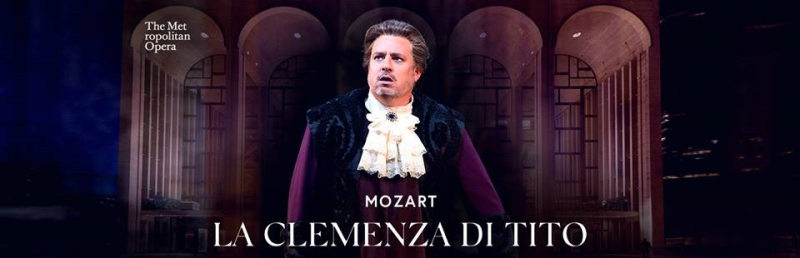
  • @ My Met Score Desk for CLEMENZA DI TITO

    54523905_663524600746741_7864682115135176704_n

    Above: Matthew Polenzani as Tito

    ~ Author: Oberon

    Saturday April 20th, 2019 matinee – One of my favorites among the Mozart operas, LA CLEMENZA DI TITO is a melodious masterpiece. Though THE MAGIC FLUTE is considered the composer’s final opera, that work was largely complete when he set about writing CLEMENZA.

    LA CLEMENZA DI TITO was something of a throw-back for Mozart: it was written in the old style of opera seria – in which a progression of set-piece (arias, duets, and small ensembles) are linked by brief passages of recitative – to celebrate the coronation of Austrian Emperor Leopold II as King of Bohemia in Prague in 1791.

    This formality of structure is illuminated by some of Mozart’s most personal arias: Sesto’s  “Parto, parto” and “Deh, per questo istante solo“, Tito’s “Se all’impero, amici Dei”, Annio’s “Tu fosti tradito“, Servilia’s “S’altro che lagrime“. and Vitellia’s “Non piu di fiori“, each of which ideally reflects the personality of the character singing it. 

    Giving the overture a nice, weighty feel, conductor Lothar Koenigs presided over a well-paced performance. A sterling continuo duo – Davis Heiss, cello, and Bryan Wagorn, harpsichord – added much to the afternoon’s pleasure, and thrilling playing from principal clarinetist Inn-Hyuck Cho (as both clarinet and basset horn soloist in “Parto, parto” and “Non piu di fiori” respectively) was a complete joy to experience.

    In the title-role, Matthew Polenzani’s pliant and expressive singing flowed forth with Italianate lyricism, the voice clear and sure, etched in with detailed pianissimi along the way (most notably in “Del piu sublime soglio“) to keep the music fresh. The tenor – whose recent Zankel Hall concert was one of the highlights of the current season – showed great sensitivity in the recitatives, especially in the long scene where he weighs his feelings before passing judgement on Sesto. “Se fosse intorno al soglio”  showed expert dynamic control, and the showpiece “Se all’impero, amici Dei” in Act II was triumphant.

    Maxresdefault jdd

    Joyce DiDonato (above) has found a perfect role in Sesto, joining such marvels as Tatiana Troyanos , Lorraine Hunt Lieberson, and Elīna Garanča in the highest echelon of interpreters of this demanding part. Ms. DiDonato, ever alert to the words, sang with dazzling technique and a vibrant sense of dramatic urgency.

    In the great aria, “Parto, parto“, Ms. DiDonato reveled in the vocal and expressive possibilities Mozart has afforded her. After displaying moving vulnerability – her hushed murmuring of “Guardami…!” was sublime – the mezzo was at her finest as she sailed thru neat-as-a-pin coloratura effortlessly (and perfectly matched by the clarinet), winning a big ovation.

    Incredibly, Ms. DiDonato surpassed herself in the second act aria, “Deh, per questo istante solo” where, with touches of straight tone along the way, she sang with deep feeling, expressing the young man’s passion and remorse. In the second verse, tiny embellishments were woven in, and the aria’s fiery finish brought down the house. 

    Elza van den Heever is a puzzling singer: her broad repertoire – from bel canto to Strauss, Wagner and (next season), Berg – seems to indicate a soprano who has not settled on a fach. Which is fine, really, except that the varying demands of the roles she is singing seems to be affecting her tone at times, which can turn rather shrill.

    As Vitellia, she was uneven in this role’s wide-ranging music, and though she touched on the high-D in Act I and successfully reached downward to the low-G in “Non piu di fiori“, the voice lacks sheer beauty and is not really all that fluent in fiorature. The highest notes – a brilliant top-B for one – popped out clearly, but seemed disconnected to the rest of the voice. I really didn’t know what to make of her performance. But for some reason, the audience – perhaps spurred on by the MetTitles – found Vitellia to be something of a comic figure; the soprano was well-received at her bows. 

    Emily D’Angelo as Annio seemed rather muted at first, and Ms. DiDonato simply drowned her young colleague out in their beautiful Act I duet. But Ms. D’Angelo soon made her mark on the performance, with a finely-rendered “Tu fosti tradito” capped by a nice top-A. The audience loved her.

    Lovely, graceful Mozart singing from Ying Fang as Servilia, recalling Hei-Kyung Hong’s beautiful Met debut in this role. Ms. Fang, with sweet-toned lyricism, made “S’altro che lagrime” (perhaps the opera’s most attractive melody) a tender delight.

    Christian van Horn was a superb vocal presence as Publio, showing the advantage of putting a stellar singer in a relatively small – but musically important – role. Bravo!

    The houselights slowly came up during the opera’s finale: a celebratory touch. The singers were all warmly applauded as they took their bows on the classic Jean-Pierre Ponnelle set.

    Metropolitan Opera House
    April 20th, 2019 matinee

    LA CLEMENZA DI TITO
    Wolfgang Amadeus Mozart

    Tito.......................Matthew Polenzani
    Vitellia...................Elza van den Heever
    Sesto......................Joyce DiDonato
    Servilia...................Ying Fang
    Annio......................Emily D'Angelo
    Publio.....................Christian Van Horn
    Berenice...................Anne Dyas

    David Heiss, Cello
    Bryan Wagorn, Harpsichord

    Inn-Hyuck Cho, Clarinet and Basset Horn soloist

    Conductor..................Lothar Koenigs

    Static1.squarespace.com a

    Intermissions at The Met these days can often put a damper on even the best of performances, but this afternoon’s single interval brought an unexpected treat: clarinetist Inn-Hyuck Cho (above) remained in the pit for the entire half-hour, practicing the basset horn part of “Non piu di fiori”. What a mesmerizing sound! The Met is so very fortunate to have this splendid musician in their orchestra. 

    Oberon

  • EUGENE ONEGIN @ The Met

    Netrebko ONEGIN

    Above: Anna Netrebko as Tatiana

    Author: Ben Weaver

    Saturday April 22nd, 2017 matinee – Tchaikovsky’s operatic adaptation of Pushkin’s “Eugene Onegin” arrived this Spring at the Metropolitan Opera. Today, the season’s final performance of the opera was telecast via HD to cinemas around the world. It’s a practice that has been contributing to the hemorrhaging of live audience attendance for the house. The Met auditorium has countless empty seats more often than not, and many of those that are filled are actually papered and subsidized by donors. Today’s ONEGIN matinee was one of only two performances of the opera that actually sold out.

    Robin-Ticciati

    In the pit was the English conductor Robin Ticciati (above). He led a really magnificent reading the score, the Met Orchestra responding to Tchaikovsky’s superb orchestration with perfection. Ticciati was careful not to overwhelm the singers with sound (Tchaikovsky’s orchestral writing is often dense). There was a wonderful lightness to his interpretation, each musical strand rising magically out of the tapestry of sound. His energetic, forward moving pacing mostly worked well. Perhaps if Tatiana in her Letter Scene and Lensky in his Act II aria had been allowed to linger just a tad longer…but overall Tchaikovsky’s magical score danced and sighed superbly.

    The cast assembled for the revival of this 2013 production was first rate. At the heart of it was Anna Netrebko as Tatiana. When Netrebko first sang the role at the Met in 2013 I did not think she made a great impression. Primarily I objected to her bland reading of the text, disappointing for a native speaker. She has certainly been able to deepen her understanding of the role. This afternoon she was a living, breathing heroine. Her Letter Scene was by turns wistful and sad, excited and terrified. Fear as she awaits Onegin’s arrival, and shame at his rejection, were palpable. Haughtiness, in a crimson gown at the royal ball in Act III as she sees Onegin for the first time in many years, was delicious. And the final scene revealed verismo-ish declarations that she will not betray her husband. I suddenly remembered that Netrebko has sung Lady Macbeth and intends to sing Tosca too. These flashes of pure steel were thrilling. Vocally she was excellent. There are occasional tendencies (not new to her) to stray off pitch in her middle voice. But her top was strong and gleaming, and the aforementioned steel in the final scene brought to mind Galina Vishnevskaya. The young, impressionable Tatiana is a woman now, royalty even. She won’t let Onegin forget this.

    Mattei ONEGIN

    Peter Mattei as Onegin (above) was in stunning voice. Truly this is one of the most beautiful baritone sounds in the world. Soft and plush, but not lacking in volume. Mattei’s long-limbed figure undergoes a reverse transformation of Tatiana. Haughty and indifferent at first, he unravels as Tatiana grows in stature. While Mattei’s singing was beyond reproach, his Russian diction was quite poor. In Act 1 it was still recognizable as Russian. Alas, as the opera progressed I often wasn’t sure he was singing in Russian at all, or just making sounds intended to sound vaguely Slavic.

    Russian tenor Alexei Dolgov was a terrific Lensky. His singing is effortless. Perhaps his neurotic, bordering hysteric Lensky would not be to all tastes, but it was believable, and – again – the singing was terrific. His Act II aria was heart-wrenching; his Russian diction crystal clear. Elena Maximova, as Lensky’s fiancée Olga, did everything right dramatically and musically. Perhaps the voice is a bit too monochrome and lacks warmth, but during the Act II ball she wonderfully conveyed a flirty, young woman who only too late realizes that her behavior towards her fiancée will lead to tragedy.

    It is a great touch to have a young bass play Prince Gremin. Usually Gremin is seen as an old man, but a youthful Stefan Kocan, with the necessary low notes in full bloom, leaves no doubt why Tatiana would refuse to leave him for a now-pathetic Onegin. 

    It was wonderful to see and hear two veteran Russian mezzos as the matriarchs. Elena Zaremba as Madame Larina showed off a still gleaming, forceful mezzo, effortlessly dominating ensembles. The great Larissa Diadkova, long one of my favorite singers, was a superb Filippyevna. There is still much voice left and dramatically her fussy Nanny was by turns funny and deeply moving as she recalls her own youth. My first live Filippyevna was the legendary Irina Arkhipova making a much belated Met debut in 1997. It is the highest compliment I can pay Diadkova to say that she is in the Arkhipova stratosphere of artists. 

    There were wonderful supporting appearances by Tony Stevenson as Triquet (lovely singing of the birthday song; it’s a character that can be very grating, but Stevenson is a superb character singer/actor), Richard Bernstein as Zaretski, and David Crawford as a Captain. The chorus was in excellent form, under the leadership of Donald Palumbo. 

    The big problem with the Met’s ONEGIN, alas, is the mediocre-to-terrible production by Deborah Warner, sets by Tom Pye, costumes by Chloe Obolensky and lighting by Jean Kalman. Warner’s boring conception is old-fashioned in the worst sense of the word. I’m as fond of a “period appropriate” production as anyone, but Warner’s staging contributes nothing to the work. The previous, gorgeous production by Robert Carsen showed more depth with a simple white box and autumn leaves than Warner and team manage with stuffy period detail. The silly “when in doubt, just lay down on the stage” trope should be made illegal. All of Act I is set in the Larin country home living room. Why the family would bring their entire farming staff in there, and then allow people to throw wheat on the living room floor, is a mystery. The Duel scene is the most effective, a moody wintry landscape. But the columns in all of Act III are simply too large, sitting like titans, distracting from any and all action on the stage. 

    So it was the superb cast of singing actors, the orchestra, and thrilling conducting by Ticciati that made this ONEGIN a superb musical event.

    ~ Ben Weaver

  • Encore: ELEKTRA @ The Met

    Mask-of-agamemnon

    Above: The Mask of Agamemnon

    Saturday April 30th, 2016 matinee – Since ELEKTRA is one of my favorite operas – sometimes I think it is my favorite opera – I planned to see The Met’s new production of it once, and then to hear it again from a score desk.

    Some people had issues with the voices of Nina Stemme and Adrianne Pieczonka at the production’s Met premiere on April 14th: squally, shrill, and flat were among descriptive words I heard being tossed about. There were also complaints that Waltraud Meier, as Klytemnestra, was “inaudible” or at least seriously under-powered vocally. So when my friend Dmitry and I attended the second performance on April 18th, we were pleased to find that both Stemme and Pieczonka sounded much better than we’d been expecting, and that Meier, though vocally restrained when compared to such past exponents of the role as Resnik, Rysanek, Fassbaender, Christa Ludwig, or Mignon Dunn, was able to make something of the music thru diction and vocal colour.

    This afternoon, the three principal women all seemed rather out of sorts vocally. Stemme sounded frayed and effortful, the highest notes sometimes just a shade flat and her vibrato more intrusive than at the earlier performance. Ms. Pieczonka was likewise on lesser form, tending to sound shrill under pressure, and the voices of both sopranos seemed smaller and less free that I remembered. Ms. Meier was – honestly (and I am a big fan of hers) – nearly inaudible much of the time; a lot of her verbal detail didn’t penetrate the orchestra. (Since the performance was being broadcast, undoubtedly Ms. Meier made a much more vivid impression over the airwaves).

    Stemme and Pieczonka did achieve a higher level as the afternoon wore on; their most exciting singing came after the murder of Aegisth and on thru to the end of the opera. But compared to their earlier performance, they were both a bit disappointing. Of course, we have to take into account that these are two of the most fearsome and challenging roles in the soprano repertoire, and are being sung over a huge orchestra in a vast space. The wear and tear on their instruments must be incredible.

    The audience at large were undeterred by concerns over vocal matters, and they lustily cheered the three women at the curtain calls; the ovation for Ms. Stemme – well-merited for her generosity and courage – was enormous, and the house lights were turned on so she could see everyone standing and screaming for her.

    For me, it was the opera itself – and Esa-Pekka Salonen’s conducting of it – that made the performance memorable. The orchestra played spectacularly, and if Maestro Salonen sped thru some of the music (the Recognition Scene seemed really fast) it sort of added to the sense of exhilaration I was experiencing just from hearing the opera live again. 

    Eric Owens made an outstanding impression as Orestes today; his first lines established a powerful and rather creepy vocal presence, and at “Lass den Orest…” he was truly splendid. He has the right amplitude for this music in this house, and was deservedly hailed at his solo bow. 

    Special mention to Bonita Hyman for her rich, deep contralto singing as the First Maid, and to the remarkable Roberta Alexander, who again made such a moving impression as the Fifth Maid, a Chéreau ‘invention’ that paid off handsomely.

    Metropolitan Opera House
    April 30th, 2016 Matinee

    ELEKTRA
    Richard Strauss

    Elektra....................Nina Stemme
    Chrysothemis...............Adrianne Pieczonka
    Klytämnestra...............Waltraud Meier
    Orest......................Eric Owens
    Aegisth....................Burkhard Ulrich
    Overseer...................Susan Neves
    Serving Woman..............Bonita Hyman
    Serving Woman..............Maya Lahyani
    Serving Woman..............Andrea Hill
    Serving Woman..............Claudia Waite
    Serving Woman..............Roberta Alexander
    Confidant..................Susan Neves
    Trainbearer................Andrea Hill
    Young Servant..............Mark Schowalter
    Old Servant................James Courtney
    Guardian...................Kevin Short

    Conductor..................Esa-Pekka Salonen

  • Matinee @ The Met: OTELLO

    Hibla

    Saturday April 23rd, 2016 matinee – I went to this performance of OTELLO at The Met expressly to hear Hibla Gerzmava (above) as Desdemona. Feeling no need to see the production, I took a score desk. Since I could not see the stage, I missed a cast change that took place spontaneously between Acts III and IV.

    Aleksandrs Antonenko started out strongly, seeming to be in better voice as Otello than at the earlier performance I had heard; but by the end of Act III he was taking stuff down an octave and speaking the lines. A substitute sang Act IV while Antonenko acted the role.

    CK24Try3SVw

    The cover, named Francesco Anile (above), sounded more Italianate and his vibrato was less prominent than Antonenko’s; but since I was unaware of the change, I just thought – from what I was hearing – that Antonenko had gotten a second wind and was making a final push. A spokesperson for the Met came onstage before the curtain calls started to explain what had happened (this was also needed for the radio audience). Then Antonenko and Gerzmava bowed together…she seemed to be trying to console him…and finally Anile came out in jeans and sneakers with an old robe thrown over his shoulders.

    Antonenko’s uneven performance in the first half of the evening included a some really nice passages mixed in with the more effortful ones. But I wondered – as I had at the earlier performance I saw – whether he merited a new production (for an opening night) at The Met, considering his less-than-stellar vocalism. Since Domingo retired the role, only Johan Botha has been more than a serviceable Otello at The Met. Heppner, Galouzine, and Cura were variable, at best. Without a world-class exponent of the title-role around these days, new productions seem unwarranted.

    Ms. Gerzmava’s voice is beautifully ‘present’ in the big Met space. Her singing has a darkish glow, she phrases appealingly, and incorporates piano effects nicely, if rather sparingly (I kept hoping for more). A trace of sharpness was evident here and there, and the final A-flat of the Ave Maria would have been more effective if held just a bit longer.

    As has sometimes happened before at The Met, the sound of voices from the lighting bay in the auditorium’s ceiling ruined much of the Willow Song and Ave Maria; it was around the same time that a cellphone also went off.

    All of the wonderful things about Željko Lučić – the authentic Met-sized voice, the uninhibited range, the dramatic nuances he brings to his singing – are undone by continuous problems of pitch. So many thrilling moments in Lučić’s Iago today were offset by his seeming inability to control this serious defect.

    Chad Shelton’s Roderigo stood out – both in terms of voice and inflection – among the supporting cast today. Jennifer Johnson Cano (Emilia), Alexey Dolgov (Cassio), Jeff Mattsey (Montano), and Tyler Duncan (A Herald who is ready for bigger roles) all did well. And that beloved Wotan and Hans Sachs, James Morris, was warmly greeted at his curtain call in the role of Lodovico.

    Conductor Adam Fischer set the opera on its way with a stimulatingly powerful treatment of the storm music; The Met chorus and orchestra were ship-shape all afternoon. 

    A fun article about Signor Anile’s stepping in here.

    Metropolitan Opera House
    April 23rd, 2016 matinee

    OTELLO
    Giuseppe Verdi

    Otello..................Aleksandrs Antonenko/Francesco Anile (Act IV)
    Desdemona...............Hibla Gerzmava
    Iago....................Zeljko Lucic
    Emilia..................Jennifer Johnson Cano
    Cassio..................Alexey Dolgov
    Lodovico................James Morris
    Montàno.................Jeff Mattsey
    Roderigo................Chad Shelton
    Herald..................Tyler Duncan

    Conductor...............Adam Fischer

  • New Chamber Ballet: Four Works

    L1550484

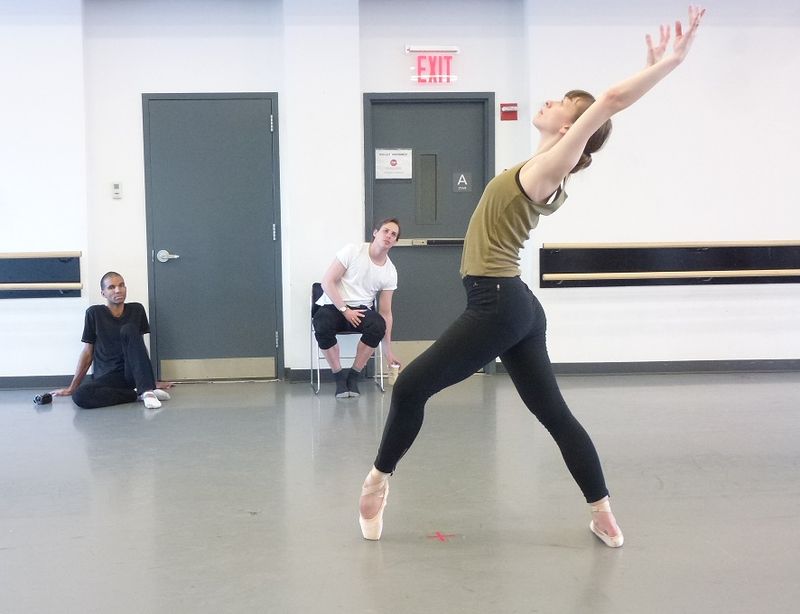
    Above: Elizabeth Brown of New Chamber Ballet rehearsing the solo Moments, observed by choreographers Miro Magloire and Constantine Baecher

    Saturday April 18th, 2015 – “Ballet is Woman,” said George Balanchine; and Miro Magloire‘s New Chamber Ballet seems to be living proof of it. Miro’s obvious delight and skill in choreographing for female dancers has resulted in a series of works which honor the ballerina tradition whilst at the same time pushing boundaries, especially in the realm same-sex partnering. Tonight, the customary New Chamber Ballet formula of women dancing in an up-close-and-personal setting to live music brought us works by both Miro and NCB‘s resident choreographer Constantine Baecher, including two world premieres.

    Now celebrating their tenth anniversary, New Chamber Ballet have always presented an ensemble of finely-trained ballerinas with vivid, individualized personalities. The current quartet maintains the high standard: these are women who are comfortable with having their audience literally within reach, able to dance with confidence and poise in an intimate setting. Their dancing is enhanced by the accomplished musicality of violinist Doori Na and pianist Melody Fader who are always ready, willing, and able to tackle whatever music Miro hands them – and that’s saying a great deal.

    Entangled, a quartet for on- and off-pointe dancers, is performed to Paganini’s Caprices expertly played by Doori Na. The girls, in Sarah Thea’s minty-green sheer costumes with a harem feeling, are paired off: two on pointe (Sarah Atkins and Traci Finch) and two in slippers (Elizabeth Brown and Amber Neff). 

    L1550289

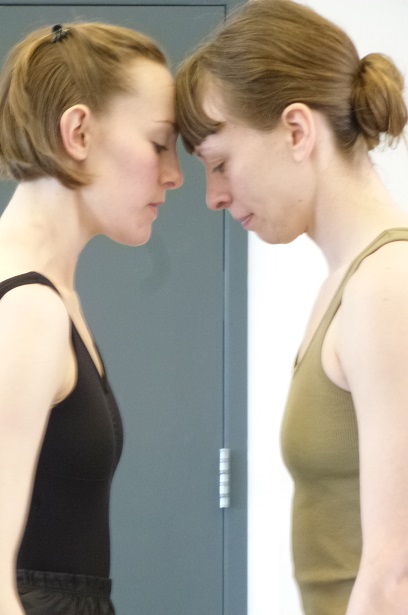
    The ballet opens with Amber and Elizabeth face to face (rehearsal image, above); they rush away from one another and then meet again – repeatedly – in an approach-avoidance sequence. Their dance becomes spastic; they struggle on the floor and there are shakes and shapes. Doori, the violinist, is meanwhile making fast and furious with the demanding Paganini score. The pointe couple appear: Sarah and Traci in stylized balletic poses with stretched arabesques and sculptural port de bras. The couples alternate; the soft-slipper girls have a shuffling little jig. As the adagio begins, the pointe pair lean into one another before they are left alone to a high violin shimmer. Innovative floor choreography follows. We half expect a faster final movement, but instead the ballet ends quietly.  

    Elizabeth Brown, a founding member of New Chamber Ballet, has been thru a serious injury episode and has come back in phenomenal physical condition and more expressive than ever. A unique dancer, Elizabeth performed Miro’s solo Moments to Salvatore Sciarrino’s Caprices 5,2, and 6. Doori Na plays the annoying (in a good way) and demanding score with touches of wit. The opening section is all about line and control, and Elizabeth here reveled in these beautiful, slow-to-still poses. The choreography becomes more animated, gestural, and space-filling, with a spirited circle of piqué turns. New Chamber Ballet audiences tend to be rather reserved, but lusty cheers went up after Moments.

    L1550245

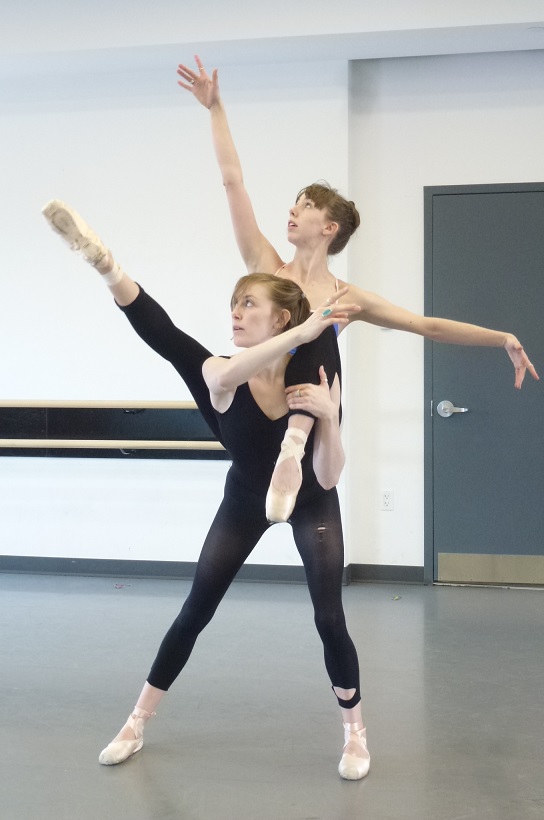
    Above: Traci Finch and Amber Neff rehearsing Miro Magloire’s newest ballet, La Mandragore

    La Mandragore (The Mandrake) is a new duet by Miro set to Tristan Murail’s solo piano work of the same title. Melody Fader at the keyboard showed a particular affinity for this music which begins misterioso, becomes turbulent, then sinks back into eerie calm. Dancers Traci Finch and Amber Neff meet Miro’s complex partnering demands head-on; they are fearless, strong and supple as they wrap around one another, performing lifts and mutually supportive feats in an unusual mixture of power and intimacy. Miro pushes the two dancers to extremes and they respond with compelling assurance and grace.  

    The world premiere of NCB resident choreographer Constantine Baecher’s Two Tauri and A Tiger marked yet another success for Constantine, who has created several works for New Chamber Ballet over the years. Two Tauri opens with Elizabeth Brown rushing on to a stimulating Mozart theme played by Melody Fader; Elizabeth’s solo is questing and energetic. Traci Finch enters next, followed by Sarah Atkins, each dancing a restless and animated solo. The movement has a playful, windswept feeling with an aspect of childlike joy, as when Elizabeth and Traci join hands and spin mirthfully about. 

    The music pauses and we hear the dancers breathing; they re-group in silence, have a walkabout, and a bit more spinning. As Melody intones a more staid Mozart theme, the ballet becomes pensive. The girls circle around, holding hands and relying on counter-balance. This passage recalls Balanchine’s fondness for similar linkings, and also evokes Matisse’s La Danse. As the music animates, the dancers rush about and a pair will playfully drag the third as in a children’s game. This recedes into a more temperate passage with some stretching motifs. Overall, Two Tauri seems like a romping, good-natured piece; yet I feel there might be some underlying shadows, too. I’ll need to see it again to get a deeper sense if it. One thing for sure: the three dancers seemed to be genuinely having a good time dancing it.

    So nice to see Candice Thompson, Amy Brandt, Emery LeCrone, and Lauren Toole among the audience tonight.

    New Chamber Ballet will conclude their 10th anniversary season with performances on June 12th and 13th, 2015. Further details will be forthcoming.

  • At the Miller Theatre: Baroque Vanguard

    K_bezuidenhout_wide-b5b77ed093080035c7e24bf4f5b150b17823af5a-s40

    Saturday April 27th, 2013 – The brilliant South African harpsichordist Kristian Bezuidenhout (above, in a Marco Borggreve photo) teamed up with Ensemble Signal to present an intriguing programme at Columbia University’s Miller Theatre. The event had been on my calendar for months and it lived up to expectations in every way.

    Two hundred and sixty years separate the composition dates of the evening’s opening and closing works. In this fusion of olde and new, Mr. Bezuidenhout and the Ensemble’s conductor Brad Lubman shook hands across the centuries, commencing the performance with the wildly discordant and precursive opening statement of Jean-Fery Rebel‘s “Chaos” from LES ELEMENTS. The work, which dates from 1737, has a startling freshness, even when it subsides into a more expected Baroque feeling. Despite its forward-looking beginning, this piece also seems to look back to the late Renaissance and the composer explores all the musical facets with a keen imagination.

    Two of the sons of Johann Sebastian Bach were represented next by a pair of sinfonias, the first by Carl Philipp Emanuel Bach (in D major, composed in the 1770s) and the second by Wilhelm Friedemann Bach (in D minor, dating from the 1740s). In the first, a complement of wind players join the strings and keyboard: horns, flutes, oboe and bassoon; the flutes remain to play the second sinfonia as well. The music is all delightful and superbly rendered, yet the work of the father which followed the intermission showed that the sons never quite attained the miraculous level of Johann Sebastian’s perfection.

    The harpsichord concerto in D-minor (1738) found Mr. Bezuidenhout at his most elegant in the gently rippling cadenzas, while the musicians of the Ensemble gave full-toned and scrupulously musical support. The harpsichordist’s speed and accuracy were dazzling, and he played with a passion and intensity that drove out any notion of this music as being a dry technical exercise.

    The harpsichord then vanished and six players (violins, viola, cello and double bass) ranged themselves in a semi-circle to tackle Michael Gordon’s devilsihly delightful WEATHER ONE. Dating from 1997, this work was inspired by chaotic shifts in weather patterns; the aural wind machine starts cranking up in the bass range and soon all six musicians are bowing furiously thru the swirling motifs in a staggering, shifting skyscape of rhythmic and textural elements. As the twenty-minute work finally subsided into calm, the audience erupted in cheers for Mr. Lubman and his valiant players: this score seems a great test of both concentration and physical stamina for the musicians. The composer appeared onstage, embracing each of the players in turn. I was left to imagine what sort of dancework could be made to this fantastical piece; the counts alone would be a major challenge for the dancers.

    As the Bach concerto was being played, I was recalling my childhood wish to play the harpsichord. My mother had bought me a recording entitled ‘Said The Piano to The Harpsichord‘ and I played it til it wore out. I had been playing the piano by ear starting at a very young age, but once I heard this recording I started asking for a harpsichord; my parents had no idea of where or how to get one in our god-forsaken little town, but the sound of the instrument always brings back this memory. Amazingly, I found the ancient recording on YouTube.

    The repertory of tonight’s Baroque Vanguard concert:

    Rebel: Chaos from Les Elements
    C.P.E. Bach: Sinfonia in D Major, Wq 183
    W.F. Bach: Sinfonia in D minor, F. 65
    J.S. Bach: Concerto in D minor, BWV 1052
    Michael Gordon: Weather One