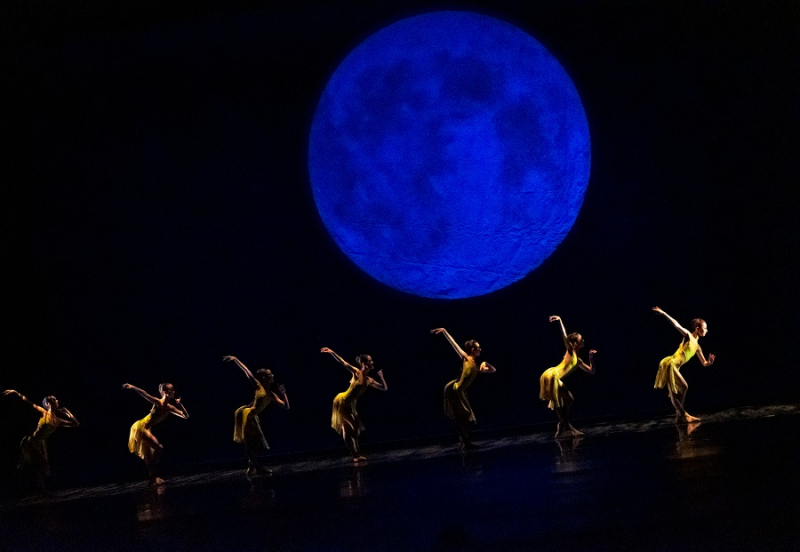
Above: from Guangzhou Ballet‘s production of Carmina Burana as performed at Lincoln Center; photo by Dmitry Beryozkin
~ Author: Oberon
Saturday August 17th, 2019 – Guangzhou, China, is the birthplace of my beloved Wei, so I arranged tickets for us to Guangzhou Ballet’s performance at Lincoln Center tonight. Earlier in the day, my friend Dmitry Beryozkin photographed the dress rehearsal of the production.
Although tested by numerous audience distractions, we stayed to the end because of the impressive work of the Guangzhou Ballet‘s dancers, who are beautifully trained and who excel in both virtuosity and artistry.
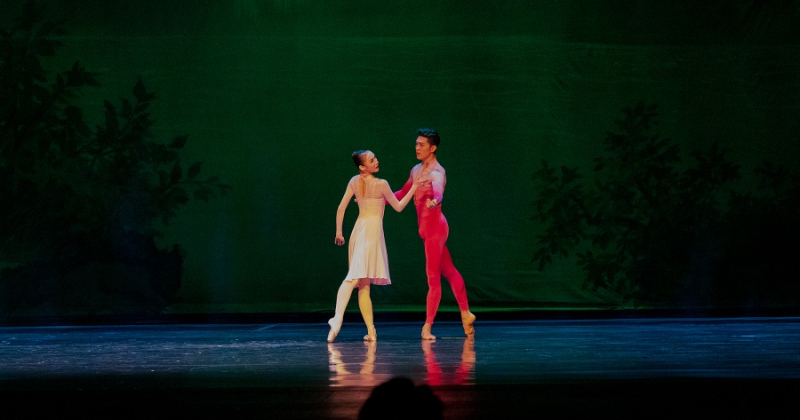
Above: from Goddess of the Luo River; photo by Dmitry Beryozkin
Goddess of the Luo River is set to a violin concerto by the venerated Chinese composer Du Mingxin, who is now in his 90th year. The music has both rhythmic and lyrical appeal, though the Adagio begins to feel overly sweet after a while.
The program note for Goddess of the Luo River was basically incomprehensible to me, but the ballet seems to tell of a pair of young lovers yearning to be together, and of the goddess who helps make their dream come true.
Peter Quanz, a Canadian choreographer beloved by my friend Arlene Cooper, has re-staged the Du Mingxin concerto to beautiful effect. Mr. Quanz is a master of classical styling who has a gift for structure and for creating pleasing and musically-inspired combinations. The opening segment of Goddess of the Luo River, danced by an ensemble of women, was emblematic of Mr. Quanz’s work, which sustained our interest for the 30-minute duration of this atmospheric piece.
Against a backdrop of a misty forest river-glade, Goddess of the Luo River unfolds like a blooming flower. If I have read the Playbill correctly, the principal dancers tonight were Fang Afang, Ma Minghao, and Huang Bairnao, and they were all simply entrancing to watch. But in fact, everyone onstage danced gorgeously, with musicality and grace.
At the end, the bow lights cam up and we looked forward to hailing the dancers in their curtain calls, but the applause dwindled away and there were no bows.
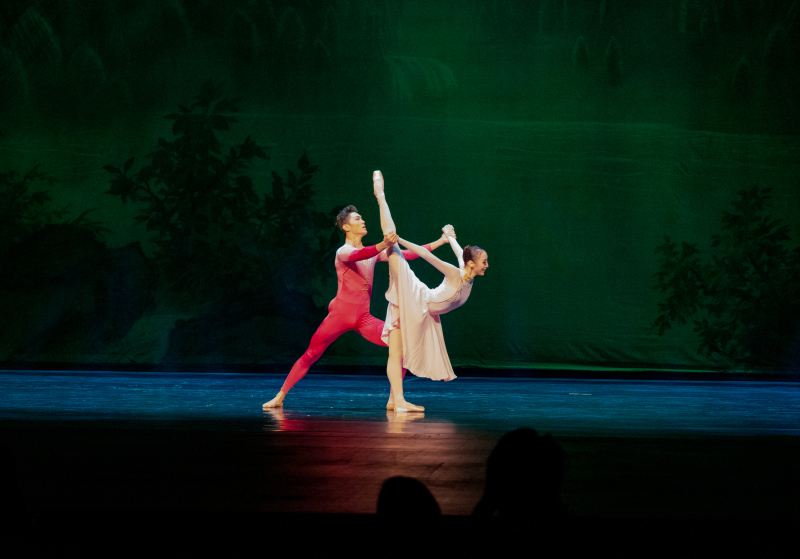
Above: from Goddess of the Luo River; Dmitry tells me they only did a brief excerpt from this ballet at the dress rehearsal. Too bad, because there were some lovely passages for the corps and the other featured dancer that I would like to have had photos of.
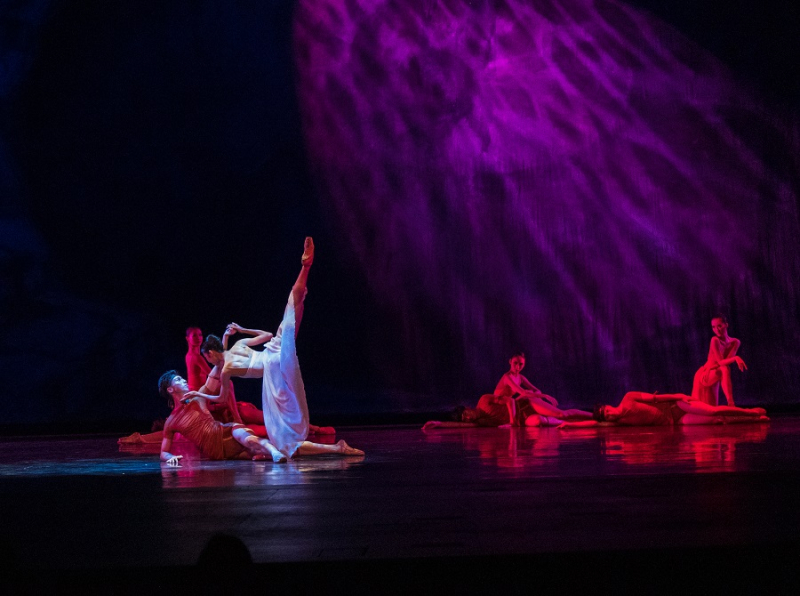
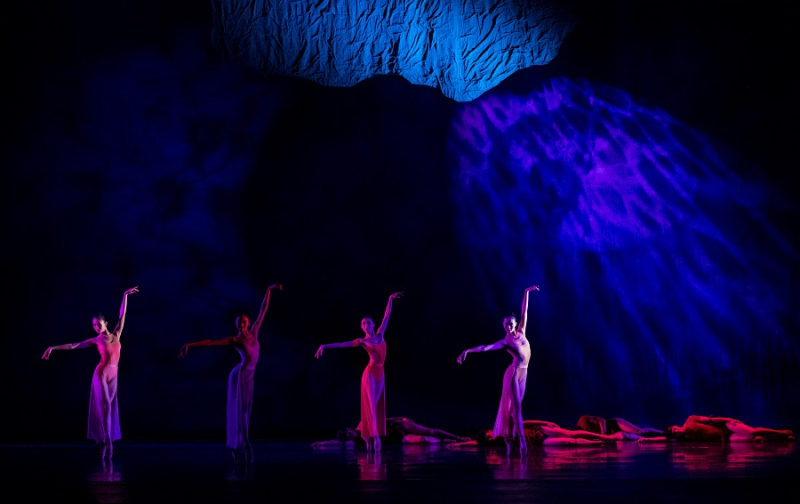
Following the interval, a three-act choreographic rendering by Qi Jiang of Carl Orff’s Carmina Burana was presented. The score was first performed on June 8, 1937, at Frankfurt, and is a setting of Medieval poems for three solo voices, chorus, and orchestra. This work was Orff’s “greatest hit” (though he wrote some truly fascinating operas) and it became one of the best-known musical works of the 20th century thru its use in film and commercials. Carmina Burana greatly appealed to the Nazi regime, to whom its rhythms were reminders of the “stamping columns of the Third Reich”.
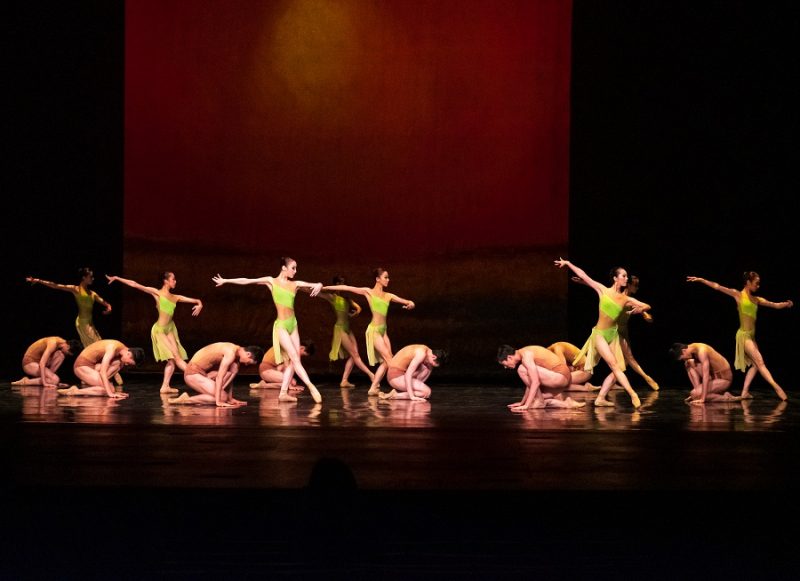
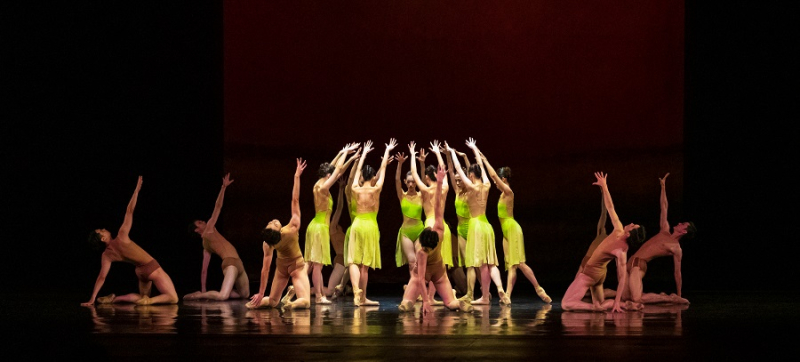
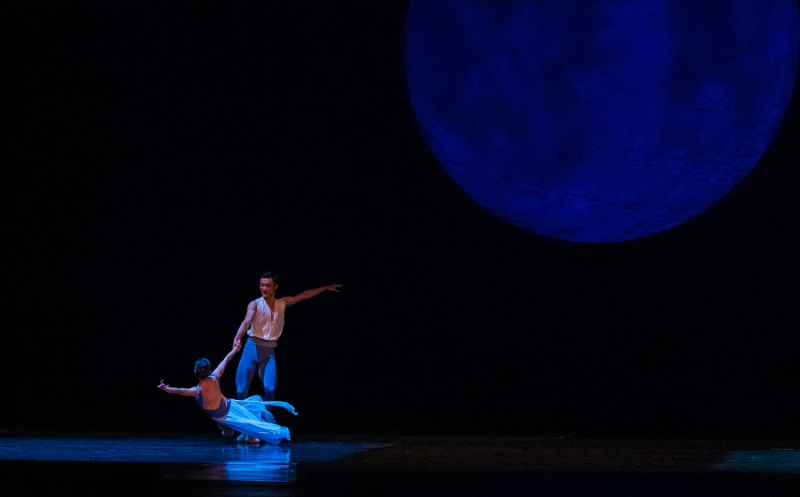
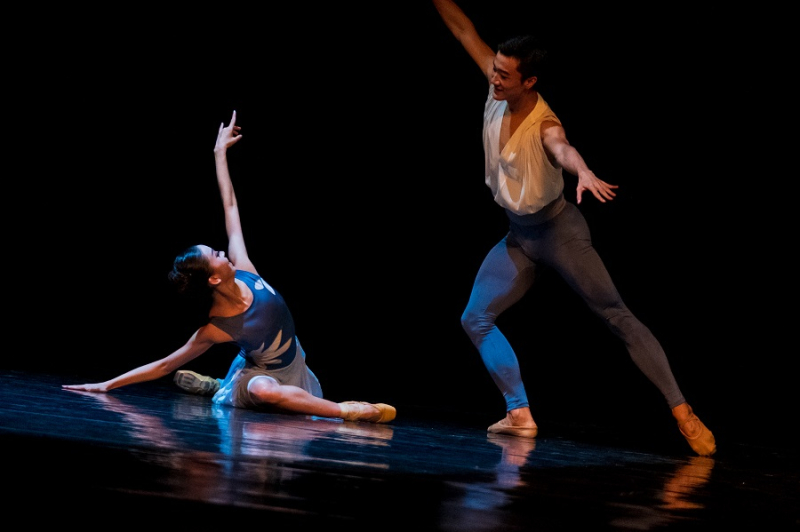
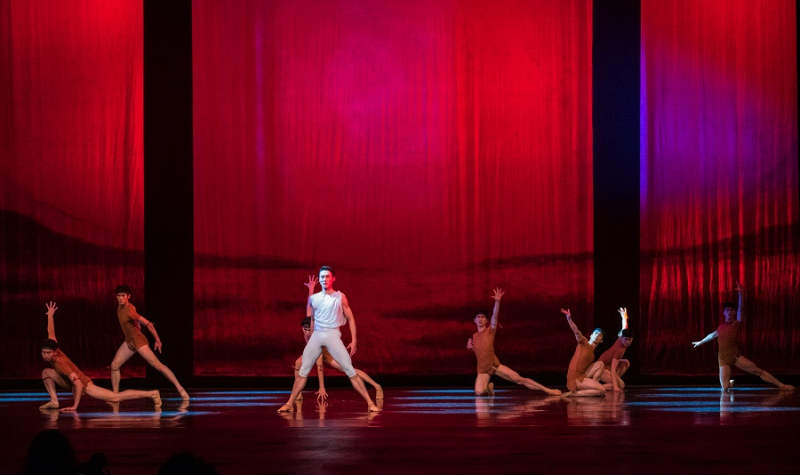
Guangzhou Ballet did not choose one of the many top-notch recordings of the piece for their ballet production but it was very well reproduced over the theater’s sound system. The music has an irresistible emotional force. Han Jiang (scenic designer) and Chen Xiaji (lighting designer) have created a production full of impressive visuals, as you can see from Dmitry Beryozkin’s photos, below.
The Company’s Carmina Burana, however, did not reach the same level of involvement for either Wei or I as the evening’s opening work. It’s nearly an hour long, and there were stretches when the choreography seemed uninspired and repetitive. Perhaps some judicious pruning of the music would have helped make it more coherent: there are stories being told, but they become rambling after a bit.
Such striking moments as the powerful, smoky opening segment with dancers emerging from under a large blanket of fabric, and – especially – the gigantic moon that looms over some scenes kept us focused. But the constant whispering and checking of cellphones by people around us, the amorous boy in front of us who wanted to cuddle his girlfriend, and the continuous undercurrent of a whimpering child somewhere to our left (eventually taken out, with 5 minutes of music left to go) became so aggravating as the ballet progressed. If we could have made a graceful exit (some people did), we would have left midway thru.
But it was nice to see the dancers taking their bows at the end, though these were staged Broadway-style, with a reprise of music from the Orff score.
Here is a gallery of Dmitry Beryozkin’s images from Carmina Burana:

~ Oberon

 Oberon's Glade