Tag: Saturday December

  • Zwilich & Barber @ Carnegie Hall

    Zwilich

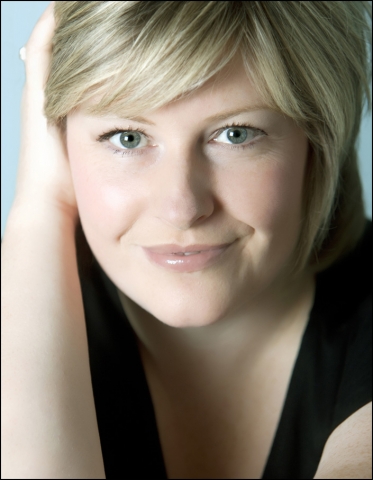
    Above: composer Ellen Taaffe Zwilich

    ~ Author: Oberon

    Saturday December 28th, 2024 – The New York String Orchestra were back at Carnegie Hall this evening, following up their Christmas Eve concert in the same Hall with a program of Zwlilich, Barber, and Brahms. I’d been down with flu-like symptoms for a couple of days, and debated whether I should attend tonight’s concert, but I couldn’t pass up a chance to experience the Barber violin concerto played live in this hall. Whether I could make it to the evening’s end remained to be seen.

    1983 Pulitzer Prize-winner Ellen Taafe Zwilich’s composed her Prologue and Variations for string orchestra on a commission from the Chattanooga Symphony, which premiered it under the baton of Richard Cormier in 1984. In her remarks on this piece, the composer spoke of her wish to celebrate “the special sonorities, character, and expressiveness of the string orchestra”. In tonight’s performance, the young players of the New York String Orchestra truly did the composer proud. 

    The violins open the piece, with start-and-stop phrases, soon picked up by the cellos. The violins then soar over an insistent beat. After a passage of luminous softness, the celli and basses cushion sizzling violins motifs. The opening theme recurs, and then a series of slow, mysterious sustained tones lead to a full stop.

    An animated section quietens to a slightly ominous lulling atmosphere. Then an agitato springs up, full of scale-work and insistent bowing. The music turns pensive, with brooding celli and deep basses. A trudging rhythm and fading violins lead to the work’s eerie ending.

    Enthusiastic applause greeted the musicians, and then Maestro Laredo gestured to Ms. Zwilich in her first tier box to rise for a bow; well-deserved bravas greeted the composer, now in her 85th year.
    Koh jpg

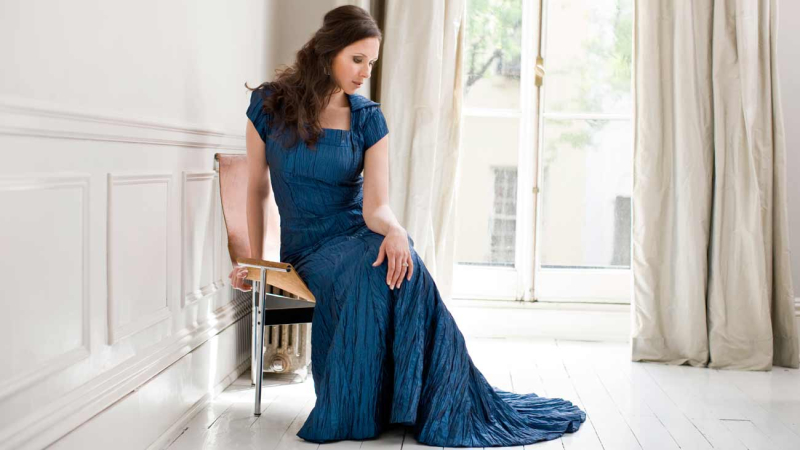
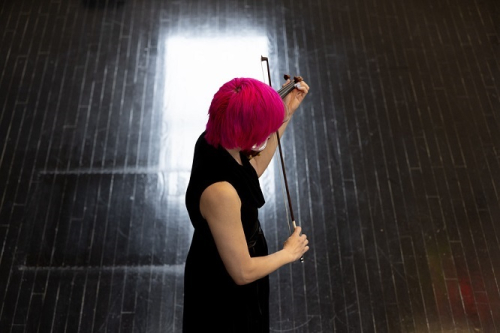
    Above: Jennifer Koh – I borrowed this stunning photo from her Facebook page

    Violinist Jennifer Koh then took the stage for the Barber, my enduring favorite among all the violin concertos I have heard thru the years. Ms. Koh looked striking in a silver-gray gown, her hair a bright, fiery red.

    This was Barber’s first effort in the concerto genre, written on a 1939 commission for the then-astonishing sum of $1000. When the originally scheduled soloist, Iso Briselli, found the concerto’s third movement too short and inconsequential, the work was premiered in 1941 by Albert Spalding; it was great success, and became one of Barber’s most beloved works, perhaps second only to his Adagio for Strings.

    Aside from concert performances, I have heard this music many times at New York City Ballet, where in 1988 Peter Martins premiered his ballet of the same title at the Company’s American Music Festival. The  ballet brings together a pair of ballet dancers and a pair of bare-footed modern dancers. The original cast starred Merrill Ashley and Adam Lüders as the classical couple, and Paul Taylor Dance Company’s delightful Kate Johnson and the charismatic choreographer/dancer David Parsons as the modern couple. Tonight’s performance was spectacular both for Ms. Koh’s fascinating way with the music, and for Maestro Laredo’s savvy exploration of the score, which allowed us to savour the composer’s gift for orchestral detail.

    Ms. Koh’s timbre has a vast colour-palette, ranging from burnished purple to shimmering silver. The very opening note of the piece always intrigues me, as Barber has the piano intone the first phrase along with the violin; Bo Zhang, at the Steinway, highlighted the keyboard’s participation throughout the concerto. 

    Ms. Koh’s playing of the familiar opening melody immediately seized my imagination; her tone has a special, spiritual quality that always gives meaning to the music. The gorgeous main theme, played by the entire orchestra, inevitably stirs my soul. Oboe (William Dunlop) and clarinet (Keyu (Frank) Tao) sing clearly over a steady pulse; violin and piano mesh, Ms. Koh rising to a shining top note. Pianist and violinist unite. The music turns grand, with a huge build-up and then my favorite moment of all: a dramatic plunge to the basses’ deepest notes. Now Ms. Koh’s violin hovers on high, descends, rises again to a delicate, suspended note; her cadenza is entrancing. Oboe, clarinet, and timpani draw us on to the movement’s conclusion. Throughout, the pianist has managed to be both prominent and unobtrusive…really impressive.

    Mr. Dunlop’s playing of the oboe solo that opens the Andante was hauntingly beautiful. The celli take up the theme, the basses sound richly, the horn solo (Engelberth Mejia-Gonzalez) glows. Out of the marvelous sonic blend, Ms. Koh’s violin rises poignantly to a shimmering trill as the trumpet (Bailey Cates) and piano interject before the violinist takes up the andante‘s opening melody with heart-rending passion. A sense of grandeur fills the hall. But then, a loudly dropped object somewhere upstairs killed the movement’s marvelous finish. Why do these things always happen at the worst possible moment?

    The timpani commences the final, brief Presto, in the course of which Ms. Koh plays what feels like thousands of notes with amazing dexterity and commitment. The celli scamper up the scale. So many notes!  All this rhythmic energy comes to a sudden halt after a final violin flourish.

    The audience cheered Ms. Koh’s intense and thrilling performance. My companion – who had played the Barber in his schooldays – and I were feeling a kind of elated exhaustion, and so we took leave of Carnegie Hall for 2024.

    ~ Oberon
  • Julie Taymor’s MAGIC FLUTE ~ 2023 #2

    Mozart jpg

    Author: Oberon

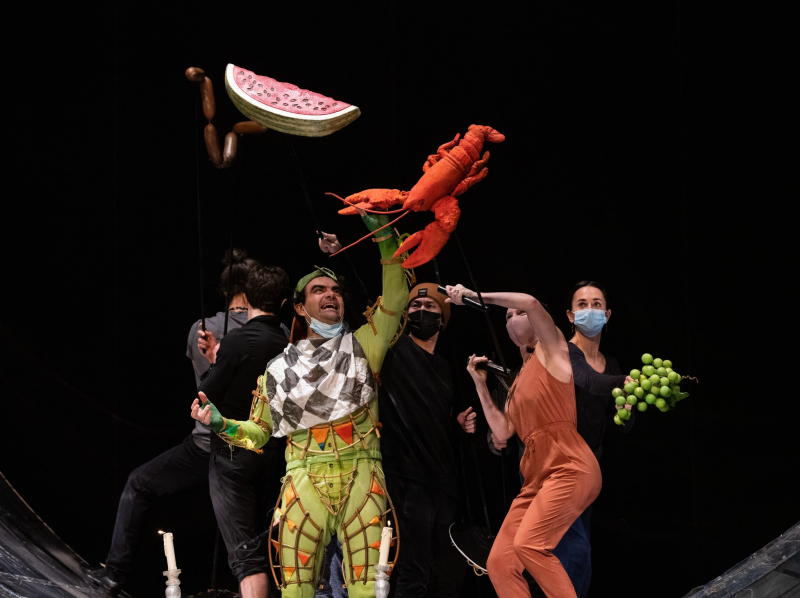
    Saturday December 30th, 2023 matinee – Back for a second performance of the Taymor abbreviated, English-language version of MAGIC FLUTE this afternoon. There were singers new to me in the cast, and also one of the brightest lights of the ‘now’ generation: soprano Liv Redpath, who I was keen to hear again after having very much enjoyed her singing at the Richard Tucker Gala at Carnegie Hall earlier this season, as well as her scintillating Oscar in BALLO IN MASCHERA at The Met.

    Gareth Morrell was on the podium this afternoon, pacing things perfectly and supporting the singers at every moment. It took a few moments for the Three Ladies to find their blend, but once they got going, their singing was appealing – though their role in the story is reduced by too much musical cutting in this version. Amanda Batista’s soprano is bright and clear, and Lindsay Ammann’s alto warm and dusky. As the 2nd Lady, Edyta Kulczak is always fun to hear, and her timbre is the most distinctive of the three. The Three Spirits were again weakly cast vocally. As the two Priests (essentially spoken roles), clear diction is key: Dylan Morrongiello and Paul Corona were spot on. And the duo of Guards – Daniel O’Hearn and Rocky Eugenio Sellers – helped make the Trial Scene a highlight of the show.

    Especially pleasing to hear this afternoon were Thomas Capobianco as Monastatos and William Guanbo Su as the Speaker. Mr. Capobianco seemed to favor a more ‘vocal’ approach to the slave’s music, rather than just going after comic effects. Mr. Su displayed a rich, imposing bass timbre and his excellent diction made his scene with Tamino (my favorite part of the opera) wonderfully understandable. At this, the turning point of the story, a round of applause covered the work’s most poetic moment: Tamino’s “O endless night!

    In the role of the questing Prince, Joshua Blue (who sang a very fine Verdi REQUIEM with Oratorio Society at Carnegie Hall in 2019), sang his ‘portrait aria’ persuasively, though the cuts in the music dampen the effectiveness of this paean to love. Mr. Blue’s voice falls pleasingly on the ear, with its sense of blooming lyricism;…he replied to Pamina’s radiant “Tamino mine!” with an ardent “Pamina mine!

    Liv_Redpath jpg

    Liv Redpath gave a sterling Pamina, her timbre having a nice sheen to it, and her dynamics wonderfully responsive to the princess’s moods. When Papageno, attempting to rescue Pamina, suggests that they lie to Sarastro to cover their subterfuge, Ms. Redpath responded with a heavenly “Be truthful!” and, as mentioned earlier, her “Tamino mine!” was simply gorgeous. She phrased the arching line of Pamina’s great aria perfectly, though an undercurrent of noise from the many children in the audience somewhat undermined the moment.

    Alexander-Elliot

    Alexander Birch Elliott (above) was a clear audience favorite – understandably so. His voice is robustly masculine and his diction clear as a bell: perfect delivery of line after line. He caught all the humor of the translation, and was truly hilarious as he employed an echo effect when trying to locate “Tamino…no…no…!” as darkness engulfed the scene. Mr. Elliott sealed his triumph with a terrific rendering of “Ein Mädchen oder Weibchen” (or whatever it is in translation) and enjoyed a lively ovation at his solo bow before calling forth his Papagena – Lindsay Ohse – who brought a nice touch of earthiness to her singing.

    At opposite ends of the opera’s vast span of vocal range, Jeni Houser (Queen of the Night) and James Creswell (Sarastro) both fared very well indeed. Ms. Houser’s a light-voiced Queen in the manner of Roberta Peters or Erika Köth; her first aria had some lovely delicacies of expression – as if to mask the Queen’s true intentions – and she spun out the coloratura of the concluding segment with aplomb. Her ‘vengeance aria’ was impressive in its agility and accuracy, and she summoned a nice dose of venom for her climactic command: “Swear…swear…swear!!!”  

    As the benevolent Sarastro, James Creswell’s spoken lines were vividly clear and finely inflected. In his two arias, he showed a bass voice suffused with a sense of compassion, true to his mission to save the world from encroaching darkness.

    If only we could find a Sarastro for our own time.

    ~ Oberon

  • Christmas Eve 2022 @ Carnegie Hall

    R rengel

    Above: violinist Rubén Rengel

    Saturday December 24th, 2022 – Spending Christmas Eve at Carnegie Hall with my longtime friend Rob Scott, we enjoyed the New York String Orchestra‘s annual holiday concert which brought us music by Elgar, Mozart, Bach, and Tchaikovsky. Jaime Laredo was on the podium, and the Venezuelan violinist Rubén Rengel was the soloist in a Bach violin concerto. The venerable Hall was packed to the rafters with music-lovers who ventured out on an extremely frigid, windy night to hear great music in the most perfect setting. 

    The New York String Orchestra is a young orchestra: as the players in this pre-professional ensemble took the Carnegie Hall stage, we were struck by their youthful energy and by their sense of dignity. Moments later, we were thrilled by the sheer richness and beauty of the sound they produced.

    Edward Elgar’s Introduction and Allegro, Op. 47, opened the concert. Composed in 1905 for performance in an all-Elgar concert by the newly-formed London Symphony Orchestra, the score calls for a string quartet and string orchestra. The NYSO’s concertmaster, Steven Song, led the quartet which further featured Minji Lee (Principal violinist), Raphael Masters (Principal violist), and Camden Michael Archambeau (Principal cellist).

    From note one of the Elgar, the players filled the Hall with music of abundant warmth, played with passion and poise. Among the quartet, violist Raphael Masters’ playing of a solo passage early on exemplified the high level of musicianship and tonal polish these young people have already achieved. The Elgar flowed on, with the agitated Allegro sections alternating with stretches of big lyricism that had the feeling of a classic film score. A fugue highlighted the sonic allure of each of the orchestra’s sections, and  – all evening, actually – the basses were extremely pleasing to hear.

    Mozart’s Divertimento in D-Major, K. 136, was luxuriantly played; the opening Allegro, with its familiar theme, was taken at a perfect tempo by Maestro Laredo. The Andante was noble and gracious, highlighted by silken sustained tones from Mr. Song’s violin. The steady pulse of the concluding Presto was finely sustained, whilst the music winks at us with sly touches of wit.

    Mr. Rengel now joined the orchestra for J. S. Bach’s Violin Concerto in A-Minor, BWV 1041. We had heard – and greatly enjoyed  – Mr. Rengel’s playing earlier this season with Ensemble Connect at Weill Hall. Tall and slender, the handsome Venezuelan caught the dancing spirit of the concerto’s lilting Allegro. In the Andante, his sweet tone and technical finesse produced enticing subtleties, his control of dynamics drawing us in to the music. The concluding Allegro assai again had a dance-like feeling, and Mr. Rengel’s fluency in rapid passages was a delight to the ear. The violinist, who had held the Hall in a palpable state of silence during this performance, was warmly cheered by the audience at the end, his colleagues onstage joining in the applause.

    Jaime laredo

    Above: Maestro Jaime Laredo

    Very high on my list of favorite musical works is Tchaikovsky’s Serenade for Strings. Like so many other people, I fell in love with this moving and melodious work through performances of Balanchine’s ballet Serenade at New York City Ballet. Tonight, hearing it in concert form, with the movements in their original order (Mr. B had placed the fourth movement before the third) was an immersive experience for me. The music was played with such heartfelt tenderness by these young people, the celli and basses constantly sending waves of poignant nostalgia thru me as memories – both sad and lovely – of past loves filled my mind.

    The love of music has, from a very early age, meant so much to me…most especially thru the dark years of my teens. Music is a constant lover: always there for me with its timeless, saving grace.  

    ~ Oberon

  • Rolando Villazón’s Papageno @ The Met

    Villazon papageno

    Above: Rolando Villazón rehearsing the role of  Papageno; a Met Opera photo

    Saturday December 18th, 2021 – Though I would like to have seen The Met’s Julie Taymor MAGIC FLUTE again, financial constraints decided me to get score desks for all but a couple of Met performances this season. One of the main draws for FLUTE this time around was to hear Rolando Villazón essaying the role of Papageno. When Villazón’s career as a primo tenore faltered a few years back, he shifted into different repertory. But I believe his taking on Papageno might be a first step towards joining the ranks of baritones

    In the event, though he was HUGELY cheered at his solo bow, Villazón’s Papageno didn’t really work in vocal terms. His voice is no longer very attractive, being a bit dry and lacking in resonance. Much of the time he semi-spoke his musical lines, whilst the actual spoken passages, charmingly accented, were not always understandable. He made bird noises from time to time; his rooster crow was hilarious. It struck me that Placido Domingo in his 80s has more voice at his disposal than Villazón, who is not yet 50.

    The remainder of the cast has its pluses and minuses. Outstanding were Matthew Polenzani’s beautifully turned phrases, exquisite piano notes, and clear diction as Tamino, and the rich and rolling sound of basso of Morris Robinson, whose diction was also superb, as Sarastro. Patrick Carfizzi’s Speaker, Rodell Rosel as Monostatos, and Ashley Emerson’s Papagena were excellent, making much of their roles. Daryl Freedman’s Third Lady and Adam Lau’s Second Guard stood out. 

    Kathryn Lewek dazzled with the Queen of Night’s first aria, climaxing with a sustained high-F; later, in her Vengeance aria, Ms. Lewek’s singing was not quite as impressive as she has been in previous seasons. Hera Hyesang Park’s attractive lyric timbre acquired an edgy quality when she put too much pressure on the tone higher up. Felicia Moore has impressed me on YouTube, but today as the First Lady she sang well but not memorably, though the voice blossomed more as the afternoon went on. Sarah Larsen was fine as the 2nd Lady, Matthew Burns and Mark Schowalter spoke clearly as the Priests, and Richard Trey Smagur was a forthright 1st Guard. The Three Spirits were under-powered and pitchy; I hope when The Met gets a new ZAUBERFLOETE, the music of these Three Spirits will once again be sung by petite women, of the same ilk as Suzanne Adams, Christine Weidinger, Frederica von Stade, Helen Vanni, and Joann Grillo, all of whom were Spirits at The Met over the years.

    Jane Glover’s conducting was well-nigh perfect, and the orchestra played well; Chelsea Knox’s flute solos fell gracefully on the ear.

    An annoying child in the Family Circle whined and muttered often throughout the opera, and the sound of moving sets around behind the drop curtain during “O Isis and Osiris” spoiled that beautiful passage. But…all’s well as ends well. As the Three Spirits remind Papageno – and us: “You have a life, so live it while you can!”

    Saturday December 18th, 2021 matinee
    THE MAGIC FLUTE}
    Wolfgang Amadeus Mozart

    Pamina.......................................Hera Hyesang Park
    Tamino.......................................Matthew Polenzani
    Queen of the Night...........................Kathryn Lewek
    Sarastro.....................................Morris Robinson
    Papageno.....................................Rolando Villazón
    Papagena.....................................Ashley Emerson
    Monostatos...................................Rodell Rosel
    Speaker......................................Patrick Carfizzi
    First Lady...................................Felicia Moore
    Second Lady..................................Sarah Larsen
    Third Lady...................................Daryl Freedman
    Genie........................................Julian Knopf
    Genie........................................Julian Fertel
    Genie........................................N. Casey Schopflocher
    Priest.......................................Ashraf Sewailam Priest.......................................Mark Schowalter
    Guard........................................Richard Trey Smagur
    Guard........................................Adam Lau
    Slave........................................Stephen Paynter
    Slave........................................Kurt Phinney
    Slave........................................Craig Montgomery
    Solo Dancer.......................................Maria Phegan

    Flute Solo...................................Chelsea Knox

    Conductor....................................Jane Glover

    ~ Oberon 

  • Met’s MAGIC FLUTE – Saturday Matinee

    Taymor Flute

    ~ Author: Oberon

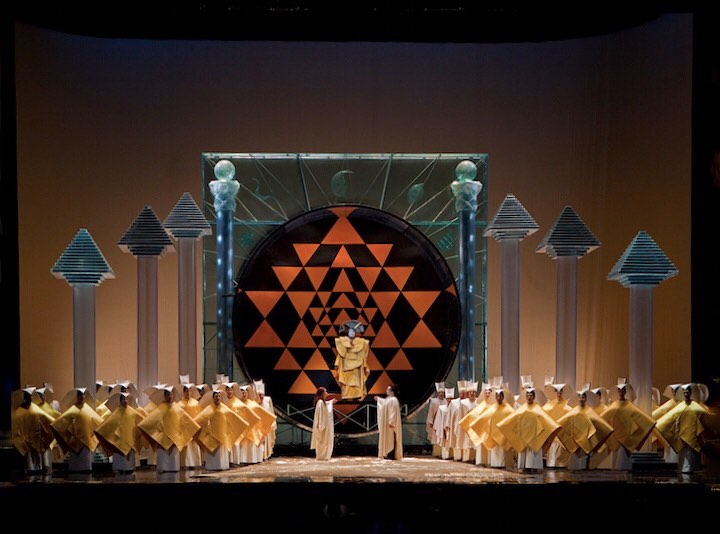
    Saturday December 21st, 2019 matinee – The Met’s shortened, English-language version of Mozart’s DIE ZAUBERFLOETE may not be as musically fulfilling as hearing the original, but it does afford an opportunity to hear lots of voices – from Met veterans to newbies – in one fell swoop, and thus I am likely to go two or three times each season that it is on offer. Although the cuts are irksome, and Papageno is too much the center of attention, there’s still enough opportunities for the singers to make their mark.

    The House was full of children today, and with people who’d forgotten to turn off their cellphones. The kids were receptive during the music, but some longish stretches of dialogue prompted then to have audible monologues of their own. Is it really necessary, in a 100-minute reduction, to bring up the Seven-fold Shield of the Sun? I suppose it really doesn’t matter, since apparently this is the last season we’ll see this production. (Or might they have a new ZAUBERFLOETE, and keep this Taymor holiday season specialty around?)

    Lothar Koenigs was on the podium this afternoon; his tempi were mostly spot-on, but there were some places where stage and pit were not totally in-sync. The Three Genii were unfortunately a weak trio vocally, and at times sounded a little like The Chipmunks. The Three Ladies – Gabriella Reyes, Megan Esther Grey, and Renee Tatum – sounded good individually, but did not always mesh well; the conductor seemed at times to leave them adrift. (Is Megan Esther Grey related to the great Wagnerian soprano, Linda Esther Grey? I will try to find out.)

    Ashley Emerson’s Papagena managed to get the words across when doing her “old lady” voice: no mean feat. Once transformed, she sang brightly. Rodell Rosel was an audience favorite as the crafty Monastatos. The Priests (Christopher Job and Scott Scully) and Guards (Arseny Yakovlev and Jeremy Galyon) did well.

    Joshua Hopkins sang excellently as Papageno, and the audience loved him; his referring to the Priests as “coneheads” was priceless. David Portillo’s attractive tone and appealing lyricism made his Tamino a winning vocal presence, with a nice feeling of tenderness. In his scene with Patrick Carfizzi’s Speaker, to my mind the key to the whole opera, both singers were clear of diction and dramatic intent. Mr. Portillo’s “O endless night!” was moving; and later, his “Music is the heart’s true home…” seemed to express what this opera is all about.

    Joelle Harvey’s vocal shimmer at “Be truthful!” was engaging, as was her self-defense to Sarastro. She made a lovely, vulnerable impression in Pamina’s aria with her expressive dynamic palette and persuasive phrasing. At her “Tamino mine!” a sense of radiance was met by Mr. Portillo’s ardent response. The two sang gently and sweetly in the quartet with the Two Guards.

    Kathryn Lewek’s Queen of the Night gave the afternoon its spark; after swirling thru the coloratura of her first aria, she sustained the high-F: an exciting moment. Her “Wrath of Hell” had great accuracy and brilliance, the high-Fs slightly metallic but hitting the bullseye each time. On her final command, “Swear!”, the soprano took a soft attack and then swelled the note to white-heat. She won vociferous applause here, and again at her solo bow. She has amply proven herself in this demanding role several times; I hope now we can hear her as Lucia or Constanze. 

    Morris  r jpg

    Spectacularly anchoring the performance was Morris Robinson’s Sarastro: generous of tone, crystal clear of diction, and benevolent by nature. A grand performance from this formidable basso. Bravo!

    All afternoon, much of the spoken dialogue seemed over-wrought and campy; Papageno tended to shriek at the least provocation. David Portillo as Tamino spoke with a slight, charming accent: not amiss, as this prince has come from afar.

    ~ Oberon

  • Michael Todd Simpson in L’AMOUR DE LOIN

    Simpson, Michael Todd

    Saturday December 24th, 2016 matinee – This afternoon we had the unalloyed pleasure of experiencing baritone Michael Todd Simpson’s performance as Jaufré Rudel in Kaija Saariaho’s breathtakingly beautiful opera L’Amour de Loin at The Met. Mr. Simpson was replacing the scheduled Eric Owens in the role, and to say that he gave an impressive interpretation would be putting it mildly: in terms of both voice and physical presence, Mr. Simpson was simply ideal.

    We settled in at our balcony box this afternoon, observing the many empty seats for this matinee; neither the Saariaho nor Strauss’s Salome – to be shown in the evening – is really holiday fare, but that’s what The Met programmed on this day before Christmas. The Amour production has its striking moments, but overall it was the musical experience that thrilled us. 

    My friend Dmitry and I had been looking forward to seeing the Saariaho opera ever since the plan for the opera’s Met premiere was whispered to me by my choreographer-friend Luca Veggetti. Luca is good friends with Ms. Saariaho, and they have collaborated here in New York: Luca staged the composer’s ballet MAA at The Miller Theatre in 2010, and in 2013 he invited me to a rehearsal of the same work when he was preparing it for a Paris production. Luca turned to Ms. Saariaho’s music for his 2012 all-female dancework From the Grammar of Dreams, created for The Martha Graham Dance Company. In 2014, a fascinating collaboration between Gotham Chamber Opera and The Martha Graham Dance Company resulted in a memorable presentation of Saariaho’s The Tempest Songbook at The Metropolitan Museum of Art: I saw an early rehearsal, and the stunning opening night performance. Ms. Saariaho was also featured in a composer’s evening at The Miller Theatre in February 2014.

    L’Amour de Loin premiered at the Salzburg Festival in 2000. The Robert Lepage production – which The Met is presenting – is the tenth production of this striking work to date; that fact alone attests to the opera’s viability, which springs – in my opinion – both from the magical sound-world Kaija Saariaho has created and from the ineffable sadness and mystery of the story. 

    Jaufré Rudel was a 12th century troubadour from Blaye, near Bordeaux in south-west France. He fell in love – sight-unseen – with the Countess of Tripoli after hearing her praised by pilgrims returning from Antioch. He wrote poems about her and sang of her nobility and virtue. From this idealized love sprang Jaufré’s desire to meet her. He joined the Crusade and set sail for the Holy Land, but he fell gravely ill on the Mediterranean voyage and arrived at Tripoli only to die in the Countess’s arms. She had him buried in the temple of her city, and thereafter, undone by her grief, she became a nun.

    Kaija Saariaho’s score, as with Debussy’s for Pelléas et Mélisande, creates a unique atmosphere with its timeless and treasurable tale of a love that is both exalted and doomed, rendered in music of intoxicating tenderness and – eventually – despair. In shimmering orchestral textures, the composer summons up visions of the sea which divides the lovers and upon which the mysterious Pilgrim sails in his fragile boat, carrying messages between Jaufré and his beloved Countess.

    From the very first measures, this music drew me in and held me, as if in a dream from which one doesn’t want to awaken. Countless passages from the opera were so hauntingly expressive that I regretted not having booked more than one performance. The music darkened considerably in the second half of the evening: there’s a vivid sea-faring prelude to Act IV, some dance-like rhythms spring up; and Jaufré’s lamenting phrases that he may not live long enough to meet his beloved are deeply moving.

    The Met orchestra played superbly under the baton of Susanna Mälkki: I loved watching her from my perch high above the pit, and she was given a warm reception when she appeared onstage at the end of the opera.

    This afternoon was actually my second encounter with Michael Todd Simpson at The Met; in 2012 he caught my attention in the brief role of the Tsar’s herald in Khovanschchina. It is Mr. Simpson, as Jaufré Rudel, who opens the Saariaho opera. But even before he began to sing, the baritone established himself as a charismatic presence: tall, fair of complexion, with expressive eyes and handsome cheekbones, Mr. Simpson put me in mind of the Royal Ballet’s Edward Watson – and believe me, I can’t pay a higher compliment than that.

    Yet all that would have been for nought had Mr. Simpson not had the vocal goods to back up his physical appeal. But …he does! This is a warm, clear, easily-produced voice – a voice wonderfully present in the big House. Mr. Simpson seemed utterly at home, both in the persona and in the music; one would have thought he’d sung this piece dozens of times since every word and note in his nuanced performance radiated assurance and grace. All afternoon, the Simpson voice was a veritable font of baritonal beauty, and while comparisons are not always meaningful, I can only say that listening to Mr. Simpson gave me the same deep pleasure I have often drawn from the singing of Sanford Sylvan and Thomas Hampson. 

    Deservedly hailed with bravos at his solo bow, Mr. Simpson proved so much more than a stand-in: he’s a distinctive artist, and one I hope to hear again – soon and often.   

    Mumford01_(c)Dario-Acosta

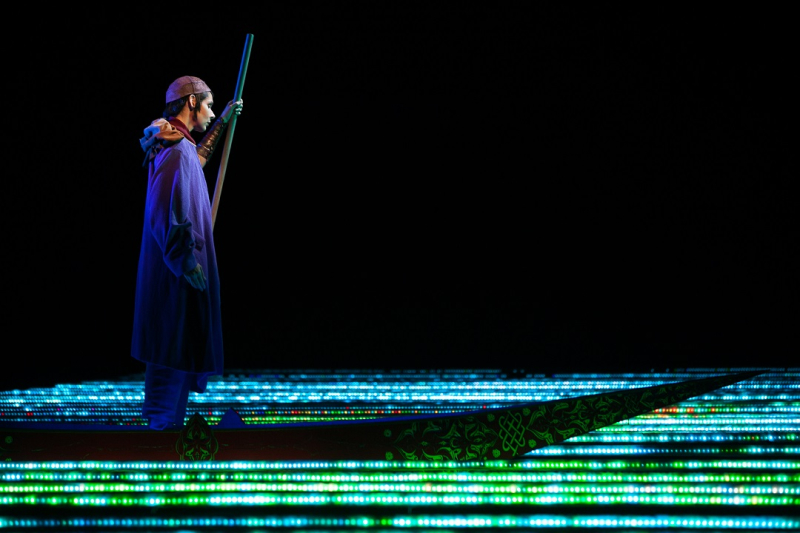
    More sublime singing this afternoon came from mezzo-soprano Tamara Mumford (above, in a Dario Acosta portrait) in the role of The Pilgrim. Patiently plying her small boat across the stage, Tamara looked out at us with far-questing eyes. She’s clad in neutral garb, a messenger with a masculine aura; but there’s no question that the voice is anything but intrinsically female. And what a voice it is! As with every note I have heard from this superb singer since she first came onto the scene, Ms. Mumford’s house-filling and lustrous tone, evenness of range, and pliantly expressive phrasing combined to imbue her performance with a marvelous glow. 

    La-Amour-de-loin-Tamara-Mumford

    Above: Tamara Mumford as The Pilgrim

    Hq720

    Above: Susanna Phillips as Clémence, Countess of Tripoli. In this role, Ms. Phillips had her finest Met success to date. A beautiful young woman, she well-captured the initial reserve and ultimate passion of the poet’s muse. Traces of stridency marked some of her uppermost notes, but overall the soprano coped impressively with the demands of the role, creating a lyrical atmosphere with her clear phrasing and sense of dynamics. And she looked so lovely, gazing out across the sea to her lover from afar.

    Robert Lepage’s infatuation with machinery – which gave us the clunky, cumbersome $20 million RING Cycle set that languishes in storage somewhere – was evident in a huge metal see-saw apparatus that swung slowly around the stage thru much of the evening. The waves of the sea were evoked by row upon row of tiny LED lights which flickered in changing colours and patterns, eventually tiring the eye. The chorus are seated beneath the waves and pop up when they are called on to sing. As the afternoon progressed, I increasingly wished The Met had imported the imaginative ENO/Cirque de Soleil production rather than this earthbound contraption. Still, I was extremely grateful to experience the opera live in any setting.  

    Some people complained of the opera’s longueurs; I never felt this at all, but I must say that the end of the opera was something of a disappointment. After Jaufré’s death, one wants a silence and then an evaporating orchestral postlude. Instead, Clémence has a sort of mad scene that becomes too verismo in its intensity. She expresses the same feelings, over and over, while one is always hoping each utterance is her last. There’s even some screaming. For me, this shattered the mood of all that had gone before. How much more poetic it would have been to end with Jaufré’s tender phrase: “In this moment, I have all that I desire.”

    Most people seem to believe that a love for someone you’ve never met is unrealistic, and that a mutual bond is unattainable. Speaking from personal experience, I strongly disagree.

  • Score Desk for TRAVIATA

    Rebeka

    Above: soprano Marina Rebeka

    Saturday December 27th, 2014 matinee – The Met’s lame production of La Traviata – yet another attempt to make opera ‘relevant’ – isn’t worth seeing, but I thought this particular cast might be worth hearing, so I bought a score desk for today’s matinee. In the event, Marina Rebeka (Violetta) and Quinn Kelsey (Germont) made for a particularly exciting afternoon: their singing of the great Act II duet – the heart of the opera – was indeed memorable. And both of them were in fact excellent throughout. It’s good to experience this kind of singing in a standard-rep work at The Met, for there’s no guarantee of it in this day and age. 

    On the podium, Marco Armiliato seemed more intent than usual on molding a convincing rendering of the score: sometimes he is too hasty, too loud, too provincial. But today he showed great attention to details of tempo and dynamic, and allowed his singers plenty of leeway to linger on favorite notes and pamper beloved phrases. The orchestra played very well.

    Aside from Maria Zifchak (Annina) and James Courtney (Dr. Grenvil), the singers in the smaller roles were more serviceable than memorable.

    In a role which has been sung in living memory at The Met by such luminaries as Richard Tucker, Alfredo Kraus, Carlo Bergonzi, Nicolai Gedda, Neil Shicoff, Placido Domingo, and Jonas Kaufmann, Stephen Costello – today’s Alfredo – seemed like a case of sending a boy to do a man’s job. A feeling of uncertain pitch pervaded quite a bit of Costello’s singing, and despite a lovely passage here and there, he seemed unsure as the music ventured higher, and his breath-line sometimes didn’t sustain. His offstage serenade in Act I was flat, and he struggled with the cabaletta “O mio rimorso”, sounding tentative and uneasy. It’s sad to hear a young and promising voice in this state; it might be a good idea for him to take a break and address the problems that seem to have cropped up in his singing.

    But Marina Rebeka and Quinn Kelsey swept Verdi’s immortal score to triumph with their outstanding vocalism all afternoon. Ms. Rebeka, who has proven vastly pleasing in Rossini’s Moïse et Pharaon at Carnegie Hall and in Don Giovanni at The Met, moved into the upper echelons of the many Violettas I have encountered in-house – more than 60 of them to date – in my many years of opera-going. Her voice has a pearly sheen; she displays impressive dynamic control, appealing turns of phrase, vibrant top notes, agile coloratura; and it’s a voice with a personality behind it. Her singing of the Act I scena was some of the most aurally stimulating I have heard in recent seasons, with plenty of verve in “Sempre libera” and a nicely placed E-flat to polish it off.

    In Act II, the soprano met her vocal equal in Quinn Kelsey, who had sung an excellent Marcello in Boheme earlier this season. This vocal duo of Met-sized voices brought to this scene the kind of tonal allure, dramatic nuance, passion, and sheer vocal glamour that made the theatre seem to pulsate with emotion. Trading phrases, each seemed to produce one magical effect after another: the sopranos pppp “Di due figli?”, the baritone’s twinge of heartache at “Deh, non mutate in triboli…” and later his deeply felt “…tai detti a un genitor!” led us to Ms. Rebeka’s superbly delicate “Dite alla giovine…”: the absolute turning point of the opera. Throughout this duet, the two singers gave the kind of involved, emotionally engaging singing that seems often to be missing in performances today. I scrawled the word “Wow!” in my Playbill. 

    Q Kelsey

    Mr. Kelsey (above) returned for a big-toned, finely-modulated and tender “Di Provenza”, winning a burst of sincere applause from the crowd (who were rather stingy with aria-applause today but went nuts at the end of the opera). I kind of wish they’d left off the baritone’s cabaletta – which Kelsey sang very well but which seems musically trite to me and de-rails the impetus of the drama.

    In the scene at Flora’s, Mr. Costello sounded flattish and seemed to lack reserves of power for the denunciation scene, but Mr. Kelsey upbraided his son with some grand singing to which Costello’s response was perhaps his best moment of the evening. Ms. Rebeka sailed over the ensemble with gleaming tone, having sung the opera’s most moving passage – “Alfredo, Alfredo…di questo core…” (where she prays that God will spare her beloved from remorse for his callous behavior) – beautifully.

    Moving directly from the country-house to Flora’s party scene to the final scene in succession, without pause, makes for a very long sing for the soprano, but Ms. Rebeka took it all in stride and did some of her most ravishing singing in “Addio del passato” where she worked some piano magic along the way and for once made the second verse seem necessary. Despite Mr. Costello being again off-pitch in “Parigi, o cara” the soprano managed to carry it off, moving on to a pensive “Ma se tornando…” as the reality that Alfredo’s love cannot save her sinks in; she bursts out thrillingly in “Gran dio, morir si giovine”, though the tenor’s response is effortful…and later in an ensemble passage he seems quite taxed by a couple of B-double-flats.

    Her chance for happiness has come too late; but with a big build-up of hope, Violetta speaks of her pain having vanished. Rising to a stunning top-A on “O gioia!”, Ms. Rebeka draws the opera to a heart-rending close.

    Big ovations for the soprano and baritone at their curtain calls; the House was still resounding with cheers as I left. If my upcoming two performances of Aïda come close to the level of today’s Traviata, I’ll be more than pleased. 

    Metropolitan Opera House
    December 27, 2014 matinee

    LA TRAVIATA
    Giuseppe Verdi

    Violetta.....................Marina Rebeka
    Alfredo......................Stephen Costello
    Germont......................Quinn Kelsey
    Flora........................Maya Lahyani
    Gastone......................Eduardo Valdes
    Baron Douphol................Jason Stearns
    Marquis D'Obigny.............Kyle Pfortmiller
    Dr. Grenvil..................James Courtney
    Annina.......................Maria Zifchak
    Giuseppe.....................Juhwan Lee
    Messenger....................Joseph Turi
    Guest........................Athol Farmer
    Gentleman....................Paul Corona

    Conductor....................Marco Armiliato

  • Score Desk for LES TROYENS

    Cassandre

    Cassandra:

    “Malheureux roi! dans l’éternelle nuit,
    C’en est donc fait, tu vas descendre!
    Tu ne m’écoutes pas,
    tu ne veux rien comprendre,
    Malheureux peuple,
    à l’horreur qui me suit!”

    Saturday December 29, 2012 – The dilemma of whether or not to attend a performance of Berlioz’s LES TROYENS at the Met concerned me for a few days. This epic masterwork is one of the greatest operas ever written, unique in its structure (it is actually almost like two distinct operas; each could stand on its own), and it is a veritable goldmine of musical marvels. On a personal note, the opera plays a stellar role in my autobiography, since it was after a magnificent 1973 matinee performance of the Berlioz work that I had my long-awaited first homosexual experience. Normally it would be on my highest-priority list of operas to see in any Met season where it’s presented. But the combination of a production that has never really satisfied me visually, a conductor who has seldom – if ever – moved me, and the disastrous casting of two of the opera’s principal roles, I at first wrote it off completely.

    But then the thought that I might never again have an opportunity to hear LES TROYENS in-house decided me in favor of going; not needing to see the production, I bought a score desk and waited for the day with a mixture of excitement and dread. A few days before the performance, one of the singers whose participation was troubling me – Marcelo Giordani – was announced as ‘withdrawing’ from the remainder of the run after a reportedly awful night at the prima folllowed by vocal struggles in the ensuing performances. His announced replacement, Bryan Hymel, has been making a name for himself of late in some of opera’s most demanding roles.

    Elizabeth-bishop

    I arrived at the theatre to find another last-minute cast change: Elizabeth Bishop (above) was to sing Dido instead of Susan Graham. This was my second experience of hearing Ms. Bishop in a performance originally scheduled for Graham, and though I’d been looking forward to Graham’s Dido, Bishop was perfectly fine. So I settled in with my lovely old scores (one for each ”opera’), wishing for a different maestro and different Cassandra, but very much anticipating both the music and the singing of the other cast members. 

    The opera opened impressively with the lively chorus depicting the joy of the Trojan people who have discovered that the Greeks, who have besieged their city for a decade, have suddenly and inexplicably departed. Sadly, the afternoon then took a real slump as Deborah Voigt began Cassandra’s great opening monolog. Voigt’s voice has declined even further than from my last encounter with her in the theatre, and her singing of this iconic role was pallid; the voice is almost unrecognizable as the soprano who once thrilled me with her Ariadne and Elsa. Unsteady and small of scale, her singing seemed apologetic for the most part, with only very few notes that bore any relation to what she once sounded like. Her final high-B in the duet with Chorebus was desperate and unpleasant, and she simply lacked the expressive dramatic thrust for the great scene in which Cassandra tries to prevent the populace from bringing the giant horse within the city walls. And she was ineffectual in the opera’s great final scene. The role calls for forceful declamation and sweeping emotional conviction: a larger-than-life feel. That Voigt could not come within hailing distance of such great interpreters of the role as Shirley Verrett and Jessye Norman was indeed sad. Her shortcomings prevented the first half of the afternoon from making its usual vivid impression. 

    In 1994 Dwayne Croft replaced Thomas Hampson as Chorebus on a Saturday matinee broadcast of TROYENS; he sang superby that day and seemed in fine voice this afternoon until suddenly, near the end of the big duet with Cassandra, his voice seemed to go hoarse. Bryan Hymel made an impressive entry as Aeneas, his singing both beautiful and urgent. In the great scene where Aeneas is warned by the Ghost of Hector of Troy’s impending doom, Hymel and David Crawford were both excellent.

    In the haunting scene where the widowed Andromache brings her young son before the court, her injection of a stifled shriek was perhaps unnecessary in what is written as a silent role. But here Ms. Voigt as Cassandra did have one of her fine moments as she quietly intoned her warning to Andromache: “Save your tears, widow of Hector! Disasters yet to come will make you weep long and bitterly”.

    Though lacking a commanding Cassandra to lead them, the scene of the mass suicide of the Trojan women managed to make a very strong impression. Thus far, as the first part of TROYENS came to a close, Fabio Luisi’s conducting had been ‘factual’, each musical “i” dotted and “t” crossed (as per the score) but lacking in mystery and mythic grandeur. His pacing was on the quick side, which is fine.

    Moving to Carthage, Luisi and his players seemed to find a more congenial glow in the music. I must commend the conductor for making the ballet music (which could just as well have been cut) fully palatable; and from Iopas’ serenade thru the grand septet and on to the end of the sublime love duet, Luisi gave what was for me his finest music-making to date at the Met. 

    Elizabeth Bishop’s voice is not creamy and opulent but she’s a fine singer and not only did she save the day, she did so with distinction. Establishing herself in the opening public scene, it was in the more intimate settings that follow where Bishop made her finest mark: the ravishing duet with her sister Anna and then – impressing in both tonal allure and poetic nuances – from “Tout conspire a vaincre mes remords” straight thru to end end of the “Nuit d’ivresse”. In the anger of the fiery quayside duet, and in her later expressions of regret, and of futile fury, Bishop brought some touches of verismo passion which worked well for her. In the stately, resigned “Adieu fiere cite” she was at her most poignant, then rousing herself yet again vocally to bring the opera to a close with her visionary “Rome!…Rome!…immortelle!” As the afternoon progressed, Bishop dispelled the disappointment of not hearing Ms. Graham, and the audience greeted her affectionately at her curtain calls.

    Bryan-hymel-1340266185-article-0

    Above: Bryan Hymel. Mr. Hymel’s Aeneas was marvelous and his type of voice – a liquid and juicy ‘big-lyric’ with a blooming top – is very well-suited to the music. Wagnerian tenors like Jon Vickers, Gary Lakes and Ben Heppner have often been heard in this role (Vickers managed to make it very much his own), and Placido Domingo handled it impressively despite its being too high for him. But for me the best rendering of this arduous music in living memory has come from Nicolai Gedda on an abridged RAI concert recording. In vocal size and stylistic grace, Hymel comes close to the Gedda ideal. A trace of sharpness crept in here and there, but from his tender farewell to his son Ascagne right thru to his final “Italie!” as Aeneas’ ships cast off for to their destiny, Hymel sang beautifully and had the audience in the palm of his hand.

    He and Ms. Bishop found the magical blend that makes the love duet one of opera’s most memorable, and in his great scena “Inutile regrets” with its remorseful “Quand viendra l’istante” and the high-lying concluding ‘cabaletta’, Hymel was glorious. His singing was full-toned and expressive, encompassing some lovely piano effects, and so moving with his heartfelt “A toi mon ame!”; the audience reacted with excited cheers as the tenor swept to the sensational climax of this great scene, then drew our further admiration as he led his soldiers aboard ship to take leave of Carthage. 

    Cc54e53b-0776-4d1e-9433-8376d0be5f01

    There are two more tenor roles in LES TROYENS A CARTHAGE and both were ideally sung today. In Iopas’ wondrously evocative (and very exposed) “O blonde Ceres” Eric Cutler (above) gave the afternoon’s most fascinating vocalism, with lovely line and ravishingly heady piano effects, and a spine-tingling ascent to a gloriously lyrical high-C. Bravo!!! 

    PAUL_APPLEBY_93R3775-4WEB

    Above: Paul Appleby. In the homesick song of the young sailor Hylas, Mr. Appleby’s beautifully plaintive timbre and the haunting colours he wove into the words made this another high point of the day.

    Home

    Above: Karen Cargill. I had very much enjoyed Ms. Cargill’s Waltraute last season and was glad of a chance to hear her again as Anna. There’s a touch of Marilyn Horne in Cargill’s voice and she sang her two big duets (one with Dido, the second with Narbal) most appealingly.

    Kwangchul Youn’s voice is warm and sizeable; his tone seems to have taken on a steady beat now though he handled it quite well. His Narbal was pleasing, and he was also cast as Mercury, his voice bringing an ominous feel as he intones “Italie! Italie!” after the great love duet, reminding Aeneas of his duty and sealing Dido’s fate.

    Richard Benstein was a strong-toned and authoritative Panthus and I very much liked hearing old-stagers Julien Robbins (Priam) and James Courtney (2nd Soldier) again. Julie Boulianne was a fine Ascagne, Theodora Hanslowe was Hecuba, and Paul Corona shared the soldiers’ scene with Mr. Courtney.

    I so enjoyed experiencing this masterwork in-house again; it may not have been a perfect performance, but it certainly made for a very satisfying afternoon. So nice to see my friend Susan there, and – being n a good mood – I even chatted with some people around me: totally out of character. Very much looking forward to my next ‘score desk’ operas: DON CARLO and TRAVIATA (who needs to look at a clock and a sofa?), and then all the RING operas in the Spring. It’s the place to be!

    Metropolitan Opera House
    December 29, 2012 Matinee

    LES TROYENS
    Berlioz

    Part I: La prise de Troie

    Cassandra...............Deborah Voigt
    Coroebus................Dwayne Croft
    Aeneas..................Bryan Hymel
    Ascanius................Julie Boulianne
    Priam...................Julien Robbins
    Hecuba..................Theodora Hanslowe
    Helenus.................Eduardo Valdes
    Andromache..............Jacqueline Antaramian
    Astyanax................Connell C. Rapavy
    Panthus.................Richard Bernstein
    Hector's Ghost..........David Crawford

    Part II: Les Troyens à Carthage

    Dido....................Elizabeth Bishop
    Anna....................Karen Cargill
    Narbal..................Kwangchul Youn
    Iopas...................Eric Cutler
    Ascanius................Julie Boulianne
    Panthus.................Richard Bernstein
    Aeneas..................Bryan Hymel
    Mercury.................Kwangchul Youn
    Hylas...................Paul Appleby
    Trojan Soldier..........Paul Corona
    Trojan Soldier..........James Courtney
    Priam's Ghost...........Julien Robbins
    Coroebus's Ghost........Dwayne Croft
    Cassandra's Ghost.......Deborah Voigt
    Hector's Ghost..........David Crawford

    Laocoön.................Alex Springer
    Royal Hunt Couple.......Julia Burrer, Andrew Robinson
    Dido's Court Duet.......Christine McMillan, Eric Otto

    Conductor: Fabio Luisi

  • Ailey Dances Taylor’s ARDEN COURT

    2171b376-36df-4999-97fa-2e282f56ccfd

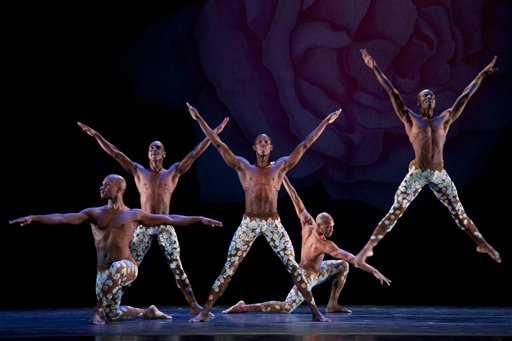
    Saturday December 24, 2011 matinee – Paul Taylor’s ARDEN COURT is one of the 20th century’s great dance masterpieces; this season it is being danced by Alvin Ailey American Dance Theater (photo above by Mark Lennihan) during their season at City Center, the first Taylor work to be performed by the Ailey Company. Looking at my packed December calendar a couple of weeks ago, I realized that today was going to be my one Ailey opportunity of the year, and how fortunate that ARDEN COURT was part of an extremely attractive programme:

    Arden Court 
    Cry
    The Hunt
    Revelations

    Copy of 8(3)

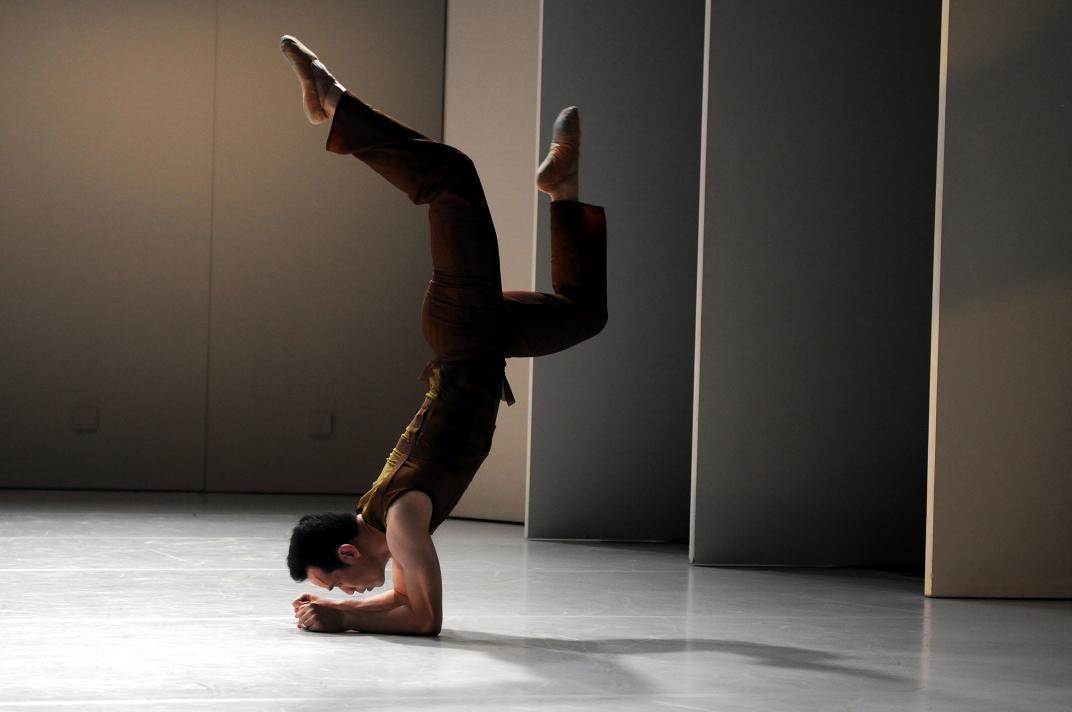
    One of the finest dancers on the current scene, Kanji Segawa, joined Ailey earlier this year and Kokyat and I were especially happy to find Kanji dancing a lot this afternoon. Kokyat photographed Kanji (above) dancing with MORPHOSES at the Guggenheim in the Autumn of 2010. His brilliant, buoyant leaps in the men’s diagonal entree passage of ARDEN COURT were outstanding, and he flung himself into the non-stop demands of Robert Battle’s dark and sexy THE HUNT with characteristic flair. 

    Taylor danced by Ailey looks phenomenal. The dancers, in their sleek costumes, are propelled with effortless grace and power thru the demanding combinations, swept along on the vivid and superby danceable music of William Boyce. ARDEN COURT was set on the Ailey Company by one of the all-time great Taylor dancers, Cathy McCann.

    AAADT_s_Briana_Reed_in_Alvin_Ailey_s_Cry._Photo_by_Paul_Kolnik.-prv

    Briana Reed (above, photographed by Paul Kolnik) danced the extended three-part Alvin Ailey solo CRY; with her unfettered extension and combination of strength and tenderness, Ms. Reed scored a huge hit with the crowd and was greeted with rockstar ovations, thoroughly deserved.

    Ailey2-dance2_1834269b

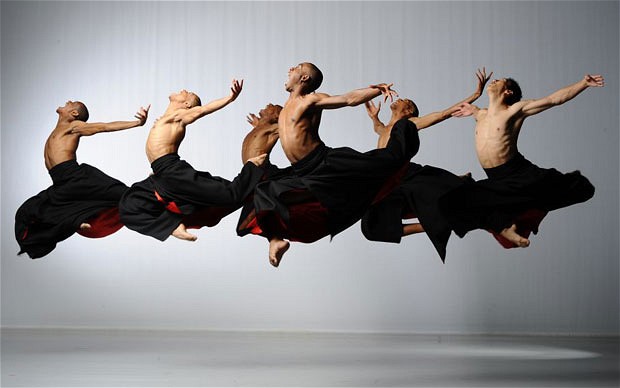
    Robert Battle’s powerful all-male ensemble work THE HUNT (above, Eduardo Patino photo) is set to a driven, percussive score by Les Tambours du Bronx. With six men (it seems like more) in long black skirts swirling and sailing thru the air, this work is sexy, ritualistic and mysterious all at once. There are few moments of repose in this martial-arts inspired, combative dance. 

    6a00d8341c4e3853ef0162fe656fbf970d-800wi
    Revelation
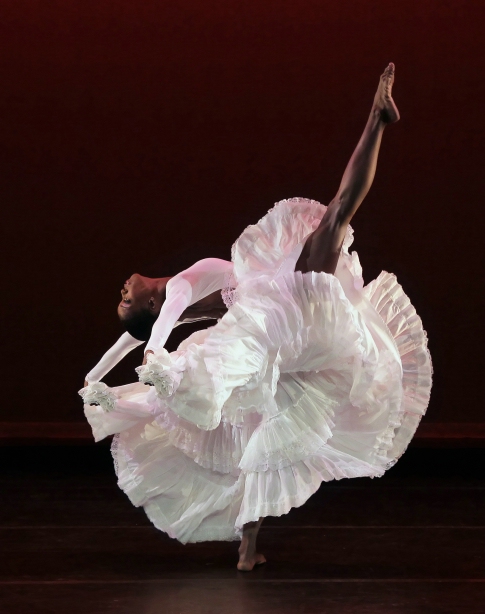
    : Clifton Brown, above, photographed by Kokyat earlier this year in rehearsal with Lar Lubovitch. We’ve been so fortunate to have been in the studio with Clifton several times in 2011 while he’s been working with Lubovitch and with Jessica Lang Dance. Today, in Ailey’s classic REVELATIONS Clifton burst onto the stage in Sinner Man and treated us to some simply magnificent dancing. In the finale he was a god-like cavalier, radiating both majesty and warmth. 

    Each section of REVELATIONS is set to traditional spirituals and gospel hymns, celebrating congregation and community while sometimes investigating individual journeys of the spirit. One memorable segment is I Wanna Be Ready, superbly danced today by Michael Francis McBride. In the finale, the women appear in marigold-yellow gowns with fans on a sweltering summer afternoon for a jubilant cotillion with their handsome beaus.

    I hardly ever have a chance to see the Ailey Company; their season always falls at the busiest time of the year. This afternoon’s performance showed them to be on peak form as the Robert Battle era commences with a bang! Such splendid dancers: I need to get to know them better.