Tag: Saturday January

  • BalaSole: IDIOMS

    L1310260

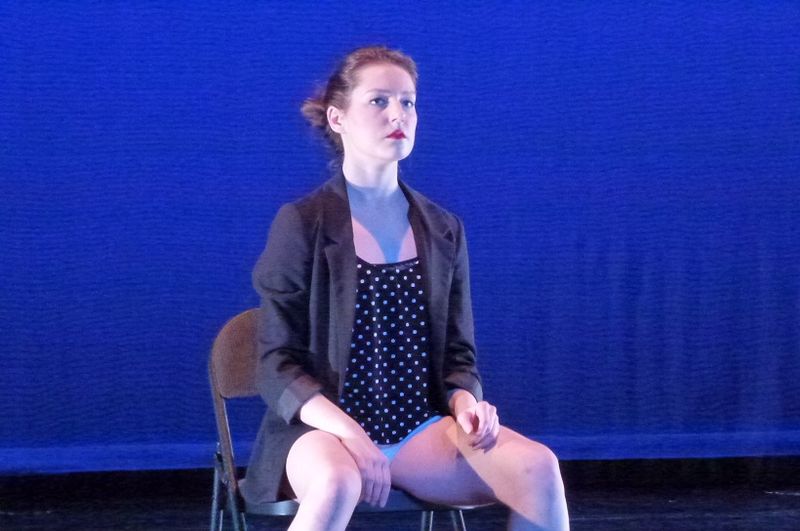
    Above: dancer Marion Helfenstein

    Saturday January 25th, 2014 – BalaSole Dance Company presenting IDIOMS at the Ailey Citigroup Theatre.  A sold-out house, including many people who were experiencing BalaSole for the first time, reacted enthusiastically to each solo work performed, covering a wide stylistic and musical range. The Company’s artistic director Roberto Villanueva selected and mentored nine solo artists for this program which also featured Emerging/Re-Emerging artists Hailey Bates, Lea Clay, and Nicole Roberts. And no BalaSole performance would be complete without Roberto himself dancing.

    True to the customary BalaSole formula, all of the evening’s participating dancers appear together in the opening and closing pieces on the program; these danceworks are created during the week-long run up to the performance dates, and for IDIOMS they were danced to a delicious musical fusion of Richter and Vivaldi.

    Marion Helfenstein commenced her solo Who Are Those Ugly Ladies In The Mirror? seated in a chair. A spoken passage gives way to a pulsing mandolin rhythm as the dancer’s gestures tell her story. When the music (by Rene Aubry) develops a deeper resonance and more intense beat, she rises to dance swiftly about the space; yet in the end she cannot escape her chair.

    Trashina Conner first enters in a state of calm wonderment to the sound of a piano; as the cello takes over, a ritual of mourning takes place. The dancer then veers between hope and despair as the music becomes more intense; she runs around the space – either pursuing something or being pursued. At last she speaks: a date – March 26, 2006 – “A nightmare…with eyes wide open…” This recollection of a traumatic event gives this solo its title 3.26.06. This intensely personal work was expressively danced, evoking real emotion from both dancer and viewer.

    Jonathan Breton’s solo Memories was performed to a beautiful score by Ezio Basso; the dancer’s slender form moved with supple grace and lyrical port de bras thru combinations from the classic ballet vocabulary persuasively meshed into a contemporary statement. Jonathan’s lithe torso and handsome line created a lyrical atmosphere, whether he was standing in a pool of light or moving freely about the space. A self-embrace near the end was a fine expressive touch.

    Ashley Peters appeared as an Emerging Artist in BalaSole‘s Autumn 2013 concert: VISAGES. I thought then that she showed real potential, and tonight she was back in a solo work: Past and Pending. To music by Outside – violin over a heavy metallic beat – Ashley covered the space in restless, dynamic moves, her body talking to us directly.

    Paulina Bracone’s solo It’s Possible developed well in the unusual juxtaposition of spoken word and ballet-based movement. This restless solo showed the dancer’s vulnerable femininity; as the music swells under the spoken narrative, her movement becomes more expansive. This improbable combination of masculine (the voice) and feminine (the dancer) elements ended up working well thanks to Paulina’s sense of commitment.

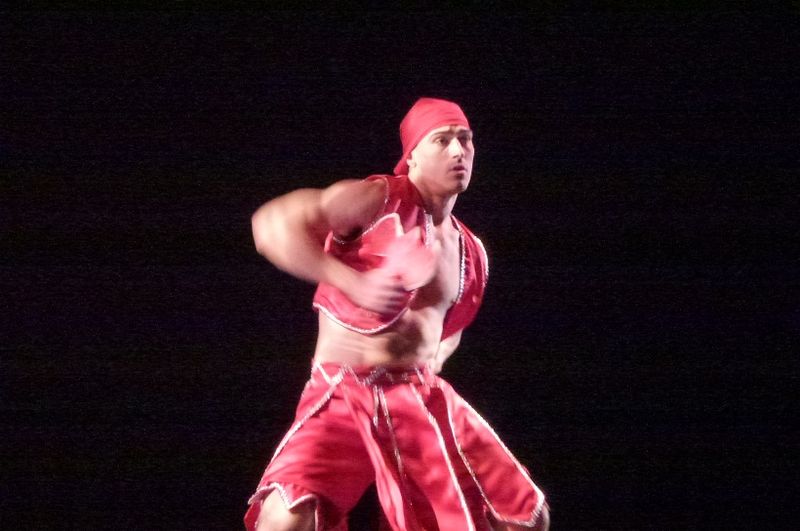
    Hunter Frederick Houde’s Afro-Cuban solo Changó emerges from Santeria folk legend: Changó is the owner of fire, lightening, thunder, and war, but he is also the patron of music, drumming, and dancing. He represents male beauty and virility, passion and power. Dressed in red and carrying a small hatchet, the dancer’s moves were vibrant and instinctive; rolling thunder, folklike chant/vocals and intense drumming push this fiery solo to its conclusion: a huge thunderclap as the lights go out. 

    Christen Quattlebaum’s solo Fireflies opens to a piano tune and is later taken up with the whimsical lyrics of the title-song. Christen shows off an expansive developpé and zooming extension, but her quirky choreography also includes gentle hops and an arcane gestural language. This off-kilter solo drew our focus in its movement, while making us wonder what the song was really about. 

    Tracy Singer enters rather dejectedly for her solo What I Did With What You Left Me. This is a proud woman who’s been shot down by love, but she’s going to bounce back. Sultry jazz marks her sense of post-breakup lethargy, but agitation emerges in supple nuances. She hits the floor – literally – but then takes off in a space-filling self-absorbed danced passage to a big blues anthem.

    Caroline Brethenoux’s solo Message Send Failure opens in silence, the dancer having difficulty breathing. At last she is able to enunciate: “There was something that I wanted to tell you.” Since she finds difficulty in speaking, she hesitantly begins to express herself in dance, though remaining on the floor; her frustration leads to a silent scream. In the end she rises, suggesting she is ready to pull herself together. But then…she can’t.

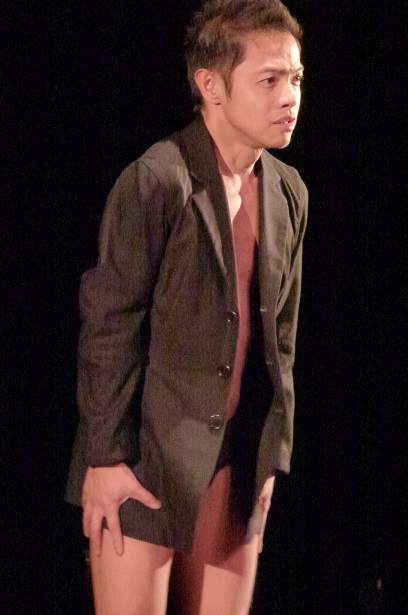
    Roberto Villanueva’s solo Incomplete – performed to solo guitar – found the dancer clad in abbreviated black briefs and a dinner jacket. He alternately reveals and conceals his torso; the dance however is not provocative but instead reflects an inner dilemma: it’s sexy but not at all sexual. On the surface we can savor Roberto’s handsome physique, but there’s more going on beneath the exterior attraction. The apex of expression is reached in a long, slow-developing arabesque. As the solo ends, delicate tremors in the hands indicate the dancer has a lot on his mind. This dance is personal: while it exposes the dancer physically, in the end Roberto retains his mystique.

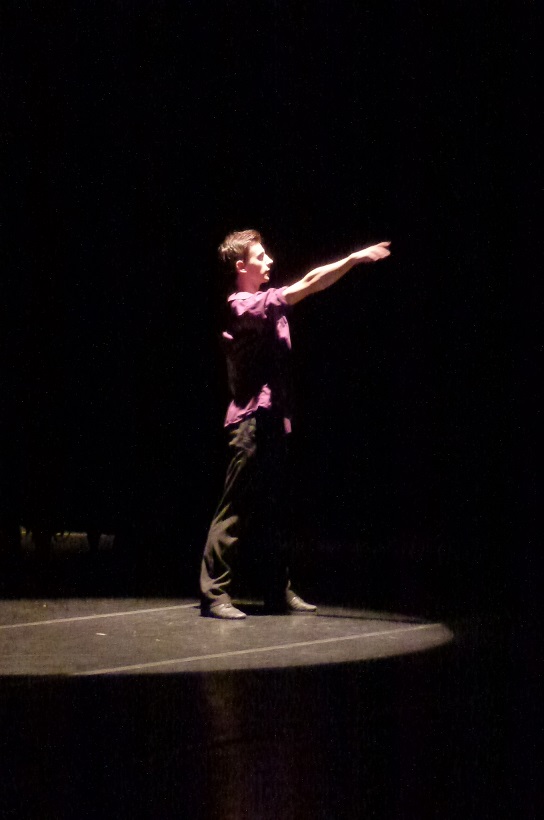
    I didn’t have very good luck taking pictures at the dress rehearsal, but here are a few of the individual dancers (sorry that I didn’t get everyone!):
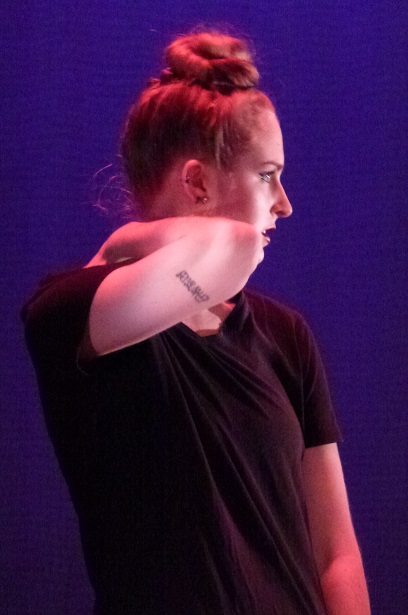
    L1310169

    Christen Quattlebaum

    L1310302

    Trashina Conner

    L1310321

    Jonathan Breton

    L1310389

    Hunter Frederick Houde

    L1310525

    Roberto Villanueva

  • All-Wheeldon @ New York City Ballet

    Christopher-wheeld_1502309c

    Saturday January 28, 2012 evening – I’ve waited a long time for this: the first programme at New York City Ballet devoted entirely to works of Christopher Wheeldon. Christopher, who danced with the Company and attained the rank of soloist before resigning the position to devote all his energies to choreography, eventually served a stint as NYCB‘s first resident choreographer. He then spent three seasons running his own company, MORPHOSES. Now he is one of the most sought-after creators of new ballets in the world. Meanwhile his established works increasingly crop up in the repertoire of top international companies.

    Tonight we saw the world premiere of LES CARILLONS, set to music from Bizet’s L’Arlesienne suites; POLYPHONIA which I tend to think is Wheeldon’s greatest masterpiece to date; and the New York City Ballet premiere of DANSE A GRANDE VITESSE, originally created for the Royal Ballet in 2006. The evening was a huge personal triumph for Christopher and for the individual dancers.

    An unfortunate injury to Jennie Somogyi during her valse in POLYPHONIA was unsettling and surely affected her colleagues in the ballet, though they danced on with poise. After a few minutes, Tiler Peck – who was dancing in the other two ballets tonight – stepped onto the stage and finished the ballet in Somogyi’s place.

    LES CARILLONS is the most purely appealing new ballet I’ve seen at New York City Ballet since Melissa Barak’s SIMPLE SYMPHONY. CARILLONS shares with with the Barak gem its use of familiar and ear-pleasing music, excellent structuring, and striking passages of dance where the classical movement vocabulary gets stretched but never breaks, giving an overall impression of freshness. Andrews Sill, on the podium, mined the Bizet score to perfection, displaying the melodic and rhythmic variety of the music while providing solid support for the dancers.

    CARILLONS begins with ten men onstage; they wear dark fitted costumes with one arm bare; semi-see-thru tops are accented with panels of deep reds or blues. They dance to one of Bizet’s most familiar tunes, soon joined by the women whose wine-toned skirts give the piece an aspect of visual richness. (There is a backdrop but it’s not visible from the 5th Ring). 

    The ten magnificent principals (yes, I include Ana Sophia Scheller since she should be) then embark on a series of vivid solos, duets and ensembles in which Christopher gives them complex and varied things to do, most especially in the partnering aspects and in the use of hands and arms. Meanwhile the corps of ten, equally handsome dancers all, swirl on and off, enriching the visual textures.

    There is a lush saxophone melody to which Sara Mearns and Amar Ramasar dance a spacious pas de deux; there is a vivacious pas de quatre for Ms. Scheller, Tiler Peck, Gonzalo Garcia and Daniel Ulbricht. Wendy Whelan and Robert Fairchild dance a lovely nocturnal duet; then Wendy remains onstage, wandering among the corps dancers as they weave intricate patterns. Wendy’s solo shows her at her radiant best. Wendy and Maria Kowroski (who looked particularly sumptuous in her scarlet gown) dance in beautiful snyc to yet another familiar Bizet melody, and Maria has a gorgeous saxophone adagio with Tyler Angle. In a passage of pure seduction, Sara Mearns displays incredible star power, later joined by the men. The harp lends lyric mystery to a solo impressively danced by Tiler Peck which later extends into a pas de trois for her, Gonzalo and Daniel. Amar Ramasar races around the stage in a series of brilliant leaps. The eye is constantly drawn to one and then another of these charismatic dancers.

    Joshua Thew from the corps de ballet joins the principal men in certain passages; Joshua looked totally at home in this stellar ensemble and with his tall, handsome presence he seems like a dancer deserving of greater opportunities to shine.

    As the ballet’s original musical theme returns, the cast unite for a richly-wrought finale. The crowd let loose with uninhibited shouts of approval as the dancers came forward to bow; flowers for the ladies and lots of screaming when Christopher appeared onstage. After two high-profile strikeouts with new ballets (SEVEN DEADLY SINS and OCEAN’S KINGDOM – failures to be blamed on bad narratives and uninteresting music) I think the public felt they were entitled to express their unbridled enthusiasm. In CARILLONS, Christopher Wheeldon takes music we want to hear and dancers we love to watch and produces structure and movement that does ballet proud.

    POLYPHONIA is always a mesmerizing ballet but it seemed even more so tonight; premiered on January 4th, 2001, this Ligeti-inspired work has always been for me the first dance masterpiece of the 21st century. It continues to fascinate and – like all great danceworks – has passages that we wait for with keen anticipation. Cameron Grant and Alan Moverman at the keyboard made Ligeti’s quirky, nuanced music tingle the ear.

    Jennie Somogyi’s injury, coming during one of my favorite parts of the ballet, placed the performance in a darkish aspect. The other dancers were surely affected by the incident but managed to forge onward with some intriguing dancing.

    The duet for Gonzalo Garcia and Adrian Danchig-Waring, Sara Mearns’ quiet radiance in her mysterious solo, Craig Hall’s godlike presence, the lively pairing of Sterling Hyltin and Adrian Danchig-Waring (can’t wait to see them together in IN G MAJOR coming up), and Tiler Peck’s cool and collected artistry as she unexpectedly added to her already-busy evening by taking over here – all these made strong impressions.

    Central to POLYPHONIA are the two superb duets for Wendy Whelan and Jared Angle. Wendy’s suppleness and the way she turns the angular shapings of her body into poetic statements keep the viewer riveted, while Jared brings an unexpected quality of nobility to the partnering. As Wendy backbends over Jared’s knee and snakes herself into her final kneeling pose, her enigmatic beauty is distilled into a single unforgettable image.

    I really wish I could come to appreciate DANSE A GRAND VITESSE but, seeing it tonight for the second time (the first was danced by Angel Corella’s company at City Center) I found it overly-long, with the athletic partnering tending to lose impact as we see more and more of it. The City Ballet dancers – led by Teresa Reichlen/Craig Hall, Ashley Bouder/Joaquin de Luz, Maria Kowroski/Tyler Angle and Tiler Peck/Andrew Veyette – were nothing short of spectacular, and the corps excelled. But I found my attention wandering as the piece progressed, despite Clothilde Otranto’s dynamic reading of the Michael Nyman score. The best passages seem to me to be for the corps where, in spacious patterns, they and their shadows filled the space. The audience loved it, so clearly I’m in the minority here. I found myself wishing that instead of DGV we could have had a revival of either EVENFALL or KLAVIER, or even of Christopher’s misunderstood and magnificent SHAMBARDS

    What mattered though was that Christopher Wheeldon has brought us a new Bizet ballet to admire and – hopefully – to see again, although ticket pricing now at NYCB makes seeing things twice something to ponder deeply before heading to the box office. 

    The big ovation Christopher received as he came out for a solo bow at the end of the evening was so thoroughly well-deserved.