Tag: Saturday June

  • Bronfman & Braunstein @ Zankel Hall

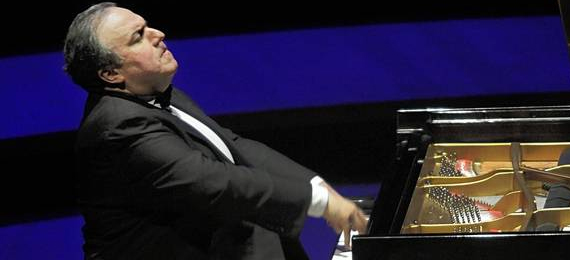
    Yefim-Bronfman

    Saturday June 18th, 2016 – Yefim Bronfman (above) concluding a Prokofiev piano sonata cycle at Zankel Hall this evening, playing the 5th and 9th sonatas. Violinist Guy Braunstein joined Mr. Bronfman for the two Prokofiev violin sonatas.

    After passing some days in a state of reclusive depression over the Orlando shootings, I ventured out tonight even though I was not really in the mood for it. But Bronfman is one of my most-admired musicians, and Prokofiev among my favorite composers, so I felt a strong desire to be there. Prokofiev’s music is not consoling, as a rule, though there are passages that reach to the soul, especially in the Andante of the second violin sonata, where Mr. Braunstein was at his finest this evening.

    Watching Yefim Bronfman perform is a particularly pleasing experience for me. He walks out, bows genially, sits down, and he and the keyboard become one. There are no frills, and no theatricality in his playing: it’s all about the music and his communing with it. Very brief pauses between movements keep the impetus of the music – and our delight in it – in true focus.

    Bronfman’s rendering of the 5th piano sonata was deeply satisfying, the audience engrossed as he immersed himself in the music’s ever-shifting melodic and rhythmic elements. This was exactly the ‘great escape’ from world-weariness I so desperately needed tonight. From its songful start, the opening Allegro tranquillo was a complete delight: the touches of dissonance adding spice, with wit, irony, and drama all having their say. A delicate march heralds the Andantino, with fetching trills, before things get darker and more emphatic, leading to a low-rumbling of a finish. By turns jaunty, lyrical, and pungent, the concluding Poco allegretto was polished off with Bronfman’s inimitable clarity and grace, the music seeming to vanish into a dream at the end.
    Hqdefault

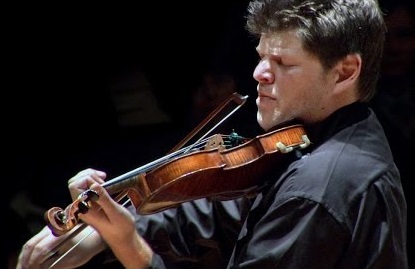
    Above: Guy Braunstein

    Mr. Braunstein then joined the pianist for the violin sonata #1. Here the piano’s somber opening of the Andante assai gives way to a rather hesitant start for the violin, with some buzzing trills before things expand to a rather labored passage. Then the piano’s misterioso murmurs underpin the violin’s sliding scales. The emphatic start of the Allegro brusco drew some energetic foot stamping from Mr. Braunstein as the turbulence envelops us; and then suddenly his violin sings a lusty song. After re-grouping and re-energizing, the music turns more pensive – but only briefly: a riotous dance ensues, subsiding into lyricism before another dramatic surge.

    The Andante features a shimmering piano motif as the violin sings in the alto range; both instruments move to the higher spheres in a unison passage, which eventually goes very high indeed. Back to the alto colourings for more of the violin’s forlorn phrases. High and lilting, the piano signals the movement’s soft ending. A sprightly jig sets off the finale, calming eventually and leading to a delicate pizzicati paragraph. Some lively scrambling makes us think the end is nigh, but instead the violin’s mute goes on and rolling scales summon an impression of “the wind in a graveyard”; the sonata ends sadly.

    The performance drew an enthusiastic response from the sold-out house; a bit of iffy intonation from the violin in places mattered little in the end, since Braunstein’s mixture of poetry and vigor made the music so savorable. 

    Following the interval, Mr. Bronfman returned for the 9th piano sonata. The first movement starts gently, and continues amiably, though there’s an underlying restlessness. More expansive passages, and some low, rumbling scales lead to an eventual quiet finish. The second movement is scherzo-like, with rippling scales and a jogging rhythm; a pensive passage, more jogging, and another soft ending.

    The Andante tranquillo brought forth more Bronfman magic: a wistful melody, followed by a glittering brilliance that subsides to mystery and then to sadness. From deep rumblings, the music rises to a high melancholy. After a big start, the Allegro finale turns ironic; “shining” music gleams forth, surrendering to mirth, percolating on high, whispering a farewell. Here Bronfman’s virtuosity and subtle colorations were at their most alluring.

    To end the evening, Prokofiev’s second violin sonata, which had started life as a flute sonata, and which David Oistrakh had prevailed on the composer to re-cast for violin in 1943. This familiar work was played with a wonderful melding of the two instruments, the players so alert to one another and marking the beauty of the Andante with glowing sound. Traces of my earlier concerns about pitch in the violin line cropped up again, but my pianist-companion seemed to feel that the issue was minor, and so I let the energy and optimism of the Allegro con brio the finale carry me along…together with the rest of the crowd, who swept to their feet at the finish to salute the generous playing and the final expression of joie de vivre from the two players.
  • Bronfman & Braunstein @ Zankel Hall

    Yefim-Bronfman

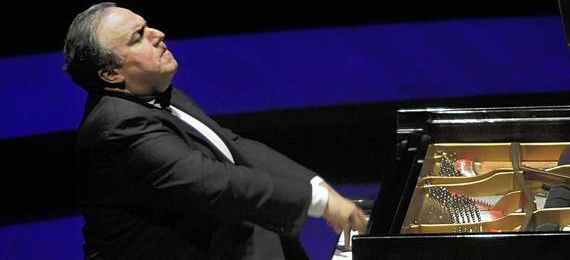
    Saturday June 18th, 2016 – Yefim Bronfman (above) concluding a Prokofiev piano sonata cycle at Zankel Hall this evening, playing the 5th and 9th sonatas. Violinist Guy Braunstein joined Mr. Bronfman for the two Prokofiev violin sonatas.

    After passing some days in a state of reclusive depression over the Orlando shootings, I ventured out tonight even though I was not really in the mood for it. But Bronfman is one of my most-admired musicians, and Prokofiev among my favorite composers, so I felt a strong desire to be there. Prokofiev’s music is not consoling, as a rule, though there are passages that reach to the soul, especially in the Andante of the second violin sonata, where Mr. Braunstein was at his finest this evening.

    Watching Yefim Bronfman perform is a particularly pleasing experience for me. He walks out, bows genially, sits down, and he and the keyboard become one. There are no frills, and no theatricality in his playing: it’s all about the music and his communing with it. Very brief pauses between movements keep the impetus of the music – and our delight in it – in true focus.

    Bronfman’s rendering of the 5th piano sonata was deeply satisfying, the audience engrossed as he immersed himself in the music’s ever-shifting melodic and rhythmic elements. This was exactly the ‘great escape’ from world-weariness I so desperately needed tonight. From its songful start, the opening Allegro tranquillo was a complete delight: the touches of dissonance adding spice, with wit, irony, and drama all having their say. A delicate march heralds the Andantino, with fetching trills, before things get darker and more emphatic, leading to a low-rumbling of a finish. By turns jaunty, lyrical, and pungent, the concluding Poco allegretto was polished off with Bronfman’s inimitable clarity and grace, the music seeming to vanish into a dream at the end.

    Hqdefault

    Above: Guy Braunstein

    Mr. Braunstein then joined the pianist for the violin sonata #1. Here the piano’s somber opening of the Andante assai gives way to a rather hesitant start for the violin, with some buzzing trills before things expand to a rather labored passage. Then the piano’s misterioso murmurs underpin the violin’s sliding scales. The emphatic start of the Allegro brusco drew some energetic foot stamping from Mr. Braunstein as the turbulence envelops us; and then suddenly his violin sings a lusty song. After re-grouping and re-energizing, the music turns more pensive – but only briefly: a riotous dance ensues, subsiding into lyricism before another dramatic surge.

    The Andante features a shimmering piano motif as the violin sings in the alto range; both instruments move to the higher spheres in a unison passage, which eventually goes very high indeed. Back to the alto colourings for more of the violin’s forlorn phrases. High and lilting, the piano signals the movement’s soft ending. A sprightly jig sets off the finale, calming eventually and leading to a delicate pizzicati paragraph. Some lively scrambling makes us think the end is nigh, but instead the violin’s mute goes on and rolling scales summon an impression of “the wind in a graveyard”; the sonata ends sadly.

    The performance drew an enthusiastic response from the sold-out house; a bit of iffy intonation from the violin in places mattered little in the end, since Braunstein’s mixture of poetry and vigor made the music so savorable. 

    Following the interval, Mr. Bronfman returned for the 9th piano sonata. The first movement starts gently, and continues amiably, though there’s an underlying restlessness. More expansive passages, and some low, rumbling scales lead to an eventual quiet finish. The second movement is scherzo-like, with rippling scales and a jogging rhythm; a pensive passage, more jogging, and another soft ending.

    The Andante tranquillo brought forth more Bronfman magic: a wistful melody, followed by a glittering brilliance that subsides to mystery and then to sadness. From deep rumblings, the music rises to a high melancholy. After a big start, the Allegro finale turns ironic; “shining” music gleams forth, surrendering to mirth, percolating on high, whispering a farewell. Here Bronfman’s virtuosity and subtle colorations were at their most alluring.

    To end the evening, Prokofiev’s second violin sonata, which had started life as a flute sonata, and which David Oistrakh had prevailed on the composer to re-cast for violin in 1943. This familiar work was played with a wonderful melding of the two instruments, the players so alert to one another and marking the beauty of the Andante with glowing sound. Traces of my earlier concerns about pitch in the violin line cropped up again, but my pianist-companion seemed to feel that the issue was minor, and so I let the energy and optimism of the Allegro con brio the finale carry me along…together with the rest of the crowd, who swept to their feet at the finish to salute the generous playing and the final expression of joie de vivre from the two players.
  • At Catherine Gallant’s Rehearsal

    L1730590

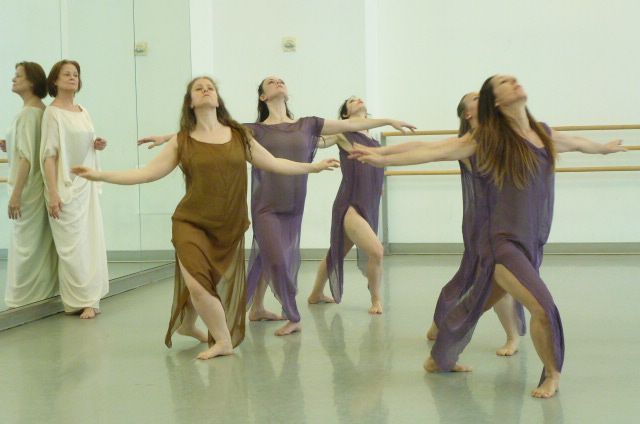
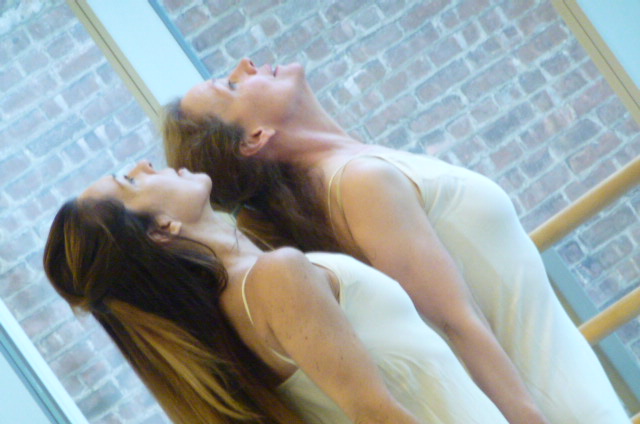
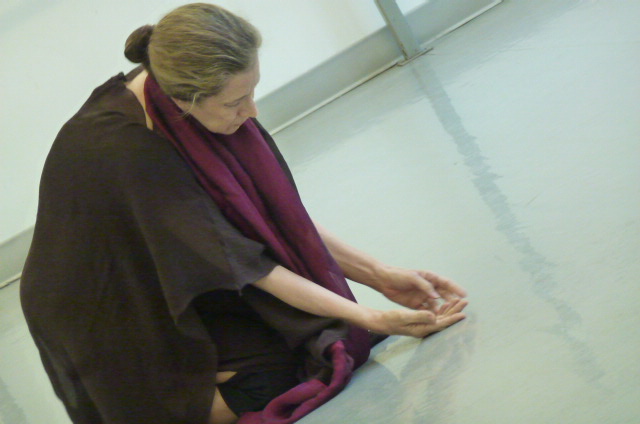
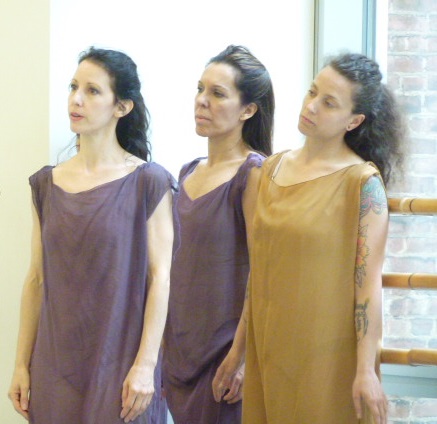
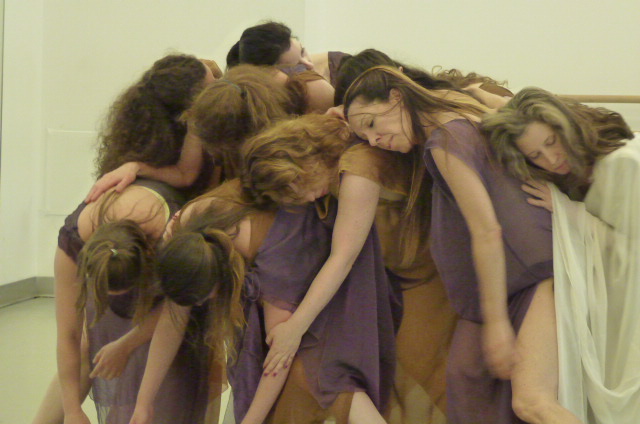
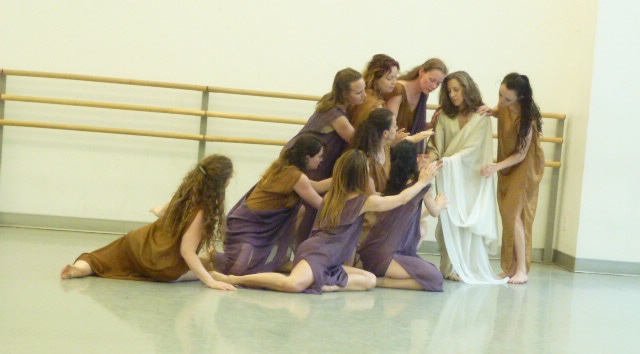
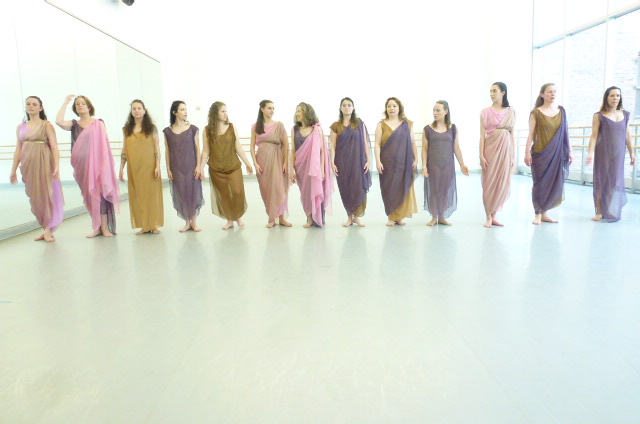
    Saturday June 11th, 2016 – I stopped in at the Ailey Studios this afternoon where Catherine Gallant and her very attractive troupe of dancers were in rehearsal, preparing for their upcoming performances at Danspace (St. Mark’s Church, 131 East 10th Street. New York, NY). Performance dates are June 23rd – June 25th, 2016, and you can purchase tickets here.

    Retrograde Universe is the title of this world-premiere production presented by Catherine Gallant/DANCE and Dances by Isadora, led by Artistic Director and Choreographer Catherine Gallant. Retrograde Universe includes four pieces by Gallant and three Isadora Duncan works. From Isadora, we will have an historical re-animation of Duncan’s Beethoven No. 7, which has not been performed since 1979; Three Scriabin Etudes, danced by Kristen Foote of the Limón Company on opening night; and Valse Brillante. Gallant’s Retrograde UniverseFinally, The Secret and Meeting #12 will show the contemporary aspects of the Company. The performance will feature musicians Christina Courtin and Yegor Shevtsov, and a visual creation from Nadia Lesy.

    In observing these lovely women today – going about their work with such dedication and such beauty of movement and expression – one feels a direct connection both with the well-spring of modern dance and with the indomitable feminine spirit. Gallant’s company is a collective of generational diversity and highly individual personalities molded into a community by their shared devotion to dance. 

    Today’s rehearsal included detailed work on some of the pieces to be shown at Danspace as well as a run-thru of the program. The woman swiftly changed costumes between works, while speaking quietly to one another and sharing a feminine bond: the atmosphere serious, but also light of heart and spirit.

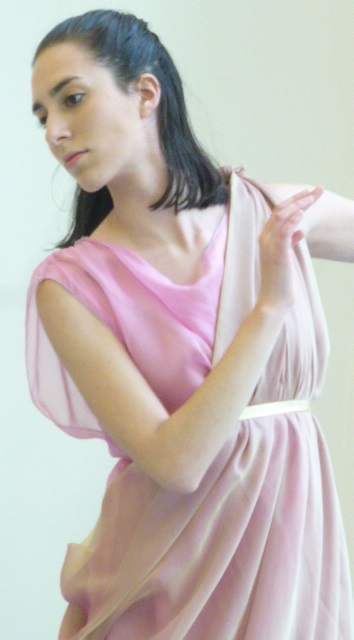
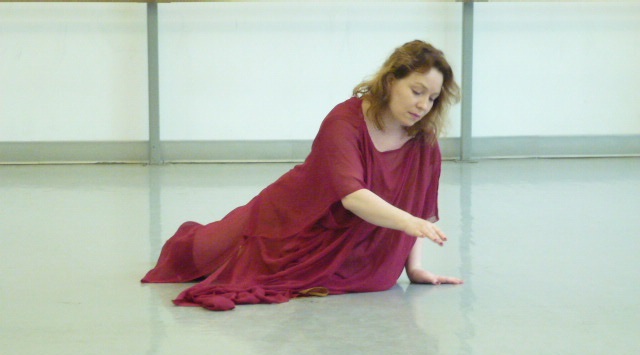
    Here are some images that I was able to capture in the studio; much of the dancing was simply too fast-paced for me to capture, but I think the distinctive personalities of this bountiful band of women show thru.

    L1730455

    L1730489

    L1730541

    Ella Lang

    L1730657

    Francesca Todesco in Isadora Duncan’s Mother

    L1730671

    L1730687

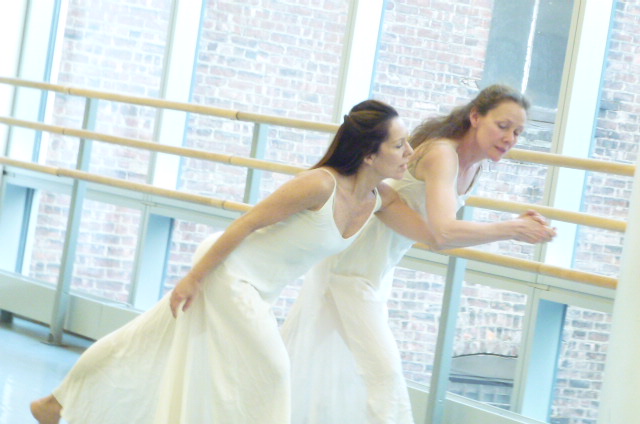
    Janete Gondim and Eleanor Bunker in Catherine Gallant’s The Secret

    L1730697

    Janete and Eleanor in The Secret

    L1730706

    Eleanor Bunker

    L1730721

    Janete and Eleanor in The Secret. I was particularly moved by this dancework, and look forward to writing more about it after seeing it in performance.

    L1730737

    Michelle Cohen in Retrograde Universe

    L1730746

    The ensemble in Retrograde Universe

    L1730753

    Michelle Cohen

    L1730775

    Loretta Thomas

    L1730766

    Loretta Thomas

    L1730801

    Catherine Gallant

    L1730825

    Loretta Thomas

    L1730834

    Loretta Thomas

    L1730886

    Michele Cohen, Janete Gondim, and Margherita Tisato

    L1730889

    Catherine Gallant

    L1730913

    L1730925

    L1730931

    L1730946

    Michelle Cohen

    L1730952

    Catherine Gallant, Michelle Cohen

    L1730956

  • Rehearsal: Knight/Beamish DANCE FOR NEPAL

    RQkHE0rinYhBWzy3nyyINzvkyHZx9FaaA39gtXrj1P0

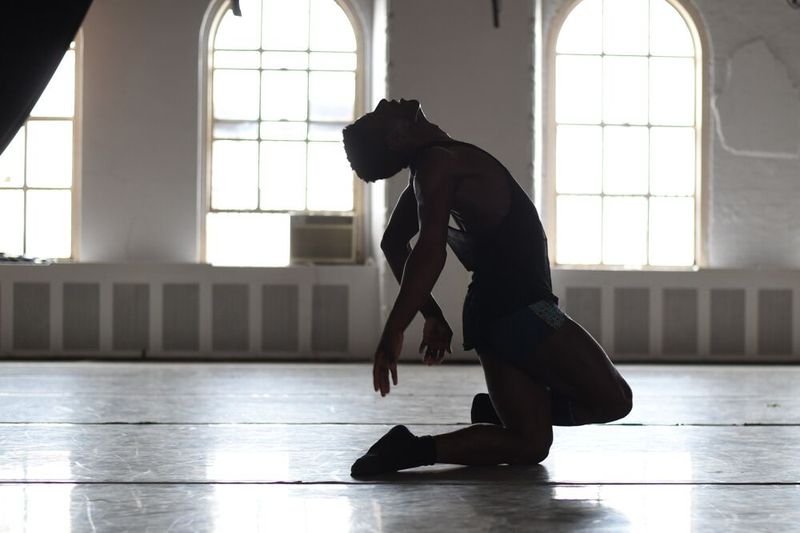
    Above: Lloyd Knight rehearsing a new Joshua Beamish solo, ‘Adoration‘, for the upcoming gala benefit DANCE FOR NEPAL; photo by Nir Arieli

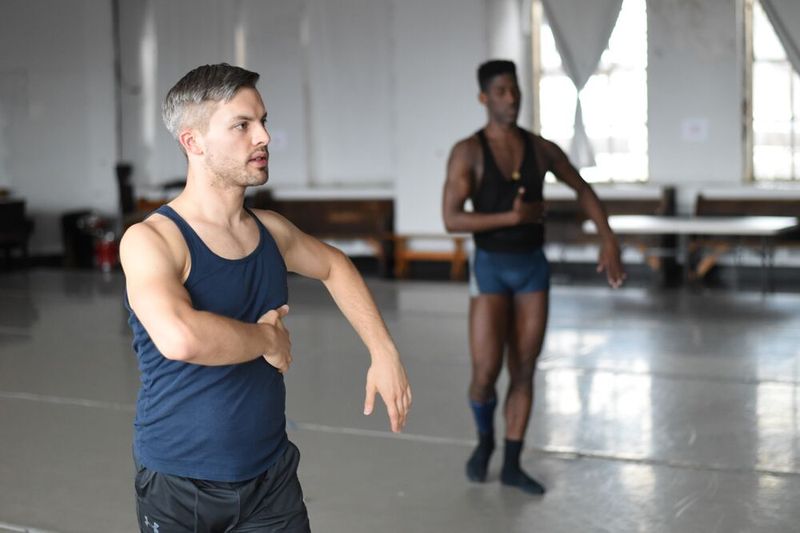
    Saturday June 27th, 2015 – On Tuesday June 30th, 2015, DANCE FOR NEPAL will be presented at the Union Square Theatre. The program, conceived by Simona Ferrera, is under the artistic direction of Lloyd Knight, principal dancer of The Martha Graham Dance Company.  All proceeds from this gala performance will benefit the survivors of the devastating earthquake that struck Nepal on April 25th, 2015. A stellar group of dancers will perform; tickets and more information here.

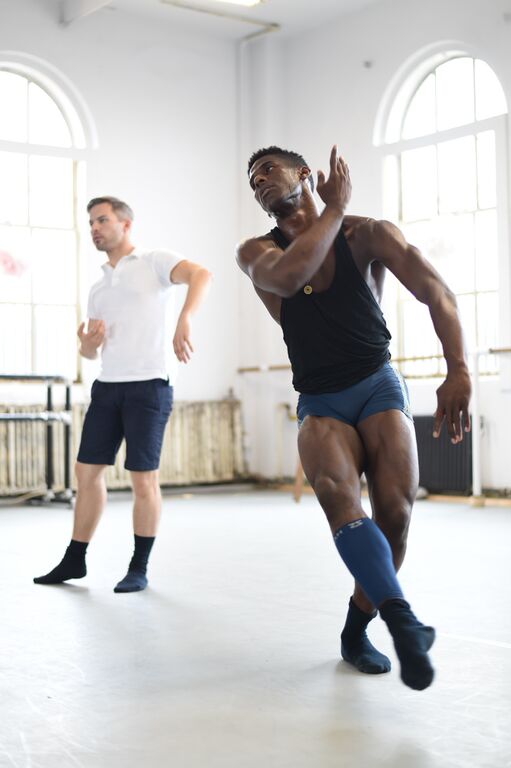
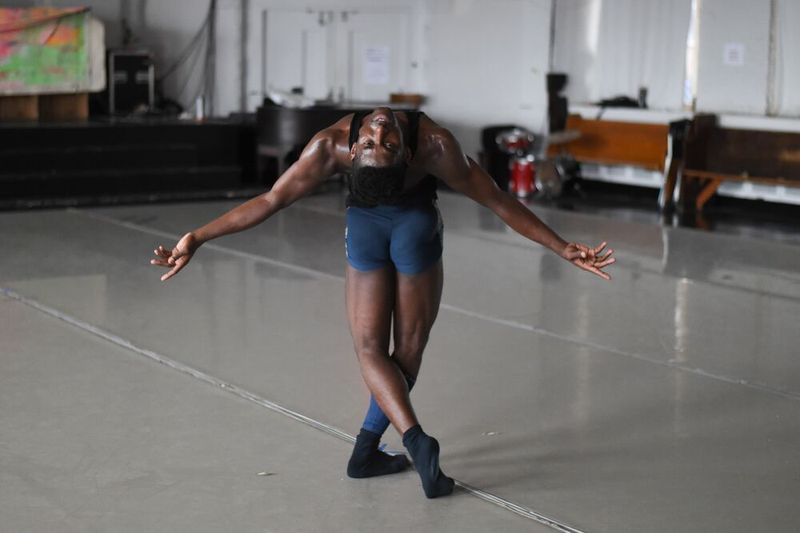
    On an overcast afternoon, photographer Nir Arieli and I dropped in at the Martha Graham studios for a rehearsal/preview of the new Beamish solo work. The choreographer has chosen the adagio from Haydn’s concerto in C-Major for cello and orchestra: a perfect setting for his fluent and expressive choreography and for Lloyd Knight’s powerful, emotive dancing. Demanding in its physicality, the solo has a deeply spiritual quality which gives Lloyd a perfect impetus for his interpretation: a striking mixture of muscularity and grace. 

    TCR4KqNouwnDvDmxEFTFrhjmF-FbmRKr7P20ePSuMqI

    Joshua Beamish (above, with Lloyd), the Canadian dancer/choreographer and founder of MOVE: the company, was recently seen here in New York City as one of Wendy Whelan’s choreographer-cavaliers in her RESTLESS CREATURE presentation at The Joyce. In August 2015, Josh will be presenting MOVE: the company for two performances at The Joyce. Details here.

    The studio atmosphere today was paradoxically calm and intense; I could have gone on watching endlessly since the combination of the music, Josh’s mapping of the movement, and Lloyd’s inspiring dancing were a welcome balm to the spirit.

    Here’s a gallery of Nir Arieli’s images from this rehearsal; I have chosen quite a few since they really capture the atmosphere:

    8GZwnZiFpnA8OML-Pn8HNZhHGPDqmTZuchV4pMfnz3s

    0H2SF4HwRQwA0R7DnkafO-z7iuCoGVFsJJ92iICWsA8

    A85gt2XQQUUmZnzGgRt25eyTiKQhCQlUcwUChXyvOkM

    DCy8A44bjllEbSPubFFO4aKrulekbGxt0OdY8ibIKlQ

    J7BWpa-lUIn3Pu3As2Fw_lc2uPivLK2eNPxY9YwdgSY

    YWKMLoVR-hRpAeO7E7BBFN5HrSk0Idjm6H9Zj2eX0xU

    FzS_IKv-9glcZ6gZEOhlITmE-V65aEekhGWN_jdDydI

    Ud_M-qKWg4ZTdgq7zJzzZRbYHMcLOR7zEa0Msyr7zm4

    MxEmtICm8SL2ikzFKnKwl0A59IyBV5Wgcr_TovHheSw

    NcBQ_rJxbrPZLlO4vcgkhncqjmQpIkt2aqdruFMR9LE

    Click on each image to enlarge.

  • Philharmonic Finale: JOAN OF ARC

    Joanpiffard

    Above: Joan of Arc, a late-19th century painting by Harold H. Piffard

    Saturday June 13th, 2015 – Jeanne dArc au bûcher (Joan of Arc at the Stake), an oratorio by Arthur Honegger, was the final offering of the New York Philharmonic’s 2014-2015 season. Leave it to Alan Gilbert to end an exciting season with a big bang: Honegger’s epic work unfolded in a staged version which captured both the gravitas and the insouciant sarcasm of the score.

    Jeanne dArc au bûcher was originally commissioned by Ida Rubinstein, who had enflamed Paris when she appeared with Diaghilev’s Ballets Russes in the title role of Cléopâtre in 1909, and Zobéide in Scheherazade in 1910. Rubinstein premiered Jeanne d’Arc with her own Company at Basel in 1938; she bade farewell to the stage in the same work in 1939.

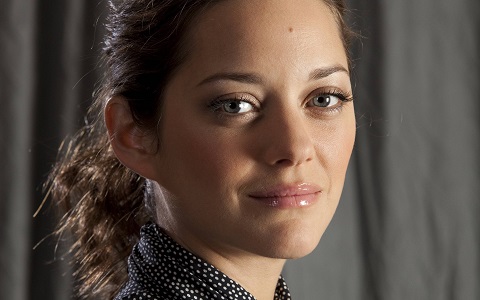
    The New York Philharmonic last performed the oratorio in 1994 with Marthe Keller in the title role. For the current performances, the superb French actress Marion Cotillard has taken on the role of Jeanne which she has previously performed at Orléans and Barcelona, and most recently on a tour of Monaco, Toulouse and Paris in the present production by Côme de Bellescize.

    Arthur Honegger’s setting of Claudel’s text centers on Joan of Arc’s last moments of life at the stake, where she sees the events of her life pass before her eyes before succumbing to a terrifyingly painful death. Her confessor, Brother Dominique, reads to her from the book of her life, starting with her trial and conviction for heresy and witchcraft in 1431 and goes back even further, beyond Charles VII’s coronation, to her awakening to the voices of the saints – Catherine and Margaret – in her country garden as a young maiden. Honegger’s theatrical setting calls for three speaking actors – as Joan, Brother Dominique, and a Narrator, respectively – as well as singing soloists and adult and children’s choruses.

    The often quirky score includes parts for saxophone, piano, and the electronic ondes martenot, and the musical influences range from plain chant and Baroque to folksong and jazz. The Philharmonic musicians were at their customary high level of play, and Maestro Gilbert’s detailed handling of the score made the best possible case for this unusual work.

    A runway wraps around the partially sunken orchestra, with the children’s chorus and various players coming into close range of the audience. Behind the orchestra, the adult chorus on risers loom up on either side of the grim stake, which rests on a small platform where Brother Dominique attempts to ease the horror of Joan’s impending torturous death by reminding her of her past good deeds and the notion of heavenly reward.

    The mood of the piece veers sharpy from piety to farce, with the presiding dignitaries at Joan’s sham trial portrayed as a pig and a donkey. The evening’s most memorable moments came at the end, as deep red light representing the consuming flames filled not only the stage but much of the auditorium. As everything faded to black, every chorister and musicians held up a small faerie light, leaving us with a vision of the eternal stars.

    Marion-Cotillard

    Above: Marion Cotillard; her portrayal of Joan was a tour de force, her wonderful voice encompassing both the irony and the terror of her speeches. From girlish sing-song to her witty responses to her captors thru to the earthy, guttural expressions of her fear of death, and at last her final ecstasy, Cotillard gave a masterful performance, as touching to watch as to hear. 

    Her fellow actors – Eric Génovèse as Brother Dominique and Christian Gonon (as narrator, and in multiple smaller roles ) – were ideally cast both in terms of their voicing of the lines and their characterizations. Among the various supporting roles, two singers stood out: soprano Erin Morley, radiant-toned in the high-lying phrases of the Virgin, and tenor Thomas Blondelle who sang fearlessly and with clear projection in the taxing tessitura of Porcus, the pig-magistrate, and in other smaller roles. Everyone, in fact, sounded well in this sometimes tricky music, and both choruses – the adults and the children – made a very fine effect.

  • RIOULT: Martha, May and Me @ The Joyce

    Rioult_4181

    Above: Charis Haines of RIOULT; photo by Paul B Goode

    Saturday June 21st, 2014 matinee – Celebrating twenty years of dance, RIOULT– named for their founder/choreographer Pascal Rioult – offered two programmes at The Joyce. My over-stuffed, end-of-season calendar only showed space for a single performance, and it was a great afternoon of dance.

    May O’Donnell was only a name to me, and one that I honestly had heard only in passing. I knew nothing of her work beyond the fact that she had danced for Martha Graham. RIOULT have revived O’Donnell’s 1943 work, SUSPENSION, set to a score by Ray Green. This ‘blue ballet’ made an absolutely stunning effect as the opening work on today’s programme at The Joyce – a programme in which Pascal Rioult honored the creative influence of two women for whom he danced: Ms. O’Donnell and Martha Graham. In a brief film shown before the O’Donnell was performed, Pascal Rioult spoke of the deep impression made on him when he first saw SUSPENSION; the piece had the same powerful effect on me today. 

    SUSPENSION opens with a marvelous solo danced today by Sara E. Seger. In deep blue body tights, her hair in a ponytail, Ms. Seger is perched upon a pair of powder-blue boxes set stage left. This solo has the feel of an Olympic balance-beam ‘routine’ and was performed with a combination of athleticism and grace by the dancer. Her colleagues, in vari-hued blue body tights then assemble: Jane Sato, Anastasia Soroczynski, Catherine Cooch, Jere Hunt, Holt Walborn, and Sabatino A Verlezza. In stylized movement, they display deep arabesques and open wingspans, striking sustained poses with great control. Their communal rituals are at once stripped-down and ornate; SUSPENSION is as clear as a pristine Summer sky.

    Pascal Rioult’s BLACK DIAMOND (2003) shows O’Donnell’s influence in the gestural language. This duet for two women is set to Igor Stravinsky’s ‘Duo Concertant‘, a work familiar to ballet-goers thru George Balanchine’s ballet of the same name. The curtain rises on a black space pierced by David Finley’s shafts of light. In a smoky atmosphere, dancers Charis Haines and Jane Sato – each atop a large black box – begin to move in parallel solos, sometimes in-sync and sometimes echoing one another. Later they descend to stage level and the dancing becomes more spacious. They return to the heights for the final moments of the ballet, with a breath-taking lighting coup as the curtain falls.

    Earlier this month, photographer Matt Murphy and I watched Charis and Jane rehearsing BLACK DIAMOND – a memorable hour in Pascal’s studio. Read about that experience here, with Matt’s striking images.

    Martha Graham’s 1940 work EL PENITENTE employs a specially-written score by Graham’s ‘dear  indispensability’ Louis Horst. Inspired by the simple penitential morality plays presented by traveling players in the American Southwest, we see the self-inflicted torture of flagellation, the temptation of Adam by Eve, repentance, crucifixtion, and redemption all played out with naive simplicity. Michael S Phillips is the Christ figure and Charis Haines plays all the female roles, from virgin to temptress. With his god-like physique and powerful dancing, Jere Hunt’s Penitent was a perfect portrayal.

    For the afternoon’s closing work, VIEWS OF THE FLEETING WORLD, master-choreographer Pascal Rioult turns to the music of Bach – from ‘The Art of the Fugue‘ – for this seven-part dancework interpersed with empty-stage interludes which create a pensive atmosphere. The ensemble passages, with the dancers sometimes clad in long red skirts, give way to three duets in which the couples appear in evocative vignettes: Marianna Tsartolia and Michael S Phillips in Dusk, Charis Haines and Jere Hunt in Summer Wind, and Sara E Seger and Brian Flynn in Moonlight. Here – and throughout the afternoon – the technical prowess and personal allure of the RIOULT dancers set the choreography in high relief; their commitment and artistry are wonderfully satsfying to behold.

  • Concert at El Museo de el Barrio

    Schumann

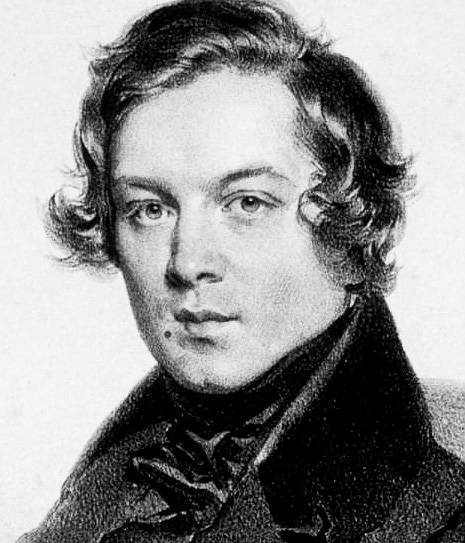
    Above: the composer Robert Schumann

    Saturday June 22nd, 2013 – The Hudson Valley Singers presented a concert entitled HYMN OF LOVE at the Museo de el Barrio this evening. I walked across Central Park North under a beautiful summer sky and met my friend Monica there. The theatre space at the Museo is charming, with its fairy tale murals; it was a full house, or nearly so. 

    One doesn’t expect to hear a piano concerto or an orchestral suite at a choral concert, and the program stretched to two and a quarter hours, what with all the rearranging of the stage to suit the configurations of musicians and singers for each piece. During the longish intermission, Monica and I caught up on ballet gossip.

    Piano Concerto #1 by Carl Maria von Weber opened the evening. Weber has never been high on my list of opera composers: a performance of FREISCHUTZ that I attended decades ago at NYC Opera was a crashing bore, and despite the splendid “Ozean!” aria I have never been able to listen to the whole of OBERON. But beyond opera, his enchanting ‘Invitation to the Dance’ makes a perfect setting for the Fokine ballet SPECTRE DE LA ROSE. And so it was an interesting opportunity to hear the composer’s piano concerto tonight. Eugene Sirotkine both played very well and conducted from the keyboard. The New York Metamorphoses Orchestra is a fine ensemble of young players, notably their flautist and oboist. The concerto might make a first-rate classical ballet, in the right choreographic hands.

    The chorus, with vocal soloists, then took to the stage for two pieces by Roobert Schumann: Adventlied and Requiem fữr Mignon. These two works deal with aspects of parenthood, the first being in anticipation of the birth of a new baby and the second a sad reflecton on the death of a beloved child. The large chorus, a lovely generational mix, sang with fervent lyricism. The music for the trio of women in the Requiem (Eleni Colenos, Liana Brooke Guberman and Alexandra Lushtak) brought to mind the trio of nymphs in Strauss’ ARIADNE AUF NAXOS. Robert Garner was the baritone soloist in both Schumann works, joined in the Adventlied by Mlles. Brooke Guberman and Kushtak along with the appealing tenor sound of David Guzman.

    In a delightful interlude, The Elm City Girls Choir brought us folksongs from America, Russia, Bulgaria and Africa.  Their fresh young voices blended well in surprisingly confident harmonies as they swayed and clapped to the varying rhythms of each song.


    Carl_nielsen_1892_xl

    Above: the composer Carl Nielsen

    From Aladdin Suite by Carl Nielsen – a tuneful colorful compilation of vignetttes composed as incidental music for a play – we heard  an Oriental
    March, a Dance of the Morning Clouds. a delicate Chinese Dance, and the concluding Blackamoor’s Dance. The players of the New York Metamorphoses Orchestra, under Mr. Sirotkkine’s baton, seized on the music’s coloristic opportunities, each instrument having its expressive voice. Seated in the audience, the chorus took up some humming passages, adding to the sonic palette.

    Hymnus Amoris (the title which inspired the programme) by Carl Nielsen, is a large-scale work which the composer crafted as a paean to love after taking his honeymoon. All of the evening’s choral participants took part, along with soloists Ms. Calenos, Mssrs. Guzman and Garner, and bass Emmanuel Mendez-Chumaceiro. The music is celebratory and ecstatic, and voices and instruments joined in a fervent ‘hymn of love’ with Mr. Sirotkine at the helm.

  • FIVE MINUTES: Amanda Selwyn Dance Theatre

    Dance_Photography_Paula_Lobo_Amanda_Selwyn_-0301 small

    Saturday June 25, 2011 – Coming down to the wire after my busiest few weeks ever, I spent the afternoon watching some of my favorite NYCB dancers at Tom Gold’s studio (more about that later), then headed downtown to experience a new company: Amanda Selwyn Dance Theatre. I hardly ever get a chance to try something different because my calendar is so full, but the publicist who invited me to Selwyn cunningly attached photos by Paula Lobo (above) and Christopher Duggan to her invitation. Both the dancers and the stage images caught my fancy. I’m glad I went: FIVE MINUTES was 100% enjoyable.

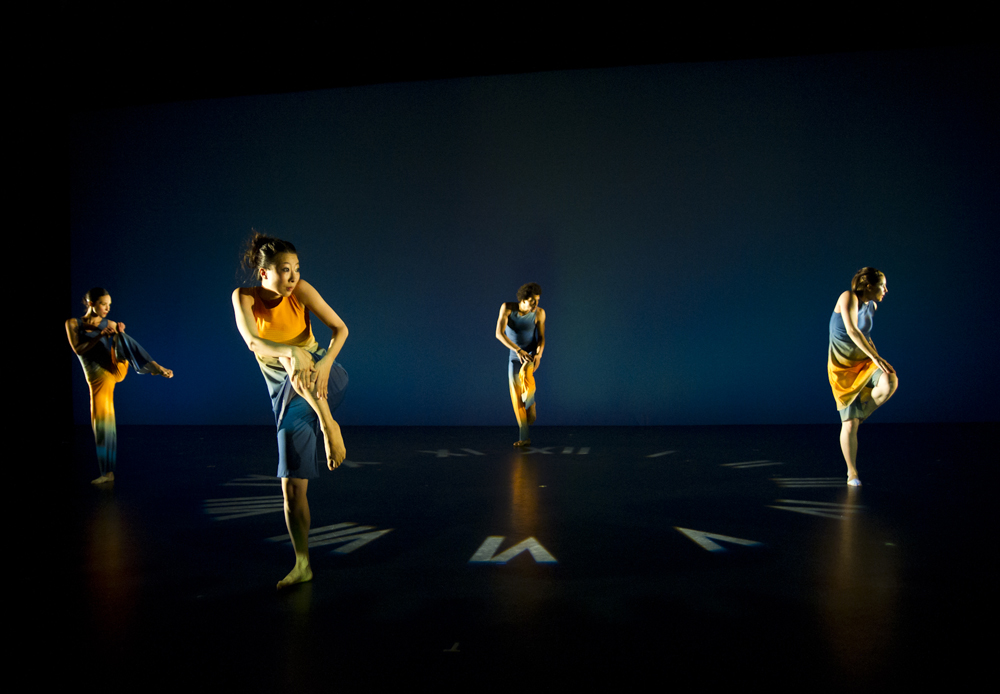
    As my friend Tom and I found our seats at Dance Theater Workshop, the projection of a large digital clock onstage was ticking down the seconds til the performance began. It started on the dot and ran in a series of finely-paced scenes for exactly 55 minutes.

    Working with a compilation score, each movement of which lasts five minutes, Selwyn presents her six dancers in ten seemingly un-related short works each with different costumes, lighting, projections and moods. The underlying theme is the passage of time and how we spend it; some of these vignettes flew by, others took a more leisurely pace. Working in various combinations (solo, duo, trio, ensemble) Selwyn’s very attractive dancers each have ample opportunity for both technical and personal expression. The dancing was excellent, the ever-changing musical and visual settings giving each dancer the possibility to explore many moods.

    Hr_20110330_Christopher_Duggan_Amanda_Selwyn_0523 small

    As the evening unfolded, there were some particulary luminous moments such a the sustained, lyrical duet for Robert Vail and Joori Jung (above, Christopher Duggan photo). Later, two strikingly beautiful men, Francisco Silvino and Louie Marin, dance conjoined solos in pools of light, the musculature of their torsos set aglow. 

    Dance_Photography_Paula_Lobo_Amanda_Selwyn_-0009 small

    Throughout the evening the lighting and projections created dreamlike settings (Paula Lobo image, above) which wrapped the dancers in colour or created chiaroscuro effects. Each five-minute segment held the imagination. There were moments of wit but they never descended to cuteness; the dancers did speak briefly: “You have five minutes…”

    Dance_Photography_Paula_Lobo_Amanda_Selwyn_-0322 small

    Paula Lobo image, above. In less than an hour, Amanda Selwyn and her troupe had given us dance that was entertaining and lovely to watch along with a reminder that time is fleeting: use yours wisely.

    We came out into the Chelsea evening where the streets had a special energy: on the eve of Gay Pride Day 2011, the New York City gay community and their suppportive friends had much to celebrate.

    Dancers:  Jenny Gillan, Ashleigh Gurtler, Joori Jung, Louie Marin, Francisco Silvino, Robert J. Vail

    Sound Design for Five Minutes  by Joel Wilhelmi.  Costume Design is by Anna-Alisa Belous.  Lighting Design is by Dan Ozminkowski.  Projection Design is by C. Andrew Bauer.  Scenic Design is by Tom Gleeson.  Stage Manger: Tiffany Tabatchnick.