Tag: Saturday March

  • Lisa Batiashvili|ORPHEUS @ Carnegie Hall

    P1010052_preview

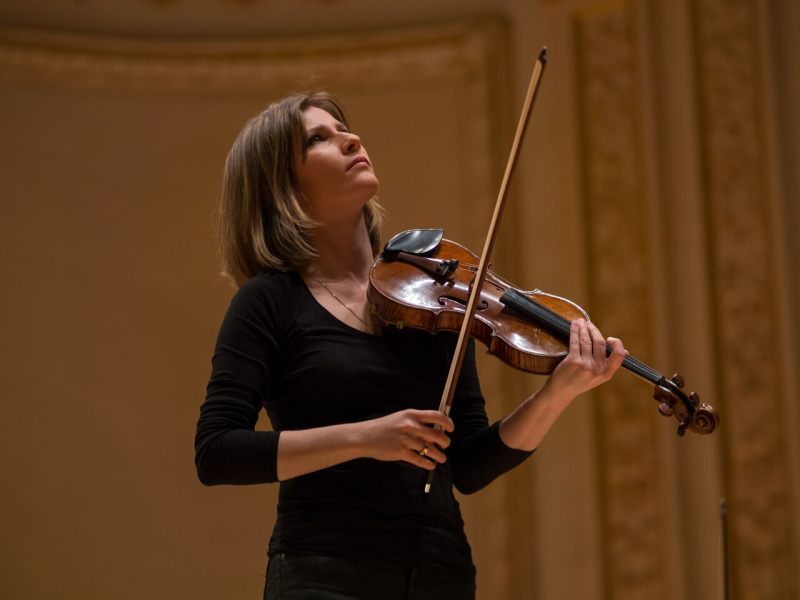
    Above: violinist Lisa Batiashvili, rehearsing for this evening’s concert with ORPHEUS; photo by Matt Dine

    ~ Author: Oberon

    Saturday March 24th, 2018 – My friend Dmitry and I are big fans of Lisa Batiashvili, so we were excited by this opportunity to hear her play the Prokofiev second concerto with ORPHEUS at Carnegie Hall. The program successfully blended works by Schubert and Prokofiev, and the comely violinist basked in a rock-star ovation after her dazzling performance.

    In 1823, Franz Schubert composed incidental music for Helmina von Chézy’s play, Rosamunde. The play was a failure, but Schubert’s music has come down to us across nearly two centuries. ORPHEUS opened their concert tonight with the play’s Entr’acte No. 1, commencing with a big, resonant sound that gave the illusion of a full symphony orchestra. The music has an air of theatrical drama, and there’s some lovely writing for clarinet. 

    Paul Chihara’s persuasive arrangement of Prokofiev’s Schubert Waltzes Suite, created specially for ORPHEUS, was highly enjoyable, and attractively played. Solo passages for oboe, flute, clarinet, and trumpet stood out. Mr. Chihara was present, and took a bow from the audience.
    P1010100_preview

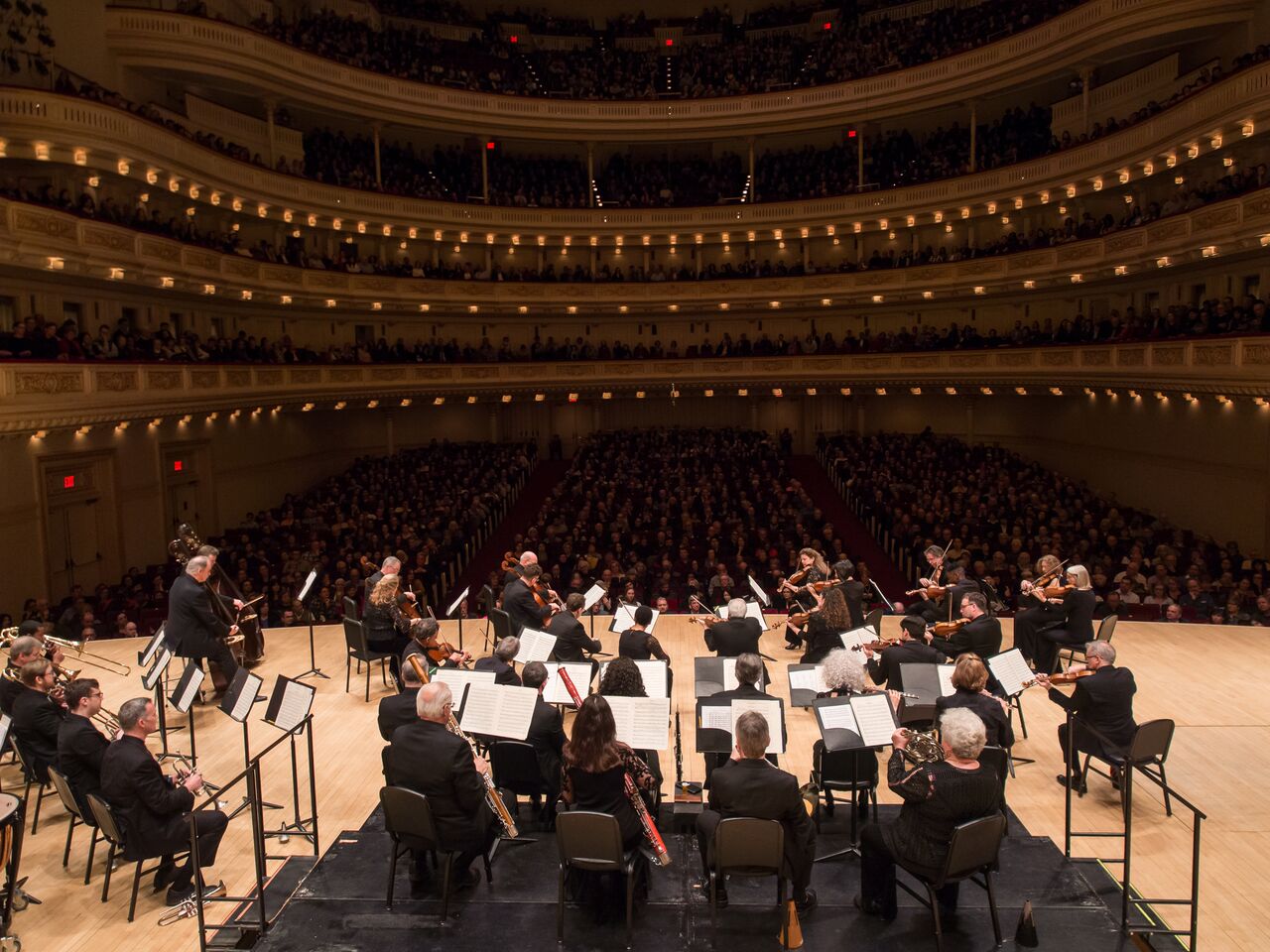
    Above: ORPHEUS onstage at Carnegie Hall, a Matt Dine photo

    The two existing movements of Franz Schubert’s Symphony No. 8 in B Minor, D. 759 (Unfinished) were given plush treatment by the ORPHEUS forces, and again the clarinet, oboe, and flute soloists seized on their opportunities to delight us with melodious gems. The ensemble sound overall was vividly textured, with notable sonic warmth from the cellos, and the frequent repeats of the familiar theme of the Allegro moderato were so cordially played. A cellphone interrupted the Andante – twice! – spoiling the atmosphere; and no sooner had that distraction faded, than some poor bloke had a terrible coughing fit. It took all my powers of concentration to endure.

    After the interval, Ms. Batiashvili strolled onto the Carnegie Hall stage along with the ORPHEUS musicians – eschewing a star’s entrance – and proceeded to enthrall us with her commanding and emotionally vivid performance of the second Prokofiev violin concerto, Op. 63.

    P3240077_preview

    Above: Lisa Batasthvili playing the Prokofiev 2nd this evening; photo by Matt Dine.

    From her opening solo passage, Ms. Batiashvili’s playing seemed wonderfully at home, both in the embracing acoustic of the venerable hall and in the decidedly à la Russe qualities of the music. Her luminous tone in the sustained melodic passages and the clarity and deftness of her coloratura flourishes were captivating. A spidery motif over plucked accompaniment was subtly delivered, and – after a lamenting theme from the cellos and a march-like intrusion – she produced lively swirls of notes over a descending orchestral figure. As the violinist returned to the sweet, poignant melody heard earlier, we were on a Batiashvili high when the mood was broken by a moaning baby somewhere in the upper tiers. At moments like this, I seriously think about giving up concert-going.

    But Ms. Batiashvili drew us back into her world with her simply gorgeous playing in the Andante assai; the theme has a nostalgic glow and it sings over a plucked accompaniment. Sailing higher and higher, with spine-tingling glamour of tone, the violinist provided for us a transfusion of tranquility in a world going mad. The ensemble then take up the melodic passage as the violin plays pizzicati.

    The final movement, Allegro, ben marcato, brings us elements of the wit that Prokofiev can so magically integrate into his music: yet another reason he’s one of my top favorite composers. The castanets here always make me smile. Throughout this dance-like movement, it was as much fun watching the pretty violinist as listening to her. As this concerto reaches its lively finish, I always wish it had been longer.

    Ms. Batiashvili, looking lovely as ever in her wine-coloured gown, won an enraptured ovation from the crowd. She treated us to a delightful encore: the March from Prokofiev’s LOVE OR THREE ORANGES.

    P3240344_preview

    Above, mutual admiration: Lisa Batiashvili and the players of ORPHEUS. Photo by Matt Dine.

    ~ Oberon

  • Kavakos Plays Sibelius @ The NY Phil

    Kavakos-Leonidas-21

    Above: violinist Leonidas Kavakos

    Saturday March 19th, 2016 – Feeling under the weather today, I was nevertheless determined to hear Leonidas Kavakos play the Sibelius violin concerto with The New York Philharmonic. I’d looked forward to this red-letter evening since the season was announced, and even though I feel strongly that people who are sick are better off staying home, I was determined to go.

    In an unusual programming move, the concerto was the opening work tonight.

    Mr. Kavakos, very tall and with the air of a mythic sorcerer, launched his inspired rendering of the concerto with a magical glow: the spine-tingling opening passage – coolly sensual – immediately drew us in. Maestro Alan Gilbert and Mr. Kavakos have formed a rich rapport over time, and the conductor and his players were at their shining best as the violinist shaped the opening movement with alternating currents of broad-toned lyricism and spiky bravura. Few violinists today can match Kavakos for power – both sonic and emotional – and his playing as the concerto unfolded continually sent chills up and down my spine.

    In the central Adagio, with its heart-fillingly gorgeous main theme, violinist and orchestra were in a particular state of grace. One of the most winning aspects of Mr. Kavakos’ playing is his marvelously sustained phrasing; Maestro Gilbert and the orchestra provided the soloist with perfect support as passage after passage fell gratifyingly in the ear, everything lovingly dove-tailed and with an acute awareness of dynamic nuance. This performance of the Adagio was a high point in a season that has been rich in musical magic. 

    Mr. Kavakos then dug into the opening dance of the concluding Allegro with gusto, and the orchestra sounded simply magnificent in the big tutti passages. Give and take between soloist and ensemble produced some dazzling effects, and the lovely ‘wandering’ passage for violin when the music briefly slows down was particularly appealing. Following an energetic rush to the finish, Mr. Kavakos enjoyed a prolonged ovation, filled with shouts of joy from his listeners. The Philharmonic players seem clearly to revel in performing with this violin-magician, and his warm greeting of concert-master Frank Huang and a lovely embrace for Sheryl Staples indicated a deeper personal connection with his colleagues than we sometimes see between soloist and orchestra. 

    After several bows, Mr. Kavakos granted us a rather long solo encore which showed a more intimate side of his artistry. And now, here’s some excellent news: Mr. Kavakos will be with us more frequently next season as he has been designated the Philharmonic’s 2016-2017 Mary and James G Wallach Artist-in-Residence. In addition to programs featuring him as soloist, he will make his NY Phil conducting debut. Find out more about this residency here

    Much as I wanted to hear the Shostakovich’s The Age of Gold Suite, I knew it was time to go home, take Advil, and rest. I now have some rare downtime: an opportunity to re-charge before this busy season continues. I have lots of wonderful music to listen to, including Mr. Kavakos’s Sony double-disc of Mendelssohn’s concerto and the piano trios, which I highly recommend; find it here.

  • Vivier & Bruckner @ The NY Philharmonic

    L1016697_(2)

    Above: conductor Manfred Honeck, photographed by Felix Broede

    Saturday March 29, 2014 – Tonight at The New York Philharmonic, Claude Vivier‘s ORION and Anton Bruckner’s Symphony #9 were played without intermission.  Manfred Honeck, music director of the Pittsburgh Symphony Orchestra, was on the podium; Maestro Honeck was replacing the originally-announced Gustavo Dudamel, who withdrew from these concerts due to illness.

    Claude Vivier, the Canadian composer of ORION, was murdered in 1983, having had a macabre premonition of his own death. This from the program notes:

    “When Claude Vivier was fatally stabbed in his apartment on the night of March 8, 1983, an unfinished manuscript for a choral work lay on his worktable: Crois-tu en l’immortalité de l’âme? (Do You Believe in the Immortality of the Soul?), which, according to The Guardian, is a dramatized monologue in which the composer describes a journey on the Metro during which he becomes attracted to a young man. The music breaks off abruptly after the line: ‘Then he removed a dagger from his jacket and stabbed me through the heart.’ “

    ORION, dating from 1979, drew inspiration from the composer’s journey from Asia to the Middle East in 1976, where he absorbed the sounds of the cultures thru which he passed. This dense and fantastical work, so sumptuously played by the Philharmonic, ranges from thunderous proclamations to arching melodic forays; gongs evoke distant temples and – truly unique – there are two vocal interjections (performed by a percussionist) which might be the cries of a muezzin or the calls of the starry hunter for whom the piece was named. As Vivier concluded his original program note for ORION: “Go and find out for yourself!”

    Vivier’s untimely and violent death finds a link – and a counter-poise – in the Bruckner 9th, the unfinished symphony on which Bruckner was at work on the day he died. He is said to have spent the morning at his Bösendorfer, going over sketches for the symphony’s finale. After taking a walk, he had a cup of tea and then took a nap from which he never awoke. What a nice, peaceful way to take leave…the very opposite of Vivier’s violent fate.

    “It will be my last symphony,” Bruckner had told a guest earlier in the creative process. At the time of his death, three movements were complete, and Bruckner had been working on the finale for months, leaving a large accumulation of sketches and thematic fragments. It’s a grand and glorious work, even without a ‘proper’ ending.

    The fervor of Bruckner’s religiosity is apparent from the start of the 9th symphony: both solemn and uplifting, the music ranges from broad statements to intimate vignettes – especially from the wind instruments; a passage of pizzicato strings one moment will give way to burnished, expansive themes the next. Climaxes build and evaporate, and chorale-like passages take on a spiritual glow.

    Over the course of the three movements, we will sometimes be reminded of such disparate composers as Wagner and Mendelssohn. The symphony as it stands ends on a note of serenity, leaving us to wonder what might have been if Bruckner had lived to complete a fourth movement.

    It goes without saying that the Philharmonic artists gave a performance of remarkably mellow beauty and rhythmic clarity; Maestro Honeck – tall and somewhat formal in demeanor – became wonderfully involved in the music; his conducting style is both passionate and animated, and devoid of melodrama. The audience saluted him with great warmth as he was called out for extra bows to a standing ovation. Let’s hope he’ll be back on the Avery Fisher podium soon.

  • Paul Taylor @ Lincoln Center 2013 #5

    Profireco

    Above: from Paul Taylor’s PROMETHEAN FIRE. Photo by Paul B Goode. Click on the image to enlarge.

    Saturday March 23rd, 2013 matinee – My final performance of the Paul Taylor Dance Company‘s 2013 Lincoln Center season. It’s been a brilliant three weeks and the Company are dancing superbly. Celebrating Bach’s birthday with a Bach ballet on every single programme has been an added source of joy, and the Company’s press liaison Lisa Labrado assured me of a warm welcome every time I attended. The Taylor company are outstandingly generous to dance writers, and it’s always a great pleasure to find Rachel Berman and Richard Chen-See – former Company dancers – circulating among the guests, making us feel a part of the Taylor family.

    This matinee opened with KITH AND KIN, dating from 1987 and set to a Mozart serenade. A tall and elegant couple in brown – radiant Amy Young and James Samson – preside over a flock of energetic young people who seem to be celebrating the sheer joy of being alive in stylized passages of leaps and restless comings and goings. Set slightly apart from this community is the magnetic Heather McGinley, a friendly (and gorgeous) guardian angel. In the central adagio, Amy and James dance with formal grace as Aileen Roehl and Michael Apuzzo swirl about them, perhaps representing their younger selves. This ballet, new to me this season, shows a happy meeting place of generations, with the stately ‘senior’ couple presiding overall yet still capable of having a little fun of their own.

    The poignantly dark splendours of THE UNCOMMITTED evolve first to the gleaming, celestial strains of Arvo Part’s Fratres as the dancers – in richly-hued body stockings with rose-red highlights – appear in a series of brief solos. This is a world inhabited by lonely spirits, seeking – but eventually unable – to connect with one another. Paul Taylor again turns again to Mozart as a series of duets unfold; each couple hovers on the brink of understanding but in the end none can sustain a relationship. Even the number of dancers involved – eleven – implies from the start that there will always be an odd man out. Despite its rather bleak emotional outlook, THE UNCOMMITTED provides a wonderful opportunity to focus on the individual lustre of each of the dancers – and what an ensemble it is: Michael Trusnovec, Amy Young, Robert Kleinendorst, Michelle Fleet, Parisa Khobdeh, Eran Bugge, Francsco Graciano, Laura Halzack, Michael Apuzzo, Aileen Roehl and Michael Novak.

    Bach provides the setting for a grand finale to the programme: PROMETHEAN FIRE. For this ballet, the entire Company are onstage; the dancers listed above are joined by James Samson, Sean Mahoney, Jamie Rae Walker, Heather McGinley and George Smallwood. In their velvety black costumes subtly trimmed with silver, the dancers revel in Mr. Taylor’s complex and visually inspiring combinations: PROMETHEAN FIRE is a masterpiece of structure, formal yet joyously human in expression. The heart of this sumptuous ballet is an adagio in which the combined genius of Mozart and Taylor moves us to the highest realms of spiritual satisfaction. Parisa Khobdeh and Michael Trusnovec were at their most transportive here, the partnering remarkable in its beauty and power, their personal magnetism magically aglow. Indeed it was one of the most moving and soul-stirring experiences in my long memory of watching dance.

    PROMETHEAN FIRE concludes with a splendid tableau of the Company dancers and for a moment we could simply relish their collective perfection, for it is they who in the end have the ultimate responsibility of making the choreography live and breathe. Then Mr. Taylor appeared for a bow and the audience swept to their feet with resounding cheers.

  • John Mark Owen’s Sonatae II

    Copy of 1

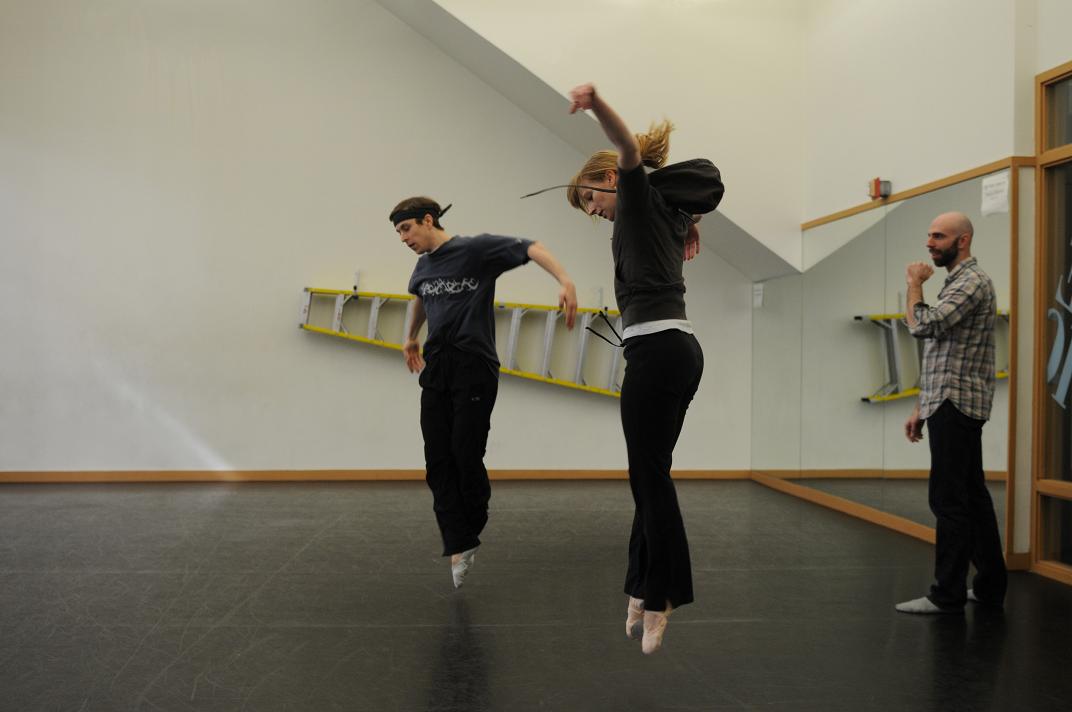
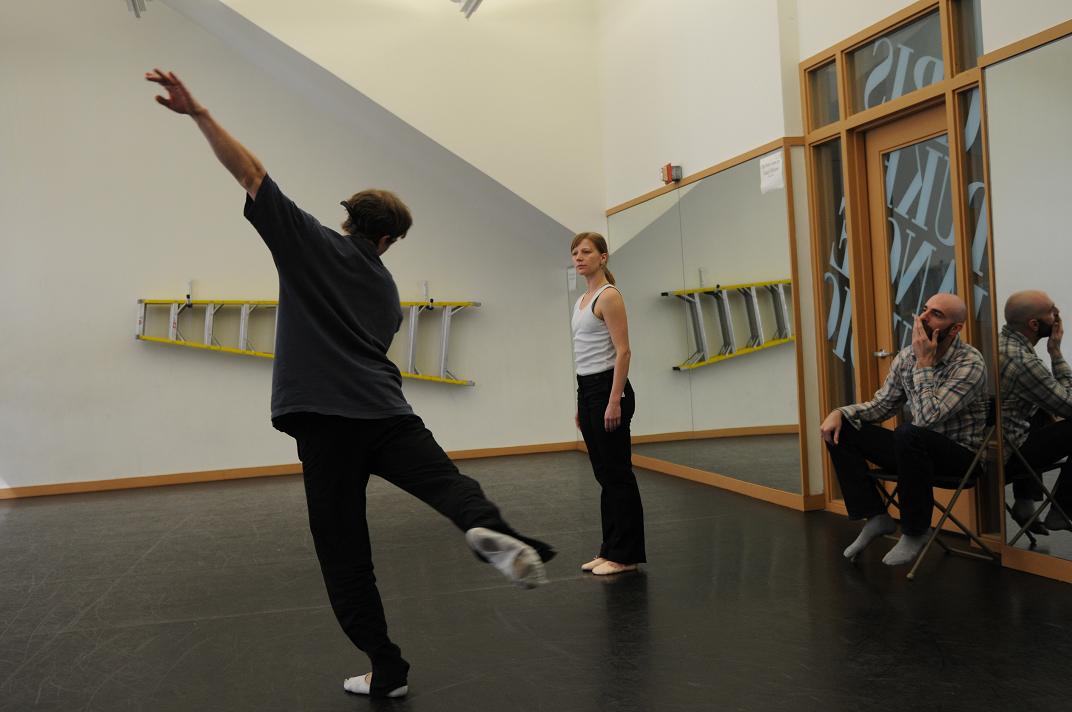
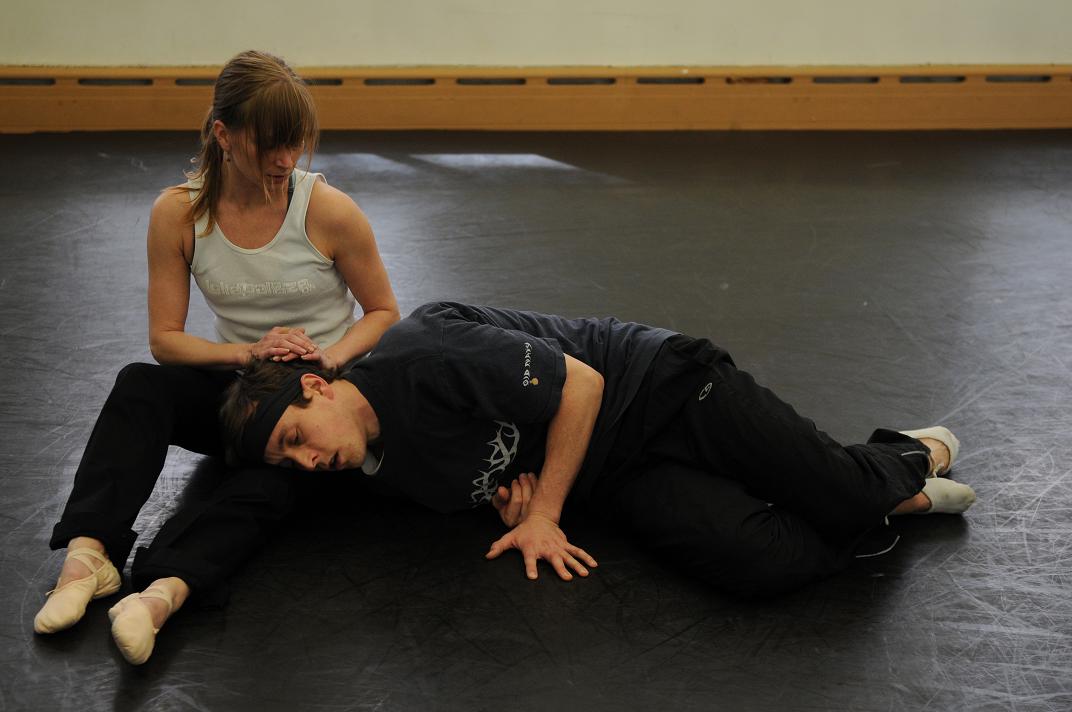
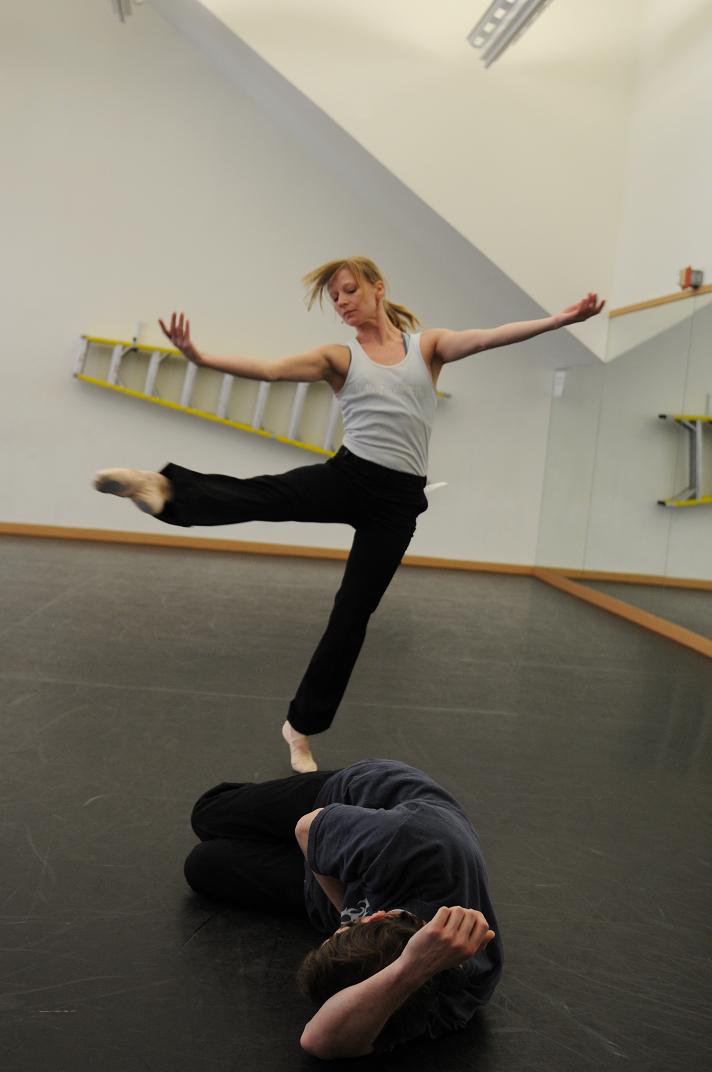
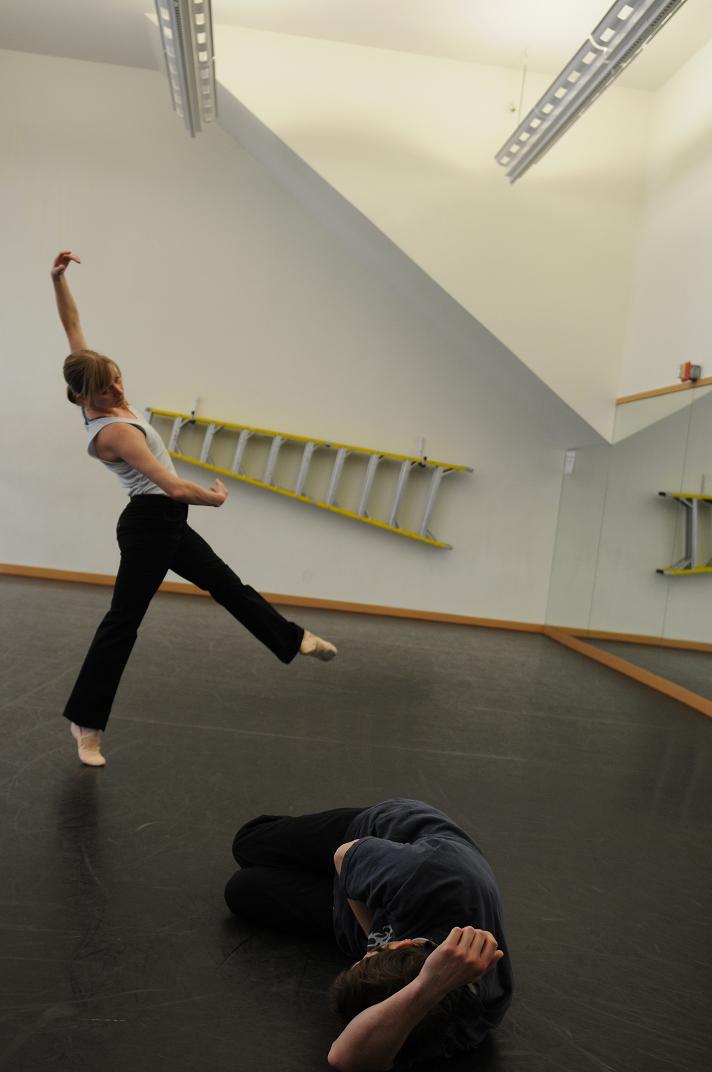
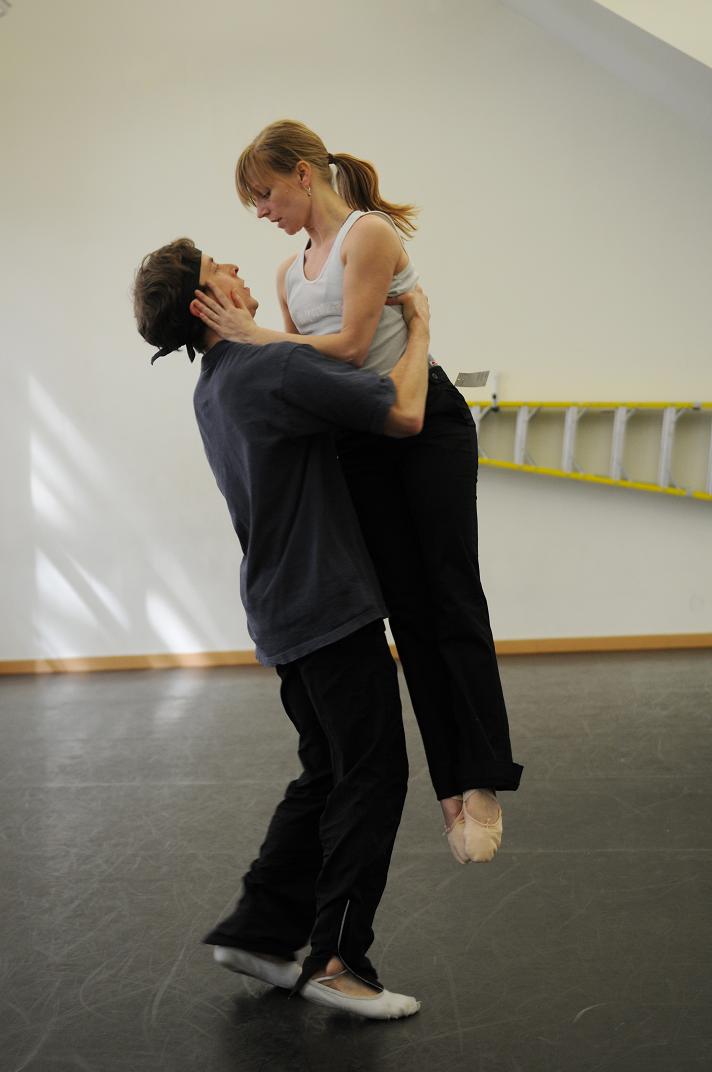
    Saturday March 26, 2011 – Choreographer John-Mark Owen invited us to watch a rehearsal of his newest work, Sonatae II, set to music of Alexander Balanescu. The duet will be shown at the 92nd Street Y on Sunday March 27th at 3:00 PM. The dancers are Jennifer Goodman and Josh Christopher, above in Kokyat’s photo.

    Copy of 2

    When Kokyat and I arrived at the studio, Jennifer and Josh were putting the finishing touches on the duet.

    Copy of 13

    They worked in silence with John-Mark and all the movement seemed so expressive. With a performance scheduled for the following afternoon one might have expected an atmosphere of urgency or even panic in the studio but instead there was an air of calm with the dancers taking their time to perfect the small nuances of gesture and expression that John-Mark was looking for.

    Copy of 24

    With the studio time running out, John-Mark played the Balanescu music and what had been an attractive series of danced passages took on a deeper and more intense feeling altogether.

    Copy of 19

    The music is just so poetic, and the dancing took wing on it. 

    Copy of 17

    Copy of 26

    Copy of 20

    As soon as the run-thru finished the dancers quickly bundled up and packed off to the Y for further rehearsing. All photos: Kokyat.

    Jennifer Goodman is currently dancing a featured role in performances of Strauss’ CAPRICCIO at the Metropolitan Opera.

    On May 6th and 7th, John-Mark Owen’s Sonatae I will be performed by Jesse Marks at Manhattan Movement and Arts Center on a programme shared with the Island Moving Company of Newport, RI.