Tag: Saturday May

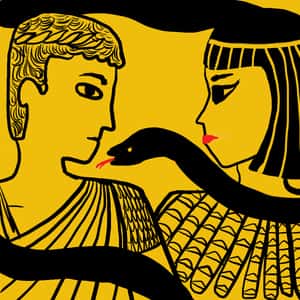
  • John Adams: ANTONY & CLEOPATRA @ The Met

    Antony-and-cleopatra

    ~ Author: Oberon

    Saturday May 24th, 2025 matinee – I hadn’t originally planned to go to a performance of John Adams’ Antony & Cleopatra, but some singers I especially like were in the cast, so I got a score desk – even though I was scoreless – for today’s matinee. My previous experiences with the composer’s operas have both disappointed (though the second was enthralling for the first 40 minutes); you can read about my reaction to The Death of Klinghoffer here and to El Niño here.

    The Met’s first incarnation of the Shakespearean tale of Antony and Cleopatra was the opera by Samuel Barber which opened the New Met in 1966. In the late summer of that year, I had made my first solo trip to New York City in order to buy tickets to some of the performances in the first few weeks of the season, and Antony & Cleopatra was on my list. 

    On the evening of September 16th, 1966, in my little room in the little town, I was tuned in for the live broadcast of the new opera. I was on pins and needles because the Met Orchestra had announced an impending strike; they’d agreed to play the opening night as it was drawing international attention in the music world. Luminaries had flown in from other nations, and Lady Bird Johnson was to be the guest of honor. For two acts, I was feeling more and more certain that the performances I’d bought tickets for would never take place: rumors indicated that the standoff could not be resolved, and that both sides were standing firm. Then, before the start of Act III, Sir Rudolf Bing appeared before the gold curtain to announce that a settlement had been reached and to welcome the musicians back “as friends”. I ran screaming thru the house; my mother thought – not for the first time – that I was deranged. 

    On December 1st, 1966, I saw the last Met performance of the Barber Antony & Cleopatra to date. I’d learned a lot of the music from repeated playings of the reel-to-reel tape I had made of the opening night broadcast, and I was thrilled to experience the voices of Leontyne Price, Justino Diaz, Jess Thomas, Ezio Flagello, and Rosalind Elias in this music ‘live‘; I was able to silently sing along with them much of the time. 

    Though the Met never revived the opera, a production given at the Juilliard School, staged by Gian Carlo Menotti and conducted by James Conlon, kept much of the music intact, whilst introducing a love duet for the title-characters. Then, in 2009, the New York City Opera presented a concert performance of the Barber opera at Carnegie Hall, with Lauren Flanigan and Teddy Tahu Rhodes in the leading roles. Read about it here

    In the ensuing years, I’ve kept favorite passages of the opera in my mind: not just the big themes and the weighty arias, but the delicious (and later cut) scene for the eunuch slave Mardian and Cleopatra’s handmaidens, full of one-liners; the haunting, poetic beauty of Antony’s young attendant Eros’s suicide (“Thus do I escape the sorrow of Antony’s death...”), and most especially the opera’s original ending, with Charmian finishing Cleopatra’s last line, “What? Should I stay…?” “…in this vile world?  Now boast ye, Death, for in thy bosom lies a lass unparalleled…your crown’s awry! I’ll mend it, then play til Doomsday...” as intoned by the sumptuous voice of Rosalind Elias. And of course, the glorious sound of Leontyne Price is forever bound to the music of Cleopatra.

    Enough nostalgia, and forgive me for rambling on. 

    So this afternoon, I am sitting alone in the great darkened hall that had reverberated to the Barber score some sixty years ago, hoping to be similarly captivated by the new Adams opera. As it turned out, I was far more fascinated with the orchestral writing than with the vocal. The composer had written a very long program note, but the print was so small I could not read it. Even while the players were tuning and warming up in the pit, the sounds of such instruments as celeste, harmonium, harpsichord, mandolin, glockenspiel, vibraphone, tam-tam, flexatone (which creates glissando effects), and numberless bells, chimes, and drums, teased my ear. Adams put all of these to cunning use, creating textures that sustained my interest throughout the 90-minute first act.

    The composer reportedly stipulates that amplification of the singing be used when his operas are presented. It’s OK by me, but the mixing board (taking up one of the parterre boxes) sometimes allowed the voices to be covered by the orchestra despite the singers being miked. A few times, the lower range of Julia Bullock (Cleopatra) took on a reverb feeling from over-amplification. I also noted that the cast’s diction was not always clear.

    A restless orchestral prelude opens the opera, wherein Antony (Gerald Finley, the superb baritone) ignites Cleopatra’s fury when he tells her he must return to Rome due to the death of this wife, Fulvia. Between un-interesting vocal writing and patches where the singers were covered by orchestral volume, this scene was basically expendable. 

    A noisy interlude takes us to Rome, where Antony is greeted coolly by his ‘boss’, Caesar (the clear, lyrical tenor Paul Appleby). To patch things up between the two men, it is suggested that Antony marry Caesar’s sister, Octavia. Agrippa, the match-maker (sung by Jarrett Ott, whose clear diction was a joy) gives way to Enobarbus (that superb basso Alfred Walker) whose description of Cleopatra sailing on the Cydnus is more a sung narrative than a melodious “aria”. 

    Back in Alexandria, Cleopatra’s voicing of “O happy horse, to bear the weight of Antony!” is no match for Samuel Barber’s setting of the text, which Leontyne Price savoured so smoulderingly. Told by Eros (Brenton Ryan) of Antony’s marriage to Octavia sets off a wild reaction from Cleopatra, though it is expressed more by the orchestra than by Ms. Bullock’s parlando and her furious song, which goes on too long…though finely rendered by the soprano.

    After an orchestral interlude, a big, beaty, turbulent theme is launched as Octavia (the plush-toned mezzo Elizabeth DeShong) cannot decide between loyalty to her brother Caesar and the appeal of Antony. Tired of her vacillating, Antony divorces her on the spot and rushes back Cleopatra. Ms DeShong brings vocal glamour to her singing, though at times the orchestra covered her. Caesar’s fury at Antony’s treatment of his sister is another case of the fascinating orchestration trumping the vocal line. When Octavia/deShong reveals (with some gorgeous measures of vocalism) that she is pregnant, her brother declares war on Antony. 

    A wondrously wrought orchestral interlude leads to a musical depiction of a disastrous sea battle, in which Antony miscalculates and Cleopatra erroneously calls off her own fleet of ships; there is a brief vocal highlight wherein Mr. Finley’s lament blends with a soaring phrase from Ms. Bullock; but it’s over almost as soon as it begins. Lights flash thru the hall as the orchestra pounds away at themes of battle in an endless ending to the opera’s first act. 

    In the 90-minute span of this opening act, memorable vocal moments have been few and far-between, whilst the orchestra has shone brilliantly. The voices were there, ready to make much of the music, but the composer’s lack of “lyric musing” (program note) deprives them of opportunities.     

    ~ Oberon
  • DON GIOVANNI @ The Met

    Mattei fang

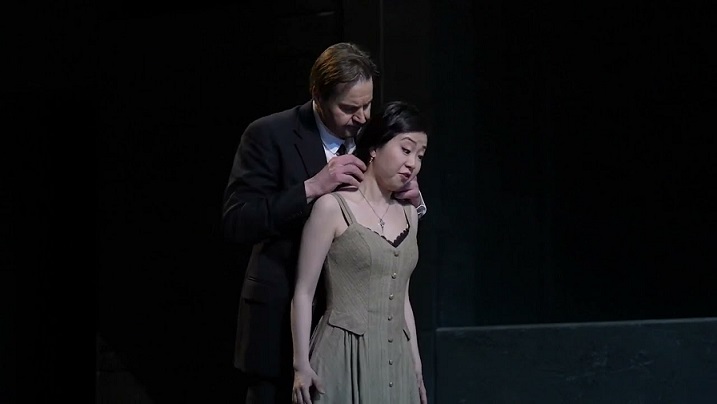
    Above: Peter Mattei as Don Giovanni & Ying Fang as Zerlina

    Author: Oberon

    Saturday May 27th, 2023 matinee – The Met’s new DON GIOVANNI is a grey affair. Large grey architectural set pieces loom above the action; from time to time they are moved to form varying spaces as the story unfolds. The costumes are drab and muted, with the only color splash coming at the Don’s party when mannequins are wheeled in, brightly dressed in period gowns. Much of the time the singers are dressed as they might be for a rehearsal. The greyness prevails until the opera’s final sextet, when flowers, potted plants, and vari-colored domestic furnishings suddenly decorate the set.

    Aside from the Don’s killing of the Commendatore with a gun rather than in a duel, there’s nothing radical in the staging. Of course, if the production had been set in the USA, everyone would have been toting an AK-15.

    With so little to distract us visually, focus was on the singing. Adam Plachetka sounded muted in Leporello’s opening lines, but he bloomed vocally with his Catalogue Aria and was thereafter very impressive. Dmitry Belosselskiy was a strongly-sung Commendatore, responding ominously to the Don’s dinner invitation, still wearing the bloody shirt in which he was killed. In powerful voice, Mr. Belosselskiy made me look forward to his upcoming Daland.

    As the peasant couple, Masetto and his Zerlina, Alfred Walker and Ying Fang were superb. Mr. Walker is always a joy to hear, and his excellent singing today turned the oft-neglected character into a leading role. Ying Fang, with one of the most appealing voices on the current operatic scene, was exquisite in both of her arias, and she blended with Peter Mattei’s suavely-phrased singing to make “La ci darem la mano” one of the highlights of the afternoon.

    Ana Maria Martinez was a bit unsettled vocally at first, and I wasn’t sure that Donna Elvira was a role for her; but she convinced me otherwise as the opera progressed. Her “Mi tradi” was fabulously sung: in a delightful musical collaboration with conductor Nathalie Stutzmann, Ms. Martinez made the aria glow. The soprano, looking like an earnest CEO in her fitted forest-green frock and black stilettos, found the perfect mix of determination and frustration in the character.

    Federica Lombardi had a triumph in her third Mozart role at The Met: following her Countess Almaviva and Elettra (IDOMENEO), she sang brilliantly as Donna Anna today, throwing in some embellishments along the way, which Mme. Stutzmann wisely allowed. All afternoon, the Lombardi voice rang clear and true, with free-flowing coloratura, and capping the ensembles brightly. In the great aria “Non mi dir“, Ms. Lombardi was poignantly expressive in her plea for understanding, and then set off the fireworks for the aria’s fast-paced conclusion.  

    Ben Bliss as Don Ottavio gave us some of the most expressive singing of the afternoon, with lovely dynamics in the touching “Dalla sua pace” and a sure command of the dazzling demands of “Il mio tesoro“. Ben’s visible frustration when Donna Anna asked for ‘more time’ after demise of her nemesis, Don Giovanni, was much appreciated by the audience.

    Peter Mattei’s Don Giovanni made a huge impression at The Met in 2009, in another drab production, which I watched with Lisette Oropesa – the first act onscreen at List Hall and the second from a balcony box. We  were both bowled over by his vivid characterization and his mellifluous singing. This afternoon, in a production that casts the Don as a psychopath, Mattei was equally impressive…and the voice is more beautiful and subtle than ever. His “La ci darem la mano” with Ying Fang, his ‘champagne aria’ (taken by Ms. Stutzmann at lightning speed) and his ravishing serenade, “Deh, vieni alla finestra“, were perfect.

    What separated this performance from most everything else I have seen at The Met this season was the conducting: the majority of the operas have been played fast and loud, apparently in an attempt to make things more ‘exciting’. As a result, singers were often made to choose between forcing or being drowned out. As a singer, Ms. Stutzmann knows what to do on the podium; so today, every note and word was clearly audible, and no one seemed to be putting undue pressure on their voice. 

    Moreover, Ms. Stutzmann gave the music a wonderful sense of flow, often moving directly from recitative to aria without pause. There was an especially lovely trio continuo players today: John C. Kelly (fortepiano), Kari Jane Docter (cello), and John Lenti (theorbo and mandolin). It was Mr. Lenti who gave the Mattei serenade its enchanting accompaniment. I cannot say which of the Met Orchestra’s cellists was responsible for the splendid playing in Ms. Martinez’s wonderful “Mi tradi“, nor which clarinetist brought such warmth and clarity to the playing of the downhill scales in Figaro’s “Non piu andrai” as part of the Don’s dinner music.

    And so, I wanted very much to meet Nathalie Stutzmann after the performance. I went down to the stage door – after the enthusiastic ovation during the curtain calls – to find that a large crowd had gathered there. The singers came out and were greeted like rockstars, and they all lingered, chatting up the fans.

    I think all afternoon the scandale was on people’s minds – at least those people who like gossip. During the performance, there had been no hint of any tension between the pit and the podium, although the players who sit nearest the spot from which the conductor enters – and who usually start clapping loudly when Maestro X, Y, or Z first appears – didn’t do that for Ms. Stutzmann today. But the audience soon spotted her and gave her a round of bravas.

    Ar last Ms. Stutzmann came out, and after she had greeted some other fans, it was my turn. I had thought of some non-controversial things to say to her, but my shyness overwhelmed me. She signed my program, and I embraced her, and said: “I love your Alto Rhapsody!” which made her smile. Listen to it here.

    Stutzmann autograph-1jpg

    ~ Oberon

  • ORPHEUS: A Paul Robeson Celebration & “Egmont”

    Carnegie hall

    ~ Author: Oberon

    Saturday May 20, 2023 – ORPHEUS presenting the world premiere of Jasmine Barnes’ Songs of Paul, celebrating the 125th birthday of the great singer/activist Paul Robeson; this was followed by Beethoven’s Egmont in an arrangement by Andreas Tarkmann, with a new translation of the narrative by Philip Bohem. Soprano Karen Slack and baritone Will Liverman were the excellent soloists for the Barnes, and Ms. Slack also sang the soprano arias in the Beethoven, sharing the stage with the inimitable Christine Baranski, who was the Narrator. 

    Robeson

    Above: Paul Robeson

    Ms. Barnes’ new work was warmly received by the audience tonight; her arrangements are beautiful, and were finely played by the artists of ORPHEUS. Sometimes the music seemed too symphonic, detracting a bit from the voices; I grew up hearing these songs on my grandmother’s 78s, with Lawrence Brown playing piano, and the orchestral settings tonight at times felt too glossy. Be that as it may, the songs were superbly sung by Will Liverman (“Didn’t My Lord Deliver Daniel?”, “Deep River”, “Swing Low, Sweet Chariot”, and “Sometimes I Feel Like a Motherless Child”) and Karen Slack (“There’s A Man Going Round Taking Names” and “My Soul’s Been Anchored in the Lord“). The two singers joined together for a grand finale, starting with the profound “Go down, Moses” which gave way to the rousing “Joshua Fit the Battle of Jericho“. Both singers sounded marvelous in the great Hall; composer Jasmine Barnes joined them for a bow, to loud cheers from the crowd.

    Egmont jpg

    The Beethoven did not seem the right companion piece to the Robeson fest this evening; though both Paul Robeson and Lamoral of Egmont were idealists and freedom fighters, that is their only real connection. There was a feeling of restlessness in the Hall as the Beethoven went on, and at least four different cellphones went off, which was distracting. At any rate, Egmont is not one of Beethoven’s masterpieces; the music mostly feels dutiful rather than inspired.

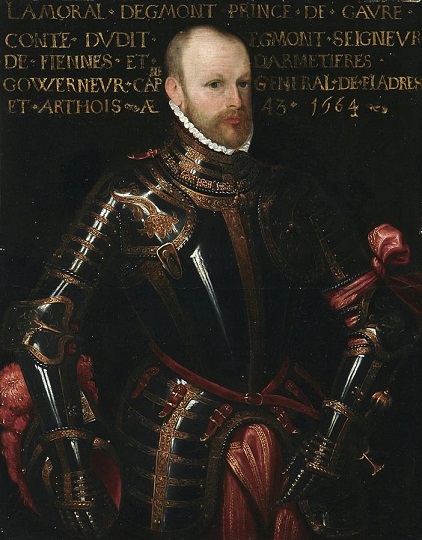
    The historical story of Lamoral of Egmont (above) began in Brussels, in the second half of the 16th century. The Low Countries, under the heavy yoke of Philip II and his Spanish Inquisition – reference Verdi’s DON CARLO – found their civil rights curtailed and the Protestant movement crushed. Egmont, although himself a loyal Catholic, went to Madrid to plead for clemency for the Protestants. He was received with honors by King Philip, but when Egmont returned to his homeland, the king sent the Duke of Alva to Brussels to squash all resistance to Spain’s will. Egmont was imprisoned and eventually executed for treason; his martyr’s death roused the Lowlanders to rebel and cast off their Spanish overlords.

    Beethoven took up the tale of Egmont in 1809, when he was commissioned to compose incidental music for the Vienna premiere of the Goethe play. Beethoven composed a set of musical numbers for Egmont, beginning with the dramatic overture, now a free-standing staple of the concert repertory. There are four entr’actes, two songs for Klärchen, and the final scenes of Egmont’s trial and death. It ends with Egmont’s exultant call to the people to overthrow their oppressors: “Defend your land! And to liberate your loved ones, give yourselves joyously, as I do now, for you!”

    Ms. Baranski, clad all in white, read the narrative, which veers from poetic to melodramatic, with her distinctive voice and innate sense of drama. Ms. Slack sang Klärchen’s two brief arias attractively. The orchestra – all evening – played splendidly, with several notable solo passages for the winds.

    ~ Oberon

  • ORPHEUS: A Paul Robeson Celebration & “Egmont”

    Carnegie hall

    ~ Author: Oberon

    Saturday May 20, 2023 – ORPHEUS presenting the world premiere of Jasmine Barnes’ Songs of Paul, celebrating the 125th birthday of the great singer/activist Paul Robeson; this was followed by Beethoven’s Egmont in an arrangement by Andreas Tarkmann, with a new translation of the narrative by Philip Bohem. Soprano Karen Slack and baritone Will Liverman were the excellent soloists for the Barnes, and Ms. Slack also sang the soprano arias in the Beethoven, sharing the stage with the inimitable Christine Baranski, who was the Narrator. 

    Robeson

    Above: Paul Robeson

    Ms. Barnes’ new work was warmly received by the audience tonight; her arrangements are beautiful, and were finely played by the artists of ORPHEUS. Sometimes the music seemed too symphonic, detracting a bit from the voices; I grew up hearing these songs on my grandmother’s 78s, with Lawrence Brown playing piano, and the orchestral settings tonight at times felt too glossy. Be that as it may, the songs were superbly sung by Will Liverman (“Didn’t My Lord Deliver Daniel?”, “Deep River”, “Swing Low, Sweet Chariot”, and “Sometimes I Feel Like a Motherless Child”) and Karen Slack (“There’s A Man Going Round Taking Names” and “My Soul’s Been Anchored in the Lord“). The two singers joined together for a grand finale, starting with the profound “Go down, Moses” which gave way to the rousing “Joshua Fit the Battle of Jericho“. Both singers sounded marvelous in the great Hall; composer Jasmine Barnes joined them for a bow, to loud cheers from the crowd.

    Egmont jpg

    The Beethoven did not seem the right companion piece to the Robeson fest this evening; though both Paul Robeson and Lamoral of Egmont were idealists and freedom fighters, that is their only real connection. There was a feeling of restlessness in the Hall as the Beethoven went on, and at least four different cellphones went off, which was distracting. At any rate, Egmont is not one of Beethoven’s masterpieces; the music mostly feels dutiful rather than inspired.

    The historical story of Lamoral of Egmont (above) began in Brussels, in the second half of the 16th century. The Low Countries, under the heavy yoke of Philip II and his Spanish Inquisition – reference Verdi’s DON CARLO – found their civil rights curtailed and the Protestant movement crushed. Egmont, although himself a loyal Catholic, went to Madrid to plead for clemency for the Protestants. He was received with honors by King Philip, but when Egmont returned to his homeland, the king sent the Duke of Alva to Brussels to squash all resistance to Spain’s will. Egmont was imprisoned and eventually executed for treason; his martyr’s death roused the Lowlanders to rebel and cast off their Spanish overlords.

    Beethoven took up the tale of Egmont in 1809, when he was commissioned to compose incidental music for the Vienna premiere of the Goethe play. Beethoven composed a set of musical numbers for Egmont, beginning with the dramatic overture, now a free-standing staple of the concert repertory. There are four entr’actes, two songs for Klärchen, and the final scenes of Egmont’s trial and death. It ends with Egmont’s exultant call to the people to overthrow their oppressors: “Defend your land! And to liberate your loved ones, give yourselves joyously, as I do now, for you!”

    Ms. Baranski, clad all in white, read the narrative, which veers from poetic to melodramatic, with her distinctive voice and innate sense of drama. Ms. Slack sang Klärchen’s two brief arias attractively. The orchestra – all evening – played splendidly, with several notable solo passages for the winds.

    ~ Oberon

  • @ My Met Score Desk for LUCIA DI LAMMERMOOR

    Bloody_dagger_

    Saturday May 21, 2022 matinee – Having no interest in seeing the Met’s Rust-Belt setting of LUCIA DI LAMMERMOOR, I took a score desk for this afternoon’s performance. In the Playbill, there’s a long essay by the director of the production. I didn’t bother to read it. This succinct program note from Tito Capobianco’s production for Beverly Sills at New York City Opera in 1969 tells us all we to need to know:

    Lucia jpg
    I recently asked a longtime singer/friend of mine why singers who should know better agree to appear in these bizarre and unsuitable productions, and he said: “If you want to work in opera nowadays, this is what opera has become. Take it or leave it. If you start turning down productions that do not respect the composer or librettist, you will soon stop being asked.”

    So I sat with my score before me this afternoon, creating my own production in the theater of the mind. There were a lot of empty seats, more than usual for a matinee. And people laughed aloud at times: there is nothing very funny about LUCIA, really, but perhaps the libretto’s reference to Edgardo’s announced journey to the “friendly shores of France”, or Enrico telling Normanno to ride out “on the road to Scotland’s royal city” to greet Arturo, seemed out of place in the Rust Belt. It must always be a pesky thing to these cutting-edge directors to have to deal with references in librettos that deter them in their quest to make opera relevant to modern audiences.

    Maestro Riccardo Frizza conducted the opera as if it were early Verdi. He sometimes let the orchestra cover the singers. The harp solo that opens the opera’s second scene was sublimely played by Mariko Anraku, but she had to contend with stage noises caused by the moving set, and then – as the solo neared its end – a cellphone went off. 

    The vocal stars of the afternoon were Polish baritone Artur Ruciński – who scored a great personal success as Enrico – and Christian van Horn, stepping in for an ailing Matthew Rose and singing magnificently as Raimondo.

    In the opera’s opening scene, Mr. Ruciński’s voice showed its customary warmth and power; his extraordinary breath control allowed him to sail thru long phrases effortlessly, and he sustained the final note of his cabaletta throughout the musical postlude. In the duet where Enrico forcibly brings Lucia around to his was of thinking about her impending marriage, Ruciński sounded splendid, with an exciting mini-cadenza at “…insano amor!” And, as at the 2019 Richard Tucker Gala, he brought the baritone line in the sextet very much to the fore.

    Mr. van Horn made every word and note of Raimondo’s role count; his voice spans the music’s range comfortably, and has both strength and nuance. In the duet where the chaplain (do they have chaplains in the Rust Belt?) persuades Lucia to yield to her brother’s demand that she marry Arturo, Mr. van Horn’s sense of line had a wonderful rightness, and once he had secured Lucia’s agreement, he expressed the character’s joy and relief with some powerfully righteous vocalism. Another great moment in the van Horn Raimondo came as he stepped between the adversaries to prevent bloodshed at the wedding ceremony: 

    “Respect in me
    the awful majesty of God!
    In His name I command you
    to lay down your anger and your swords.
    Peace, peace!…
    He abhors
    murder, and it is written:
    He who harms another by the sword,
    shall perish by the sword.”

    This is one of the opera’s great moments, and Mr. van Horn sang it thrillingly.

    To hear this basso sing Raimondo’s announcement of the murder of Arturo almost persuaded me to stay to the end of the opera. If I say that Mr. van Horn was as thoroughly impressive and satisfying in this role as Robert Hale had been in the City Opera’s Sills production, that is very high praise.

    Had our Edgardo and Lucia attained the level as Mssrs. Ruciński and van Horn this afternoon, this would have been one of the great LUCIAs of my experience. But Javier Camarena’s voice, while clear and pleasing, seemed a size too small for this music in the big House. For the most part, the conductor did not push the tenor to extremes, but a bit more ring and vigor were wanting. Passing moments of flatting and throatiness could be forgiven at this, the final performance of the run. The popular tenor seemed to struggle at times in the Love Duet, which was spoilt anyway by the persistent cough of someone in the audience. But he did go for the high E-flat, despite the fact that he and Nadine Sierra sounded somewhat screamy at this tense moment.

    Ms. Sierra ‘s tone at first seemed to have a steady beat; this became less prominent as the afternoon wore on, though moments of slightly sharp singing came and went. It is a generic sound, and she does not put a personal stamp on the music as such memorable Lucias as Sutherland, Scotto, Sills, Gruberova, Devia, and Oropesa have done, but, for all that, she had some very exciting moments. For one thing, her top D-flat and D were spot on today, making for exciting ends to her Act I cabaletta, the sextet, and the Act II finale. However, I do not think the Sierra Lucia will be remembered for years to come as the ladies listed above have been and will continue to be. 

    As Normanno, tenor Alok Kumar was covered by the orchestra in the opening scene, but he was incisive later on. Deborah Nansteel fared very well as Alisa, and she handled the ‘high A’ moments in the Act II finale, which elude many mezzos, nicely. Eric Ferring sang the brief but demanding role of Arturo handsomely. 

    ~ Oberon

  • MET Orchestra/Gergiev/Trifonov @ Carnegie Hall

    Trifonov

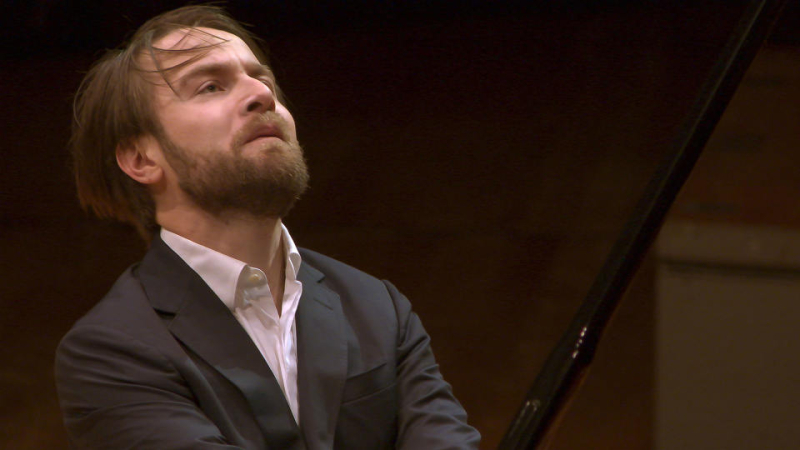
    Above: pianist Daniil Trifonov

    ~ Author: Ben Weaver

    Saturday May 18th, 2019 – The MET Orchestra made its way over to Carnegie Hall for one of its popular annual orchestral concerts. Former principal guest conductor Valery Gergiev – director of the Mariinsky Theater of St. Petersburg, and a regular presence on the Met podium – led the performances (without a podium, which seems to be his preferred method; one of his many eccentricities that also include conducting with what appears to be a toothpick.)

    For the the first half of the concert Maestro Gergiev was joined by the star pianist Daniil Trifonov for Robert Schumann’s ever-green Piano Concerto in A minor. Mr. Trifonov is an excellent pianist, perhaps even a great one, even at his relatively young age. But as demonstrated by this particular performance (and not for the first time) he often displays his own eccentricities with music-making. He played the introduction to the concerto extremely slow (remarkably, one could hear some early echoes of Rachmaninoff in the piano and orchestra) – and then at the first sign of a something faster, Trifonov sped up like a runaway train. These extremes in the tempos – dragging slow and demonic fast – dominated the entire performance, but felt like an affectation, not organic music-making. This is not a new thing for Mr. Trifonov; his Carnegie Hall debut in 2011 (with Tchaikovsky’s 1st Piano Concerto, conducted by Gergiev) was criticized by the New York Times for similar behavior: “…he tended to offset extremely fast playing with extremely slow, more maundering than meditative: a manic-depressive approach…”

    Needless to say, the fast playing was dazzlingly note-perfect. Trifonov does not attempt more than he can actually accomplish. And in the slow sections he frequently displayed extraordinary sensitivity and beauty. But on the whole the performance was, alas, mostly frustrating and even boring. I have little doubt that maestro Gergiev supported all of Trifonov’s choices: Gergiev himself frequently takes similar liberties with the tempo, especially in non-Russian repertoire. Sometimes it works (his Wagner is often thrilling for it), but only sometimes.

    The audience greeted Trifonov’s performance warmly (to say the least) and he played a lovely, beautifully articulated and, dare I say, perfectly-paced encore – Schumann’s “Nicht schnell, mit Innigkeit” from Bunte Blätter, Op. 99, No. 1.

    Maxresdefault

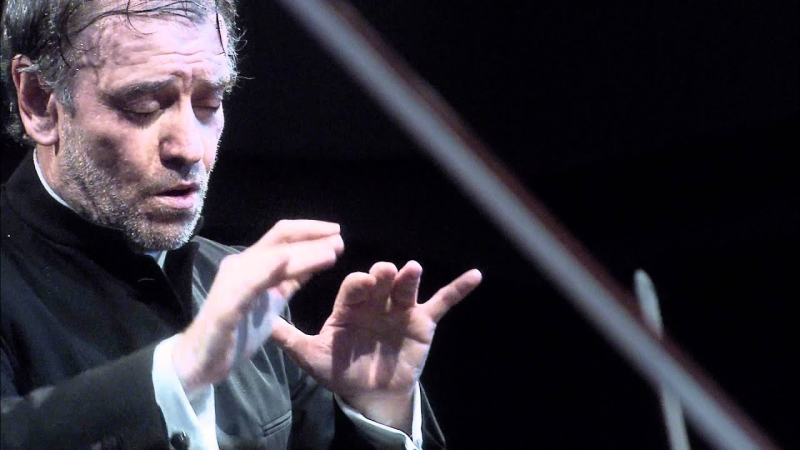
    For the second half of the concert the MET Orchestra and Maestro Gergiev (above) took center stage for Franz Schubert’s last symphony, Symphony No. 9 in C major, completed in 1828, the year of his death. The manuscript collected dust in Schubert’s brother’s possession until 1837 when Robert Schumann, passing through Vienna, paid a visit to Ferdinand’s home and was rewarded with a “hoard of riches” of Schubert’s never-before seen manuscripts, including the final symphony. Schumann and his friend Felix Mendelssohn finally arranged the work’s premiere in 1839 under Mendelssohn’s baton. The premiere was not a success with the audiences and it took many years for the symphony to finally gain acceptance for the masterpiece it is. The work’s length, which Schumann called “heavenly,” was a big stumbling block. In due time composers like Anton Bruckner and Gustav Mahler out-composed Schubert’s 9th for time and the work finally did ascend to warhorse status.

    The symphony opens with a call from a horn, played beautifully by (probably) MET’s principal hornist John Anderer. The orchestra, under Gergiev’s toothpick, sounded superb. Gergiev has been burnishing his German music credential as the new principal conductor of the Munich Philharmonic. The nicely articulated rhythm were clean and sharp. This work was far more consistently paced than the opening Schumann concerto. Gergiev kept the symphony moving at a clip that never felt rushed. Many solo instruments were given a chance to shine, particularly the woodwinds in the second movement. The Scherzo was graceful and the once controversial final movement – where in the 1830s Mendelssohn found London musicians laughing at the second theme of the movement and refusing to play it – was thrillingly played. But something was missing from the whole: perhaps a little variety of rhythm and dynamics. Gergiev conducting was extremely consistent, but in a work faulted by some for being too repetitive, consistency turned out to be something of a negative.

    An extended ovation followed; the audience wanted an encore, but with an imperial wave Maestro Gergiev gave the orchestra permission to disband.

    ~ Ben Weaver

  • An Evening With Freiburg Baroque

    Bb_freiburger-barockorchester-kristian-bezuidenhout-werke-von-haydn-mozart-und-j-chr-bach-2018_01_20170608

    ~ Author: Ben Weaver

    Saturday May 19th, 2018 – The period instrument ensemble Freiburg Baroque Orchestra (above) has been a favorite of mine on records for some time. I was glad to finally be able to hear them live – along with one of my favorite pianists, Kristian Bezuidenhout at the fortepiano. This concert of works by Haydn, J.C. Bach and Mozart was part of Lincoln Center’s Great Performers series. 

    Conducting from the keyboard in the uncomfortably warm Alice Tully Hall, Mr. Bezuidenhout launched the Freiburg Barockorchester into the opening chords of Haydn’s Symphony No. 74 (composed in 1781) with great enthusiasm. The musicians, standing around the fortepiano, all wore black and played beautifully.

    Period instruments can be an acquired taste. These instruments can go out of tune easily, and there is sometimes a nasal quality to the sound of the strings. But personally I love it, errant pitches and all. Though it should be noted that for the Freiburg Baroque musicians pitch was not an issue. Their ensemble work is flawless and the small number of players do not surrender anything in fullness and richness of sound. For this concert the orchestra was made up of 9 violinists, 3 violas, 2 cellos and 1 double-bass; with an assortment of winds and 2 horns.

    Haydn’s 74th Symphony was one of the first works he was able to publish independently and for his own profit while working for the Esterházys in Eisenstadt, Austria. It may be true that many of Haydn’s symphonies can be a bit workmanlike, but the 74th is one of his finest works, filled with lovely melodies and inventive orchestration. The second movement especially is lovely: an Adagio of muted violins playing lovely theme and variations over the cello playing a repeated motif, like a guitar accompanying a serenade. A lively Trio leads to an exciting whirlwind of the Allegro finale.

    Johann-christian-bach

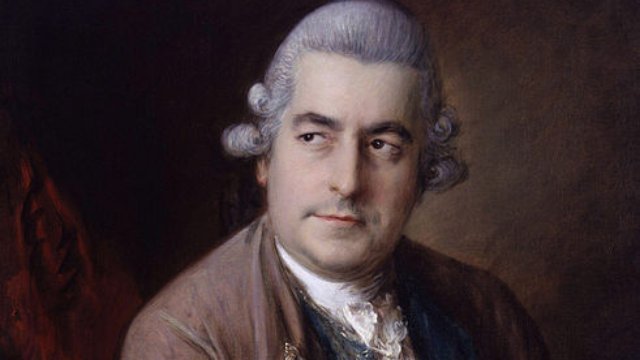
    Johann Christian Bach (above) was the youngest of Johann Sebastian Bach’s sons and formed a direct link from the great Baroque master to the soon-to-be most important composer of the Classical era. When the Mozarts visited London in 1764, Wolfgang was 8 years old and J.C. Bach, recognizing talent in the young boy, played duets with him on the harpsichord and let him borrow music. Two years later, when Mozart tried his hand at composing piano concertos, he used J.C. Bach’s music as the foundation: 10 year old Mozart’s first 3 Piano Concertos are based on Johann Christian’s themes. And when Mozart heard of J.C. Bach’s death in 1782 he was in the middle of composing his 12th Piano Concerto. Mozart paid tribute to his old friend by basing the slow movement of the concerto on a melody from one of Bach’s operas, La calamità del cuore.

    While Johann Christian could never eclipse his father – a true titan – as a composer, he nonetheless became a very respectable musician in his own right. More than that, Johann Christian’s Symphony in G minor, Op. 6, No. 6 is something of a trailblazer of the symphonic repertoire. Composed some time in the 1760s, the G minor Symphony went beyond the usual sunny allegros and dances of other composers. Johann Christian offered something of a “sturm und drang” darkness in this work that would reach the peak of passion with Beethoven. The symphony opens with stormy strings and horns’ call to arms. There is an urgency to the music that an older Mozart and then Beethoven would bring over the edge. The slow movement, the Symphony’s longest movement, brings respite from urgency, but not darkness. Menacing horns return in the final Allegro molto. In this movement you can hear the winds Beethoven would one day raise in his Pastoral Symphony. But strangest of all is the Symphony’s conclusion: it simply stops, unresolved, in the middle of a thought. This is something no composer would seriously attempt until the end of the 19th century.

    Both Haydn and J.C. Bach were friends and mentors to the young Wolfgang Mozart. All 3 men composed memorable piano concertos, but Mozart’s compositions in the genre surpassed anyone who came before. Mozart’s 9th Piano Concerto, composed in Salzburg in 1777, is one of his most important compositions. It was the largest and most substantial composition of his to date, and it launched Mozart’s extraordinary development of the Piano Concerto into a centerpiece of not only his own output, but of the genre overall. The musicologist Alfred Einstein once called it “Mozart’s Eroica.”

    For many years the concerto was incorrectly called “Jeunehomme.” Nobody really knew who Jeunehomme was and it is only in 2004 that historian Michael Lorenz established that the confusion arose from the incorrect spelling of Victoire Jenamy, the highly regarded pianist and daughter of famous dancer and balletmaster Jean-Georges Noverre. The Mozarts had known the Noverres for some time, and Wolfgang gave the concerto to Ms. Jenamy as a gift of friendship between the two families when she stopped in Salzburg on her way to Paris from Vienna in 1777.

    The concerto opens with an unusual, almost instant entry of the fortepiano. Typically concertos began with extended orchestral introductions; indeed, most of Mozart’s own piano concertos do. But here Mozart wasted no time for the soloist. It’s a feature other major composers would not attempt until Beethoven’s 4th and 5th Piano Concertos a quarter century later. Composers like Grieg, Tchaikovsky and Rachmaninoff celebrated this invention with unforgettable results in their own times. The second movement, a lovely Andantino, contains magnificent writing for the piano, written almost like for a singing voice, and the final Rondo contains a surprising slow Minuet, perhaps Mozart’s nod to Ms. Jenamy’s father’s dancing career.

    The 17th Piano Concerto, written in 1784, may be from the early stages of Mozart’s maturity as a composer, but it is a fully developed and wonderful work. The orchestra begins the piece with a lively and extended introduction, like most of Mozart’s concertos. But once the pianoforte enters, Mozart displays an unerring sense of balance between the solo instrument and orchestra, the play between them, passing of melodies from one to the other – and to other solo instruments within the orchestra – was something few could do with the confidence of Mozart. The beautiful Andante is in a long line of unforgettable Mozart slow movements, at once charming and sad, with flashes of light and sudden clouds. Beautiful writing for the winds in the movement is particularly moving as well. The exuberant final movement is a reminder that Mozart often sounds easy – effortless – but, in fact, requires extraordinary virtuosity.

    Photos-4x

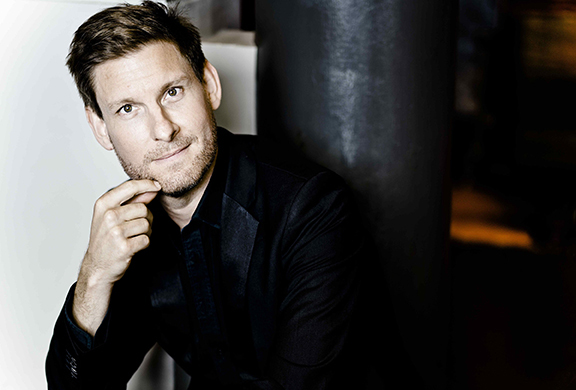
    Kristian Bezuidenhout (above, in a Marco Borggreve) portrait played these works magnificently. He played, of course, on a period fortepiano and hearing these concertos played on an instrument Mozart would have recognized is a fascinating experience. We are so used to the behemoth sound created by the modern Steinway Grand in a concert hall (accompanied by a far larger ensemble) that we forget how light and almost fragile these sounds originally were. The instrument (alas, the Playbill does not mention the specific period it replicates) has a pearly, mildly hollow sound. There are, of course, no pedals, so the sound produced is uniform and it is up to the player to truly create the effect he/she wishes to present. Mechanical trickery is not an option. Mr. Bezuidenhout is a magician in this regard. He may well be our most brilliant interpreter of Mozart’s music today. Undaunted by technical demands, he manages to conjure universes out of a small wooden box and a few strings. The rapport between him and Freiburg Baroque players is obvious; they have perfectly synced tempos and dynamics, and there were the warm glances and smiles exchanged as cues and between movements.

    The players all sat down on the risers to hear Mr. Bezuidenhout play an encore, a magical Allemande from Mozart’s unfinished Suite in C major (sounding like Papa Bach by way of Mozart).

    ~ Ben Weaver

  • NY Phil: THE PLANETS + Williams’ Tuba Concerto

    PJ-BW140_FIXBAG_DV_20140723162140

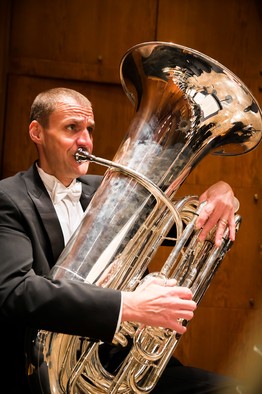
    Above: Alan Baer of The New York Philharmonic in a Chris Lee photo

    Saturday May 28th, 2016 – Aside from Mars, I am not really a fan of the famous Gustav Holst work The Planets (composed in 1914-1916). I remember many years ago tuning in to a radio broadcast of the piece and finding my interest diminishing steadily once the spaceship left Mars for Venus; I never made it back to Earth.

    Tonight, a chance to hear The Planets in concert at Geffen Hall provided an opportunity to test my earlier reaction. Under the baton of David Robertson, The New York Philharmonic‘s performance of this sprawling epic was nothing short of marvelous. But the music itself just doesn’t reach me, beyond a surface appeal – and despite the composer’s obvious skill in orchestration. And so – yet again – upon departing Mars, I felt lost in space. 

    The remaining six movements do have their very appealing passages, of course, but also their longueurs. The only time I truly connected with any of the music was when the theme of the hymn ‘I Vow To Thee My Country strikes up as Jupiter looms in the sonic heaven. The stay on Uranus seemed endless: not much going on there. I simply couldn’t wait for this trip thru the solar system to end. Maestro Robertson had the huge forces doing his bidding to fine effect, and making a splendid sound; featured violin solos from Sheryl Staples were saving graces on this journey to nowhere. 

    But enough grumbling, lest I be mistaken for Bernie Sanders; the first half of the program was indeed thoroughly enjoyable.  

    Edward Elgar’s Introduction and Allegro (composed in 1905) opened the evening; it’s a beautiful piece and would make a great ballet score (maybe it’s been done?). The composer gives a prominent role to a string quartet, setting them before the full string contingent of the orchestra. As this quartet consisted of Sheryl Staples, Lisa Kim, Cynthia Phelps, and Carter Brey, the playing was remarkable – I especially was entranced by a solo from the viola of Ms. Phelps. When the Philharmonic strings played en masse, the richness of sound was truly savorable.

    The tall and slender Alan Baer then appeared with his silver tuba for John Williams’ Tuba Concerto. This rather brief work (just over 15 minutes in length) was very pleasing from start to finish, for Mr. Baer’s sound has a warm glow and a toothsome dark-chocolate richness in the lower range.

    The opening passages made me think of a sea shanty: good-natured, a bit brusque, with fog-horn low notes along the way. Later the tuba converses with the French horn, and in the concerto’s second movement, the tuba sounds deep phrases over a horn chorale before embarking on a polished cadenza.

    The violins strike up. The oboe has a theme that is passed to the flute, and then the flute and tuba talk to one another. After another – briefer – tuba cadenza, fanfares sound and there is a cabaletta of sorts, with trumpets giving propulsion and the tuba singing some skittish coloratura. Harp and timpani have a part to play: another inventive mix on the composer’s part. Swift-rising scales for the tuba herald a jovial conclusion.

    Philharmonic audiences love it when artists from the orchestra step forward in featured roles; there was lovely enthusiasm for the string quartet after the Elgar, and Mr. Baer received hearty cheers from the crowd, as well as the admiring applause of his colleagues.

  • NY Phil: THE PLANETS + Williams’ Tuba Concerto

    PJ-BW140_FIXBAG_DV_20140723162140

    Above: Alan Baer of The New York Philharmonic in a Chris Lee photo

    Saturday May 28th, 2016 – Aside from Mars, I am not really a fan of the famous Gustav Holst work The Planets (composed in 1914-1916). I remember many years ago tuning in to a radio broadcast of the piece and finding my interest diminishing steadily once the spaceship left Mars for Venus; I never made it back to Earth.

    Tonight, a chance to hear The Planets in concert at Geffen Hall provided an opportunity to test my earlier reaction. Under the baton of David Robertson, The New York Philharmonic‘s performance of this sprawling epic was nothing short of marvelous. But the music itself just doesn’t reach me, beyond a surface appeal – and despite the composer’s obvious skill in orchestration. And so – yet again – upon departing Mars, I felt lost in space. 

    The remaining six movements do have their very appealing passages, of course, but also their longueurs. The only time I truly connected with any of the music was when the theme of the hymn ‘I Vow To Thee My Country strikes up as Jupiter looms in the sonic heaven. The stay on Uranus seemed endless: not much going on there. I simply couldn’t wait for this trip thru the solar system to end. Maestro Robertson had the huge forces doing his bidding to fine effect, and making a splendid sound; featured violin solos from Sheryl Staples were saving graces on this journey to nowhere. 

    But enough grumbling, lest I be mistaken for Bernie Sanders; the first half of the program was indeed thoroughly enjoyable.  

    Edward Elgar’s Introduction and Allegro (composed in 1905) opened the evening; it’s a beautiful piece and would make a great ballet score (maybe it’s been done?). The composer gives a prominent role to a string quartet, setting them before the full string contingent of the orchestra. As this quartet consisted of Sheryl Staples, Lisa Kim, Cynthia Phelps, and Carter Brey, the playing was remarkable – I especially was entranced by a solo from the viola of Ms. Phelps. When the Philharmonic strings played en masse, the richness of sound was truly savorable.

    The tall and slender Alan Baer then appeared with his silver tuba for John Williams’ Tuba Concerto. This rather brief work (just over 15 minutes in length) was very pleasing from start to finish, for Mr. Baer’s sound has a warm glow and a toothsome dark-chocolate richness in the lower range.

    The opening passages made me think of a sea shanty: good-natured, a bit brusque, with fog-horn low notes along the way. Later the tuba converses with the French horn, and in the concerto’s second movement, the tuba sounds deep phrases over a horn chorale before embarking on a polished cadenza.

    The violins strike up. The oboe has a theme that is passed to the flute, and then the flute and tuba talk to one another. After another – briefer – tuba cadenza, fanfares sound and there is a cabaletta of sorts, with trumpets giving propulsion and the tuba singing some skittish coloratura. Harp and timpani have a part to play: another inventive mix on the composer’s part. Swift-rising scales for the tuba herald a jovial conclusion.

    Philharmonic audiences love it when artists from the orchestra step forward in featured roles; there was lovely enthusiasm for the string quartet after the Elgar, and Mr. Baer received hearty cheers from the crowd, as well as the admiring applause of his colleagues.

  • Stella Abrera as Giselle @ ABT

    Abrera

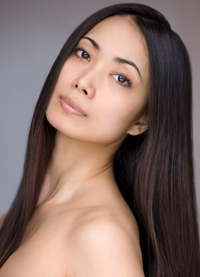
    Above: Stella Abrera

    Saturday May 23rd, 2015 – Stella Abrera danced her first Giselle with American Ballet Theatre at The Met this evening; she had previously danced the role with the Company on tour. Ms. Abrera was originally to have debuted as the iconic Wili at The Met in 2008 but an injury intervened. Now at last we have the beauteous ballerina’s Giselle onstage here in New York, and what a lovely and moving interpretation it is. The audience, which included some 200 former members of ABT there to honor the Company’s 75th anniversary, gave Ms. Abrera and her partner, Vladimir Shklyarov, a delirious standing ovation.  

    ABT‘s GISELLE is a classic. Having seen it many times, there are of course aspects of it that I wish could be altered; but for a production which must frame any number of Giselles and Albrechts in a given season, it serves the ballet very well. The second act in particular is redolent of the perfume of the many phenomenal ballerinas who have graced this stage in this immortal role.

    While the Abrera debut was the evening’s centerpiece, there were many other impressive aspects to the performance. Leann Underwood was a vision in ruby-red as Bathilde, and Misty Copeland and Craig Salstein were on peak form for the Peasant Pas de Deux – I’ve never seen Craig dance better. Nancy Raffa’s mime as Berthe was clear and moving. Thomas Forster was a tall, intense Hilarion with a slightly creepy aspect, though his sincere love for Giselle was never in doubt. 

    Veronika Part’s plush dancing and Romanov-princess demeanor made her a stellar Myrthe; leaping along the diagonal in a swirl of white tulle, the imperious ballerina seemed gorgeously unassailable. Christine Shevchenko and Stephanie Williams danced beautifully as Moyna and Zulma, and the ABT Wilis, in Part’s thrall, won waves of applause for their precise, grace-filled dancing.

    Earlier this month I saw Stella Abrera in LES SYLPHIDES. She struck me as ideal in the Romantic style of this Fokine ballet; that performance seems now to have been a prelude to her Giselle. An immensely popular ABT ballerina, Abrera had the audience with her from the moment she opened the door to her cottage; as Giselle, she rushed out into the late-Summer morning full of joy and buoyed by her secret love, unaware that this was to be her last day on Earth.

    This Giselle had every reason to trust her Loys, for in Vladimir Shklyarov’s portrayal of the young nobleman there was a boyish sincerity and heart-on-sleeve openness that any girl would delight in. Shklyarov’s Albrecht had not thought far enough ahead as to the possible outcome of his village romance; he was genuinely in love and there was no trace of deceit behind his affection. Thus the naive pair saw no impediment to their romance; who knows? Albrecht might even have renounced his inheritance and they lived on together, happily ever after. Hilarion, in discovering the truth, ruins that scenario. Thus it seemed that Shklyarov’s Albrecht came to Giselle’s grave not as a repentant cad but as a bereft lover whose incautious behavior has destroyed his beloved.

    Abrera and Shklyarov both have beautiful, natural smiles, and they could not suppress the happiness of their mutual devotion throughout the early scenes of Act I. Their dancing together was light and airy, and Abrera’s solo was the lyric highlight of the first act. Yet whatever happens in Act I, and however moving Giselle’s mad scene might be – and Abrera’s was truly touching – it’s in Act II that the two dancers face the great test of both technical surety and poetic resonance. This evening Abrera and Shklyarov simply soared.

    Abrera’s Giselle gave all her purity and gentle strength to sustain her beloved throughout his ordeal. There was no way Myrthe could win against this Giselle’s steadfastness. In a spectacular pair of overhead lifts, Shklyarov swept Abrera heavenward with breathtaking steadiness. In his solos, the danseur‘s leaps and beats drew murmurs of admiration from the many dancers seated around us, and later his endless entrechats had the visual impact of a Joan Sutherland trill. Abrera, pallid and ethereal, danced sublimely. The final parting of the lovers was deeply affecting; cherishing the single flower Abrera had given him, Shkylarov seemed about to depart but in the end, drawn back by the memory of his lost Giselle, he collapsed amid the lilies on her grave.

    Standing ovations can seem de rigueur these days, but not this one: the moment the curtains parted on Abrera and Shkylarov standing alone on the vast stage, the audience rose as one and a great swelling of cheers filled the House. Not only do we have a superb ‘new’ Giselle to cherish – Abrera stands with the finest I have seen in the role – but also a deeply satisfying partnership that we can hope to enjoy frequently in coming seasons.