Tag: Saturday November

  • Concertgebouw: Schoenberg & Mahler

    Untitled

    Performance photo by Chris Lee

    ~ Author: Ben Weaver

    Saturday November 23rd, 2024 – The Royal Concertgebouw Orchestra gave two sold-out concerts at Carnegie Hall last week under the baton of its chief conductor designate Klaus Mäkelä. The second concert on Saturday, November 23rd featured beloved works by Arnold Schoenberg and Gustav Mahler.

    Between the two concerts, this evening’s playing of Schoenberg’s Verklärte Nacht, Op. 4 was the strongest performance of the orchestral works the Concertgebouw presented this week. Originally composed for string sextet in 1899, Schoenberg made an arrangement for a string orchestra and it’s become one of his most beloved and most frequently performed works. The string section of the Concertgebouw was on absolute peak form with its lush yet concentrated sound. Schoenberg’s score is by turns dark, ominous, romantic, and shimmering, and the orchestra reflected each emotion and turn with beautiful clarity. Maestro Mäkelä conducted it without a score, so it appears to be a work that is close to his heart. Maybe that’s why he managed to keep the tension throughout the entire composition. 

    When it comes to playing Mahler, I think the Concertgebouw’s only rival is the New York Philharmonic. These symphonies are close to their hearts and they perform them frequently. The Symphony No. 1 in D major received its Dutch premiere in 1903 under Mahler himself. This evening’s performance under the orchestra’s young incoming chief conductor was somewhat mixed.

    The first movement was something of a mess that echoed the very unfortunate performance of Rachmaninoff’s Symphony No. 2 the previous evening: while Maestro Mäkelä can build to a climax, he was unable to connect any of the climaxes together, the tension and structure of the music disintegrating every few minutes. So it was here, unfortunately. Low voltage would be one way to describe it, a flicker of color quickly draining into something dull and gray.

    Fortunately things improved as the performance continued, and Mäkelä managed to keep the symphony moving. The second movement is filled with sections of chamber music, interrupted by full orchestral blasts. There was some wonderful playing from individual sections of the Concertgebouw, the winds in particular covering themselves in glory.

    The Funeral March was the best part of the performance. The double bass solo (principal Dominic Seldis) was appropriately weary and somber. The mocking tune that interrupts it was nicely paced and delightfully almost jazzy. The Finale was largely well handled, but lacked enough frenzy to be truly satisfying until the very last moments.

    With Maestro Mäkelä taking over two of the world’s top orchestras – the Concertgebouw and the Chicago Symphony Orchestra – these performances left me concerned if he is the right person for these jobs at this time. But time will soon tell if the confidence he has inspired in others pays off.

    ~ Ben Weaver

  • Concertgebouw: Schoenberg & Mahler

    Untitled

    Performance photo by Chris Lee

    ~ Author: Ben Weaver

    Saturday November 23rd, 2024 – The Royal Concertgebouw Orchestra gave two sold-out concerts at Carnegie Hall last week under the baton of its chief conductor designate Klaus Mäkelä. The second concert on Saturday, November 23rd featured beloved works by Arnold Schoenberg and Gustav Mahler.

    Between the two concerts, this evening’s playing of Schoenberg’s Verklärte Nacht, Op. 4 was the strongest performance of the orchestral works the Concertgebouw presented this week. Originally composed for string sextet in 1899, Schoenberg made an arrangement for a string orchestra and it’s become one of his most beloved and most frequently performed works. The string section of the Concertgebouw was on absolute peak form with its lush yet concentrated sound. Schoenberg’s score is by turns dark, ominous, romantic, and shimmering, and the orchestra reflected each emotion and turn with beautiful clarity. Maestro Mäkelä conducted it without a score, so it appears to be a work that is close to his heart. Maybe that’s why he managed to keep the tension throughout the entire composition. 

    When it comes to playing Mahler, I think the Concertgebouw’s only rival is the New York Philharmonic. These symphonies are close to their hearts and they perform them frequently. The Symphony No. 1 in D major received its Dutch premiere in 1903 under Mahler himself. This evening’s performance under the orchestra’s young incoming chief conductor was somewhat mixed.

    The first movement was something of a mess that echoed the very unfortunate performance of Rachmaninoff’s Symphony No. 2 the previous evening: while Maestro Mäkelä can build to a climax, he was unable to connect any of the climaxes together, the tension and structure of the music disintegrating every few minutes. So it was here, unfortunately. Low voltage would be one way to describe it, a flicker of color quickly draining into something dull and gray.

    Fortunately things improved as the performance continued, and Mäkelä managed to keep the symphony moving. The second movement is filled with sections of chamber music, interrupted by full orchestral blasts. There was some wonderful playing from individual sections of the Concertgebouw, the winds in particular covering themselves in glory.

    The Funeral March was the best part of the performance. The double bass solo (principal Dominic Seldis) was appropriately weary and somber. The mocking tune that interrupts it was nicely paced and delightfully almost jazzy. The Finale was largely well handled, but lacked enough frenzy to be truly satisfying until the very last moments.

    With Maestro Mäkelä taking over two of the world’s top orchestras – the Concertgebouw and the Chicago Symphony Orchestra – these performances left me concerned if he is the right person for these jobs at this time. But time will soon tell if the confidence he has inspired in others pays off.

    ~ Ben Weaver

  • Angel of Many Signs @ Gerald Lynch Theater

    A

    Above: performance photo by Alan Barnett

    Author: Shoshana Klein

    Saturday November 18th, 2023 – The New York Choral Society gave a concert on Saturday afternoon at the Gerald Lynch Theater, joined by the new-music focused Bergamot Quartet and composer/conductor/vocalist Raquel Acevedo Klein. The premise had to do with Hildegard von Bingen, and most of the repertoire was arrangements of her music for choir.

    I love a continuous performance, but for this one, I never really had in idea of where we were in the program, even though there was supposedly a multi-movement work sharing the title of the concert in the middle – at some points it was clear that the choir was singing in English and I suppose that was the giveaway, but the setup and video never really changed, so it was a little hard to tell. 


    The concert began with Raquel Acevedo Klein only, singing with some electronic manipulations, as everyone else gathered on stage. It was a sizeable group, so it was effective to have something going on instead of just having the audience watch while people found their spots onstage.


    B


    The electronic element was interesting: Ms. Acevedo Klein (above, photo by Alan Barnett) is able to make some very cool things happen. She and the quartet mostly acted as sort of interludes between the choral pieces, sometimes with some overlap. It was a nice juxtaposition to have the older and newer, but didn’t feel like it had a lot of direction.


    The video element was somewhat engaging as well, with one big screen behind the ensemble and two smaller ones flanking the stage. There were busy animations happening throughout the production, definitely tied to the music but only in instrumentation – usually when the quartet only was playing, the visuals would be sparser, one specific animation that recurred and tied things together a bit. When the whole choir was active, there would be many visuals that would come back to create a busy landscape, sometimes involving “angel” imagery, but usually not in a typical Christian imagining (which I did kind of appreciate, but this was never really explored as far as I could tell).


    The pieces were certainly not bad – I’ll definitely admit I’m not much of a choir person and surely missed plenty of nuance. Overall, the performance was interesting but repetitive, and I just didn’t have a sense of the structure, narrative, or takeaway, which – given all of the extra elements – it seemed like there was going to be.


    ~ Shoshana Klein

  • Benjamin Bernheim in RIGOLETTO @ The Met

    Feola bernheim rigoletto

    Above: Rosa Feola and Benjamin Bernheim in RIGOLETTO at The Met

    Author: Oberon

    Saturday November 26th, 2022 matinee – After reading several glowing reviews of the French tenor Benjamin Bernheim over the past few years, and hearing of his recent success in LUCIA DI LAMMERMOOR opposite Lisette Oropesa at Vienna and Zurich, I decided to add today’s Met matinee of RIGOLETTO to my schedule. And I’m glad I did! This afternoon’s performance was strongly cast, from the title-role down to the Page and Guard.

    This was my first time to see the Bartlett Sher production. The staging is inoffensive, with some interesting ideas; but the scene of Gilda’s sacrifice at the inn was clumsily managed. The set sometimes revolves like a carousel on high speed. Having been brought to the palace by the courtiers, Gilda seems eager when the duke comes to her, but then she seems humiliated when she emerges from the bedroom soon after. Having a bloodstain on her white nightgown might have been a telling touch.

    In my estimation, Mr. Bernheim carried off top vocal honors. The voice is wonderfully clear and well-projected, with top notes that bloom. He is capable of ravishing soft singing, and he keeps the music fresh with subtle dynamic shifts. His performance was stylish and assured; I certainly hope we will hear more of him at The Met. 

    Kelsey

    Quinn Kelsey’s Rigoletto (photo above) was sung with great power and commitment. His incredibly sustained “Ah no, è follia!” at the end of the “Pari siamo!” monolog was one of the afternoon’s great thrills, and throughout the opera, his vocal generosity seemed boundless. Whether it was the baritone’s decision or the conductor’s, “Cortigiani, vil razza dannato!” was taken at an absurdly fast pace, giving it a surface urgency rather than a deeper sense of feeling; but when “Miei signori…” was reached, the great beauty and tenderness of the Kelsey voice was at its most impressive. There were a few rather husky notes as the opera progressed, but overall Kelsey’s Rigoletto was a stunning performance. (I should mention here the beautiful playing of the cellist in the “Miei signori…” section).

    Rosa Feola had many lovely passages as Gilda, though the sound of the voice is not truly distinctive. To me, she seems more of a lyric rather than a coloratura soprano, and some of the topmost notes tested her a bit. It would be nice to hear her as Liu or Mimi.  

    Aside from Mr. Bernheim, John Relyea’s Sparafucile was a big draw for me. The basso cuts a fine figure as the assassin, and his dark timbre is perfect for this music. At the end of his Act I encounter with Rigoletto, Mr. Relyea’s incredibly sustained low-F drew a round of applause.

    In her Met debut role of Maddalena, Aigul Akhmetshina displayed an attractive presence and a plushy voice; she merits more Met opportunities. I consider Monterone to be a very important character in the opera; though his scenes are relatively brief, if they are powerfully delivered they can make a great impact. Today Bradley Garvin sang the role with vivid authority. As the courtiers, Scott Scully (Borsa), Jeongcheol Cha (Marullo), and Paul Corona and Brittany Renee (the Cepranos) were all excellent, and Edyta Kulczak’s Giovanna – clearly on the Duke’s payroll – had a memorable moment: as Rigoletto stands aghast at having been an accomplice in the kidnapping of this own daughter, the nurse flees the house with her suitcase. Brilliant! 

    How many times over the decades that I have been going to the opera have the singers of the Page and the Guard in RIGOLETTO captured my attention? Today was the first! Met choristers Andrea Coleman and Yohan Yi each stepped up to bat, and each hit a home run. Ms. Coleman has a bit more to sing, and she sang it prettily indeed; and Mr. Yi’s “Schiudete: ire al carcere Monteron dee!” was strikingly voiced. I borrowed this photo of Mr. Yi and Ms. Coleman from the Met Chorus’s Facebook page:

    Yi and coleman

    I met Speranza Scapucci when she was at Juilliiard; several of my young singer-friends who were studying there at the time spoke highly of her. Lately, she has come into her own, with prestigious productions on her resumé, including a debut at La Scala conducting Bellini’s CAPULETI ED I MONTECCHI featuring Ms. Oropesa as Giulietta. This run of RIGOLETTO marked her Met debut performances.

    From the pit, Ms. Scapucci certainly gave us a lively RIGOLETTO; the opera swept by with a feeling of inevitability, yet she also had a handle on the more reflective passages. The only drawback, really, was her tendency to let the brass players cover the voices; things got out of hand in the ‘storm’ trio in the final act, where Mlles. Feola and Akhmetshina and Mr. Relyea were giving their all, to no avail.

    Metropolitan Opera House
    Saturday November 26th, 2022 matinee

    RIGOLETTO
    Giuseppe Verdi

    Rigoletto...............Quinn Kelsey
    Gilda...................Rosa Feola
    Duke of Mantua..........Benjamin Bernheim
    Maddalena...............Aigul Akhmetshina
    Sparafucile.............John Relyea
    Monterone...............Bradley Garvin
    Borsa...................Scott Scully
    Marullo.................Jeongcheol Cha
    Count Ceprano...........Paul Corona
    Countess Ceprano........Brittany Renee
    Giovanna................Edyta Kulczak
    Page....................Andrea Coleman
    Guard...................Yohan Yi

    Conductor...............Speranza Scappucci

    ~ Oberon 

  • Ben Weaver @ The “New” Geffen Hall

    Geffen hall

    ~ Author: Ben Weaver

    Saturday November 19th, 2022 – It is wonderful to be back at David Geffen Hall to hear the New York Philharmonic. I love the new space, which is far more attractive than the previous relic of 1960s hideousness. Bringing the stage forward to make room for seating  behind the orchestra – something practically every European concert hall has been doing for decades – shrinks the auditorium and creates an intimate space. I thought I’d be distracted by the people behind the orchestra, but the design of the stage – with its horizontal lines and wood trims – creates a nice frame for the eye to focus, so my gaze was always on the players, rarely above them. (Except when someone turned on their phone flashlight to find something they dropped…that’s when one wishes one had a cannon to shoot the audience member right into the sun.) But otherwise, the hall is gorgeous.

    And the sound is spectacular. For decades NY Philharmonic audiences had to listen to music land with a thud and the glorious sound of this orchestra never bloomed. No more. This was the reason these renovations were essential and long overdue. We can finally hear this great orchestra in all its sonic glory! Tonight’s concert gave us a wide range of musical styles to appreciate the varied nuances of the new acoustic.

    The announced program for this concert was supposed to begin with Jean Sibelius’ glorious tone poem Oceanides. Alas, it was replaced with an Igor Stravinsky piece I’ve always found to be rather a waste of time: Symphonies of Wind Instruments. Composed in 1920 and revised in 1945-47, it is a shapeless, senseless series of tedious honking. Occasionally echoes of Le Sacre du printemps do not save it. Its premiere was not a success (“hisses and laughter”) and with good reason. Fortunately it only lasts 10 minutes. One can’t fault the wonderful Philharmonic wind section here because they played wonderfully and it is good to hear them play in isolation. I wish more music was programmed generally to showcase specific sections of the orchestra.

    Béla Bartók’s Concerto for Two Pianos, Percussion, and Orchestra, composed in 1937 as a sonata for two pianos and transformed into its current concerto form in 1940, is a virtuosic tour-de-force. One can easily see that the work was conceived as a sonata for two pianos because the orchestral contribution is rather spare throughout. The two pianists dominate, but the percussionists get a fair workout as well. The caustic, rhythmic Bartók is on full display here, the pianists and percussionists taking turns trading blows. The first and second movements are particularly aggressive, though the second movement in a more creepy way. The strings are struck with bows, adding to the percussive nature of the piece. Pianists Daniil Trifonov and his former teacher Sergei Babayan were spectacular. Playing – and occasionally swaying – in perfect sync, their ability to bring beauty and lyricism into Bartók’s most caustic music was magical. The three Philharmonic percussionists – Christopher Lamb, Daniel Druckman  and Markus Rhoten – were in perfect sync with the two star pianists. The lighter and almost humorous final movement was a lively conclusion to this difficult work. Conductor Hannu Lintu coordinated everyone spectacularly.

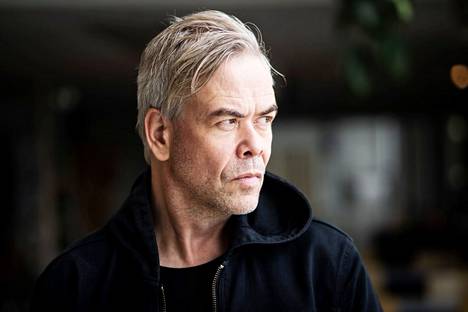
    Hannu lintu

    Finland – home of Maestro Lintu (above) – dominated the second half of the program. Kaija Saariaho’s Ciel d’hiver – lifted from her larger 2003 composition Orion – was a gorgeous sensory experience. Saariaho has a highly unique sound palette, her ability to create otherworldly sounds are extraordinary. There’s a timelessness and weightlessness to her music; it’s as if it has always been there, like primordial space – it is all around us. The transparency of the sound can now be appreciated in the new acoustics.

    Jean Sibelius’ Symphony No. 7 – composed in 1924 – finally allowed us to hear the Philharmonic in its combined glory, and to appreciate the acoustics of the new Hall. If Saariajo’s music is like a frozen lake, Sibelius is a surging river and ocean of sound. His ability to make you feel the cold wind of a Finnish winter has always been a distinct feature of his extraordinary music. A relatively brief single-movement work, the Seventh realized Sibelius’ desire to pare down his music to the barest essentials. (Sadly he seems to have pared himself down to nothing just two years later. Only two major works followed the Seventh, and then Sibelius stopped composing – though he lived another 30 years!)

    The symphony is made of 11 interconnected sections, some highly lyrical (recalling the more Romantic Sibelius of yore), and some far more abstract. The symphony’s final note, held by the strings, raising in volume and intensity – by turns sinister and unfinished – always reminds me of the harrowing Interlude in Berg’s Wozzeck, after Wozzeck has murdered Marie. A sustained note full of terror and hysteria. How can a single note contain so much emotion? And yet it can. Here Sibelius, like Berg before – although more subtle than Berg – shows us how.

    Hannu Lintu has this music in his bones and brought out the most extraordinary performance from the Philharmonic. The climaxes were shattering, and because of the clear acoustic in the new Hall, they were shattering in volume and clarity, as well as emotion. The music simply glowed.

    ~ Ben Weaver

  • LA BOHEME ~ A Met Matinee

    Boheme final scene

    Saturday November 20th, 2021 matinee – In 2016, Anita Hartig was a radiantly-sung Liu in TURANDOT at The Met. When her Violetta was announced in the 2018-2019 season, I was eager to hear her again, only to find that – at least at the performance I attended – she was having serious pitch problems. So this year, despite wanting to hear Charles Castronovo and Artur Ruciński in BOHEME, I hesitated to go because Ms. Hartig was the Mimi. Then I heard a clip from the prima of Mimi’s Act I narrative and the soprano sounded fabulous. So, there I was today, in a packed house, experiencing the Franco Zeffirelli BOHEME for the umpteenth time.

    The afternoon started on a sour note: while waiting for the curtain to rise, the two women sitting next to me removed their masks, started eating crackers, called people on their phones, and even called each other! Seriously! I wasn’t about to let them ruin the performance for me, so I abandoned my seat with a view and went back to my more usual score desk.

    I liked Eun Sun Kim’s conducting a lot. Her tempi felt just right, and she seemed to breathe with the singers, allowing them leeway with sustaining notes when they wished. The orchestra were in fine fettle, and I especially loved the harp passages at the opening of Act III.

    BOHEME is a love story, and today’s lovers were excellently paired. Ms. Hartig’s “Mi chiamano Mimi” was gorgeously sung and phrased, and she turned on the power for the ecstatic cresting phrase of the love duet, and again for the climax of the ensemble following Musetta’s Waltz. Ms. Hartig’s sustained high-C at the end of Act I was handsomely harmonized by Charles Castronovo, today’s Rodolfo. The tenor’s Act I aria was particularly appealing in his way with the words; his top notes do not ‘bloom’ but they have ample power. In Act III, his anguish in telling Marcello the real reason he must break with Mimi was passionately expressed. Ms. Hartig’s “Addio senza rancor” was very moving, and she gave us an exquisite pianissimo on the final “…rancor!” A few moments later, having decided to stay with Mimi until the Spring, Mr. Castronovo ravished the ear with his own lovely pianissimo on “…alla stagion dei fior!

    Artur Ruciński’s Marcello was sung with power and warmth; he led the ensemble ‘reprise’ of Musetta’s Waltz in a commanding way, and was wonderful in his Act III duet with Mimi, and then in his conversation with Rodolfo. Fererica Lombardi was a bright-toned Musetta, making the most of her Waltz. Alexander Birch Elliott was an excellent Schaunard, and I very much liked Nicholas Brownlee’s voice as Colline – so much so that I regretted leaving before his Coat Aria (the thought of sitting thru another endless Gelb-Intermission sent me packing after Act III). The Scottish baritone Donald Maxwell, long a favorite at the Royal Opera, Covent Garden, doubled in the roles of Benoit and Alcindoro.

    The Zeffirelli BOHEME has come in for some bashing of late. Some people feel it’s time for a change. But – like the Zeffirelli TURANDOT – it’s been a veritable cash cow for the Met, selling out (or selling “big”) no matter who is singing. Today’s nearly full house seemed attentive and appreciative. And of course they applauded the rise of the curtain on the Café Momus scene. Oh dear, people actually enjoying themselves at the opera! We can’t have that, now, can we?

    Metropolitan Opera House
    November 20th, 2021 matinee

    LA BOHÈME
    Giacomo Puccini

    Mimì....................Anita Hartig
    Rodolfo.................Charles Castronovo
    Musetta.................Federica Lombardi
    Marcello................Artur Rucinski
    Schaunard...............Alexander Birch Elliot
    Colline.................Nicholas Brownlee
    Benoit..................Donald Maxwell
    Alcindoro...............Donald Maxwell
    Parpignol...............Marco Antonio Jordão
    Sergeant................Tyler Simpson
    Officer.................Ross Benoliel

    Conductor...............Eun Sun Kim

    ~ Oberon

  • Farewells @ New Chamber Ballet

    6a00d8341c4e3853ef016767bb8206970b-800wi

    Above: Elizabeth Brown and Sarah Atkins of New Chamber Ballet, photo by Kokyat

    ~ Author: Oberon

    Saturday November 23rd, 2019 – While I felt happy to be part of New Chamber Ballet’s 15th anniversary season, tonight felt bittersweet as two dancers long associated with Miro Magloire’s company were giving their farewell performances: Elizabeth Brown (a founding member) and Sarah Atkins.

    Over the years since I began following Miro’s work, his Company has undergone many changes in roster. Inevitably, with smaller dance troupes, one forms an attachment to individual dancers, and this is especially true of New Chamber Ballet as Miro has frequently invited to me rehearsals over the years, so that I’ve often felt like I’m a non-dancing member of the family. Watching Elizabeth and Sarah tonight brought back so many memories, not only of their own performances but of all the other women they have danced with thru the years. This kind of nostalgia is lovely in its way, but it also means we’re all getting older.

    The evening’s program opened with Klavierstück, to solo piano music by Karlheinz Stockhausen. The grand piano had been rolled into the center of the space, where pianist Melody Fader deftly took in stride the composer’s demands. Danced by the evenings two honorees – Elizabeth Brown and Sarah Atkins – it’s a work in which the piano becomes an altar or shrine. 

    6a00d8341c4e3853ef0168e695be97970c

    Above: Sarah Atkins, photo by Kokyat

    Next came a solo, For Another Day, created by Miro specially for Sarah Atkins. With the piano now back in its usual place at the point of the seating diamond, Melody Fader played the sixth of Franz Schubert’s Moments musicaux to which Ms. Atkins danced with a deep sense of the music’s lyrical flow. Circling the space, the dancer made eye contact with audience members: a beautiful expression of leave-taking. To dance this gorgeously at one’s farewell speaks volumes for Sarah’s technique and artistry. As the solo ended, a tidal wave of vociferous applause cheers was unleashed; everyone stood up to salute the dancer, who had to bow many times. 

    For an excerpt from Miro’s full-length work Phantom, music of Wolfgang Rihm, which veers from dreamlike to dramatic, was marvelously played by Ms. Fader and the enormously talented violinist Doori Na. Here we must pause to praise the technical assurance of the fearlessly adventurous Melody and Doori, who tackle any score Miro sets before them with flair. Over the years, they – as much as the choreography and dancing – have made New Chamber Ballet so distinctive. A chance to peer over Doori’s shoulder at his illuminated score for the Rihm was a highlight of my evening.

    The dancers – Amber Neff, Rachele Perla and NCB newcomers Anabel Alpert and Megan Foley – coped well with the choreography, which is often floor-oriented and includes demanding passages of the same-sex partnering that Miro has been developing in recent works. Tonight, in this gala setting, it seemed earthbound and over-long. Matters were not helped by the audience seating configuration, which feels like a airport boarding lounge when the flights have been delayed. 

    6a00d8341c4e3853ef01b7c90150ea970b

    Above: Elizabeth Brown rehearsing Morning Star with violinist Doori Na, photo by Nir Arieli

    This was my third viewing of Morning Song, the solo Miro made in 2017 for Elizabeth Brown to John Cage’s violin piece “Cheap Imitation”. A new costume for this ballet tonight was less to my liking than the original, but that became irrelevant during this sensational performance by Ms. Brown and Mr. Na.

    Morning Star is one of Miro’s greatest creations, and my favorite among all his works.  Elizabeth Brown is the inspirational force behind the solo’s success, with its feeling of timeless ritual and quiet ecstasy. It is a portrait of feminine power and mystique, and Ms. Brown dances it divinely. It ends as the dancer circles the space in hypnotically slow turns, finishing with an Isadora-like greeting of the dawn, arms upraised.

    As a founding member of New Chamber Ballet, Elizabeth has been an superlative muse for Miro, and an inspiration for dance-lovers; her technical prowess, unique persona, and deep devotion to the art merit the highest praise.

    During the mammoth applause that greeted her after Morning Song this evening, Elizabeth and Doori bowed deeply to one another, underscoring the intrinsic connection between music and dance that is Miro’s trademark.

    To conclude the program, Miro offered a pièce d’occasion entitled As One. Set to Antonín Dvořák’s Romance for violin and piano – played with impeccable verve, charm, and joy by Melody Fader and Doori Na – the work is Miro’s hymn to all the dancers who have performed for him thru New Chamber Ballet’s 15-year history.

    As such, and in a celebratory move that seemed to take Elizabeth and Sarah by surprise, a bevy of former NCB dancers who had been seated randomly among the crowd suddenly rose and stepped into the dance space, performing an homage to the two departing stars whilst also celebrating the continuum of Miro’s tireless work, in which the dancers and the dance are one.

    6a00d8341c4e3853ef01b8d1a3507e970c

    Above: Elizabeth and Sarah. Thanks for the memories, ladies…and please: keep on dancing!

    ~ Oberon

  • @ My Met Score Desk For PEARL FISHERS

    Pearl fishers

    ~ Author: Oberon

    Saturday November 24th, 2018 matinee – The New York City Opera used to perform Georges Bizet’s Pêcheurs de Perles fairly often, and I saw it there four times in the 1980s with such sopranos as Diana Soviero, Carol Vaness, Diana Walker, and the enchanting Rachel Rosales; tenors Barry McCauley and Jerry Hadley; and baritones Dominic Cossa, William Stone, and Robert McFarland. During that time of my life, I really liked this melodious opera, with its enchanting soprano aria, a poetic (and difficult) tenor aria, and – of course – a beloved duet for tenor and baritone: “Au fond du temple saint“.

    But there’s also a lot of filler, atmospheric in its way yet in the long run just…filler. Pêcheurs was not on my initial list of operas to see/hear at The Met this season;  but as I was tallying up my score desk order, I added a couple of operas just to see if they’d still be of interest to me. Pêcheurs, as it turns out, isn’t.

    I had skipped this Met production of Pêcheurs when it was new, because I’d taken a strong dislike to Diana Damrau. This season, Pretty Yende is singing Leïla, a part which I imagined would suit her voice far better than Donizetti’s Lucia had. “O Dieu Brahma!” is not the easiest way to start your afternoon. Ms. Yende’s florid singing was not always fluent, and at times her pitch was a shade off; counter-balancing this were an ethereal high B-flat and a gorgeous high-D. I imagine her “Comme autrefois” would have been quite fine, but I couldn’t outlast the intermission to find out.

    Alexander Birch Elliott had stepped into the role of Zurga midway thru the season prima of Pêcheurs, replacing Mariusz Kwiecien, who has now withdrawn from the production due to illness. Mr. Elliott has a handsome lyric baritone voice, and he blended perfectly with Javier Camarena in their famous duet, which drew sustained applause.

    Mr. Camarena’s singing of the dreamy aria “Je crois entendre encore” was lovingly phrased, with exquisite piano effects. His voice is a bit light for this role in the big house, but it’s wonderfully present and expressive.

    On the podium, Emmanuel Villaume did what he could with this perfumed score, giving an atmospheric prelude (twice interrupted by applause); he sometimes let his orchestra cover the voices, however.

    Hearing this opera again had the effect of finding a disintegrating, powdery rose pressed in the pages of a book you haven’t opened in decades. You can’t remember who gave you the flower or why it was significant enough to save, but you feel a twinge of regret that something that once meant something to you no longer does.

    Metropolitan Opera House
    November 124th, 2018 matinee

    LES PÊCHEURS DE PERLES
    Georges Bizet

    Léila...................Pretty Yende
    Nadir...................Javier Camarena
    Zurga...................Alexander Birch Elliott
    Nourabad................Nicolas Testé

    Conductor...............Emmanuel Villaume 

    ~ Oberon

  • Cynthia Phelps|Jaap van Zweden|NY Phil

    Cynthia Phelps

    Saturday November 19th, 2016 – Even before I started going to The New York Philharmonic faithfully, I was a fan of Cynthia Phelps (above) from her work with Chamber Music Society of Lincoln Center. Tonight, Ms. Phelps was center-stage at Geffen Hall, playing a brand new viola concerto by composer Julia Adolphe. The program further featured works by two of my extreme favorite composers – Wagner and Tchaikovsky – and was conducted by the Philharmonic’s Music Director designate, Jaap van Zweden.

    It has been ten years since The Metropolitan Opera last performed LOHENGRIN, and I for one have really missed it; I was grateful tonight for the opportunity to hear the opera’s Act I prelude, and – under Maestro van Zweden’s baton – the artists of the Philharmonic gave it a stunning performance.

    Wagner wrote of the prelude as being a depiction of the descent of the Holy Grail to Earth; it opens on high, with ethereal violins, and the rapture slowly spreads from one section of the orchestra to another, creating a sonic glow. At the very end, a return to the stratosphere with a pianissimo whisper from the violins leaves us breathless. Maestro van Zweden molded the piece lovingly, controlling the layerings of sound to perfection and creating an organic whole. It is simply an astonishing and unique piece of music.

    Cynthia Phelps, gowned in blue, then took the stage to a warm welcome for Julia Adolphe’s viola concerto; entitled Unearth, Release, the concerto is in three movements, each being sub-titled. The first is Captive Voices, and it opens on a mysterious note with the viola playing in the low register. The composer employs a variety of percussion effects, and here the vibraphone sounds eerily. The viola remains unsettled – as if talking to itself – and then rises slowly out of the depths. A brief shimmer in the violins, a gong resonates ominously, and then the music turns big and cinematic; bells sound, the horns give voice, and magically the harp enters the mix: the concerto’s most intriguing passage – for viola and harp in a pinging dialogue – ensues. An odd, probably sub-conscious quote from LA FORZA DEL DESTINO pricked up my ear; deep, sustained notes from Ms. Phelps, and then her line rises to mingle with the harp again as the music fades into air.

    The second movement, Surface Tension, begins with an animated, scurrying passage. The viola is kept busy against shifting rhythmic patterns from the orchestra until the movement comes to an abrupt halt. The dreamlike opening of the third movement, Embracing Mist, features Frank Huang’s violin playing on high. The viola rises, and the cabasa makes a somewhat creepy appearance. Trumpet and English horn speak up before the music turns more expansive, over-lain by a brief horn duet. Ms. Phelps’s viola whispers to us one last time.

    The concerto has a darkling appeal, and Ms. Phelps’ playing of it is first-rate; it has the potential to become a vehicle for violists worldwide. The composer took a bow, and the Philharmonic audience – always so responsive when a player from the home team takes a soloist role – showered Ms. Phelps with affection.

    Zweden Borggreve a

    Maestro van Zweden (above, in a Marco Borggreve portrait) and the Philharmonic players then gave a thrilling rendering of Tchaikovsky’s 4th symphony. From the opening fanfares, the performance was marked by big, passionate playing whilst jewel-like moments from the various solo voices emerged along the way to delight us. During the course of the first movement, my admiration for Maestro van Zweden became unbounded: his very animated podium personality and his brilliant alternation of jabs, lures, and summonses as he cued the various players was simply delightful to behold. Among the most cordial passages were an alternation of violins vs winds over timpani, and big playing from the horns; flute, clarinet, oboe, bassoon, and horn soloists shone forth. The music excited us thru its sense of urgency.

    Liang Wang’s evocative playing of the oboe solo that opens the second movement was a high point of the performance; in this Andantino, very much à la Russe, the wind soloists again flourished in each opportunity the composer provides.

    The dazzling unison plucking of the strings in the Scherzo was vividly crisp and clear tonight, with the Maestro’s fingertip control of the volume sometimes honed the sound down to a delicate pianissimo whilst maintaining the lively atmosphere. Oboe and flute again sing appealingly.

    A grand, wild start to the concluding Allegro con fuoco established immediately the fact that Maestro van Zweden was taking the designation “con fuoco” (“fiery”) very much to heart. The orchestra simply blazed away, a mighty conflagration that dazzled the audience in no uncertain terms. As the symphony reached its fantastical conclusion, the Geffen Hall audience burst into unrestrained shouts of approval and gales of applause: everyone stood up to cheer. Maestro van Zweden returned and signaled the musicians to rise, but instead they remained seated and joined in the applause, giving the conductor a solo bow. The audience loved it.

    An evening, then, that moved from the spiritual to the exhilarating, superbly played, and with a Maestro from whom, it seems clear, we can expect great things.

  • Unseen: Not Just Another TOSCA @ The Met

    Joseph Colaneri

    Above: Maestro Joseph Colaneri

    Saturday November 28th, 2015 matinee – Arriving at The Met for today’s matinee of TOSCA, I found that patrons are now being ‘wanded’ by security forces on entering the house. Once inside, I watched the auditorium not fill up: at curtain time there were an alarming number of empty seats. If a Saturday matinee of a popular opera on a holiday weekend cannot sell better than this, what’s to be done?  From my score desk, I avoided the dreariness of the Luc Bondy production, instead letting this exciting traversal of the score play out dramatically in my theatre of the mind. Later in the day, news came of Mr. Bondy’s death – he’s the same age as me. 

    Liudmyla Monastyrska’s 2012 Aida at The Met was interesting enough draw me back to the House this afternoon to hear her as Tosca. Roberto Aronica, a idiomatically solid Cavaradossi in a performance I attended earlier this season, and Marco Vratogna, new to me, shared the stage with the Ukrainian soprano. All three sang passionately, and they had the right sized voices for their roles in the big space. But in the end it was the opera itself, and conductor Joseph Colaneri’s marvelous feeling for the music, that kept me on to the end and had me shouting bravo! for the Maestro at the curtain calls.

    Colaneri is a real opera conductor: he knows that the voices come first and he can immediately establish a dynamic range to suit whatever cast he’s presiding over. Every singer is always heard, and if in the heat of the moment someone in the cast should rush ahead or linger too long on a note, Colaneri can immediately adjust and keep the flow of the music steady. My hat is off to him for this TOSCA, which seemed so fresh and alive, almost as if I was hearing it for the first time instead of the 500th.

    Today’s TOSCA was much more the sort of performance of this opera that I want to hear than the one I attended earlier this month, where Angela Gheorghiu’s walking-on-eggshells singing of the title role siphoned off much of the excitement. Today, Ms. Monastyrska displayed the needed vocal amplitude for the music of Tosca, and she and her colleagues sang with generosity and commitment all afternoon.

    Two powerful bassos each made their mark in the first act: Richard Bernstein (Angelotti) and John Del Carlo (Sacristan) both sounded huge, declaiming their lines vividly. Later, in Act III, Connor Tsui sang the song of the shepherd so impressively that I felt like applauding.

    Mr. Aronica, first of the principals to appear, has a sturdy, masculine sound which he flung into the house confidently. Some passing flatness at the passaggio was not a serious detriment to his performance. Having had to rein his voice in somewhat when singing opposite Mme. Gheorghiu in the earlier performance, he was today much better matched with Ms. Monastyrska and together they poured out the big melodies of the love duet with apt Puccinian fervor. Later, vowing to aid Angelotti, Aronica speared a triumphant high-B on “La vita mi costasse!” and held onto it.

    As the diva playing the diva, Ms. Monastyrska established her vocal credentials with her commanding offstage cries of “Mario! Mario!”. Once onstage, her voice revealed a slightly throaty throb, and a bit of flutter that quickly endeared itself as it gave a trace of vulnerability to the character. The Monastyrska sound sails easily into the hall, especially as she ventures to the upper end of her range. She puts very little pressure in the lower notes, and showed good instincts in lightening the voice for “Non la sospiri” and the playful banter about the colour of the Attavanti’s eyes. Some rather odd diction along the way didn’t bother me in the least, especially when she and Mr. Aronica cut loose to exciting effect in the climaxes of their duet.

    Diction and its effectiveness played a good part of the success of Marco Vratogna’s Scarpia. His voice has a darkish, menacing quality and his creepy verbal nuances revealed the sadism lurking under his quasi-elegant veneer. For all his dramatic bite, Vratogna could also deliver real, sustained vocalism when it suited him: his “Tosca divina, la mano mia…” was musically reassuring. The Attavanti fan having done its work, Ms. Monastyrska – her voice now at full flourish – gave a walloping shout at “Tu non l’avrai stasera…GIURO!” and went on to an exciting crescendo at “…egli vede ch’io piango!”  Maestro Colaneri then marshaled the orchestra and chorus for the grandiose finale, giving the music its full sweep but never overwhelming Mr. Vratogna’s relishing of the text as he salivates over his plan for Tosca’s ultimate surrender.

    Mr. Vratogna impressed at the start of Act II with his greasily subtle musings on being so close to having Tosca in his trap; increasingly angry with Spoletta, the baritone understandably blustered a bit. Cavaradossi is brought in and then taken off to be tortured and the cat-and-mouse game between Tosca and Scarpia begins.

    Ms. Monastyrska monumental high-A on “Solo, si!” was soon followed by one of her rare ventures into chest voice at “Sogghigno di demone!”…very effective. Maestro Colaneri built the drama thrillingly as Scarpia baited Tosca mercilessly; from a bold and brassy top C down to a plaintive murmur at “Che v’ho fatto in vita mia..?” Monastyrska had really gotten into it.

    Tosca blurts out the truth about Angelotti’s hiding place to Scarpia; her lover, on discovering she’s caved in, is about to disown her when news of Bonaparte’s victory at Marengo throws Scarpia for a loop. Colaneri in a great moment drove the orchestra relentlessly and Aronica tackled a passionate top-A on “Vittoria!”. The Monastyrska high-C as she sees her lover dragged away was massive – slightly raw, but thrilling.

    A false calm is restored. Scarpia/Vratogna offers his bargain. Describing his lust for Tosca, the baritone was slightly taxed by the highish tessitura here but verbally makes it all work. Monastyrska began the “Vissi d’arte” softly, slowly opening the voice and phrasing throughout with lovely modulations of colour and volume; she went totally lyric at “Diedi gioielli della Madonna al manto…” before the build-up to a house-filling B-flat, followed immediately by a pulling back on the A-flat and then a stunning crescendo to triple forte on the G. I’ve never heard it done this way, but the soprano pulled it off impressively.

    The murder scene was less effective than some I have heard – Monastyrska’s parlando phrases were not really effectively rendered – but Colaneri and his orchestra’s superb playing of the postlude to the murder was so atmospheric.

    Fantastic work from The Met horns at the opening of Act III; the prelude was yet another Colaneri jewel, evolving to the amazingly deep sounds that precede the introduction of the “E lucevan le stelle…” theme. Basso Tyler Simpson made his mark as the jailer, and then the haunting prelude to the tenor’s aria commences. Mr. Aronica was at his finest here, with an intense and passionate ending which won him sustained applause. 

    Monastyrska/Tosca arrives; she describes the murder of Scarpia vividly, culminating in a blindingly bright and very long high-C at “Io quella lama…”. Maestro Colaneri and his players sustained their high level as the soprano and tenor joined in a flowing duet before soaring to a stentorian high-B just before their unison “Trionfal!” And then Scarpia’s last trick is played out and the opera ends in a flash.

    The tedium of two Gelb-intermissions was relieved by chatting up a young pianist from Montreal, visiting the Met – and our City – for the first time. 

    Metropolitan Opera House
    November 28th, 2015 matinee

    TOSCA
    Giacomo Puccini

    Tosca...................Liudmyla Monastyrska
    Cavaradossi.............Roberto Aronica
    Scarpia.................Marco Vratogna
    Sacristan...............John Del Carlo
    Spoletta................Eduardo Valdes
    Angelotti...............Richard Bernstein
    Sciarrone...............Jeffrey Wells
    Shepherd................Connor Tsui
    Jailer..................Tyler Simpson

    Conductor...............Joseph Colaneri