Tag: Saturday November

  • More Rachmaninoff @ The NY Phil

    Daniil-trifonov-4-rach-logo-w

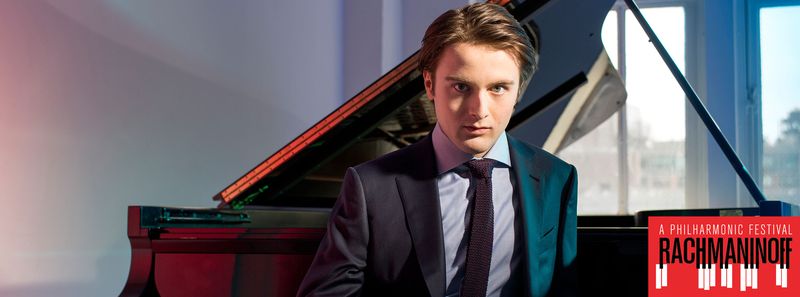
    Saturday November 21st, 2015 – The New York Philharmonic‘s Rachmaninoff Festival continued tonight, bringing together pianist Daniil Trifonov (above) and conductor Neeme Järvi for the composer’s 4th piano concerto. The evening opened with Arkady Leytush’s orchestration of Rachmaninoff’s Russian Song, Op. 11, No. 3 and ended with Maestro Järvi and the orchestra on peak form for the Rachmaninoff 1st symphony. Incredibly, the symphony was having its NY Philharmonic premiere performances in this series of concerts.

    The Russian Song is a deep, soulful song; lasting all of five minutes, it was a beautifully-played prelude for the concerto which followed. The basic theme goes thru moody rhythmic and harmonic shifts, with the sound of chimes and hammered bells giving a liturgical feeling. Just as we are getting immersed in these sounds, the piece is over. 

    Daniil Trifonov scored another hit with the Philharmonic audience in this, his second program in the orchestra’s Rachmaninoff series. The piano concerto No. 4 took Rachmaninoff nearly two years to complete and the result was unusually long as concertos go. At its premiere in 1927 – with the composer at the keyboard and Leopold Stokowski conducting the Philadelphia Orchestra – the critics bashed the piece and the composer set about editing it; it has come down to us in a relatively compact form of 25 minutes duration.

    Mr. Trifonov filled these minutes with luxuriant playing. From its sweeping start thru the pensive opening of the ensuing Largo, the third movement’s vivid cadenza, and on to the uninterrupted and varied demands the composer makes on the pianist in the final Allegro Vivace, Trifonov displayed an ideal blend of lyricism and the virtuosity. Finishing in triumph, the pianist basked in a prolonged standing ovation, and responded to the audience’s cheers with a briskly delicate rendering of the ‘Silver’ Fairy’s variation from SLEEPING BEAUTY. A magical moment.

    N jarvi

    Neeme Järvi (above)

    For all the felicities of Trifonov’s playing, I have to say that the piano concerto #4 didn’t really seize my imagination as a musical experience; but the Symphony No.1 absolutely did.

    This symphony was composed in 1895, and its 1897 premiere, conducted by an allegedly drunk Alexander Glazunov, was nothing less than a disaster and sent Rachmaninoff into a deep depression. The work was withdrawn, the score – in a two-piano draft – languishing in the archives of the Glinka Museum in Moscow. It wasn’t until after the composer’s death that the orchestra parts were found in the archives of the Leningrad Conservatory. The symphony was reconstructed in full and given a ‘second premiere’ in Moscow in 1945, where it was at last accorded a warm welcome. It now recognized as a exemplar of the Rachmaninoff style.

    The only mystery is why it has taken so long for the Philharmonic to present it, for these performances mark the orchestra’s first of this work. It was an unalloyed pleasure to encounter this symphony live, and thanks to Maestro Järvi and the artists of this great orchestra, the performance was truly engrossing.

    A veritable treasure chest of melodic and rhythmic delights, the 1st symphony provides numerous opportunities for the principal players to ‘sing’: Anthony McGill (clarinet), Liang Wang (oboe), and Robert Langevin (flute) all outstandingly clear and true, and tonight’s concertmaster Michelle Kim in a lovely violin solo. A grand passage for massed horns and violins was especially gratifying for me, a one-time horn player.

    I gave up trying to take notes (*) midway thru the symphony: I simply wanted to take it all in and savor the live experience. I’ll search the symphony out on YouTube and delve into it more deeply next week, but I do want to mention the particular inventiveness of the concluding Allegro con fuoco which starts with military drum rolls and eventually develops into a true Rachmaninoff ‘big melody’. Liang Wang’s dulcet oboe sounds yet again, then some wonderful rhythmic patterns develop. Things build, and then – out of the blue – there’s a tremendous, walloping bang on the gong: the sound is allowed to evaporate into thin air as the other musicians sit silently. Then they take up a last melodic passage, building to a big finale.

    My hope is that this symphony will soon be programmed for additional Philharmonic performances…hopefully under Maestro Järvi’s baton.

    * (The main reason I stopped taking notes was the distraction of a cellphone ringing in our immediate vicinity; a minor annoyance during the concerto, it became a full-blown nuisance during the symphony.  The ushers came twice to attempt to isolate the source without disrupting the music, but the irritant continued. For a few moments I lost the thread of my concentration, and then I decided just to surrender to the music for the rest of the evening.)

  • LADY MACBETH OF MTSENSK @ The Met

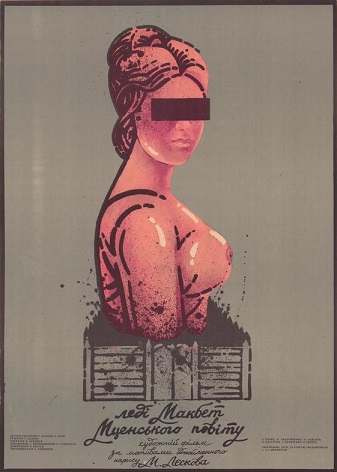
    Lady-macbeth-of-mtsensk-district-movie-poster-1989-1020340180

    Saturday November 29th, 2014 matinee –  My friend Dmitry and I both really like Shostakovich’s LADY MACBETH OF MTSENSK; I remember being bowled over by Catherine Malfitano’s portrayal of Katerina Ismailova back in 2000. The chance to see this season’s revival caused us to weigh the pros and cons: basically we were not sure of what to expect from Eva-Maria Westbroek – who plays Katerina this season – having not been especially thrilled with what we’d seen her do to date: a solid but un-illuminating Sieglinde and a seriously miscast Francesca da Rimini. But in the end Shostakovich won out, and we were rewarded with one of the greatest Met experiences in the past decade.

    As Katerina this afternoon, Ms. Westbroek sounded rather wobbly and edgy at first, but as the performance progressed the voice became steadier (though never truly steady) and her control of it was increasingly impressive. It’s a generous voice, and in addition to some rich spinto outpourings she was able to hone the voice down to a whisper at times. As an actress, she surely threw herself unsparingly into the role, winning a roar from the crowd as she took her curtain calls.

    Brandon Jovanovich was the passionate, randy, and ultimately heartless Sergei. His voice is Met-sized, warm and vigorous. Tall and handsome of physique, he tackled the physical requirements of the production with gusto, including being hoisted aloft whilst humping the cook (Holli Harrison is a spirited yet hapless portrayal). Mr. Jovanovich sings the Verdi REQUIEM with the New York Philharmonic in January: something to look forward to even more eagerly after his big success today.

    As the cuckolded Zinovy, tenor Raymomd Very gave a strong vocal performance; dramatically he seemed to be thoroughly under his father’s thumb and unable to comprehend the needs and desires of his slowly-smouldering wife.

    In LADY MACBETH Shostakovich provides a number of finely-crafted roles which today were seized upon by a wonderful coterie of singing actors/actresses. In particular, we had a veritable parade of bassos who plumbed the vocal depths so beloved in Russian music whilst constructing their characters with juicy, scene-grabbing theatrics. In a pair of towering characterizations, Anatoli Kotscherga as Boris and Vladimir Ognovenko (the Police Sergeant) gave object lessons in the art of operatic performing. Mr. Kortsherga was the oily, lazy, hypocritical father figure to a T; his singing had delightful tinges of liquor and sleaze, his tone ample and with a dark vibrance. Mr. Ognovenko, who for over two decades has given us great portrayals at The Met, was in thunderous voice and threw himself into the staging with great gusto. His was a major triumph today. More basso brilliance from Mikhail Kolelishvili (the ample-voiced, dancing priest), Dmitry Belosselskiy (with his deep lamenting sound in the final ‘hymn’ of the doomed prisoners); and Ricardo Lugo (making his mark as a Prison Guard).

    Back in August 1982 I saw a breathtaking Beni Montresor-designed production of Cavalli’s L’ORMINDO given by Chamber Opera Theatre of New York. The two male leads were tenor Ronald Naldi and (then-) baritone Allan Glassman. Both went on to appear in many Met productions. Mr. Glassman made the transition to tenor and has sung both character and leading roles at The Met, including Herod in SALOME and Bégearss in GHOSTS OF VERSAILLES. Today he was cast as the Shabby Peasant, the man who discovers the dead body of Zinovy, setting up the arrest of Katerina and Sergei. Mr. Glassman’s singing was stentorian and superbly characterized, his stage portrayal at once manic and furtive. His scene was a highlight of the afternoon.

    Oksana Volkova, an outstanding Olga in ONEGIN last season, was rich-toned as Sonyetka – how gross that she and Katerina drowned in a vat of dumped human waste! – and Kelly Cae Hogan’s clear, pointed soprano rang out nicely in her few phrases as a Convict. Tyler Duncan (Millhand) and John McVeigh (Teacher) stood out among the supporting cast.

    Safe_image.php

    The hero of the afternoon was conductor James Conlon (above). With both the Met orchestra and chorus on absolute peak form, Conlon shaped the spectacular Shostakovch score with extraordinary commitment, summoning forth the vast colour-range of the music and evoking stellar playing in the featured instrumental solo passages that crop up quite frequently. Conlon gave his singers ideal support, and it was his musical vision that made the performance the thrilling event that it was. After the final chord, the Maestro remained in the pit, shaking hands with many of the players.  

    The Graham Vick production is one of The Met’s finest, making very inventive use of the stage area (especially the trap doors!) and with countless touches to lure the eye: the disco ball in particular casts brilliant shards of light into the auditorium. Elements of the Orthodox faith are incorporated (the over-the-top grieving widows clambering up a towering pile of garbage to plant crosses whilst flagellating themselves or beating their breasts); then there are the comic-opera police force, the roistering peasants, the shirtess hunks who work for Boris. It’s a vulgar, boozy, ironic and  – in the end – moving production. This afternoon’s large audience seemed mesmerized throughout, and there were very few defections at intermission. The ovation at the end was hearty (though more was really deserved) and the orchestra players remained in the pit to be hailed lustily along with James Conlon during the bows. After the final curtain fell, there were loud sounds of celebration from the stage as the cast, chorus, and crew shared in the mutual admiration of their work at the end of a successful run.

    Note: The performance started about 15 minutes late due to some lighting malfunction in the pit.

    Metropolitan Opera House
    November 29, 2014 (matinee)

    LADY MACBETH OF MTSENSK
    Dmitri Shostakovich

    Katerina Ismailova......Eva-Maria Westbroek
    Sergei..................Brandon Jovanovich
    Zinovy..................Raymond Very
    Boris...................Anatoli Kotscherga
    Aksinya.................Holli Harrison
    Millhand................Tyler Duncan
    Coachman................Dustin Lucas
    Peasant.................Allan Glassman
    Steward.................Rod Nelman
    Porter..................Brandon Cedel
    First Foreman...........Kurt Phinney
    Second Foreman..........Daniel Clark Smith
    Third Foreman...........David Lowe
    Priest..................Mikhail Kolelishvili
    Chief of Police.........Vladimir Ognovenko
    Policeman...............Earle Patriarco
    Teacher.................John McVeigh
    Old Convict.............Dmitry Belosselskiy
    Sentry..................Ricardo Lugo
    Sonyetka................Oksana Volkova
    Convict.................Kelly Cae Hogan
    Prison Officer..........Paul Corona

    Conductor...............James Conlon
  • Eryc Taylor Dance: New Choreography

    10488074_10152831497854666_2393990510578167467_n

    Saturday November 15th, 2014 – Eryc Taylor Dance, Inc. presented an evening of danceworks by the three recipients of the 2014 ETD New Choreography Grants: Daniel Holt, Ana C. Sosa, and Eryn Renee Young. The performance took place at the Martha Graham Dance Center on Bethune Street.

    Glancing out the window of the big Graham studio/theater while waiting for the performance to begin – the Empire State Building looking all silvery and shining – I was thinking of all the wonderful hours I have spent there in the past few years. In his opening remarks, Eryc Taylor expressed a similar affinity for the space where he worked with Merce Cunningham for five years.

    And then the dancing began.

    Eryn Renee Young’s Symphonie Miroir opened this concert of three well-contrasted works. To percolating music by Bela Bartok, the work commences with the girls (on pointe) in a diagonal; the music – plucked and skittery – sets off the dancers in contemporary stylings of classic ballet vocabulary. Isaac Owens, the group’s lone male, dances a dynamic pas de trois with Jasmine Chiu and Jacline Henrichs. A musical ‘explosion’ ignites the finale, a pas de sept which features pose-striking and breaking down the group into sub-units, with brief solo passages assuring that all the dancers have their chance to shine. Building a pulsing finale, there’s a sudden unexpected lull as the music turns a bit spacey; then a push onward to the finish. Ms. Young’s choreography showed a fine sense of exploring space and a knack for visual polyphony. And she gets extra roses and champagne for choosing Bartok.

    Ana Sosa danced in her own work, The Logical Road to Insanity, with a quartet of fellow dancers who  all seemed so young. Ms. Sosa chose some interesting vocal music, from Fleet Foxes and Cocorosie, which included ear-tweaking harmonies. The quintet of dancers work in-sync, with occassional passages of solo work, notably a somewhat B-boyish moment for Cesar Brodermann. Ms. Sosa’s accomplished use of floor work and of a gently ironic tip-toeing motif underscored the signs of impending mental collapse among the dancers; at one point the music goes totally looney, and the choreographer’s fleeting self-solo showed her on the brink of madness. It was all done well, and performed with commitment by the youthful cast, right down to the silent ending.

    Daniel Holt, that charismatic Dirty dancer, brought out a trio of girls to dance with him in Bermuda. They all wore black shorts, bright-coloured cartoonish tank tops, and black socks. Things start casually, almost slow-mo, and then a grinding beat develops. Spastic synchronized movement with breakout solos and detached walkabouts underscore the complex approach-avoidance relationships of the foursome, all laid out with raw physicality. They collapse, but rise again for the work’s most haunting passage – an entangled quartet set to Owain Phyfe’s recording of ‘La prima vez: a highlight of the evening.

    Pressing onward to a dark, dense beat, there are stylized clusters, escapes, and outright antagonism. Then the music suddenly takes on a celestial quality, with a deep bass underglow, as the dancers – in spastic gestures – attempt to communicate. But this dissolves in the end, and one of the girls gives Daniel the finger…which he kisses.

    ‘La prima vez’ translation:

    “The first time I saw your eyes
    I fell in love with you.
    I loved you from that moment
    And until the grave, I will love you.
    Come close to me, my dear one,
    You have saved me.
    Discover me and tell me/open yourself and tell me
    Your life’s secrets.”

  • New Chamber Ballet: Baecher and Magloire

    1426491_541344345952393_316149436_n

    Saturday November 23, 2013 – New Chamber Ballet‘s 2013-2014 season continued this evening with a program featuring a Miro Magloire premiere and a revised version of a Constantine Baecher ballet. As always at New Chamber Ballet, live music was an essential component of the performance: pianist Melody Fader and violinist Doori Na were in their element, particularly in the very demanding (commissioned) score by Michel Galante for Miro’s new ballet.

    In Miro’s “A Present” which opened the evening, three women (Elizabeth Brown, Holly Curran, and Amber Neff) go to great lengths to have and to hold onto a necklace which has been sent them by an unknown admirer. A note is enclosed with the gift, but we never learn who it is from or what it says. After some under-handed pilfering and a frantic chase, the bauble is destroyed and the note torn to shreds. Doori Na played a suite of melodies from Tchaikovsky’s Nutcracker, arranged for solo violin, while the three girls fought for possession of the mysterious gift.

    Another conflict ballet comes in the form of Miro’s “Sister, My Sister” wherein dancer Amber Neff is annoyed – to the point of becoming homicidal – by her sister, soprano Charlotte Mundy. The Morton Feldman score calls for Ms. Mundy to vocalize on single, sustained notes. This gets under her sister’s skin. Melody Fader and Doori Na (unseen) played the angular Feldman score as the two women battled it out.

    “Stay With Me”, the new Magloire/Galante collaboration, is perhaps Miro’s finest achievement to date. There are narrative undercurrents but no specific scenario is suggested: the ballet is essentially two duets – the first for Holly Curran and Traci Finch and the second danced by Ms. Curran with Sarah Atkins. The girls wear simple tights and halter tops. In the first duet, Holly and Traci dance an entwined mirror-image adagio; Traci at one point executes a wonderfully fluid backbend. Sarah Atkins silently observes the end of the Traci/Holly duet and then she takes Traci’s place – as the latter walks away – and continues the dance with Holly. The choreography presents a stylized language of intimacy, and the mystery of who these women are and what they mean to one another remains unsolved as the ballet ends.

    IMG_20131117_220510_edited

    Above: dancers Holly Curran and Traci Finch in a rehearsal image by Amber Neff

    The Galante score for “Stay With Me” is fascinating and it challenges the two musicians in terms of both technique and stamina. The piece opens with both piano and violin playing in the highest range. Doori’s violin slithers up and down rapid chromatic scales or lingers for measure after measure on a single pinging tone, while Melody at one point produces a series of sweeping downhill glissandi covering the full keyboard; elsewhere the piano writing favors ethereal high shimmers. Kudos to these two musicians for their spell-binding performance. “Stay With Me” is a ballet I will want to see and hear again soon.

    Constantine Baecher’s “Allow You To Look At Me” was originally a sort of joint-biography of Mr. Baecher and dancer Elizabeth Brown and their long-time association. In tonight’s revision, now titled “Allow You To Look At Me Again” that intensely personal element has been discarded in favor of a more generalized narrative about what it means to perform and to expose oneself to public scrutiny. Narrator Jonathan Parks-Ramage now reads the biographies of each of the three participants – Ms. Brown, Holly Curran and Mr. Baecher – rather than the former poetic story of Constantine and Elizabeth’s mutual admiration. At the piano, Melody Fader plays familiar melodies which underline the personal facets of each dancer’s self-view. The solo for Elizabeth Brown, danced to Debussy’s ever-poignant Clair de Lune, was the evocative apex of the ballet and a lovely portrait of this dictinctive dancer. The work, though now less personal, remains powerful.


  • Miro Magloire Goes Classical: New Chamber Ballet

    6a00d8341c4e3853ef017615b0efb6970c

    Above: Elizabeth Brown of New Chamber Ballet, photo by Kokyat. Click to enlarge.

    Saturday November 17, 2012 – Performances at New Chamber Ballet always feature live music, and quite often it is music that has been written in the 20th or even the 21st century. Tonight’s programme varied a bit from the New Chamber Ballet norm as three of the four works choreographed by the Company’s director Miro Magloire were set to works of Old Masters: Bach, Handel and Tchaikovsky.  In such company, the fourth work – by Karlheinz Stockhausen – gave the evening a nice tangy jolt.

    Super-familiar melodies from THE NUTCRACKER were transcribed for solo violin and played with alternating currents of delicacy and gusto by Clara Lyon. There were no candy canes or snowflakes to be seen, however: instead, three women (Elizabeth Brown, Nora Brown and Holly Curran) became obsessed with a gift-wrapped silvery pendant that changed hands several times in the course of the ballet. Technically demanding solos were spun thru the musical fabric, and elements of chase and deceit played out as each girl tried to claim the bauble for her own.

    Melody Fader attacked the hammering motif that opens Karlheinz Stockhausen’s Klavierstuck IX with flair; Elizabeth Brown and Holly Curran sit on either side of the pianist as Miro’s KLAVIERSTUCK commences: a ballet that became a memorial to the composer who passed away in 2007, shortly after having given Miro his blessing to choreograph the piece. The piano itself becomes the central element of the ballet, functioning as a barre and as an altar. Miro’s affectionate gesture to the composer he so admired has become New Chamber Ballet’s signature work.

    After a short break, Melody Fader switched modes and played a transcription of a Handel violin sonata (arranged by Miro) as the Company’s newest member Nora Brown gave lyric sweep to the pure classic vocabulary of the solo SPIEGELEIN. Wearing Candice Thompson’s fetching pale rose and white tunic, Nora’s graceful dancing had a lovely fresh quality.

    Its premiere having been delayed a couple of months, Miro’s new ballet THE OTHER WOMAN proved one of his finest works to date. Set to Bach’s B-minor sonata (played by Clara Lyon and Melody Fader) this ballet about duplicity and its resulting emotional impact on the personalities involved struck close to home. Elizabeth Brown and Holly Curran are the two women – and who could choose between them? – while Sarah Atkins en travesti gives a wonderful performance as the object of their affections. Sarah, in a black suit and bowler hat, danced her jaunty solo with  élan while the two girls vied for his attention in a situation where someone is bound to lose.

    New Chamber Ballet‘s audience continues to grow, with new faces among the crowd of familiar long-time supporters. In their mixture of classic, on-pointe dancing and live music in an intimate setting, Miro’s evenings hold a unique place in the Gotham dance scene. Their next performances are slated for February 15th and 16th, 2013.