Tag: Saturday October

  • NYCB Flashback ~ Wendy Whelan’s Farewell

    (Bringing this 2014 article forward from the Grove to celebrate the one-and-only Wendy Whelan.)
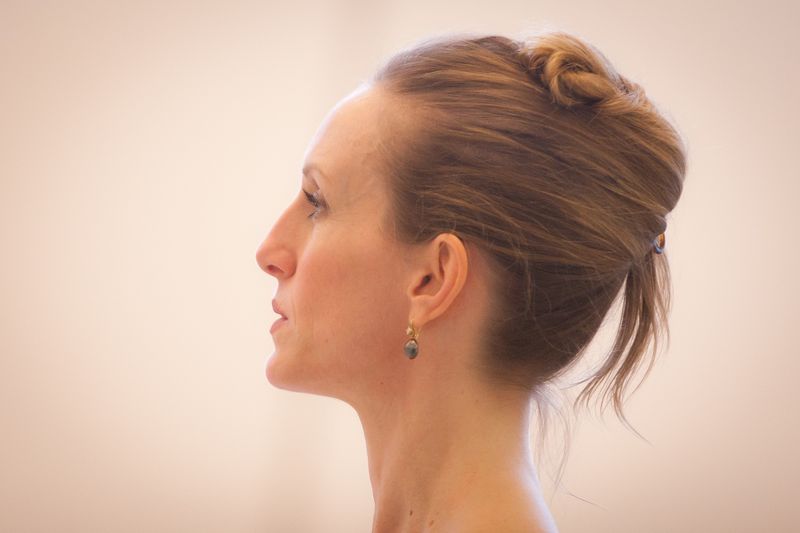
    ww by matt murphy

    Above: Wendy Whelan, photographed by Matt Murphy

    Saturday October 18th, 2014 – No two ballerina farewells are ever alike. Darci Kistler’s farewell marked the end of an era, as she was considered “the last Balanchine ballerina”. At Heléne Alexopoulos’ gala we celebrated one of the greatest beauties ever to grace the stage. Yvonne Borree’s farewell was the most touching, Kyra Nichols’ the most moving. I missed the farewells of Jenifer Ringer and Janie Taylor, saying ‘goodbye’ to them in the days prior to their final bows, simply because I couldn’t imagine NYCB without them. Miranda Weese wasn’t given the full farewell treatment as she wasn’t retiring, just changing companies. I missed her even before she was gone, and I still miss her.

    Tonight, Wendy Whelan’s farewell summoned up an enormous range of emotions, just as her dancing has always done. The programme was well-chosen to underscore her association with four great choreographers, including a complete performance of one of her signature ballets, Balanchine’s LA SONNAMBULA, excerpts from works by Jerome Robbins, Alexei Ratmansky, and Christopher Wheeldon, plus a special pièce d’occasion: a new pas de trois devised for Wendy, Tyler Angle, and Craig Hall in a choreographic collaboration of Chris Wheeldon and Alexei Ratmansky.

    Daniel Capps was on the podium for the opening SONNAMBULA and the concluding Vivaldi/Richter setting for the premiere of BY 2 WITH & FROM; Andrews Sill led the Shostakovich score for CONCERTO DSCH. Throughout the evening, Company musicians were featured: pianist Cameron Grant playing the Chopin for GATHERING; Susan Walters at the keyboard for CONCERTO DSCH; violinist Arturo Delmoni with Cameron Grant for AFTER THE RAIN; and violinist Kurt Nikkanen for the Vivaldi/Richter. For each of them, Wendy had a very cordial greeting, and at the end of the evening she stepped to the edge of the stage and swept into a deep curtsey to thank the NYCB orchestra for their invaluable support throughout her career. That was a particularly lovely moment.

    The emotional temperature ran high all evening; in fact several people I talked to spoke of how they had experienced unusual mood swings from giddiness to despair throughout the day, anticipating Wendy’s dancing whilst regretting that it would be her last time on this stage. 

    Following LA SONNAMBULA‘s opening scene and divertissements, Wendy appeared to the first ovation of the night. She conveyed the mystery of the sleepwalker with her pin-pointe bourrées; in a trance, she managed to totally ignore Robert Fairchild’s endless attempts to intrude on her private world. Earlier in the work, Sara Mearns, Amar Ramasar, Likolani Brown, Megan Mann, Devin Alberda, David Prottas, Lauren King, Antonio Carmena, and Daniel Ulbricht were all vividly present, and they joined in the applause for Wendy during the bows.

    In the DANCES AT A GATHERING excerpt, Wendy joined Abi Stafford and Rebecca Krohn in dances of sisterly joy; Jared Angle, Adrian Danchig-Waring and Zachary Catazaro were the handsome cavaliers. In the passage where the girls are flung from one boy to the next, Zachary made an amazing catch of Wendy as she hurtled thru the air into his arms.

    It was that poignant piano theme in Shostakovich’s concerto #2 – played with great clarity by Susan Walters – that really put me over the edge. Wendy and Tyler Angle danced the adagio from CONCERTO DSCH luminously, with such expressive lyricism. A beautiful sextette of supporting dancers conveyed the quiet intensity of the little vignette Ratmansky has created for them here: Alina Dronova, Gretchen Smith, Lydia Wellington, Joshua Thew, Justin Peck, and our newly-promoted-to-soloist Russell Janzen. How thrilled they all must have been to share these moments with Wendy one last time.

    Wendy and Craig Hall then danced the pas de deux from Wheeldon’s AFTER THE RAIN, holding the audience in an enraptured state as the crystalline purity of the Arvo Pärt’s ‘Spiegel im Spiegel’ stole thru the silent hall in all its poignant grace. It seemed that time stood still here, allowing us to immerse ourselves in the spell-binding artistry of these immaculate dancers.

    In between the three above-listed shorter works, brief films were shown while Wendy changed costumes. In these films, the ballerina I have had the honor to know revealed so many facets of her personality. In one utterly Wendy moment, she played up the mock-jealousy of finding Craig Hall emerging from a rehearsal with ‘another woman’: Rebecca Krohn. That made me laugh out loud. 

    And all to soon, we had reached the end. The Ratmansky/Wheeldon collaboration provided an excellent setting for Wendy’s last dance on Mr. B’s stage. With her two princes – Tyler Angle and Craig Hall – she conveyed the supple strength, tenderness, gentle wit, and sheer overwhelming beauty that have made her one of the great dance icons of our time. The ballet ends with Wendy reaching for the stars.

    At a farewell, the actual dancing often takes a back-seat to the event. The ballerina appears in selections from her cherished roles and as we savor her artistry one last time while secretly we are looking forward to the downpour of rose petals, the flinging of bouquets, the embraces of colleagues, the inevitable “last bow”, and the opportunity to express our admiration in unbridled clapping and shouting.
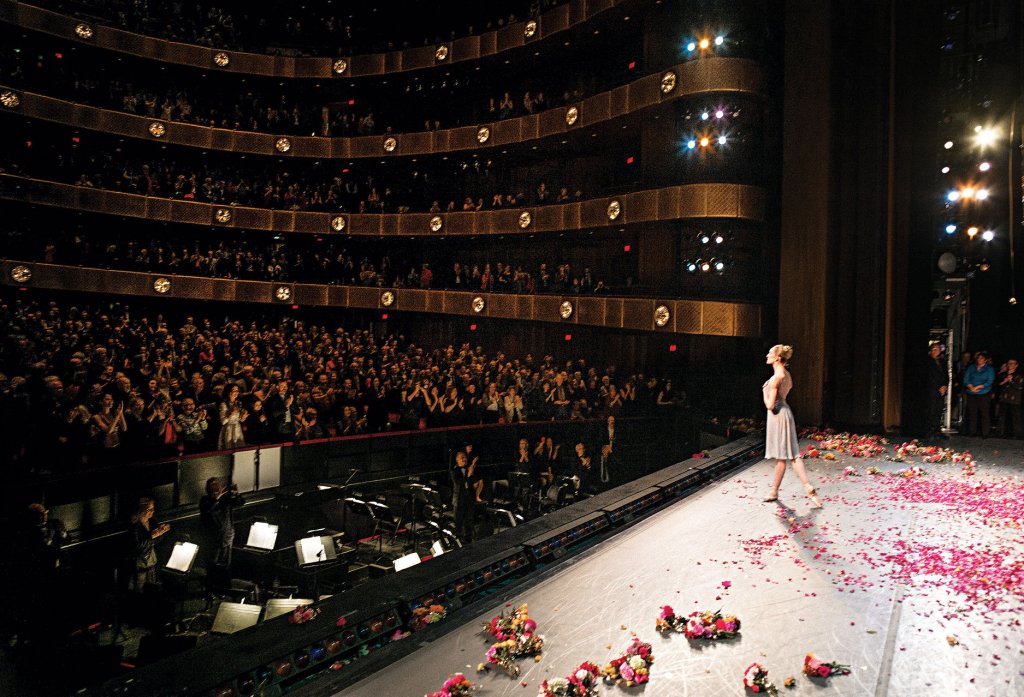
    ww farewell

    For Wendy, the huge ovation at the end signified not only our appreciation for all she has accomplished in her magical career to date, but also our plain unvarnished love for her as a human being.

    As the applause at long last echoed away, I started walking up Broadway, planning to attend the after-party. But then I just felt a need for solitude and reverie, so I jumped on the train at 72nd Street and came home. I was thinking yet again that it has been my great good fortune to have been in this City at the same time as Wendy Whelan.

    LA SONNAMBULA: Whelan, R. Fairchild, Mearns, Ramasar, Mann, Brown, Alberda, Prottas, King, Carmena, Ulbricht

    DANCES AT A GATHERING (Excerpt): A. Stafford, Whelan, Krohn, Danchig-Waring, Catazaro, J. Angle [Solo Piano: Grant]

    CONCERTO DSCH (Second Movement): Whelan, T. Angle [Solo Piano: Walters]

    AFTER THE RAIN Pas de Deux: Whelan, Hall [Solo Piano: Grant; Solo Violin: Delmoni]

    NEW WHEELDON/RATMANSKY (World Premiere): *Whelan, *T. Angle, *Hall [Solo Violin: Kurt Nikkanen]

    (It took me a long time to settle on a portrait of Wendy to headline this article. Matt Murphy took the picture at the top when Wendy guest-taught a class at Manhattan Movement and Arts Center a couple of years ago. To me, the photo is her…I love the wispy strands of hair at the nape of her neck, and her utterly unique beauty.)

    Bringing this story up to date, Wendy is currently the Associate Artistic Director of the New York City Ballet.

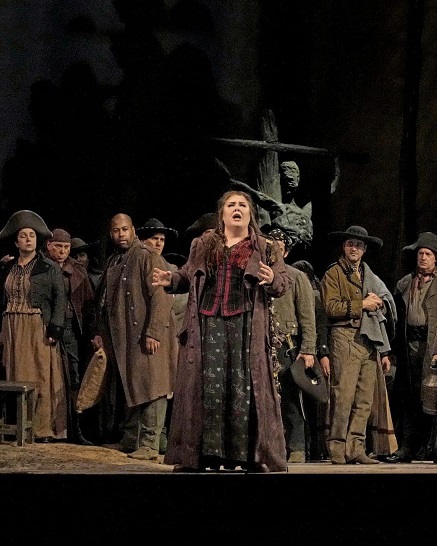
  • @ My Met Score Desk for TROVATORE

    Daniele-callegari-jpg

    Above: Maestro Daniele Callegari

    ~ Author: Oberon

    Saturday October 26th, 2024 matinee – What made this performance outstanding was the conducting of Daniele Callegari; he made the music come alive with brisk but never rushed tempi, whilst keeping the volume under control, helping the singers to sing without forcing. At a few points, the musicians fell back on the Y N-Z approach: play loud and fast. But mostly, the performance was immeasurably satisfying. It wasn’t until I got home and checked the archives that I realized I’d heard a Callegari TROVATORE in 2013; the awfulness of his cast that night had made me purge the memory from my mind.

    This afternoon, TROVATORE started with a bang: Ryan Speedo Green’s Ferrando immediately established the singer’s vocal authority, seizing our interest – and holding it – throughout his monolog, which was expertly supported by the Maestro. Ryan’s diminuendo on “All’inferno!” was chilling. The scene’s finale, and the sounding of the castle’s alarm bells, assured us we were in for some vibrant Verdi.

    As Inez, Briana Hunter’s appealing voice and sense of urgency in her exchange with Rachel Willis-Sorenson’s Leonora engaged us in their story right from the start. At first, Ms. Willis-Sorenson’s tone showed a steady beat, and passing hints of sharpness, but the voice would come under control as the opera progressed. Maestro Callegari kept the forward impetus of “Tacea la notte placida” flowing, and the soprano went on to regale us with her deft vocalism in “Di tale amor“, etching in some very fine trills.

    Igor Golovatenko gave the Count di Luna’s opening lines a quiet, sustained feeling; then the power of his voice came into play.  All afternoon, he would prove himself an excellent Verdi baritone. The harp sounds, and Michael Fabiano’s instinctive phrasing and passionate delivery of the words of his serenade were a joy to experience. Coming forward, Mr. Fabiano’s scornful “Infida!” raised the performance’s temperature to the boiling point. Ms. Willis-Sorenson scorchingly brilliant “M’odi” staved off the duel until the dynamic stretta ended with a joint high D-flat from the soprano and tenor, and the adversaries’ swords clanged as they rushed off.

    Barton azucena

    After a truly rousing Anvil Chorus with the blacksmiths’ thunderous hammerings, Jamie Barton (above in a MET Opera photo) commenced Azucena’s iconic “Stride la vampa” and I was soon thinking this would be Jamie’s best Met role to date. She could be deliciously subtle one moment and richly chesty the next, and her trills and top notes were really impressive. She ended the brief aria with a bang, but there was no applause. Jamie’s very sustained “Mi vendica!” was another perfect touch. Ned Hanlon’s powerful summons from the Old Gypsy made its mark.The gypsies headed off.

    Now mother and son are alone, and Jamie commences the old woman’s story: what perfect support the Maestro and his players gave to her great narrative, and how persuasive the mezzo’s story-telling. As Azucena is about to tell her son the ironic truth of those moments at her mother’s execution, Fabiano/Manrico takes a poignant diminuendo of “Tu forse…?” and then the fire music of the high strings gives him an answer even before his mother can say the words. Jamie nailed the top B-flat of the story’s climactic moment, then sang her final lines in a sustained, chilling hush. Back in the day, this kind of singing would have stopped the show,  but today there was only a brief round of applause.

    A vividly expressive conversation between mother and son brings on Fabiano’s “Mal reggendo” in which his lyricism and sense of ebb and flow captivates, as does his marvelously quiet “Non ferir!” This great scene now races to its end with the striking duet “Perigliarti ancor...” with some plummy chest notes from Jamie, and as well as a colorful, wide-ranging cadenza.

    Maestro Callegari gave us a wonderfully stealthy opening to the Convent Scene, and then Mr. Golovatenko’s great voicing of the recit leads to an exchange with Ryan Speedo Green before cresting with Di Luna’s powerfully delivered “Leonora di mia!. The great aria “Il balen...” was taken slightly faster that usual; overall it was beautifully sung though there were traces of sharpness along the way. Mr. Golovatenko was heartily cheered. Another exchange with Mr. Green, with some urgent chorus passages, led to di Luna’s brief cabaletta, which fades away as the nuns are heard approaching.

    Fab igor

    Above: Michael Fabiano and Igor Golovatenko as Manrico and Count di Luna; a MET Opera photo

    There was a lovely exchange of farewells between Mlles. Willis-Sorenson and Hunter before all Hell breaks loose and Manrico returns from the dead. Ms. Willis-Sorenson launches the ensemble in hesitant wonder at her beloved’s re-appearance…radiant top notes, and the poignant “Sei tu dal ciel discendere?” from Leonora, and then a trading of insults between her rival lovers. Suddenly Manrico’s men rush in crying “Urgel viva!” and Manrico greets them with one of my favorite lines in the opera: “Miei prodi guerrieri!” The ensemble rushes to a finish but is halted for Ms. Willis-Sorenson to again beautifully voice her wonderment at her beloved’s resurrection.

    After the interval, Ryan Speedo Green is again superb as he urges the Count di Luna’s men to victory in the coming siege. Azucena is apprehended lurking about the camp; Jamie Barton’s “Giorni poveri” is expressively sung, with nice subtleties of phrasing, but after Mr. Green calls the old gypsy out, Jamie turns fiery with “Deh, rallentate…!” 

    Inside his besieged castle, Manrico tries to calm Leonora though his fate seems predestined. Mr. Fabiano’s recit and his gorgeously phrased “Ah, si, ben mio” won him vociferous applause, though I was sensing a bit of tension in the highest notes. After a tenderly harmonized duet passage with his beloved, Ruiz (played by Daniel O’Hearn) rushed in to tell of Azucena’s impending execution. Manrco’s “Di quella pira” was taken at breakneck speed…very exciting…though again, Mr. Fabiano’s highest notes were not thoroughly comfortable.

    After the applause had died down, there was a very odd sound of someone screaming from the stage-left wing; this was followed by a moan, and the sound of someone talking on a cellphone. No idea what the problem was.

    (Update: on Sunday evening at the Tucker Gala, I found out the reason for the offstage commotion. After singing the Di quella pira“, Michael Fabiano walked into the wings and tripped over something. He let out a scream and then a moan, and you could hear a walkie-talkie call summoning medics. He finished the opera, but last night at Carnegie Hall, he had to be walked unto the stage by the pianist, moving stiffly and very slowly. Kudos to Michael for keeping his commitment to the Tucker event.)

    Now Ms. Willis-Sorenson regaled us with her spectacular singing in the great scene where Leonora comes to the tower where her lover is awaiting execution; she seeks to bargain with di Luna and save Manrico’s life. As Ruiz, Mr. O’Hearn brings her to this dark place; his voicing of his despair over Manrico’s imminent death was infinitely touching when a trace of a gentle sob spoke volumes of his devotion. 

    The the Met stage was now Ms. Willis-Sorenson’s to own, and own she did. Absolutely phenomenal singing here! Her recit was finely phrased, then came the beloved aria “D’amor sull’ali rosee” in which the soprano held her own against memories of great Leonoras from the past. Her line was beautifully sustained, the trills lovingly defined, her tone richly lyrical. In the cresting lines “Ma deh! non dirgli, improvvido, le pene del mio cor!” did not spin the piano/pianissimo effects that many sopranos favor, but instead sounded more resolute. Her cadenza featured a lovely piano top note, on which she did a thrilling crescendo. She finished the aria with the lower ending.

    In the Miserere that follows, a vivid sense of fate developed at the soprano’s “Quel suon, quelle prece”, and her anguish at hearing Manrico’s voice singing an ardent farewell to her was palpable. Ms. Willis-Sorenson then sailed thru her cabaletta, dispensing the coloratura with aplomb and capping the scena with a house-filling high-C.

    Both the diva and Mr. Golovatenko were cooking in their great duet, sung with great abandon and dramatic pointing of the text. Some people will doubtless say that the soprano left out the high-C at the end, but…it’s not in the score. 

    In prison, awaiting execution, Manrico tries to calm his anxious mother; Mr. Fabiano sang with consoling beauty of tone whilst Ms. Barton delivered a fearsome “Parola orrendo!“. Jamie’s superb control made “Si, la stanchezza” so moving, and then the two singers found a lovely blend in “Ai nostri monti“, with a perfect fadeway at the end. Mr. Fabiano’s anger at Leonora makes sparks fly, but Jamie interrupts them with a dreamy reprise of “Ai nostri monti“. 

    Fab w-s

    Above: Michael Fabiano and Rachel Willis-Sorenson in the opera’s final scene; a MET Opera photo

    Leonora reveals that her death is at hand: she has taken poison. Ms. Willis-Sorenson’s “Pria che d’altri vivere” was so poignant. Her death releases di Luna from his promise, and Manrico is swiftly executed. Jamie Barton then gave the opera a flaming finish with her powerful “Sei vendicata, o madre!” 

    Bravi, tutti!

    Trovatore.jpg r-2

    I went to the stage door after the performance where I met Maestro Callegari; he very kindly signed my program (above). 

    ~ Oberon

  • Paola Prestini’s SILENT NIGHT @ National Sawdust

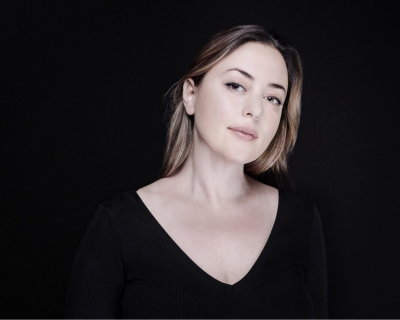
    Prestini

    Above: composer Paola Prestini; photo by Caroline Tompkins

    ~ Author: Lili Tobias

    Saturday October 28th, 2024 – I was lucky enough to have a front row seat to the world premiere of composer Paola Prestini’s new opera, Silent Light. I walked into National Sawdust on Saturday night to ambient insect noises mingling with the chatter of the audience finding their seats. As I looked out over the set of unfinished wood, I could smell the faint hint of bacon, eggs, and pancakes. And these things were just the beginning of how this production expanded not only my ears, but all of my senses!

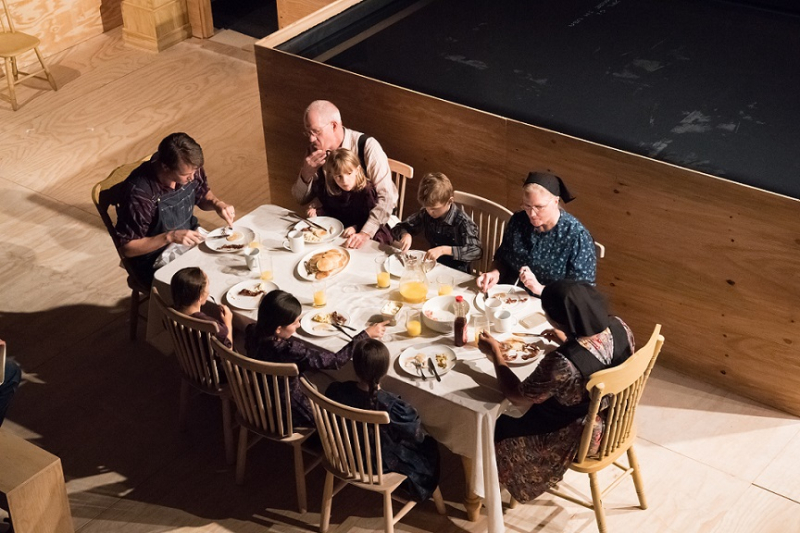
    The innovative ways Prestini played with the sounds, visuals, and physical objects on stage really made Silent Light stand out, though the plot stuck close to standard operatic tropes—love, infidelity, etc. One of the first aspects of this that caught my attention was how she used mundane sounds either by themselves or incorporated into the musical sounds. The opera gets underway with the loud tick-tock of a grandfather clock (seen in the back left corner of the stage) oscillating in volume. The louder it gets, the more surreal the set feels. As that first scene progresses, the women and children of the family come onstage to set the table for breakfast (cooked onstage!) and all begin eating. The natural clatter of plates and utensils mingling with the warm low brass and string instruments created a very fun and realistic soundscape. It truly felt like the audience members were invisible observers within the room with the characters.


    Silent Light performance at NS_0115_


    Above: the ensemble, photo by Jill Steinberg


    I was especially impressed with the transitions between scenes, both in terms of the music and the staging. As breakfast wraps up, a wave of construction sounds rise up from the left side of the stage as the chorus becomes a team of workers. There’s a large waft of dust, which visually separates the two halves of the stage between the men at work outside and the women at work in the house. There were also two wonderful moments of transition between diagetic and non-diagetic music. One occurred during this scene as the chamber ensemble begins playing what seemed to me a lively popular song and the chorus sings along, simultaneously moving the chairs and table to prepare for the next scene. And later on, a French ballad begins playing on a television in the kitchen, then becoming the background for the characters Johan and Marianne to meet up in a hotel room. Both transitions were executed so seamlessly and really helped push the the flow of action forward.


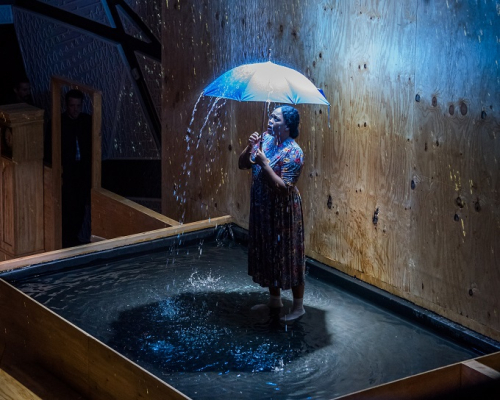
    Silent Light performance at NS_0498_


    Above: Brittany Renee; photo by Jill Steinberg


    Another remarkable aspect of this opera were the juxtapositions between silence or quiet sounds and loud, nearly overbearing sounds. Overall, I felt like there was minimal actual singing in this opera, but not in a bad way at all! As a listener, I tend to get fatigued when operas have extra long passages of continuous singing, so I really appreciated the many moments of silence or instrumental music—or even just foley sounds—that provided contrast (and rest for the singers’ voices too). There were also many moments of abrupt shift from sound to silence. One especially striking moment takes place when Johan and his wife Esther are driving in a truck, Esther knowing that Johan has just slept with Marianne. The music, accompanied by the sound of heavy rain, creates a steady and unceasing anxiety as Esther finally comes to terms with her own feelings about her husband’s affair. Then it suddenly stops as she rushes out of the truck, leaving behind just the sound of the rain (and the literal water which has started pouring down onto the stage!).


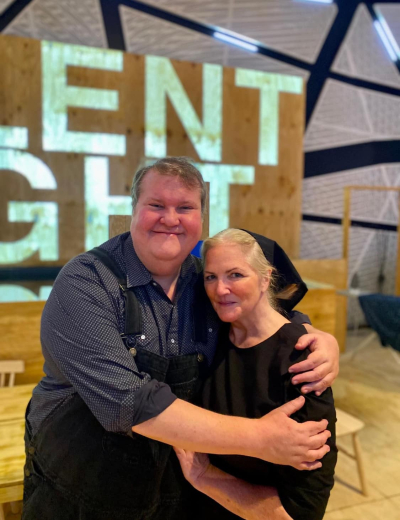
    Tony & margaret silent light


    Above: Anthony Dean Griffey and Margaret Lattimore; photo courtesy of Mr. Griffey


    I also want to add that the novelties of this opera did not go unsupported by amazing musicianship. All the singers were incredibly strong both vocally and as actors, and the lyricism of Prestini’s music really helped them sound even more amazing! I also enjoyed Prestini’s writing for brass. Because of the small size of the instrumental ensemble, the proportion of brass instruments to other types felt very high relative to, for example, an orchestra. I liked how predominant a role the trumpet and trombone played in the music, and they really added a unique depth to the sound that was especially resonant in the small performance space.


    Silent Light performance at NS_0230_


    Above: Daniel Okulitch and Julia Mintzer, photo by Jill Steinberg


    This opera contained so many interesting things that it’s honestly been difficult to write about everything that caught my attention! I thought it was a huge success at National Sawdust, and I hope it gets many more performances. It will be super interesting to see how the staging evolves in different spaces and with different cast members. Silent Light was an incredibly immersive experience, and there was always something of interest to listen to, look at, and even smell!


    ~ Lili Tobias

  • @ My Met Score Desk for PETER GRIMES

    Grimes

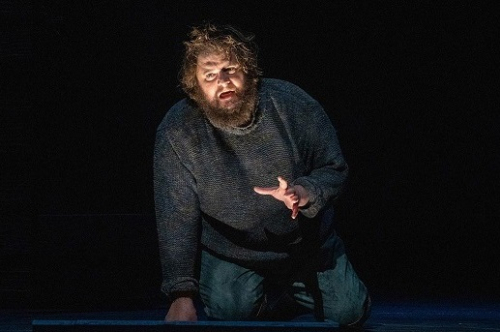
    Above: Allan Clayton as Peter Grimes; a Met Opera photo

    NOTE: This article was delayed due to problems with Typepad. Photos may be slow to load, and the musical excerpt may not play.

    Saturday October 28th, 2022 matinee – I didn’t like the Met’s current PETER GRIMES production, which premiered in 2008, when I saw it in the House, but later I watched it on DVD and found it thrilling. For this revival, I pondered getting a seat with a view, but then opted for practicality and took a score desk.

    I first saw GRIMES in 1983; it was a day I shall never forget. We’d been to SIMON BOCCANEGRA in the afternoon, and I was exhausted; sitting there waiting for GRIMES to begin, I thought “I’ll never make it to to end.” But moments after the curtain rose, Jon Vickers delivered his blazing first line, “I swear by almighty God…”, stepping on Swallow’s line in his impatience, and from that moment on, I was riveted. Vickers, his colleagues Elisabeth Söderström and Thomas Stewart, and a stellar lineup of singing actors (Jean Kraft, Lili Chookasian, Jerome Hines, Dale Duesing, Ezio Flagello, and Robert Nagy) gave me a thrilling first GRIMES, under the baton of the great Sir John Pritchard.

    In the ensuing years, I experienced two magnificent portrayals of Grimes at The Met: Philip Langridge and Anthony Dean Griffey each made an overwhelming impression. This afternoon, the British tenor Allan Clayton staked out his own claim to the role with a stunningly sung performance. I first heard the voice of Allan Clayton on the excellent Decca DVD entitled Britten’s Endgame.

    The Met Orchestra were on top form this afternoon, and the opera’s interludes – well-beloved as a concert ‘suite’ – were by turns painfully beautiful and searingly violent. The conductor, Nicholas Carter, was at his finest in these glorious passages. But he was less successful when solo voices were singing, sometimes giving too much volume and either covering the singers or leaving them to struggle for a heftier sound. The Met Chorus, with so much to do in this opera, were simply grand: “O tide that waits for no man…spare our coasts!

     
    Allan Clayton’s Grimes was more lyrical in sound than the other tenors I have heard live in the role, though he has good cutting power when he needs it. It was in the poetic passages of the music that the tenor made our hearts ache for this hapless, misunderstood man. From the start, his wonderfully clear diction made every word count. In the opening scene in the court, telling of the death of the first apprentice, Mr. Clayton drew us in.
     
    As the opera unfolds, the character’s hopes for a new life are raised, only to be dashed. Mr. Clayton’s extraordinarily expressive singing caught every nuance of these shifts in Grimes’s mental state. His poignant “Great Bear and Pleiades“, where he sings of the “…clouds of human grief…” along with “What harbour shelters peace?, and “In dreams I’ve built myself some kindlier home” were hauntingly sung, in contrast to the deranged scene in which he torments the apprentice and eventually sends the boy down the sea cliff to his doom.  My feeling is that Mr. Clayton’s Grimes may be the closest to Peter Pears’ in vocally capturing the personality of the doomed fisherman. Mr. Clayton’s performance deservedly won the audience’s vociferous approval.
     
    Soprano Laura Wilde made an unexpected Met debut this afternoon as Ellen Orford. Her voice, with a somewhat girlish timbre, was appealing in her Act II scene with the apprentice, John, and especially so in her third act Embroidery aria. In more dramatic passages, the conductor sometimes failed to do the right thing, leaving Ms. Wilde to push the tone. The soprano and Mr. Clayton were well-matched in general, She was warmly received by the audience.
     
    Balstrode fills an odd place in the opera: as one of the few true friends and defenders of Grimes, the character is key; but Britten does not give him all that much to sing. Adam Plachetka was fine in the role today.
     
    The librettist and composer create expert character studies amongst the townsfolk of The Borough, affording wonderful opportunities for today’s cast. Prime among these is Swallow, splendidly voiced this afternoon by the excellent Patrick Carfizzi.
     
    Two mezzo roles offered Denyce Graves and Michaela Martens many choice phrases as Auntie and Mrs. Sedley respectively. After a few warm-up notes, Ms. Graves sounded very well; “A joke’s a joke, and fun is fun!” she jibed sarcastically. Ms. Martens, with the meatier role of one of the opera’s most despicable characters (a busybody and gossip with a drug addiction,) got a round of laughs from the crowd with “I’ve never been in a pub in my life!” and pulled out some darkish chest tones at “Murder most foul it is!” and “Crime, which my hobby is...”
     
    Harold Wilson as Hobson kicked the opera off with his strong-voiced summons of Grimes to take the oath; later, Hobson tries to evade Ellen’s offer to accompany him to pick up Grimes’s next apprentice. Chad Shelton (Bob Boles) and Justin Austin (Ned Keene) each made their mark, and the always-effective Tony Stevenson excelled as the Reverend Horace Adams. As Auntie’s two nieces, Brandie Sutton and Maureen McKay sang prettily; they were joined by Mlles. Wilde and Graves in the opera’s pensive quartet, one of the score’s unique highlights.
     
    With this performance, PETER GRIMES seemed to edge out BILLY BUDD as my favorite Britten opera; however, that pendulum might swing back if I ever get to see BILLY BUDD again, just as the very top spot on my list of favorite operas has shifted between ARIADNE AUF NAXOS and ELEKTRA for years.
     
    PETER GRIMES is a cruel opera; the characters (well, except for Ellen) each have a mean streak, and zero tolerance for anyone who is ‘different’. Growing up in a similar small town, where everyone knows (and minds) everyone else’s business, I learned to keep mostly to myself, leaving the world behind to live in my own dream-space filled with opera, and with longings I didn’t understand. Like Peter, I had an understanding girlfriend who protected me in a way, and soothed my sadness.  My classmates were cruel, but things never turned brutal, as they do in The Borough: “Bring the branding iron and knife…what’s done now is done for life!” I sometimes wonder how I endured those long, worrisome days.

    Metropolitan Opera House
    October 28th, 2022 matinee

    PETER GRIMES
    Britten

    Peter Grimes............Allan Clayton
    Ellen Orford............Laura Wilde (debut)
    Captain Balstrode.......Adam Plachetka
    Mrs. Sedley.............Michaela Martens
    Auntie..................Denyce Graves
    Niece...................Brandie Sutton
    Niece...................Maureen McKay
    Hobson..................Harold Wilson
    Swallow.................Patrick Carfizzi
    Bob Boles...............Chad Shelton
    Rev. Horace Adams.......Tony Stevenson
    Ned Keene...............Justin Austin
    John....................Brandon Chosed

    Villagers: Helena Brown, Ross Benoliel, Scott Dispensa,
    Ned Hanlon, Jeremy Little, Patrick Miller, Steven Myles, Earle Patriarco,
    Jonathan Scott, Meredith Woodend, Yohan Yi

    Conductor...............Nicholas Carter

    Settling in at my desk well before curtain time. I opened the old, heavy score I had taken from the library, and found the incredible inscription shown below. It means that Benjamin Britten actually held this score in his hands.

    Britten autograph-1 jpg
    ~ Oberon

  • Christopher Williams ~ NARCISSUS @ NYLA

    Narcissus jpg

    Above: from NARCISSUS; photo by Andrew Jordan

    Saturday October 30th, 2021 matinee – At New York Live Arts this afternoon with Roberto Villanueva for a performance of Christopher Williams’ NARCISSUS. It was a purely delightful hour, wherein the music, choreography, lighting, costumes, and the beautiful cast of dancers all combined to create a dreamworld at once quirky, erotic, and poignant.

    NARCISSUS is set to Nikolai Tcherepnin’s score “Narcisse et Echo” which was composed in 1911 for Michel Fokine’s ballet of the same title, produced by Serge de Diaghilev for the Ballets Russes. In Mr. Williams re-imagining of the ballet, he takes a fresh look at the timeless tale of Nacissus, a young man very much taken with his own beauty. The enticing production features costume and set designs by Andrew Jordan and lighting by Joe Levasseur.

    In a brief prologue, in which bouche fermée voices are heard, a group of Boeotians are silhouetted against the breaking dawn. We then meet the Oreads: a brotherhood of mountain nymphs with Spock-like ears. Dancers Casey Hess, Jack Blackmon, Alexander Olivieri, Michael Parmelee, and Logan Pedon cavort, their heavenly, nearly nude bodies adorned with fantastical red penises. For all the intimacy of their partnering, they paradoxically seem chaste. The music underscores the ecstatic feeling of these youthful males, savoring their delight in nature and in each others company. Throughout this provocative scene – and indeed, throughout the entire ballet – the choreography in superbly musical.

    The music shifts with the arrival of Echo, who has both a penis and female breasts; Mac Twining plays the part handsomely. Echo is a lonely creature, and is rejected by the Oreads who hiss at him like animals. Now the Boeotians return: hetero and same sex couples of varying ages are danced by Janet Charleston, Alan Good, Ching-I Chang, Shayla-Vie Jenkins, Justin Lynch, and Jake Montanaro. They are joined by a trio of Bacchantes (Christiana Axelsen, Breckyn Drescher, and Caitlin Scranton), dressed in flame-coloured gowns, their faces painted white, their dark hair almost Medusa-like. Their dance is a highlight of the ballet. Now the music becomes tumultuous, the dancing joyous.

    The Oreads re-appear, and we are only too happy to see them again; and finally we meet Narcissus himself – in the magnetic person of New York City Ballet principal dancer Taylor Stanley. Clad in a short blue tunic, his solo depicts the character’s self-love.

    For Narcissus has fallen in love with his own reflection: a reflection danced by Cemiyon Barber in a yellow tunic. Their duet of mutual admiration is danced in-sync; meanwhile, their shadows follow them on the wall. 

    Echo returns; smitten with Narcissus, his dance is a visual lament. As the music veers from powerful to eerie, he sustains a balance as if teetering on the verge. Mr. Twining excelled here. Now Narcissus and his double return; the music gets big as they fill the space with swirling leaps and mirror-image passages. They embrace, sink to the ground, their bodies communing whilst the forlorn Echo watches them in despair. Narcisssus expires; reaching under his dead idol’s tunic, Echo brings forth a yellow narcissus as darkness falls.

    The dancers were enthusiastically applauded; though I thought solo bows for Mssrs. Stanley, Barber, and Twining were in order, they were not forthcoming. The choreographer was warmly greeted by dancers and audience alike. 

    One of the many reasons I wanted to see this production was the presence in the cast of my friend Justin Lynch. Justin has danced for Amanda Selwyn, Lydia Johnson, and Nai-Ni Chen, and in 2014 he appeared in the Metropolitan Opera’s controversial production of DEATH OF KLINGHOFFER. In 2010, he participated in Kokyat’s photoshoot at the Secret Theater. Justn’s such a handsome fellow: it was great to see him again.

    ~ Oberon

  • Emanuel Ax|Stéphane Denève @ The NY Phil

    Emanuel-ax

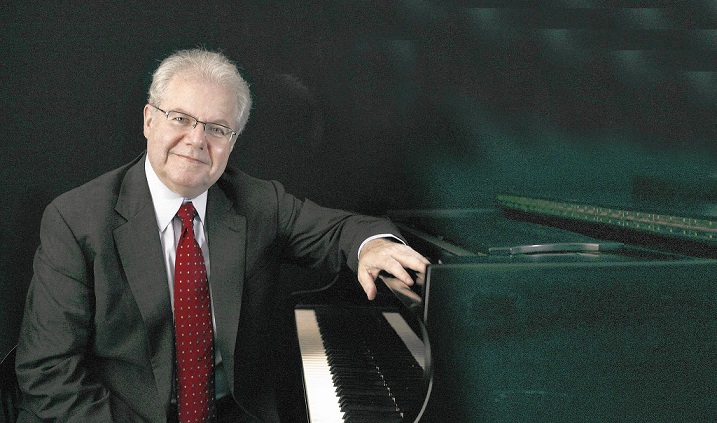
    Above: pianist Emanuel Ax

    ~ Author: Oberon

    Saturday October 26th, 2019 – How wonderful to encounter Emanuel Ax again so soon after his lovely performance of the Schumann piano quintet with the Dover Quartet last week at Zankel Hall. Tonight the great pianist joined The New York Philharmonic for Beethoven’s Piano Concerto #1.

    The announced program looked long on paper, and indeed – after an engrossing first half – there was something of a slump with Albert Roussel’s 3rd symphony. It’s understandable that Maestro Stéphane Denève would want to include it, but somehow it did not quite fit in with the other works: it didn’t hold hold up well in the company of Beethoven and Ravel.

    Jennifer+Higdon

    Above: composer Jennifer Higdon

    Jennifer Higdon’s blue cathedral, composed in 2000 in memory of her brother, opened the evening. Read the composer’s eloquent program note on this work here.

    blue cathedral opens with most ethereal of sounds: barely audible at first, the music slowly seeps into our consciousness. Cello, the plaintive flute, clarinet, piano, and harp bring their colours to bear; the strings are lush and grand, with the high violins set against the deep celli and basses. A massive wave of drums and low brass hits like a tsunami. The marimba, oboe, and Cynthia Phelps’ dusky viola are heard: each solo voice seems to evoke a particular memory of the departed.

    The music then becomes cinematic, with a back-beat dynamic. Brass fanfares lead to epic grandeur before calm sets in. Now the solo voices are heard again – flute, clarinet, oboe – and an especially fine passage for a cello/viola quartet as the music fades to the gentle chiming of a solitary bell.

    In her program note, Ms. Higdon wrote about her use of the clarinet, which was her brother’s instrument. It was in the passages for that instrument, sublimely played by the inimitable Pascual Martínez-Forteza, that Ms. Higdon’s moving tribute to her sibling found its most poignant voice.

    Emanuel Ax, ever a welcome guest at the Philharmonic, was warmly greeted as he took his place at the Steinway. The pianist sat quietly as the musical introduction – at first courtly, then stately – sets the mood. Mr. Ax then began his enchanting performance: crystal-clear arpeggios, subtly modulated, drew us in. Beethoven’s font of melody – both for the pianist and the orchestra – is filled to overflowing. In a long paragraph, the pianist displayed his gifts with nimble downhill scales played pianissimo, and cascades of notes of great delicacy, clarity, and warmth.

    Following a majestic orchestral passage, the long cadenza – which seems almost like a sonata in itself – was impeccably delivered, the audience in a state of rapt attentiveness. One sensed that an ovation might erupt at this point, but Maestro Denève was able to forestall an intrusion by keeping a cautionary hand raised.

    Now came the Largo, featuring one of Beethoven’s most gorgeous themes. For the next several minutes, my companion and I were transfixed by the ongoing dialog between Mr. Ax’s keyboard and Pascual Martínez-Forteza’s clarinet. Two great musicians, trading subtleties: mesmerizing! 

    Mr. Ax immediately commenced the concerto’s concluding Rondo: Allegro, bringing to mind – with its jaunty interjections – the ballet Prism which Helgi Tomasson choreographed to this score for New York City Ballet in 2000. The esteemed pianist continued to dazzle us right to the last note, causing the audience to leap to their collective feet as he took his bows; Mr. Martínez-Forteza was also asked to rise, deservedly so.

    An encore was demanded, and Mr. Ax sustained the ballet connection for me with his Chopin, used by Jerome Robbins in his ballet Dances at a Gathering.

    Stephane_Deneve_01_811x486

    Following the interval, Maestro Stéphane Denève (above) brought us two works by his fellow Frenchmen: Albert Roussel’s Symphony #3 (composed 1929-1930) and Maurice Ravel’s immortal La Valse, which premiered in 1930. 

    The Roussel at first seemed wonderfully refreshing: its jazzy, driven, bustling opening augured well for thorough enjoyment. Yet as the work unfolded, it seemed full of ideas but lacking in coherence. The first, second, and fourth movements each felt overly long, and there was a sense of increased audience restlessness. The piece features a lot of ‘big’ music; rhythmic variety and enticing instrumentation are never lacking. Though poignant, witty, and ebullient by turns, the music slips in one ear and out the other, leaving little lasting impression. Some wonderful solo passages for violin, played beautifully by Frank Huang, were appealing.

    Image

    Above: New York City Ballet’s Marika Anderson in George Balanchine’s La Valse

    “We are dancing on the edge of a volcano…” wrote Maurice Ravel’s in his notes for La Valse. Such a timely concept, as our world these days often seems to be rushing toward its doom. This music, which George Balanchine choreographed for his evocative “death and the maiden” ballet of the same title, has been with me for decades.

    Tonight’s performance, under Maestro Denève’s ardent baton, was everything one can hope for in this marvelous music. The musicians made the most of every opportunity, whether by solo or by section. La Valse again entranced with its dark allure and inevitability. Resistance is futile.

    As we were walking down to the subway, my friend Cherylyn Lavagnino and I both spoke of the effect that the playing of Mssrs Ax and Martínez-Forteza in the Beethoven adagio had on us, and of the consolation of such musical experiences in these dark days. Thank you, gentlemen.

    ~ Oberon

  • Weilerstein|Bychkov ~ All-Dvořák @ Carnegie Hall

    Af22462a9412c5a25af7c7678f4b1224

    Above: cellist Alisa Weilerstein

    Author: Ben Weaver

    Saturday October 27th, 2018 – The Czech Philharmonic Orchestra, under the direction of its chief conductor and music director Semyon Bychkov, rolled into Carnegie Hall on Saturday, October 27th for a two-concert visit. The first concert was an all-Dvořák program which featured two of the composer’s greatest works: the Cello Concerto (with soloist Alisa Weilerstein) and Symphony No. 7.

    Dvořák’s Cello Concerto was composed in New York City in 1894-95. Dvořák had long-held reservations about a concerto for the instrument: an early effort to write one in 1865 was left unfinished and lost until 1925; attempts by scholars to reconstruct it for performance have met with mixed results. But Dvořák was so impressed by a New York Philharmonic performance of Victor Herbert’s Cello Concerto No. 2 that he decided to try again. (Herbert, a highly successful composer of operettas in his own right, was principal cellist of the NY Philharmonic.) The resulting cello concerto by Dvořák, in the key of B minor, is arguably the greatest one of all. Brahms, for example, exclaimed: “Why on earth didn’t I know that a person could write a violoncello concerto like this? If I had only known, I would have written one long ago.”

    The opening Allegro begins with a mournful clarinet solo, a melody that reappears throughout the movement – and returns in the second half of the final movement. The cello enters playing the same melody, though in a different key. Alisa Weilerstein is one of the finest cellists in the world today and she held the audience spellbound with her passionate, emotionally generous and technically precise playing. With Maestro Bychkov, and an orchestra that has Dvořák in their bones, this was a performance from all that could not be improved. (Special recognition for the magnificent, soulful horn solo playing by, I assume from the roster, Kateřina Javůrková.) The lovely second movement, Adagio, contains Dvořák’s tribute to his dying sister-in-law Josefina (with whom he was secretly in love). He revised the finale of the concerto after returning to Prague and learning that Josefina had died. Dvořák inserted a melancholy section right before the end of the work. He wrote to the publisher: “The finale closes gradually, diminuendo – like a breath…”

    The audience greeted Ms. Weilerstein’s performance with a warm standing ovation. Weilerstein’s control of the instrument is superb. She manages to produce a million colors of sound, the rich and warm tone of her cello glows. The audience kept calling her to return, no doubt hoping for an encore. Alas, not on this night. But it’s hard to top perfection anyway.

    After the intermission the orchestra performed what many consider to be Dvořák’s finest symphony, No. 7, commissioned by the London Philharmonic Society in 1884. Dvořák himself conducted the premiere in 1885. The symphony opens with a sinister theme from the lower strings. This melody, and the dark mood, dominate the movement and haunt the rest of the symphony. No. 7 has a reputation as Dvořák’s tragic work and many conductors emphasize the darkness. But maestro Bychkov and the orchestra find more nuance here. Despite the somber mood of the opening movement there is plenty of humor too, including a lively Scherzo that could have been rejected from Dvořák’s Slavonic Dances. It is a truly great Symphony, even if has not gained the popularity of Symphonies Nos. 8 and 9.  And the Czech Philharmonic plays it better than anyone.

    The glowing strings, warm brass (no barking here), and the obvious love they have for this music are incomparable. Although most great orchestras can play everything well, there is something to be said for orchestras of a composer’s native land taking precedence in how their music can and should sound. Russians play Tchaikovsky better than anyone, Czech musicians do it with with Dvořák and Janáček, the French play French in ways most others simply don’t, an Italian voice can do things with a Verdi line that no one else can, etc. It’s not just about all the notes being played – any decent orchestra can do that – it’s about how the musicians feel about those notes. And this great orchestra clearly feels Dvořák’s music in a  singular way. It’s not just love for the music, it’s pride in the music. It is impossible to replicate anywhere else.

    You could hear and feel this uniqueness tonight, especially in the two encores: two Slavonic Dances, the lilting Starodávný (Op. 72, No. 2; surely one of Dvořák’s most memorable melodies) and the thrilling Furiant (Op. 46, No. 8). If you didn’t sway or tap along to this music, if you didn’t sing it to yourself, you weren’t doing it right.

    ~ Ben Weaver

  • Joshua Beamish @ Ailey Citigroup Theater

    Joshua Beamish in PIERCED by MOVE the company 2

    Above: choreographer Joshua Beamish

    Saturday October 26, 2013 – The planned New York City premiere presentation of Joshua Beamish’s PIERCED at Ailey Citigroup had to be abandoned on very short notice due to extenuating circumstances. A combination of dancer injuries and a delay in obtaining visas (a result of the recent US government shutdown) caused the Canadian choreographer to assemble a new programme, literally on the spur of the moment. The evening proved rewarding in its own right, thanks to Joshua’s charismatic personality, his gifts as both choreographer and dancer, and the assistance of two of Gotham’s loveliest ladies: Deborah Wingert and Cathy Eilers.

    Cathy introduced the evening, describing how she fell under Joshua’s spell right from her first meeting with him at Joyce SoHo a few years ago. A film of a pas de deux from PIERCED was then shown, performed by Harrison James (National Ballet of Canada) and Jo-Ann Sundermeier (Smuin Ballet). The music is by David Lang, and the title PIERCED refers to Cupid’s arrow.

    Live dancing started with a solo that followed: Joshua – as the self-described ‘guardian of love’ – danced with hypnotic fluidity: his clarity of movement and caressive port de bras enhance his god-given handsomeness, creating a distinctive self-portrait.

    In an interview that followed, Deborah Wingert posed just the right questions so that we got to know Joshua – his process and his way of thinking – without compromising his personal mystique. Many dance interviews fall flat, but Deborah’s thorough understanding of dance from the inside out – as dancer, teacher, choreographer, stager and coach – assured an articulate and meaningful dialogue with Joshua, one coloured by honest emotion.

    For now we must put PIERCED on our wish-list and hope that a future opportunity will bring Joshua’s MOVE: the company to New York City in full force.

    Tonight’s performance continued with Jacklyn Wheatley of The Ailey School performing a new Beamish solo, Some is Lost, to music by Hauschka. The movement here is a feminine counter-poise to the solo Joshua danced earlier in the evening.

    Music from Bach’s cello suite #1 set the stage for Joshua’s expressive dancing of a solo from his 2011 work Allemande. Sticking with the music of the great masters, Vivaldi was then summoned for a particularly satisfying performamce of an extended excerpt from This Black Vale which premiered earlier this year. Davon Rainey, totally at home in Joshua Beamish’s flowing movement style, danced a solo and then a duet in which Joshua kept coming and going, their relationship a mystery. Davon’s second solo was a more animated piece, and then, as the music seemed to fracture, Joshua re-appeared for the evening’s final solo.

    Joshua Beamish will be dancing a duet he choreographed for Wendy Whelan and himself at The Joyce as part of Wendy’s production Restless Creature April 1st – 6th, 2014. Further details will be forthcoming.

  • Atlanta Symphony @ Carnegie Hall

    Polegato-Brett-Headshot

    Above: baritone Brett Polegato, one of tonight’s soloists at Carnegie Hall

    Saturday October 27th, 2012 -The Atlanta Symphony Orchestra brought three 20th century works to Carnegie Hall in a wonderfully crafted evening under the baton of Robert Spano. My front row seat put me right at the heart of things, beneath a row of lovely cellists that I could have reached out and touched. This was my third evening at Carnegie in a week’s time, and I felt so at home there.

    I chose this programme because I wanted to hear the Canadian baritone Brett Polegato; his voice intrigued me when I first heard him singing on a tape of the 1995 Cardiff Competition which my friend Mollie had so kindly sent me. It’s taken me all this time to hear him ‘in person’ and it was well worth the wait; my impressions of him from that tape proved totally valid: he’s a first-rate singer.

    But to start at the beginning, Mr. Spano opened the programme with Copland’s APPALACHIAN SPRING, by far the best-known of the evening’s three weeks. In classical music, familiarity can breed not so much contempt as a taking for granted of certain works. If you say ‘NUTCRACKER‘ or “Eine kleine nachtmusik‘, people will shrug and smirk and say “Again?” But these pieces are popular for a reason.

    Listening to the Atlanta players in the Copland, I realized again how really original and purely enjoyable this score is. And it put me so much in mind of my recent links with the Martha Graham Dance Comany and with the Japanese artist Isamu Noguchi who designed the sets for Graham’s iconic ballet. Tonight APPALACHIAN SPRING felt like the masterpiece that it is, so lovingly played.

    CHICHESTER PSALMS is one of the few Leonard Bernstein works that I admire, and possibly the only one that truly enjoy. I actually came to know this music thru Peter Martins’ ritualistc setting at New York City Ballet. Its rhythmic freshness and its heartfelt melodic strands make it so appealing, and tonight we had an adult male soprano rather than a boy treble; John Holiday’s gorgeous tone stole gleamingly into the huge Hall. His voice gave the music an erotic/exotic throb that a boy singer could never produce. The audience gave Mr. Holiday a rousing cheer as he bowed, and he very much deserved it.

    William Walton’s BELSHAZZAR’S FEAST was an early success for the composer and it sounded magnificent last night as played and sung by the musicians and chorus of the Atlanta Symphony. The work tells the story of the proverbial writing on the wall, and of Belshazzar’s demise and the triumph of godliness. It plays out strikingly, though it does seem to me that Walton became just a shade long-winded in the final pages of the score: he doesn’t seem to know when to stop. Be that as it may, it was an inspired performance all round.

    Brett Polegato’s noble tone sailed out into the Hall with warmth, focus and power, his exemplary clarity of diction making reference to the printed texts unnecessary. In the unaccompanied passage ‘Babylon was a great city…’ the singer forged a direct link with the audience, his voice speaking to us with remarkable directness and emotional force.

    The evening posed the question, why isn’t Brett Polegato at The Met? And why, for that matter, isn’t Mr. Spano there as well?  They are both masters of their respective crafts.

    1f318148667991b369f2f610fbbb8cfd

    You can experience their work on the Grammy Award-winning recording of Vaughan-Williams SEA SYMPHONY

    Tonight’s concert:

    Performers

    • Atlanta Symphony Orchestra
      Robert Spano, Music Director and Conductor
    • John Holiday, Countertenor
    • Brett Polegato, Baritone
    • Atlanta Symphony Orchestra Chorus
      Norman Mackenzie, Director of Choruses

    Program

    • COPLAND
      Appalachian Spring
    • BERNSTEIN
      Chichester Psalms
    • WALTON
      Belshazzar’s Feast
  • Emery LeCrone/Columbia Ballet Collaborative

    Copy of E1

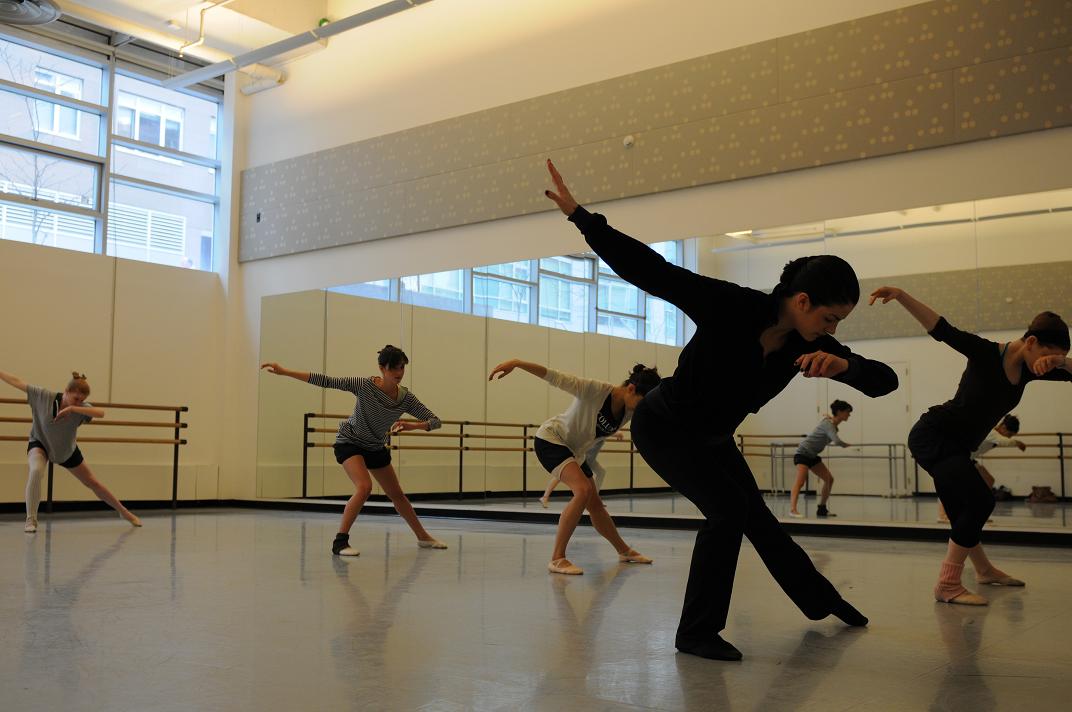
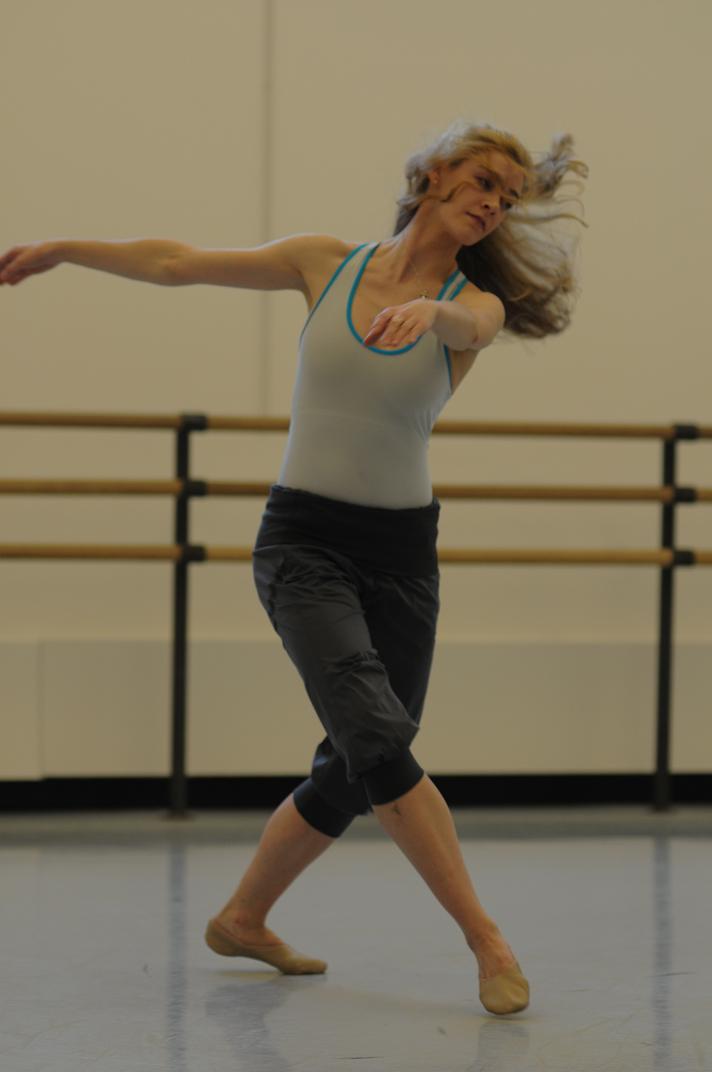
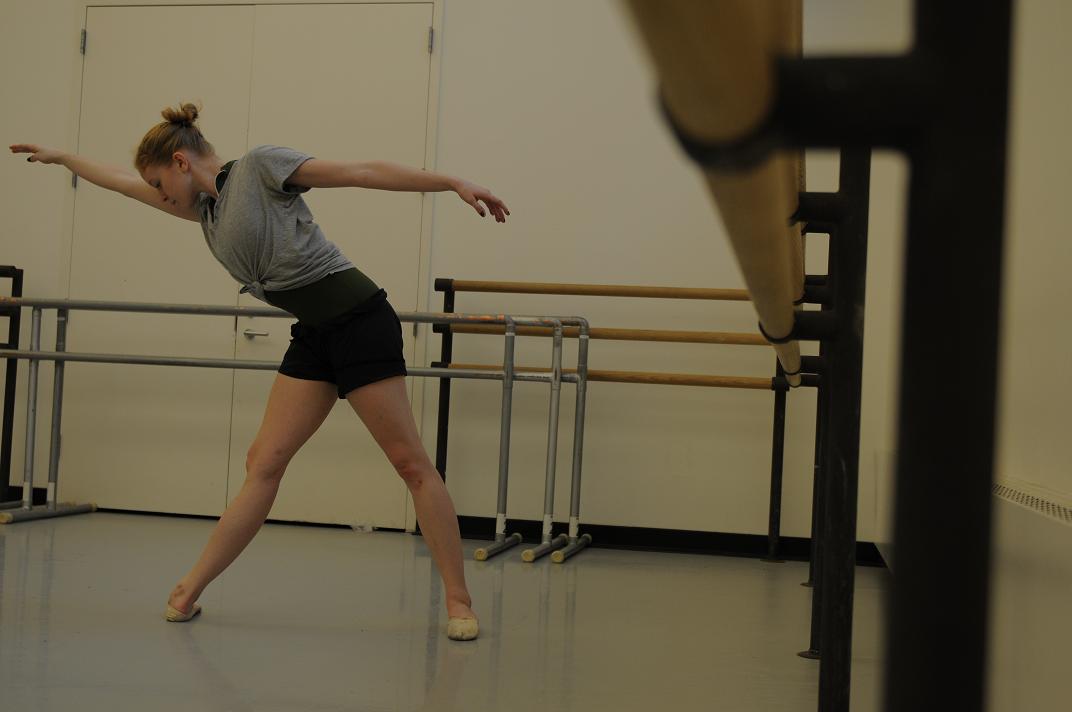
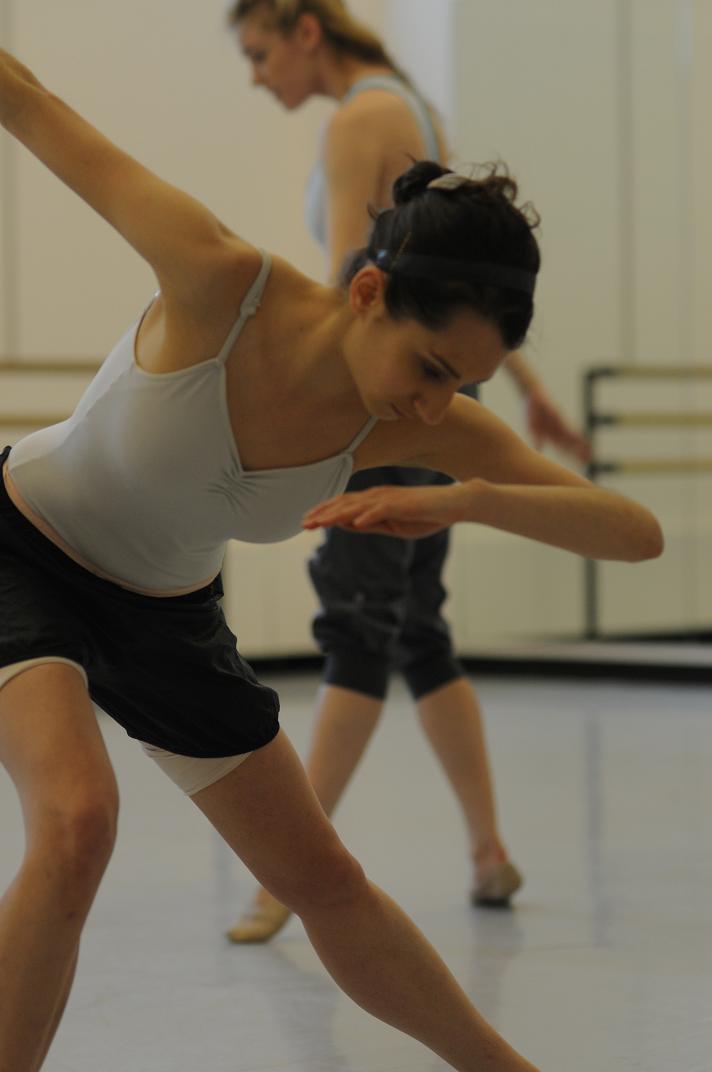
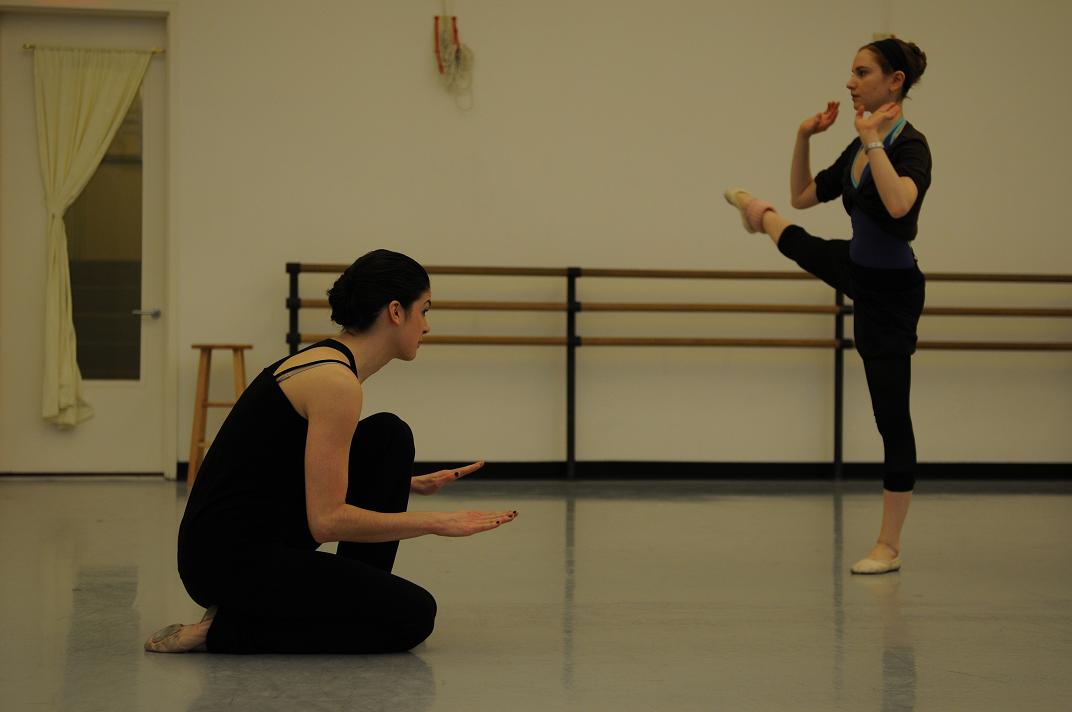
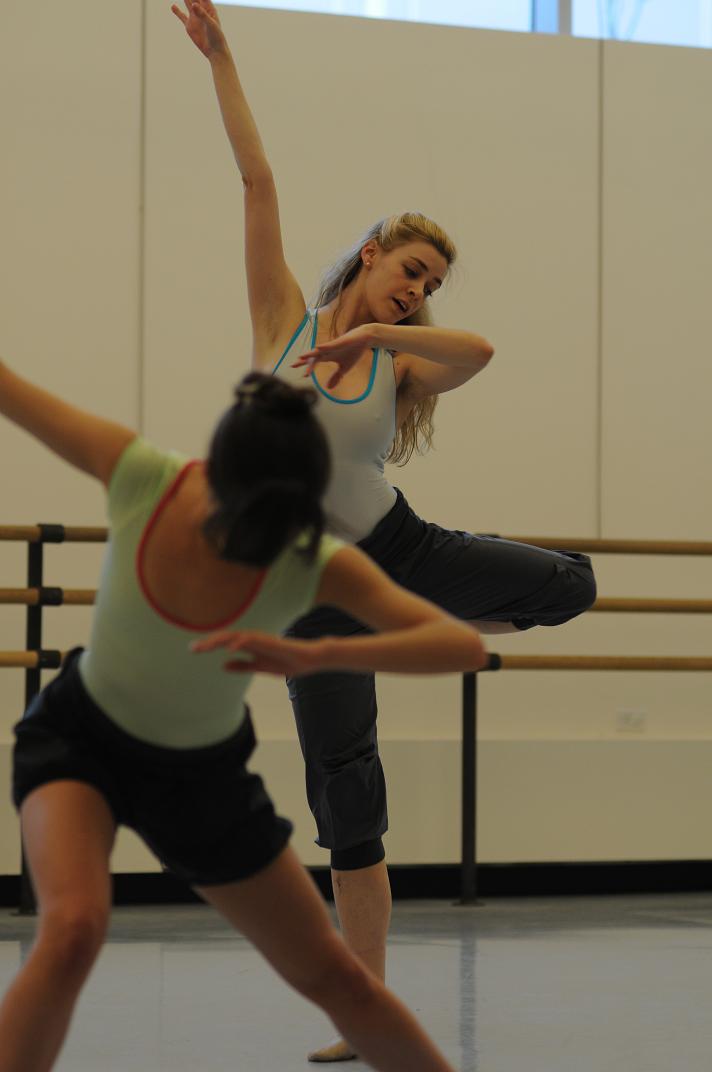
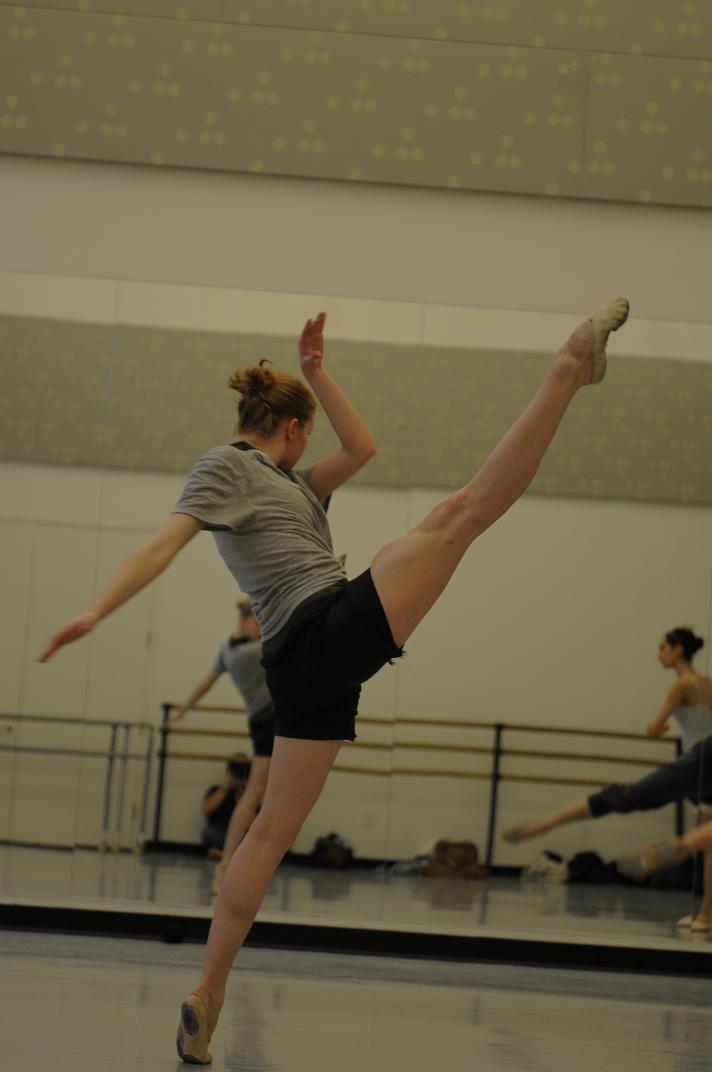
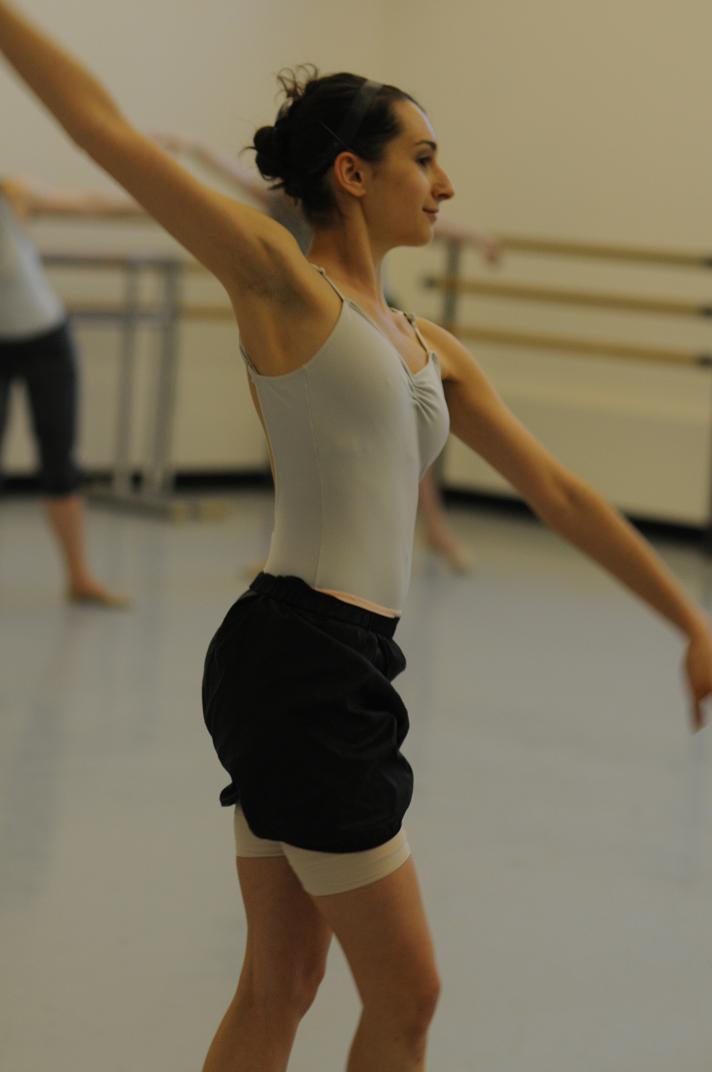
    Sunday March 21, 2010 – Emery LeCrone invited Kokyat and me to a rehearsal for her new work being created for the Columbia Ballet Collaborative‘s upcoming performances at the Miller Theater on April 9th & 10th.

    Copy of 17

    Emery’s work is entitled Five Songs for Piano and is set to selections from Mendelssohn’s Songs Without Words, Opus 19, #2 – 6. Click on the first two images for a closer look.

    Copy of 3

    Victoria North, who is Artistic Director of the Collaborative, dances a soloist role in the new ballet and she is joined by an ensemble of four young Columbia students:

    Copy of 10

    Erin Arbuckle…

    Copy of 9

    …Jen Barrer-Gall…

    Copy of 7

    …Nicole Cerutti…

    Copy of 4

    …and Alexandra Ignatius.

    Copy of E4

    The work has been set and now Emery is polishing up the details and sometimes adding, discarding or altering moves and gestures. The music is sometimes plaintive and sometimes vivacious. The girls worked smoothly together to produce the look Emery wants; counts and spacing were discussed and Victoria’s solo passages were worked into the framework of the quartet.

    Copy of 1

    After Emery broke down and spruced up individual segments, she suggested technical corrections and got the girls thinking about expressive nuances. Then they tried a full run-thru during which the shape of the ballet became clear and the detail work paid off. It’s a really attractive, lyrical piece – I’ve always thought so much of Mendelssohn’s music truly begs to be danced to – and the girls responded well to the score and to Emery’s style of movement.

    Here are more of Kokyat’s images from the rehearsal:

    Copy of 5

    Nicole and Victoria.

    Copy of 12

    Nicole (in front).

    Copy of 13

    Jen.

    Copy of 14

    Erin.

    Copy of 8

    Alexandra.

    Copy of 16

    Performance details:

    Columbia Ballet Collaborative proudly presents an engaging program of contemporary ballet works in its return to Miller Theatre. The program includes choreography by Justin Peck, Emery LeCrone, Monique Meunier, Lauren Birnbaum, Claudia Schreier, and John-Mark Owen. Guest artists include Teresa Reichlen and Justin Peck of the New York City Ballet.
    Tickets are just $12 (or $7 with Columbia University ID). Tickets are available online or at the box office:

    Miller Theatre Box Office
    2960 Broadway (at 116th street)
    212-854-7799