Tag: Saturday September

  • Lydia Johnson Dance @ NYLA ~ 2022

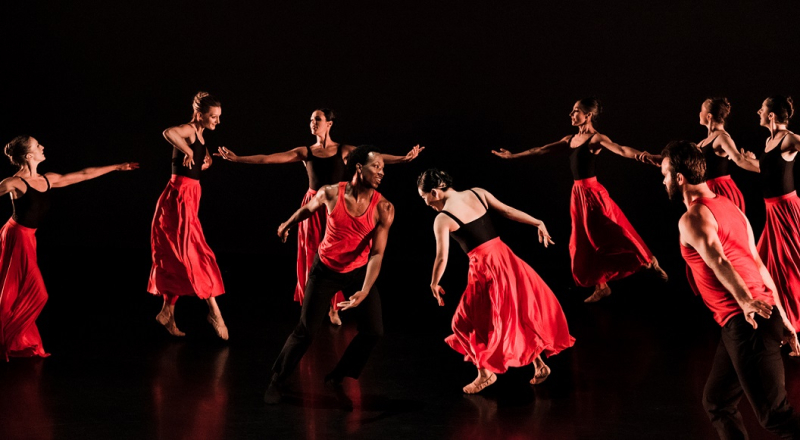
    Ensemble

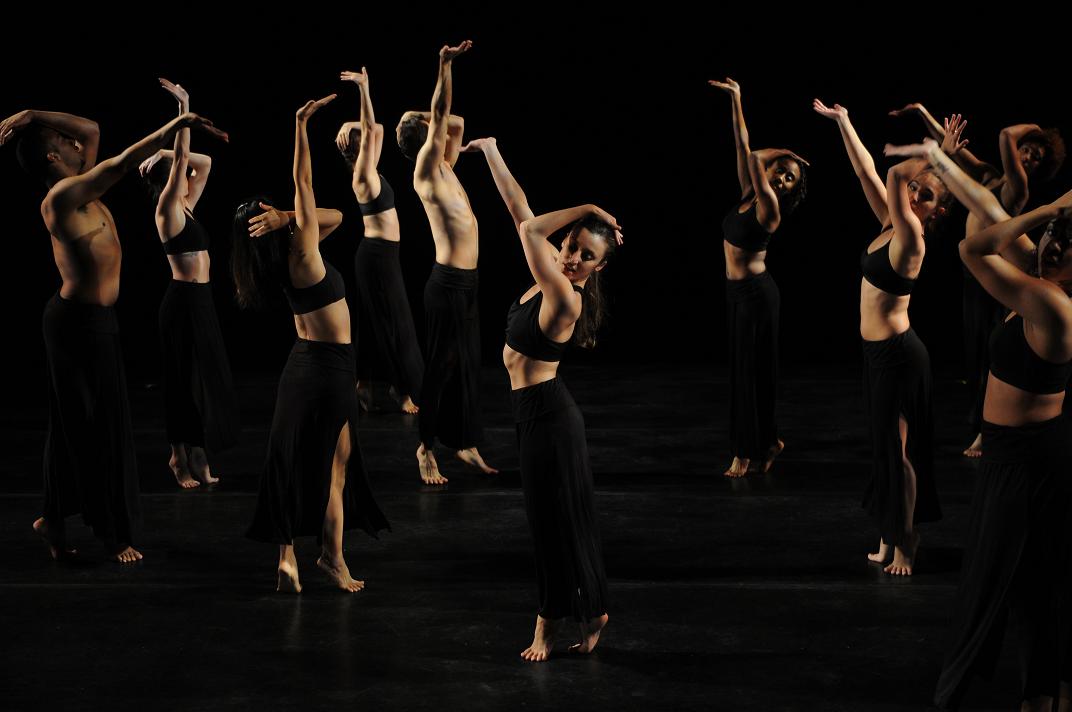
    Above: the dancers of Lydia Johnson Dance in Lydia Johnson’s For Eli; photo by Dmitry Beryzokin

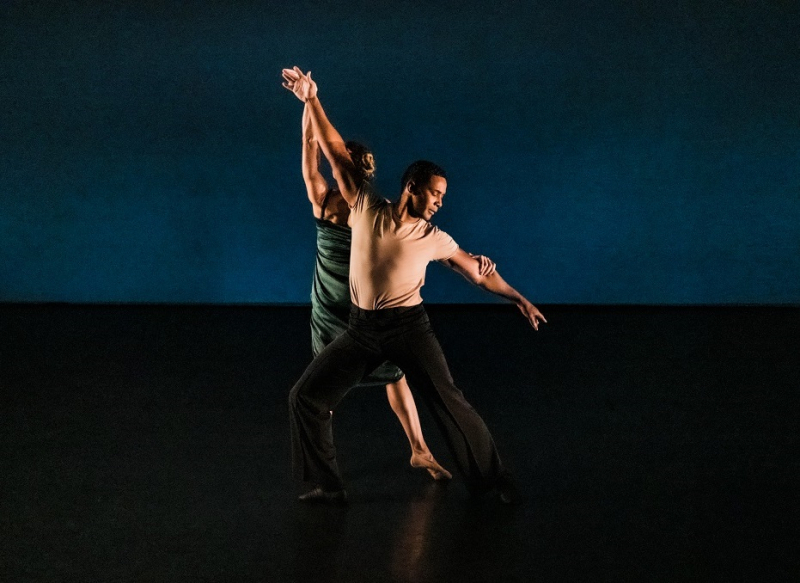
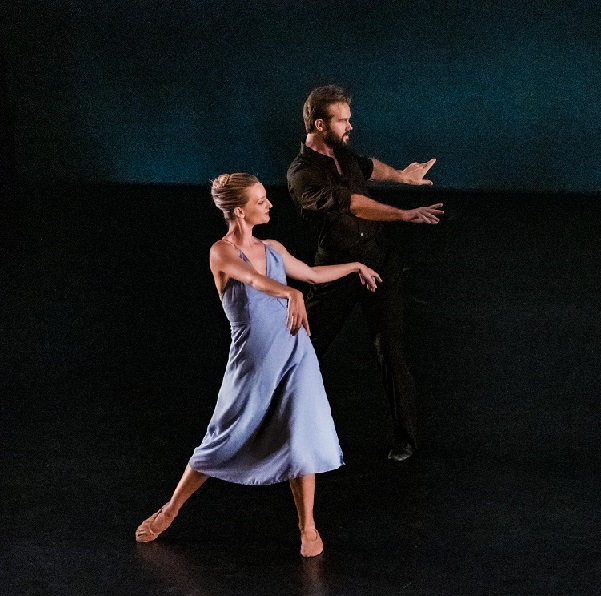
    Saturday September 17th, 2022 – Lydia Johnson Dance performing at New York Live Arts in Chelsea. Having missed two New York seasons due to the ongoing pandemic, the Company took the opportunity to appear at NYLA in September rather than wait until their accustomed performance time in the Spring: the dancers of course were anxious to perform again, and guest artist Craig Hall of New York City Ballet fame was available…so: on with the show!

    Unfortunately, I was feeling sick and could not attend any of the performances; but I did see all four of the works being presented when I dropped in at a studio rehearsal the previous week. My friend Dmitry Beryozkin photographed the dress rehearsal, and sent me some images. So this is not a review, really, but simply a photo gallery. 

    The Company were not idle during the long shutdown: they spent a week at Kaatsbaan, where Lydia worked on new creations, they danced (outdoors) in Connecticut, and they gave a warmly-received studio showing at the Martha Graham Studio Westbeth on May 2022, previewing two new works: Glide Path and For Eli. 

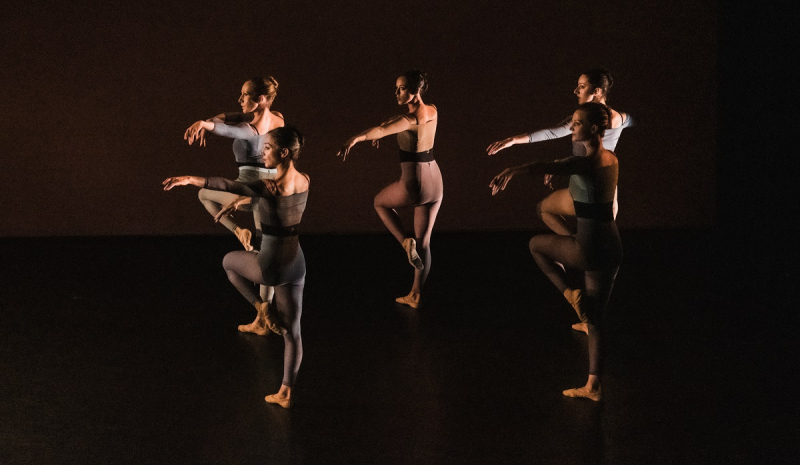
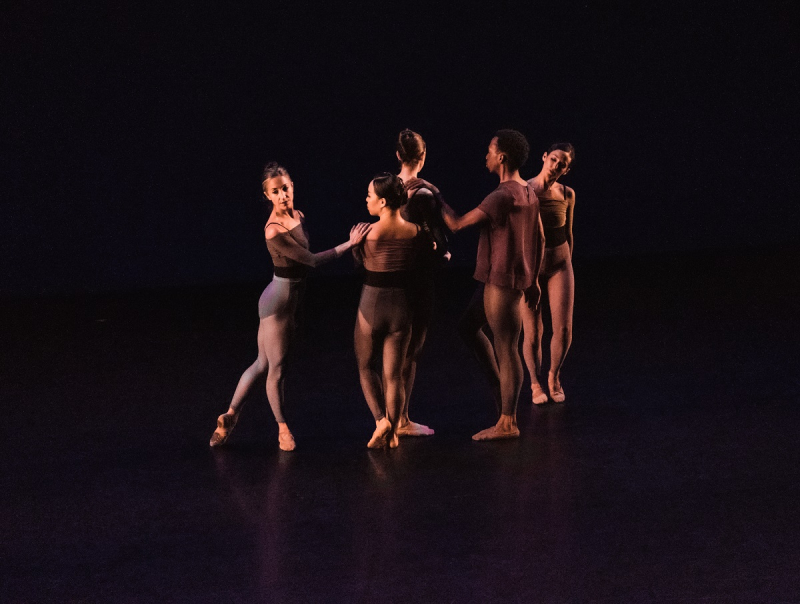
    Glide Path opened tonight’s show: it’s set to music by the contemporary quartet ETHEL. Here are some of Dmitry’s evocative photos from the dress rehearsal of Glide Path:

    DSCF6446

    Minseon Kim and Chazz Fenner-McBride

    DSCF6455

    The ensemble of women

    DSCF6507

    Katie Lohiya

    DSCF6627

    Chazz Fenner-McBride and Willy Laury

    DSCF6648

    Emily Sarkissian, Minseon Kim, Amanda Egan, Michael Miles, and Michelle L. Siegel

    DSCF6709

    Willy Laury and Laura DiOrio

    DSCF6721

    Laura DiOrio and Willy Laury

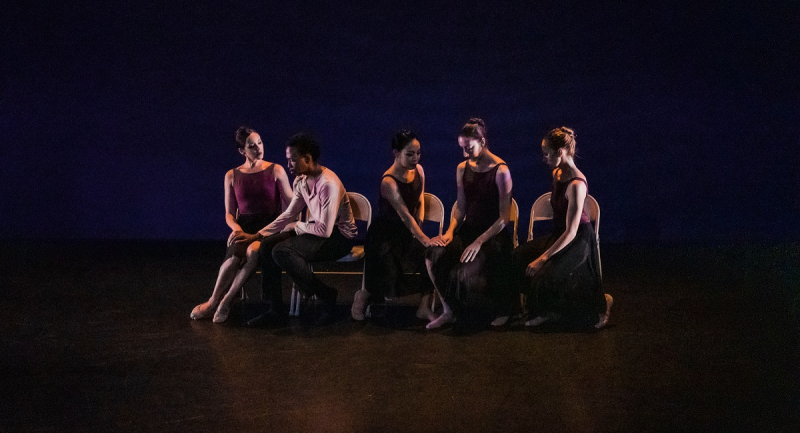
    Next came For Eli, a poignant work commissioned by New Jersey-based artist Laura Lou Levy, in memory of her pianist-son Eli, who loved playing the music of Frédéric Chopin.

    A series of Dmitry Beryozkin’s images from For Eli:
    DSCF6840

    Michelle L. Siegel, Michael Miles, Minseon Kim, Amanda Egan, and Laura DiOrio

    DSCF6939

    Willy Laury, Michael Miles, Katie Lohiya, Amanda Egan, and Minseon Kim

    DSCF6944

    Katie Lohiya

    DSCF7056

    Amanda Egan, Emily Sarkissian

    DSCF7123

    Chazz Fenner-McBride and Willy Laury

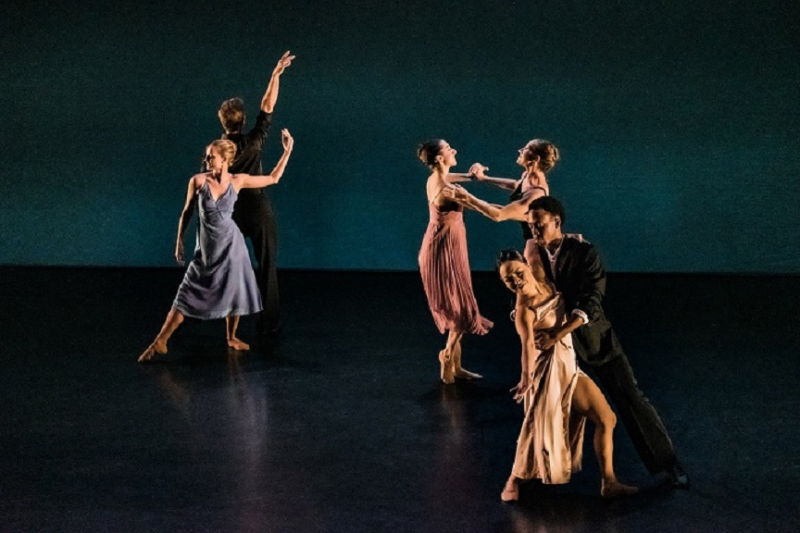
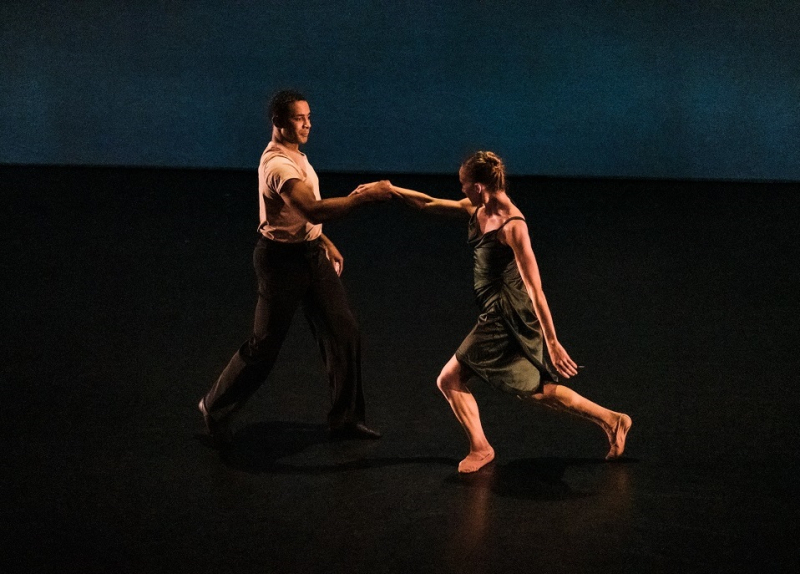
    Following the interval, Craig Hall joined Lydia’s dancers for Time…and again, a new work set to Oscar Peterson recordings of jazz standards. This marked a return engagement for the former New York City Ballet star, whose performances in Lydia’s haunting Night and Dreams in 2019, dancing with Laura DiOrio, were deeply moving. Craig and Laura have reunited for Time…and again, joined by three other couples for a series of duets.

    Photos from this jazz work by Dmitry Beryozkin:

    DSCF7304

    Katie Lohiya and McGee Maddox

    DSCF7305

    Katie & McGee, Amanda & Laura, Minseon & Michael

    DSCF7377

    Laura DiOrio & Craig Hall

    DSCF7425

    Craig Hall & Laura DiOrio

    DSCF7456

    Laura & Craig

    DSCF7549

    Amanda Egan & Chazz Fenner-McBride

    DSCF7617

    Katie Lohiya & McGee Maddox

    DSCF7760

    Crag Hall

    DSCF7920

    Katie Lohiya with Michael, Laura, and Willy

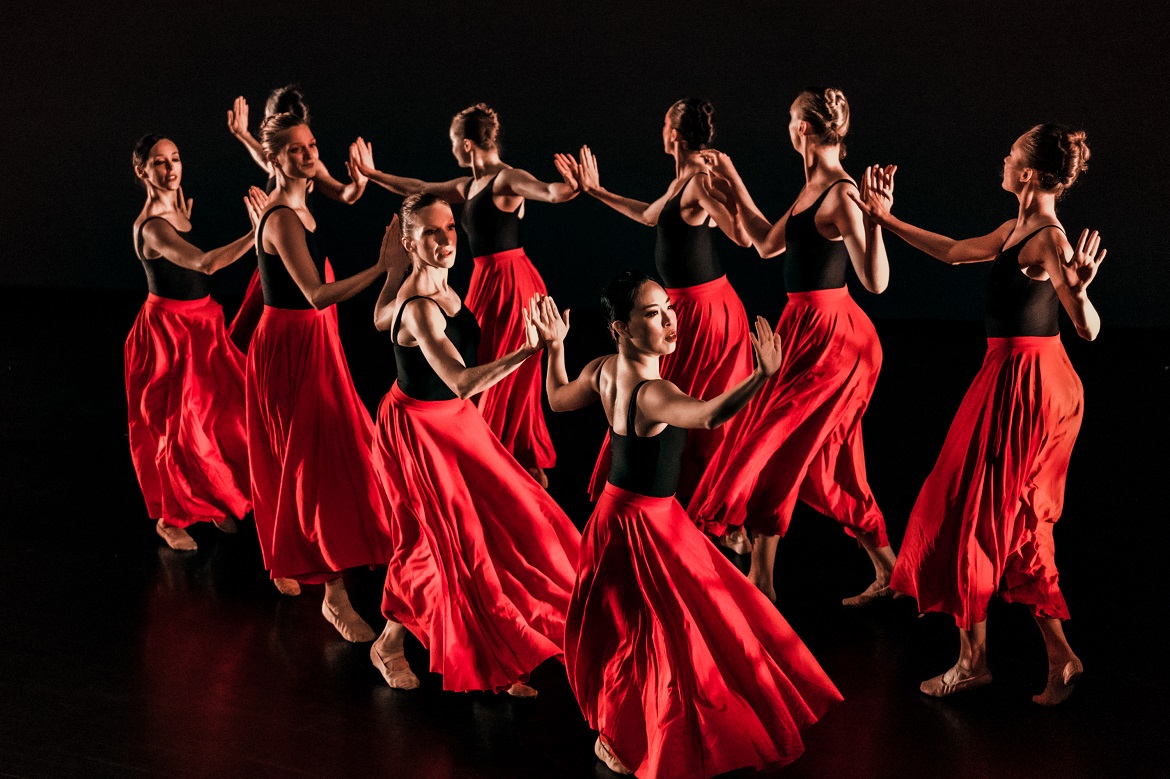
    The music of Henryk Górecki makes a colossal impression in the evening’s concluding work, Undercurrent. Here are some of Dmitry Beryozkin’s pictures from this ballet:

    DSCF8146

    McGee Maddox, Chazz Fenner-McBride, and Michael Miles

    DSCF8361

    Students from Lydia’s school participated in the finale of Undercurrent
    DSCF8379

    The Company women in swirling red skirts

    DSCF8390

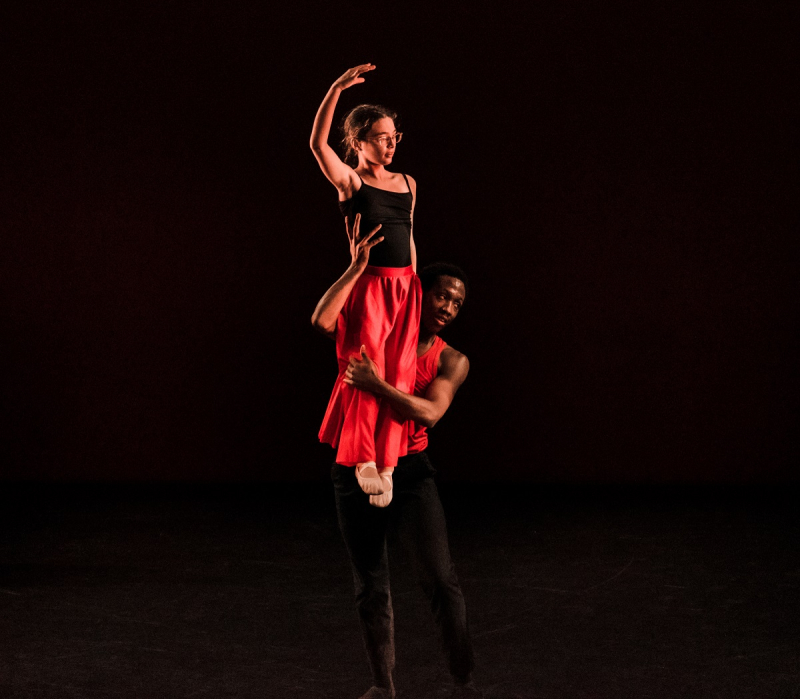
    The full Company onstage

    DSCF8393

    Michael Miles and Minseon Kim, center
    DSCF8434

    Michael Miles and student dancer Stella Weihrauch

    DSCF8446

    DSCF8486

    Laura DiOrio, aloft, as Undercurrent come to an end

    All photos by Dmitry Beryozkin

    ~ Oberon
  • Miro’s New Wolfgang Rihm Ballet

    Mirophotoarnaudfalchier

    Above photo by Arnaud Falchier

    ~ Author: Oberon

    Saturday September 22nd, 2018 – A new ballet choreographed by Miro Magloire to music by Wolfgang Rihm was presented as part of New Chamber Ballet‘s 2018-2019 season opener tonight at City Center Studios. Also on the program were three works from the NCB repertory: AMITY (from 2017, to music of Mozart), MEMORIES (JS Bach), and THE LETTER (a narrative work, set to Haydn).

    Just before heading out to Miro’s, I received some bad news on the family front. I thought briefly of just staying home, but then: what could I do at home but brood helplessly? Better to be where there is music and dancing.

    The music of Bach is ever an antidote to daily cares. Pianist Melody Fader’s playing of the selections from The Well-Tempered Klavier that form the score of Miro’s ballet MEMORIES had both spirit and grace. Four dancers – Elizabeth Brown, Kristine Butler, Amber Neff, and Madeleine Williams – appear in Sarah Thea’s sleek, colour-vision costumes.

    Thumbnail_S_2018_02_16_Magloire_043

    Above: Kristine Butler in MEMORIES, photo by Arnaud Falchier

    In the opening moments of this ballet, varying trios of women seem to shut out the fourth. A solo for Elizabeth Brown highlights this dancer’s beautiful arms and hands. Amber Neff and Kristy Butler have an animated duet that evolves into a slow, stretchy, intimate partnership. Elizabeth and Madeleine dance in sync, then Elizabeth and Amber team up.

    The tall women – Kristy and Madeleine – dance fast, followed by a vivid solo from Amber Neff. In this, Amber’s striking port de bras, and a hint that her ‘character’ might be wounded, give a narrative feeling. A floor-based trio for Amber, Kristy, and Madeleine follows, and then another solo passage from Elizabeth shows her special gift for illuminating the music. The foursome bring the ballet to an allegro finish.

    Earlier this Summer, I spent two afternoons watching and re-watching a DVD of Rihm’s opera OEDIPUS, which I found quite engrossing. Yet even with that preparation, I was totally unprepared for the effect the composer’s Über die Linie VII, as played by Doori Na, would have on me. This made for an unusual experience: the music came to increasingly dominate my mind – to the extent that the dancing seemed more like an accompanying dream.

    The ballet, entitled FEEL YOUR FALL, danced by Amber Neff, Madeleine Williams, and Rachele Perla, is rather floor-oriented, with the girls leaning upon one another in encircling embraces, their bodies and spirits enmeshed and entwined. As they rise and dance, one captivating motif stood out: a repeated gathering gesture from the dark-eyed, lovely Ms. Perla which created for me a link to Isadora’s port de bras language.

    “So enthralled by the music!” I scrawled across my notes. From tonal depths of passion to hair’s-breath pianissimi, Doori gave a truly compelling performance of this long and demanding piece. I’ve come to think of Doori as a violinist who can play anything, and this evening his remarkable playing served as confirmation. He called his preparation of the piece “a journey”, and he repays his listeners by taking us on a journey of our own. Simply extraordinary.

    I did have two thoughts on the overall effect of this ballet: I feel it could benefit from having more dancers involved – if for no other reason than that they could dance to this music, which must be a revelation. And I think darker, more dramatic costumes would be fantastic: this actually could be a proverbial ‘black’ ballet. But these are simply idle thoughts: FEEL YOUR FALL is fine just as it stands.

    It took a few minutes for me to return to Earth from this cosmic experience. As a diversion, Melody Fader played Haydn for THE LETTER, a ballet in which Elizabeth Brown and Traci Finch might be viewed as mistress and maid. It has its comic aspects, but the mystery remains to the end: we never learn the contents of the letter.

    The evening concluded with AMITY, Miro’s graceful, golden ballet set to Mozart’s violin sonata K. 296 which Doori and Melody played with distinction. Mlles. Butler, Finch, Neff, and Williams floated and flitted about the space, dancing Miro’s combinations with joyous abandon, so close we could almost reach out and touch them. AMITY was commissioned by dance-lover Edward Petrou in memory of his wife Rachel; this evening, Miro added a further dedication: to the great Arthur Mitchell, who passed away on September 19th.

    ~ Oberon

  • Miro’s New Wolfgang Rihm Ballet

    Mirophotoarnaudfalchier

    Above photo by Arnaud Falchier

    ~ Author: Oberon

    Saturday September 22nd, 2018 – A new ballet choreographed by Miro Magloire to music by Wolfgang Rihm was presented as part of New Chamber Ballet‘s 2018-2019 season opener tonight at City Center Studios. Also on the program were three works from the NCB repertory: AMITY (from 2017, to music of Mozart), MEMORIES (JS Bach), and THE LETTER (a narrative work, set to Haydn).

    Just before heading out to Miro’s, I received some bad news on the family front. I thought briefly of just staying home, but then: what could I do at home but brood helplessly? Better to be where there is music and dancing.

    The music of Bach is ever an antidote to daily cares. Pianist Melody Fader’s playing of the selections from The Well-Tempered Klavier that form the score of Miro’s ballet MEMORIES had both spirit and grace. Four dancers – Elizabeth Brown, Kristine Butler, Amber Neff, and Madeleine Williams – appear in Sarah Thea’s sleek, colour-vision costumes.

    Thumbnail_S_2018_02_16_Magloire_043

    Above: Kristine Butler in MEMORIES, photo by Arnaud Falchier

    In the opening moments of this ballet, varying trios of women seem to shut out the fourth. A solo for Elizabeth Brown highlights this dancer’s beautiful arms and hands. Amber Neff and Kristy Butler have an animated duet that evolves into a slow, stretchy, intimate partnership. Elizabeth and Madeleine dance in sync, then Elizabeth and Amber team up.

    The tall women – Kristy and Madeleine – dance fast, followed by a vivid solo from Amber Neff. In this, Amber’s striking port de bras, and a hint that her ‘character’ might be wounded, give a narrative feeling. A floor-based trio for Amber, Kristy, and Madeleine follows, and then another solo passage from Elizabeth shows her special gift for illuminating the music. The foursome bring the ballet to an allegro finish.

    Earlier this Summer, I spent two afternoons watching and re-watching a DVD of Rihm’s opera OEDIPUS, which I found quite engrossing. Yet even with that preparation, I was totally unprepared for the effect the composer’s Über die Linie VII, as played by Doori Na, would have on me. This made for an unusual experience: the music came to increasingly dominate my mind – to the extent that the dancing seemed more like an accompanying dream.

    The ballet, entitled FEEL YOUR FALL, danced by Amber Neff, Madeleine Williams, and Rachele Perla, is rather floor-oriented, with the girls leaning upon one another in encircling embraces, their bodies and spirits enmeshed and entwined. As they rise and dance, one captivating motif stood out: a repeated gathering gesture from the dark-eyed, lovely Ms. Perla which created for me a link to Isadora’s port de bras language.

    “So enthralled by the music!” I scrawled across my notes. From tonal depths of passion to hair’s-breath pianissimi, Doori gave a truly compelling performance of this long and demanding piece. I’ve come to think of Doori as a violinist who can play anything, and this evening his remarkable playing served as confirmation. He called his preparation of the piece “a journey”, and he repays his listeners by taking us on a journey of our own. Simply extraordinary.

    I did have two thoughts on the overall effect of this ballet: I feel it could benefit from having more dancers involved – if for no other reason than that they could dance to this music, which must be a revelation. And I think darker, more dramatic costumes would be fantastic: this actually could be a proverbial ‘black’ ballet. But these are simply idle thoughts: FEEL YOUR FALL is fine just as it stands.

    It took a few minutes for me to return to Earth from this cosmic experience. As a diversion, Melody Fader played Haydn for THE LETTER, a ballet in which Elizabeth Brown and Traci Finch might be viewed as mistress and maid. It has its comic aspects, but the mystery remains to the end: we never learn the contents of the letter.

    The evening concluded with AMITY, Miro’s graceful, golden ballet set to Mozart’s violin sonata K. 296 which Doori and Melody played with distinction. Mlles. Butler, Finch, Neff, and Williams floated and flitted about the space, dancing Miro’s combinations with joyous abandon, so close we could almost reach out and touch them. AMITY was commissioned by dance-lover Edward Petrou in memory of his wife Rachel; this evening, Miro added a further dedication: to the great Arthur Mitchell, who passed away on September 19th.

    ~ Oberon

  • The Labèque Sisters|van Zweden|NY Philharmonic

    Labeque-01

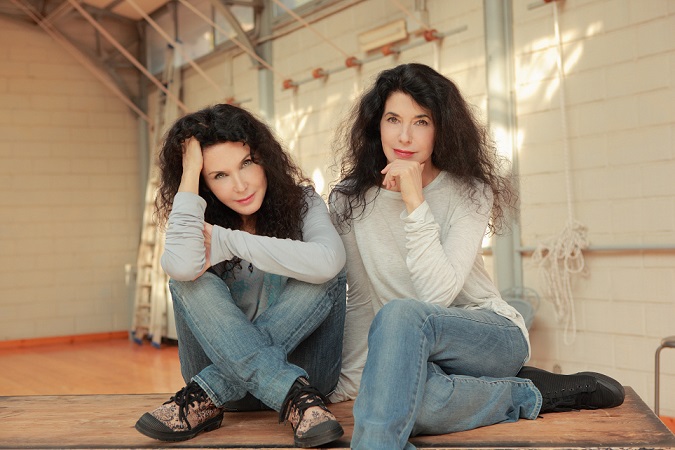
    Above: Katia and Marielle Labèque

    Author: Oberon

    Saturday September 23rd, 2017 – The first thing we noticed upon taking our seats at The New York Philharmonic this evening was that the seating arrangement for the orchestra had changed: risers are now in use. Hopefully this is a permanent enhancement, as it is so pleasing to be able to actually see people like Judith LeClair, Robert Langevin, Anthony McGill, and Liang Wang while they are playing. 

    This week has marked the start of the Jaap van Zweden era at the Philharmonic, even though it’s not until next season that the appendage “Designate” will be dropped from the title “Music Director”.  The orchestra played superbly for the Maestro, and if the vociferous standing ovation that erupted the moment the Mahler 5th ended is any indication, the audience is embracing Mr. van Zweden in no uncertain terms.

    The New York premiere of Philip Glass’s Concerto for Two Pianos and Orchestra opened the program. The Labèque sisters, in fitted black trousers and be-spangled sweaters, were warmly greeted by the crowd; they have been top-rank musicians for a long time and they still look sensationally slender and attractive…and their playing retains its accustomed verve and grace.

    Glass calls for a huge orchestra for this most recent of his creations; no fewer than seven percussionists take part, along with vast troupes of string, wind, and brass players. The concerto is in three movements and sets out from a jazzy opening that develops into a feeling of a giant hurdy-gurdy playing as a kozmic merry-go-round swirls madly. Pulsing waves of sound, in dense textures, wash over us.  From this turbulence, a lovely misterioso motif for the pianos emerges, with a gong struck softly as an undertone.

    The pianists playing in their lower ranges open the second movement, with wooden clappers beating time. The trumpets and flutes join voices; at this point a cellphone went off in the audience but it merged into the musical texture. Rhythmic and textural variety sustain this central movement. The concerto concludes with a sort of adagio of somewhat darkish hues.

    The new concerto is appealing in its way, but I can’t say it’s particularly distinctive or memorable. The pianos do not take the prominence one might expect in a concerto setting, but rather they are simply one constant voice in the overall chorus of instruments, given a few solo/duo passages along the way. I was hoping for an encore from the Labèque sisters, or possibly an appearance by Philip Glass, but after a couple of bows, the intermission commenced.

    Van-zweden-jaap-banner

    Above: Jaap van Zweden

    Mahler’s Fifth Symphony was composed during the summers of 1901 and 1902, during his annual holiday from his job as director of the Vienna Court Opera. It was in Vienna the winter prior to beginning his fifth symphony that Mahler had met Alma Schindler, the beautiful daughter of a famous landscape painter. Mahler proposed to her in the Autumn of 1901, and the symphony, with its journey from mourning thru the dreamworld of the Adagietto to happy triumph seems to mirror the composer’s state of mind with his new-found love.

    The symphony’s brilliant opening trumpet fanfare was excitingly introduced by Christopher Martin. As the first three movements of this very long symphony progressed, the Philharmonic players responded thrillingly to Maestro van Zweden’s intense, almost daemonic vision of the score. In the beloved Adagietto, for strings and harp, the conductor’s gentle pace and his summoning of luminous textures from the musicians created a depth of beauty in which we could – for a few minutes – forget the dark dangers of living in today’s uncertain world. In the grandeur of the symphony’s dazzling Rondo-Finale, the maestro and his musicians swept the celebratory feeling forward, pausing only for a couple of momentary roundabouts, and on to its epic conclusion. The audience went wild.

    ~ Oberon

  • Batiashvili|Tchaikovsky|NY Philharmonic

    Batiashvili - gilbert

    Saturday September 24th, 2016 – Lisa Batiashvili‘s appearances with The New York Philharmonic are always red-letter events; the mutual admiration society that the luminous violinist has formed with Maestro Alan Gilbert invariably results in something very special, and tonight their entente cordiale produced a magnificent rendering of the Tchaikovsky violin concerto.

    When I arrived at Geffen Hall, the atmosphere was already abuzz: “Sold Out” signs were just being posted, and a long line of music-lovers hoping for returns was forming. A packed house always creates its own sense of excitement, and when the ever-elegant Ms. Batiashvili strode onto the stage in a stunning black gown with a bejeweled bodice, the welcome was wonderfully warm. Forty minutes later, the violinist was basking in an epic full-house ovation.

    It was another female violinist, Maud Powell, who helped popularize the Tchaikovsky concerto – a concerto at first thought by some to be unplayable. Ms. Powell played the New York premiere of the piece in 1889 with the New York Symphony (which merged with the Philharmonic in 1928); tonight, Lisa Batiashvili carried the banner to new heights.

    In the concerto’s opening movement, Ms. Batiashvili combined passionate lyricism with subtle turns of phrase; her coloratura was fleet and fluent, her shaping of phrases so innately appealing. When Alan Gilbert’s full orchestra entered for the big tutti passage, visions of the grandeur of the Romanov court were evoked. Ms. Batiashvili’s cadenza sounded a bit modern (“…to old-fashioned ears…”, as Mrs. Manson Mingott would say) and her playing of it most impressive: superb control of dynamics and a stunningly sustained double trill which led to a poignant restoration of melody. After treating us to some sizzling fireworks, the violinist sailed graciously into an affecting theme before ascending to some very delicate high-register passages and thence to the movement’s final flourishes.

    Playing with a melancholy pianissimo, Ms. Batiashvili created a very poetic atmosphere of sadness as the Canzonetta/Andante began. Her tone became incredibly soft, with a lovely sheen to it, while the audience held their collective breath to savour every moment of it.

    There’s a direct path into the concerto’s finale, which commences with an intense invitation to the dance, followed by a playful second theme. Relishing these shifts of mood, Ms. Batiashvili sounded gorgeous in a deep-lyric interlude and brilliant in some decorative filigree that followed. On to the final sprint, where the fiery glow of the violinist’s passionate playing swept all before her, igniting an ovation and delighted cries of “Brava!” as the entire audience rose to acknowledge Ms. Batiashvili’s truly thrilling performance.

    Lisa was called out for a solo bow – huge din of cheers and thunderous applause – then returned again with Maestro Gilbert, who signaled the wind soloists (who had made such distinctive impressions in the final movement) to rise. The mutual affection of violinist and conductor was movingly evidenced as they embraced and walked off together. But still the ovation would not subside, and the radiant soloist re-appeared for another solo bow, with her onstage colleagues joining the tribute and the audience getting gleefully boisterous. 

    During the course of the concerto, the marvelous rapport between Ms. Batiashvili and Maestro Gilbert was as endearing to the eye as their playing to the ear: as the music wove its spell, they seemed engaged in a pas de deux which swayed on the ebb and flow of Tchaikovsky’s balletic score. Bravi!!

    Enjoy a bit of Lisa’s playing here.

  • New Season @ New Chamber Ballet

    11951394_10153559309753571_5653016928534843419_n

    Saturday September 12th, 2015 – After celebrating their tenth anniversary season in 2014-2015, Miro Magloire’s New Chamber Ballet have commenced their second decade of presenting intimate, on-pointe evenings of dance with live music: a formula which maintains NCB‘s unique place in the Gotham dance-sphere and keeps Miro’s loyal followers coming back for more.

    This evening’s programme was all-Magloire in terms of choreography, and mostly ‘modern’ in terms of music: aside from the Mozart setting of the opening ballet, the oldest work played tonight dates from 1952 (Morton Feldman’s Extensions 3), and anything that’s younger than me counts as ‘modern’.

    It is, in fact, Miro’s musical integrity that accounts for my unflagging interest in his work: I can go to his performances knowing I can depend on him to serve up music – whether olde or written last year – that will fascinate. His musicians – Melody Fader (piano) and Doori Na (violin) – seem capable of leaping over whatever technical obstacles might be set in their path – a virtue in itself, since contemporary composers often seem intent on pushing the boundaries of an instrument’s capabilities.

    Likewise, Miro continues to expand the choreographic possibilities of what an all-female troupe of dancers can do. His most recent works – three of them seen tonight – take same-sex ballet partnering into uncharted territory.

    Miro is comfortable with both narrative and abstract works. The evening’s opener – IN THE PARLOUR – is set to Mozart’s violin sonata in E-minor K. 304, which was handsomely played by Melody Fader and Doori Na. In this domestic drama, three women express shifts in friendships and matters of trust. A beautiful solo for Elizabeth Brown begins haltingly, in silence; soon she is wafting serenely about the space. She pauses to write upon the wall; in this she is thwarted by a destructive Sarah Atkins. Meanwhile, a third woman – Holly Curran – seems unsure of whose side she’s on. Holly’s crisis is resolved as she allies with sneaky Sarah. The three girls danced flawlessly and sustained the mysterious atmosphere of the ballet.

    Tristan Murail’s score for LA MANDRAGORE veers from turbulence to high, shining motifs, and then to a misterioso atmosphere; Melody Fader at the piano showed a sure feel for the moods of the piece. The two lithe and wonderfully supple dancers – Traci Finch and Amber Neff – moved thru the enmeshed, intimate partnering passages with physical strength and a sense of mutual assurance that was truly impressive. 

    6a00d8341c4e3853ef0177428f3d23970d-800wi

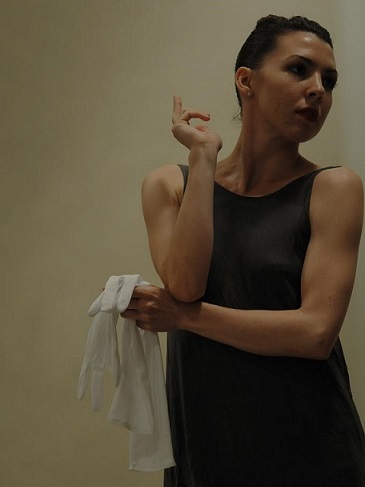
    As Sarah Atkins (above, photo by Kokyat) strolls onto the stage wearing long white evening gloves and smoking a cigarette, a vision of Nijinska’s LES BICHES pops into mind; but Miro’s ballet GLOVE is in fact more intriguing than Nijinsk’a old Poulenc ballet. Melody Fader’s expert playing of Feldman’s Extensions 3 sets the scene for this small jewel of a work in which Holly Curran and Elizabeth Brown become increasingly desirous of obtaining Sarah’s gloves. There are comings and goings – the dancers periodically hide behind the piano, concocting their future moves – and the ballet ends with a mysterious seizure.

    I had seen a rehearsal of parts of Miro’s newest creation GRAVITY; both at the rehearsal and at this evening’s performance, I was captivated by Doori Na’s masterful playing of the score for this ballet: numbers 3 and 5 from Friedrich Cerha’s Six Pieces for Solo Violin. In introducing this premiere tonight, Miro’s enthusiasm for Cerha’s music makes me quite certain we will see the remaining movements of the score being danced to in the near future.

    Tonight’s enticing presentation of the work as it currently stands was delicious both musically and in the dancing: Elizabeth Brown, Traci Finch, and New Chamber Ballet debutante Cassidy Hall formed a strong sisterhood and smoothly wove their way thru the many demanding elements of Miro’s choreography. The work is sculptural, with partnering motifs that can be fluid one moment and angular the next. Among the many felicitous moments were…

    L1610535

    …a rhapsodic wingspan gesture from Elizabeth Brown, supported by Traci…

    L1610643

    …and a lovely slow attitude promenade by Traci and Cassidy, as seen in these rehearsal images.

    GRAVITY has the feel of an impending Magloire masterpiece; let’s see where the Cerha takes the choreographer next.

    L1570060

    Above: rehearsing FRICTION: Amber Neff and Holly Curran

    Doori Na and his violin propelled the evening to a fine finish in Richard Carrick’s In Flow, as set by Miro for his ballet FRICTION. Doori took the music from its hesitant opening thru a rather boozy passage of seasick pitch and on to some skittering and stuttering motifs to a big, passionate rhythm. For the dancers, again the intimacy is palpable; Amber and Holly are in full flourish for the demanding partnering and the dance well-captures the textures of the music. Holly’s black tights and toe shoes were an added visual enticement.

    After ten years of reporting on the Manhattan dance scene, there are times when I think I’ve seen all there is to see. Yet a handful of choreographers and companies continue to hold my attention, and Miro and his New Chamber Ballet are among their small number…as much for the music as for the dancing. And that’s exactly how it should be.

  • Unsuk Chin/Mahler @ The NY Phil

    Kari Kriikku

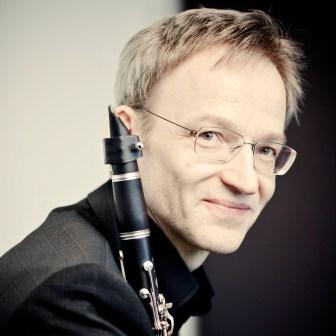
    Above: clarinet soloist Kari Kriikku

    Saturday September 27th, 2014 – The first subscription concert of the New York Philharmonic‘s 2014-2015 season featured a new clarinet concerto by the Korean composer Unsuk Chin and Mahler’s symphony #1. The Mahler evoked one of the most vociferous audience responses I’ve experienced since I started going to the Philharmonic frequently.

    A pre-concert mini-lecture-demo by Maestro Gilbert – with Mr. Kriikku giving some examples of the techniques called for by Unsuk Chin in the clarinet concerto – was somewhat spoilt by the distraction of late seating. Once the concerto proper started, all was well and the audience showed great attentiveness as this new sonic experience unfolded.

    Mr. Kriikku’s mastery of his instrument was beyond impressive; the clarinet truly became an extension of the artist. He showed an ability to sustain two tones at the same time, to make the ebony resonate at the faintest of volume levels, to wheeze and to squwak, and even to sustain long phrases seemingly without drawing breath.

    Ms. Chin draws from aspects of Asian folk music, overlain by textures of sound that are beyond contemporary. These layers are dense but drawn out by the Philharmonic musicians with sterling clarity. A vast array of percussion instruments are called into play, including a wine glass, a washboard, and two fishing reels. The soundscape veers from eerie near-silence to outbursts of intense shreiking from Mr. Kriikku.

    Overall, I felt the work (which seemed a bit too long at times) was more impressive than actually pleasing or meaningful. Surely it affords the player an opportunity to extend his range far beyond what might be considered to be in the realm of possibility. But, like much new music these days, neither the heart nor the soul were engaged. 

    The Mahler 1st, which premiered in Budapest in 1889, is classically referred to as “the Titan”; and while a programme note admonishes the listener from attaching that label to it, surely the final movement is a titanic experience.

    Back in 1889, the symphony had five movements instead of the four which we experience today. The composer deleted the original second movement – Blumine (‘Bouquet of Flowers’) – after the premiere, leaving us with the first movement in which Mahler represents “the waking of Nature after a long Winter” followed by a Scherzo (“The wind in my sails”). In the slow movement that comes next, solo double-bass sets forth the theme based on the French nursery song ‘Frère Jacques‘ (hearing it caused a rustle of appreciation among the audience): the movement depicts “The Hunter’s Funeral” with its vision of a hunter’s last cortege, the coffin drawn by animals. And at last we reach the epic graudeur of the finale which Mahler called “Dall’Inferno” – From Hell”: an outpouring of despair coming from a deeply wounded heart.

    These programmatic references in the end seem only to reflect Mahler’s desire to connect with the more conservative elements of his audience. The symphony is pure music, from start to finish, whatever allusions one might draw on hearing it. The orchestra gave a huge, glistening performance of the work, with the final movement being particularly magnificent. As the final chord resounded, the audience rose their feet in unison and commenced a long, loud ovation which Maestro Gilbert and the players truly deserved.

  • CONTRASTS at Riverside Church

    MM_TONY_M-2

    Above: Morales Dance rehearsal photo by Matt Murphy. The dancers are Leonel Linares and Nicole Corea.

    Saturday September 22, 2012 – Tony Morales of Morales Dance is the driving force behind CONTRASTS, a programme of works by four choreographers presented at The Theater at Riverside Church. Tony’s guest choreographers are Lydia Johnson (Artistic
    Director of Lydia Johnson Dance), Yesid Lopez (Director of DeMa Dance
    Co
    ) and Henning Rübsam (Artistic Director of SENSEDANCE).

    I’d been looking forward to this alignment of dance and dancers for some time, and the evening came off very well indeed, with major kudos to Mike Riggs for his lighting designs that produced some striking images in the varied works.

    Morales Dance presented three works on the programme, opening with the Spring-like freshness of SCENES. To music of Benedetto Marcello, the dancers are first seen kneeling in a circle in a pool of light. The opening sequence has a ritualistic feel which envolves into an airy and pleasing series of dances: an allegro duet for Nicole Corea (a guest dancer from Lar Lubovitch Dance Company) and MarieLorene Fichaux, a pas de trois for Alison Cook Beatty, Jerome Stigler and Leonel Linares. Kate Loh makes a lovely impression in her dancing here (and later, in AMOR BRUTAL), A solo for Alison Cook Beatty, danced in silence, forms a bridge to the concluding passages danced to Chopin. As the work moves to its finale, the dancers return to their opening circle of light.

    Later in the evening we saw Tony Morales’ AMOR BRUTAL, a narrative work that I’ve watched being developed in the studio over time. In August, Matt Murphy produced some beautiful images at a rehearsal of the piece. Soft billows of smoke waft across the stage as singer Mary Ann Stewart and pianist Sandro Russo (performing live onstage) embark on the Manuel de Falla songs which provide the setting for this domestic drama. Nicole Corea and Leonel Linares have reached the point of no return in their marital conflict and now it’s a question of where the couple’s three daughters will set their allegiance. Nicole, dancing with her ever-radiant personal commitment, naturally assumes that her girls will be in her camp. But it’s the n’er-do-well father, danced with easy charm by Leonel, who has his daughters in the palm of his hand. The work ends with Nicole completely marginalized; the sisters (Kate Loh, Alison Cook Beatty, MarieLorene Fichaux) turn their backs on her and her husband slips out of the picture entirely. Adding a last personal touch to this work, the concluding song Amor Brutal is performed on a recording by Tony Morales’ father, who passed away earlier this year.

    Three duets comprise the final Morales work on the programme: PIANO PIECES: the first danced by Kate Loh and Alison Cook Beatty to a waltz tune, the second performed by MarieLorene Fichaux and Jerome Stigler to Scriabin, and the third danced by Nicole Corea and Leonel Linares to Scarlatti.

    The opening image of Lydia Johnson’s CHANGE OF HEART, enhanced by Mike Riggs’ lighting, caused me to gasp for breath momentarily: this work-  which I have watched being created over the past several months – and these dancers have a special significance to me. Some people close to me know of my unhappy Summer and of the rift between me and my cherished friend who should have been with me tonight watching Lydia’s work. However, sometimes the very things that remind us of past happiness also reassure us as we try to move on. Between the Bach music and the sheer expressive beauty of Lydia’s troupe of dancers, the experience was uplifting.

    For musicality and fine structuring, few people currently choreographing in the New York dance scene can compare with Lydia Johnson. There is thought, passion and tenderness in her work, and a depth of musical resonance that is very satisfying to behold. Yet for all that, in the end it’s the dancers whose ‘speaking’ of a choreographer’s unique dialect will make a dancework meaningful or not.

    This evening Lydia’s ensemble was led by two of her core dancers: Jessica Sand and Laura DiOrio. Having watched these two young women countless times in the studio or in performance, it is still and always a moving experience to see them rendering Lydia’s choreography with such clarity and grace. Reed Luplau (guest dancer from Lar Lubovitch Dance Company) created a remarkable impression in Lydia’s SUMMER HOUSE earlier this year; he wears Lydia’s style like a second skin. Katie Martin, Natalia Wodnicka and Min Seon Kim have been dancing for Lydia for the past few months and are blending well into the ensemble, each with her own distinctive signature. The newest comers to Lydia’s work – Lauren Perry, Christopher Bloom and Eric Williams – already look more than at home here, and Ms. Perry with her fresh face and feel put me in mind of a favorite dancer from the past: Kate Johnson of the Paul Taylor Dance Company.

    402235_3930921345502_183455664_n

    Rehearsal image: Laura DiOrio, Eric Williams, Jessica Sand.

    And so this particular collective of dancers worked beautifully together to develop the flowing patterns of CHANGE OF HEART: solo moments, duets and ensembles sweep graciously by on the Bach score. A pas de trois for Laura, Reed and Eric, a duet for Jessica and Reed, a men’s trio…these are some of the moments that stood out. But it’s not really a work of highlights but rather a tapestry in which each thread seems richly colourful and alive.

    The evening was entitled CONTRASTS, and so something really dark and wild was bound to crop up along the way. Henning Rubsam’s HALF-LIFE is set to a thunderously propulsive score by Laibach. With the ever-vibrant Temple Kemezis and Jacqueline Stewart on pointe, this non-stop dark revel of contemporary ballet style came lke a jolt. Paul Oisin Monaghan, one of Gotham’s most intriguing dancers, always captures the eye. And the astounding power and presence of Max van der Sterre was electrifying. Musically disturbing and on-the-edge in its movement, HALF-LIFE has a life of its own. Mike Riggs’ lighting made a big impression here.

    The one choreographer with whose work I was unfamiliar, Yesid Lopez, offered a really appealing work for four girls entitled STRINGS. The costumes – corset-like bodices and gauzy soft-hued pantalooons – were especially lovely and the music (Chopin, Nyman, Dvorak) was matched by the atmospheric glow of Mike Riggs’ lighting. Jessica Black was featured in a solo passage, and the work made me want to see more of Mr. Lopez’s choreography.

  • BalaSole @ Ailey Citigroup Theater

    Copy of 2

    Saturday September 24, 2011 – Earlier this year we discovered BalaSole, the brainchild of dancer/choreographer Roberto Villanueva. In a series of concerts, Roberto brings together dance artists of varied backgrounds and provides them with a platform to show their work both as creators and dancers. For his July 2011 presentation, Roberto had assembled a very interesting mix of dancers and styles; for tonight’s showing, entitled SPECTRE, an equally fine line-up came together in a very appealing programme. A large and attentive audience at Ailey Citigroup Theater clearly enjoyed this well-paced and finely lit production.

    Click on the images to enhance.

    Copy of 1

    The participating dancers in BalaSole’s concerts win their spots in the programme thru an audition process. Entrants come from all over and they spend a week here in NYC preparing for the performances. Each BalaSole production opens and closes with an ensemble piece put together by the dancers and supervised by Roberto Villanueva. The creation of these two pieces turns a group of solo artists into a collective.

    Copy of 4

    Roberto chose a setting of the familar ‘White Swan’ theme from the Tchaikovsky masterpiece for the opening and closing dances tonight; at first rendered on the celesta, the music then goes into a rather grandiose disco beat: off-putting? Not in the least…actually I thought it was a lot of fun. It gave us an opportunity to see all the dancers – clad in long black skirts – before the solo presentations started. In Kokyat’s photo above: Gierre Godley and Ellena Takos.

    Copy of 7

    Following a brief pause so she could slip into costume, Lauren Putty (above) opened the procession of soloists with a space-filling solo set to a song by Sade. As with almost all the dancers, Ms. Putty’s solo was self-choreographed. Laced with vivid leaps and showing the dancer’s strong dramatic presence, this piece – entitled Reflections – got the evening off to a fine start.

    Copy of 10

    Her tutu-like skirt tied in the back with a large black bow gave Ellena Takos (above) a Degas feeling but her style was contemporary, well-suited to her choice of an Alicia Keys song. I Love You, I Love You Not shows a woman in a romantic quandry, sometimes collapsing to the stage like a crushed marionette.

    Copy of 17

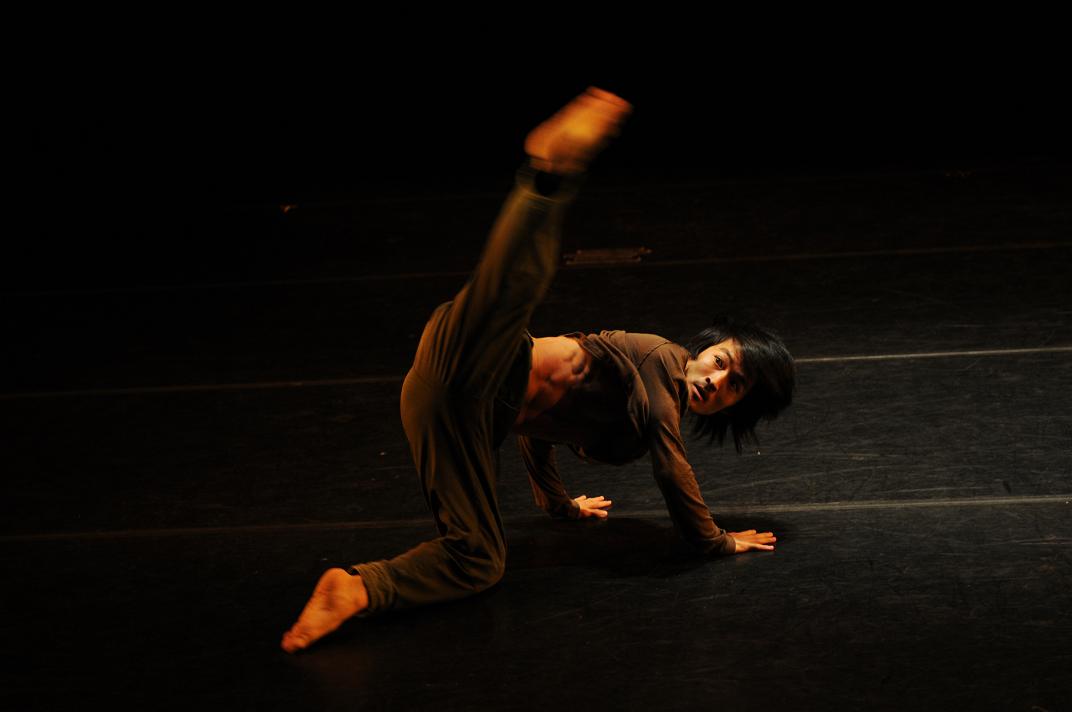
    Daisuke Omiya from Japan has a long resume of experience as a tap dancer but now he’s working on developing a broader style of modern dance. Using an industrial-sounding track from Aphex Twin, the slender danseur moved fluently – but with an edge – in the gritty solo Life Sound which made me think at times of Marco Goecke’s contemporary classic Mopey.

    Copy of 20

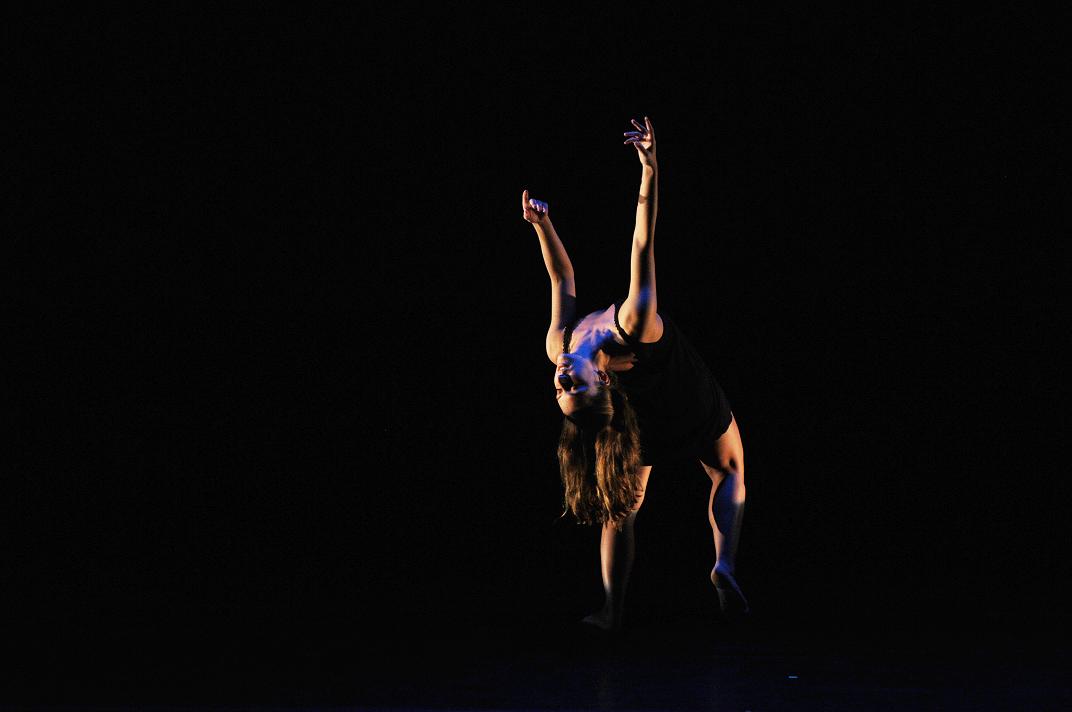
    Beautiful and exotic, with luminous eyes, Jasmine Domfort (above) rose from a pool of light to dance Counter Existence, set to Arvo Part’s quietly radiant Spiegel im Spiegel played by Angele Dubeau and La Pieta. Using her hands and even her hair as expressive tools, she created a highly personal atmosphere.

    Copy of 21

    Allison Kimmel (above) began her solo Pursuit with a slow backbend. Dancing to music by Max Richter (excellent choice: a first-rate exponent of the contemporary-classic genre), Ms. Kimmel let the music lead her from pensive to animated as she seemed on a quest for someone or something that eluded her. We saw Allison earlier this year at TAKE Dance‘s summer intensive; we love seeing dancers we’ve seen before…

    Copy of 26

    …which was another reason we were so entranced by Gierre Godley’s performance of Kept? We first saw Gierre (above) in November 2010 dancing with Eryc Taylor Dance. For Kept?, Gierre also used a Max Richter score and he danced it with an intense air of mystery. Drawing his shirt up over his face, a shroud-like image gave the work an ominous feeling; throughout, Gierre’s hands were spell-binding.

    Copy of 29

    Following a brief intermission, Cailin Murtha’s solo Corner of Your Heart had a lamenting quality. Using music of Kurt Bestor and Sam Carlson, the dancer in a simple black dress conveyed an aura of regret and resignation.

    Copy of 31

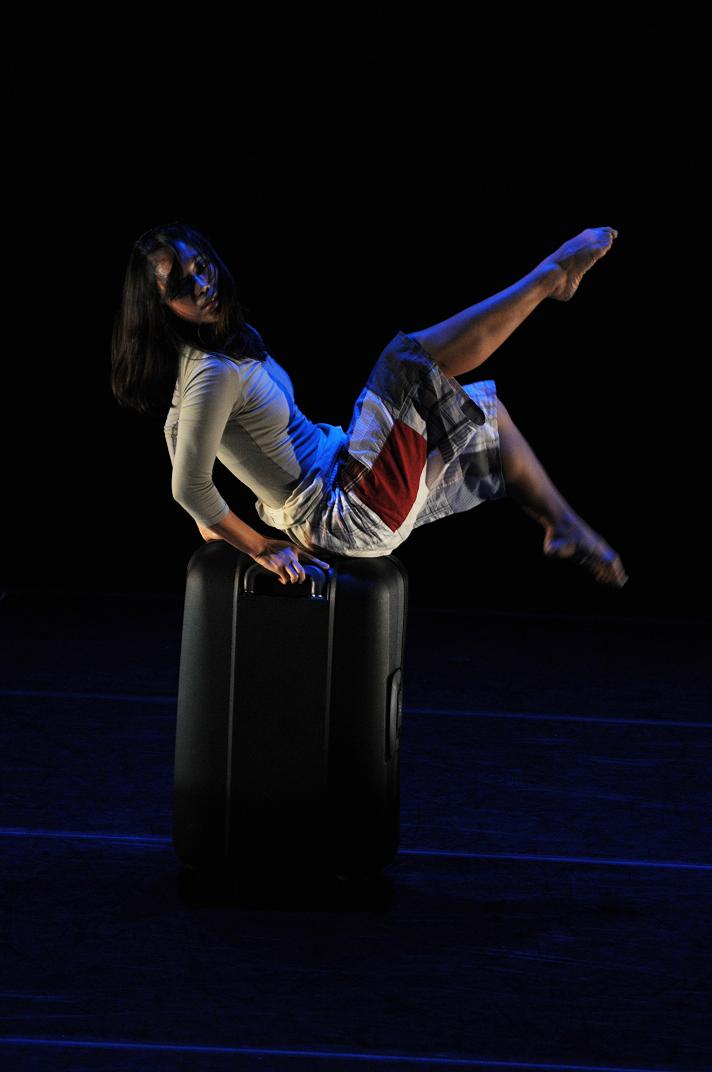
    Ren Xin Lee (above), dancing an excerpt from Somewhere…We Hear choreographed by Kuik Swee Boon to music of David Darling, conveyed the anxious vulnerability of a traveler in a strange land. With her heavy suitcase in tow, the dancer reminded us of the uncertainty of immigrants searching for a new life.

    Copy of 36

    With his slender form clad in ripped blue-jeans, Peter Mills looked very much an au courant young man, but his solo actually had a timeless quality, greatly enhanced by the music of Dario Marianelli in which instruments from cello to musette were heard. Moving into an agitated state, the dancer’s trembling form confronted the audience directly as From Behind ended.

    Copy of 39

    M.E.A.N. is a solo by Courtney J Cook in which the dancer, in dark trousers and a white shirt, fidgets nervously and paces about restlessly as she deals with a romantic breakdown. “It’s over,” says singer Jill Scott succintly. As evening falls, Ms. Cook lights up another cigarette to sooth her nerves.

    Copy of 46

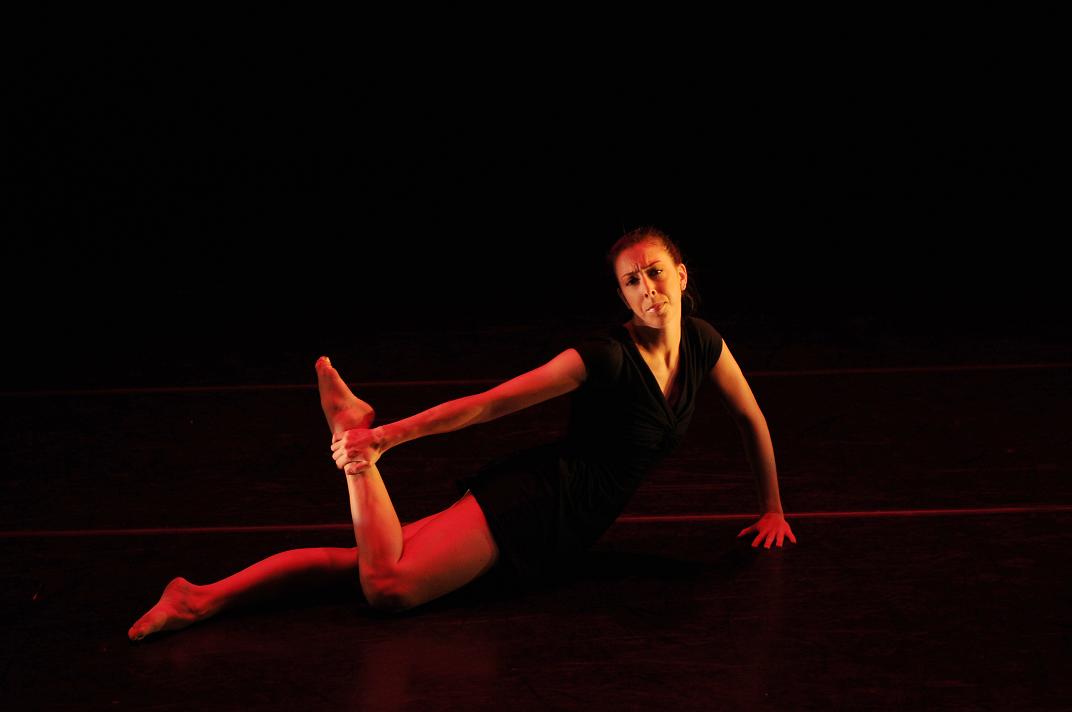
    Julie Halpin’s solo Alone begins with the dancer seated in a straight-back chair and wrapped in a red scarf. Music by Fire Horse propels the dancer into activity but she eventually resigns herself to her lonely vigil. For what or whom is she waiting?

    Copy of 48

    Percussive fanfares precede a ritualistic yet lyrical solo danced by Roberto Villanueva in white briefs and a long sheer white veil. Set surprisingly to Chopin, this work (entitled Be) evoked images of some of Isadora Duncan’s mythic solos. Roberto danced this in a state of serene contemplation…

    Copy of 50

    …kneeling silently as the drums marked the end of the rite.

    Copy of 52

    All the dancers returned for a Tchaikovsky finale: a fantasy of black swans who have wandered far from the lake.

    Copy of 51

    Final curtain call.

    All images by Kokyat. Photos of the individual dancers here.