Tag: Scanned Section

  • TRISTAN UND ISOLDE: Jones & Kollo

    Scanned Section 31-1

    ~ Author: Oberon

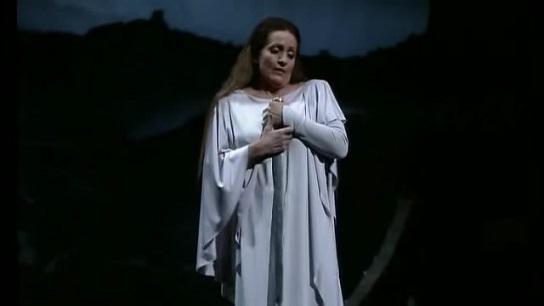
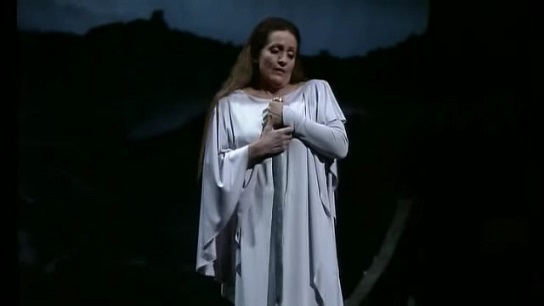
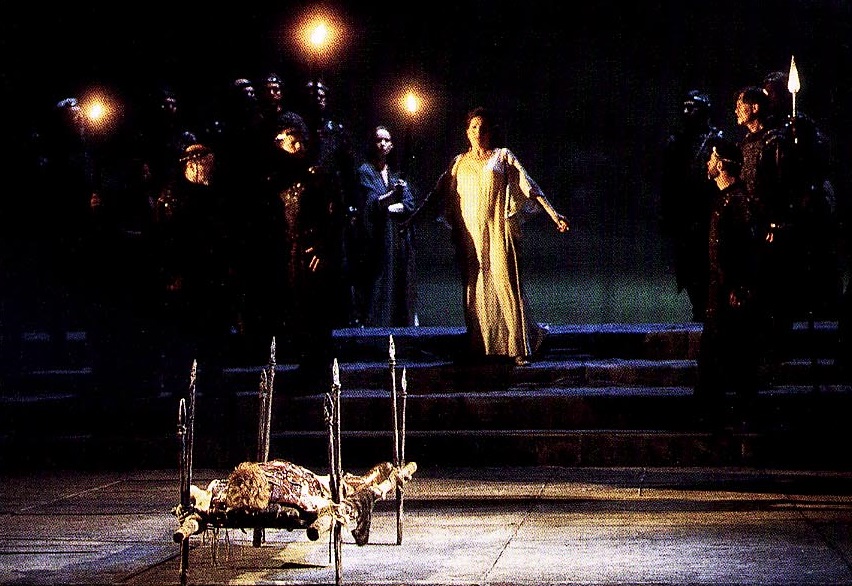
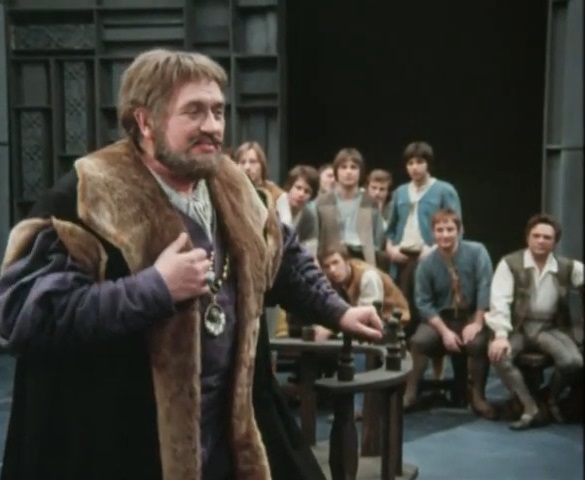
    Recalling the day I spotted this DVD of TRISTAN UND ISOLDE on the shelf at the Library of the Performing Arts. The production is from the Deutsche Oper Berlin, filmed on tour at Tokyo in 1993. It stars Dame Gwyneth Jones and Rene Kollo (photo above), two veteran Wagner specialists who were in their mid-50s at the time. During a few days of break from live opera and symphonic performances, I watched this TRISTAN one act at a time on three successive days of bitter cold weather. Despite flaws, I found it to be a moving experience.

    TRISTAN is an opera that took me a long time to embrace. Following my first live performance of it – the thrilling prima of a new production at The Met in 1973 with Birgit Nilsson and Jess Thomas in the name roles – I still found myself shying away from repeated viewings. It was the Dieter Dorn/Jürgen Rose Met production that finally brought me under the spell of this great opera; unfortunately, that gorgeous setting has since been discarded for a tedious updated production – set on a 20th-century battle cruiser – that makes little dramatic sense. Who knows when I’ll see TRISTAN in the theatre again?

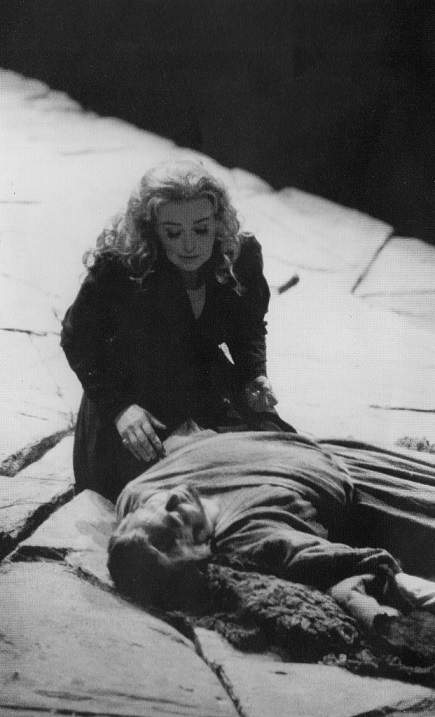
    On the DVD, I found the Deutsche Oper’s simple and spare Götz Friedrich production serviceable – though lacking in poetry – in the first two acts. There’s a lot of standing about, but perhaps that’s the nature of the piece. One exciting moment comes at the close of the Liebesnacht, when the stage is flooded with light at King Marke’s return. And I was deeply moved that it is Kurwenal, not Isolde, who collapses in despair over the mortally wounded Tristan as the curtain falls on Act II.

    In the third act, the production reaches its zenith. On an outcropping of rock at Castle Kareol, bathed in silvery light from a desolate sun, Tristan lies near death. During the long scene between Tristan and his faithful retainer Kurwenal, the relationship between the two men has never seemed so poignant (this is thanks in part to Gerd Feldhoff’s splendid acting as Kurwenal). Isolde arrives, her auburn hair now streaming loose, and seeks to revive her lover. The confusion of the arrival of the second ship is well-handled: Kurwenal slays Melot, but then he too meets his death. King Marke’s lamenting words are unheeded by Isolde, who has left earthly matters behind.

    Maestro Jiří Kout shapes the yearning prelude thoughtfully; his conducting throughout the long opera manages to be both passionate and respectful of the singers. At curtain-rise, Clemens Bieber’s singing of the Sailor’s plaintive song is very effective.      

    Dame Gwyneth Jones, possessor of one of the biggest voices ever unleashed in an opera house, shows off that power to fine effect when she chooses; but much of the music is quietly and expressively sung, displaying the soprano’s incredible control. Her highest notes are steady and strong. Annoyingly and inexplicably, the filming continually shows us Tristan rather than Isolde during her Act I Narrative and Curse. While Dame Gwyneth looks rather mature – the costuming in Acts I and II is a bit dowdy – she is entirely credible. Her Liebestod is not vocally perfect, but it moved me deeply. A year after this performance was filmed, I saw the soprano as Elektra at The Met where her singing had staggering force and brilliance.

    Rene Kollo’s experienced Tristan is cannily sung; his tone can display a steady beat, but he is nonetheless vocally persuasive throughout. His third act is truly impactful; passing moments of vocal strain can be overlooked in view of the power and commitment of Kollo’s singing and acting. 

    Hanna Schwarz, Chereau’s Fricka and a splendid Met Klytemnestra in 1999 and 2002, is a bewitching Brangaene; her voice is lyrical yet well-pointed. Ms. Schwarz, slender and graceful, appears to have materialized from out of the Mists of Avalon. Magnificent singing, awash with heartbreak, sets Robert Lloyd among the finest of King Markes.

    5a9227538e4ebb2db0d340baa39aefb5

    I’ve seen some mighty impressive Kurwenals in my day, but I think Gerd Feldhoff (above) takes the prize – not only for his the clumsy sincerity of his declarations of love for and loyalty to Tristan, but also for his truly beautiful and moving vocalism. His performance makes the third act unforgettable.

    Maestro Kout gives us an expressive rendering of the “Wesendonck” prelude to Act III. Also making a strong mark in the final act are the superb English horn player, tenor Uwe Peper’s crippled and touchingly voiced Shepherd, and Ivan Sardi’s Steersman.

    Peter Edelmann, whose father Otto was an iconic Baron Ochs, beams with smug self-satisfaction as he betrays Tristan: a small but telling bit of characterization.

    I’ll be returning to this DVD in future, for so many reasons.

    ~ Oberon 

  • Premiere: Levine/Schenk GÖTTERDÄMMERUNG

    Scanned Section 6-1

    (NOTE: this was originally published during the pandemic…)

    During these endless days of being at home, I’ve been reading thru my opera diary, a hand-written document I started in 1962 and which now fills numerous file folders. So many wonderful memories of the great performances I saw over the years were stirred up by reading about them.

    One such exciting night was the 1988 premiere of the Otto Schenk GÖTTERDÄMMERUNG, the closing opera of Wagner’s epic RING Cycle. Often referred to affectionately as “the Levine RING”, full cycles of the production in the ensuing seasons created a great international buzz; Wagnerites from all over the globe gathered in New York City to witness this classic staging.

    Having already seen the RHEINGOLD, WALKURE and SIEGFRIED, I had a pretty good idea of what to expect; still, when the Gibichung Hall loomed into view, it took my breath away. Levine was mostly magnificent, though there were moments when he let things drag a bit; his orchestra gave it their all, and the chorus sounded sensational as they gathered in lusty expectation of the double wedding.

    As to the singers, here’s what I wrote upon returning to my room at the Colonial House after the performance: 

    “Casting was strong, with pretty singing from the Rhinemaidens – Joyce Guyer (in her Met debut), Diane Kesling, and Meredith Parsons – and Franz Mazura made an astoundingly vivid Alberich, singing with oily malice. The opening scene of Act II, with Alberich pawing at the sleeping Hagen, was very atmospheric.

    The Gibichung brother and sister were rather curiously cast: as Gunther, Anthony Raffell’s voice sounded veiled and throaty, and Kathryn Harries’ beautiful (and beautifully acted) Gutrune was undone by effortful singing and a prominent vibrato. [I mentioned that Cornell MacNeil and Lucine Amara could have made for far more interesting casting in these roles!].

    The Norn Scene, which I have always loved, benefited from the super casting of Mignon Dunn as 1st Norn, sung with richly doom-ladened tone. Hanna Schwarz (2nd Norn) had a couple of husky moments, but overall sang vividly, with excellent diction. As the 3rd Norn, Marita Napier sometimes sounded a bit insecure, but she did not let down the side. These three really made something of their opening discussion. 

    Toni Kramer sang erratically but acceptably in the torturous role of Siegfried. He seemed to be husbanding his powers, doing his best singing in Act III.

    C l + h b

    Above: Christa Ludwig as Waltraute and Hildegard Behrens as Brunnhilde

    The divine Christa Ludwig made a thrilling Waltraute, singing with great clarity and verbal point. The distinctive Ludwig tone – that cherished sound – drew the audience in to her every phrase. Add to this the anguished urgency of her delivery, and the result was a veritable triumph.

    The Ludwig Waltraute produced one of my all-time favorite curtain calls: stepping before the gold curtain for her first solo bow, she was greeted by such a din of applause and shouting that she halted in her tracks; her eyes opened wide in amazement, and she broke into a huge smile. It seemed to me that she had not expected such an avalanche of affection. She bowed deeply, clearly savoring this outpouring of love from the crowd.

    Matti

    The towering magnificence of Matti Salminen as Hagen (above) produced tremendous excitement in the House. His huge voice was at peak form, effortlessly filling the hall with sinister sound. In the scene where Hagen’s father appears to him in a dream, Salminen and Franz Mazura matched one another in both power and eerily expressive subtlety: thoroughly engrossing. The basso’s portrayal as the drama of Act II unfolded was towering in its epic nastiness and in his manipulation of the situation to attain the character’s sole goal: to regain the ring. This was a performance thrilling to behold, and to hear. 

    The roar of applause for each of Salminen’s solo bows was thunderous, and I was so excited to be part of it, shouting myself hoarse.

    ~ Sample the Salminen Hagen, from a later broadcast…it gives me he chills: 

    Matti Salminen as Hagen – Met 1993

    Snapshot

    Hildegard Behrens (above) was a Brunnhilde of terrifying intensity and incredible feminine strength. This was an overwhelming interpretation, in which voice and physicality combined to transcend operatic convention, reaching me on the deepest possible level. Behrens lived the part, in no uncertain terms.

    The Dawn Duet found Behrens portraying the tamed warrior maid to perfection, savoring her domestic bliss but eager that Siegfried should go out into the world and do great deeds. Her unconventional beauty and her inhabiting of the character were so absorbing to behold. Later, In the scene with Waltraute, Behrens as Brunnhilde listened anxiously to all her sister’s words and she began to grasp the first signs of the downward spiral that would culminate with Siegfried’s betrayal and her own sacrifice. Even so, she dismissed Waltraute with fierce disdain. Behrens’ vivid depiction of Brunnhilde’s terror and helpless dejection as the false Siegfried wrested the ring from her was palpable.

    Scanned Section 1-1

    In one of the evening’s most gripping moments, Behrens – having become possessed by Brunnhilde’s plight in Act II – responded to Siegfried’s oath by snatching Hagen’s spear away him and singing her own oath with blistering abandon. Totally immersed in the character, her pain was painful to behold. In the powerful trio that ends Act II, Behrens, Raffell, and Salminen were splendid.

    Behrens GOTTER

    Above: Hildegard Behrens as Brunnhilde ~ Immolation Scene

    In the Immolation Scene, the great strength of Brunnhilde’s love for Siegfried, and her determination to perish in the flames of his funeral pyre, marked the culmination of Hildegard Behrens’ sensational performance. Her singing was powerful, with unstinting use of chest voice and flaming top notes; there were moments when expressionistic effects crept in but it all seemed so right. The amazing thing about Behrens’ singing and acting here was that it all seemed spontaneous…she seemed to be living it all in the moment. One cannot ask more of an operatic portrayal.

    The curtain calls went on and on, the audience eager to show their appreciation with volleys of bravos as the singers stepped forward time and again. Here we must also thank James Levine, whose grand design underlies the great success to date of the individual operas. Ahead, in the Spring, seeing the full cycle in a week’s time is already on my calendar. My dream will come true!” 

    ~ Oberon

  • Scenes from a Munich WALKURE

    Scanned Section 15-1

    Ingrid Bjoner (above) is Brünnhilde in these scenes from a performance of Wagner’s DIE WALKURE from Munich, 1972. The in-house sound quality leaves much to be desired, but I’ve always loved this rendering of the Todesverkündigung as sung by Bjoner and James King.

    There are also three brief excerpts from Act III, with Claire Watson as Sieglinde and Heinz Imdahl as Wotan joining Ingrid Bjoner. Rudolf Kempe’s conducting strikes me as just about ideal.

    WALKURE exc – Munich 1972 – Bjoner King Watson Imdahl – Kempe cond

  • Sara Leland Has Passed Away

    Scanned Section 1-1

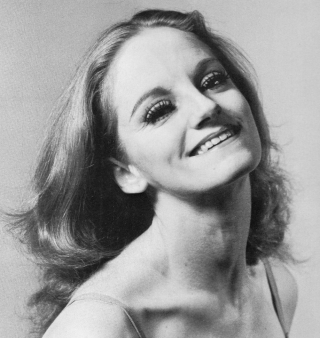
    Above: former New York City Ballet principal dancer Sara Leland has passed away.

    In the Autumn of 1974, I had moved into TJ’s dorm room at Sarah Lawrence College, pretending to be a student; he and I were making frequent trips into Manhattan for the opera. We’d spent the Summer on Cape Cod, performing with a small ballet company. I had never liked ballet until I got caught up in it by dancing in COPPELIA. Now that we were living within range of Lincoln Center, TJ began taking me to see The New York City Ballet.

    It was a heady time at NYCB, with Kay Mazzo, Patricia McBride, Karin von Aroldingen, and Violette Verdy as reigning ballerinas. And on our third visit to the House of Mr. B that season, Suzanne Farrell returned to the Company after five years in exile following her falling out with Balanchine…yes, we were there that night.

    Whilst these lovely ladies were giving one spectacular performance after another, both TJ and I had a special affection for Sara Leland, a truly unique ballerina. I first saw Sara in the Valse Mélanconique of TCHAIKOVSKY SUITE #3; a few days later, she danced the third movement of SYMPHONY IN C in Farrell’s return performance. 

    In May of 1975, I saw my first JEWELS, and it was RUBIES that most dazzled me, with Ms. Leland and Marnee Morris, another favorite, in the leading roles. Robert Weiss stepped in on very short notice for Edward Villella that night. Read about it here.

    Helgi and sara

    We went on to see Sara Leland in Balanchine’s UNION JACK (above, with Helgi Tomasson), SYMPHONY IN THREE MOVEMENTS, and VIENNA WALTZES, and in Robbins’ DANCES AT A GATHERING (in Apricot), SCHERZO FANTASTIQUE, GOLDBERG VARIATIONS, AN EVENING’S WALTZES, and THE CONCERT.

    Both TJ and I were especially fascinated whenever Sara danced with Bart Cook. They had a kind of offbeat sexiness, and they somehow could be both edgy and poetic at the same time:

    C2-1

    Another of Sara’s frequent partners, John Clifford, posted a film of SYMPHONY IN C, third movement; watch it here.

    Iwm weslow sara leland

    Sara Leland’s romantic side shines thru in this lovely photo of her with William Weslow in Balanchine’s LA VALSE.

  • Premiere: Levine/Schenk GÖTTERDÄMMERUNG

    Scanned Section 6-1
    During these endless days of being at home, I’ve been reading thru my opera diary, a hand-written document I started in 1962 and which now fills numerous file folders. So many wonderful memories of the great performances I saw over the years were stirred up by reading about them.

    One such exciting night was the 1988 premiere of the Otto Schenk GÖTTERDÄMMERUNG, the closing opera of Wagner’s epic RING Cycle. Often referred to affectionately as “the Levine RING”, full cycles of the production in the ensuing seasons created a great international buzz; Wagnerites from all over the globe gathered in New York City to witness this classic staging.

    Having already seen the RHEINGOLD, WALKURE and SIEGFRIED, I had a pretty good idea of what to expect; still, when the Gibichung Hall loomed into view, it took my breath away. Levine was mostly magnificent, though there were moments when he let things drag a bit; his orchestra gave it their all, and the chorus sounded sensational as they gathered in lusty expectation of the double wedding.

    As to the singers, here’s what I wrote upon returning to my room at the Colonial House after the performance: 

    “Casting was strong, with pretty singing from the Rhinemaidens – Joyce Guyer (in her Met debut), Diane Kesling, and Meredith Parsons – and Franz Mazura made an astoundingly vivid Alberich, singing with oily malice. The opening scene of Act II, with Alberich pawing at the sleeping Hagen, was very atmospheric.

    The Gibichung brother and sister were rather curiously cast: as Gunther, Anthony Raffell’s voice sounded veiled and throaty, and Kathryn Harries’ beautiful (and beautifully acted) Gutrune was undone by effortful singing and a prominent vibrato. [I mentioned that Cornell MacNeil and Lucine Amara could have made for far more interesting casting in these roles!].

    The Norn Scene, which I have always loved, benefited from the super casting of Mignon Dunn as 1st Norn, sung with richly doom-ladened tone. Hanna Schwarz (2nd Norn) had a couple of husky moments, but overall sang vividly, with excellent diction. As the 3rd Norn, Marita Napier sometimes sounded a bit insecure, but she did not let down the side. These three really made something of their opening discussion. 

    Toni Kramer sang erratically but acceptably in the torturous role of Siegfried. He seemed to be husbanding his powers, doing his best singing in Act III.

    C l + h b

    Above: Christa Ludwig as Waltraute and Hildegard Behrens as Brunnhilde

    The divine Christa Ludwig made a thrilling Waltraute, singing with great clarity and verbal point. The distinctive Ludwig tone – that cherished sound – drew the audience in to her every phrase. Add to this the anguished urgency of her delivery, and the result was a veritable triumph.

    The Ludwig Waltraute produced one of my all-time favorite curtain calls: stepping before the gold curtain for her first solo bow, she was greeted by such a din of applause and shouting that she halted in her tracks; her eyes opened wide in amazement, and she broke into a huge smile. It seemed to me that she had not expected such an avalanche of affection. She bowed deeply, clearly savoring this outpouring of love from the crowd.

    Matti

    The towering magnificence of Matti Salminen as Hagen (above) produced tremendous excitement in the House. His huge voice was at peak form, effortlessly filling the hall with sinister sound. In the scene where Hagen’s father appears to him in a dream, Salminen and Franz Mazura matched one another in both power and eerily expressive subtlety: thoroughly engrossing. The basso’s portrayal as the drama of Act II unfolded was towering in its epic nastiness and in his manipulation of the situation to attain the character’s sole goal: to regain the ring. This was a performance thrilling to behold, and to hear. 

    The roar of applause for each of Salminen’s solo bows was thunderous, and I was so excited to be part of it, shouting myself hoarse.

    ~ Sample the Salminen Hagen, from a later broadcast…it gives me he chills: 

    Matti Salminen as Hagen – Met 1993

    Snapshot

    Hildegard Behrens (above) was a Brunnhilde of terrifying intensity and incredible feminine strength. This was an overwhelming interpretation, in which voice and physicality combined to transcend operatic convention, reaching me on the deepest possible level. Behrens lived the part, in no uncertain terms.

    The Dawn Duet found Behrens portraying the tamed warrior maid to perfection, savoring her domestic bliss but eager that Siegfried should go out into the world and do great deeds. Her unconventional beauty and her inhabiting of the character were so absorbing to behold. Later, In the scene with Waltraute, Behrens as Brunnhilde listened anxiously to all her sister’s words and she began to grasp the first signs of the downward spiral that would culminate with Siegfried’s betrayal and her own sacrifice. Even so, she dismissed Waltraute with fierce disdain. Behrens’ vivid depiction of Brunnhilde’s terror and helpless dejection as the false Siegfried wrested the ring from her was palpable.

    Scanned Section 1-1

    In one of the evening’s most gripping moments, Behrens – having become possessed by Brunnhilde’s plight in Act II – responded to Siegfried’s oath by snatching Hagen’s spear away him and singing her own oath with blistering abandon. Totally immersed in the character, her pain was painful to behold. In the powerful trio that ends Act II, Behrens, Raffell, and Salminen were splendid.

    Behrens GOTTER

    Above: Hildegard Behrens as Brunnhilde ~ Immolation Scene

    In the Immolation Scene, the great strength of Brunnhilde’s love for Siegfried, and her determination to perish in the flames of his funeral pyre, marked the culmination of Hildegard Behrens’ sensational performance. Her singing was powerful, with unstinting use of chest voice and flaming top notes; there were moments when expressionistic effects crept in but it all seemed so right. The amazing thing about Behrens’ singing and acting here was that it all seemed spontaneous…she seemed to be living it all in the moment. One cannot ask more of an operatic portrayal.

    The curtain calls went on and on, the audience eager to show their appreciation with volleys of bravos as the singers stepped forward time and again. Here we must also thank James Levine, whose grand design underlies the great success to date of the individual operas. Ahead, in the Spring, seeing the full cycle in a week’s time is already on my calendar. My dream will come true!” 

    ~ Oberon

  • Leonie Rysanek as Lady Macbeth

    Scanned Section 13-1

    A year before her Met debut in the same role, Leonie Rysanek made her New York debut as Verdi’s Lady Macbeth in a concert performance with The Little Orchestra Society. Overall, she gave an exciting (if somewhat uneven) performance; she galvanized the audience with her thrilling singing of “La luce langue“.

    Leonie Rysanek – La luce langue ~ MACBETH – Little Orchestra Society 1958

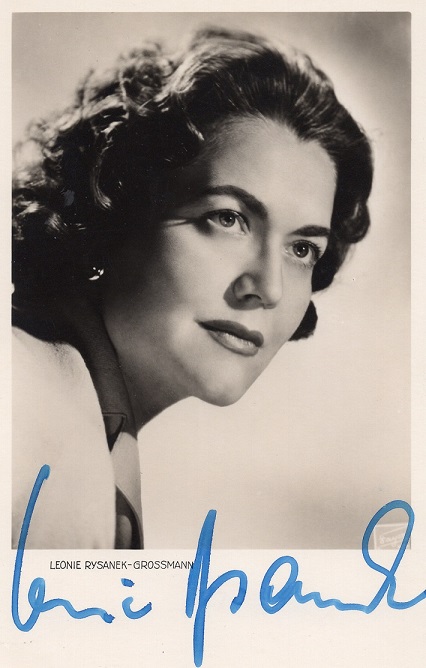
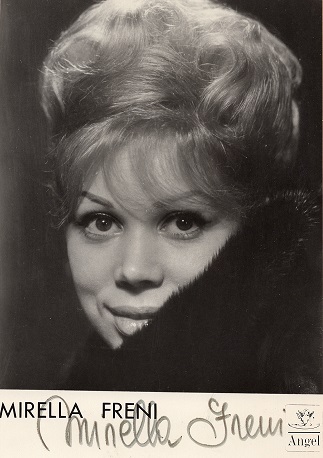
    After hearing Leonie Rysanek’s voice for the first time on a Texaco/Metropolitan Opera broadcast of BALLO IN MASCHERA, I wrote to her and received the photo (at the top of this article) a few days later. She became one of the most potent forces in my enduring obsession with opera. I saw her many times at The Met, including her unforgettable 25th anniversary gala. She was my first Senta, Ariadne, Kaiserin, and Salome; her Met 25th anniversary gala in 1984 was one of the greatest thrills of my opera-going career.

    ~ Oberon

  • New Bayreuth

    Scanned Section 4-1

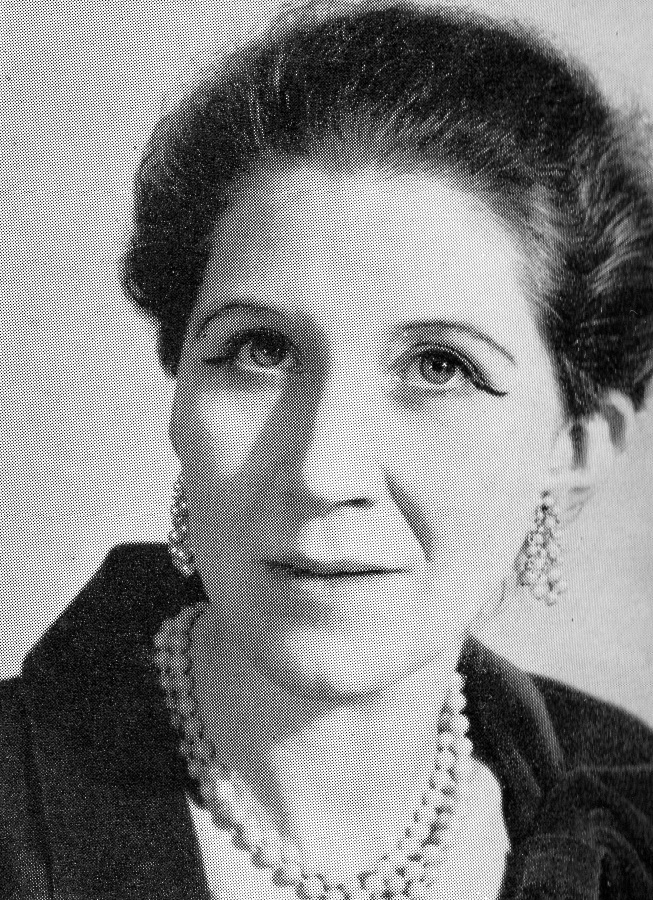
    Penelope Turing (above) was an Englishwoman who attended the second post-war Bayreuth Festival in 1952, returning to the Green Hill for many seasons thereafter. She continued to attend performances thru the Summer of 2009, and she passed away in 2010.

    Turing’s book, New Bayreuth, was first published in 1969. It is full of detailed writing about both the scenic and the musical aspects of the productions she saw there over her first seventeen years of attending the Festival, commencing – in 1952 – with DAS RHEINGOLD, in Wieland Wagner’s ground-breaking production which had premiered the Summer before.

    Turing’s writing about the voices and characterizations of the eminent singers who appeared in those first post-war festivals is fascinating to read.  

    Her descriptions are so evocative. Of curtain-rise for the Wieland Wagner PARSIFAL, which had been introduced in 1951, Turing writes: “According to the score, the scene is a glade in a solemn, shady forest in the domain of the Grail. In what we saw, however, there was no forest definable, nor even a tree. We felt the forest rather than saw it: a legendary forest that was of no time and no place, and one, moreover, over which mystery and sorrow and pain seemed to have brooded long.”

    After reading that, on page 6, I was hooked on Turing’s book, and have been barely able to put it down. Turing’s writing is free of ‘intellectual’ blather, theories, and nit-picking. She writes about what she saw and what she heard, and how she felt about it all. 

    Md30327760771

    The book contains many black-and-white photos from those years: of the iconic productions, and of the fabled singers who appeared in them; of the Festspielhaus, and of the town of Bayreuth. These produce a feeling of nostalgia for a place I’ve – unfortunately – never been.

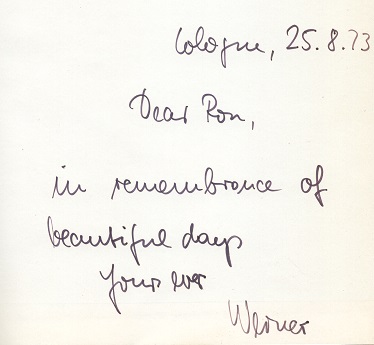
    But there’s another reason I’m so captivated by the book. As I so often do, I bought New Bayreuth in a used, hardcover edition via Alibris. Used books invariably have a life of their own, and, opening it for the first time, I found this inscription:

    Scanned Section 2-1

    Who were Ron and Werner? Were they lovers? Had they gone to Bayreuth together, or did they perhaps meet one another there? Are they still alive? My guess would be: probably not.

    But now their book has come down to me, and it is intriguing in so many ways.

    ~ Oberon

  • Mirella Freni ~ Depuis le jour

    Scanned Section 7-1

    Mirella Freni ~ Depuis le jour – LOUISE

    “Since the day that
    I gave myself,
    my destiny has blossomed.
    I seem to be dreaming
    beneath a fairy sky,
    my soul still enraptured
    by that first kiss!

    What a beautful life!
    My dream was not a dream!
    Oh, I am so happy…
    Love spreads its wings above me!
    In the garden of my heart,
    a new joy sings!
    Everything vibrates,
    everything rejoices in my triumph!

    About me, all is smiles,
    light and happiness!
    And I tremble at the memory
    of the first day of love!

    What a glorious life!
    Oh, how happy I am…too happy!

    And I tremble deliciously
    at the charming memory
    of that first day of love!”

  • Ingrid Bjoner as Turandot

    Scanned Section 3-1

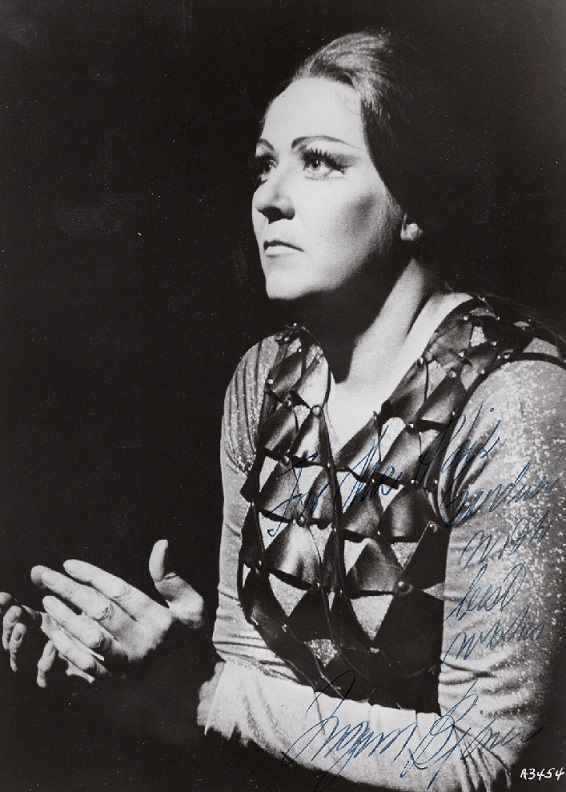
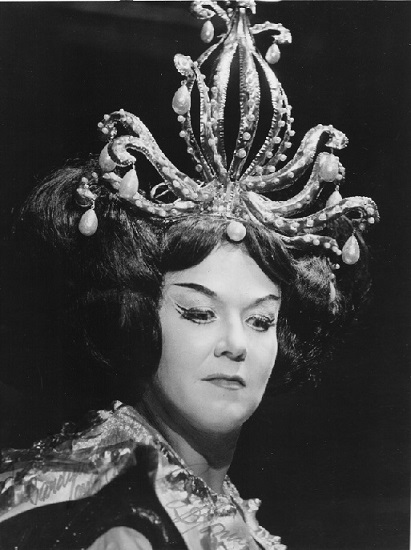
    Ingrid Bjoner sent me the above photo of herself as Turandot after I sent her a letter of praise letter after seeing her in this role at The Met in 1974.

    On the back of the photo, Ms. Bjoner wrote:

    Scanned Section 11-1

    Turandot is a fascinating role, and I have seen many sopranos undertake it over the years since Mary Curtis-Verna was my first icy princess at The Old Met in 1965.

    Birgit Nilsson was, of course, the Turandot of her day. But Ingrid Bjoner made a striking impression with her powerful, silvery sound, and – in truth – her characterization was more complex and interesting than Nilsson’s. I wrote about my impressions of the Bjoner Turandot here.

    And here she is, in a German-language performance:

    Ingrid Bjoner – TURANDOT ~ In questa reggia (in German) with Ludovic Spiess

    ~ Oberon

  • Die Meistersinger von Hamburg ~ 1970

    Scanned Section 6-1

    Above: Giorgio Tozzi as Hans Sachs and Richard Cassilly as Walther von Stoltzing

    Author: Oberon

    I plucked a DVD of Wagner’s Die Meistersinger off the shelf at the Library of the Performing Arts; it was described as a “studio production from the Hamburg State Opera, 1970”. I had no idea what to expect, but I ended up really loving it.

    Purists will kvetch over the fact that about 25 minutes of music has been cut, including parts of David’s long monolog in Act I and the Apprentices Dance in Act III. The cuts were apparently made so as to conform to the four hours allotted for a television presentation. Since the David is very fine, and since the overall performance is excellent, it’s too bad that the cuts had to be made. They did not, however, affect my great enjoyment of the performance.

    Sets are ‘suggested’ rather than built. The opera is fully staged, in appropriate costumes; the singers appear to be lip-syncing to a pre-made recording, and they all do a splendid job of it…so good, in fact, that you can’t really tell

    Leopold Ludwig leads a stylish reading of the overture; throughout the performance, he sets perfect tempi and ideally balances the comedy and chaos against the intimacy, passion, and humanity that pervade this marvelous opera.

    The filming makes us part of the action. In Act I, the lively apprentices tease David whilst setting up for the meeting of the Masters: we are part of their work and their play. The apprentices, by the way, are a handsome bunch of boys, each with his own personality. In live performances, petite women from the chorus are sometimes pressed into service in this ensemble group, so as to sing the higher-lying phrases. Here, the boys seem to tackle those lines in falsetto.

    Once the masters have convened, we are right in the thick of their debates: the camera sweeps and zooms in as opinions are expressed and reactions are caught on film. An expert bunch of singing-actors, we get a vivid feeling of each Master as an individual. And later, we even go inside the Marker’s curtained booth as Walther von Stoltzing sings his heart out in his trial song…to no avail.

    The conversations, comings and goings, furtive lovers’ meetings, and Beckmesser’s silly serenade (mistaking ‘Lene for Eva) in Act II lead up to a convincingly bumptious “riot”. In Act III, the intimate scene of Sachs urging Stolzing onward in the composing of the “Prize Song”, and of Beckmesser’s pilfering of said song, and of the blessèd joy of the great quintet, gives way to the meadow on St. John’s Day – a vast space with only a gallery for the Masters, a chair for Eva, and the platform from which the “Prize Song” becomes an immortal melody. The triumph of true love is celebrated by all.

    Scanned Section 7-1 (3)

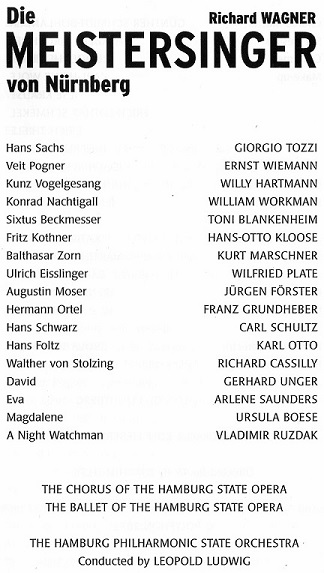
    The cast is superb in every regard. Each singer has the measure of his or her role, both vocally and in characterization. There’s little in terms of theatricality to come between us and these folks as real townspeople, and the story unfolds with complete naturalness.

    Giorgio Tozzi is for me simply a perfect Hans Sachs; he was, in fact, the very first singer I saw in this role at The Met in 1968. More than that, Tozzi played a huge part in my developing passion for opera: the first basso voice I came to love, his arias from NABUCCO and SIMON BOCCANEGRA were on the first operatic LP set I every acquired; he was Don Giovanni in the first opera I attended at the (Old) Met, and later he was my first Daland and Jacopo Fiesco. I saw Tozzi onstage for the last time as Oroveso in NORMA at Hartford, CT, in 1978; he was so vivid as the almost deranged high priest of the Druids.

    Tozzi6

    Here in this MEISTERSINGER film, Tozzi (above) is everything I want in a Sachs: vocally at ease in every aspect of the wide-ranging music, his singing warm, his portrayal so human and so rich in detail. His two monologs (Flieder– and Wahn-) are beautifully sung and deeply felt, and his impassioned final address to the citizens of Nuremberg – a warning against the intrusion of foreign powers on their daily lives – rings true today. It is so pleasing to have Tozzi’s magnificent Sachs preserved for the ages.

    Saunders Eva

    Arlene Saunders (above, as Eva) is another singer to whom I feel a strong attachment, as well as a sense of gratitude: over a span of time, I saw Ms. Saunders singing four vastly different roles, making a memorable impression in each. First was her Anne Trulove when the Hamburg Opera brought THE RAKE’S PROGRESS came to The Met in 1967; Ms. Saunders’ pealing lyricism in her aria and ‘cabaletta‘ left such a lovely impression. Later, she was a surprisingly thrilling Minnie in FANCIULLA DEL WEST at New York City Opera, a movingly vulnerable and hopeful Elsa in LOHENGRIN at Hartford’s Bushnell Auditorium, and strikingly beautiful, touching, and wonderfully-sung Marschallin at Boston. 

    In this Hamburg MEISTERSINGER, we first see Saunders’ adorable face looking up from her prayer-book in church, secretly thrilled by the attention of the tall knight who is captivated by her. From there to the end, Ms. Saunders endears and charms us in every moment of the role of Eva.

    66852356_10216720847467589_5296722770879578112_n

    Richard Cassilly (above, with Ms. Saunders as Eva) is an imposing and big-voiced Stolzing; he towers over his beloved Ev’chen, and indeed over most everyone in the film.  Often seeming stiff and dour, the tenor blossoms into smiles whenever Eva is near. The knight’s pride, insecurity, and hopefulness are all expressed in Mr. Cassilly’s acting; as to his singing, it is big, warm, and winning. The scene of the ‘birth’ of the “Prize Song” – and of Eva’s hearing it for the first time – is very moving to an old romantic like myself.

    Snapshot

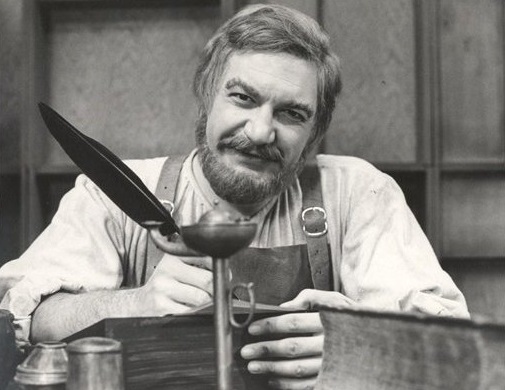
    Toni Blankenheim (above, with Giorgio Tozzi as Sachs at the end of Act I) scores in one of his greatest roles, Beckmesser. In the hands of such an imaginative singing-actor, this annoyingly vain character finally moves us in Blankenheim’s portrayal of his defeat. The baritone also convinces us that he is actually playing the lute. (There is apparently a similar filmed production from Hamburg of Berg’s WOZZECK with Blankenheim in the title-role and Sena Jurinac as Marie; I want to see it!)

    Unger Boese

    Above: Gerhard Unger and Ursula Boese as David and Magdalene

    Petite of build, tenor Gerhard Unger with his boyish face does not seem out of place among the apprentices. Unger is a first-rate, “voicey” character singer and an impetuous actor. As his slightly older betrothed, Magdalene, Ursula Boese is wise and warm-hearted whilst also being a sly conspirator in getting everything to go well for Eva and Stolzing. Both Unger and Boese sing very well indeed.

    Snapshot 2

    Basso Ernst Wiemann (above) sang nearly 75 performances at The Met from 1961 to 1969, including the roles of Fafner, Hunding, Hagen, the Commendatore, Rocco, King Henry, and Daland in broadcasts of these operas that I was hearing for the very first time. As Pogner in this film of MEISTERSINGER, Wiemann displays his ample, seasoned basso tones in a warmly paternal portrayal.

    Hans-Otto Kloose

    The one singer in a major role with whom I was totally unfamiliar is Hans-Otto Kloose (above), who plays an upbeat, gregarious Kothner. In both his portrayal and his singing, Mr. Kloose excels. He was a beloved member of the Hamburg State Opera ensemble for thirty years, starting in 1960, giving more than 1,800 performances with the Company. For all that, I cannot seem to find other samples of his singing.

    The Meistersingers include both veterans and jünglings: among the latter, Franz Grundheber is an extremely handsome Hermann Ortel. As a final link among the singers in this film to some of my earliest operatic memories, Vladimir Ruzdak, who sang Valentin in my first FAUST at the Old Met, appears here as a baritonal Nightwatchman.

    Snapshot 4

    “All’s well as ends better,” as they say in The Shire. Sachs is crowned with a laurel wreath by Eva at the feast of St. John’s Day in Olde Nürnberg.  

    ~ Oberon