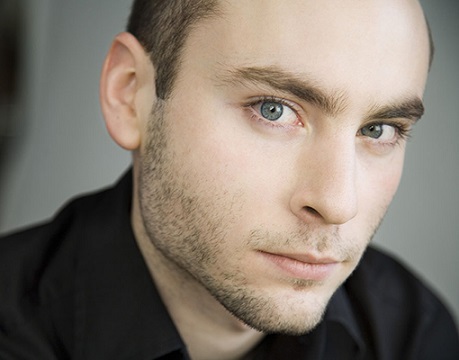
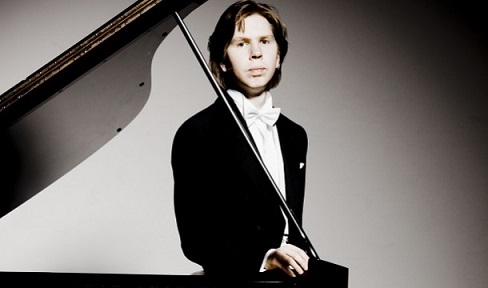
Tag: Schumann Quartet

  • New Music @ Rose Studio

    ~Author: Scoresby

    Thursday April 26 2018 – At the Chamber Music Society of Lincoln Center’s last New Music concert of the season, the Schumann Quartet and pianist Gloria Chien gave a wide-ranging performance. The first piece on the program was the last movement of Swiss composer Helena Winkelman‘s Quadriga Quartet for Strings titled “Sleipnir the eight-legged” based on the eponymous horse in Norse mythology. While only the last movement of the quartet, Ms. Winkleman is open to it being played alone. It is a rollicking piece that includes references to Bartok, jazz, metal, and Swiss folk music all in a contemporary idiom.

    The Schumann Quartet played through the virtuosic material with enthusiasm, indulging in all the fun timbres Ms. Winkleman imbeds in the score and still able to bring out the lyricism that punctuates the more cacophonous moments. In fact, violist Liisa Randalu and cellist Mark Schumann seemed to blend incredibly well as duo – matching each other to create a delicious backdrop for first violinist Erik Schumann and second violinist Ken Schumann’s lyrical melodies. Through the work, the rhythmic pulse sounds like a frenetic horse stomping through – it is a shame we only got to hear one movement of this quartet. I look forward to hearing more of Ms. Winkleman’s music soon.

    Screen Shot 2018-05-01 at 5.25.18 PM

    Above: Schumann Quartet; Photo Credit: Kaupo Kikkas

    The second work on the program was Timo Andres’s five continuous movement work Quintet for Piano, Two Violins, Viola, and Cello. The aptly named first movement Cannons and Fables, sounds like an upbeat riff on minimalist Schumann. The most interesting was the second movement, which is based on large dusty tremolos in all of the instruments. The quartet’s tight and structured sound contrasted the more rustic sounding piano part. While interesting to listen to – this doesn’t seem to Mr. Andres’s most interesting work.

    Henze’s brief “Sonatina for Violin and Piano” seemed highly structured and a completely different sound world than the earlier Andres. Second violinist Ken Schumann and Ms. Chien presented the work based off of themes from one of his operas. The Allegretto has an active piano work full of counterpoint and dissonance, with what seem to be quotes from Messiaen’s Quartet for the End of Time. Mr. K Schumann captured the almost romantic nostalgia in the second movement, his mute letting him produce a supple ghostly sound and his phrasing emphasizing the lyrical quality of the music. Ms. Chien in the last movement embraced the drama in the piano part and gave heft to the huge chords that end the piece below Mr. K Schumann’s highpitched violin.  

    After the rigidly structured world of Henze, the program moved into two selections from “Piano Etudes” by Augusta Read Thomas. The first (etude 3), titled Cathedral Waterfall – Homage to Messiaen, is a spacious work that uses the extreme reaches of the piano and heavy use of pedal to evoke a large cathedral. Ms. Chien let the piano boom in these chords, making the small space seem like an echo chamber. She managed to let the color of each chord be clear without blending into the next – thus producing a chiming sound. This effect sounded at once like Feldman’s sparse tone mixed with the large spaciousness that Crumb’s Makrosomos evoke. The second work (etude 2) called “Fire Waltz – Homage to Bartók” is a thrillingly fun Ligeti-esque work. Ms. Chien seemed to stick to its incisive rhythm and sound like a machine that kept getting interrupted. It was a fun reading that seemed to relish in Ms. Thomas’s jazzy composition style.
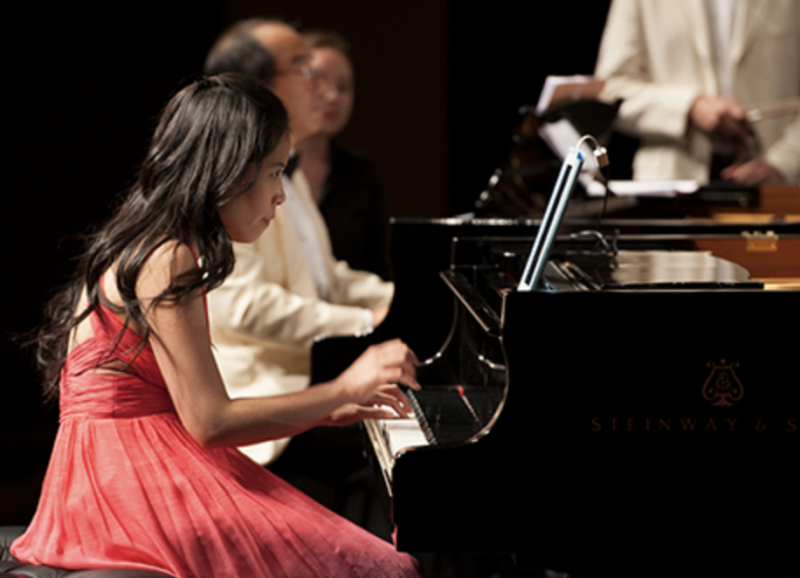
    Screen Shot 2018-05-01 at 5.22.19 PM

    Pianist: Gloria Chien

    The most well-known piece on the program was Arvo Pärt’s Fratres. Mr. Pärt originally composed the work in 1977 and has rearranged it over 15 times for different instrument combinations. While all share a structural chord sequence and something percussive, each one has a slightly different sound. In her speech beforehand, Ms. Randalu shared that Mr. Pärt thought of his music as existing not for a particular timbre or instrument, but in absolute forms – structural music. All four members of the quartet gave a dedicated performance. 

    Mr. K Schumann held the same note for all 10 minutes of the performance, letting everyone blend around and atop his drone. This version of Fratres is more spiritual and less earthy than other versions of the piece. They took the chords slowly, the instruments started in the high harmonics and over the course of the piece moved to the lowest notes through the chord sequence – Mr. M Schumann’s warm cello pizzicato breaking up the sequence. The lack of contrast in this version of the work, makes it much more sparse – perhaps intentional to evoke a choir. While certainly a beautiful work and given a detailed rendering here, it seemed like an odd way to end such an exciting program – perhaps it would have been better served an opener? Nonetheless, it capped another great performance in the CMS New Music Series.

  • Mendelssohn’s Sorrow @ Chamber Music Society

    20170226_MS

    Above: the Schumann Quartet

    Sunday February 26th, 2017 – Following last week’s Chamber Music Society of Lincoln Center‘s program centering on joy-filled music by Felix Mendelssohn, we were back at Alice Tully Hall to experience the great composer’s more melancholy moods. With music of Bach and Schumann also on offer, we became acquainted with Schumann String Quartet, and could admire once again three artists whose CMS performances to date have given particular pleasure: violinist Danbi Um, cellist Jakob Koranyi, and pianist Juho Pohjonen.

    Juho_Pohjonen009_0

    Mr. Pohjonen (above) opened the evening with Bach’s Chromatic Fantasy and Fugue in D minor for Keyboard, BWV 903. The Finnish pianist’s elegance of technique and his Olde World mystique always summon up for me visions of pianists from bygone days performing in the drawing rooms of Paris, Budapest, or Vienna. But for all those dreamworld allusions, Mr. Pohjonen’s playing has vibrant immediacy and is very much of our time.  

    Mr. Pohjonen, in a program note, describes the Chromatic Fantasy as “labyrinthine”, and that it most surely is; but it’s a wonderful work to get lost in, and as the pianist drew us along the music’s sometimes eccentric, almost improvisational pathways, we could only marvel at the gradations of both subtlety and passion in his playing.

    The Schumann Quartet intrigued us from the very opening notes of their rendering of Mendelssohn’s Fugue in E-flat major. From her first phrase, violist Liisa Randalu drew us in; the three Schumann brothers – Erik and Ken (violins), and Mark (cello) – take up the wistful melody in turn. The music becomes gently animated, with the four voices blending serenely. Poignant colours from the rising violin and the honeyed resonance of the cello frame Ms. Randalu’s expressive playing. These textures will become key elements in the Schumann Quartet’s performance of the composer’s Quartet in F-minor, which followed immediately.

    Mendelssohn’s last completed major work, the F-minor quartet was composed in 1847. On returning to Frankfurt from a tiring stay in London in early May, the composer soon learned that Fanny, his beloved sister, had died of a stroke. Mendelssohn struggled that summer with work on numerous projects, but was only able to complete this final quartet, dedicated to Fanny’s memory. On November 4th, he died following a series of strokes. He was 38 years old.

    The F-minor quartet opens with scurrying attacks and a sense of restless energy. The music softens to a nervous pulsing as the cello sings from lyrical depths, with the luminous violin overhead. The movement then accelerates to a striking finish. The “scherzo” ironically mixes passionate phrases with delicate commentary. Viola and cello rumble darkly in the brief trio passage, then the tempest stirs up again before a little coda vanishes into thin air.

    A simple song that Mendelssohn and Fanny had shared in happier times memorializes their bond in the touching Adagio, which commences with a descending cello passage. The recollections evoked by the song, which is a sweet melody in its own right, are now tinged with sadness. Superbly controlled tone  from Erik Schumann’s violin was most affecting; the pulsing cello then heralds a surge of despairing passion.

    The finale is restless, at times verging on dissonant. Passing notions of lyricism are swept away, and wild passages for the violin warn of an impending disaster. This is a composer on the brink.

    The Schumann Quartet’s very impressive playing of this disturbing yet strangely beautiful piece earned them a very warm acclamation from the Tully Hall crowd. It is pleasing to know that they will be back with us next season in this same lovely space to share other aspects of their artistry – music from The Roaring Twenties on March 4th, 2018, and a full Schumann Quartet evening on April 29th, 2018, when they’ll play works of Haydn, Bartok, Reimann, and Schumann. 

    Following the interval, Mr. Pohjonen offered Robert Schumann’s Arabesque in C major for Piano, Op. 18. This episodic piece has a narrative aspect, though none is stated or even implied. Mr. Pohjonen relished the melodious themes that rise up, veering from major to minor as the Arabesque flows forward. Subtle passages become treasurable in this pianist’s interpretation, and the poetic finish of the work was lovingly expressed.

    Juho Pohjonen returned with his colleagues Danbi Um and Jakob Koranyi for Schumann’s Trio No. 1 D minor for Piano, Violin, and Cello, Op. 63.

    Danbi-Um-Banner_2

    Above: Danbi Um, photo by Vanessa Briceño

    Koranyi_Jakob_pc_Anna-Lena_Ahlström_1_72

    Above: Jakob Koranyi, photo by Anna-Lena Ahlström

    Ms. Um, lithe and lovely in a fair burgundy-hued gown, displayed the sweetness of tone that makes listening to her so enjoyable; Messrs Koranyi and Pohjonen are masters of dynamic nuance, and thus the three together delivered page after page of radiant, colorful playing. 

    The D-minor trio’s opening movement calls for rippling arpeggios from the pianist, expertly set forth by Mr. Pohjonen. Ms. Um and Mr. Koranyi harmonize and converse in passages which switch from lyrical yearning to emphatic declamation. A pause, and a new theme emerges: delicate at first, then turning passionate. A sense of agitation prevails in this movement, despite ‘settled’ moments: the three musicians captured these shifts of mood so well, and they savored the rather unexpected ending. 

    Marked “Lebhaft, doch nicht zu rasch” (‘Lively, but not rushed’), the scherzo has the feel of a scuffing, skipping dance. Rising and falling scales glow in the calmer interlude; but the dance soon strikes up again…and comes to a sudden halt.

    The trio’s third movement embarks on a disconsolate violin passage, played with affecting expressiveness and lovely control by Ms. Um. When Mr. Koranyi’s cello joins in, this simple melody becomes increasingly touching. A gently urgent central section reverts to the slow, sad gorgeousness so evocatively sustained by our three musicians, the cello sounding from the depths.

    The tuneful finale seems almost joyous, but shadows can still hover. The playing is marvelously integrated, becoming tender – almost dreamy – with smoothly rippling piano and the violin on the ascent. The themes mingle, developing into a big song. This simmers down briefly before a final rush of energy propels us to the finish. 

    I had felt pretty certain the Um-Koranyi-Pohjonen collaboration would produce memorable results, and I was right. We must hear them together again – soon – and let’s start with my favorite chamber works: the Mendelssohn piano trios. The audience shared my enthusiasm for the three musicians, calling them back for a second bow this evening.

    • Bach Chromatic Fantasy and Fugue in D minor for Keyboard, BWV 903 (before 1723)
    • Mendelssohn Fugue in E-flat major for String Quartet, Op. 81, No. 4 (1827)
    • Mendelssohn Quartet in F minor for Strings, Op. 80 (1847)
    • Schumann Arabesque in C major for Piano, Op. 18 (1838-39)
    • Schumann Trio No. 1 D minor for Piano, Violin, and Cello, Op. 63 (1847)
  • Mendelssohn’s Sorrow @ Chamber Music Society

    20170226_MS

    Above: the Schumann Quartet

    Sunday February 26th, 2017 – Following last week’s Chamber Music Society of Lincoln Center‘s program centering on joy-filled music by Felix Mendelssohn, we were back at Alice Tully Hall to experience the great composer’s more melancholy moods. With music of Bach and Schumann also on offer, we became acquainted with Schumann String Quartet, and could admire once again three artists whose CMS performances to date have given particular pleasure: violinist Danbi Um, cellist Jakob Koranyi, and pianist Juho Pohjonen.

    Juho_Pohjonen009_0

    Mr. Pohjonen (above) opened the evening with Bach’s Chromatic Fantasy and Fugue in D minor for Keyboard, BWV 903. The Finnish pianist’s elegance of technique and his Olde World mystique always summon up for me visions of pianists from bygone days performing in the drawing rooms of Paris, Budapest, or Vienna. But for all those dreamworld allusions, Mr. Pohjonen’s playing has vibrant immediacy and is very much of our time.  

    Mr. Pohjonen, in a program note, describes the Chromatic Fantasy as “labyrinthine”, and that it most surely is; but it’s a wonderful work to get lost in, and as the pianist drew us along the music’s sometimes eccentric, almost improvisational pathways, we could only marvel at the gradations of both subtlety and passion in his playing.

    The Schumann Quartet intrigued us from the very opening notes of their rendering of Mendelssohn’s Fugue in E-flat major. From her first phrase, violist Liisa Randalu drew us in; the three Schumann brothers – Erik and Ken (violins), and Mark (cello) – take up the wistful melody in turn. The music becomes gently animated, with the four voices blending serenely. Poignant colours from the rising violin and the honeyed resonance of the cello frame Ms. Randalu’s expressive playing. These textures will become key elements in the Schumann Quartet’s performance of the composer’s Quartet in F-minor, which followed immediately.

    Mendelssohn’s last completed major work, the F-minor quartet was composed in 1847. On returning to Frankfurt from a tiring stay in London in early May, the composer soon learned that Fanny, his beloved sister, had died of a stroke. Mendelssohn struggled that summer with work on numerous projects, but was only able to complete this final quartet, dedicated to Fanny’s memory. On November 4th, he died following a series of strokes. He was 38 years old.

    The F-minor quartet opens with scurrying attacks and a sense of restless energy. The music softens to a nervous pulsing as the cello sings from lyrical depths, with the luminous violin overhead. The movement then accelerates to a striking finish. The “scherzo” ironically mixes passionate phrases with delicate commentary. Viola and cello rumble darkly in the brief trio passage, then the tempest stirs up again before a little coda vanishes into thin air.

    A simple song that Mendelssohn and Fanny had shared in happier times memorializes their bond in the touching Adagio, which commences with a descending cello passage. The recollections evoked by the song, which is a sweet melody in its own right, are now tinged with sadness. Superbly controlled tone  from Erik Schumann’s violin was most affecting; the pulsing cello then heralds a surge of despairing passion.

    The finale is restless, at times verging on dissonant. Passing notions of lyricism are swept away, and wild passages for the violin warn of an impending disaster. This is a composer on the brink.

    The Schumann Quartet’s very impressive playing of this disturbing yet strangely beautiful piece earned them a very warm acclamation from the Tully Hall crowd. It is pleasing to know that they will be back with us next season in this same lovely space to share other aspects of their artistry – music from The Roaring Twenties on March 4th, 2018, and a full Schumann Quartet evening on April 29th, 2018, when they’ll play works of Haydn, Bartok, Reimann, and Schumann. 

    Following the interval, Mr. Pohjonen offered Robert Schumann’s Arabesque in C major for Piano, Op. 18. This episodic piece has a narrative aspect, though none is stated or even implied. Mr. Pohjonen relished the melodious themes that rise up, veering from major to minor as the Arabesque flows forward. Subtle passages become treasurable in this pianist’s interpretation, and the poetic finish of the work was lovingly expressed.

    Juho Pohjonen returned with his colleagues Danbi Um and Jakob Koranyi for Schumann’s Trio No. 1 D minor for Piano, Violin, and Cello, Op. 63.

    Danbi-Um-Banner_2

    Above: Danbi Um, photo by Vanessa Briceño

    Koranyi_Jakob_pc_Anna-Lena_Ahlström_1_72

    Above: Jakob Koranyi, photo by Anna-Lena Ahlström

    Ms. Um, lithe and lovely in a fair burgundy-hued gown, displayed the sweetness of tone that makes listening to her so enjoyable; Messrs Koranyi and Pohjonen are masters of dynamic nuance, and thus the three together delivered page after page of radiant, colorful playing. 

    The D-minor trio’s opening movement calls for rippling arpeggios from the pianist, expertly set forth by Mr. Pohjonen. Ms. Um and Mr. Koranyi harmonize and converse in passages which switch from lyrical yearning to emphatic declamation. A pause, and a new theme emerges: delicate at first, then turning passionate. A sense of agitation prevails in this movement, despite ‘settled’ moments: the three musicians captured these shifts of mood so well, and they savored the rather unexpected ending. 

    Marked “Lebhaft, doch nicht zu rasch” (‘Lively, but not rushed’), the scherzo has the feel of a scuffing, skipping dance. Rising and falling scales glow in the calmer interlude; but the dance soon strikes up again…and comes to a sudden halt.

    The trio’s third movement embarks on a disconsolate violin passage, played with affecting expressiveness and lovely control by Ms. Um. When Mr. Koranyi’s cello joins in, this simple melody becomes increasingly touching. A gently urgent central section reverts to the slow, sad gorgeousness so evocatively sustained by our three musicians, the cello sounding from the depths.

    The tuneful finale seems almost joyous, but shadows can still hover. The playing is marvelously integrated, becoming tender – almost dreamy – with smoothly rippling piano and the violin on the ascent. The themes mingle, developing into a big song. This simmers down briefly before a final rush of energy propels us to the finish. 

    I had felt pretty certain the Um-Koranyi-Pohjonen collaboration would produce memorable results, and I was right. We must hear them together again – soon – and let’s start with my favorite chamber works: the Mendelssohn piano trios. The audience shared my enthusiasm for the three musicians, calling them back for a second bow this evening.

    • Bach Chromatic Fantasy and Fugue in D minor for Keyboard, BWV 903 (before 1723)
    • Mendelssohn Fugue in E-flat major for String Quartet, Op. 81, No. 4 (1827)
    • Mendelssohn Quartet in F minor for Strings, Op. 80 (1847)
    • Schumann Arabesque in C major for Piano, Op. 18 (1838-39)
    • Schumann Trio No. 1 D minor for Piano, Violin, and Cello, Op. 63 (1847)