Tag: Screen Shot

  • Aimard | Stefanovich @ Carnegie

    ~Author: Scoresby

    Thursday October 25 2018 – The difference between hearing a particular musician live versus hearing a recording of them can be extraordinary. For Pierre-Laurent Aimard and Tamara Stefanovich‘s two piano performance in Carnegie’s Zankel Hall, I was excited by the repertoire but unsure how it would be performed. Familiar with Mr. Aimard’s many recordings but never having heard him live, I have always thought of him as a thoughtful, but somewhat understated pianist. This duo proved me wrong in one of the most exciting and beautiful performances I’ve heard in the past few years. 

    Screen Shot 2018-10-26 at 7.00.51 PM
    Pierre-Laurent Aimard and Tamara Stefanovich during last night’s recital; Photo Credit: Steve Sherman

    This was a concert of equals, exchange, and contrasts. To begin the program, they selected seven works from Bartok’s Mikrokosmos. For those who haven’t studied piano, the Mikrokosmos occupy an odd place: wonderful short studies meant to illuminate aspects of technique/musical thinking ranging from the beginner (Book 1) to virtuoso performer (Book 6). Bartok made sure that each of these were compositionally interesting and many are imbued with folksy melodies.

    The short selection Ms. Stefanovich and Mr. Aimard drew from covered the range of styles. One was the Debussy like Chord and Trill Study in which Mr. Aimard played a constant Debussy-like trill to Ms. Stafanovich’s chordal melody. The light touch and exquisite pedaling made this short study shine. In the aptly named New Hungarian Folk Song (originally for voice and piano), they brought out the Messiaen-like textures in the base chords below the lyrical melody. To end the selections they played the Ligeti-like Ostinato trading accents and rhythms with each other. It was a nice launching point for the rest of the evening.

    Next was Ravel’s very early work Sites auriculaires which consists of a Habanera in the first movement and a second movement titled Between bells. In the Habanera, Mr. Aimard plucked out a sensual low pulse that is kept quietly moving through the movement while Ms. Stefanovich brought a clean sound to the more melodic part. The performers made the most of the luscious bell-like sonorities in the opening of Between bells that sound like later Ravel, full of whole tones with large dynamics. The silken middle section was given a soft pedaling and lots of space to let the notes resonate.

    The major work on the first half of the program was the US Premiere of Harrison Birtwistle’s Keyboard Engine, A Construction for Two Pianos. Like the rest of the program, this piece is a study in opposites: ranging from dynamics, thematic material between performers, rhythmic contrasts, toccata like lines paired with heavy chords, and many others. The two pianos seem split in this material – always interrupting the other with its contrast, sometimes aligning to produce a new sonority altogether. After a dodecaphonic sounding start of quiet repetitious notes the music roars to life with sudden loud dynamics in the extreme registers of the piano. The pianos are slowly exchanging a call and answer type format and the dialogue between them becomes more frenzied. After a brief respite with dreamy material, a rapid pace ensues with an ostinato that is punctuated by polyrhythms in both instruments. Both performers seemed to gleefully indulge interrupting the other’s lines and hitting giant chords in sync.

    These spacious and frenzied passages continue to alternate for the remainder of the work and each time a passage moves in to the opposite extreme it takes on slightly different material. Ms. Stefanovich and Mr. Aimard managed to capture the frenzy, intimacy, and mischievousness that this piece has – it would be fantastic for two dancers to stage given the many contrasts. One of my favorite sections was near the end when Mr. Aimard’s piano begins to create sympathetic vibrations with the other piano by holding down specific keys with the sustain pedal. These transfers of sound and timbre gave a bell like quality to some of Ms. Stefanovich’s chords. I found myself transfixed in the jazzy riffs of rhythm and spinning themes of the piano. It must take incredible coordination to pull off such an assured performance of this work that seemed to be perfectly both in and out of sync. It was a pleasure to see both pianists studying each other carefully for cues.
    Screen Shot 2018-10-26 at 6.55.43 PM
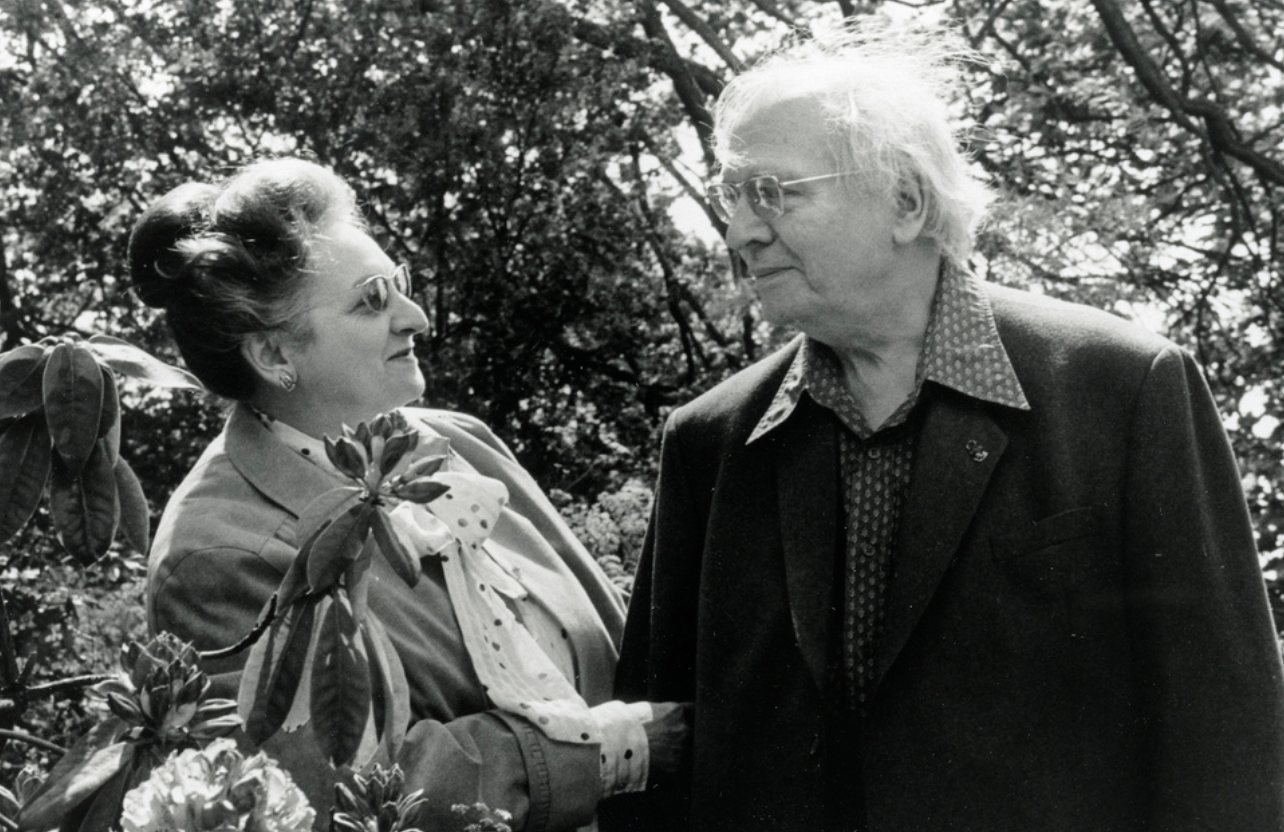
    Above: Loriod and Messiaen many years later, still in love

    The treat of the evening came after intermission in the form of Messiaen’s Visions de l’amen. This sprawling seven movement, 50-minute (small for Messiaen’s standards) work is a classic two piano piece with each of the movements dedicated to a vision of a reason to be thankful (or an amen as Messiaen puts it) – this is a cosmic, mystical piece of music in a way only Messiaen can deliver. Like the Birtwistle work, each piano has its own distinct voice – a fleeting, fast ethereal part that was written for Messiaen’s future wife Yvonne Loriod and an earthier chordal part written for himself. Ms. Loriod was perhaps the greatest contemporary music pianist of the 20th century and the dedicatee of almost all of Messiaen’s piano music – they had a partnership of equals. Ms. Stefanovich took on Loriod’s voice and Mr. Aimard took Messiaen’s.

    Before the opening Amen of creation, the performers took a good two minutes on stage letting the audience quiet down and the rumbling of the subway beneath to pass before beginning. Mr. Aimard managed to make the ppp in the score for his primordial opening sound like a whisper coming out of the slight noise from the crowd earlier before introducing the main melodic theme of the work. Meanwhile, the pppp high-pitched bells from Ms. Stefanovich rang in a soft, but lucid texture. The creeping in Ms. Stefanovich’s part is classic Messiaen – a song of the stars that is continually moving atop Mr. Aimard’s expanding chords. The interaction between the two is like light hitting stained glass and creating refractions – the light being Ms. Stefanovich’s bending colors. The music continued getting faster and louder as the “Creation” unfolded until the resonance from the piano held in the air with one last loud chord. In the next movement’s long introduction, Mr. Aimard nailed the jazzy harmonies and riffs barrowed from the Quartet from the End of Time’s sixth movement in the low register. Ms. Stefanovich’s managed to play through the rapid bird like sequences in the high reaches of the piano in a sing-song fashion in perfect time with beefy chords from Mr. Aimard. This exchange and dialogue of thematic material was so much fun to both watch and hear.

    One of my favorite moments from the evening was after the first outburst of passion in the Amen of desire. The music got very quiet producing a moment of éblouissement. Mr. Aimard played a tender love theme while Ms. Stefanovich in the tinkled a taught, but honeyed variation of the original ‘star’ melody in the upper registers. The quiet sensitivity of Ms. Stefanovich’s made the music sing. This gave way to a loud run of manic, effervescent love at the climax of the movement with both performers seemingly investing all of their energy. It was clearly that this work is personal to both of them. Only the ending of the Amen of the consummation got even louder, more manic, and extreme in its sound.
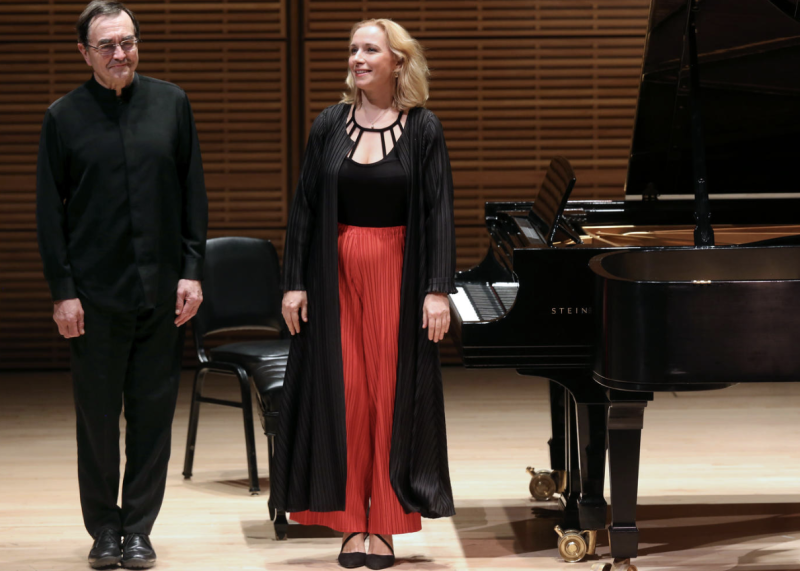
    Screen Shot 2018-10-26 at 7.02.18 PM
    Pierre-Laurent Aimard and Tamara Stefanovich; Photo Credit: Steve Sherman

    Through all the dense textures, both performers managed to emphasize Messiaen’s stunning language taking through the virtuosic runs of Ms. Stefanovich’s high register and the huge chords of Ms. Aimard’s lower register. In the fffff final, organ like chords spanning the register of the entire piano the audience gave a well-deserved rapturous applause before the notes even decayed. They ran the gamut of textures, timbres, and emotions – ending in exaltation. As one more conservative in taste neighbor near me put it “I never thought I’d like that sort of modern music, but hearing that piece in person was like a religious experience!” Indeed it is and it is difficult to get a sense of the proportions of such a piece from a recording.

    — Scoresby

    The Performers:

    Pierre-Laurent Aimard, piano

    Tamara Stefanovich, piano

    The Repertoire:

    Bartók: Seven Selections from Mikrokosmos

    Ravel: Site auriculaires

    Birtwistle: Keyboard Engine, A Construction for Two Pianos

    Messiaen: Visions de l’amen

  • Berio Sinfonia@NY Phil

    Author: ~Scoresby

    Thursday May 24 2018 – “The unexpected is always upon us. Well, I must have said this before since I say it now” says Berio’s sprawling five movement work for orchestra and microphoned vocal octet: Sinfonia2018 marks the 50th anniversary of Berio’s opus magnum. It was commissioned by the NY Philharmonic for its 125th anniversary (Berio delivered the score a year late) and the work, more than most, feels like a stamp of its time. Written for Leonard Bernstein and the jazzy pop group the Swingle Singers originally, the music has a wide range references, from Mahler to Boulez. The text draws from Beckett, Lévi-Strauss, and Berio’s own writings. Some of the words are purposely difficult to hear, moving in and out of focus at Berio’s will. With music that is both funny and saturated with anxiety of events of 1968, the meaning of this piece is purposely obscured. 

    Screen Shot 2018-05-30 at 2.15.20 PM

    From the Archives: Composer Luciano Berio

    It is a commentary both in a universal sense and a musical sense (the performers even narrate the music in real time, almost like a sports commentator in the third movement). 50 years later, it feels both relevant and a glimpse into a specific period. Philosopher Walter Benjamin wrote in his Thesis on the Philosophy of History: 

              This is how one pictures the angel of history. His face is turned toward the past . . . The storm irresistibly propels him into the future to which his back is turned, while the pile of debris before him grows skyward.  

    I never thought I’d hear a musical representation of Benjamin’s words, but Berio is able to so in this piece.

    Each of the first four movements (the fifth was added a few years later) has its own feel and exists in a completely different sound world then the others. The fifth ties the disparate entities together in a sort of amalgam of the movements. This evening, the New York Philharmonic presented the work with Seymon Bychkov conducting his second week in a row and the young new music ensemble Roomful of Teeth in its New York Philharmonic debut. It should be said, because this work has such a textual importance it was surprising that the NY Philharmonic opted to not use either supertitles or issue a libretto – particularly for the third movement of the piece. While in English, Berio’s tricky text is important and purposely difficult to hear at times. 

    In the mysterious opening of first movement, Mr. Bychkov managed to guide the orchestra with an incisive sound while blending with the organ-like Roomful of Teeth. Speech is incredibly important to Berio, in his works he always mimics it. Here, the Philharmonic took this to heart. As a singer would finish a line, the instrumentalists would pick up the melody imitating the singer’s timbre and speech pattern. It was an impressive transformation from speech to music and vice versa, making the weaving textures of the piece wonderful to hear. This magical effect reminded me a lot of Boulez’s Répons, composed nearly twelve years later. This is the only performance of the work I’ve heard where I could clearly hear all of the singers – the Philharmonic’s sensitive accompaniment surely the reason. The second movement comprises of a memorial to Martin Luther King Jr. The precise and pouncing brass/percussion outbursts balanced the more Gregorian chant-like singing texture that sits below – at once given the impression of being static and lurching forward. Mr. Bychkov drew a wide range of color from the orchestra, balancing the many textures while still making the outbursts sound percussive. The music briefly devolves into a march near the end before dissipating and here the orchestra seemed to blend into quietness of the hall.

    Screen Shot 2018-05-30 at 2.17.19 PM
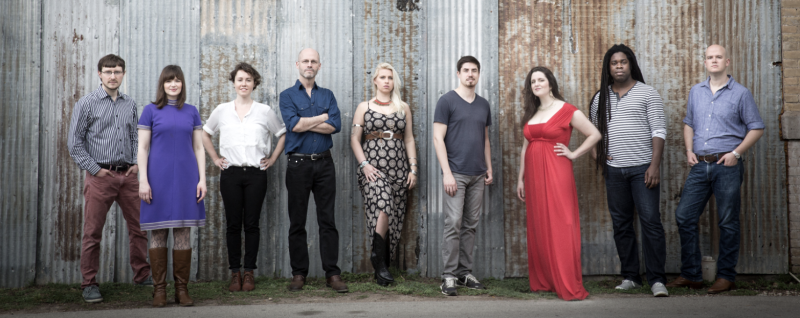
    Above: Some of the members of vocal group Roomful of Teeth; Photo Credit: Bonica Ayala of BONICA AYALA PHOTOGRAPHY

    The third movement is the most experimental music Berio wrote. It has the third movement of Mahler’s Symphony No. 2 underlying it (which is in itself a setting of Mahler’s St. Anthony’s Sermon to the Fish from Das Knaben Wunderhorn) with many additions. Berio makes sure that the Mahler is never lost through the entire movement, but it comes in out of focus while the singers do everything from congratulating the conductor to singing about the anxiety of the role of art in politics. Mr. Bychkov managed to untangle the chaos of the music by making each texture transparent and audible, even in the most cacophonous sections. Whether through melody or rhythm, the Mahler was easily heard as were the slew of extra-musical references. Roomful of Teeth for their part, made the movement at once entertaining and somber, even getting laughs from some audience members. During the serious moments, such as questioning the point of art, they took a dedicated tone. This is incredibly difficult music to perform, but I can’t imagine it being rendered better. 

    In the fourth movement which has many short outbursts and feels comparatively sparse and calm, Mr. Bychkov’s precise conducting and the orchestra’s sharp sound provided a respite. The fifth movement’s recollections brought in bits of each of the other movements, almost like a summary of the entire work. It was wonderful to hear because it felt like a retrospective that tied everything together. The much younger looking crowd than usual (many hipster looking men in their late 20’s/early 30’s, likely do to Roomful of Teeth’s dedicated following) gave a well-deserved enthusiastic applause. Mr. Bychkov, Roomful of Teeth, and the NY Philharmonic couldn’t have performed the piece better, showing why at 50 this remains one of the most important symphonic works composed.

    Returning from intermission, the New York Philharmonic did its annual Milestones speeches, honoring members of the New York Philharmonic who are retiring and who have been a part of the orchestra for a certain number of years. This year, they honored the 25th anniversaries of Oboist Robert Botti, Principal Violist Cynthia Phelps, violist Robert Rinehart, and horn player R. Allen Spanjer. They also retiring members Mark Schmoockler (44 years), Vladimir Tsypin (35 years), and Archivist Barbara Haws (34 years). Ms. Haws gave a stirring speech about the importance of history and the connections that occur from a true institution like the New York Philharmonic. Her speech dovetailed perfectly with the Sinfonia, “The present honors the past. 100 years ago, seems like today.” 

    Screen Shot 2018-05-30 at 2.20.50 PM
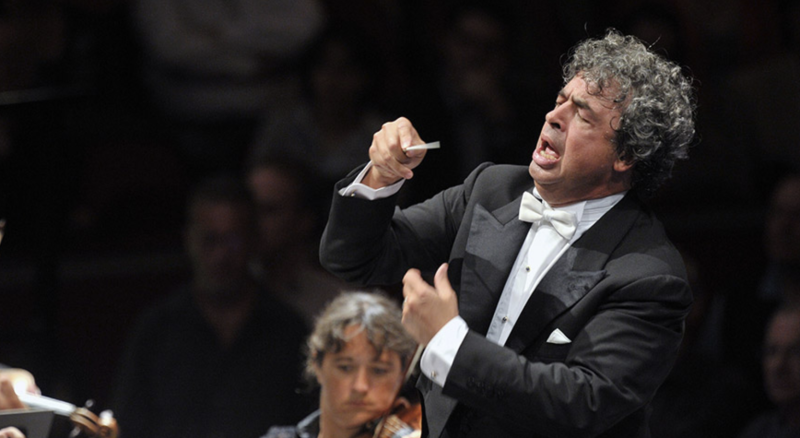
    Above: Conductor Semyon Bychkov; Photo credit: Chris Christodoulou

    After, the group performed Strauss’s last tone poem: An Alpine Symphony. The pairing of these two seemingly unrelated works comes from a line in the Sinfonia when the main narrator in the third movement makes a sarcastic jibe about the Alpine Symphony, saying something the effect of maybe a grand work like the Alpine Symphony will grow flowers (while discussing the lack of political potency music has). Mr. Bychkov and the Philharmonic were in top form. While this is personally my least favorite Strauss piece, Mr. Bychkov gave one of the best interpretations one could want. He made the strings sound vigorous, the brass warm, and the music layered. The orchestra crafted a round, gentle, and rolling sound – which contrasted the first half’s incisiveness well. During the exciting stormy sections, it was fun watching the percussionist get up to play the Thunder Sheet for its brief appearance. It was clear after this performance that Mr. Bychkov can get this orchestra to sound its best – I look forward to hearing him again soon.

  • Janine Jansen and Friends @ Zankel

      Screen Shot 2017-12-19 at 12.47.01 PM

    Above: violinist Janine Jansen

    ~ Author: Scoresby

    Thursday December 7 2017 – This evening had one of the best chamber performances I’ve heard of the year in Carnegie Hall’s Zankel Hall. This commenced violinist Janine Jansen’s six performances as a part of Carnegie Hall’s Perspectives series; where artists of certain acclaim curate concerts in a given season. Ms. Jansen’s will include three chamber music performance (this being one of them), two orchestral performances, and a recital with Jean-Yves Thibaudet. This was the first time I had heard Ms. Jansen in recording or performance, so it was thrilling to hear such a well-programmed concert – though I had heard all the pieces on the program in concert before.

    The performance began with a performance of Bartok’s Contrasts for Violin, Clarinet, and Piano (this recording has Bartok playing along with Benny Goodman, who the piece was written for). Ms. Jansen was on violin, the esteemed Martin Fröst was on clarinet, and Lucas Debargue was on piano. In the first movement’s “recruiting dance”, Ms. Jansen and Mr. Fröst seemed to almost be dancing with each other on stage while playing. Mr. Fröst in particular captured all the jazzy timbres and fun improvisatory sounds – sounding free and loose. Mr. Debargue kept the stormy piano part quiet and atmospheric, never overwhelming the group.

    Capture

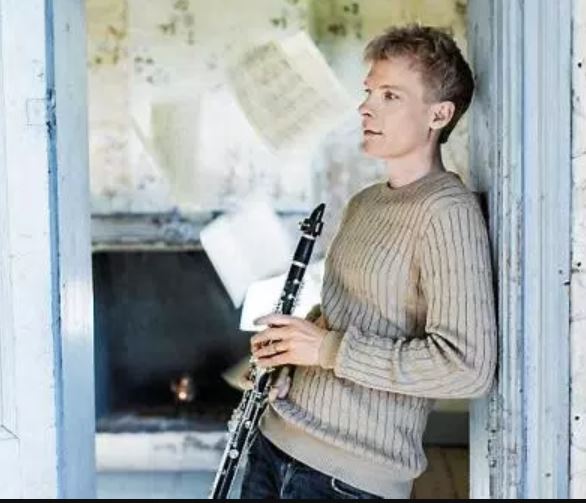
    Above: Clarinetist Martin Fröst, photo by Mats Bäcker

    Ms. Jansen provided a rough gritty sound with perfect technique. The second movement brought a different sound world, languid and mysterious. They took a looser approach, letting each line sing. Mr. Debargue captured the folksiness and jazzy rhythms well. The last movement was played with stunning speed and accuracy. While fun through all the various riffs, it sounded a little too rushed. Nonetheless, with big personalities like Ms. Jansen and Mr. Fröst, the fun parts of the piece were giving distinct timbres. Mr. Debargue’s relaxed downward scales sounded contrasted the rougher timbres of Ms. Jansen and Mr. Fröst.

    The second piece on the program was a bit of rarity. Ms. Jansen and Mr. Debargue returned to play Szymanowski’s Mythes for Violin and Piano, Op. 30. For those that don’t know, Szymanowski’s music has a few distinct periods, but his most famous middle period sounds almost like a more radical Debussy with motion. Mr. Debargue played the opening of La Fontaine d’Aréthuse with a delicate color palette and impressionistic quality without making the piano sound too blurry. Ms. Jansen embraced the almost crass strangeness of the violins opening line. For a piece that has this late Debussy sound, one has to embrace all the effects in both instruments for the music to work, and here one couldn’t ask for better interpreters. As the first movement went on to its passionate climax Ms. Jansen seemed to let loose in a way that was missing in the Bartok.

    Screen Shot 2017-12-19 at 12.49.33 PM

    Above: Pianist Lucas Debargue

    The whirr of sound and color was thrilling, followed by a ghostly harmonic sections. Mr. Debargue was equally enjoyable, changing textures every few phrases. I look forward to hearing Mr. Debargue’s newly released Syzmanowski/Schubert album. The third movement, Dyrads and Pan has the violin imitating Pan’s flute for a good portion of the pieces. Through trills, quarter tones, muted sections, natural harmonics and a host of other methods that Syzmanowski dictates Ms. Jansen made the music sound like much more than just a violin. 

    The last piece on the program was The Quartet for the End of Time by Oliver Messiaen. In addition to Mr. Debargue and Ms. Jansen, Martin Fröst returned for the difficult clarinet part and cellist Torleif Thedéen joined on the cello. This is the sort of music that can really only heard live as recordings can’t capture its both apocalyptic and meditative mood in the same way. It also requires utmost coordination between each musician. Of the dozen or so performances I’ve heard in the past three years this was perhaps the best. During the first of eight movements, Mr. Fröst began almost as if he was conducting. His tone small, but his style emphasizing the bird trills. Mr. Debargue made his way softly through the 29 chord cycle that makeup the piano part. The play between Ms. Jansen and Mr. Fröst was again evident here – each seeming to get energy from the other. Nonetheless, they kept the strange mood somber and the atmosphere stagnant. Almost as if one were to walk into a large space and hear some birds chirping and people talking, getting enveloped in it. 

    The second movement brought an entire different style of playing, here letting the apocalyptic element of the piece shine. Mr. Debargue had a rough, almost crass sound explodes out of the quiet atmosphere, announcing the end of time. Mr. Thedéen and Ms. Jansen’s languid duet after maintained the eerie quality of the first movement, meandering through seemingly without direction. To capture these contradictory elements of the music is impressive; the group sounds like it has played together for years and I look forward to hearing their recording of it released earlier this month. One of the more striking aspects of this performance is that all the performers seemed comfortable with Messiaen’s lengthy silences. 

    The third movement is for solo clarinet and the emotional center of the piece. It truly is one of my favorite moments in all of music, so to hear such an excellent clarinet player perform it was moving. Mr. Fröst’s performance was perhaps the quickest I’ve heard in terms of tempo, but it allowed him to make each phrase have more energy and breath. It also made each rest and silence all the more apparent. During the famous long sustained screeches that crescendo from silence to the maximum sound a clarinet can make (only a clarinet can start from complete silence that way), Mr. Fröst’s body seemed to quiver as he approached the maximum sound of his instrument, but that convulsing was perfect for the physicality of the music. During the more active sections in-between each shriek, Mr. Fröst’s fast tempo let the bird-like melodies shine. While all performances sound bird-like, Mr. Fröst’s light tone and nimble trills seemed particularly well suited. 

    The fourth movement is a light interlude and it felt like being sucked out of a trance after the severity of solo clarinet movement. Here, Ms. Jansen, Mr. Fröst, and Mr. Thedéen sounded joyful and played well together. During the passages in unison it felt like they fused into one large instrument. Mr. Thedéen’s low pizzicatos were a delight. Turning back to the meditative mood, the fifth movement is a stunning meandering melody on the cello with a simple piano accompaniment. Mr. Thedéen’s had a drier sound at first, but then settled into a more romantic style by the end. Mr. Debargue played is murmurs on the piano softly, without ever eclipsing the cello. 

    Screen Shot 2017-12-19 at 12.52.25 PM

    Above: Cellist Tortleif Thedéen, photo by Nikolaj Lund

    The sixth and seven movements had the best chamber music playing of the night; each member of the quartet seemed fully invested in the music. During the dark sixth which has an extended section with all the instruments playing in unison with the same dynamic markings, not one instrument seemed eclipse another, an incredibly difficult feat. They played up all of the accents and gave a quick, fierce account. After the long introduction, there is a section where the clarinet and piano pound out longer rhythms that eventually take over the piece. Mr. Fröst and Mr. Debargue played this with verve, making each punctuation sound final until another fast break with all the instruments in unison sputtering a drawn out phrase. This contrast made the movement even more dramatic than it typically is. This led into the dissonant seventh movement, where the group seemed to be both aggressive and colorful in their sound. They managed to make it sound darker and more stormy than I’ve heard before.

    The last movement is an extended passage for violin and piano, similar to the cello section. Here though, Ms. Jansen had a slow ringing sound. Mr. Debargue provided a sublime accompaniment. Again, it was easy to slip into a trance with the slow slide up both the violin and piano. After landing in the highest registers of both, Ms. Jansen sounded the last note – but kept her posture as if there was more. This held the audience from applause and everyone sat in the silence of eternity for a full minute before a hearty applause. I wish more musicians captured those sublime moments of quiet after a performance, it felt just as important as the music itself. I look forward to hearing her next performances apart of her Perspectives series on January 18 and January 21.