Tag: Steven Banks

  • Accordion & Saxophone @ The Morgan Library

    Yca

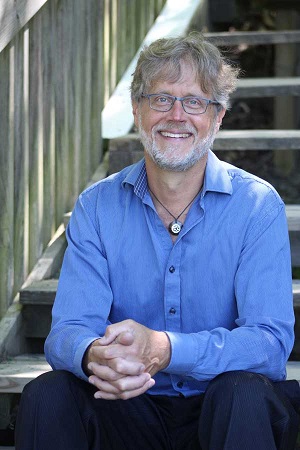
    Above: Steven Banks and Hanzhi Wang

    Tuesday February 22nd 2023 – Young Concert Artists presenting a noontime concert at The Morgan Library featuring the unusual combination of accordion and saxophone. The players – Hanzhi Wang (accordion) and Steven Banks (saxophone) – have both previously appeared at The Morgan in solo recitals; they are brilliant, unique artists, and I was eager to hear them live again. But the afternoon did not turn out as planned.

    We settled into our seats, but after a few minutes we were shivering. We put our coats back on, but the damp chill was pervasive. Looking around, it seemed that everyone in the audience was bundled up, and I was recalling an evening many years ago when the young Frederica von Stade gave a recital in a frigid hall in Syracuse, NY, where the maintenance staff had inadvertently shut off the heat; luckily, someone located a small space heater which was set up onstage to keep the singer somewhat warm.

    This afternoon’s musicians took the stage, Mr. Banks towering over the petite Ms. Wang. They launched their program with an arrangement of Handel’s Recorder sonata in G-minor, HWV 360; it took a moment to adjust to the brighter sound of the saxophone in music we are accustomed to hearing played with the softer timbre of the recorder, but Mr. Banks immediately scaled back his dynamic palette, bringing delicious subtleties to the music. Meanwhile Ms. Wang, looking so lovely in her pleated white frock, transformed her accordion into a compact organ, playing with such cordial tone and bending the phrases with consummate skill. As he music veered from courtly to festive, the players were wonderfully in sync and so attentive to one another, making for a musical treat.

    Three miniatures by Krzysztof Penderecki – the great and sorely missed Polish master-composer – were so fascinating to hear. The first, Allegro, is weirdly spastic; it seems to reach its quirky end in a matter of seconds, with the players wryly relishing the innate humour of the piece. A dark and doleful Andante cantabile followed, the timbres of the two instruments blending to perfection. The concluding Allegro ma non troppo is a bouncy dance, polished off zestfully by Ms. Wang and Mr. Banks.

    Now Ms. Wang offered excerpts from Bach’s Goldberg Variations: the very familiar Aria, played with great depth of feeling, followed by four variations which called for all manner of fanciful fiorature, dispatched with effortless grace and polish by this remarkable virtuoso.

    Virtuosity continued in abundance as Ms. Wang gave us two works by Martin Lohse: Autumn Rain, with its dotty raindrops sparklingly defined, and the more somber Winter’s Tale, in which gentle snowflakes drift down on an overcast wintry afternoon. Ms. Wang’s incredible dexterity was simply mind-boggling to observe, her fingers flying nimbly over the keys as she spun out the music, much to our delight.

    But we were now chilled to the bone, and we silently agreed that we needed to leave and seek some warmth. We slipped up the stairs as the stage was being set for the next piece, and a few other audience members followed us out. I was sorry to miss Mr. Banks’s set, and the anticipated Astor Piazzolla finale.

    ~ Oberon

  • Accordion & Saxophone @ The Morgan Library

    Yca

    Above: Steven Banks and Hanzhi Wang

    Tuesday February 22nd 2023 – Young Concert Artists presenting a noontime concert at The Morgan Library featuring the unusual combination of accordion and saxophone. The players – Hanzhi Wang (accordion) and Steven Banks (saxophone) – have both previously appeared at The Morgan in solo recitals; they are brilliant, unique artists, and I was eager to hear them live again. But the afternoon did not turn out as planned.

    We settled into our seats, but after a few minutes we were shivering. We put our coats back on, but the damp chill was pervasive. Looking around, it seemed that everyone in the audience was bundled up, and I was recalling an evening many years ago when the young Frederica von Stade gave a recital in a frigid hall in Syracuse, NY, where the maintenance staff had inadvertently shut off the heat; luckily, someone located a small space heater which was set up onstage to keep the singer somewhat warm.

    This afternoon’s musicians took the stage, Mr. Banks towering over the petite Ms. Wang. They launched their program with an arrangement of Handel’s Recorder sonata in G-minor, HWV 360; it took a moment to adjust to the brighter sound of the saxophone in music we are accustomed to hearing played with the softer timbre of the recorder, but Mr. Banks immediately scaled back his dynamic palette, bringing delicious subtleties to the music. Meanwhile Ms. Wang, looking so lovely in her pleated white frock, transformed her accordion into a compact organ, playing with such cordial tone and bending the phrases with consummate skill. As he music veered from courtly to festive, the players were wonderfully in sync and so attentive to one another, making for a musical treat.

    Three miniatures by Krzysztof Penderecki – the great and sorely missed Polish master-composer – were so fascinating to hear. The first, Allegro, is weirdly spastic; it seems to reach its quirky end in a matter of seconds, with the players wryly relishing the innate humour of the piece. A dark and doleful Andante cantabile followed, the timbres of the two instruments blending to perfection. The concluding Allegro ma non troppo is a bouncy dance, polished off zestfully by Ms. Wang and Mr. Banks.

    Now Ms. Wang offered excerpts from Bach’s Goldberg Variations: the very familiar Aria, played with great depth of feeling, followed by four variations which called for all manner of fanciful fiorature, dispatched with effortless grace and polish by this remarkable virtuoso.

    Virtuosity continued in abundance as Ms. Wang gave us two works by Martin Lohse: Autumn Rain, with its dotty raindrops sparklingly defined, and the more somber Winter’s Tale, in which gentle snowflakes drift down on an overcast wintry afternoon. Ms. Wang’s incredible dexterity was simply mind-boggling to observe, her fingers flying nimbly over the keys as she spun out the music, much to our delight.

    But we were now chilled to the bone, and we silently agreed that we needed to leave and seek some warmth. We slipped up the stairs as the stage was being set for the next piece, and a few other audience members followed us out. I was sorry to miss Mr. Banks’s set, and the anticipated Astor Piazzolla finale.

    ~ Oberon

  • Saxophonist Steven Banks @ The Morgan Library

    Steven banks

    Wednesday March 23rd, 2022 matinee – Young Concert Artists presenting a noontime “encore” concert by saxophonist Steven Banks (photo above) at the Morgan Library. Pianist Xak Bjerken joined Mr. Banks for a wonderfully varied program.

    From way back in my high-school days, I’ve loved the sound of the saxophone; I chose the French horn, but in band, I always sat next to our phenomenal first sax player. This afternoon was the first time I’ve ever attended a full recital of music for the instrument, and I was bowled over by Mr. Banks’ opulent sound, commanding technique, and deep musicality. 

    The program opened with Canadian composer Denis Bédard‘s Fantasie, a delightful piece which Mr. Banks played on soprano sax. As the afternoon evolved, he moved to alto sax, and then to tenor sax. The exuberant opening of the Bédard immediately established Mr. Banks as a virtuoso of the first order. His tone is luminous, his technique compelling, his breath control astonishing. Tall and slender, he is a charismatic musician, and he had the audience under his spell within seconds. Bédard makes the pianist an equal partner in this work, and Mr. Bjerken played with great clarity and feeling, both here and throughout the concert.

    The Fantasie features flowing melodies, with alternating passages of lyricism and animation; as the music takes a pensive turn, both artists made much of the sustained phrasing. Then, a da capo of the zestful opening speeds on to a quirky end.

    Xak Bjerken

    Above: pianist Xak Bjerken

    I became familiar with Paul Creston’s Sonata in E-flat Major, Op. 19, during the pandemic via YouTube; this afternoon, I was very glad for the opportunity to hear it played live. The piece was premiered by one of the most popular American saxophonists of his day, Cecil Leeson, in New York City in 1940. For this, Mr. Banks took up his alto sax.

    The sonata is in three movements; the first, marked “With Vigor“, has a lively beginning and goes on thru many contrasts of speed and flow, including  a warm, drawn-out melody and passages of bustling wit. Both Mr. Barnes and Mr. Bjerken showed off a wide range of dynamics. The second movement, “With Tranquility“, finds Mr. Bjerken with a solo which develops into a lovely song in which both artists showed a gift for finely-shaped phrasing and for finding appealing colours. The music becomes passionate, then turns dreamy. The sustained ending was immaculately rendered. Following a spirited opening the third movement – “With Gaiety” – moves on to an interlude wherein Mr. Banks summoned up some of his sweetest sounds. The music then breezes on to its finish.

    Now that we have Mr. Banks among us as a saxophone paragon, let’s hope contemporary composers will follow Paul Creston’s lead and bring us more sonatas – and/or concertos – for the instrument.

    Mr. Banks then spoke of the next three works, which are often featured as encores; he wanted to bring them to us as a set, and as such they were highly enjoyable to hear…their contrasts setting each work in high relief.

    First came Claude Debussy’s brief and haunting Syrinx, which is usually heard as a flute solo. Languorous and seductive, this music found fresh hues in the saxophone range: a dusky quality develops, and Mr. Banks’ fantastic dynamic control made it so alluring.

    From Astor Piazzolla, we heard Milonga del Angel, which Mr. Bjerken commenced with a slow swaying motif from the piano. The music is full of suggestion: at first inviting, then more insistent.  

    Steven Stucky’s Scherzino is playful and slithering at first, then becomes songful, and finally dotty. The piano goes high before we reach a sudden end.

    Mr. Banks’ next offering was a large piece he wrote himself: Come As You Are. It is in four movements, three honoring of his siblings, and the final one dedicated to his mother; each movement drew its inspiration from a beloved spiritual. For this, Mr. Banks brought forth his tenor sax.

    In the first movement, Lift My Eyes, we could hear echoes of “My Lord, What a Morning”. There are big bursts of melody, and the pianist plays an important role here. An uncannily sustained note from Mr. Banks led to a slow, quiet cadenza.

    Times of the Storm draws on “Wade in the Water”; it is bustling, jazzy music. At one point, Mr. Banks turned his back to the audience and achieved a sort of echo effect as Mr. Bjerken reached into the piano to pluck individual strings. A sense of quiet rapture settles over us; from the keyboard, Mr. Bjerken plays swirling pianissimo spirals of notes.  

    Strength of my Life moved me deeply, since the old song “His Eye Is On The Sparrow” was a great favorite of my maternal grandmother, who would sing it to me in her old age with a quavering voice. From a lulling start by the piano, the saxophone sings to us passages that veer from poignant to passionate. Mr. Banks finishes this movement with a long tone that slowly vanished into the air. What a sound!

    For the fourth and concluding movement of this suite – Lift My Hands – Mr. Banks turned to “I Still Have Joy”. A somber start soon grows more lively. I cannot recall ever hearing a more sumptuous saxophone tone than what Mr. Banks gave us here…well, all afternoon, actually.  And then he turns to some flights of coloratura before a big build-up to the finish.

    This singular creation, at once personal and universal, was such an impressive undertaking for the artist. His family were present, hearing the music performed ‘live‘ for the first time.

    The program concluded with Pedro Iturralde’s Pequena Czarda, which has a dramatic start before becoming a big sad-love song. A fast and bouncy czardas pops up, slows for an interlude, and then ends with a swirl of notes.

    Mssrs. Banks and Bjerken gave us so much to enjoy this afternoon. The concert marked a reunion with my high-school classmate Deb Hastings, who came down from Connecticut specially for the occasion. After the two-year pandemic lull, it was wonderful to see her again…and to hear together such fresh, vibrant music so engrossingly played.

    ~ Oberon