Tag: Sunday April

  • @ My MET Score Desk for the New AIDA/3rd of 3

    Garace jagde ken howard

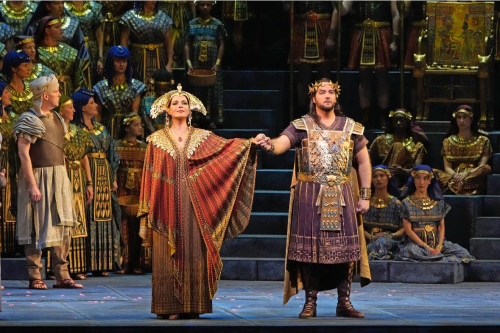
    Above: Elīna Garanča and Brian Jagde as Amneris and Radames; a Ken Howard/MET Opera photo

    ~ Author: Oberon

    Sunday April 27th, 2025 matinee – Two of the opera world’s brightest stars joined the cast today for the first of four Metropolitan Opera performances of Verdi’s AIDA, concluding this season’s run of the new production: Elīna Garanča, who had recently withdrawn from some European performances but who thankfully made it here to sing for us, was Amneris this afternoon, and the great Mongolian baritone Amartuvshin Enkhbat, whose Met debut as Germont in 2022 was truly impressive, as was his Amonasro this afternoon. Both of these singers came to worldwide recognition after participating in the Cardiff Singer of the World competition, the mezzo in 2001 and the baritone in 2015.  

    The only aspect of today’s performance that I wasn’t looking forward to was the presence on the podium of Yannick Nézet-Séguin, whose fast-and-loud, brass-happy conducting has spoiled several Met performances for me. 

    After a the opera’s expressive prelude, superbly played by the MET Orchestra, the huge voice of Morris Robinson drew us immediately into the story. As Radames, the stentorian tenor sound of Brian Jagde responded to the hint that Robinson/Ramfis had just dropped with an urgent recitative and then commenced the “Celeste Aida” which was taken a bit faster than usual; the tenor’s massive top notes immediately impressed the crowd, winning Jagde enthusiastic applause: with this man in command, the Egyptians were sure to win the coming battle.

    Ms. Garanča as Amneris enters, immediately making a lovely vocal impression as a lyrical princess; in her elegant phrasing, her every note spoke of her deep affection for Radames. A dulcet clarinet solo introduces Angel Blue’s Aida. The orchestra was sometimes too loud during the ensuing trio.

    Krzysztof Bączyk immediately made an excellent vocal impression as the King, as did the clear-toned Messenger of Yongzhao Yu. “Su del Nilo” felt a bit rushed, but Mr. Bączyk and Mr. Robinson traded bass sonorities to fine effect. Ms. Garanča chimes in…but from the pit, a N-S noise fest is developing. Angel Blue soars above the ensemble, then immediately commences “Ritorna vincitor!” in which Aida’s dilemma is introduced: she is torn between her love for Radames and love of her homeland. Some nice, chesty resonances underscore her anguish, though her topmost range seemed a bit tight. Her lyrical, prayerful ending of the aria was truly beautiful.

    As the action moves to the Temple of Vulcan, Tessa McQueen’s offstage Priestess is too far upstage to make an immediate impression but soon she is moved to a more congenial spot from which to display her attractive voice. There are lovely harmonies from the priests, and then ballet commences, only to have the music’s beautiful sense of calm (played with nice rubato touches) spoilt by someone’s coughing fit. Morris Robinson’s fabulous introduction to the consecration ritual, and Mr. Jagde’s heroic response, soon fall victim to over-playing from the N-S pit, nearly swamping the voices. 

    Bringing the house lights up a bit prior to the ensuing boudoir scene really shatters the mood; there’s a late seating, with latecomers stumbling about in the near darkness whilst people who’d arrived on time think it’s a bathroom break. Cellphones come on throughout the hall. Chatter spoils the ensuing opening harp solo as the women’s chorus seeks to restore the mood after this intrusion of reality.

    Ms. Garanča’s thrice-voiced, dreamy summoning of her beloved is so seductive. After the ballet interlude, the Egyptian princess baits her Ethiopian rival. Sparks fly as their rivalry is revealed; Amneris has the upper hand, and Ms. Garanča’s “Figlia de’ Faraino!” is blisteringly set forth. Some of Ms. Blue’s higher notes are a bit harsh, but her touching prayer at the end – Numi pieta!” – sounded gorgeous.

    The Triumphal Scene is grandly done, orchestra and chorus blazing away – interspersed with more lyrical passages – and then the ballet boys bring down the House with their bold, stomping dance. Mr. Bączyk sounds splendid as the King greets the conquering hero: Radames. The prisoners of war are brought in, among them the incognito King of Ethiopia – Aida’s father, Amonsaro – in the person of Amartuvshin Enkhbat. N-S lets loose the brass, but the baritone is unfazed, singing handsomely. Angel Blue produces a shining top-C. Now Mssrs. Robinson and Bączyk exchange bass sonorities as they debate the fate of the prisoners…of course, the priest wins. Bączyk now gives his daughter’s hand in marriage to Radames, with Ms. Garanča revelling in her triumph. The concluding ensemble was a bit messy. 

    On the banks of the Nile, Morris Robinson again impresses as he leads Amneris to a all-night prayer vigil. Angel Blue phrases the “O patria mia” poetically, her lyricism to the fore. She doesn’t float the top-C, but she makes much of the ensuing lament with a neat crescendo and then a hushed “…mai più…!” 

    Amartuvshin Enkhbat is authoritative and truly impressive as he tells his daughter what she must now do in the name of her country. His wonderful phrasing as he manipulates her leads to some very fine cantabile passages from Ms. Blue. The orchestra again overplays, but the baritone rises to the challenge with an epic “Non sei mia figlia!” Ms. Blue’s anguish is palpably voiced, and her father responds with the inspiring “Pensa che un popolo, vinto, straziato!”; here the orchestra gave truly marvelous support, making it a highlight of the performance.

    Radames now appears, and Ms. Blue treats us to a very seductive “La tra foreste vergini” as she tempts him to run away with her. The soprano’s turnings of phrase here is most inviting. But Mr. Jagde is unsure…his dolce B-flat as he ponders his choices was magical indeed. There was an intrusion by someone in distress in the audience, which killed much of the atmosphere as the duet moved to its end; Ms. Blue’s closing B-flat was short and unsteady; then the stretta was on the wild side, the soprano’s top not really assured. Amonasro’s reappearance sealed the baritone’s success, and then Mr. Jagde nailed his “Io resto a te!” with amazing power and thrust.

    Elīna Garanča now took command of the Met stage with a Judgement Scene in which every word and note counted. Her “Vorrei salvarlo…” was full of hesitant hope, and then the chilling orchestral passage, ending on a splendid clarinet low note, brought Radames before her. Simply gorgeous clarinet playing underscored Ms. Garanča’s beautifully desperate plea, to which Mr. Jagde responded with a great outpouring of tone. Garanča’s brilliant “Morire!!?” was phrased immediately into her ensuing entreating passages. Jagde silenced her with a massive B-flat. Tension reaches a boiling point, Garanča’s voice rising to two scorching B-flats as her desperation overwhelmed her.

    Radames is led away, and Ms. Garanča’s lament is hauntingly sung, her anguish over her jealously having caused Radames’s downfall marked by a pianissimo intoning of “…io stessa lo gettai!” fading to a whisper. Morris Robinson’s chilling calls of “Radames!” must still be echoing somewhere in the univese. Soft drum rolls ominously underscore the ensuing trial, with Robinson/Ramfis becoming increasingly impatient.

    Harsh accents from the orchestra underscore the death penalty prouncement, the deep brass voices terrifying. Ms. Garanča’s pleas are in vain; in her fury she curses the priests, soaring to a climatic top A. A prolonged ovation ensued, the crowd cheering the beloved mezzo in a well-deserved salute.

    The final scene opened with Mr. Jagde’s doom-ladened phrases of farewell to Aida. When she steps from the darkness of the tomb, the great farewell duet commences. Here one wished for more piano singing from Ms. Blue but overall the duetting voices were wonderfully expressive and moving. Then Ms. Garanča’s solemn invocation of peace lingered on the air as darkness fell.

    The ovation when Elīna Garanča took her first solo bow was genuinely tumultuous; a bouquet flew onto the stage, and the comely Elīna literally prostrated herself in response to the waves of love pouring across the footlights. 

    ~ Oberon

  • String Resonance @ Chamber Music Society

    Bella 2

    Above: Bella Hristova

    ~ Author: Oberon

    Sunday April 21st, 2024 – A quintet of exceptional string players gathered this evening at Alice Tully Hall where Chamber Music Society of Lincoln Center was presenting works by Beethoven, Françaix, Bridge, and Mendelssohn.

    Beethoven’s Trio in E-flat major, Op 3, was superbly played by Bella Hristova (violin), Timothy Ridout (viola), and Sihao He (cello). In this early work, the composer gives us six movements instead of the usual four. Each movement seemed a bit drawn out, and – beautiful as the music is – various motifs recur until their originality wears thin.

    String

    Above: Bella Hristova, Sinhao He, and Timothy Ridout at the end of the Beethoven

    The opening Allegro con brio has a witty start; along the way, pauses will charmingly crop up. The violin part is quite florid, and Ms. Hristova played it vividly, The music veers from agitated to lyrical until – In a mood swing –  Mr. He’s cello suddenly digs in dramatically. The music fades, then rebounds with some lively bowing from all. After another lull, we move on to a brisk finale.

    The Andante has gentle start, with violin trills set over a graceful dance rhythm. Lovely subtleties emerge from the ideal blend of the three voices, and how lovely to observe the communication between the musicians. The movement ends with a brief plucked motif.

    The opening bars of the first Minuet have a hesitant quality; then a sense of irony develops. Sweet melodies entwine, laced with touches of humor. Mr. Ridout’s velvety viola opens the Adagio in a gently swaying mode. Mr. Hristova brings perfect clarity to a solo violin passage, then joins in the swaying feeling  as viola and cello take up the melodic line. The roles of melodist and accompanist shift graciously. A cadenza from Ms. Hristova is heard. Violin and viola echo one another, then the viola and cello commune. Near the end, a strange droning sound emerges.

    The second Minuet, marked Moderato, is light and lively at first, then the sound grow denser. A high, fanciful violin passage again shows off the Hristova magic. The Finale/Allegro begins with bright, virtuosic passages before sailing thru a variety of moods and rhythms. After some false endings, the final cadence is reached.

    String 2

    Above: Chad Hoopes, Sinhao He, and Matt Lipman playing the Françaix

    Nothing could have provided a more vibrant contrast to the Beethoven than Jean Françaix’s Trio for violin, viola, and cello, which was composed in 1933. Chad Hoopes (violin), Matthew Lipman (viola) and Mr. He (cello) took the stage for this delightful fifteen-minute piece which is alive with contrasts and gleaming tone colours. The opening Allegretto vivo is sprightly, with a jazzy feel; the Scherzo is a fast, waltzy dance.

    In the Andante, the individual timbres of the three players can be delightfully savored. Mr. Hoopes opens the movement with a sweet/sad violin theme; then Mr. He’s cello sets a slow rhythm before taking up the melody with his deep-violet sound. The theme then passes to Mr. Lipman’s distinctive viola. The zestful final Rondo is rapid and rhythmical, with the violin sailing to airy heights before the mood turns whimsical with the viola interjecting some cunning trills. Then, out of the blue, the music turns into a march. The three musicians seemed to be having so much fun with this refreshing piece.

    String 3

    Above: violists Timothy Ridout and Matthew Lipman after the Bridge

    Following the interval, I experienced Frank Bridge’s Lament for two violas for the first time. Composed in 1912, this eight-minute work is a real treasure for folks like me who love the viola sound. The two dapper young players, Timothy Ridout and Matthew Lipman, immediately drew us into the mood of the music. Mr. Lipman starts with a sorrowful theme, richly intoned. Mr. Ridout joins, playing poignantly in a higher range. In passages of close harmony, the music gets more passionate. A dialogue emerges: Matt in a lyrical mode as Tim plucks a rhythm: then they switch roles. In a passage of double-stops, we sense the aural illusion of a quartet. They two then play in unison, and Tim then sustains a long tone over Matt’s gentle plucking beat. The final chord fades. There was a big audience reaction to this rarely-heard work, and the players were enthusiastically applauded.

    Mendelssohn

    At last we come to Mendelssohn (above), who composed his Quintet #2, Op. 87, in 1845. The composer’s Piano Trio #1 is the piece that turned me on to chamber music…and his MIDSUMMER NIGHT’S DREAM is the perfect ballet score.

    In this evening’s Quintet performance, Mr. Hoopes was 1st violin, and Ms. Hristova 2nd, while Mr. Lipman was 1st viola and Mr. Ridout 2nd; anchoring the work with his opulent cello tones was Mr. He. The lively start of the Allegro vivace heralded a thrilling performance, the rich blend these players achieved had the effect of an orchestra playing. Tremolos spring up, adding to the vivacious atmosphere. A big theme sounds, Mr. Hoopes’ violin shines in high-lying passages…it’s all very grand. Suddenly things soften, only to surge up again to a glorious finish.

    The Andante scherzando has a sly start, later developing into a courtly waltz with cello pizzicati setting the pace. Minor-key harmonies emerge, and Mr. Ridout plays descending tremolos, opening an exchange of melodies between Mr. Lipman and Mr. Hoopes. The movement flows on to a wispy conclusion.

    A somber – almost tragic – atmosphere pervades the Adagio e lento, with achingly beautiful harmonies evolving over the tones of the cello rising step by step. A proud rhythm is taken up, almost like a noble Spanish dance, and the music grows more lyrical, with a reassuring violin solo. The doleful atmosphere returns, with Mr. Hoopes, and then Mr. Lipman, taking the melodic lead. Mr. Hoopes has a cadenza, and then shines in a high passage over shimmering tremolos. Passion rises to a sense of grandeur, with the violin soaring over all. The music calms to a wisftul end. 

    The final Allegro molto vivace is a bustling affair, with each player having a chance to shine. The violas, and then the violins, harmonize. After a lull, there is a final dash, further lifting the audience’s spirits and igniting a standing ovation wherein the players were recalled for a second bow while shouts of bravo! rang thru the hall.

    (Performance photos from the Chamber Music Society’s Facebook page)

    ~ Oberon

  • Graham Classics + New Works ~ 2023

    Rigney

    Above: from Annie Rigney’s new work for the Martha Graham Dance Company, GET UP, MY DAUGHTER

    Sunday April 23rd, 2023 matinee – Two Graham masterpieces and two recently-premiered works new to the Graham Company repertoire held the stage at the Joyce Theater this afternoon.

    DARK MEADOW SUITE, one of Graham’s most beautiful works (with an equally beautiful Carlos Chávez score) opened the performance. At curtain-rise, the women are posed like icons, with Anne Souder slightly removed from the others. They begin stamping their feet. A plaintive violin theme is heard, joined by the cello. The women move with classic Graham steps and gestures; Ms. Souder is simply sublime.

    Lloyd dark meadow

    Now Lloyd Knight (above) appears, striking poses in a spellbinding opening solo which develops into a stage-filling dance. Ms. Souder joins him for a duet in which an electric current seems to pass between them; their intimate partnering is at once sensual and ritualistic.

    The kneeling men hold the women in a uniquely lovely leaning, questing pose, symbolic of seeking or longing; Ms. Souder and Mr. Knight continue to reign in duet and solo phrases: unbearably tender and heartfelt.

    Aside from the principal couple, the cast for MEADOW today featured Leslie Andrea Williams, Laurel Dalley Smith, Marzia Memoli, Devin Loh, Kate Reyes, Jacob Larsen, Richard Villaverde, and new-to-Graham James Anthony.

    MGDC2023_Steven-Pisano-44

    Above: Marzia Memoli and So Young An in Annie Rigney’s GET UP, MY DAUGHTER; photo by Steven Pisano

    Ms. Rigney’s debut piece for Graham opened earlier in the week. It is a harrowing work, set to a thrilling score by Marco Rosano which incorporates Bulgarian folk music with original themes by the composer, and with stunning lighting by Yi Chung-Chen. It tells a story similar to one that I heard long ago from my high-school girlfriend.

    A quartet of young women in satiny frocks – So Young An, Anne O’Donnell, Anne Souder, and Marzia Memoli – dance together to chanted harmonies. They seem wary, full of angst and longing.

    MGDC_Get-Up-My-Daughter_MSherwood_07

    Above, in a Melissa Sherwood photo: Richard Villaverde makes a disturbingly powerful impression as the man of the house, who singles out So Young An as his partner of the moment in a dramatic duet of control, resistance, and resignation. The music is solemn, with the haunting voice of the great counter-tenor Andreas Scholl bringing a timeless feel. 

    Ying Xin joins the sisterhood, who have apparently been drugged into near stupor; while heavenly harmonies are heard, they seem to plan an escape but lack the strength to attempt it. The organ joins the musical soundscape, lending a curiously religious air. Mr. Villaverde returns; the women tremble in fear. Drums thunder forth, and the piece ends suddenly.

    MGDC2023_Steven-Pisano-47

    Above: Ying Xin, Marzia Memoli, and So Young An in GET UP, MY DAUGHTER; photo by Steve Pisano

    Why this work affected me so deeply lies in recalling my girlfriend’s experience, of which I was unaware at the time. For three years, her father routinely raped her, her two older sisters, and her younger brother. I was aware of the extreme tension she endured living in a home with a drunken father, but I never knew about the sexual side of it until a few years later, after she had escaped and moved to Washington DC. I only knew how she clung to me in our tender, juvenile – but curiously “knowing” – love-making. Her father eventually blew his brains out.

    Cortege 1

    Above: from CORTEGE 2023, with Ruchard Villaverde kneeling; photo by Steve Pisano

    Equally thought-provoking this afternoon was the second darkly powerful new work, CORTEGE 2023, set to a score by Aidan Elias and choreographed by Baye & Asa. This piece spoke of the dangerous world in which we now live: scenes of violence, torture, and isolation alternate with depictions of mourning and consolation.

    Chimes sound at curtain-rise as a diagonal of dancers are seen covered by a shroud, which is slowly pulled away as the dancing starts. The lighting (again by Yi-Chung Chen) flashingly isolates various tableaux of people under duress: prisoners, the interrogated, the isolated, the bereaved.

    MGDC_Cortege-2023_MSherwood_7944

    Lloyd Knight’s solo (above photo by Melissa Sherwood), set to sinister music, is riveting. Rhythmic variety, and ritualistic acts, carry the piece eerily forward. Anne O’Donnell’s solo is so expressive, and James Anthony has an opportunity to shine.

    MGDC2023_Steven-Pisano-32

    Above: Lorenzo Pagano and the ensemble; photo by Steve Pisano

    Violence has become a fact of life, as indicated by a cataclysmic buildup of brass in the score. An animated quartet become a hypnotic sextet: the movement is non-stop. Deep chords invoke feelings of doom; and then, as silence falls, the vast shroud is used as a cover-up. 

    The afternoon ended with a spectacular performance of Martha Graham’s take on the Medea story: CAVE OF THE HEART. The Metropolitan Opera’s 2022-2023 season opened with the Met’s first-ever performance of Cherubini’s MEDEA starring the inimitable Sondra Radvanovsky, so the story is fresh in the memory.

    MGDC_Cave-of-the-Heart_LAW_MSherwood-24

    Leslie Andrea Williams (above, in a Melissa Sherwood photo) radiated her distinctive star-power in a performance that brought the character’s double personality – abandoned lover and conniving sorceress – vividly to life. When she is not doing, she is always thinking; Leslie’s expressive face, and her eyes – ever scanning the scene for what damage she can do – are as vital to her playing of the role as her dancing. 

    MGDC_Cave-of-the-Heart_LAW_MSherwood-16

    Laurel Dalley Smith (photo above by Melissa Sherwood) gave a dazzling performance as the naive bride, basking in Jason’s attentive courting, unaware of the doom that awaits her.

    MGDC_Cave-of-the-Heart_LAW_MSherwood-44

    Lorenzo Pagano as the proud Jason, looking to be King of Corinth whilst scorning the woman who made it all possible, pays the cost of his betrayal. His earlier show of pride, taunting Medea with his worshipful wooing of the young princess, plunges him headlong into disaster. (Photo above by Melissa Sherwood).

    MGDC_Cave-of-the-Heart_LAW_MSherwood-03

    Presiding overall, and striving in vain to prevent the ultimate catastrophe, the marvelous Natasha S. Diamond-Walker – a Graham goddess if ever there was one – conveyed both the dignity and the anxiety of the all-knowing Chorus in perfect measure. (Photo above by Melissa Sherwood). 

    It surprises me that Martha Graham did not bring the children of Medea and Jason into her telling of the story. The two young boys are a key element in the Cherubini opera, wherein Medea surpasses the cruelty of murdering Jason’s betrothed by knifing the youths. She flings their bloody corpses at Jason’s feet; aghast, he asks her: “What was their crime??” to which she calmly replies: “They were your children…”

    Following the performance, I went downstairs to greet and thank the dancers, and was thrilled to see again – after waaaay too long – two of my Graham idols, Blakeley McGuire and Carrie Ellmore-Tallitsch.

    ~ Oberon

  • Premieres @ Graham

    MGDC_Get-Up-My-Daughter_MSherwood_06

    Sunday April 23rd, 2023 – The Martha Graham Dance Company have presented two premieres during their current season at The Joyce. I saw them both on this afternoon’s program, and I found them to be engrossing (for different reasons), with fascinating musical scores, terrific lighting, and – needless to say – spectacular dancing.

    Some images have come my way, and I am posting one picture from each of the new works now, with my write-up to follow tomorrow. At the top, dancing Annie Rigney‘s GET UP, MY DAUGHTER, are Richard Villaverde and So Young An. The score, which sometimes draws on Bulgarian folk music, is by Marco Rosano.

    Below, from CORTEGE 2023, choreographed by Baye and Asa to a score by Aidan Elias, are dancers James Anthony, Anne Souder, and Richard Villaverde.

    MGDC_Cortege-2023_MSherwood_7899

    Both photos are by Melissa Sherwood, courtesy of the Martha Graham Dance Company.

  • From Mendelssohn @ Chamber Music Society

    Barnatan-8-gallery

    Above: pianist Inon Barnatan, photographed by Marco Borggreve

    ~ Author: Oberon

    Sunday April 28th, 2019 – Music by Felix Mendelssohn, and by three composers he inspired, was on offer by Chamber Music Society of Lincoln Center at Alice Tully Hall this evening. The Society drew together an international ensemble of extraordinary musicians for a program of mostly familiar works, with a Schumann gem – a piece I’d never heard, nor even heard of – thrown into the mix for good measure. 

    5ae1bc9352939

    The Swedish cellist Jakob Koranyi (above in a Lisa-Marie Mazzucco photo) and Israeli pianist Inon Barnatan opened the concert with Mendelssohn’s Lied ohne Worte in D-major, Op. 109. The musicians proved to be an ideal pairing: they both play from the heart. This is a song sung by the cello, with a bittersweet melody, and an interlude that is passionate and then animated, before leading back to theme. The cellist ranges from a ravishingly sustained and tapered high note to – soon after – a plunge to the depths; the music ends with a rising phrase. A packed house called the two gentlemen back for a bow. The evening was off to a wonderful start.

    Robert Schumann’s Märchenerzählungen (‘Fairy Tales‘) for Clarinet, Viola, and Piano, Op. 132, was one of the composer’s last completed works. It was written in 1853, just five months before his attempted suicide and his subsequent confinement in a mental institution, where he died in 1856 at the age of 46. 

    Romie_Formal_2

    Märchenerzählungen brought forth the excellent Canadian clarinetist Romie DeGuise-Langlois (above); living as we do in a time when a number of superb clarinetists have thriving careers, it’s always a special pleasure for me to hear Romie, with her colorful tone and abundant technique. She was joined by violist Paul Neubauer and Mr. Barnatan for the four miniatures that comprise Märchenerzählungen

    The entwining of the mezzo-soprano-ranged voices of clarinet and viola was intriguing to hear: in the first movement, the music veers from playful to songful with lightness of mood, and Romie’s dynamic range – and her very pretty trill – were beautifully evident.

    An almost march-like pace commences the second movement, with blithely harmonized duetting from the clarinet and viola. An ensuing darkish mood felt a bit tongue-in-cheek: was Schumann toying with us?

    Mssrs. Neubauer and Barnatan open the third movement with sublime softness, joined soon by the clarinet. A wistfully exquisite blend of the three instruments – with immaculate turns of phrase – became achingly beautiful in its freely flowing lyricism. The movement’s sustained ending was very touching.

    In the final movement, clarinet and viola converse, then are heard as a duo. A charming interlude, with lightly etched motifs from Mr. Barnatan at the Steinway, shifts onward to a gallant finish. The only fault I could find with this Schumann work was that it’s too short: I wanted to hear more from Ms. DeGuise-Langlois.

    Paul-neubauer-by-tristan-cook

    Paul Neubauer (above, in a Tristan Cook photo) returned immediately with Mr. Barnatan for a lustrous performance of Johannes Brahms’ Sonata in E-flat major for Viola and Piano, Op. 120, No. 2, composed in 1894. The opening Allegro amabile brings us a sweet and subtle song, followed by a passionate passage from the pianist. Things then settle into a rather pensive state, both players delighting us with their dynamic palette and their feeling for the ebb and flow of the themes. A Romantic atmosphere, with the music soft and lovely, carries us thru a change of mood.

    In the second movement, Appassionato, the urgent passion of the opening statement subsides, but an underlying restlessness lingers. A hymn-like theme for solo piano lets us savour Mr. Barnatan’s artistry; joining in, Mr. Neubauer’s viola carries the melody to the instrument’s depths. In a sudden upswing, the music turns waltzy…and then finds a cool, darkish ending.

    The sonata’s final movement has a simple theme; the music is slow, with an air of Bach about it. A charming dance variation crops up, playful in its quirky swiftness, which is eventually becalmed. The work ends with a multi-faceted coda. Mssrs. Neubauer and Barnatan were rightly hailed for their warm-hearted performance. 

    Following the interval, Mr. Barnatan had the stage to himself for “Juin – Barcarolle” from Tchaikovsky’s Les saisons for Piano, Op. 37b.  This is echt-Tchaikovsky, with Mr. Barnatan relishing each note of the theme, which is thoughtful, and almost somber. Following a brief animation, descending notes bring us back to the melody. The music takes on a sort of shimmer, and then goes deep before rising to a soft, fading finish.

    Cho-Liang Lin

    Above: violinist Cho-Liang Lin, photo by K C Alfred

    The evening ended with a glorious performance of the Mendelssohn Trio No. 2 in C-minor for Piano, Violin, and Cello, Op. 66, in which Mssrs. Koranyi and Barnatan were joined by master violinist Cho-Liang Lin. The two Mendelssohn piano trios were the first chamber works to seize my attention, back at a time when I listened almost exclusively to opera.

    The passion – and the abundant lyric detail – of the music was served to perfection by Mssrs. Lin, Koranyi, and Barnatan. Their performance had a polish and glow that somehow made the music sound even more gorgeous to me than it ever has. It would be hard to imagine anything more moving – and thrilling – to me on a personal level than experiencing this music (which essentially opened up a new world for me when I heard it by chance on the radio…oh!, so many years ago) played with such lustre and vitality as it was tonight. A sublime, poignant experience; all my emotions were in play.

    It meant so much to me to be hearing this performance, as offered by the Chamber Music Society where – in the past few years, thanks to their generous welcome – I have had the opportunity to explore the vast chamber music repertoire, played by the great artists of our time. I became quite emotional as the trio of musicians produced one glorious passage after another tonight. And, in fact, the entire audience seemed to have fallen under a spell of enchantment. 

    The bows were not even off the strings when the applause commenced, the audience expressing their fervent delight with the performance – and their admiration for the musicians – in a spontaneous, full-house standing ovation. The players took a second bow as shouts of ‘bravo!‘ rang thru the hall. 

     ~ Oberon
  • The Schumann Quartet @ Chamber Music Society

    30738946_10155657104388666_6425725551075393536_n

    Above: The Schumann Quartet

    ~ Author: Oberon

    Sunday April 29th, 2018 – The Schumann Quartet‘s finely-contrasted program at Chamber Music Society this evening brought us works composed in four different centuries, including the US premiere of a piece composed in 2006 by Aribert Reimann.

    One of the (many) nice things about attending Chamber Music Society frequently: your opinions on various composers change. Over the past few seasons, being exposed often to the music of Haydn has altered my feelings towards his music, which had always seemed to me attractive and well-crafted but lacking in the emotional qualities that make Mozart, Beethoven, and Brahms so satisfying. 

    So this evening’s opening Haydn – the Quartet in B-flat major for Strings, Hob. III:78, Op. 76, No. 4, “Sunrise” (1797) – didn’t give me the old reaction: “If only they’d programmed _____________ instead,” but rather a feeling of appreciation, especially as it was so finely played. Each member of the Schumann Quartet has a beautiful ‘voice’, and as they blended in this music the effect was heavenly.

    The “Sunrise” Quartet is indeed worthy of its name: seconds into the piece, an ascending phrase from the violin depicts the moment of dawning day. Soon afterward, the music turns lively, and the players show off their expert sense of timing. When the music turns darkish, the layering of the four musical lines is truly atmospheric.

    In the Adagio which follows, a lovely sense of calm pervades. The high violin sings serenely over the warmth of the lower mix; modulations are graciously set forth, the cello with glowing tone. The Menuetto has an oddly ‘Scottish’ feeling, and in a da capo, subtly charming hesitations are felt. The quartet then dove immediately into the final Allegro, ma non troppo – ‘non troppo‘ being the key, for the pacing had a gentle lilt. As things turn more lively, the harmonizing violins bring a witty touch. A sudden gear shift sets up a super-fast conclusion.

    The Schumann Quartet then moved on to Bartók: his Quartet No. 2 for Strings, BB 75, Op. 17 (1914-17), a wartime work which was given a remarkable interpretation by the young musicians: thoroughly engrossing.

    The Bartók 2nd’s three movements each seem to represent an emotional state: solitary life, joy, sorrow. An eerie sense of restlessness sets the mood of the opening Moderato; contrasting passages of intensity and somber beauty find the Schumanns at their most expressive, the probing cello making a special impression. Tonal richness wells up, angst and poignant longings are finely delineated. A rocking motif, plucked cello, duetting violins, and dusky viola drift thru our consciousness before the music takes on a searing quality. This subsides to movement’s sudden, near-silent finish.

    The Allegro is scrambling, animated, constantly pulsing. The Schumanns relish the passages of plucking with brief bits of melody tucked in. The music becomes driven, then suddenly stalls. Following more hesitations, staccati, and snatched commentary, energy is restored. Trilling, the music plunges on. But we are not there yet: another pause, and some agitato scurrying before a big finish. The rhythmic vitality of the Schumanns gave this Allegro just the perfect sense of dancing. 

    An alien sense of gloom descends over the concluding Lento as a bleak melodic motif is passed violin to violin to viola to cello. From muted, pensive blendings, the violin rises to the heights. Intense harmonies bring a density of sound that is suddenly stilled. From quietude, another unsettling passage builds. Plucked notes bring us to a whispered ending.

    Throughout the Bartók, I was deeply engaged by the Schumanns’ playing, sitting forward to catch every nuance. My focus was so intense that the hall and everyone around me seemed to vanish; it was just me and the music – a rare, profound feeling.

    I confess to never having listened to much of Aribert Reimann’s music; I took a recording of his opera LEAR from the library a few years ago and found it off-putting in the extreme. I cannot say that the composer’s Adagio zum Gedenken an Robert Schumann for String Quartet – in its US premiere performance this evening – did anything to make me want to explore more of the composer’s work, despite the excellence of the playing.

    Dark viola and cello and powerful staccati from the violins open the piece. The music becomes woozy; at times it sounds seasick. Moments of beauty in the richness of the lower voices, and high-lying phrases from the second violin are welcome. The cellist taps his cello. 

    From nowhere, a hymn-like melody appears, then goes askew; these motifs alternate for a bit before the music turns metallic. High violin notes and strange harmonies carry the 8-minute work forward. As an imagining of what music Robert Schumann in his madness might have heard in his head, Reimann’s Adagio is touching; this alone might make it worth hearing again in future.

    To round out the evening, Robert Schumann’s Quartet in F major for Strings, Op. 41, No. 2 (1842). This was Schumann’s first effort in the quartet genre, and both my companion and I had a sense that the composer was rather feeling his way into it: sometimes the flow of musical ideas seems a bit disjointed. However, there are plenty of passages to savour – and a wonderfully deft Scherzo – which the players brought forth in their polished, melodious performance.

    ~ Oberon

  • The Romantic Viola @ Chamber Music Society

    042416_TRV

    Sunday April 14th, 2016 – No fewer than eight violas were in play on the Adrienne Arsht Stage at Alice Tully Hall this evening as Chamber Music Society of Lincoln Center offered an exceptional program, curated and head-lined by Paul Neubauer (above), in which the viola was heard in music by seven different composers (plus one anonymous composition). The program ranged from mid-19th century works to a world premiere by Joan Tower, who was present and took a bow…and got a kiss from Mr. Neubauer.

    A Robert Schumann rarity and a fantasy-suite by August Klughardt were the first two works on the program; written about twenty years apart, the two pieces each call for violist, pianist, and a woodwind collaborator. It was our good fortune this evening to have clarinetist Romie de Guise-Langlois and oboist James Austin Smith joining Mr. Neubauer and pianist Alessio Bax. Both Mlle. de Guise-Langlois and the dapper Mr. Smith are elegant players, and both are blessed with astonishing breath control.

    Romie-de-guise-langlois-155x232

    Above: Romie de Guise-Langlois

    The Schumann opens like a breath of Springtime. Clarinet and viola pass melodies back and forth, eventually honed down to a dialogue where they finish one another’s sentences. Underscored by Mr. Bax’s immaculate playing, Mlle. de-Guise-Langlois’ and Mr. Neubauer’s blend of timbres was most appealing. The second movement veers from march-like to moments of ironic deftness to a free flow of song, which the pianist takes up. Poignant and pensive, the third movement has a touch of mystery; here Mlle. de Guise-Langlois was able to sustain long lines with total control, tapering the tone into a sweet blend with the Neubauer viola. The animated fourth movement – which pauses midway thru for a gently-paced passage – was as pleasant to watch as to hear, as the eye-to-eye contact of Romie and Paul was keenly focused; Mr. Bax’s piano provided added joy.

    James-sq

    Above: James Austin Smith

    The slender frame and expressive face of James Austin Smith might have graced the salons at Kellynch Hall or Pendersleigh Park: a youthful, romantic figure. His playing also has an Olde World geniality: dulcet of tone and (as with Mlle. de Guise-Langlois) blessed with an uncanny ability to spin out long lines. In August Klughardt’s Schilflieder, Mr. Smith established at once an ideal rapport with Paul Neubauer.

    The first of the five “fantasies” opens with solo piano, soon joined by the plaintive oboe and the soulful viola; the second brings the restless viola into harmonizing with the oboe. Mr. Bax’s dreamy playing leads off the third movement, with the viola and then the oboe singing sadly and tenderly; the pianist’s sense of delicacy was a lovely asset here. The fourth movement begins dramatically, with viola and oboe sounding forth over a rippling piano motif.

    Mr. Smith’s formidable breath control was much admired in the closing movement; the atmosphere is poetic and sustained, the viola wistful. A nicely-turned cadenza for oboe led to the end of the work with a very sustained joint oboe/viola note. 

    Both the Schumann and Klughardt were brand new to me, and both made me wonder why we don’t hear them played more often. Of course, the Gordon Jacob piece for eight violas will always be a rarity, simply because the logistics of getting eight first-rate violists together to rehearse and perform it would take some doing. Mr. Neubauer was able to call upon his viola-playing colleagues to assemble a classy octet – including Cynthia Phelps, the NY Phil’s principal violist. Ida Kavafian and Daniel Phillips, more usually seen with their violins, took up violas to join in the fun tonight. Along with Mr. Neubauer, Hsin-Yun Huang, Richard O’Neill, Lawrence Dutton, and Pierre Lapointe formed a very impressive ensemble.

    This Suite for Eight Violas, composed in 1976, created quite a buzz. It opens with a unison “Russian” theme, the eight voices blended in song. The second movement, Scherzo and Drone, is a sprightly romp: a folk-dance with a sly finish. Sweet sadness prevails in the Chorale: Lento. Richard O’Neill then kicked off the closing Tarantella with swirling rushes of notes alternating with gentler interludes. A broad melody sweeps us thru to the end. The audience, clearly relishing the combined talents of these eight artists, sent up an enthusiastic ovation. 

    Following the interval, Paul Neubauer appeared alone onstage. 

    I love Joan Tower’s music, and I really enjoyed hearing tonight the two solo works she wrote expressly for Mr. Neubauer, the second of which was having its world premiere. Simply Purple is deceptively simple; a slowly rising scale, with a deep sense of mystery pervading, must be delivered with consummate control and subtle dynamic variants. The premiere, Purple Rush, is a scurrying downward swirl; it goes low and dusky, with cascades of notes and shimmering, slippery slides. Mr. Neubauer’s mastery held the audience throughout; and it was so nice to see Ms. Tower there, sharing the applause with the violist.

    Jennifer_Johnson_Cano

    Stepping across the Plaza from The Met, where she has been appearing as Emilia in Verdi’s OTELLO, mezzo-soprano Jennifer Johnson Cano (above, in a Fay Fox photo) sang the two Brahms viola songs, the only music on the program that I was familiar with. A comely young woman with a voice to match, Ms. Cano’s warm, even tone and her natural feeling for the words – and for finding beautiful hues to express them – provided a most appealing rendering of these two familiar and beloved melodies. She formed an immediate rapport with Mr. Neubauer as they faced one another across their music stands; their blend of timbres was a pleasure to hear, and Mr. Bax, at the Steinway, continued to take a major role in the proceedings with his lustrous playing. May we have Ms. Cano back please – and soon! – perhaps for the Wesendonck Lieder?

    Photo_abax

    Above: Alessio Bax, a superb pianist who played in six of the works on offer this evening

    A flash of Spanish light and colour is welcome on any concert program; tonight, Joaquín Turina’s Escena andaluza proved yet another notable discovery. An opening cascade from the piano becomes a caress. Ms. Kavafian and Mr. Phillips are back with their violins now, and together with Richard O’Neill (viola),  Paul Watkins (cello), and Mr. Bax at the piano they catch the music’s sensuous moodiness and underline Mr. Neubauer’s tonal affluence ideally. Outstanding playing from Romie de Guise-Langlois put the final flourish on this miniature Andalusian tone poem.

    A lilting and passionate violin solo (Ms. Kavafian) is answered by Mr. Watkins’ velvety cello; Mr. Bax’s keyboard shifts between the insinuating and the rhapsodic, and there’s a flurry of string instruments being plucked.

    Ms. Kavafian opens the second section of the Turina playing in the high range. The music glides from sly seduction to rising desire and on to a shimmering glow before the pianist – abetted by the clarinet – urges us to surrender to our passions.

    The same ensemble from the Turina remained onstage for Hermann Schulenberg’s Puszta-Märchen; they were already seated and raring to go. But where was Paul Neubauer? The ensemble struck up – a gypsy romance – and Mr. Neubauer stepped from the wings, already playing, and strolled down the steps and into the audience. He stopped next to me and my friend Claudia Schreier and – fixing me with an intense gaze – played a dusky, wine-drenched melody with great passion; I could actually feel the resonance of the music rising from the viola. He then locked eyes with Claudia and continued to play, totally by instinct. Momentarily he walked away, but then came back to us to continue his serenade. After a few moments he turned his attention to the usherette and played to her on intimate terms.

    Onstage, his colleagues were continuing to play while keeping one eye on the wandering minstrel. Suddenly they switched to a brilliant czardas; Mr. Neubauer returned to center-stage, playing on with virtuoso élan, and evoking swirling roulades from Romie’s clarinet. The music halted as all the players stomped their feet, and the audience burst into applause.

    Mr. Neubauer’s arrangement of Rumanian Canary, with its bird-song ‘cadenza’, was the concluding delight of the program. This led to a joyous standing ovation, and the players being called out twice.

    Being serenaded by Paul Neubauer is something I’ll always remember: an unexpected and charming episode in my life – a life that remains full of surprises. 

    The Repertory:

    The Participating Artists:

  • American Symphony Orchestra’s MUSIC U

    Cd_cover460

    Sunday April 19th, 2015 – This note from the press release describes the inspiration for today’s programme, entitled ‘MUSIC U’, by the American Symphony Orchestra: “In a country without kings and courts, universities have served as the patrons for many of America’s greatest composers.” Leon Botstein and the ASO were joined by the Cornell University Glee Club & Chorus in a celebration of five Ivy League composers.

    RandallThompson480

    In 1940, Randall Thompson (above) who taught at Harvard and was director of the Curtis Institute, was commissioned to compose a choral work for the opening exercises of the new Berkshire Music Center at Tanglewood, to be performed by the entire student body. The composer offered a setting of the Alleluia. Distraught over the Nazi invasion of France, Thompson could not bring himself to compose a joyous fanfare. Instead, he produced this solemnly beautiful and introspective piece, inspired by the Biblical passage (Job 1:21): “The Lord gave and the Lord has taken away; blessed be the name of the Lord.”

    Performing a cappella under the direction of Robert Isaacs, the young singers from Cornell displayed a lovely vocal blend in the heavenly harmonies of this slow, lilting choral miniature. The gentle pace quickens somewhat near the work’s end, but falls back into calm with a very sustained final note that hung on the air.

    Parker

    After a rather long pause, the concert continued with the oldest work (late 19th century) on the programme: the cantata Dream-King and his Love by Horatio Parker (above), one-time Dean of Music at Yale. This cantata won first prize in its category in a competition judged by Dvořák himself. A fanciful romantic text tells the tale of a maiden visited in her dream by a kingly lover.

    The work is melody-filled and seems to echo some of the exotic works of Jules Massenet. From the lyrical opening (the harp is prominent) thru passages dance-like, rapturous, and triumphant by turns, the music opens out like a perfumed lotus blossom. The naturally youthful sound of tenor soloist Phillip Fargo fell pleasingly in the ear, and the singers from Cornell again gave of their best.

    Rochberg-George-01

    The Symphony No. 2 by George Rochberg (above), who ran the music department at the University of Pennsylvania, was the longest work on the programme. Composed in 1955-1956, this symphony today sounds like a generic work from an era when classical music was not quite sure what direction it was headed in. It’s a big-scale piece, one which seems to take itself very seriously. One can sense such influences as Prokofiev, Stravinsky and Schönberg in the writing, and the composer’s fine craftsmanship is never in doubt. Yet despite its rhythmic variety and interesting sonic textures – oboe and horns are well-employed – the piece seemed over-extended. Melody is pretty much banished – a promising duet passage for two violas evaporated after a few seconds – and although melody is not essential, it is inevitably gratifying. Maestro Botstein’s commitment to the work and the excellent playing of the ASO – many fleeting bits of solo work are strewn throughout the score – made as strong a case for the symphony as one could hope to hear.

    300h

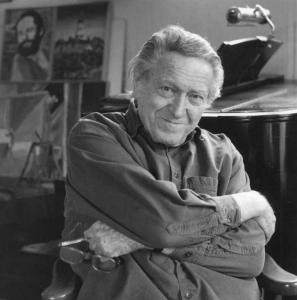
    Music for Cello and Orchestra by Harvard’s Leon Kirchner (above)…

    Nicholas-Canellakis

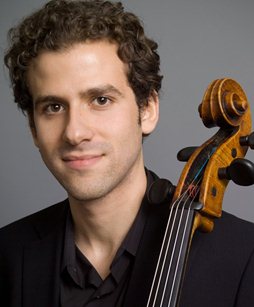
    …with soloist Nicholas Canellakis (above) opened the second half of the concert. The cellist is a frequent participant in Chamber Music Society of Lincoln Center‘s superb concerts.

    Today, Kirchner’s music seemed to me to have found what was missing from the Rochberg: a connection to the heart. Throughout the Kirchner, the solo cello gives his piece a sense of unity and purpose that – to my ears – the Rochberg lacks. Kirchner’s orchestration is colorful and dense, with excellent use of percussion, and the music sometimes takes on a cinematic quality. I love hearing a piano mixed into an orchestral ensemble work, and at the reference to TRISTAN UND ISOLDE, my friend Adi and I exchanged smiles.

    Mr. Canellakis was simply breathtaking right from the cello’s passionate opening statement. He was deeply involved in the music, moving seamlessly from a gleaming upper register to the soulful singing of his middle range. Capable of both redolent lyricism and energetic, jagged flourishes, Nicholas’s playing seemed so at home in the venerable Hall. The audience gave him lusty and well-deserved round of applause as he was called back to the stage after his exceptional performance.   

    Robertosierraheadshot

    The chorus then returned to the stage for the concert’s grand finale: the world premiere of Cantares by Roberto Sierra (above), which Cornell University commissioned for this concert in celebration of their 150th anniversary. In this panoramic work, the cultures of the African, Spanish, Native Peruvian, and Aztec peoples are entwined in vivid musical settings of texts dating back to the 16th and 17th centuries. The composer has re-imagined these invocations and narratives for the contemporary world; for this piece, the Cornell choristers leapt readily from Quechua to Spanish.

    A long sustained tone opens Cantares; then, emerging from dark turbulence, the chorus begins to ‘speak’. A trumpet call, a wandering xylophone, a celestial harp, an oddly ominous rattle: these are all heard as kozmic sound-clouds drift by. The music is mystical and – with the under-pacing of rhythmic chant – takes on an other-worldly feeling.

    The second movement evokes African ritual and that continent’s ancient connection to Cuba. The music seems to echo thru time in its heavenly, ecstatic vibrations. Somehow Chausson’s Poeme de l’amour et de la Mer came to mind.

    An orchestral interlude has the flutter of birdsong and a dense-jungle yet transparent appeal and leads into the final Suerte lamentosa, an epic of dueling cultures told from both the winners’ and the losers’ points of view.

    The work is perhaps a trifle too long, but the composer has been successful in drawing us to contemplate the oft-forgotten (or ignored) events surrounding the injection of Christianity into the Western Hemisphere. And musically it’s truly brilliant.

  • American Symphony Orchestra’s MUSIC U

    Cd_cover460

    Sunday April 19th, 2015 – This note from the press release describes the inspiration for today’s programme, entitled ‘MUSIC U’, by the American Symphony Orchestra: “In a country without kings and courts, universities have served as the patrons for many of America’s greatest composers.” Leon Botstein and the ASO were joined by the Cornell University Glee Club & Chorus in a celebration of five Ivy League composers.

    RandallThompson480

    In 1940, Randall Thompson (above) who taught at Harvard and was director of the Curtis Institute, was commissioned to compose a choral work for the opening exercises of the new Berkshire Music Center at Tanglewood, to be performed by the entire student body. The composer offered a setting of the Alleluia. Distraught over the Nazi invasion of France, Thompson could not bring himself to compose a joyous fanfare. Instead, he produced this solemnly beautiful and introspective piece, inspired by the Biblical passage (Job 1:21): “The Lord gave and the Lord has taken away; blessed be the name of the Lord.”

    Performing a cappella under the direction of Robert Isaacs, the young singers from Cornell displayed a lovely vocal blend in the heavenly harmonies of this slow, lilting choral miniature. The gentle pace quickens somewhat near the work’s end, but falls back into calm with a very sustained final note that hung on the air.

    Parker

    After a rather long pause, the concert continued with the oldest work (late 19th century) on the programme: the cantata Dream-King and his Love by Horatio Parker (above), one-time Dean of Music at Yale. This cantata won first prize in its category in a competition judged by Dvořák himself. A fanciful romantic text tells the tale of a maiden visited in her dream by a kingly lover.

    The work is melody-filled and seems to echo some of the exotic works of Jules Massenet. From the lyrical opening (the harp is prominent) thru passages dance-like, rapturous, and triumphant by turns, the music opens out like a perfumed lotus blossom. The naturally youthful sound of tenor soloist Phillip Fargo fell pleasingly in the ear, and the singers from Cornell again gave of their best.

    Rochberg-George-01

    The Symphony No. 2 by George Rochberg (above), who ran the music department at the University of Pennsylvania, was the longest work on the programme. Composed in 1955-1956, this symphony today sounds like a generic work from an era when classical music was not quite sure what direction it was headed in. It’s a big-scale piece, one which seems to take itself very seriously. One can sense such influences as Prokofiev, Stravinsky and Schönberg in the writing, and the composer’s fine craftsmanship is never in doubt. Yet despite its rhythmic variety and interesting sonic textures – oboe and horns are well-employed – the piece seemed over-extended. Melody is pretty much banished – a promising duet passage for two violas evaporated after a few seconds – and although melody is not essential, it is inevitably gratifying. Maestro Botstein’s commitment to the work and the excellent playing of the ASO – many fleeting bits of solo work are strewn throughout the score – made as strong a case for the symphony as one could hope to hear.

    300h

    Music for Cello and Orchestra by Harvard’s Leon Kirchner (above)…

    Nicholas-Canellakis

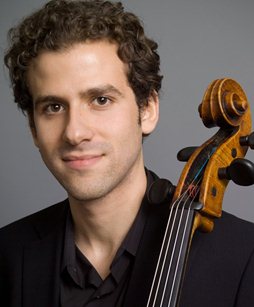
    …with soloist Nicholas Canellakis (above) opened the second half of the concert. The cellist is a frequent participant in Chamber Music Society of Lincoln Center‘s superb concerts.

    Today, Kirchner’s music seemed to me to have found what was missing from the Rochberg: a connection to the heart. Throughout the Kirchner, the solo cello gives his piece a sense of unity and purpose that – to my ears – the Rochberg lacks. Kirchner’s orchestration is colorful and dense, with excellent use of percussion, and the music sometimes takes on a cinematic quality. I love hearing a piano mixed into an orchestral ensemble work, and at the reference to TRISTAN UND ISOLDE, my friend Adi and I exchanged smiles.

    Mr. Canellakis was simply breathtaking right from the cello’s passionate opening statement. He was deeply involved in the music, moving seamlessly from a gleaming upper register to the soulful singing of his middle range. Capable of both redolent lyricism and energetic, jagged flourishes, Nicholas’s playing seemed so at home in the venerable Hall. The audience gave him lusty and well-deserved round of applause as he was called back to the stage after his exceptional performance.   

    Robertosierraheadshot

    The chorus then returned to the stage for the concert’s grand finale: the world premiere of Cantares by Roberto Sierra (above), which Cornell University commissioned for this concert in celebration of their 150th anniversary. In this panoramic work, the cultures of the African, Spanish, Native Peruvian, and Aztec peoples are entwined in vivid musical settings of texts dating back to the 16th and 17th centuries. The composer has re-imagined these invocations and narratives for the contemporary world; for this piece, the Cornell choristers leapt readily from Quechua to Spanish.

    A long sustained tone opens Cantares; then, emerging from dark turbulence, the chorus begins to ‘speak’. A trumpet call, a wandering xylophone, a celestial harp, an oddly ominous rattle: these are all heard as kozmic sound-clouds drift by. The music is mystical and – with the under-pacing of rhythmic chant – takes on an other-worldly feeling.

    The second movement evokes African ritual and that continent’s ancient connection to Cuba. The music seems to echo thru time in its heavenly, ecstatic vibrations. Somehow Chausson’s Poeme de l’amour et de la Mer came to mind.

    An orchestral interlude has the flutter of birdsong and a dense-jungle yet transparent appeal and leads into the final Suerte lamentosa, an epic of dueling cultures told from both the winners’ and the losers’ points of view.

    The work is perhaps a trifle too long, but the composer has been successful in drawing us to contemplate the oft-forgotten (or ignored) events surrounding the injection of Christianity into the Western Hemisphere. And musically it’s truly brilliant.

  • At Cherylyn Lavagnino’s Rehearsal

    5941803_orig

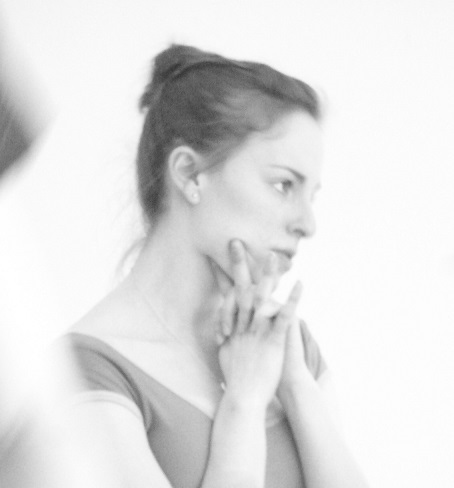
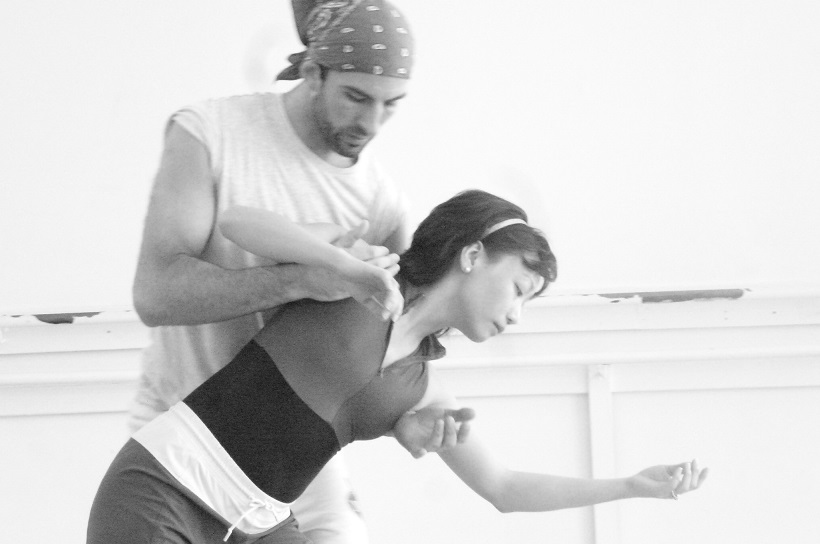
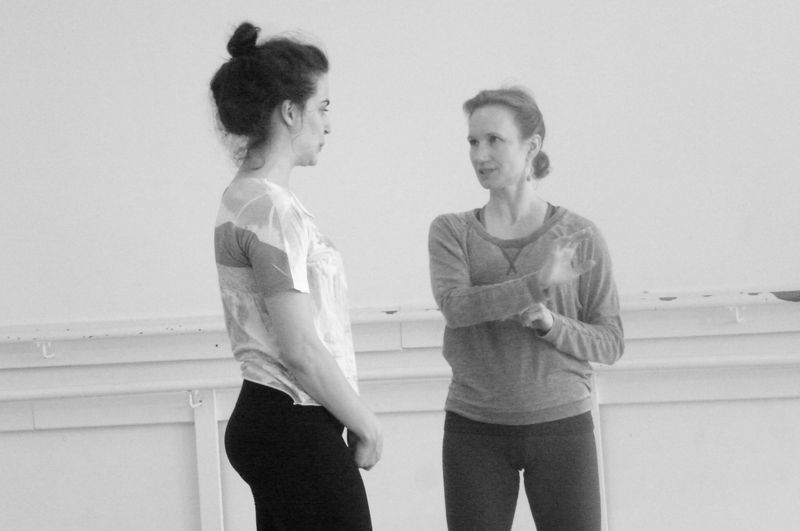
    Sunday April 13th, 2014 – This afternoon I stopped in at the NYU/Tisch studios where Cherylyn Lavagnino Dance are preparing for their upcoming performances (details above) at St. Marks Church near the end of June. 

    Cherylyn’s musical sensibilities, her keen sense of structure, and the way she draws nuances of personal  expression from her dancers have put her on my A-list of current choreographers. Having watched her work for the past few seasons, I haven’t sensed a single false step either in her choreography or her choice of music…or of dancers. 

    L1370241

    Above: dancers Lila Simmons and Michael Gonzalez

    For the upcoming St. Marks season, Cherylyn will present movements from two earlier works: her Bach/Couperin ballet Triptych and last season’s beautifully crafted Treize en Jeu, set to Franz Schubert’s Trio in E Flat Major for piano, violin and cello. A new work, Ru, is inspired by Kim Thúy’s novel of the same name and centers on a young woman’s life as a post-Vietnam War political refugee. Drawing upon the passive resistance of T’ai Chi and to be styled in costumes reminiscent of the traditional Vietnamese áo dài dress, Cherylyn’s new work – so evocative even now in a studio setting with the dancers in practice clothes – is set to a score by Scott Killian.

    Here are a few photos I took of Cherylyn’s dancers at today’s rehearsal:

    L1370313

    Michael Gonzalez and Giovanna Gamna

    L1370221

    Christine Luciano

    L1370260

    Eliza Sherlock-Lewis

    L1370555

    Travis Magee and Elliot Hammans

    L1370387

    Giovanna Gamna

    L1370487

    Claire Westby

    L1370559

    Adrian Silver and Selina Chau

    L1370477

    Lila Simmons and Giovanna Gamna

    L1370228

    Michael Gonzalez

    L1370522

    Claire Westby discussing the fine points with Christine McMillan

    L1370583

    Adrian Silver and Selina Chau

    L1370256

    Travis Magee

    L1370416

    Selina Chau

    L1370433

    Selina and Travis

    Visit the Cherylyn Lavagnino Dance website here.