Tag: Sunday August

  • dell’Arte Opera Ensemble: LA CALISTO

    CAVALLI

    ~ Author: Oberon

    Sunday August 20th, 2017 matinee – Francesco Cavalli (above) wrote about 30 operas, and of them LA CALISTO has become a favorite with contemporary audiences. Premiered in 1651, the opera’s brief and richly-varied musical numbers – and its sensuous, lusty characters – seem wonderfully fresh and relevant to us today, especially in a performance such as was offered this afternoon by the enterprising dell’Arte Opera Ensemble down at the La MaMa Theater.

    A brief synopsis of the opera will help sort out the twists of plot and the infatuations and motivations of the various characters:

    THE PROLOGUE
    Nature and Eternity celebrate those mortals who have climbed the path to immortality. Destiny insists that the name of Calisto be added to the list.

    THE OPERA
    A thunderbolt hurled by Giove has gone awry and decimated a portion of the valley of Arcadia. The god comes down with his sidekick Mercurio to inspect the damage They find the nymph Calisto, desperately seeking water. Giove causes a stream to gush up. He then attempts to seduce Calisto, who is a follower of Diana – the goddess of the hunt – and a staunch virgin. She rejects Giove’s advances, but later succumbs when he disguises himself as Diana. Meanwhile, the real Diana, because of her vow of chastity, cannot return the love of the handsome shepherd boy Endimione. Diana relies on the help of her attendant nymph, Linfea, who desires a husband but spurns the advances of a young satyr.

    On Mount Lycaeus, Endimione sings to the moon, the symbol of Diana. As he sleeps, Diana covers him with kisses. He awakes and they sing of their love. Jove’s infidelity is discovered by his wife Juno, while Diana’s secret is found out by Pane, the god of the forest, who has long desired her. Endimione is persecuted by Pane and his satyrs.

    The Furies turn Calisto into a bear at the command of the indignant Juno. Giove sadly confesses all to Calisto: she must live the rest of her life as a bear, but eventually he will raise her to the stars. Diana rescues Endmione and they agree that, while their kissing-fest was enjoyable, they will leave it at that. Giove and Mercurio celebrate Calisto’s ascension to her heavenly home in the constellation Ursa Major

    ~~~~~~~~~~~~~~~~~~~~~~~~~~~~~~~~~~~~~~~~~~~~~~~~~~~~~~~~~~~~~~~~~~~~~~~

    Sung in the original Italian, with English surtitles, the dell’Arte production is directed with wit and affection by Brittany Goodwin, who let the bawdiness of certain scenes play out without lapsing into vulgarity. The costumes by Claire Townsend mix modern-day wear with fantasy elements. The scenic design is by You-Shin Chen, and the atmospheric lighting by Dante Olivia Smith.

    The score was played by an expert period-instrument ensemble led by Charles Weaver, with Mr. Weaver and Adam Cockerham playing lutes, violinists Dongmyung Ahn and Sarah Kenner, cellist Matt Zucker, and Jeffrey Grossman at the harpsichord. Their unfailing grace and perceptive dramatic accents brought Cavalli’s music into our time in all its glory.  

    20768180_10107878883186965_3866968242292011471_n

    Vocally, the afternoon got off to a splendid start as Allison Gish (above, in a backstage portrait) intoned the lines of La Natura with a voice that evoked thoughts of the great contraltos of bygone days.

    In a scene which anticipates Wagner’s GOTTERDAMMERUNG Norns (even down to having a contralto sing first), Ms. Gish’s La Natura is joined by Elyse Kakacek as L’Eternità and Jungje Xu as Il Destino. Ms. Kakacek looked striking as she sang from the mezzanine; the voice is full and wide-ranging, pinging out into the theater space. Jungje Xu’s voice is lyrical, and she sang very well as she pleaded Destiny’s case for giving Calisto a place in the heavens. When these three singers blended voices, the effect was superb. Later in the opera, they portrayed the stream which sprang up to quench Calisto’s thirst, and – later still – were Furies, minions of the goddess Juno, who revel in a scene where they torment Calisto.

    20747980_10154800303580777_7132399321096474619_o

    Above: Emily Hughes as Calisto, with her fellow archers of Diana’s entourage, in a Brian Long photo. Ms. Hughes was the lovely focal-point of the story; with her clear, appealing timbre and a charming streak of vulnerability in her personification of the role, the young soprano made Jupiter’s infatuation entirely understandable. Her long aria in the opera’s second half was particularly pleasing.  

    Mason Jarboe as Giove (Jupiter) – handsome in appearance and authoritative of voice – was an ideal matching of singer to role. My only wish was that he’d had more to sing. The same might be said of tenor Brady DelVecchio as Mercurio; his characterful singing, easy stage demeanor, and pimp-like persona were much appreciated. Both gentlemen savoured their every moment onstage.

    EmilyHughes_AdriaCaffaro

    Above: Emily Hughes as Calisto with Adria Caffaro, who appears both as Diana and as Giove disguised as Diana. Ms. Caffaro was able to subtly differentiate vocally between her two roles; the voice is warm, sizable and pliant, with a touch of earthiness. And she exuded goddess-like confidence. After an episode of heated kissing between Calisto and Giove in his Diana guise, Ms. Caffaro returns as ‘Diana herself’ and is amused – and then annoyed – by Calisto’s description of ‘their’ smooching session and the implication that Diana might have same-sex desires: Ms. Caffaro here turned fiery, making the scene one of the highlights of the afternoon. 

    PadraicCostello

    Above: Padraic Costello as Endimione. Mr. Costello’s honeyed counter-tenor and gift for persuasive phrasing fell graciously on the ear. His portrayal of the shepherd, infatuated with Diana, was as expressive as his singing. As the most human character in the story, and the one for whom love is truly all, Mr. Costello was as moving in his sincerity as in the beauty of sound he produced.   
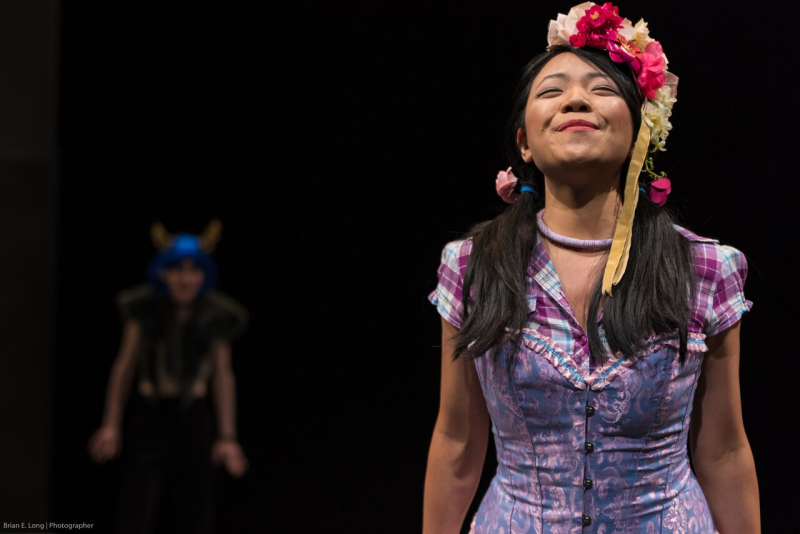
    JoyceLin

    Above: Joyce Yin as Linfea, one of Diana’s handmaidens who is torn between preserving her chastity and losing it. Satirino, a lusty satyr, offers to solve Linfea’s dilemma for her, but she fends him off. Ms. Yin’s voice is clear and assertive, pealing forth to express her excitement. Stage-wise, she was a bundle of energy, and very amusing when she ‘remembered’ to strike the required archer’s poses.
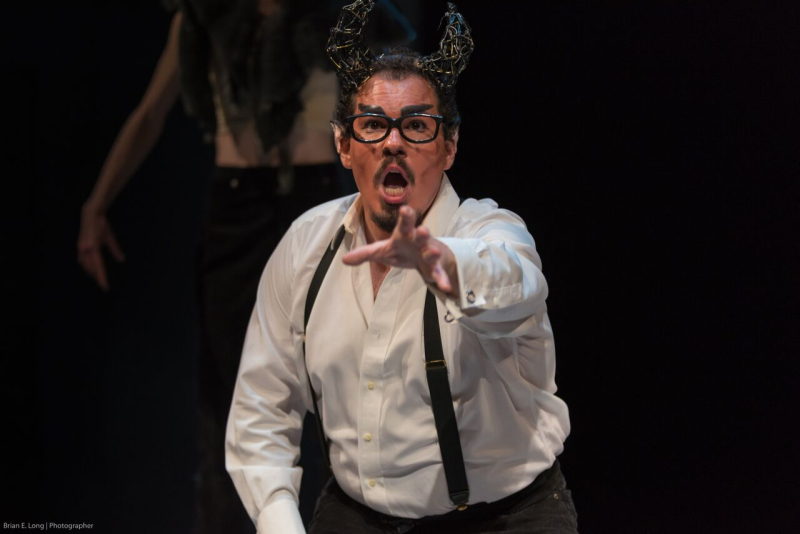
    RaymondStorms

    Above: Raymond Storms as Pane. This is the opera’s second counter-tenor role and Mr. Storms excelled in the music, which veered from passionate declaration to soft, sweet turns of phrase. His acting was spot-on as yet another frustrated lover of Diana (she’s so popular!).

    Pane’s pals are Shawn Palmer as Satirino (the satyr who tried to have his way with Linfea earlier) and Angky Budiardjono as Silvano. This trio’s scenes recall the rustics in MIDSUMMER NIGHT’S DREAM…and all three are actors who can sing.

    Ms. Palmer looked androgynous with her lithe, long-legged figure and glossy blue bob-wig. Her cantering walk and occasional pawing of the ground revealed her animal nature. Her rather long dramatic aria showed a deeper side to the character, and she sang it so well.

    Mr. Budiardjono’s singing was wide-ranging and ample-toned, a very pleasing sound to be sure. In Part II of the opera, Mssrs. Storms and Budiardjono have a duet that really showed off their talents; Ms. Palmer then joined them in a trio that was sheer fun to see and hear.

    Sophie Delphis as the goddess Giunone, wife of Jove, did not descend from the heavens until the start of Part II. Clad in an elaborate haute couture dress, spike heels, and a flame-red hat, Ms. Delphis’ appearance was as striking as her singing and acting. A complete immersion into the character made her every note, word, and movement vivid. In a vindictive rage upon learning her husband has been unfaithful, Ms. Delphis unleashed her anger like a sylvan Santuzza. The voice has a real bite to it.

    Diana’s archers also served as stagehands, quickly maneuvering floor platforms into different configurations and nimbly transforming swaths of long, hanging sheer-white fabric into clouds, canopies, or pillars.

    The afternoon flew by; all too soon we were hearing what seemed to be a choral finale with all the characters mingling voices as Giove showed Calisto the firmament…her future home. But the voices fade away and the opera ends on a parlando passage from Giove.

    Production photos by Brian Long.

    ~ Oberon

  • The Current Sessions Volume V, Issue II

    Photo-original

    Sunday August 23rd, 2015 – I like everything about the CURRENT SESSIONS: I like the idea, I like the venue, I like like the relaxed yet attentive audience…and I’ve liked just about every work and dancer I’ve ever seen there. Alexis Convento and Allison Jones continue to put together strong programs and to offer their audience a chance to experience the work of new and mid-career choreographers in an intimate setting, with first-class lighting and sound.

    In their presentations, the CURRENT SESSIONS particularly like to welcome mixed-media danceworks, and he first half of tonight’s program featured three such pieces, if one includes the lighting effects of the Niall Jones work. After the interval, pure dance took over. It was an evening of contrasting moods, with some very impressive individual performances.

    In the opening work, Ashley Robicheaux & Artists offered Spaces Part II: “We, two”. My fascination with this piece began even before the dancing started, as Kane Mathis appeared and began to play his 21-string Mandinka harp. Mr. Mathis was within arm’s reach of me as he played, producing other-worldly sounds. A film commences, showing closeups of the hands and eyes of the two dancers – Ashley Robicheaux and Holly Sass. The two women emerge from the shadows, wary and seeking. They perform a mirror-image duet which evolves into intense partnering. One lifts and twirls the other; an emotional spasm is quietened. They rush about; an eventual embrace leads to the renewal of intense struggle. Passions ebb and flow, and in the end one girl pulls the other offstage as the music fades. 

    Joe Monteleone//Monteleone Dance‘s MK Ultra Sound derives its inspiration from Project MK Ultra, a covert CIA project involving mind control using psychotropic drugs which ran from 1953 til 1973. In the dancework, Mr. Monteleone and Shelley White dance a stylized duet against visual projections, including a woman’s face upside down. The soundscape ranges from static with a heavy beat, thru spoken ‘instructions’, fragments of song, the story of the IIlluminati. Complacency settles on the dancers: in a trance, they seem lulled into security. The movement then becomes more agile and expressive, finally calming to the sound of breathing. At last the woman seems to break down. In flickering light and shadows, the couple watch the ultrasound images of a fetus. Fleeting tenderness, then a fade to black. 

    Dancer Noel Genet sets the stage for his solo Solitude and Excess Features, choreographed by guest artist Niall Jones. Wearing trousers and a lace shirt, Mr. Genet first performs a spastic solo in place to the sound of silence. In a mélange of movement, the dancer reclines, rises, collapses, is weighted down, dances in the dark, writhes on the floor, jogs in place, crawls and shimmies, dances with his shadow, and concludes with an oddly graceful solo. Mr. Genet, utterly self-absorbed, gave a compelling performance; his sense of deadly earnest was soon evoking laughter from the audience. This quirky piece seemed at times like improv, but clearly it had all been thoroughly mapped out. The low-key levity of Mr. Genet’s performance sent the audience forth for intermission drinks in a congenial mood.

    A deep throbbing hum heralds the arrival of Jeff Docimo//Isodoc Dance Group for an excerpt from Mr. Docimo’s Cut Crawlers. Clad in black, the five dancers crawl furtively into the space, which they explore with wary curiosity. The piece seems wrapped in shadow, with ominous thunder underscoring the mystery of this lost tribe. Amara Barner’s solo is outstanding, as is Mr. Docimo’s – which has breakdance elements impressively woven in. These two later have a duet, showing off the choreographer’s athleticism. Throughout this work, a sense of structure was amply evident: both in movement and emotional resonance, Cut Crawlers was impressive.

    For her solo Bonjour Tristesse, Marissa Brown//Lone King turns with compelling rightness to the poignant music of Frédéric Chopin. Ms. Brown is seated in a folding chair, her eyes gazing intently at an unoccupied antique armchair across the diagonal from her. As the comely Ms. Brown rises from her reverie, her dancing is contemplatively physical, making excellent use of the space as movement and stillness alternate. At last, overcome by the music, she returns to her seat and to her obsession with the armchair: who had sat there? Where has that person gone? What has the dancer lost in losing that person? A beautiful and resonant work, expressively danced.  

    LoudHoundMovement (guest artist) closed the program with Brendan Duggan’s trio A Rib Where Her Voice Had Been, performed by Matthew Ortner, Holly Sass, and Shelby Terrell. First one woman and then the other vocalize softly. One woman dances a solo whilst the second dances a slow, almost imperceptible waltz with the man. The stage brightens, and to the sound of a big heartbeat motif, the dancers engage in a brisk trio, grasping and eluding one another and sometime lapsing into stand-still plastique. There’s a passage of 2-female partnering, with lifts and carryings; then they speak to each other in sign language as the man reclines. After he awakens, with a breakish solo, the women revert to their soft singing and then all evaporates into silence.

  • CURRENT SESSIONS Volume IV, Issue II

    10540414_809848329055281_1375134267170772879_n

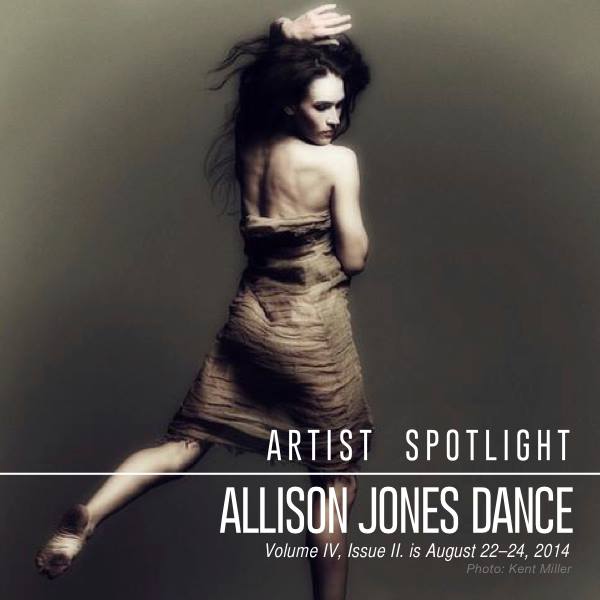
    Sunday August 24th, 2014 – This was the only performance of the ‘current sessions’ of the CURRENT SESSIONS that I could attend. I dearly wanted to see Colby Damon’s work but that will have to wait for another opportunity. Meanwhile, tonight’s line-up had the range and flair we’ve come to expect from these unique dance programmes. A big round of applause for the SESSIONS‘ co-Artistic Directors Allison Jones (photo at the top) and Alexis Convento for making it happen yet again.

    Housed in a comfortable, intimate venue The Wild Project down on the Lower East Side, the CURRENT SESSIONS bring together works by established and emerging choreographers in mix-and-match programming, getting dance and dancers seen in smoothly-produced and finely-lit (by Mike Inwood) repertory evenings. 

    This particular programme offered three fascinating works for solo female dancers, an entracing film based on the legend of Narcissus, an extended selfie of imaginative wit and energy, and ensemble pieces of visual variety, all served up by inspired and inspiring dancers.

    Jenna Pollack, a hypnotic mover, opened the evening in Nicole van Arx’s solo Wasserflut. Eerie and feral at first, Ms. Pollack expands thru the dance into a compelling presence; her backless black shirt reveals her expressive dorsal musculature. As the piece evolves, Jenna’s shadow becomes an element of the choreography. Fleetingly glimpsed through a sonic haze are fragments of the Schubert song from which the solo draws its title. 

    Enza DePalma // E|N|Z|A offered some bloom in darkness; this work for four dancers employs white chairs outlined in flourescent light. In this abstracted domestic drama revolving around our sense of security in our accustomed living space, the chairs are re-arranged as the dance moves forward. A distorted version of the Barcarolle from CONTES D’HOFFMANN is danced in-sync by the two girls; then the boys dance to a heavy beat. As the dancers re-claim their seats, we expect another vignette but instead a sudden blackout leaves us pondering what we’ve just seen.

    Jay Carlon’s Dance Film Selfie showed this engaging dancer/choreographer in a variety of public settings (starting on an escalator at Sochi) all caught on his own camera. Charmingly mixed, the scene of Jay dancing to “The Man I Love” while waiting for a bus was especially poignant; later he’s ticketed by the police: it’s a misdemeanor to dance in Brooklyn? As the film ends, Jay appears live onstage, sets his camera in the corner, and records another selfie solo to add to his repertoire. When the soundtrack, for solo violin, starts skipping like a broken record, it’s over. Jay’s timely and wonderfully whimsical work was a direct hit with the Wild Project crowd. Check him out here.

    Playback, a duet choreographed by Bryan Arias, was performed by Roya Carreras and Elise Ritzel to music played on an old cassette deck. Evoking both memory and expectation, the duet becomes intimate as the girls move to a collage of Mozart, a mostly incoherent spoken-word passage, and Max Reger. Bryan Arias’ choreography brought out a dark side in his two beautiful dancers.

    57c0d547191d0cc7a8f32dd041be8b95_large

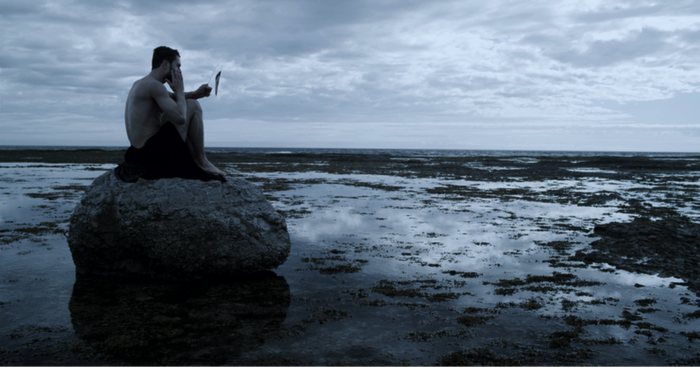
    Above: Nico Archambault in the film Stagnant Pool

    Stagnant Pool, a film by Kevin Calero co-choreographed by Wynn Holmes and Nico Archambault, transports us to a mythic land’s end where – inspired by the legend of Narcissus – Mr. Archambault moves like a demi-god across the seascape from which rise other-worldly rock formations. Shards of a broken mirror allure the dancer to his own image as fantastical music of the spheres becomes transportive: the cumulative effect is breath-taking. And then the vision evaporates into a nightmarish coda.

    Allison Jones presented the evening’s second solo work, SUBCYCLE, in which she performed to a Sam Silver composition. Deep sonics anchor the work in which Allison, bathed at first in golden light, moves with an intense sense of plastique gesture, pausing briefly to rest on the floor before brighness floods the space and she revives: an absorbing and definitive performance.

    Choreographer Kat Rhodes has tirned to Cormac McCarthy’s novel The Crossing as inspiration for LOBO (Wolf), an excerpt of whch was shown tonight. A young girl in a homespun dress is roused from her sleep by three other women in prairie denim garb appear in this ritualistic and evocative work: the three women may variously represent men, or wolves. Music by Nick Cave and Warren Ellis, as well as Mike Inwood’s lighting, enhanced the committed work of the four dancers.

    Andrea Murillo, a dancer I first saw work while she was working with the Martha Graham Dance Company, danced gorgeously in a Troy Ogilvie-choreographed solo Legacy Part One. The power and control of movement which Ms. Murillo developed while working at Graham were amply evident in her inspired peformance tonight. Spoken narrative and a kozmic big beat set the atmosphere as the radiant dancer held sway over the crowd, the lights coming up to a huge brightness as the solo progressed. Andrea’s perfomance was a knockout: I can’t wait to see Part Two

  • ABARUKAS + vivake @ MMAC

    1069802_10151735363464933_471183311_n

    Sunday August 18, 2013 – One of my few opportunities to try a new dance company, since their performance happened to fall on one of my rare free days: Abarakus Contemporary Dance Company gave two performances at MMAC this weekend where they were joined by the hip-hop company vivake.

    vivake opened the show, dancing Scar. The Company, led by Vivake Khamsingsavath, is made up of sexy boys and beautful girls, and they danced up a sultry summer storm in this darkly alluring piece. All clad in black, and illuminated by the fine lighting design by David Opara, the dancers exuded sensuous energy. Vivake himself is an ultra-charismatic personage, a dancer who put me very much in mind of such super-smooth Gotham movers as Bennyroyce Royon and Norbert de la Cruz. I look forward to seeing this dynamic group again.

    I loved looking at the cast listings this evening and finding familiar names: Lizzy Zevallos dancing with vivake and Guang-Lei Hui dancing with ABARUKAS. I really enjoyed seeing both of them again.

    ABARUKAS offered Yoshito Sakuraba’s “Lullaby to Mr. Adam“; this note from the choreographer had me expectng a narrative dancework:

    Lullaby
    to Mr. Adam
    emerges from from an idea of a complete separation from
    reality, imagining myself returning to the past.   I imagine myself
    walking to my home where I lived and loved when I was little.   The
    moment I start imagining that, I continue to recall a letter from the
    first girl I fell in love with, the barbershop I used to go to, streets
    where I’d bicycle to school, a sky where there were fireworks in the
    summer, friends I played basketball with, and my grandma, whom I loved
    but never expressed that to her.  I’ve lived through everything and
    everyone’s memory.   And they lived through mine.   I still have the
    letters from the girl.”

    But the choreographer is not a literalist; the piece is abstract and opens with a ritualistic passage in which we meet the dancers one by one. As with vivake, ABARUKAS is a Company loaded with talent. As individuals and as an ensemble, they danced with vivid commitment. Plenty of solo opportunities were afforded as the dancework unfolded. The choreography is gestural, scupltural, and – again – excellently lit by Mr. Opara. 

    Adan Jiminez Aguillar, a tall and stage-commanding presence, had a central role in the piece commencing with a passage in which he shoots – and then revives – his fellow dancers. He’s cast as a rather tyrannical type, though in the end he manages somehow to redeem himself. Guang-Lei Hui is a very fluid mover and a strong partner, and Shawn Rawls showed some remarkable break-dancing skills in his solo. Adan has a sustained, powerfully lyrical solo danced to the evening’s most poignant musical theme. The women – Caitlin Cantrell, Erin Dillon, Rebecca Quintrell, and Tsai-Hsi Hung – danced beautifully and allowed their individual personalities to emerge as the work surged forward.

    The denouement of the piece comes as each dancer steps forward to slap Adan’s face – he endures this, and expects the same from Guang-Lei who instead gently lays his hand on Adan’s shoulder. A perfect final image as the light fades.

    But no – there’s more to come. Another ensemble passages melds into a spacious duet for the striking Erin Dillon and Adan which ends with yet another ideal final tableau. But no – the work continues on. It’s all well-crafted and very finely executed, but after two false endings things seem to be stretching on a bit too long; a judicious paring down and some re-arranging of the various segments could produce a more cohesive and impressive overall effect. Nevertheless, the performances of the dancers overcame any slight misgivings about the structure of the piece.

  • Lydia Johnson’s Bach-In-Progress

    Copy of 15

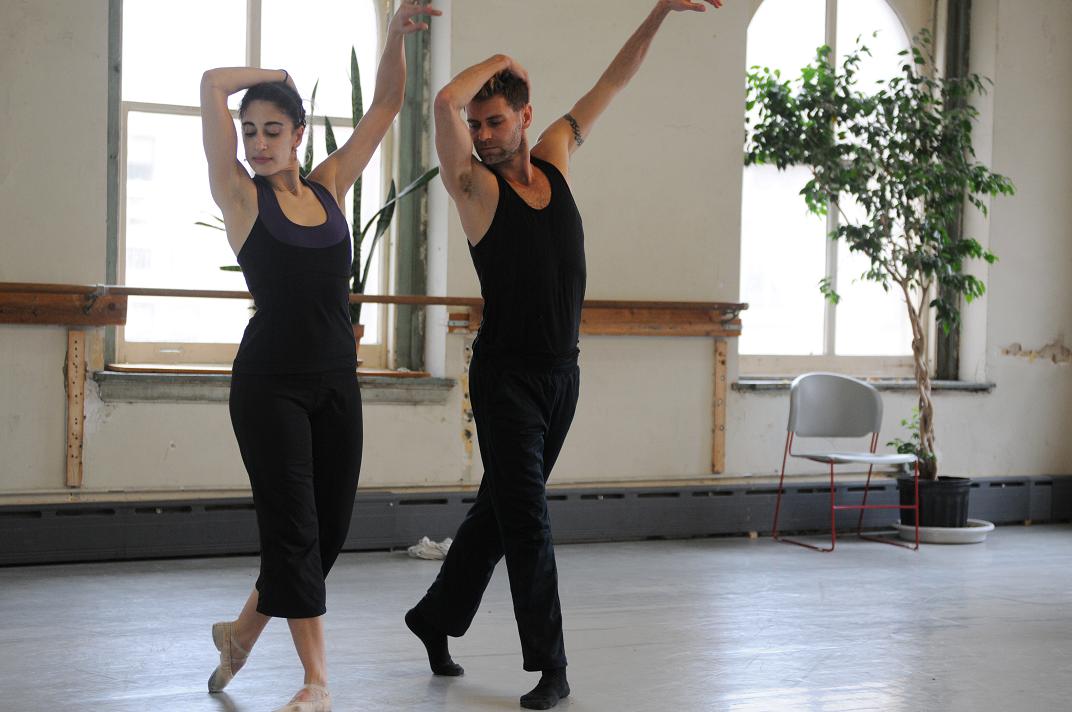
    Sunday August 22, 2012 – Kokyat and I stopped in at Lydia Johnson’s rehearsal at Battery Dance on this dreary, rainy day where guest artist Attila Joey Csiki (above) of the Lar Lubovitch Dance Company was rehearsing with Lydia’s company for the first time. 

    For her latest creation, a work for large ensemble, Lydia turns to the music of J. S. Bach. The piece is already well-developed choreographically and despite the fact that this was Attila’s first day working with Lydia, he’s already thoroughly at ease with the style; in fact his signature musicality and the silken flow of his dancing are a natural compliment to Lydia’s beautifully expressive motifs of movement. 

    Copy of 19

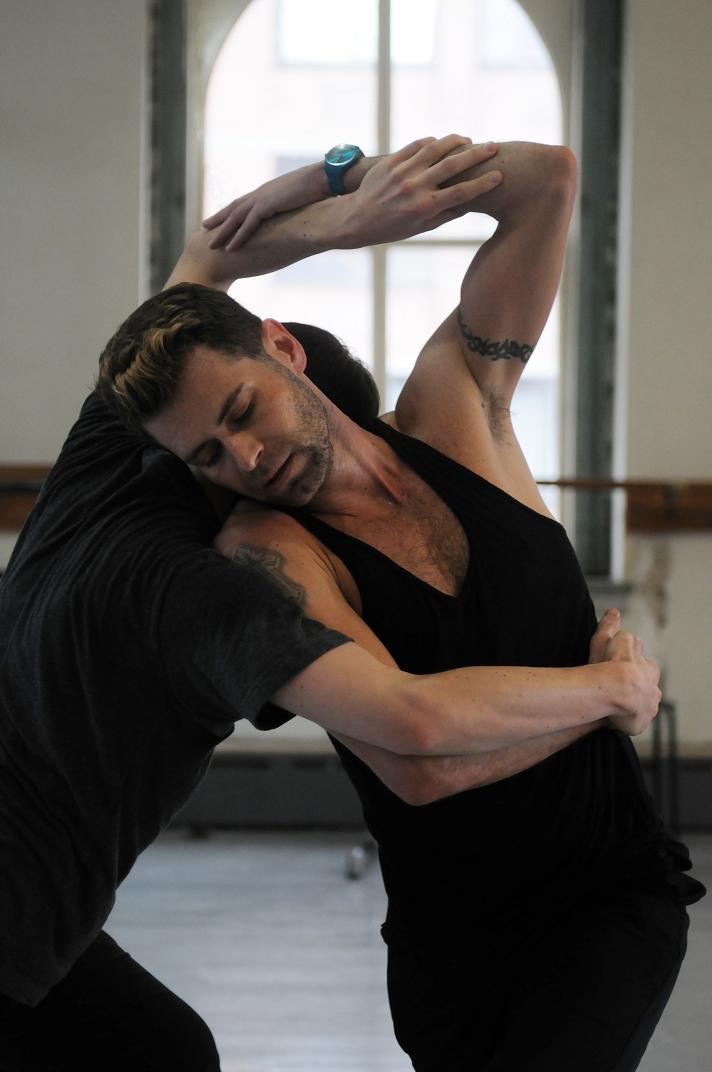
    A central passage in this new dancework is a duet for Attila and Blake Hennessy-York (above). The boys have already mastered the structure of this duet and they ran thru it a few times, working out details of placement and trying various elements of partnering to achieve the desired smoothness.

    Copy of 46

    Attila and Blake, above.

    Copy of 61

    In a second duet, Attila dances with Lisa Innacito McBride (above).

    Copy of 60

    This duet culminates with Attila falling into a beautiful swoon…

    Copy of 63

    …and then re-awakening. 

    Copy of 36

    Kokyat was silently moving around the studio to capture the many different elements of this ballet; above, Laura DOrio and Lisa Iannacito McBride. Since we were seeing it for the first time there was a lot to take in, often with multiple things happening – apropos of Bach – at the same time. In addition to Laura and Lisa, the dancers include:

    Copy of 25

    Kaitlin Accetta

    Copy of 45

    Blake Hennessy-York and Sarah Pon

    Copy of 6

    Lauren Jaeger

    Copy of 4

    Min-Seon Kim…

    Copy of 33

    …and Katie Martin. 

    It’s always exciting to see the evolution of a new dancework and as always we felt very grateful to Lydia and the dancers for sharing their creative endeavor with us.

    Lydia Johnson Dance will perform at Peridance on June 23rd and 24th, 2012 in a programme which will feature the premiere of the new Bach piece as well as ballets sent to music of Philip Glass and Osvaldo Golijov. In addition to the dancers pictured above, Jessica Sand and Kerry Shea will be dancing. Reed Luplau appears as a guest along with his Lubovitch colleague Attila Joey Csiki. Max van der Steere will also be guesting with Lydia’s company. Ticket information here.

    All photographes by Kokyat, with more images here.