Tag: Sunday December

  • CMS Brandenburgs ~ 2021

    Bach

    Sunday December 19th, 2021 – Chamber Music Society of Lincoln Center‘s annual Yuletide performances of Bach’s immortal Brandenburg Concertos are always a highlight of the New York musical season. Music lovers turn out on droves for each of the program’s three presentations, giving themselves an early Christmas gift.

    One tradition at the CMS Brandenburgs is the annual reshuffling of the order in which the six concetros are played. This year, the odd-numbered concertos were played first, with the even-numbered ones coming after the interval.

    The 1st Brandenburg (in F-major) briought together the program’s largest ensemble of players, which produced a wonderful fullness of sound. The wind instrument lineup tonight was impressive indeed: there are three oboes, led by Stephen Taylor with Randall Ellis and Mr. Smith, two mellow horns (David Byrd-Marrow and Stewart Rose); and Marc Goldberg’s rich-toned bassoon. On the string team, led by violinist Daniel Philllips (excellent in the Adagio), Arnaud Sussmann and Sean Lee (violins) were joined by Che-Yen Chen (viola) and Dimitri Atapine (cello). The outstanding continuo duo – Kenneth Weiss (harpsichord) and Joseph Conyers (double bass)- made marvelous music all evening. Mr. Phillips made a lovely thing of the Adagio, where he and Mr. Taylor duetted cordially. The bustling Allegro drew a warm round of applause, but then comes a built-in ‘encore’, in which the wind players outdid themselves.

    The 3rd concerto, in G-major, is unique in that the anticipated central slow movement is replaced by a mere couple of chords and a violin flourish before going immediately on to the exhilarating Allegro. Bach calls for three trios of strings: violinists Sean Lee, Arnaud Sussmann, and Alexander Sitkovetsky gave us lively playing in the opening movement, whilst Mr. Phillips traded his violin for his viola to join Mr. Chen and Yura Lee. Add the cello trio of Timothy Eddy, Mr. Atapine, and Inbal Segev, and you have a veritable string-fest. My companion, Cherylyn Lavagnino and I were much taken with Mr. Conyers’ rich and nimble bass playing. The final Allegro sailed blithely onward: so many notes! 

    In the 5th concerto (in D-major), harpsichordist Kenneth Weiss mesmerized the crowd with his fantastic playing of the long cadenza; people stood up and cheered when he stepped forward for a bow at the end of the evening’s first half. From its familiar opening theme, the 5th concerto puts the violin (Sean Lee) and the flute (Ransom Wilson) in the spotlight; these two gentlemen played the central Affetuoso divinely, whilst Mr. Weiss’s harpsichord cunningly etched a filigree around their melodies. In the concerto’s light and lively final Allegro, Mssrs. Sitkovetsky, Phillips, Eddy, and Conyers were a top-class ensemble. 

    Following the interval, flautist Tara Helen O’Connor drew a warm welcome as she walked out onto the Tully Hall stage, goddess-like in a glimmering red gown. Yura Lee and Inbal Segev had also chosen red frocks for the evening, giving the scene a festive Yuletide glow.  In the 2nd concerto (in F-major), dazzling trumpet virtuosity from David Washburn set the hall alight, whilst Ms. O’Connor’s timbre had its familiar crystalline clarity.

    In the Andante, the quartet of Ms. O’Connor, James Austin Smith (oboe), Arnaud Sussmann (violin), and Timothy Eddy (cello) wove a tapestry of sound that warmed the soul: simply perfect. Then Mr. Washburn’s trumpet calls rang out, summoning us to revel in the concerto’s festive finale. A rock-star ovation saluted these extraordinary musicians as they returned for a bow.

    Yura Lee and Che-Yen Chen put us under a viola spell with their playing of the 6th concerto (B-flat major) – the one in which no violins are heard: a trio of cellists (Mr. Atapine, Ms. Segev, and Mr Eddy) and the continuo players are all Bach needed here. The Adagio – one of Bach’s most moving and melodious inventions – was entrancing as Ms. Lee and Mr. Chen exchanged phrases. This could have gone on and on – such a balm to the ear – but the closing Allegro sweeps us inexorably forward with its thrice familiar theme..

    The evening ended with the fourth concerto (in G-major), in which Alexander Sitkovetsky dazzled us with his silky tone and incredible dexterity. Duetting flautists Ransom Wilson and Tara Helen O’Connor displayed jewel-like qualities in their playing of the animated phrases of the outer movements, whilst bringing a sweet sadness to the harmonies of the central Andante. Mr. Conyers’ double bass and Ms. Segev’s cello provided a resonant counterpoise to the high voices of the flutes and violin. Then we are down to the final Presto: a fugue-like race in which Mr. Sitkovetsky’s fabulous virtuosity led his colleagues in a final sprint to a victorious finish. The audience saluted the musicians with a vociferous standing ovation, recalling them for a second bow.

    Leaving Alice Tully Hall, which has become dear to me over these past few years as a refuge of peace and beauty in an increasingly perilous world, we stepped out into the brisk evening air, feeling on top of the world. How wonderful to experience this concert with my friend Ms. Lavagnino, who is truly a kindred spirit.

    ~ Oberon

  • Cherylyn Lavagnino’s Salon

    L1520411

    Above: dancers are Claire Westby, Adrian Silver, and Selina Chau of Cherylyn Lavagnino Dance in a salon-showing of Naděje, a work-in-progress by Ms. Lavagnino

    Sunday December 14th, 2014 – On this cold, clear afternoon, friends of Cherylyn Lavagnino Dance gathered for a studio showing of works (and works-in-progress) by Cherylyn and by Christine McMillan, a dancer/choreographer with enduring ties to Cherylyn’s company.

    The programme opened with Naděje (‘Hope’) a piece Cheylyn is in the midst of creating. Drawing inspiration from the life of Václav Havel, the great Czech writer, philosopher, dissident, and statesman, Cherylyn turns to music of Havel’s fellow countryman Leoš Janáček: the composer’s violin sonata, composed in 1914 (and later revised). The ballet calls for a large cast and the choreography displays Cherylyn’s characteristic flow of movement and her spot-on sense of structure. I look forward to following the development of this new work.

    Here are a few more images from Naděje:

    L1520394

    Giovanna Gamna, Travis Magee

    L1520425

    Selina Chau

    L1520403

    Justin Faircloth

    L1520391

    Giovanna Gamna, Travis Magee in Naděje

    L1520434

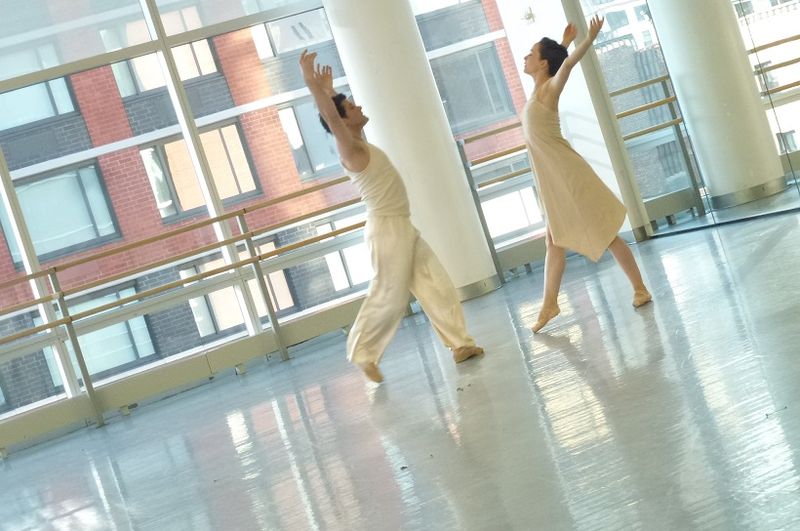
    Above: Assaf Benchetrit and Laura Mead, dancing to Rachmaninoff

    A portion of an as-yet-untitled duet which Cherylyn is creating for Indianapolis City Ballet is set to piano music of Sergei Rachmaninoff. Clad in creamy white, dancers Laura Mead and Assaf Benchetrit move with impetuous lyricism thru combinations drawn from the classic ballet vocabulary but with a fresh accent.

    L1520430

    Above: Assaf Benchetrit and Laura Mead

    Cherylyn’s 2010 dancework Snap Shots is an ensemble work danced to an original score by Kyle Olson. Set in four movements, the work features a double pas de deux, a male soloist with a quartet of ballerinas, a duet for two men, and a full-cast finale. The work is spacious and animated, including a passage where two men race about the space as if pursued.

    Images from Snap Shots:

    L1520444

    Adrian Silver, Selina Chau

    L1520463

    Adrian and Selina

    L1520485

    Christine Luciano, Lila Simmons, Giorgia Bovo, Claire Westby

    L1520566

    Above: Christine McMillan in her solo Woman in Dress

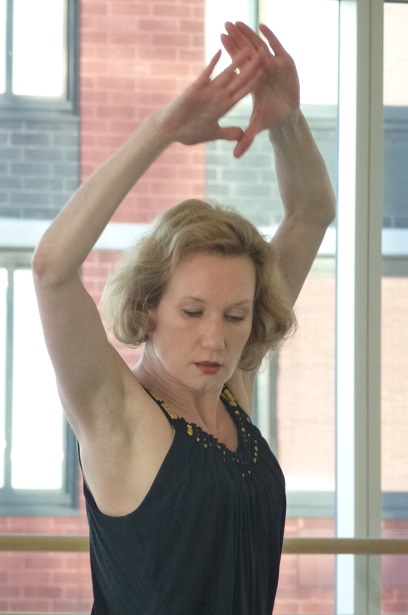
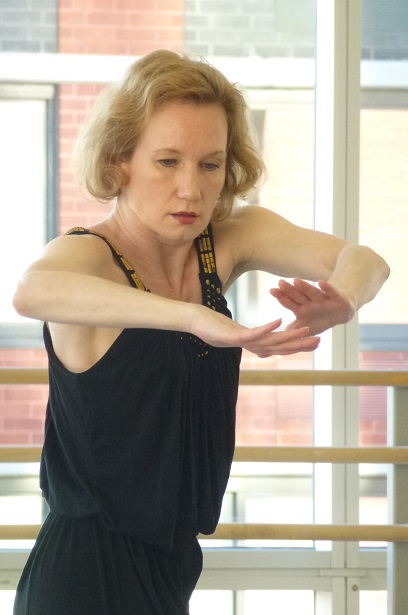
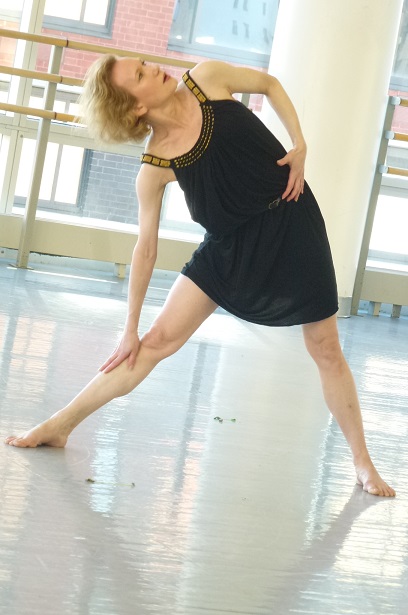
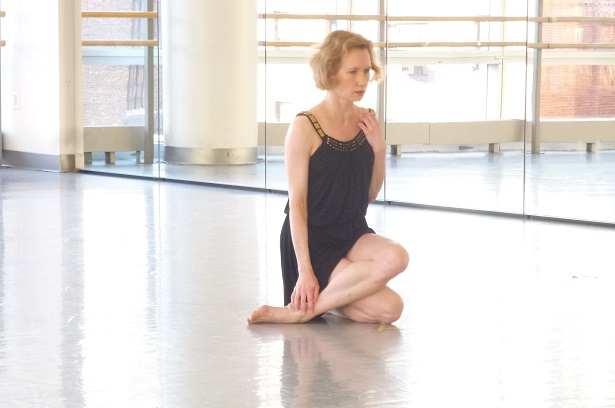
    Christine McMillan’s self-choreographed solo, Woman in Dress, unfolds to music by Hildur Gudnadóttir and Ólafur Arnalds. The dancer, who presents an interesting mixture of feminine strength and delicacy, uses her expressive arms and hands to poetic effect. In the course of the dance she moves from ecstatic heavenward reach to elements of self-examination, a self-portrait with an intrinsic emotional quality.

    Images of Christine McMillan in Woman in Dress:

    L1520529

    L1520532

    L1520554

    L1520547

    Christine McMillan: Woman in Dress

    The presentation ended with a performance of Cherylyn’s Ru, which premiered last season and is set to a score by Scott Killian. Inspired by the Saigon-born writer Kim Thúy’s novel of the same title, Ru, which means ‘lullabye’ in Vietnamese, depicts the flight of a young girl’s family from the Communists who have seized their home, first to Malaysia and eventually to Canada. Furtive and desperate, the women in this dancework bond together in quiet rituals; the men – in sexy costumes – alternately seem like oppressors and protectors. Scott Killian’s music provides the atmospheric setting for some of Ms. Lavagnino’s most expressive choreography.

    Some of the dancers in Ru are:

    L1520601

    Giovanna Gamna

    L1520613

    Travis Magee, Selina Chau

    L1520622

    Justin Faircloth

    L1520659

    Christine Luciano

    L1520637

    Adrian Silver

    L1520656

    Lila Simmons and Selina Chau in Ru

  • My Only 2012 NYCB NUTRACKER

    George-balanchines-the-nutcracker1

    Sunday December 23, 2012 matinee – Due to the rise in ticket prices at New York City Ballet, I’ve had to adopt strict budgeting rules: for the first time since moving to NYC, I found myself forced to skip NUTCRACKER season altogether. I’d been in the habit of going as many as eight times each year, seeing debuts and covering interesting casting combinations for my blog with genuine enthusiasm. I came to really love and admire the entire Balanchine NUTCRACKER experience, always finding fresh details in the thrice-familiar production.

    But this year, with prices really out of my reach and with the Tchaikovsky Festival looming ahead (I want to go every single night!), I was forced to forego NUTCRACKER; I’ve looked at the casting each week, wishing I could be there but simply unable to deal with the monetary situation.  Fortunately, my friend Monica very kindly offered me a ticket to today’s matinee.

    The cast this afternoon included some debuts, and there wasn’t a principal dancer to be seen onstage. But the soloist and corps de ballet did the Company proud, stepping into the leading roles with confidence and charm. Clothilde Otranto led a lively performance, and special kudos to concertmaster Kurt Nikkanen for his ravishing playing of the Interlude, replete with shimmeringly subtle trills in the highest register.

    LovetteLauren

    Lauren Lovette’s debut as the Sugar Plum Fairy was a major point of appeal in the casting today. This young ballerina has been doing excellent work in the corps, and she always makes a beautiful impression when she’s cast in a prominent role; her debut recently in Christopher Wheeldon’s POLYPHONIA was a real eye-opener, for she held the stage in mesmerizing fashion in her mysterious solo, danced to one of Ligeti’s most trance-like works. Her Sugar Plum today was lyrical and light in the opening solo, and showed the confident radiance of a seasoned star-ballerina in the pas de deux where her cavalier, the story-book-prince Chase Finlay, showed off his ballerina with  élan. Together they sailed smoothly thru the duet’s many difficulties: difficulties that have been known to undo the most seasoned dancers. Lauren and Chase drew the audience in with their youth and poise, winning a particularly warm reception.

    30240_1409846800214_5470712_n

    I met Mary Elizabeth Sell shortly after she joined the Company in 2006, and have kept an eye on her ever since. She and I share a birthday; I took the above picture of her one day a couple years ago when I ran into her on a rehearsal break. Always a dancer to draw the eye in any ballet because of her vivid presence and perfect smile (she was one of the few dancers to make an impact in the leaden OCEAN’S KINGDOM), her performances stand out in a way that have always made me think she could do well in major roles. This Winter the opportunity came her way – she had debuted yesterday as Dewdrop – and, just as I suspected she would, she seized the opportunity and gave a really exciting performance. Her Dewdrop was on the grand scale, able to make her own musical statement in the role by playing ever so subtly with the timing: holding an arabesque one moment, then swirling forward in a flurry of pirouettes. Her jeté was effortlessly brilliant, her extension regally unfurled, her attitude turns silky, her fouettés gracefully swift and sure. To all of this she added her dark eyes and gracious smile. Her performance had amplitude and (rare commodity:) glamour; in short, she put me in mind very much of one of my all-time-favorite Dewdrops, Colleen Neary. There’s no better compliment, in my book.

    Other notable newcomers were Cameron Dieck (handsomely squiring the marvelous Gwyneth Muller in Spanish), Claire Kretzschmar (leggy and cool as Arabian), and Joseph Gordon (bouncing high in Chinese). Sara Adams was pretty, precise and perfectly pleasing as Marzipan; Anthony Huxley – he of the fabulous feet – a stellar Candy Cane (I was hoping he’d jump thru his hoop on his exit in the finale, as he did when he first danced the role); Andrew Scordato an amusing Mother Ginger; Lauren King and Ashley Laracey led the Waltz of the Flowers with distinction…two of my favorite ballerinas.

    In Act I, Sean Suozzi replaced David Prottas as Drosselmeyer; the change was unannounced. Sean was superb, as we could expect from one of the Company’s most intriguing personalities; he even gave the grandmother a startlingly emphatic kiss. Amanda Hankes and Christian Tworzyanski were the appealing Stahlbaums, Kristen Segin and the very pretty Claire von Enck danced charmingly as Harlequin and Columbine, and Giovanni Villabos neatly executed the Soldier Doll’s solo.

    It’s kind of amazing that there are now dancers in the Company I cannot
    identify onstage; things seem to be changing more rapidly that ever in
    terms of the roster. During 2012 some of my favorite dancers left the
    Company unexpectedly; others are currently injured (an ongoing problem).
    The total complement of dancers stands at 85, the smallest number in my
    years of attending,; apprentices and (sometimes) senior SAB students
    seem to be filling the ranks in the big ensembles.

    SUGARPLUM: *Lovette; CAVALIER: Finlay; DEWDROP: Sell; HERR DROSSELMEIER: Suozzi; MARZIPAN: Adams; HOT CHOCOLATE: Muller, *Dieck; COFFEE: *Kretzschmar; TEA: *Gordon; CANDY CANE: Huxley; MOTHER GINGER: Scordato; FLOWERS: King, Laracey; DOLLS: Von Enck, Segin; SOLDIER: Villalobos, MOUSE KING: J. Peck; DR & FRAU STAHLBAUM: Hankes, Tworzyanski

    The house seemed nearly full, and so nice to run into some of the Company’s most ardent supporters during intermission.

    Thanks so much, Monica!

  • Ratmansky’s NUTCRACKER for ABT

    Copy of AV4

    Sunday December 26, 2010 at 5:30 PM – Ever since he photographed Veronika Part when she was dancing for Avi Scher, Kokyat has been smitten with the ballerina. He had a second opportunity to photograph her when she repeated her role in Avi’s ballet TOUCH. He and I went to see her in ABT’s SWAN LAKE and he was really excited at the prospect of seeing her in Alexei Ratmansky’s new version of THE NUTCRACKER. Kokyat’s image of the ballerina, above.

    I have always liked ABT’s ‘Baryshnikov’ NUTCRACKER though I must say I think the filmed version falls short of experiencing it in the theatre. I especially like what Baryshnikov did with some of the divertissement pieces, most notably Spanish (danced in this filmed clip by Jolinda Menendez and Clark Tippett) and Marzipan (Aurea Hammerli and Warren Connover in the filmed excerpt).   I also have a soft spot for the way Baryshinikov made the pas de deux a ‘psychological’ pas de trois for Clara, the Prince and Drosselmeyer. I once saw three consecutive performances of the Baryshnikov production on a single weekend: my Claras were Leslie Browne, Mariana Tcherkassky and Natalia Markarova. Much as I admire Gelsey Kirkland in the film, each of these ballerinas was quite wonderful in the role.

    Aside from the Balanchine NUTCRACKER which I have seen close to a hundred times (not counting the filmed version), the Baryshnikov setting is the only version of this ballet I’m really familiar with. But it’s been years since it was presented ‘live’ and now ABT have put on a new version at BAM and so we braved the snowy trek to Brooklyn and the restless audience full of kids to see what Ratmansky has devised.

    2010-b-nutcracker

    The Ratmansky NUTCRACKER opens in the Stahlbaum kitchen. Mice (beautifully costumed in in grey tailcoats) play a big role in this production, especially one little mouse who quickly became tiresome. The kitchen scene was an unnecessary addition since it had nothing to do with anything.

    One immediate realization about this production is how much better the NYCB orchestra play this score than their ABT counterparts. Of course, the NYCB musicians have had much more experience playing it. (The interpolated violin intermezzo which links the two scenes of Act I of the Balanchine is not done at ABT).

    The party scene is played in a large, flat-tourquoise room. The children in this scene are too old to still be enchanted by Christmas, so they are spoiled and snotty instead. There’s hardly any dancing aside from the Harlequin/Columbine duo and a couple known as The Recruit and the Canteen Keeper. These mechanical dolls appear from large wrapped Xmas boxes just as the dolls in Balanchine’s version do. But their choreography isn’t nearly as lovely. They also reappear randomly later in the production.

    There is no sense of mystery or magic about Ratmansky’s Drosselmeyer who looks – in his plaid pants and spangled cloak-liner – like a 19th century dandy/pimp. Isaac Stappas, handsome as ever, did what he could with the role.

    Nutrehearse

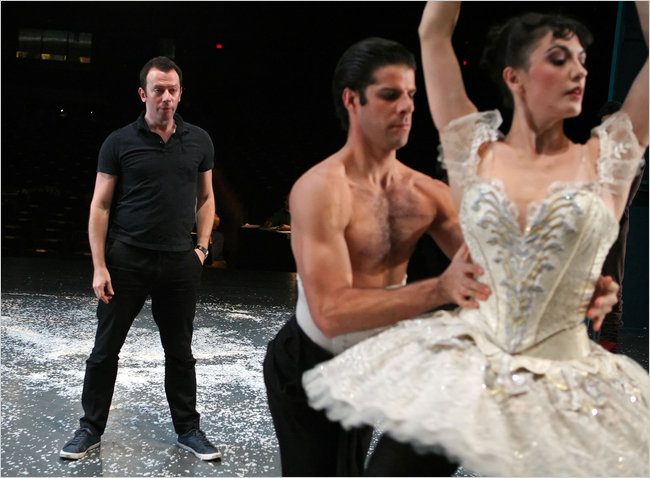
    Rehearsal photo: Ratmansky, Gomes, Part.

    The Battle of the Mice is a rather helter-skelter affair. Then we’re off to the Snow scene where Clara and her boy-prince encounter their older selves in the persons of Veronika Part and Marcelo Gomes. The younger and older couple have a sort of parallel pas de deux; there’s lots of hugging and excitement over being with someone you love but the choreography for Part & Gomes seems hellbent on making them look their worst for the most part. You have two of the greatest dancers in the world at your disposal and this is all you could think of to do? Meanwhile the snowflakes are doing some dancing but it isn’t cohesive; in fact it’s rather random….and they sometimes lay down on the floor. Their petite leaps in place make lots of toe-shoe racket on the stage, causing me to yearn for Balanchine’s swift, magical and winter-quiet snowflakes. Where are Mary Sell and Sarah Villwock when you need them? Well, anyway, all the ABT snowflakes appear to die at the end of the scene. Drosselmeyer pushes on a large sleigh but its runners have not been oiled and there’s a loud screeching sound. He manages to run over the tutu of one of the recumbent snowflakes before her gets Clara and her boy-prince into the sleigh to head for Sugar Plum Land. 

    Ratmansky’s divertissement ‘national dances’ lack the charm of the Balanchine versions – the music is charming, so the choreography should be also. Aside from a conventional and pleasing Spanish dance for three couples, most of the choreography in ABT’s Act II went in for cuteness and cleverness rather than vivacity or anything vaguely poetic.

    Who knew, for example, that the Nutcracker has five sisters? Dressed in pink top hats, five excellent ABT ballerinas danced very nicely but the choreography just seemed so pointless (they had the Marzipan music). I could swear I saw Maria Riccetto among them though she was not listed.

    In Arabian, all I could think was “Sascha Radetsky came back to ABT for this?”  The conductor chose a molasses-in-January tempo, making the already-long piece stretch out interminably. The handsome Sascha, in harem pants, bare-chested and beautifully tattooed, simply walked around the stage while four women teased, cajoled and scolded him. At the very end of the piece he did a very quick phrase of real dancing and then swept off.

    Marian Butler and Joseph Gorak were fine in Chinese though they had more interesting things to do in the finale than in the set piece. Three men danced a slapstick Russian trepak; the dancers were replacing the announced trio and I am not sure I got the names right but they seemed to be Luis Ribagorda, Roman Zhurbin and Julio Bragado-Young.

    Ever since Balanchine put a male dancer on stilts and created a drag Mother Ginger, several productions have done the same in this number. Ratmansky tries it again but what undermines his version is having the ‘polichinelles’ dressed as Red Hot Chili Peppers. Cuteness prevailed yet again and by this point things were getting pretty stale. (Baryshnikov’s pleasing solution to this set piece was to have it danced by four Jesters with tinkling bells sewn to their costumes).

    The Waltz of the Flowers featured anonymously pretty choreography; there’s no Dewdrop but there are four male Bees who buzz around the bouquet of ballerinas. My heart bled for the four excellent danseurs who were forced to carry on with much coy prancing about. Baryshnikov’s version had also omitted the Dewdrop role, and he too used men in the Waltz but they were elegantly dressed cavaliers, not silly and superfluous bugs.

    Part and Gomes danced splendidly in the grand pas de deux, given in standard performance order (adagio/male solo/female solo/coda) as opposed to Balanchine’s version which rearranges it, putting the Sugar Plum variation at the start of Act II. There were some exciting partnering feats in the duet but even here Ratmansky seemed to feel a need to be different just for the sake of being different; the choreography wasn’t memorable enough for me to recall specifics. At times, though, it seemed to me that the choreography was working against the natural grace of the dancers by making them do odd things.

    As the finale draws to a close, Gomes asks Part to marry him. He places a ring on her finger while attendants place a veil on her head. They elope.

    At the end, in a bizarre scene, Clara is seen in her bed with Gomes standing to one side and the boy-prince at the other. She awakes and goes first to one, then the other. Does she want them to get in bed with her? They recoil and withdraw. Clara settles down with her Nutcracker doll as the voyeuristic Drosselmeyer peeks in thru the window.

    Copy of 1

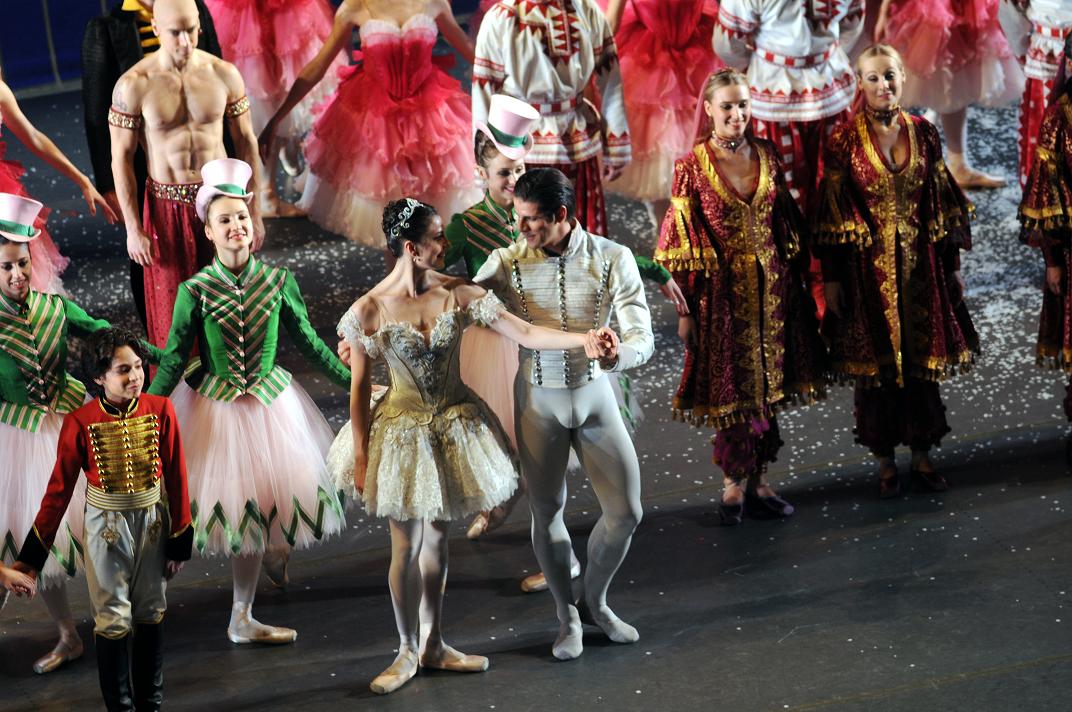
    Curtain call photos by K. Click to enlarge.

    Copy of 5

    There were lots of empty seats though it’s possible the weather was to blame for some of them, The production seems to have been built for touring; it looks nice enough at BAM but I think it would be really dwarfed at the Met.

    My guideline for the success or failure of a ballet production is simple: is it something I want to see again or – failing that – would I be willing to see again despite misgivings just to see other dancers in the leading roles? This production fails on both counts. Kokyat liked some of it simply because it was so visually different from anything else. I kept wishing they’d simply refurbished the Baryshinikov.

    My friend and fellow blogger Tonya Plank takes a different view of the production here; she saw a different cast and I believe she plans to see additional performances.

    So many superb dancers in each roster rank: I wish ABT would make more of an effort to mount productions which are truly worthy of their talents. 

    Thinking about current choreographers who might offer an interesting take on NUTCRACKER, the names Christopher Wheeldon, Edwaard Liang and Melissa Barak came to mind.