Tag: Sunday February

  • Graham @ The Joyce 2015 – Part II

    30828_433083144185_6944679_n

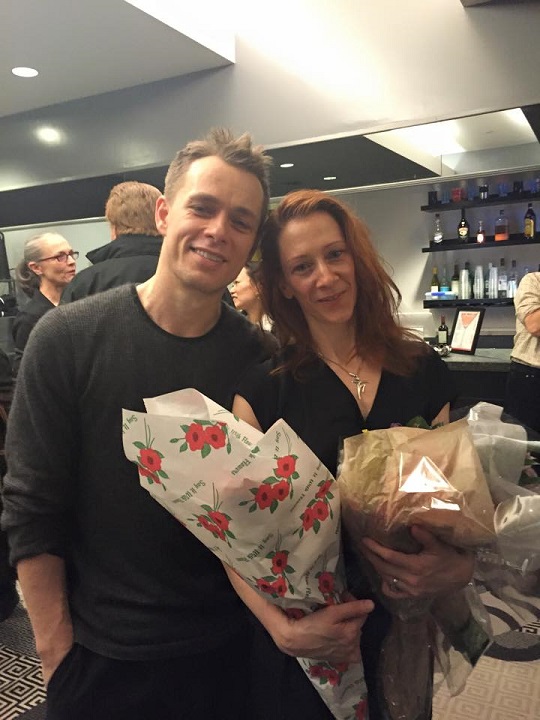
    Above: Blakeley White-McGuire and Tadej Brdnik; these two phenomenal dancers were making their ‘farewell’ appearances as members of the Graham company tonight.

    Sunday February 22nd, 2015 – For me it was a bittersweet evening at the Martha Graham Dance Company‘s final performance of their 2015 Joyce season following the news earlier this week that tonight would mark the ‘farewell’ Graham performances of Blakeley White-McGuire and Tadej Brdnik, two of the great Graham interpreters of our time and two people I greatly love and admire both as dancers and personalities. 

    Tadej danced in the very first performance of a Graham work that I ever saw: Appalachian Spring at Jacob’s Pillow some 20 years ago. That afternoon his Bride was the inimitable Miki Orihara. Combining the physique of a champion athlete with an appealingly boyish face, Tadej’s boundless energy and commitment have made him a Graham icon; he also has a devilish sense of humor, and I’ve seen him at the end of a long rehearsal keeping his fellow-dancers merry with one-liners and dead-pan expressions. In these final performances as a Company member, he has again shown the power and presence that have made him an emblematic Graham dancer throughout his career.

    Of Blakeley White-McGuire, one can say she has indomitable technical prowess and a rare gift for communicating emotion. But beyond that there’s an undefinable element in her dancing which only a handful of dancers in my experience have possessed: a spiritual connection with the music and the movement that makes her performances not just important, but essential. Blakeley is twice-blessed by Terpsichore, and it is we – the audience – who reap the benefits of her beauty and generosity of spirit. 

    Like Wendy Whelan, who recently retired from New York City Ballet (and who was in the audience tonight!), both Blakeley and Tadej have indicated that they aren’t retiring, but simply turning a page in the chronicle of their dancing careers.

    Blakeley and Tadej walked into the Graham studios for the first time on the same day some two decades ago. Although in the original scheme of things they were not scheduled to dance Errand Into The Maze together this season, it seems they were destined by the gods to do so.

    _MG_7823

    Their performance was thrilling, commencing with Blakeley’s opening solo (photo above by Brigid Pierce) in which she danced with a palpitating mixture of fear and resolve, delineating the character’s destiny in a vivid marriage of technique and temperament. Tadej, as the monstrous Minotaur, stalks her like a vicious predator, his incredible thigh musculature giving him grounded strength of purpose. Their pas de deux, so fraught with struggle and sexuality, shows Graham’s gift for devising miracles of leverage, counter-balance, and entwining in her partnering motifs. Blakeley and Tadej’s joint triumph was vastly cheered by the packed house, and their Graham colleagues joined them onstage for the celebration. 

    For all the excitement generated by Blakeley and Tadej, the evening was an enriching one overall, commencing with two Graham works in which two of my beloved Muses appeared: Deep Song opened the program in a vivid performance by Carrie Ellmore-Tallitsch, and Miki Orihara gave a luminous rendering of an excerpt from Primitive Mysteries, presiding over a corps of young women in blue.

    _MG_7545

    Above: Carrie Ellmore-Tallitsch in Deep Song; photo by Brigid Pierce

    Deep Song is a solo work by Martha Graham, set to Music by Henry Cowell. It was premiered in 1937 as one of the choreographer’s responses to the horrors of war (the Spanish civil war in this case). In a black and white gown, Carrie Ellmore-Tallitsch is first seen seated on a white bench. The choreography develops with seeming inevitability as she struggles with her  inner torment, sinking to the ground. She later lifts the bench, seeming to use it as a shield or hiding place. Finally the bench takes on a coffin-like aspect as she lowers it over herself. Carrie, a dancer I have always held in highest esteem, danced as superbly as I expected. The audience seemed to agree: she won a prolonged ovation which made me want to smile and weep at the same time.

    6a00d8341c4e3853ef01a511cbecd5970c-800wi

    Miki Orihara (rehearsal image, above) appeared like a shimmering angel all in white to perform the ‘Hymn to the Blessed Virgin’ from Graham’s 1931 ballet Primitive Mysteries. This is the Graham work I am most curious about, and tonight’s tantalizing excerpt makes me curiouser and curiouser. Escorted by a group of attendants in deep blue gowns (members and apprentices of Graham II), Miki radiates feminine mystique with her poetic gestures, moving with an almost ghostly lightness of tread. To Louis Horst’s atmospheric melody for flute and piano, the women perform antique rituals in this finely-structured dancework. The ensemble’s signature poses and port de bras make a particularly strong effect as Miki walks forward between facing rows of acolytes who sink down or raise their arms to heaven as she passes by. Miki sustains a powerful pose in demi-plié as the women circle about her. All to soon, their cortège passes onward but the resonance of their dancing lingers. Miki, always so movingly inspired and inspiring, sets a lovely example for the young dancers surrounding her: not only of how to move, but how to be.

    In the Graham Company’s on-going project of asking now-generation choreographers to create short danceworks inspired by Martha’s legendary solo Lamentation, Michelle Dorrance and Liz Gerring have now devised new pieces – Lamentation Variations – for the Graham dancers. Bulareyaung Pargalava’s Variation, a classic by now, was also on offer tonight.

    007_ChristopherJones_013

    Above: the Graham men in Michelle Dorrance’s Lamentation Variation; left to right are Abdiel Jacobsen, Ben Schultz, Lloyd Knight, Lloyd Mayor, Tadej Brdnik. Photo by Christopher Jones.

    Ms. Dorrance, a tap-dancing paragon, did not ask the Graham dancers to tap. But the music she used relied on tap rhythmics with a jazzy over-lay. The men formed a kind of central knot, while a quintet of women were seen in walkabouts…which one or two of the men sometimes strayed into. Though abstract, an underlying aspect of sadness and solitude prevailed throughout this work.
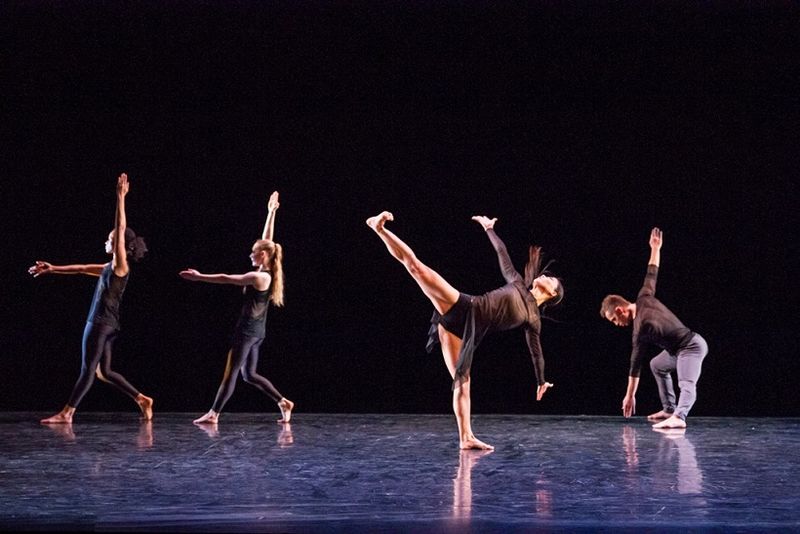
    001_MG_2624

    Liz Gerring’s Lamentation Variation is a quartet – performed by Natasha M Diamond-Walker, Charlotte Landreau, Ying Xin, and the indefatigable Tadej Brdnik (photo, Brigid Pierce) – which is set to a score for electronics and piano. The movement is rather stylized, and choreographer and dancers make excellent use of the space.

    150212_M_Graham_B_Pagarlava_003

    Above: from Bulareyaung Pargalava’s Lamentation Vartiation; photo © 2015 Yi-Chun Wu.

    Pargalava’s Variation opens to the sound of Martha Graham’s voice speaking about the solo that inspired all these variations. Soon a haunting melody from Mahler’s ‘Songs of the Wayfarer’ is heard. In flesh-coloured tights, the delicate XiaoChuan Xie and her three demi-god partners – Ben Schultz, Lloyd Knight, and Lloyd Mayor – move with a sense of flowing lyricism through intricate partnerings in which Chuan alternately sinks down and is lifted on high. The dancers and the dance certainly wove a hypnotic spell tonight.
    002_MG_7971

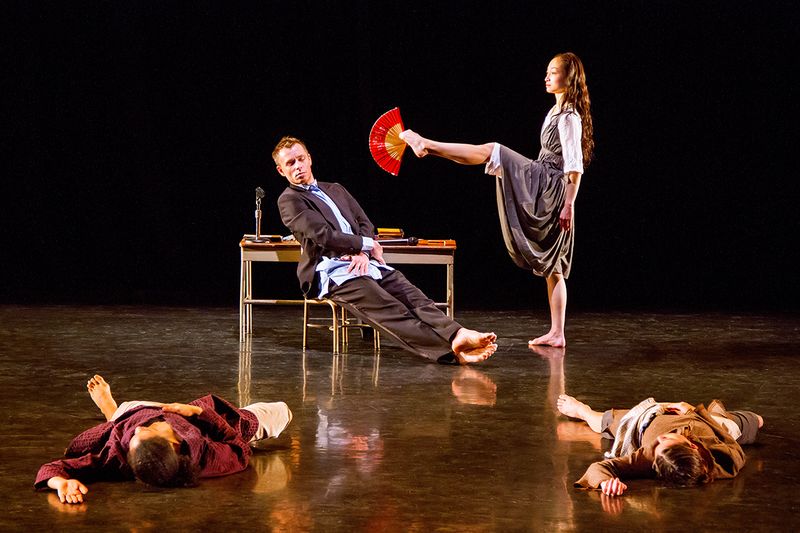
    Above: Tadej Brdnik and XiaoChuan Xie in Annie-B Parson’s The Snow Falls in the Winter; photo by Brigid Pierce.

    I saw Annie-B Parson’s The Snow Falls in the Winter a few seasons ago when OtherShore performed it. It’s simply not my cup of tea. For me one of the great joys of watching dance is: the dancers are silent. Once they begin to speak, a whole element of mystery falls away. Ms. Parson’s work is more like a play with a bit of dancing thrown in. The Graham dancers of course flung themselves into the piece with their customary zest, and Carrie Ellmore-Tallitsch and Natasha Diamond-Walker in particular proved themselves adept actresses. But while many in the audience applauded lustily and commented enthusiastically on this very ‘different’ work, I found it pretty tedious.

    006_MG_8799

    Above: from Andonis Foniadakis’ Echo, Lloyd Mayor, PeiJu Chien-Pott, and Lloyd Knight; photo by Brigid Pierce

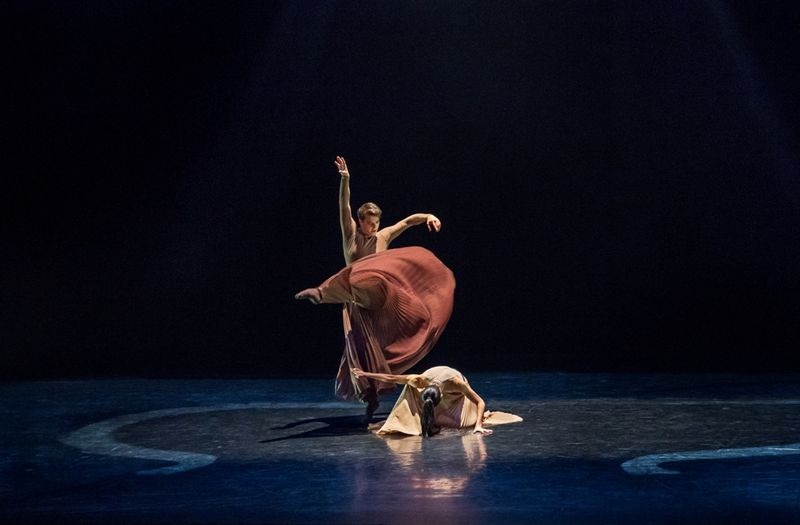
    The evening then soared to its conclusion with Andonis Foniadakis’ myth-inspired masterwork, Echo. It’s more a mood piece than a literal re-telling of the ancient tale of Narcissus and Echo, and as such it flows gorgeously upon Julien Tauride’s atmospheric score. The Graham Company’s beautiful pair of Lloyds – Mayor and Knight – create the illusion of Narcissus and his refection in deeply-enmeshed duets, their movement enhanced by their long sheer skirts (costumes by Anastasios Sofroniou) as caught in shadowy swirls by Clifton Taylor’s lighting design. PeiJu Chein-Pott is simply gorgeous as Echo, her dancing radiant and her creation of the character’s unspoken love and frustration literally becoming poetry in motion. In a supporting ensemble (as if such dancers can ever be thought of as merely ‘supporting’!) Tadej Brdnik, Ben Schultz, Abdiel Jacobsen, Natasha Diamond-Walker, XiaoChuan Xie, Charlotte Landreau, and Lauren Newman all wove into the marvelous mythic tapestry that Mr. Foniadakis has created.
    002_MG_8527

    Above: from Andonis Foniadakis’ Echo, Lloyd Mayor and PeiJu Chien-Pott; photo by Brigid Pierce

    So nice to see many dancer-friends among the crowd: Wendy Whelan, Mariya Dashkina Maddux, Jere Hunt, Justin Lynch, Jonathan Breton, and Alexandre Balmain; and of course my delightful companion of the evening, Roberto Villanueva. Special thanks to Janet Eilber, the dance world’s most gracious hostess, and to publicist Janet Stapleton for sending me the production photos with perfect timing. 
    11018652_10152754243055749_7393396627905223554_n

    Afterglow: Tadej Brdnik and Blakeley White-McGuire basking in the affectionate admiration of friends and fans after the performance. Photo courtesy of Karen Brounstein.

  • NY Philharmonic Ensembles: Concert @ Merkin Hall

    Penderecki

    Above: the composer Krzysztof Penderecki

    Sunday February 15th, 2015 matinee – This series of chamber music concerts by musicians from The New York Philharmonic looked so appealing when I saw the initial announcement. Due to my crowded calendar, this was my first opportunity to attend one of the concerts this season, and I’m most grateful to Lanore Carr of the Philharmonic for arranging it for me. Aside from the very interesting repertoire, the concert gave us an opportunity to ‘meet’ many of the Philharmonic’s artists in a more intimate setting. 

    Merkin Hall is a fine venue for chamber music – with a very clear acoustic – and the audience, who braved frigid temperatures to attend, were held in a sustained state of attentive delight by both the music and the playing.

    The outstanding contemporary Polish composer Krzysztof Penderecki’s String Trio was premiered in 1990 at Krakow. Today, cellist Nathan Vickery introduced the piece, citing the fact that Penderecki set out early in his career to write music that would antagonize his listeners, but that, over time, his approach mellowed.

    The String Trio is a vivid and very pleasing miniature – about 12 minutes long – and was played to perfection by Mr. Vickery with Quan Ge (violin) and Dawn Hannay (viola). After a slashing, jagged introductory phrase, the viola, then the cello, and then the violin make opening statements. The work takes on a conversational feel, as the instruments seem to murmur or chatter to one another with buzzing intimacy. The second movement is dance-like. All three players excelled in both tonal appeal and rhythmic surety. It was a bracing, lively performance, with intriguing touches of wit subtly expressed..

    Jean Sibelius’s String Quartet in D minor, Voces intimae, Op. 56 was the only familiar work on the programme. This is music rich in expressions of melancholy and tenderness – even the more animated passages have a rather forlorn undercurrent – and in introducing it, violist Irene Breslaw quoted Sibelius as saying it was “…music that brings a smile to your lips at the time of death.”

    The musicians – Anna Rabinova and Hyunju Lee (violins), Ms. Breslaw, and cellist Qiang Tu (superb depth of tone!) – vied with one another in poignancy of expression and beauty of line. Combined, their voices mingled in heartfelt harmonies, most especially in the quartet’s autumnal Adagio where their evocations of longing and regret spoke so deeply to me. In the scurrying finale, the players’ technical deftness was truly impressive.

    The chance to hear music by Vittorio Giannini was an important factor in wanting to attend this concert. This now-nearly-forgotten composer was so prolific, writing operas, symphonies, sacred works, chamber music, and songs. His sister, Dusolina Giannini, was an operatic soprano who sang two dozen performances at The Met from 1938-1941. Vittorio Giannini was well-regarded in his lifetime – he taught at Juilliard, The Manhattan School of Music, and the Curtis Institute, and he founded the North Carolina School of the Arts – and his music won favor with audiences. Yet he and his music seem to have lapsed into obscurity following his premature death in 1966 at age 63.

    Today we heard Vittorio Giannini’s Piano Quintet, and a gorgeous work it is! Melodically rich in the spirit of Puccini and Rachmaninoff, this quintet presents a rhapsodic blend of piano and strings in which theme follows theme in a steady flow of passionate lyricism. Giannini is so adept in his art that the music is able to speak directly to the heart without ever becoming cloying. Violinist Yulia Ziskel, commenting on the composer and his forgotten works, spoke of the ‘silver screen’ quality of certain passages of the quintet, and how right she was. But the music does more than just bathe the senses in a sea of opulent melodies, for the composer also shows a keen talent for rhythmic nuance. 

    Guest artist Keun A Lee – who I had heard previously playing for an Alek Shrader recital – was simply a luminous central force for the quintet. Her playing is elegant and generous, and she is also a delight to watch. Ms. Ziskel was joined by Shanshan Yao (violin), Rémi Pelletier (viola) and Mr. Vickery (cello). They played with warm resonance, most especially in the second movement where the cello takes the melodic lead (with the piano) which is then picked up by the viola. This adagio featured some of the evening’s most passionate playing. The third movement gets dance-y, developing a swaying effect at one point before swirling onwards to the fast and furious finale.

    Chamber music must be so rewarding to play; and imagine how delightful it must have been for these musicians to discover the Giannini anew. The caliber of playing was stellar, and this was a really engaging programme.

  • Schubert’s Octet @ CMS

    Schubert

    Above: Franz Schubert

    Sunday February 23, 2014 – A sold-out house at Alice Tully Hall as Chamber Music Society of Lincoln Center continued their series The Incredible Decade, featuring works composed between 1820 and 1830, with octets by Schubert and Mendelssohn.

    The evening didn’t quite turn out as I’d hoped; I’ve been fighting off a cold and I thought I had medicated myself sufficiently to get thru the concert. But about half-way thru the Schubert all the symptoms suddenly activated and – since I am always kvetching about people who come to performances when they are coughing – I thought the polite thing would be to leave at intermission. This choice was seconded by the presence of a fidgety woman next to me who kept poking me in the ribs with her elbow. I hated to miss the Mendelssohn – one of my favorite works – but in the end I think I made the right choice because by the time I got home I was really sick.

    At any rate, the performance of the Schubert octet in F-major was certainly worth my effort to attend; as is their wont, Chamber Music Society assembled a group of players of the highest calibre and their work – both as individuals and in ensemble – was dazzling. The vociferous ovation at the end was fully merited, the musicians called out twice as the audience’s cheering waves of applause swept over them.

    Schubert’s octet in F major, D. 803, was an ambitious project for the young composer. Sometimes viewed as a preparatory ‘outline’ for what would eventually become the Symphony No. 9 in C major, The Great, the octet in itself is a rewarding and innovative work. Performance timing of one hour makes this one of the longer chamber works in the active repertory; its six movements literally brim over with melodic and harmonic riches. The mood runs from sunshine to shadow and the work conveys Schubert’s musical and emotional ebb and flow; it’s a piece that calls for both vrtuosity and spiritual intention, and our stellar band of players tonight gave a performance that was nothing short of spectacular.

    D288FC0D-DBDE-8E54-239713E258DAC4D4

    I was particularly excited to encounter one of my favorite musicians, Alexander Fiterstein (above), whose prodigious talents as a clarinetist were very much an illuminating factor in this evening’s performance. In the Menuetto, Alexander and violinist Erin Keefe engaged in a courtly dialogue, and earlier in the Adagio it is the clarinet which first ‘sings’ the lovely melody. Ms. O’Keefe’s silken timbre was a joy to hear throughout, and her fellow string players – Sean Lee (violin), David Aaron Carpenter (viola), Jakob Koranyi (cello) and the Society’s formidable double-bass player Kurt Muroki – blended stylishly while the wind trio – along with Mr. Fiterstein – had Bram Van Sambeek (bassoon) and the matchless velvet of Radovan Vlatkovic’s horn playing. Having played the horn in high school, every time I hear Mr. Vlatkovic I develop a case of ‘timbre envy’. How does he do it? My timbre was always too trumpet-like. Special kudos to Mr. Koranyi as well: his ‘variation’ in the Andante was one of the outstanding passages of the evening.

    In her pre-curtain speech, co-Artistic Director of CMS Wu Han gave us the exciting news that subscription/ticket sales were already well ahead of projection for the 2014-2015 season.  Bravo CMS!

  • Lydia Johnson Dance @ Peridance: Golijov

    Copy of 19

    Sunday February 26, 2012 matinee – Lydia Johnson Dance presented two works at Peridance this afternoon. The performance marked the first full presentation of Lydia’s new, as-yet-untitled work to music of Osvaldo Golijov as well as a revival of her 2006 piece to music of Philip Glass: FALLING OUT.

    Kokyat and I have been following the creation of the Golijov work from its earliest days, visiting the studio periodically to view the work’s progress. Lydia is so generous in sharing her creative process, giving us an extraordinary insight into how ideas become danceworks.

    Click on each image to enlarge:

    Copy of 2

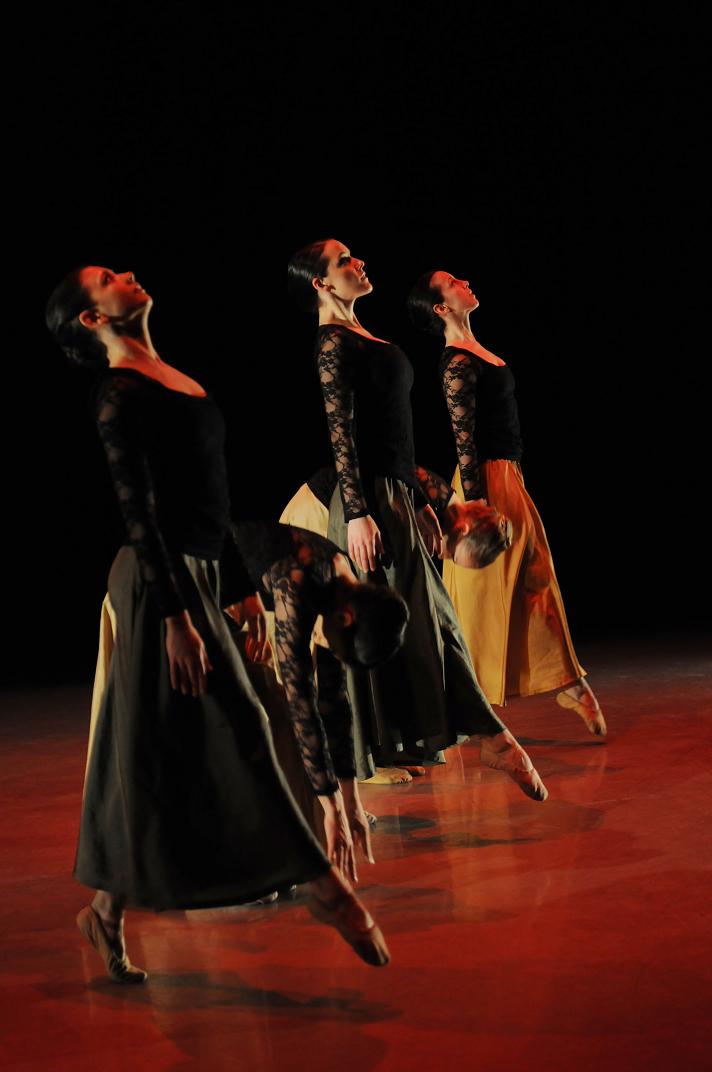
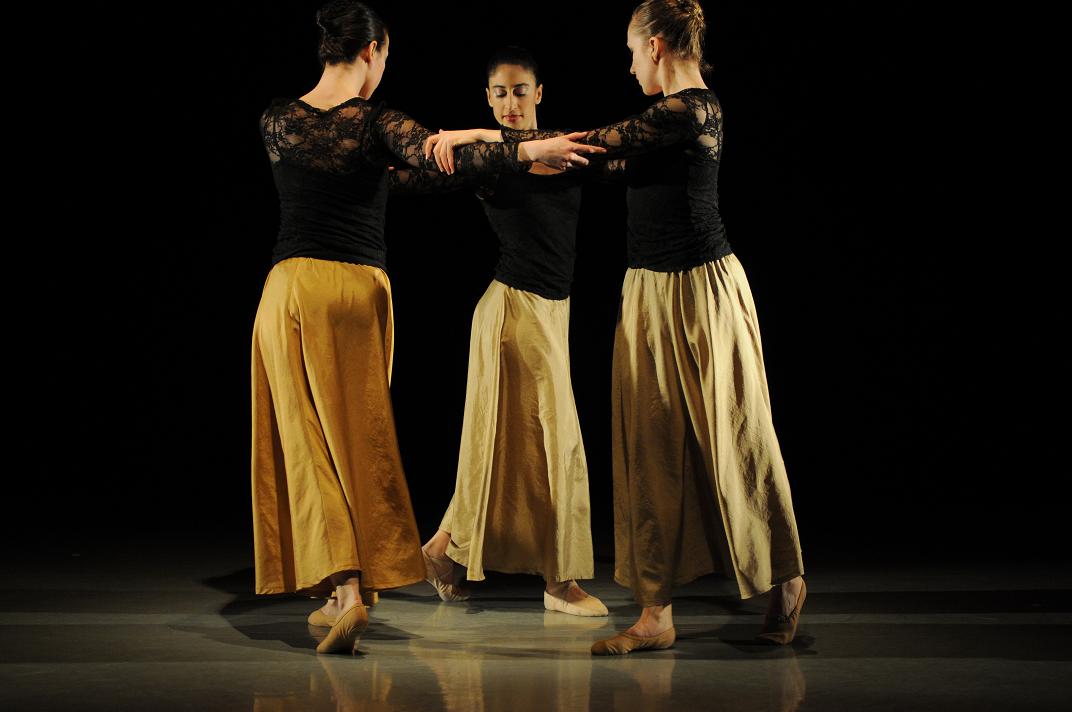
    In the Golijov, a trio of women first appear in soft golden gowns; their black-lace bodices provide a Spanish feel. Remaining in place, they perform a gestural ritual implying both spirituality and cleansing.

    Copy of 6

    Quietly they move in a circular pattern…

    Copy of 16

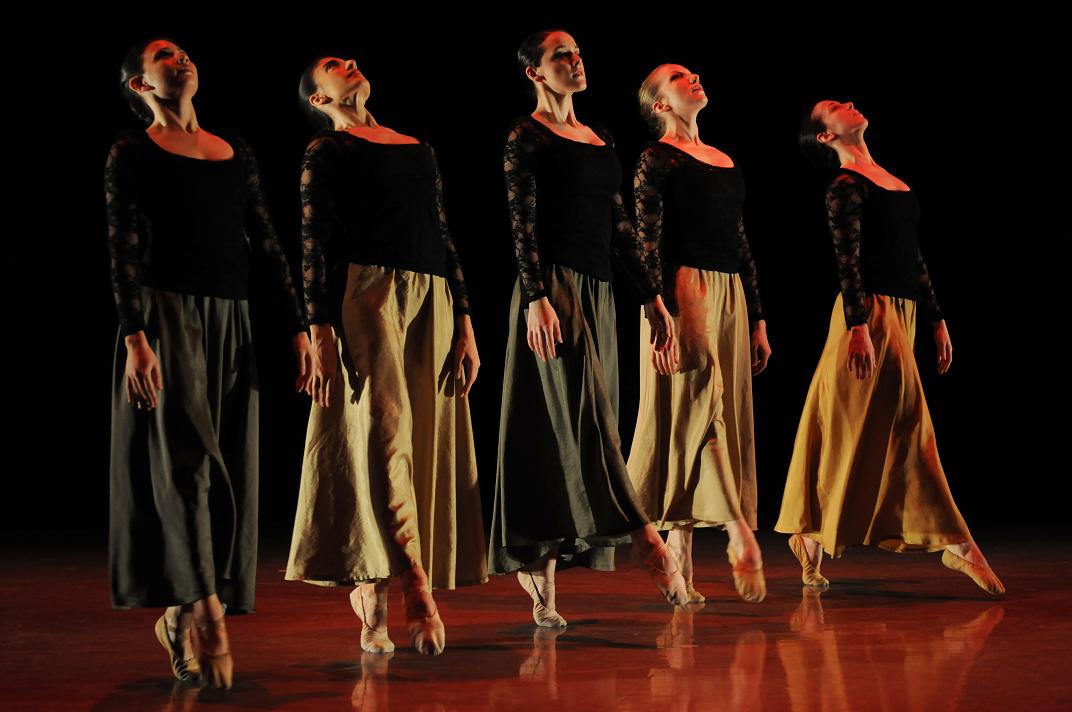
    …which is expanded by the entry of two more women.

    Copy of 21

    With an unexpected juxtaposition of calm and urgency, the women continue their mysterious rites as the music takes on a soulful expression. 

    Copy of 35

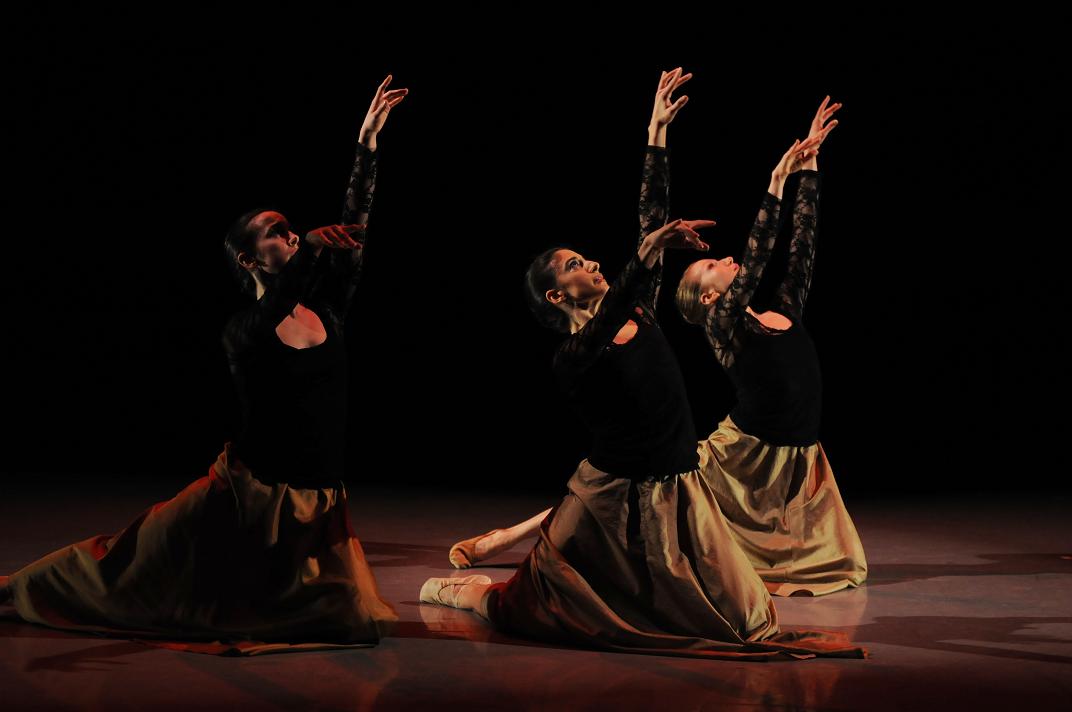
    Images of silent despair and of consolation are evoked…

    Copy of 39

    …blended with uplifting gestures of unity and hope.

    Copy of 40

    The final movement of the Golijov is marked by themes of rocking as each girl in turn swoons into the arms of her sisters to be gently lulled.

    Copy of 45

    In this work, choreographer Lydia Johnson seems to be telling a story yet the mystique of the five women – who they are and what their rituals mean to them – is left to the imagination of each viewer. One of the things about Lydia’s work that I most appreciate is her unerring taste in music: she always seeks out the best, whatever genre she might decide to work in. Here, the religious themes of the Golijov pieces she uses offer a wide range of interpretative images, from the earthy to the sublime. Darkly handsome in atmosphere, this dancework resonates with the bonds of sisterly unity and affection; it steers clear of sentimentality, thus striking a deeper chord.

    Copy of 26

    Always a choreographer’s greatest good fortune: to have dancers who understand and communicate the imagined nuances of a given work. The lyricism and grace of the five women dancing in the Golijov maintained the spirit of the music and movement from first note to last. They are (above): Sarah Pon, Lisa Iannacito McBride, Kaitlin Accetta, Laura DiOrio, and Jessica Sand.

    Details of the afternoon’s second work, set to music of Philip Glass, will appear here shortly.

    All photographs by Kokyat.

  • David Grenke’s VESPERS/Rehearsal

    Copy of 3

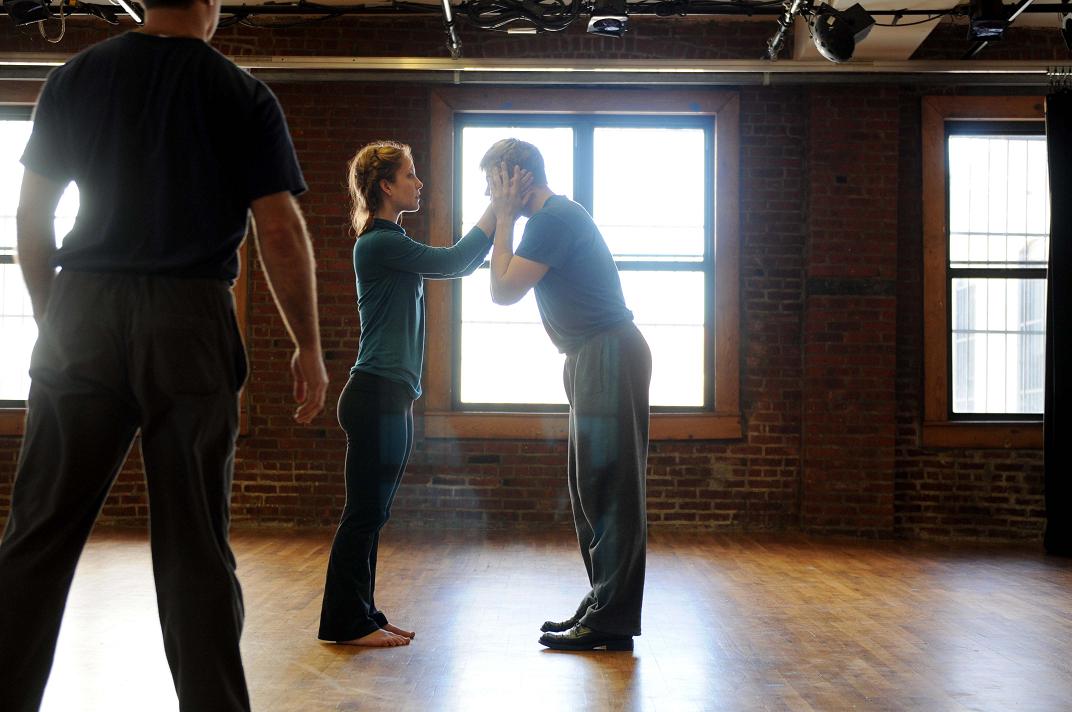
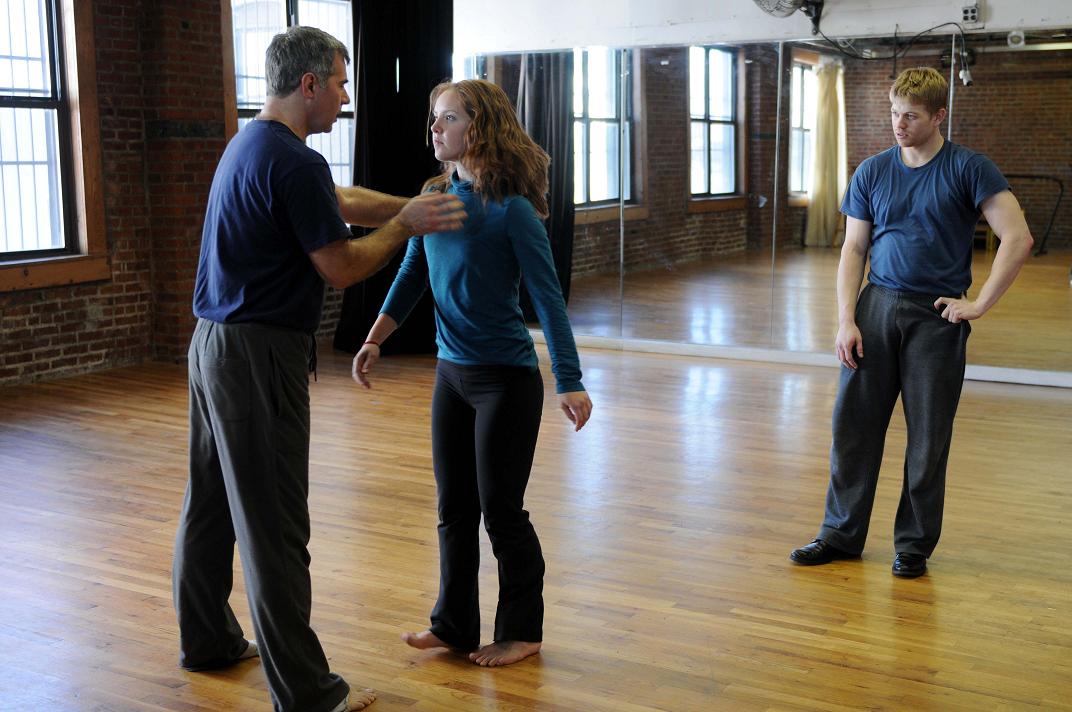
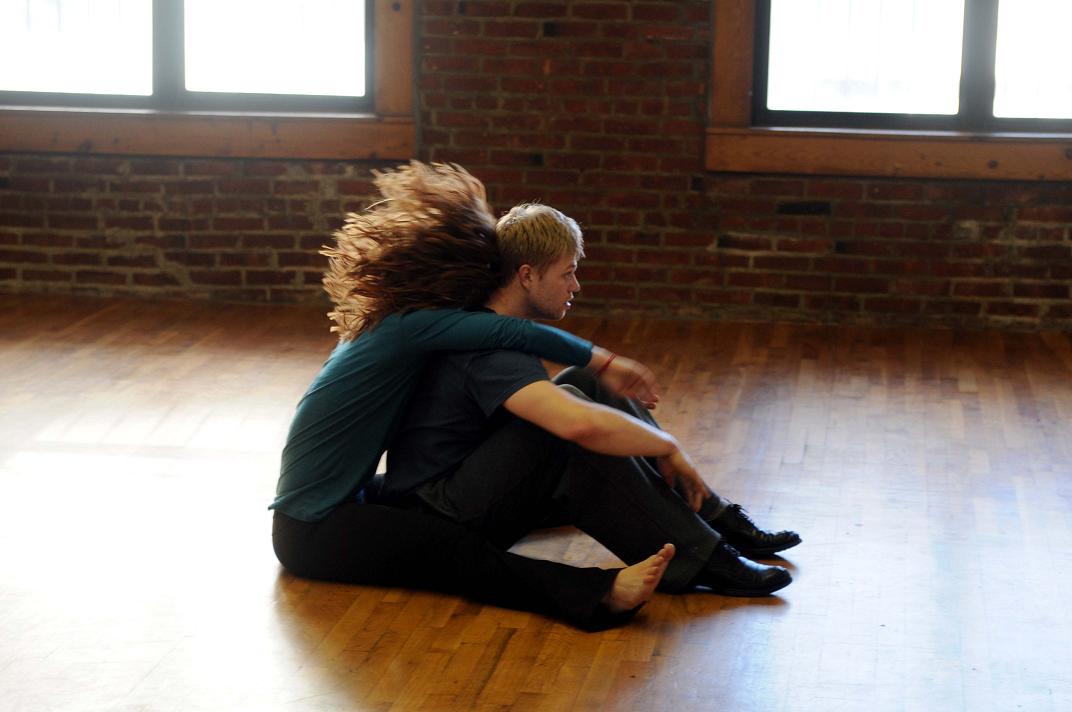
    Sunday February 20, 2011 – Kokyat and I went out to Brooklyn where Shannon MacDowell, a young dancer we have met thru her work with Amy Marshall Dance Company and isadoraNow was rehearsing a duet by David Grenke, VESPERS, with her partner Brian Runstrom in preparation for the upcoming performances at the Cedar Lake theater by Dancers Responding to AIDS.

    Copy of 28

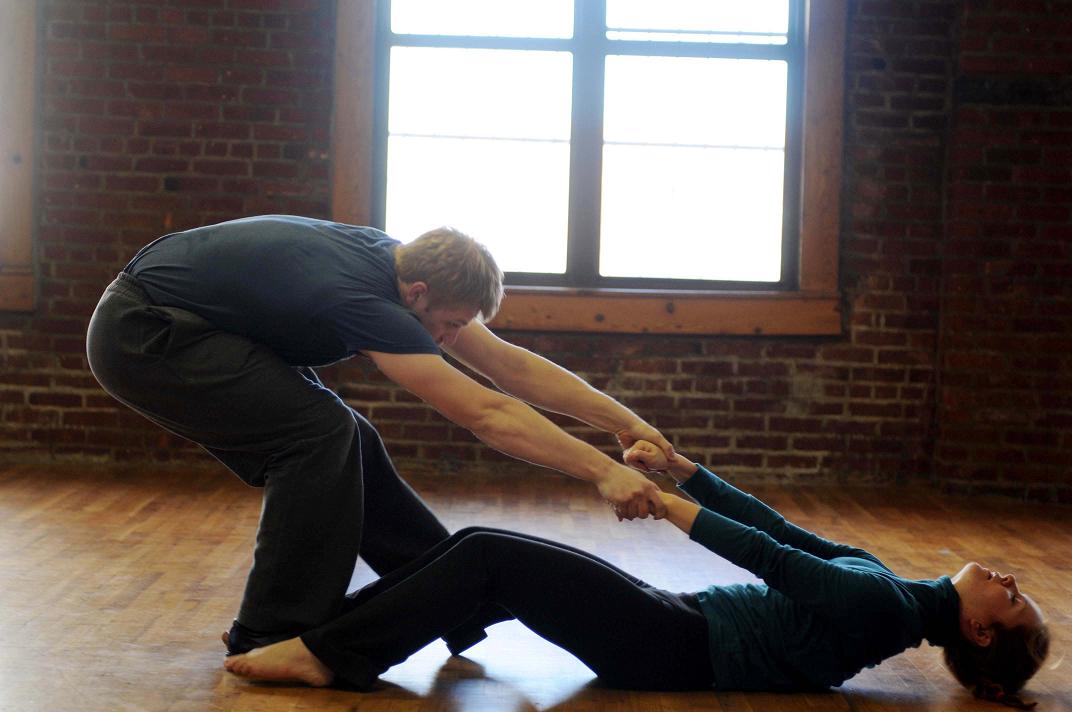
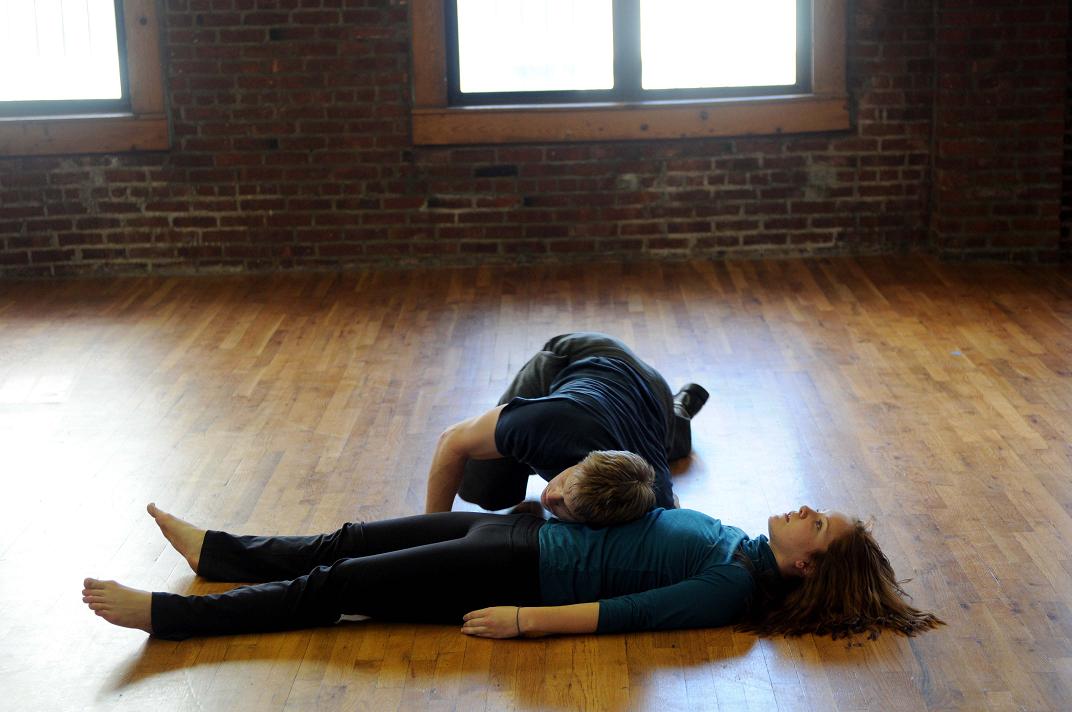
    David Grenke, a former principal dancer with Paul Taylor Dance Company, created VESPERS in 1992. Set to the Tom Waits song ‘Tom Traubert’s Blues‘, the duet portrays a man attempting to raise his beloved from the dead.

    You can hear the music here; If you aren’t familiar with the voice of Tom Waits – described by critic Daniel Durchholz as sounding “like it was soaked in a vat of bourbon, left hanging in the smokehouse for a few months, and then taken outside and run over with a car” – it might take some getting used to. In the context of David Grenke’s dancework, the singing is strangely haunting.

    Copy of 46

    As soon as Shannon and her partner Brian Runstrom began the rehearsal today I recalled seeing a film of this work up at the Pillow at the time Grenke was creating it. They were showing various dance clips on a screen in the Pillow’s visitors center and I remember some women were watching it; one said: “This is so sexist, I hate it!” and another asked: “Why is he abusing this poor woman?”  I said aloud, “She’s dead. He’s not abusing her, he’s trying to wake her up!”

    Copy of 9

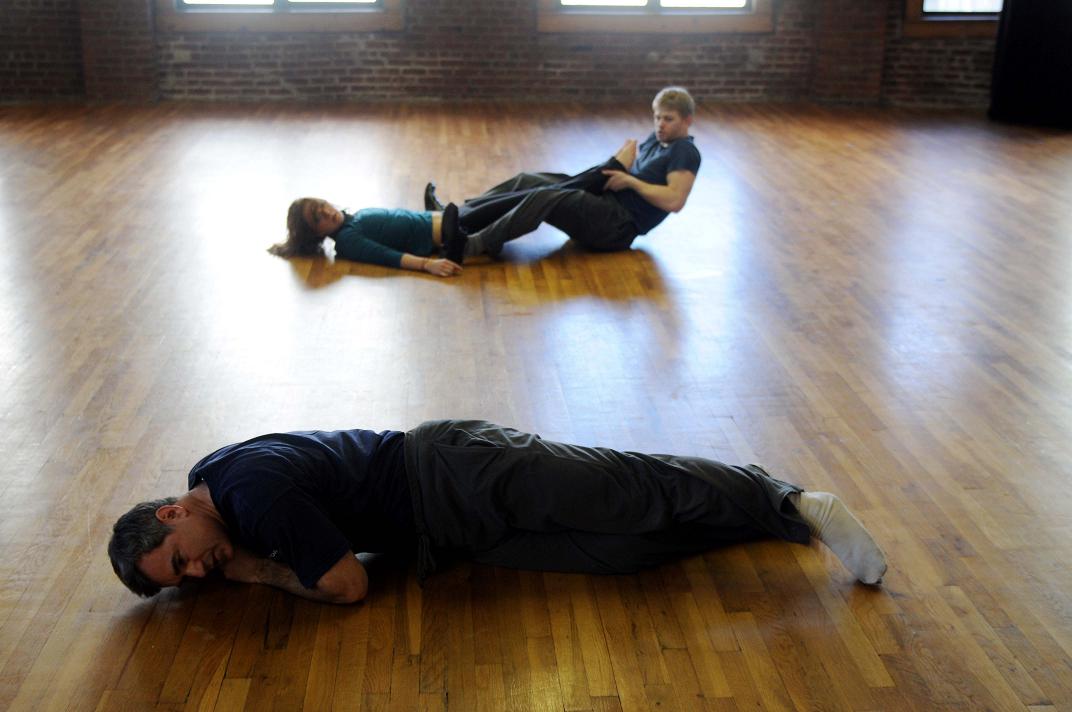
    It was a powerful experience to re-encounter the duet today, danced to the raspy invocations of Waltzing Matilda. Shannon and Brian had been learning the duet from a filmed version and this was their first time actually being in the studio with David. The dancers have the basic moves and structure down, the choreographer was detailing their work and bringing it into focus.

    Copy of 26

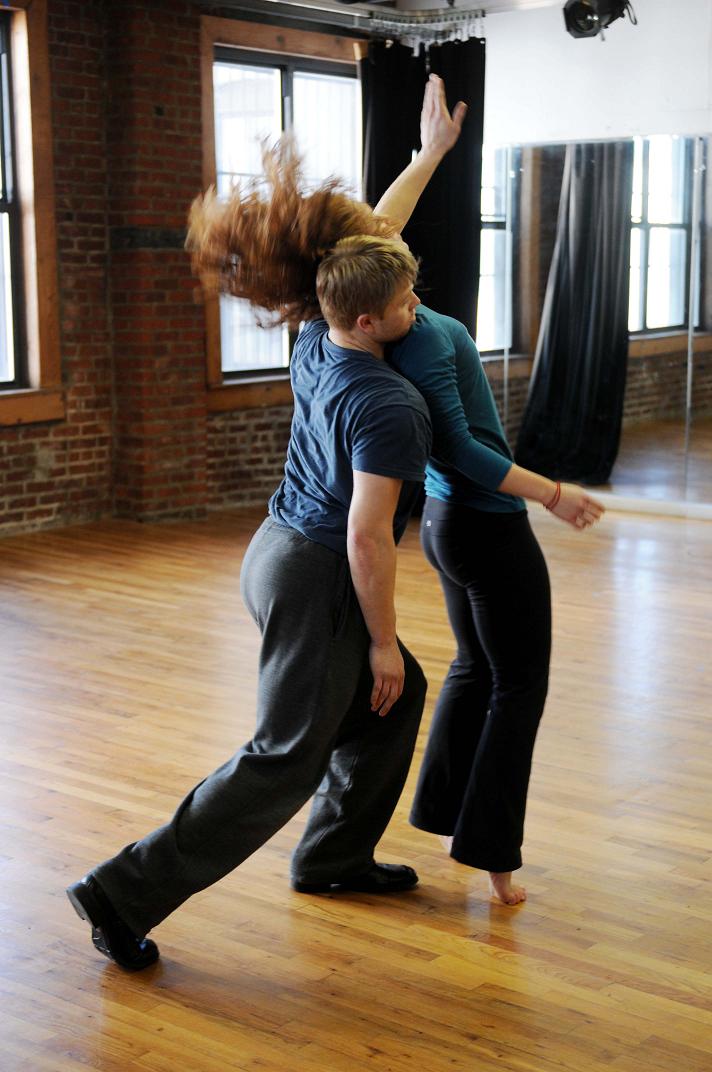
    The piece is intensely physical and full of body contact. “Don’t let it get sexual!” David admonished: “That’s not what it’s about.” Shannon and Brian responded keenly to all that David asked of them. Sometimes the choreographer would step in, taking the place of one of the dancers to show how he wanted something to be done. But he also let Shannon and Brian bring their own personalities into play.

    Copy of 1

    Shannon MacDowell and choreographer David Grenke

    Copy of 18

    Brian Runstrom, Shannon MacDowell

    Copy of 20

    Copy of 29

    Copy of 43

    Copy of 45

    Copy of 52 

    Copy of 53

    Copy of 40

    The light in the studio was quite evocative; Kokyat shot the duet in the available light and though we were there for less than an hour, the atmosphere of VESPERS radiated strongly as David and the dancers kept their focus on the process. Looking forward to seeing their finished work at the Cedar Lake performances.

    All photos: Kokyat.