Tag: Sunday June

  • Paul Taylor @ The Joyce ~ 2025

    Shawn lesniak

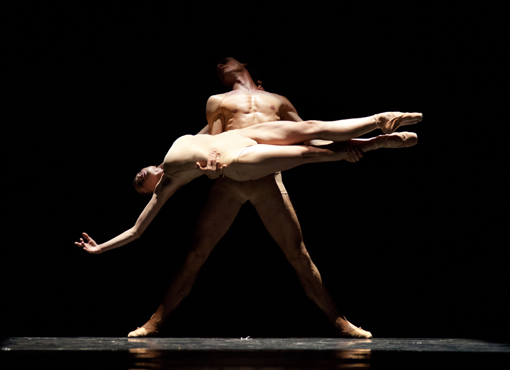
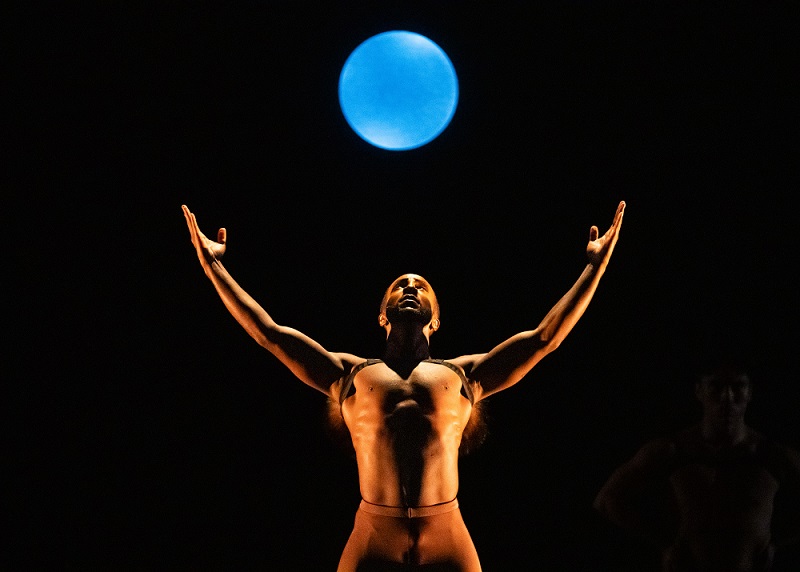
    Above: Shawn Lesniak in Paul Taylor’s Runes; photo by Steven Pisano

    ~ Author: Oberon

    Sunday June 22nd, 2025 matinee – Three works were on the bill at The Joyce this afternoon, as the Paul Taylor Dance Company concluded their season at the iconic venue. The matinee marked the farewell Taylor performance of Shawn Lesniak, who joined the Company in 2019. 

    Paul Taylor’s opus 64 – Polarisis set to a commissioned score by Donald York; it premiered in 1976. This work is unique in that it presents the same choreography twice, in different musical settings and with different dancers performing in and around a metallic cube; Jennifer Taylor’s lighting design, always so impactful, is also altered in the repeat. 

    In the cast of the first setting of the work were Gabrielle Barnes, Emmy Wildermuth, Payton Primer, John Harnage, and Jake Vincent. Of the women, Mlles. Barnes and Primer were new to me. Ms. Wildermuth had dazzled me in 2024, dancing Jody Sperling’s Clair de Lune, inspired by Loïe Fuller; today, in Polaris, her solo was vividly danced. John Harnage and Jake Vincent looked like young gods, and they danced handsomely.

    Donald York’s score develops a lilting theme, the choreography is stylized as the dancers move about the space creating shapes and striking poses; one dancer replaces another as if by magic.  The music is increasingly cinematic, the dancing full of wit, irony, athleticism, and grace. Ms. Primer and Mr. Harnage have an intriguing duet, and then Ms. Barnes made a gorgeous impression in a long solo passage where she moved about the space like a goddess. 

    One by one, the dancers of the first setting depart, their spots being taken over by Lisa Borres Casey, Jada Pearman, Jessica Ferretti, Lee Duveneck, and Alex Clayton. The music here felt more dramatic…more theatrical; at times, it became suspenseful, even creepy. The lighting seemed to take on a unique glow, with Jada Pearman charming us in her solo. Ms. Borres Casey and Mr. Clayton matched up to fine effect in their duet, and Jessica Ferretti was stunning and sublime in the long solo. Lee Duveneck towered over his colleagues, always a compelling advocate of the Taylor style. The finale of the ‘second’ score was especially evocative. 

    Following the interval, we saw Tablet (Taylor’s opus 24), set to a commissioned score by David Hollister, premiered in 1960. This playful, nine-minute duet was once danced by the choreographer and Akiko Kanda (photo below by Helga Gilbert): 

    Tablet-Taylor-Kanda-by-Helga-Gilbert 2

    Today, Tablet was danced by Kristin Draucker and Devon Louis, below in a Steven Pisano photo:

    Taylor tablet pisano

    Tablet’s score is quirky, the atmosphere that of a playful courting duet. The dancers were ideally paired, their shapes and port de bras having a natural flow. Each has a solo passage, but it is in their entwined partnering that the relationship – and the mutual trust between the two – is most palpable. During the interval, former Taylor star Richard Chen-See stopped by to chat; I understand that Richard was very much involved in getting Tablet back into the repertoire, and that’s surely why it felt so perfect. Ms. Draucker and Mr. Louis were the ideal choices for this revival. I hope Tablet will continue to be danced for us in seasons to come.   

    Cloven Kingdom has long been one of my favorites in the Taylor repertoire; it was the choreographer’s opus 63. With music by Arcangelo Corelli, Henry Cowell, and Malloy Miller, the work premiered in 1976. I first saw it at Jacob’s Pillow in 1982, and it was love at first sight…and first hearing. The music casts a spell: the elegance of Baroque is mixed with sexy percussive rhythms and sounds from an exotic jungle to captivating effect. Having seen it numerous times since that Pillow showing, the piece today was as marvelous as ever.

    “Man is a social animal…” as the Spinoza quote tells us. And what a delightful bunch of humans danced for us this afternoon: Jessica Ferretti, Gabrielle Barnes, Emmy Wildermuth, Elizabeth Chapo, Kristin Draucker, Lisa Borres Casey, Jada Pearman, and Payton Primer swept about the stage in their swirling gowns, leapt swiftly along diagonals, and found new ways of walking (and cart-wheeling) that gave their moves added vibrancy. Their mirrored head-gear cast shards of light into the Hall.  

    The male quartet – a Taylor classic if ever there was one – was dazzlingly done by Devon Louis, John Harnage, Austin Kelly, and Mr. Lesniak. It seemed to me that, in the course of this number – which ends with a stunningly-lit statue-pose – and indeed on into the ballet’s finale, the dancers were subtly messaging their affection and admiration to their retiring colleague as they passed him in the course of their dancing.

    The matinee ended with a rousing ovation from the packed house; cries of “Shawnie! Shawnie!” rang out, and Mr. Lesniak then took a solo bow, to wild applause. Flowers were pelted onto the stage as his colleagues surrounded him in a massive love-in. Bravo!! Bravissimo!!!  

    ~ Oberon

  • Flamenco Vivo Carlota Santana @ The Joyce ~ 2024

    Screenshot 2024-06-22 at 22-26-30 FANNY ARA (@fannyara) • Instagram photos and videos

    Above: dancer Fanny Ara

    ~ Author: Oberon

    Sunday June 23rd, 2024 – Flamenco Vivo Carlota Santana presenting the US premiere performances of  EQUILIBRIO (Clásica/Tradición) by Emilio Ochando. Featuring nine dancers and musicians, the work embraces flamenco tradition while creating a unique staging of dances set to an original score by guitarist Daniel Jurado and featuring multi-instrumentalist Gonzalo Grau.

    On the hottest day of the Summer (so far…and we are only on day 3) – with a high of 95 degrees – it was unfortunate that The Joyce’s air conditioning was malfunctioning. This made for a sweaty audience experience, and I can only imagine the effect on the dancers. But they persevered, looking as proud, noble, and sexy as ever; that’s an odd trio of adjectives, no?  But that describes them perfectly.

    Today’s program was rather different from last season’s Flamenco Vivo production; today was more of an ensemble affair. There were some impressive solos but none of the free-standing flamenco showpieces that feel like great operatic arias; instead, Mr. Ochando’s EQUILIBRIO had a more organic quality. Three fantastic musicians guaranteed an afternoon of fabulous music: Mr. Jurado is a guitarist de luxe, and Mr. Grau is extraordinary in his range, playing keyboard, drums, and cello in turn. (I bet if someone handed him a bassoon or trumpet, he could manage that as well). Vocalist Loreto De Diego displayed a multi-hued sound that ranged from slightly raspy parlando to clear, sensuous soft tones to full-fledged Broadway-style belting. Her singing was emotion-drenched and heartily applauded.

    Lighting designer Daisy Long kept things simple and effective. Large moveable rectangles of tube lighting changed hues to fit the mood of the music, and were easily shifted about the stage by the dancers, giving each of the scores thirteen movements a distinctive character. Carmelita Vestuario’s costuming had the women in red gowns with black underskirts and the men in fitted black trousers and red shirts (later, they donned black skirts for a while). Castanets, the iconic sound of flamenco, were often in use, delightfully played by the six dancers.

    Flamenco vivo 2024

    Above: the Company

    The afternoon opened with a keyboard solo from Mr. Grau. All six dancers appear with their castanets for a gorgeous opening, red skirts swirling. Mr. Jurado’s guitar comes in for the second movement, and Ms. De Diego’s voice begins to entrance us.

    Mr. Grau takes up the cello for a riveting fandango in which dancer Emilio Ochando, lying on his back, gives a virtuoso performance with the castanets. The clarity of his playing was amazing, especially when he honed the volume down to a mere whisper. Mr. Ochando then dons a vest embellished with silver bells for El Vito, with Ms. de Diego showing her vocal range whilst the three female dancers – Fanny Ara, Lorena Franco, and Laura Peralta – clap in varying rhythms.

    A somewhat competitive duet ensues, with Fernando Jimenez and Yoel Vargas doing some dynamic foot stamping; castanets continue to entice, and the four women observe the men’s ‘duel’, calling out to them, egging them on.

    The musicians take over for Zambra, a slow lament for cello, guitar, and voice. Then the music speeds up, and all six dancers take up spoons for a rhythmic ensemble piece…big, lush dancing here: the audience loved it.

    A classic Spanish fringed shawl is passed from dancer to dancer in Alegrias; Fanny Ara was especially captivating here, manipulating the shawl with flair. The six dancers, seated in a row of chairs, have a marvelous piece full of synchronized hand gestures and animated clapping. Again, the audience seemed to take special pleasure in this segment.

    I now realized that my note-taking was all jumbled and over-written; this usually happens at The Joyce where the house is in deep darkness during most performances. Further notes became impossible, but I must mention a passionate ‘aria’ sung by Ms. de Diego before the afternoon’s finale was reached.

    A large crowd gathered in the lower lobby after the performance where there was an impromptu Q and A, and where I got to greet the beautiful Ms. Ara: the dancer who first turned me on to flamenco. Bravissima Fanny!

    ~ Oberon

  • Polish National Ballet @ The Joyce

    Ec34f50a48674b29a8d072cb4db0ae00

    Above: dancers of The Polish National Ballet in MOVING ROOMS; Photo: Ewa Krasucka

    Sunday June 21st, 2015 matinee – The Polish National Ballet in their New York debut performances at The Joyce with three contemporary works, bringing to New York City some two dozen dancers from their 90-member Company. While the inclusion of something more classical from their vast repertory might have given us a fuller picture of what The Polish National Ballet are about, it was nonetheless an exhilarating afternoon, thanks in no small part to the sleek energy of the dancers who brought ballet-based vitality to these modern works.

    Krysztof Pastor’s ADAGIO & SCHERZO, a setting of two movements from Schubert’s C-major string quartet, introduced us to the dancers; they are first seen in a sculpted cluster, evocatively lit. To the achingly poignant themes of the adagio, we meet them as individuals, as couples, and in small units as they come and go from the space. There’s some very poised and polished pointe work from the girls, and some impressive partnering motifs from the couples as the choreographer wraps an au courant feeling around the classical ballet vocabulary.

    The dancers re-form the opening cluster at the end of the adagio, then move on to fast-paced allegro dancing for the scherzo. In passages of stylized bravura, the ballet sweeps forward;  we may wish to linger our gaze on certain dancers but as they sail across the stage it’s clear there isn’t a weak link anywhere: they are all exciting to watch.

    A thorough change of mood as Emanuel Gat’s RITE OF SPRING unfolds before us. Performed by three women and two men in a space defined by an illuminated red carpet, this Rite is improbably set in a South American dance club. After a few initial moments of sizing one another up, the dancers go into ballroom/tango-based moves; partnerings come and go, and there’s always a woman left on her own. The work, nearly 40-minutes in length, maintained its pull on the viewer thanks to the charisma of the five dancers. It ends as one of the women slowly lets her hair down, lays down on the carpet, and falls asleep. Throughout this piece, I kept thinking of the riot caused by Stravinsky’s music when the ballet was premiered in the Nijinsky setting in Paris in 1913. The score is still provocative, but…to have caused a riot…?

    PolishNationalBallet1

    Above: from MOVING ROOMS; photo: Ewa Krasucka

    Krysztof Pastor’s MOVING ROOMS gave the afternoon its powerful finale. Set to music of Alfred Schnittke and Henryk Górecki (his fascinating harpsichord concerto), this ballet opens with a solo male dancer, superbly illuminated, and soon expands to a giant light-defined chessboard on which the full complement of dancers move in mixed combinations, a dynamic structure of comings and goings that continually lures the eye in one direction, then another. In-sync ensemble passages are especially impressive to watch, filling the stage with unified movement.

    Eventually the ballet goes ‘nude’ – or, more precisely, the dancers appear nude in dance belts and sheer body tights. Their taut physiques seem both vulnerable and savourable; the dancing is sexy and ecstatic. 

    A large audience watched the performance in attentive silence and cheered the dancers roundly during the bows. I hope The Polish National Ballet will be back in Gotham in the near future; they certainly made a vivid impression today.

  • Rehearsal: Omar Roman de Jesus’s SAAKASU

    IMG_9372

    Above: “Saakasu” rehearsal, photo by Travis Magee

    Sunday June 13th, 2014 – Omar Roman de Jesus, who dances with Parsons Dance, presents “Saakasu” at the Jacqueline Kennedy Onassis Theater, 120 West 46th Street, on June 19th and 20th, 2015, at 7:00 PM. The program is under the auspices of Roschman Dance who will be premiering a new piece, “Crooked Creek”, and a revival of their 2012 work, “Learning To Fold”. Tickets here.

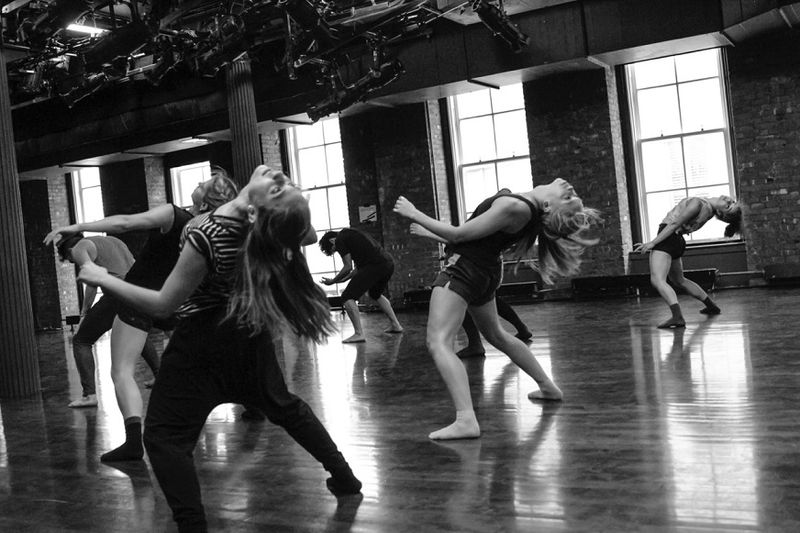
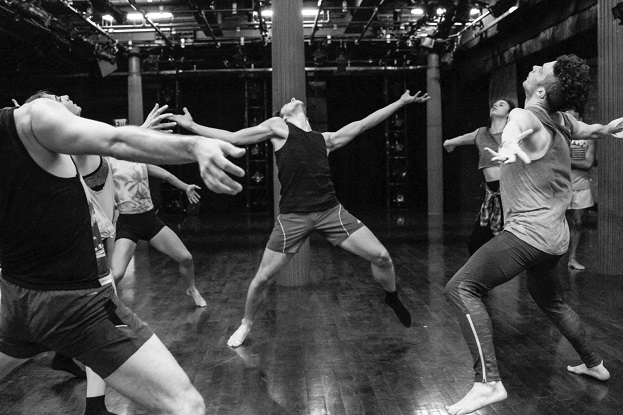
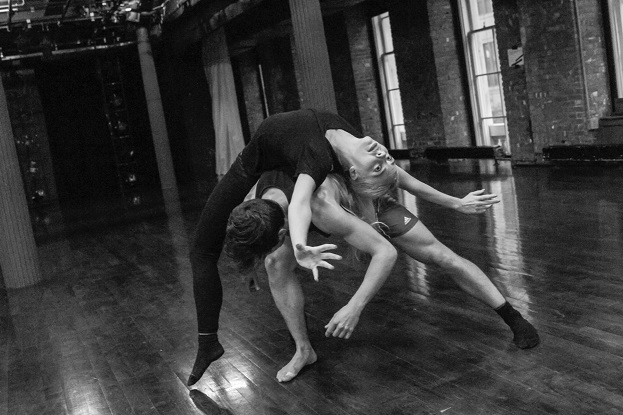
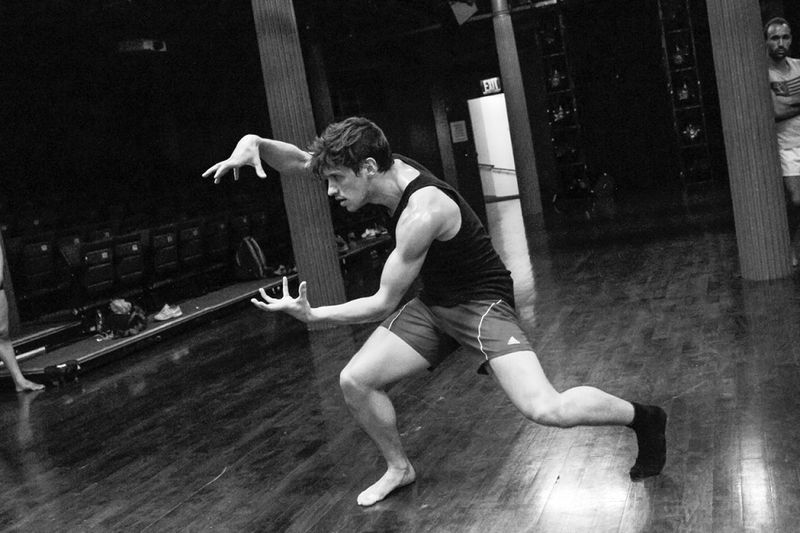
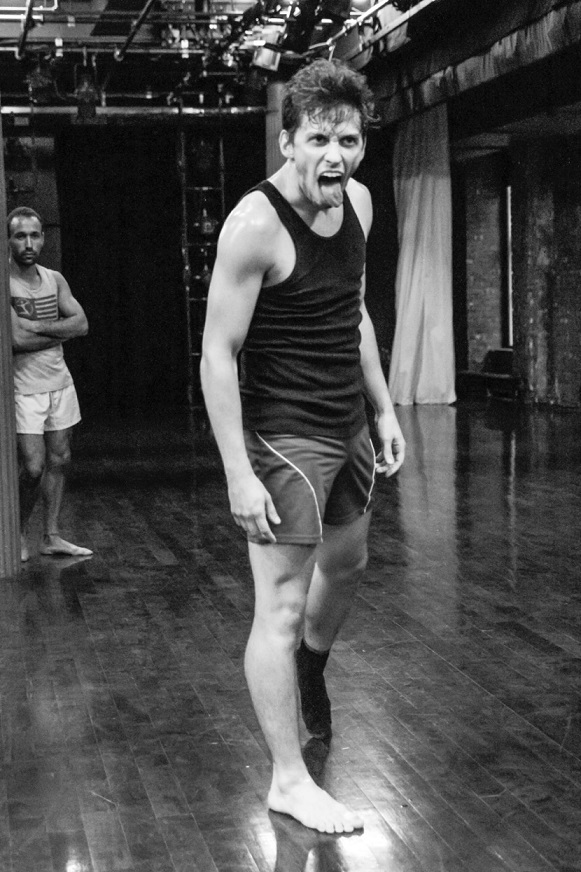
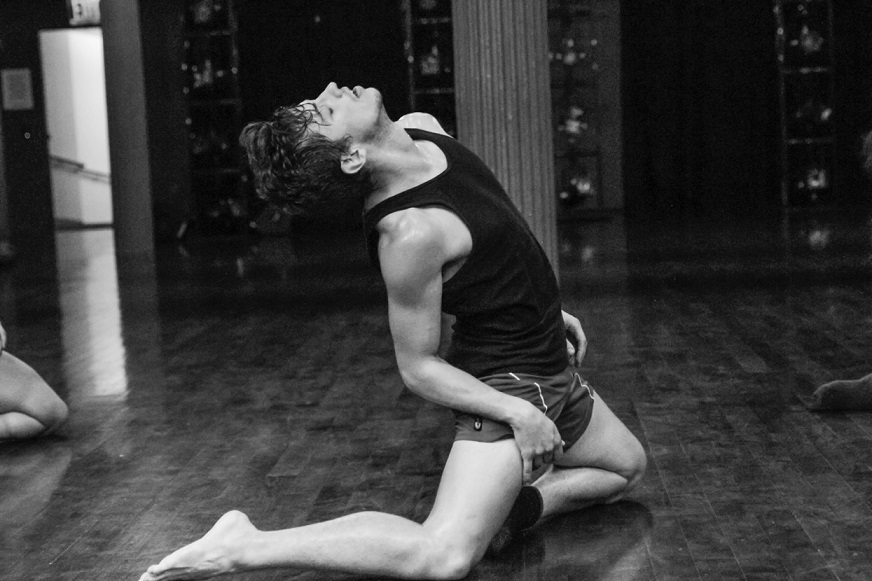
    This evening, Omar invited photographer Travis Magee and me to a rehearsal of “Saakasu“, which  translates to “circus” in Japanese; Omar’s dancework presents “a nightmarish vision of animalistic transformation”.

    Ian Spring (above) of Parsons Dance has a pivotal role in “Saakasu”; his Parsons colleagues Geena Pacareu Rijnsburger and Eoghan Dillon are also in the work, along with an ensemble of dynamic young dancers.

    Travis’s photos from the rehearsal:

    IMG_0655

    Ian Spring (center) and the ensemble

    IMG_0662

    IMG_0463

    Above: Eoghan Dillon

    IMG_0262

    Above: a duet for Zoey Anderson and Ian Spring…

    …and more of Ian Spring:

    IMG_0548

    IMG_0625

    IMG_0702

    All photos by Travis Magee


  • Lydia Johnson Dance @ Peridance

    Copy of 19

    Sunday February 26, 2012 matinee – Lydia Johnson Dance presented two works at Peridance this afternoon. The performance marked the first full presentation of Lydia’s new, as-yet-untitled work to music of Osvaldo Golijov as well as a revival of her 2006 piece to music of Philip Glass: FALLING OUT.

    Kokyat and I have been following the creation of the Golijov work from its earliest days, visiting the studio periodically to view the work’s progress. Lydia is so generous in sharing her creative process, giving us an extraordinary insight into how ideas become danceworks.

    Click on each image to enlarge:

    Copy of 2

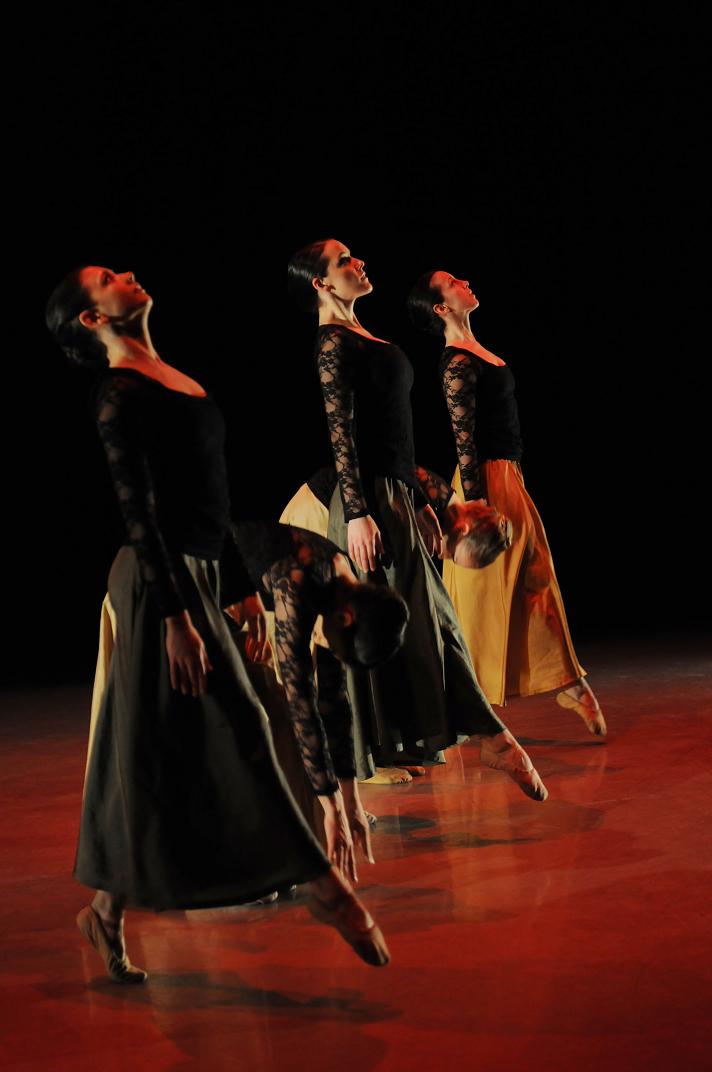
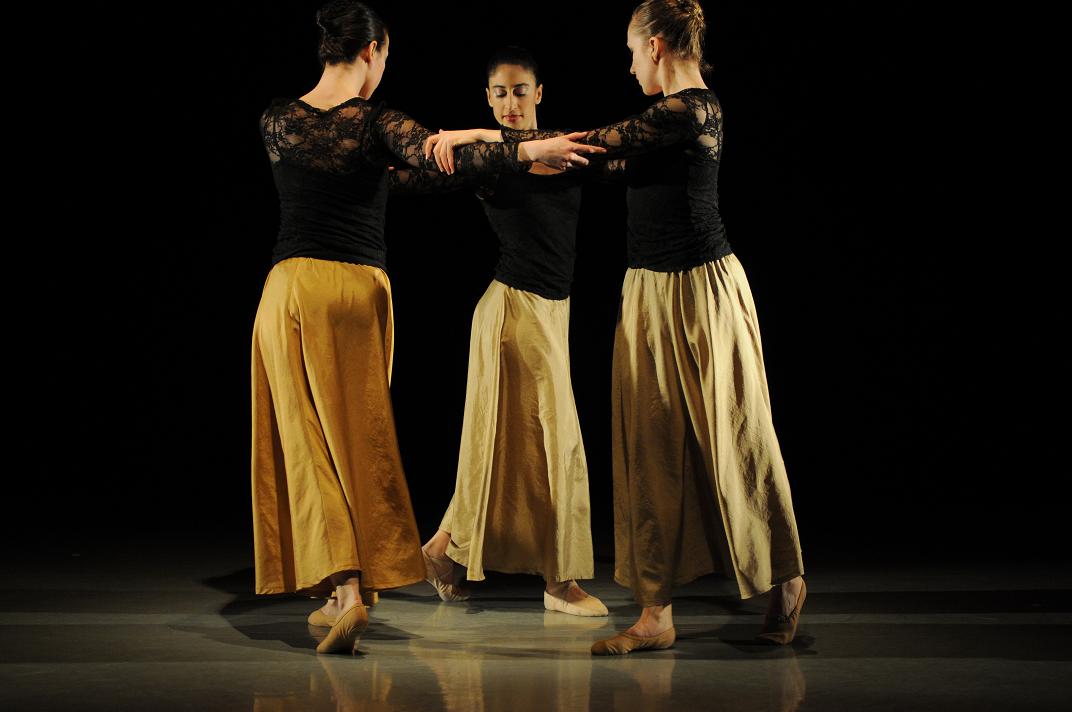
    In the Golijov, a trio of women first appear in soft golden gowns; their black-lace bodices provide a Spanish feel. Remaining in place, they perform a gestural ritual implying both spirituality and cleansing.

    Copy of 6

    Quietly they move in a circular pattern…

    Copy of 16

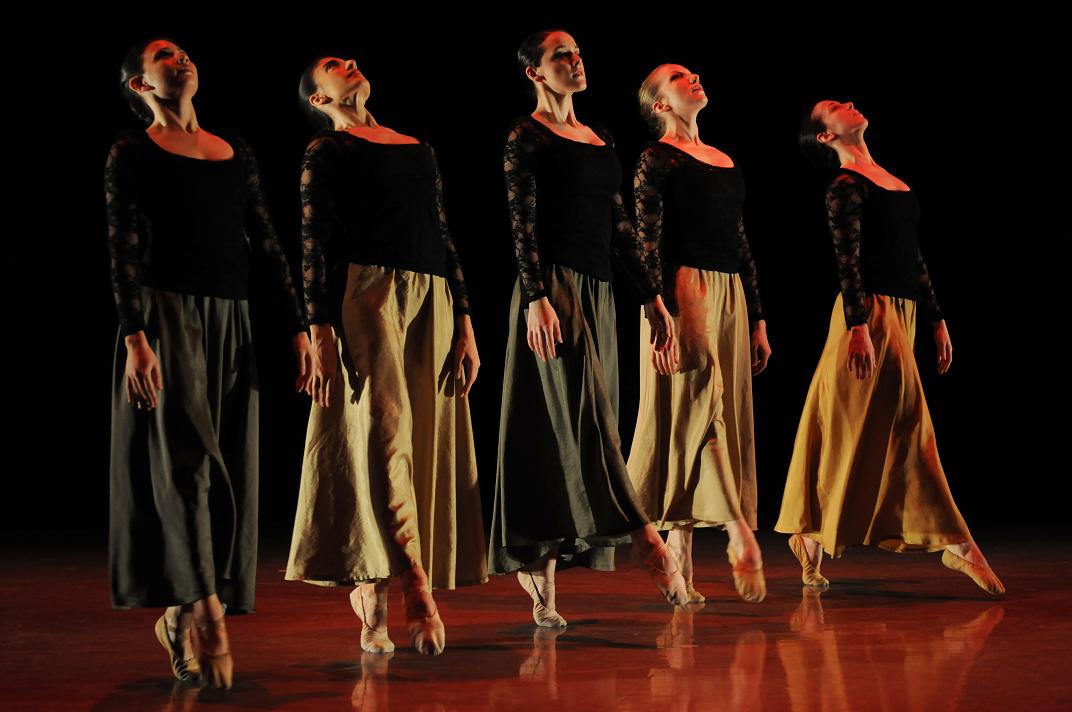
    …which is expanded by the entry of two more women.

    Copy of 21

    With an unexpected juxtaposition of calm and urgency, the women continue their mysterious rites as the music takes on a soulful expression. 

    Copy of 35

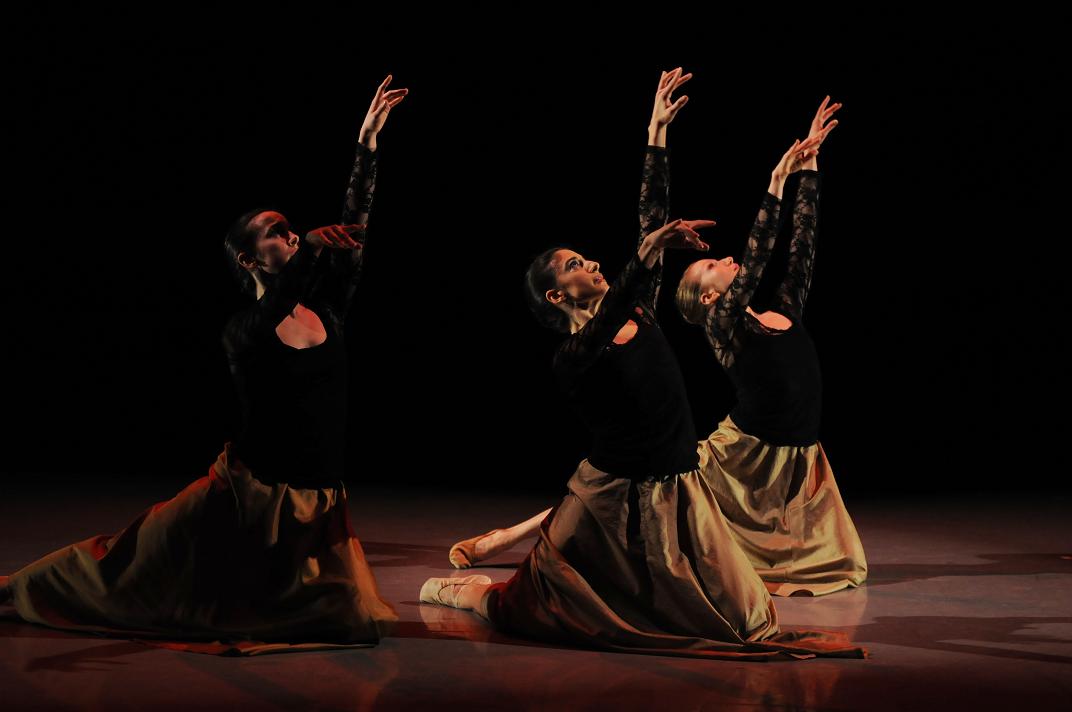
    Images of silent despair and of consolation are evoked…

    Copy of 39

    …blended with uplifting gestures of unity and hope.

    Copy of 40

    The final movement of the Golijov is marked by themes of rocking as each girl in turn swoons into the arms of her sisters to be gently lulled.

    Copy of 45

    In this work, choreographer Lydia Johnson seems to be telling a story yet the mystique of the five women – who they are and what their rituals mean to them – is left to the imagination of each viewer. One of the things about Lydia’s work that I most appreciate is her unerring taste in music: she always seeks out the best, whatever genre she might decide to work in. Here, the religious themes of the Golijov pieces she uses offer a wide range of interpretative images, from the earthy to the sublime. Darkly handsome in atmosphere, this dancework resonates with the bonds of sisterly unity and affection; it steers clear of sentimentality, thus striking a deeper chord.

    Copy of 26

    Always a choreographer’s greatest good fortune: to have dancers who understand and communicate the imagined nuances of a given work. The lyricism and grace of the five women dancing in the Golijov maintained the spirit of the music and movement from first note to last. They are (above): Sarah Pon, Lisa Iannacito McBride, Kaitlin Accetta, Laura DiOrio, and Jessica Sand.

    Details of the afternoon’s second work, set to music of Philip Glass, will appear here shortly.

    All photographs by Kokyat.