Tag: Sunday March

  • Discovering Lydia Johnson Dance

    (This story from Oberon’s Grove tells of my first encounter with Lydia Johnson Dance in March 2009.)

    ljd first

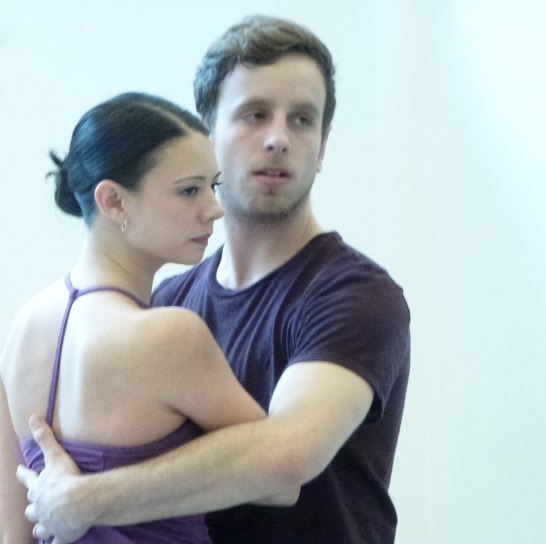
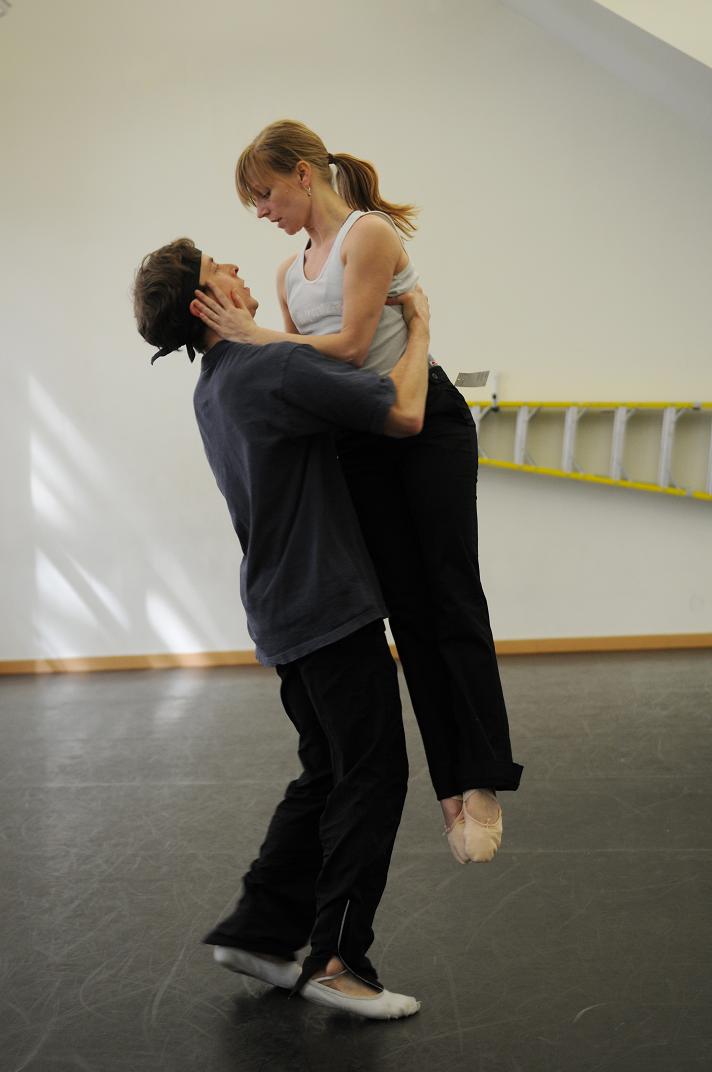
    Above: dancers Jessica Sand and Tucker Ty Davis, photo by Julie Lemberger

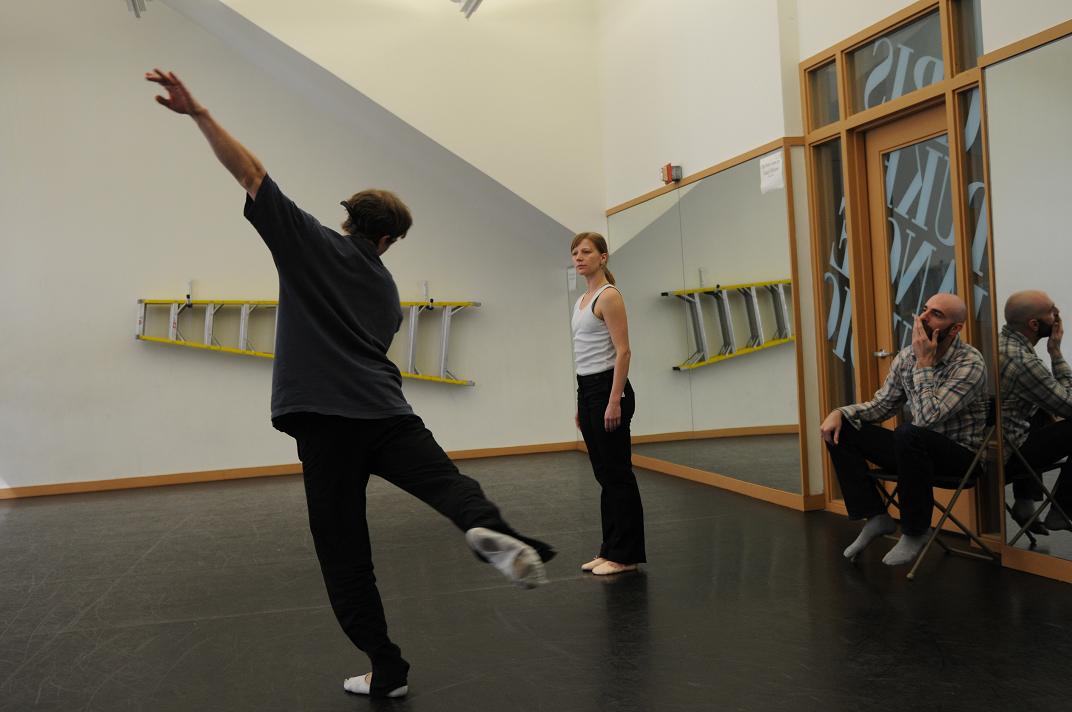
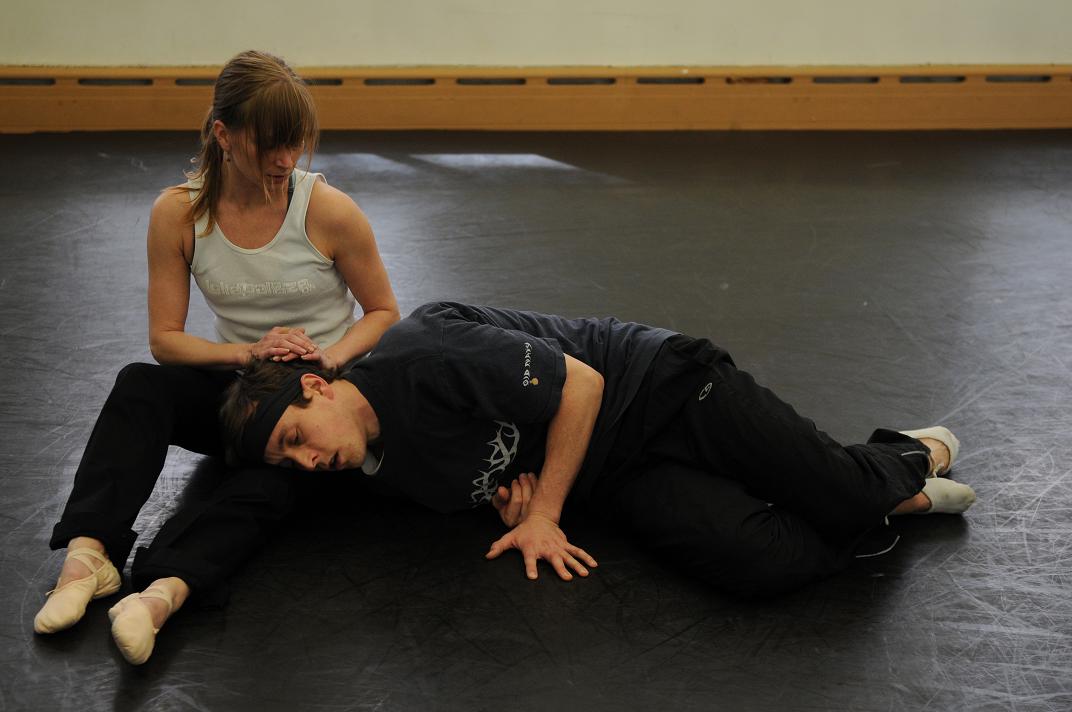
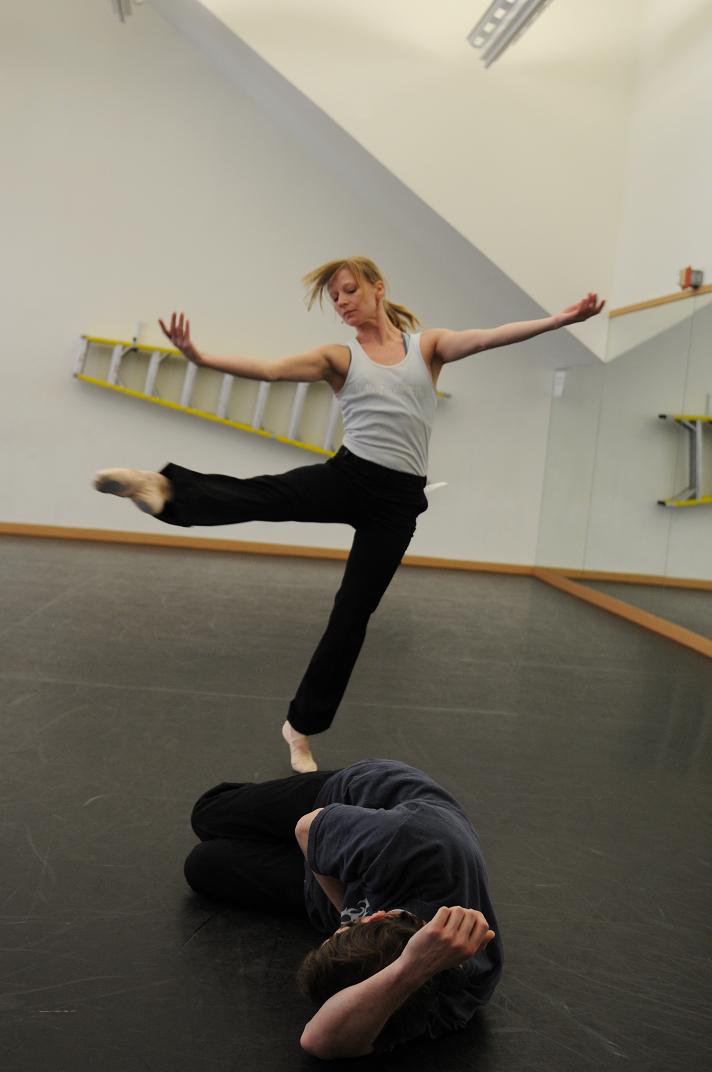
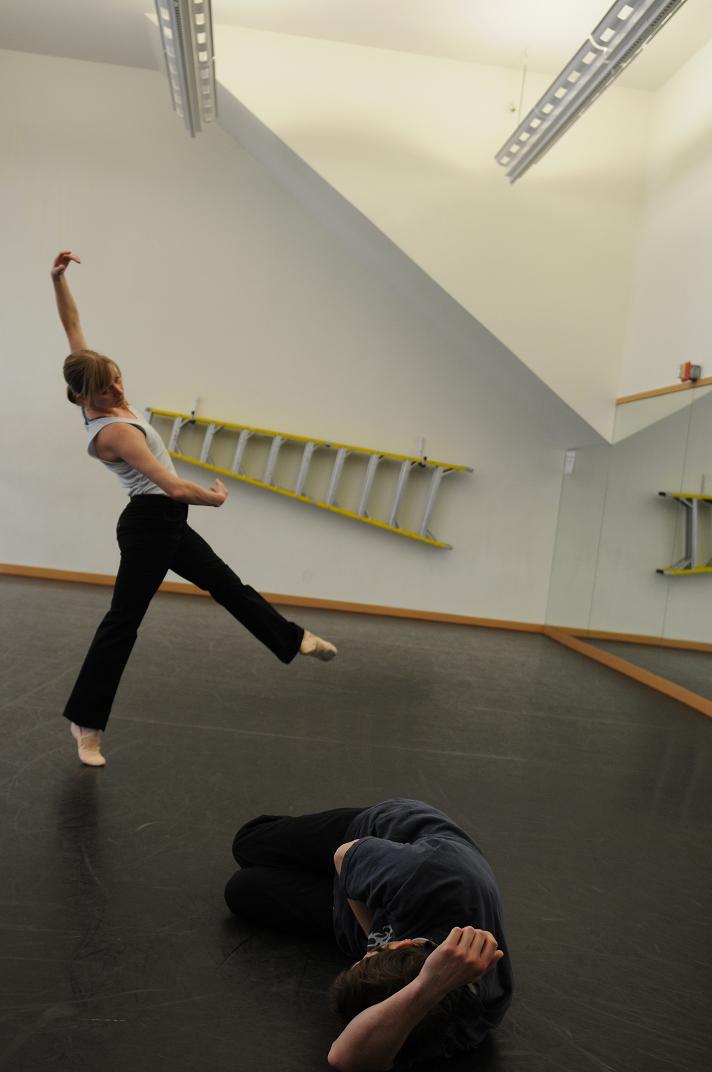
    Sunday March 29, 2009 – Back to the City Center Studios tonight with Evan to watch a rehearsal by the Lydia Johnson Dance Company of their latest work – as yet untitled – to the music of the Polish composer Henryk Gorecki. This was preceded by excerpts from Lydia’s 2004 work IN CONVERSATION set to the spectacular Violin Concerto of Philip Glass.

    Waiting for the dancing to begin, Evan and I were speaking of the sheer number of invitations to dance events we receive on a daily basis. Sorting out what to see and what to miss increasingly becomes a dilemma as we try to decide from a press release whether it is something we will like or not; then it’s a matter of scheduling and also of hoping to space events out reasonably so there is time in between to reflect rather than dashing madly from one venue to another and never having anything really sink in. Fortunately I have struck it rich in many of my choices, such as TAKE Dance or Miro Magloire’s New Chamber Ballet.

    Up until this evening Lydia Johnson was just a name I was vaguely familiar with; what made me say ‘yes’ to this invitation was the announcement that she would be working to music of Gorecki. Music is always the key element for me when it comes to enjoying dance; if I like the music, I’m halfway there before the dancing even commences.

    So this is what happened: Lydia Johnson became overnight one of my favorite contemporary choreographers. Her dancers all appear to have strong classical ballet background and are wonderfully fluent in presenting what Lydia asks of them while each also shows keen individuality and personal magnetism. Lydia’s style seems to me very demanding physically, making us aware of the workings of the human body while always imaginatively aligning movement to the music . 

    Introducing the works, Lydia’s love of music shone thru in her words. Then her dancers took the floor and within seconds I knew I had found something I loved.

    In excerpts from IN CONVERSATION, dancer Jessica Sand (who reminds me of Alexandra Ansanelli) immediately began ‘speaking’ to me with her superbly fluid movement; there is a gestural language here and Jessica’s dancing has a nice feeling of the poetic. She is partnered by an enigmatic dark-haired and dark-eyed young man named Robert Robinson. The bearded dancer immediately swept Jessica into a spacious lift, his strength as a partner surprising in view of his slender frame. Beyond that he showed elegant port de bras and a presence with an intriguing touch of mystery. Watching these two dancers move thru Lydia’s pas de deux with such extraordinary focus and grace as the gorgeous Glass score filled the room was quite an experience. I felt a deep connection to the music and to the expressive commitment of the dancers.

    Meanwhile, Tucker Ty Davis stood on the sidelines. He seemed rather unassuming and his more hunky build made me wonder what kind of dancer he would be. The answer when he started to move was compelling: he is passionate, powerful, agile and fearless. His interjected solo lasted only moments but it was enough to put him right up high on my list of dancers to watch in future.

    The Glass score with its hypnotic rhythms and haunting minor-key lyricism practically screams: “Dance to me!” It seemed to me that music, dancers and choreographer had met in a perfect union. And after such an exhilirating experience I had to keep reminding myself “It’s just a rehearsal”. Now I can’t wait to see it in full performance setting.

    After a very short break, all nine of the Company’s dancers appeared in the untitled Gorecki. Still a work in progess, the piece uses part of the composer’s Harpsichord Concerto (‘…like the score of an old horror movie”…as Lydia aptly decribed it) and part of his String Quartet #1. Lydia stated that the two movements may eventually have a connecting interlude but I didn’t think it needed anything more; it looks so good and responds so well to the music just as it is.

    At first the five women seem to be in their own world, moving with quiet intensity in patterns which seem to express that they are an isolated group but not discontented with their situation. As the four men join them, the movement becomes more expansive. Couples form, and the large group often splinters into trios who perform synchronized gestures as the dancing swirls around them; I especially liked this aspect of the piece. The work is both visually and musically extremely satisfying and again the individual dancers continually draw the eye from one to another. Jessica Sand, Tucker Ty Davis, Kerry Shea and the blonde Eric Vlach were outstanding in the leading roles here. The ensemble were anything but anonymous: rather each dancer makes a personal mark on the choreography. I look forward to putting names to faces so that I can properly enthuse over their individual efforts. 

    (This evening marked the start of my enduring friendship with Lydia Johnson and with many of the dancers who have appeared in her performances thru the ensuing years.)

  • Dallas Symphony @ Carnegie Hall

    Luisi

    Above: Maestro Fabio Luisi

    Author: Shoshana Klein

    Sunday March 26th, 2023 – I have to admit to not knowing much about the Dallas Symphony Orchestra before tonight. I’ve seen Fabio Luisi guest conduct before but not work with his home orchestra. As it turns out, they put on a great concert – they played with energy, focus, and dynamic range, and Luisi does a great job of keeping things interesting and restrained to keep the music interesting later on. Despite, or maybe because of this, somehow the concert still had more people dropping things in the audience than any other concert I’ve ever been to.

    Negron jpg


    What keeps me awake by Angélica Negrón (above, photo by Quique Cabanillas) started the concert – a short 7-minute piece, but a very nice introduction to the concert. Negrón created a distinctive but not completely unfamiliar sound world – though this might have something to do with the fact that I listen to her band, Balún – which seriously, you should check out if you haven’t heard them. Negrón is the Composer in residence at the DSO and I’m looking forward to hearing more pieces that come out of that collaboration.


    The piece evokes uncertainty and wandering like her program note explains – navigating moving from Puerto Rico to New York City as a Latina composer trying to fit into spaces that historically excluded people who look like her.

    G o jpeg


    Rachmaninoff’s second piano concerto with Garrick Ohlsson (above) was very enjoyable. I’m usually in the balcony, and being on the orchestra level so close to the stage, I could actually feel the sounds through my feet when the brass let loose. The orchestra was super sensitive under Luisi, the piano sections drawing us all in and the louder sections contrasting well. Ohlsson played the 3rd movement with some extra snappiness, which was just enough to keep my full attention for a piece many of us have heard… somewhat frequently. Near the middle/end of the third movement, I think the piece loses steam a bit compositionally, but it almost makes the end more exciting – right around the time you start to be ready for it to be over, it gets into it again and heads for the hyper-romantic finish.


    Ohlsson did an encore that he announced from the stage, though it wasn’t really necessary – Chopin’s op 9 no 2, probably the most well-known of the nocturnes. Near the end, he had a little fun with it, adding some whimsy in places.


    The Tchaikovsky, (which started at almost 10pm, the joys of an 8:30 start time) was really well paced, restrained just enough more than usual to be noticeable. Some tempi choices in the second movement caught my ear, the bassoon solo section – while sounding great – was a little slow to me, and the horn solo also sounded good but a little fast. However, overall I chose to trust the plan as the whole piece came together really well. The wind soloists were all fantastic, and more soloistic than their counterparts in the first half of the concert.


    It’s played so much, but this is one of those pieces to me that if you put it away for long enough, it regains most of its charm. It turns out I hadn’t heard it in long enough that it felt fresh and new, at least with this exciting performance.


    ~ Shoshana Klein

  • Philharmonic Ensembes~Ewazen/Stravinsky/Dvořák

    Ewazen

    Above: composer Eric Ewazen

    Author: Oberon

    Sunday March 27th, 2022 matinee – I always enjoy the Philharmonic Ensembles series at Merkin Hall, and I was very glad to be there this afternoon for an excellent program. The players of the New York Philharmonic love playing chamber music together when time allows, and this afternoon’s lineup of artists was really impressive.

    Composer Eric Ewazen greeted us prior to the program’s opening work: his Ballade, Pastorale, and Dance for the unusual combination of flute, horn, and piano. The last time I heard an Ewazen score was in 2018, when the composer’s violin concerto was used by the great choreographer Paul Taylor for his last major work: Concertiana. Today, introducing his Ballade, Pastorale and Dance, Mr. Ewazen touched on his Ukrainian heritage, and then the performance began.

    William_wolfram

    For the Ewazen trio, the tall and distinguished pianist William Wolfram (above) was joined by the Philharmonic’s stellar flautist Mindy Kaufman, and the orchestra’s current Acting Associate Principal Horn, the radiant Leelanee Sterrett.

    The opening Ballade begins with a darkish motif from the piano, soon joined by the mellow depth of the horn and the gleaming upper range of the flute. The blend of these three voices was really delectable, making me wish other composers would write for this particular combination. From a long flute trill and spiraling piano figurations, the music turns animated, and then calms for a really gorgeous andante. Then another burst of vigor, and another contrasting slower passage before a brisk final statement.

    Rippling sounds from Mr. Wolfram keyboard introduced a lovely Pastorale theme from Ms. Sterrett’s horn, which is then harmonized by Ms. Kaufman’s flute. Here, the contrast between burnished richness of the horn with the silvery sweetness of the flute truly delighted the ear. Lovely phrases follow, one after another, and then Ms. Sterrett’s horn sings a lyrical theme over the warbling flute and the piano’s arpeggios. A feeling of hope seems to rise within us as the Ballade reaches its solemn end.

    With sparkling sounds from Ms. Kaufman’s flute, and with Mr. Wolfram’s piano sounding in the upper octaves, we are ready to Dance. Ms. Sterrett’s summoning horn draws us in to this lively and tuneful music, which gets quite grand as the work comes to its close.  Such a unique treat this music is! Other choreographers might do well to follow Paul Taylor’s lead and have a listen to Mr. Ewazen’s music.

    More music I’d never heard before – Igor Stravinsky’s Octet for Winds – came next. For this, a brilliant ensemble drawn from the ranks of the Philharmonic’s wind sections were gathered: Robert Langevin, flute; Pascual Martínez Forteza, clarinet; bassoonists Judith LeClair and Kim Laskowski; trumpeters Christopher Martin and Thomas Smith, with Colin Williams on trombone and George Curran on bass-trombone. Mr. Langevin, in his introductory remarks, told us a story about a dream Stravinsky had had in which this particular set of instruments were playing together, and he wrote this octet to try to capture what he’d heard in his dream.

    The Octet is in three movements, though there was no discernible break between the second and third. A trumpet note introduces the Sinfonia, followed by a blending of woodwind voices. The full ensemble engage in music that is wittily paced and harmonized. A brassy march springs up, with trumpet calls and chuckling bassoons. The Sinfornia comes to a sudden halt.

    The Theme and Variations, which runs directly into the Finale, starts out with plodding brass and unison woodwinds; they then switch roles. Scurrying bassoons herald a military brass band passing by, and everyone falls in. Suddenly, I hear a waltz, with Mssrs. Langevin and Martínez Forteza taking the lead. Brilliant rhythms briefly take over, then there’s a slow bassoon passage, taken up by the clarinet and the brass. The music becomes chorale-like, before the flute and clarinet have a dialogue. The bassoons, sounding jolly, are joined by the clarinet; shifting rhythms carry us to the Octet‘s finish.     

    The afternoon’s program ended with a magnificent performance of Antonín Dvořák’s beloved Piano Quintet in A-major, Op. 81, one of his most familiar and oft-played works. The musicians here were violinists Kuan Cheng Lu and Su Hyun Park, violist Rebecca Young, and cellist Ru-Pei Yeh, with Mr. Wolfram returning to the piano. Ms. Young introduced the piece, and then took up her viola to regale us in the numerous opportunities Dvořák provides for the instrument. Kuan Cheng Lu played the many magical violin melodies with Olde World sweetness, warmth, and emotion; and the composer has also been generous to the second violinist: Su Hyun Park, playing beautifully this afternoon. And the cello is prominent throughout, with Ru-Pei Yeh providing cordial tone and rhythmic finesse. At the piano, Mr. Wolfram sustained the excellent impression he made in the Ewazen, making me wish to hear him in a solo recital.

    The applause throughout the afternoon was rather subdued; the audience consisted largely of senior citizens (anyone older than me is a senior citizen!) and perhaps they lack the stamina to clap for a long time. I honed my applauding skills during the 20-minute ovations that often ensued during the last Golden Age at the opera, which ended years ago. These days, applause lasting more than five minutes is extremely rare. Well, we live in different times now: everyone’s constantly in a rush – to get to the theatre, and then to get home. As my commadre used to say, “No time for love.” 

    ~ Oberon

  • Andonis Foniadakis’ GLORY @ The Joyce

    20133155045

    Sunday March 30th, 2014 – I like to think of myself as the first person in Gotham to have ‘discovered’ Andonis Foniadakis. The Greek choreographer brought his solo setting of THE RITE OF SPRING to Joyce SoHo in 2008; I was invited to the dress rehearsal and I went, not knowing what to expect. It was a thrilling experience, made even more memorable by the incredible dancing of Joanna Toumpakari. I was so blown away by this RITE that I immediately arranged to see it again the following evening.

    In May 2013 Andonis created HORIZONS for Cedar Lake Contemporary Ballet, and earlier this month his simply gorgeous ECHO was by premiered by The Martha Graham Dance Company.  And now Ballet du Grand Théâtre de Genève have brought Andonis’ GLORY, created on them in 2012, to The Joyce. I was only able to attend today’s final performance of the run; I wished now that I’d planned to see it more than once.

    Take a look at GLORY here.

    The first thing I love about GLORY is the music: Andonis starts with a selection of vocal and instrumental works by George Frideric Handel which Julian Tarride has woven into a tapestry of sound incorporating strains of contemporary vocalism, fleeting rhythmic gestures, and the occasional sonic thunderclap. The only slight miscalculation is the use of the Hallelujah Chorus which – in my view – is too familiar to be included; there are dozens of celebratory choral works in the Handel catalog and I would have chosen something rarer. Nonetheless, between Handel and Tarride, the dancers can take wing in this hour-long work which flows on endless waves of lyrical, expansive movement.

    The lighting (Mikki Kunttu) plays a major role in the visual appeal of GLORY: shafts of light radate thru the dancing area in ever-shifting patterns, creating chiaroscuro effects, variously illuminating the dancers from all sides and evoking the sunlight pouring into the dark caverns of antique cathedrals. Costume designer Tassos Sofroniou has clad the dancers like dark angels at first; later brilliant ruby red gowns will bring a satanic touch to the proceedings. The dancers change costumes often, some taking on pale yellow and lighter hues, and at one point the men appear in dance-belts like living statuary as they manipulate a single woman in complex lifts. 

    Andonis has structured GLORY in such a way that there seems to be more than the twenty listed dancers onstage. They come and go in various movement units and from time to time simply march forward, having descended the two steps a the back of the stage, like oncoming armies. At times they arrange themselves in mirror-image Rorschach-patterns. The Geneva dancers are remarkably flexible and strong, their energy level seeming to soar as this physically demanding work progressed: the ballet is a non-stop panorama of movement.

    Graham-like rituals alternate with knotted clusters of bodies, and visual polyphony plays a key role: there are usually several things happening at once. Along the way, solos or pas de deux bring individual dancers into focus. In the ballet’s most striking passage, a woman appears in a long cape of black parachute silk which is manipulated by the black-clad men using metal rods (photo at the top).

    Although at times there was a sense of repetitiveness in the choreography and a feeling that the work was perhaps a bit too long for optimum effect, the overall beauty and the combined theatrical power of the dancers, the choreography, the music and visual representation made for a very pleasing afternoon.

  • Deborah Wingert/Lydia Johnson Dance Salon

    L1340657

    Above: Deborah Wingert

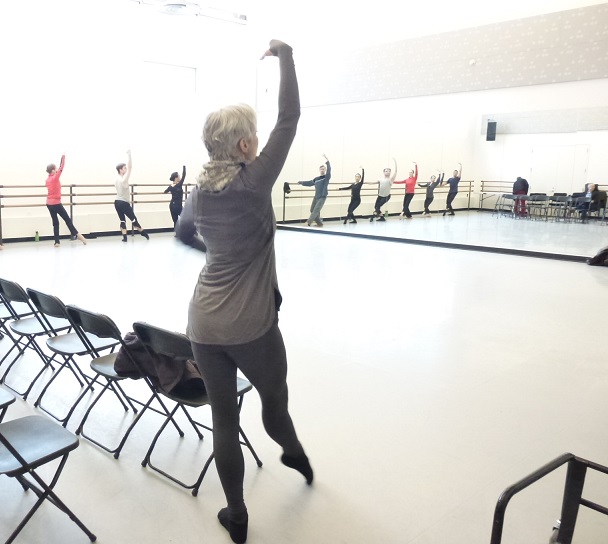
    Sunday March 23, 2014 – Friends – long-time and new – of Lydia Johnson Dance gathered at Manhattan Movement and Arts Center this afternoon for a salon/studio presentation of Lydia’s latest work-in-progress, set to the Mozart Fantasy in C-minor, K. 475. Wearing one of her many hats, the extraordinary Deborah Wingert – teacher, choreographer, stager for the Balanchine Trust, and ballet mistress for Lydia Johnson Dance – gave a pre-salon class, demonstrated her inspirational coaching abilities, and spoke of her life as a dancer whose career took wing with Balanchine’s blessing.

    L1340608

    First, a class. The dancers of Lydia’s company come from varied backgrounds. Deborah, who teaches Company class weekly for LJD, has been imbuing a feeling of stylistic unity in the dancers. Lydia’s choreographic vision is an unusual fusion of ballet and contemporary; Deborah’s class work places an emphasis on ballet while at the same time encouraging the individuality of expression of each dancer. It seems like a paradox, but it’s happening.

    The Mozart-in-progress opens with a lyrical solo danced by Katie Martin; throughout this work, Lydia provides each of her dancers with prominent passages allowing their singular qualities to shine thru.

    L1340648

    One extended segment is a duet for Sarah Pon and Anthony Bocconi (above), dancing in a realm of tenderness and trust.

    L1340633

    A duet for Blake Hennessy-York and Chazz Fenner-McBride (above), which the boys have just started working on, was coached by Deborah and in the span of a few moments took on a more vivid quality, having made slight adjustments in placement and support. Chazz, the newest dancer in Lydia’s company, brings the same sincerity to his dancing here that made his performances in Robin Becker’s INTO SUNLIGHT so meaningful.

    Kerry Shea, Laura DiOrio, Lisa Borres and Min Kim along with Katie and Sarah create beautiful shapes and a sense of quiet urgency as they come and go with dream-like unpredictability – all of this to Mozart’s peerless melodies.

    L1340686 - Copy

    LJD‘s Steve Cramer interviewed Deborah (above); she spoke of the affinity that has developed between Lydia Johnson and herself, and of their shared belief in the communicative power of music. Deborah further regaled us with stories of working for Mr. B, sharing anecdotes which were moving and witty by turns.

    L1340692

    As a savory ‘dessert’, Kerry Shea and Eric Williams (above) performed a duet from Lydia’s ballet NIGHT OF THE FLYING HORSES, to a score by Osvaldo Golijov. My friend Lisette Oropesa and I shared a secret smile as the haunting melody of “Je crois entendre encore” from Bizet’s PECHEURS DES PERLES suddenly materializes in a Golijovian incarnation. I was so glad to have my friends Lisette, Steven and Joe at the studio today; this was Lisette’s first opportunity to witness dance at close range, and I think it really moved her, especially since her beloved Mozart was an integral element of the afternoon.

    The new Mozart, along with the Golijov and Lydia’s ravishing Schubert ballet NIGHT AND DREAMS, will all be part of her upcoming season at Ailey Citigroup in June; details will be forthcoming.

  • Rehearsal: Cherylyn Lavagnino Dance

    298949_2223306496198_978977615_n

    Above: dancer Justin Flores, photo by Kokyat.

    Sunday March 24, 2013 – Today I went over to to the studios at Tisch/NYU where Cherylyn Lavagnino was working with her dancers on a new ballet set to the Schubert piano trio in E-flat, a piece that has always evoked dance images for me. Entitled TREIZE EN JEU, it is an ensemble work that features intimate duets mixed into a larger and finely-structured setting.

    Stepping off the elevator to the second-floor studio space, the sounds of the Schubert score at once made me feel that I was in for something special, and that was indeed the case. A roomful of dancers, many of whom I know, were mid-phrase when I walked into the studio. It took only a few seconds of observation to determine that this would be a truly pleasing afternoon, as much to the ear as to the eye. 

    Cherylyn Lavagnino’s works, though fresh in detail, are rooted in the traditions of classical ballet. The girls are on pointe and the vocabulary is rich. Subtle nuances in the port de bras and partnering put a distinctive gleam on the choreography, and transitions from unison ensemble passages to a focus on individuals or couples are accomplished in the twinkling of an eye. The dance springs ever from the music, and what heart-filling music it is.

    For this large work, Cherylyn has assembled a group of dancers with a high level of technical accomplishment and with distinctive personalities. They work beautifully as a collective yet their individuality is never submerged; thus in the bigger moments of the work the eye is constantly lured from dancer to dancer.

    A series of duets give us a chance to savor some lovely partnerships: Claire Westby and Eric Williams, Laura Mead and Justin Flores, Ramona Kelley and Adrian Silver, and the long-limbed and lithe pairing of Giovanna Gamna and Michael Gonzalez. Each couple creates a unique atmosphere; it was so satisfying to watch them ironing out the details under Cherylyn’s watchful eye. Justin later worked on the piece with the delicious Selina Chau – there will be double-casting during the performance run at Baruch College in June. Samuel Swanton joined in an energetic male quartet, and two very attractive apprentices – Kristin Deiss and Lila Simmons – filled out a double-trio of women who weave patterns while the sumptuous Claire and Eric are dancing. Laura Mead who made such a lovely impression in Pontus Lidberg’s WITHIN for Morphoses last October, looks fetching indeed, and the elongated shapes created by Giovanna and Michael gave their duet a particular appeal.

    It was particularly meaningful for me to see Ramona and Adrian dancing together again, for it was in this very studio in 2009 that I first met them when they were rehearsing a John-Mark Owen duet. Their partnership remains an intriguing combination of delicacy and strength. 

    As the dancers dispersed after a final run-thru, Selina and Justin remained to do some intensive work on the partnering. Their dedication and keen focus on detail gave a clue as to why Cherylyn’s works always end up looking so good.

    This new Schubert ballet can be seen (with the score played live!) from June 12th thru 19th when Cherylyn Lavagnino joins Dušan Týnek Dance Theatre and Zvi Gotheiner as part of the inaugural year of a new festival
    celebrating music and dance at Baruch College. Exact dates and times will be announced soon, and the festival extends thru June 22nd with solo nights for Zvi and Dušan.

  • Superb AUREOLE/Paul Taylor Dance Company

    851.da.JMP_02Michaelposterleapminustrampoline_0

    Above: Michael Trusnovec of the Paul Taylor Dance Company photographed by Jordan Matter.

    Sunday March 25, 2012 matinee – Among the many works being presented by Paul Taylor Dance Company during their premiere season at Lincoln Center, AUREOLE (celebrating its fiftieth birthday) looked outstandingly fresh and fine this afternoon. The cast was led by Michael Trusnovec who gave a performance of great clarity and lyric power in the role’s expressive solo. Michael has been dancing magnificently all season and today, both in AUREOLE and the afternoon’s concluding SYZYGY, he was on top form: one of the truly great male dancers of our time.

    For AUREOLE’s beautiful but all-too-brief pas de deux, Amy Young was at her loveliest; she and Michael danced in perfect harmony in this Springtime duet. Mr. Trusnovec was not the only top-flight male dancer in the cast: Francisco Graciano gave a vivid performance of his athletic and very demanding role, his dancing crisp and crystal clear. Gorgeous dancing from Michelle Fleet and Heather McGinley put just the right finishing touch on this ballet. An all-star cast in a Taylor masterwork: life is good.

    It seemed a bit odd to have back-to-back comedies as the central segment of the programme; perhaps being a matinee it was thought to play to the many kids in the audience. I would have chosen one or the other and in fact could have done without TROILUS AND CRESSIDA altogether, except that Robert Kleinendorst looks so hot in his underwear.

    Poor Ponchielli! Walt Disney and Allan Sherman have conspired to make the ballet music from LA GIOCONDA a source of mirth for millions of people who wouldn’t know the Ca D’Oro from a bowling alley. Over the last half-century at The Met ballerinas like Sally Brayley, Nira Paaz, and Allegra Kent have danced to this music; in 2006 Christopher Wheeldon re-choreographed the ballet for the Met’s Montresor production: Angel Corella, Danny Tidwell, Gillian Murphy and David Hallberg have danced Christopher’s bravura and only slightly tongue-in-cheek version, while Ashley Bouder performed it splendidly with MORPHOSES at City Center. Paul Taylor’s take on the Dance of the Hours goes in for pratfalls and guffaws. It couldn’t end soon enough.

    By contrast, GOSSAMER GALLANTS, which had seemed like a major bit of fluff when I first saw it, now looked more appealing. The Smetana score is entertaining, and there’s quite a bit of real dancing mixed in with the horseplay…and the bug-spray.

    SYZYGY dates from 1987 but for me it’s a real 60’s piece. Watching the dancers whirl and swirl madly about the stage, I feel like it’s the Summer of Love and everyone’s more than a bit high. I half-expected Janis Joplin to materialize in her feathers and finery and sing “Try…Just a Little Bit Harder”. Donald York’s synthesizer-rich score amplifies this feeling: it’s kozmic, to say the least.

    The title SYZYGY comes from a term used to describe those rare times when the sun, moon and Earth are in perfect alignment. It’s a great finale for a Taylor performance, and it was brilliantly danced today.

  • John Mark Owen’s Sonatae II

    Copy of 1

    Saturday March 26, 2011 – Choreographer John-Mark Owen invited us to watch a rehearsal of his newest work, Sonatae II, set to music of Alexander Balanescu. The duet will be shown at the 92nd Street Y on Sunday March 27th at 3:00 PM. The dancers are Jennifer Goodman and Josh Christopher, above in Kokyat’s photo.

    Copy of 2

    When Kokyat and I arrived at the studio, Jennifer and Josh were putting the finishing touches on the duet.

    Copy of 13

    They worked in silence with John-Mark and all the movement seemed so expressive. With a performance scheduled for the following afternoon one might have expected an atmosphere of urgency or even panic in the studio but instead there was an air of calm with the dancers taking their time to perfect the small nuances of gesture and expression that John-Mark was looking for.

    Copy of 24

    With the studio time running out, John-Mark played the Balanescu music and what had been an attractive series of danced passages took on a deeper and more intense feeling altogether.

    Copy of 19

    The music is just so poetic, and the dancing took wing on it. 

    Copy of 17

    Copy of 26

    Copy of 20

    As soon as the run-thru finished the dancers quickly bundled up and packed off to the Y for further rehearsing. All photos: Kokyat.

    Jennifer Goodman is currently dancing a featured role in performances of Strauss’ CAPRICCIO at the Metropolitan Opera.

    On May 6th and 7th, John-Mark Owen’s Sonatae I will be performed by Jesse Marks at Manhattan Movement and Arts Center on a programme shared with the Island Moving Company of Newport, RI.