Tag: Sunday May

  • CMS: Beethoven Quartet Cycle ~ Finale

    Calidore_Beethoven

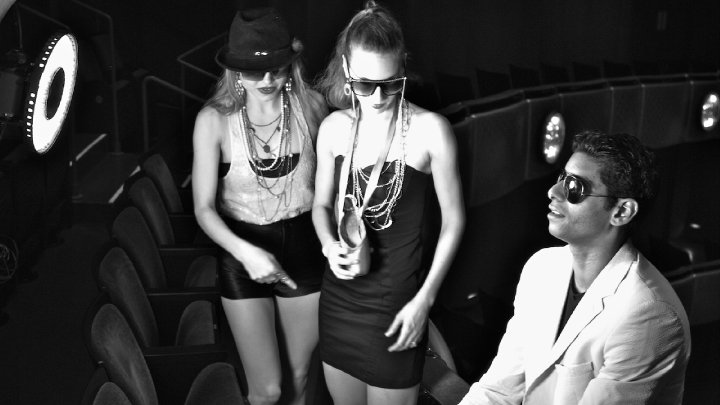
    Above: the Calidore String Quartet, photo by Frank Impelluso

    ~ Author: Ben Weaver

    Sunday May 18th, 2025 – Chamber Society of Lincoln Center reached the end of its 2024-25 Beethoven String Quartets cycle, performed by the the outstanding Calidore String Quartet. For the sixth and final concert the quartet – violinists Jeffrey Meyers and Ryan Meehan, violist Jeremy Berry, and cellist Estelle Choi – performed Beethoven’s quartets Nos. 14 and 16.

    String Quartet No. 14 in C-sharp minor, Op. 131, composed in 1825-1836, and has been studied and individually praised by the likes of Richard Wagner, Robert Schumann, and Franz Schubert – who had it played for him privately a week before his death. Composed in seven movements played without a break, it opens with a somber melody on the first violin. The rest of the musicians enter one by one, the music remaining austere and calm, perhaps reflecting Beethoven’s deep faith as it resembles parts of his earlier Missa Solemnis. Wagner once wrote that this was “the saddest thing ever said in notes.” The Calidores played this beautifully, with extreme care and dedication. The music shifts to a playful dance and then back to darkness, and then back again and again. The playful Scherzo (marked Presto), with its charming melody, zooms around like a playful puppy, lovingly played by the Calidores. There’s a memorable moment towards its conclusion where all four instruments play pianissimo in their highest registers, then the volume is quickly raised, which felt like being suspended in zero gravity and then quickly falling down. The Finale is a violent march with occasional soaring melodies to break up the clouds.

    The Quartet No. 16 in F major, Op. 135 ended up being Beethoven’s almost-last composition for the string quartet. (The only thing remaining was the new final movement for Quartet No. 13, which ended up being the very last piece Beethoven ever composed.) It opens once again with a somber melody, but unlike the darkness of the earlier quartets, this one is simply mournful and lovely. The Calidores held the audience in thrall with the beauty of their playing. The second movement, Vivace, is wonderfully chaotic, as if ready to unravel at any point. The following Lento assai, cantabile e tranquillo is Beethoven at his most lyrical, full of stops and starts, like breathing of a dying man. And the Finale: Grave, ma non trope tratto, begins ominously and violently, but ends on a lighter, even triumphant, note.

    The terrific musicians of the Calidore Quartet undertook a monumental challenge, performing all sixteen of Beethoven’s String Quartets in a single season. The works themselves are the Mount Everest of the string quartet repertoire and the challenges are enormous. Beethoven wrote his string quartets in three batches of his life and career: early, middle, and late. They show a profound progress of an artist who became the leading figure of Romanticism, sturm und drang; but also a musician of frequently surprising humor. Mssrs. Meyers, Meehan, Berry, and Ms. Choi combine all the elements needed to bring these million faces of Beethoven to life.

    ~ Ben Weaver

  • Parsons Dance @ The Joyce ~ 2025

    Her-Gifts-Photo-by-Steven-Pisano1-1024x683

    Above: the one and only Zoey Anderson in David Parsons’ new solo, Her Gifts; photo by Steven Pisano

    Sunday May 18th, 2025 matinee – Parsons Dance at The Joyce with a program of works by Rena Butler, Robert Battle, and the founding choreographer himself: David Parsons.

    The program opened with Parsons’ 2005 work Wolfgang, to music of Mozart. Hints of Paul Taylor as well as nods to the classical ballet world are woven into the choreography. Howell Binkley’s emblematic lighting designs – both here and later, in Caught and In The End – are so atmospheric. 

    Wolfgang  Photo by Paula Lobo

    Wolfgang (photo above by Paula Lobo) has a beautiful, flowing feeling, with a series of duets giving the dancers ample opportunity to shine (the “either/or” listing of the dancers left me wondering who was who at times). For a while, the dancers lounge on the floor. The adagio brought finely-lit poses, laced with touches of humor. There were vanishing acts, where the dancers disappeared into the upstage darkness. In the light and bright finale, Parsons makes canny use of the music; a series of turns elicited a burst of applause.

    A brand new – and stunning – solo, Her Gifts, choreographed by David Parsons to Roberta Flack’s immortal classic ‘The First Time Ever I Saw Your Face’, was a gift from David to the radiant Zoey Anderson. In a striking Judy Wirkula gown, glowingly bathed in golden light, Zoey took complete command of the stage with her hypnotic way of moving: her every step and gesture held the audience under a spell.

    The Hunt (2010), is choreographed by Robert Battle to a tumultuous score by the French percussion band Les Tambours du Bronx. I seem to recall being at the studio one afternoon early on in this work’s creative process. Of course, it was a whole different set of dancers in those days. 

    The Hunt can be danced by either men or women, and today it was a female quartet – Téa Pérez, Megan Garcia Ziminski, Justine Delius, and Joanne Hwang – who took us on this wild ride. Burke J. Wilmore’s lighting bathes the quartet in bloody light; later, saturated colors illuminate the back panel. The dancing is provocative, ritualistic, ecstatic. Pairing off, bodies are dragged about. The pace is relentless, the women so compelling in their moves. The crowd responded with unbridled enthusiasm.  

    Sheep_s-Gothic-Paula-Lobo

    Above: from Rena Butler’s Sheep’s Gothic; photo by Paula Lobo

    Sheep’s Gothic, a 2025 creation by Rena Butler opened the evening’s second half. Moody lighting by Christopher Chambers showed us seven dancers costumed by Asha Ama in athletic gear, including knee pads. The “either/or” cast listing (and a prevailing darkness) again kept me from figuring out who was who, but the dancing was impressive throughout.

    A cappella choral works by Felix Mendelssohn have an oddly nationalistic air. Offsetting these, music by Darryl J Hoffman creates a sonic tapestry; things speed up, echo effects entice, whimsical elements are introduced as this darkish dancework evolves. The chorale resumes, with some mechanical noises further deepening the nocturnal mood. Hymn-like music and spoken words sustain the atmosphere, but after a while, a feeling of longueurs creeps in. A relaxed beat underpins a spacious ensemble as this enigmatic dance moves to its end.   

    I cannot count the times I’ve seen David’s signature masterpiece Caught; I first saw this solo danced by the choreographer at Jacob’s Pillow many years ago. Since then, it’s been performed by both male and female dancers, and it never fails to elicit a delirious response from the audience. This afternoon, Joseph Cyranski wowed the crowd with his magnetic presence and dazzling dancing, perfectly timed to give Caught the visual magic this iconic dancework demands.    

    In The End  Photo by Steven Pisano

    Above: Joseph Cyranski in In The End; photo by Steven Pisano

    David Parsons created In The End – to the music of the Dave Matthews Band – in 2005. It makes a perfect closing number, as all ten of the Company’s dancers join in. Again, Howell Binkley’s lighting is a key element to the work’s appeal. The dancers move thru the Parsons choreography with a mix of lyricism and athletic poise, evoking a celebratory ovation at the end as each dancer rushes on for a solo bow.  

    ~ Oberon

  • Farewells: Amar Ramasar

    Amar

    Above: New York City Ballet principal Amar Ramasar

    Author: Oberon

    Sunday May 29th, 2022 matinee – This afternoon, we bade farewell to one of New York City Ballet‘s most popular stars: Amar Ramasar. I remember so clearly seeing the handsome young man with the engaging smile for the first time on Mr. B’s stage during the 2000-2001 season. His ascent thru the ranks came quite soon and seemed inevitable: a soloist by 2006 and a principal in 2009.

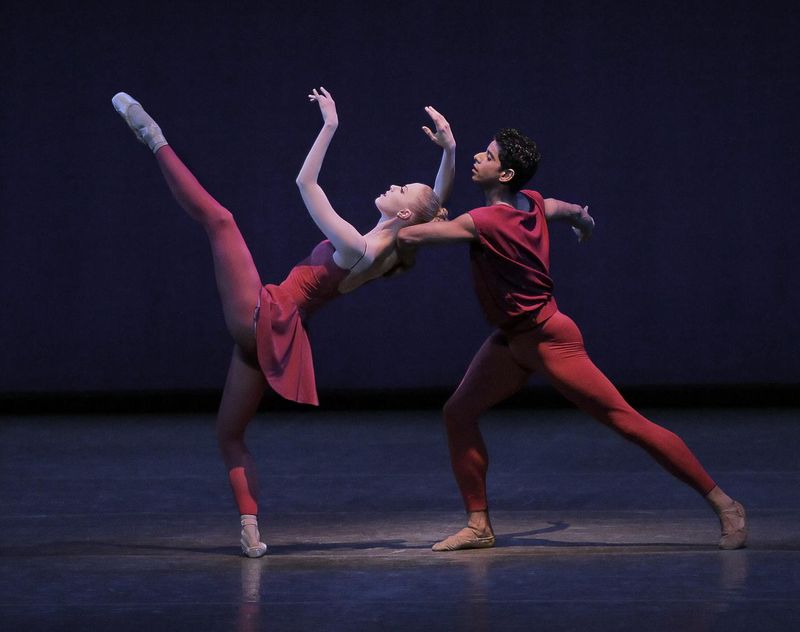
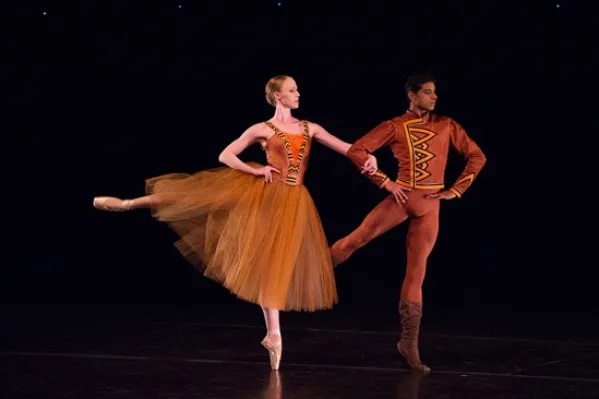
    Thru the ensuing seasons, I enjoyed seeing Amar countless times. Among the ballets in which he made a vibrant impression were Balanchine’s AGON, BRAHMS-SCHOENBERG QUARTET, FOUR TEMPERAMENTS, LIEBESLIEDER WALTZES, STRAVINSKY VIOLIN CONCERTO, SYMPHONY IN C, SYMPHONY IN THREE MOVEMENTS, UNION JACK, and WHO CARES?; Jerome Robbins’ DANCES AT A GATHERING, FANCY FREE, FOUR SEASONS, GLASS PIECES, IN THE NIGHT, and WEST SIDE STORY; Bigonzetti’s OLTREMARE, LUCE NASCOSTA, and AMARIA; Peter Martins’ CHICHESTER PSALMS and FEARFUL SYMMETRIERS; Jorma Elo’s SLICE TO SHARP; and Ratmansky’s RUSSIAN SEASONS and PICTURES AT AN EXHIBITION.

    Amar has also appeared on Broadway in CAROUSEL and WEST SIDE STORY.

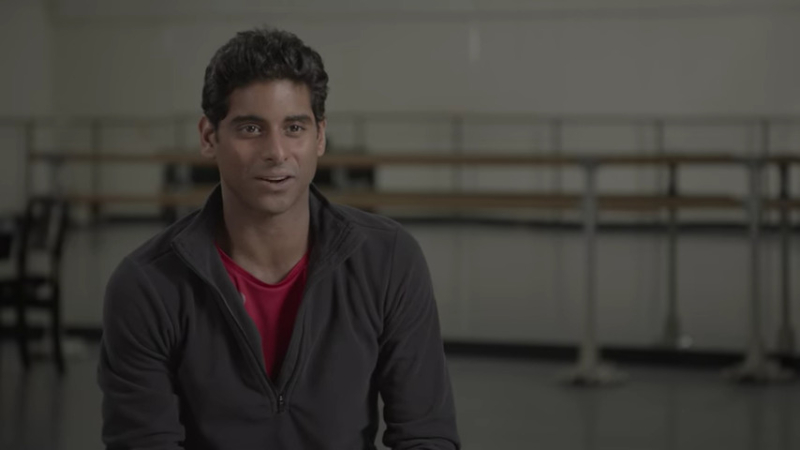
    Amar discusses Ratmansky’s PICTURES AT AN EXHIBITION here.

    Here’s some photos of Amar with his renowned partners:

    Amar & becky russian seasons john ross

    With Rebecca Krohn in RUSSIAN SEASONS; photo by John Ross

    Amar starling symph in 3 moves kolnik

    With Sterling Hyltin in SYMPHONY IN THREE MOVEMENTS; photo by Paul Kolnik

    Amar tess fearful symetries kolnik

    With Teresa Reichlen in FEARFUL SYMMETRIES; photo by Paul Kolnik

    Amar tess polyphonia kolnik

    Again with Tess, in POLYPHONIA; photo by Paul Kolnik

    Amar tiler divert 15 kolnik

    With Tiler Peck in DIVERTIMENTO #15; photo by Paul Kolnik

    Tess amar  C Duggan in the night jpg

    With Teresa Reichlen in IN THE NIGHT; photo by Christopher Duggan

    AMARIA jpg

    With Maria Kowroski in Mauro Bigonzetti’s AMARIA, danced at Maria’s farewell performance

    Twirl sara amanda amar

    Above: in 2010. Amar appeared with Sara Mearns and Amanda Hankes in Kristin Sloan’s brief film, TWIRL; I was planning to post a link to the film here, but it’s no longer available. Sara was to have danced Titania in Amar’s farewell performance this afternoon, but she was out with an injury.

    I met Amar in passing several times, and once at one of Emery LeCrone’s rehearsals. He was always extremely friendly and upbeat, and always ready with an infectious laugh.

    ~~~~~~~~~~~~~~~~~~~~~~~~~~~~~~~~~~~~~~~~~~~~~~~~~~~~~~~~~~~~~~~~~~~~~~~~~~~~~~~~~~~~~~~~~~~~

    I’ve loved Mr. B’s MIDSUMMER NIGHT’S DREAM ever since I first saw it in May of 1977 with a fantastic cast headed by Karin von Aroldingen and Robert Weiss as the fairy queen and king, Patricia McBride and Helgi Tomasson in the second act pas de deux,and Jean-Pierre Frohlich (no less!) as Puck. You can see how I became spoiled rotten from my early days of ballet-going.

    Amar sterling

    For his farewell, unfortunately, Amar did not have an evening of ballets of his own choosing, but rather he was scheduled to dance the divertissement pas de deux in Act II of MIDSUMMER NIGHT’S DREAM with Sterling Hyltin (photo above by Paul Kolnik). In the days running up to the farewell matinee, there were numerous cast changes due to illness and injury; then Amar himself sustained an injury, and it was arranged that he would dance only the adagio in today’s performance; sportingly, Andrew Veyette took over the allegro sections, squiring Sterling handsomely. When Amar finally appeared, the crowd went absolutely berserk, with a roaring flood of applause that obliterated several bars of music.

    Amar looked very serious throughout the adagio, partnering Sterling with tender loving care. They won a tumultuous, extended ovation, embracing frequently as the applause rolled on. In the ballet’s grand finale, Amar finally began to smile – that dazzling smile that has won the hearts of so many ballet fans over the years. 

    The entire performance had a special glow. The orchestra, under Clothilde Otranto’s genial baton, sounded wonderful in this magical score to which Balanchine tells the tale so very clearly, without a wasted note or gesture. Unity Phelan, my first dark-haired Titania since Karin, was lovely, and Daniel Ulbricht’s Oberon was simply delightful both in his virtuosity and his acting. Harrison Ball was a spectacular Puck, his characterization tinged with just a hint of darkness. 

    As the mortals Helena and Hermia, Isabella LaFreniere and Ashley Laracey were finely-contrasted: Isabella the more lyrical and wistful, Ashley the more dramatic. Ashley’s solo, alone in the woods at night, was a masterpiece all its own. Their suitors, Aaron Sanz and Peter Walker, were lively and played their parts engagingly. Gil Bolden was a terrific Bottom, the recently-promoted Chun Wai Chan looked dashing as Titania’s Cavalier, and Alexa Maxwell was a brilliant Butterfly, having her own personal triumph. Dazzling me – and the entire House – with her vivid beauty, spacious dancing, and fabulous fouettés, Emily Kikta displayed full-fledged star-power as Hippolyta, causing the noble Preston Chamblee, as the Duke of Athens, to fall to his knees and ask her to marry him.

    With Puck drifting skyward in the ballet’s final moments, the audience burst into applause; after some bows before the curtain, Amar finally stood alone on the big stage and the audience unleashed a deafening hurricane of cheers. Amar leapt off the stage to embrace Peter Martins, then resumed his place center-stage as a procession of well-wishers came forward to greet him. How wonderful to see the gorgeous Lourdes Lopez and her husband carrying bouquets to Amar; and moments later, Gonzalo Garcia surprised Amar by bringing forth the beloved Joaquin de Luz. The ovation went on and on and on, Amar clearly moved by the outpouring of love. He pounded his heart and seemed on the verge of tears.

    Outside the stage door, a huge crowd gathered to wish Amar well. But after an hour, he still had not emerged, and people began drifting away. If he’d come out sooner, he would have been there til nightfall, signing autographs and being photographed. 

    Amar-Ramasar igor burlak

    Above: Amar Ramastar, photo by Igor Burlak

    Hail and farewell, Amar! Thank you for brightening our lives. I hope I’ll see you around town from time to time in the years ahead.

    ~ Oberon

  • Gerda Lissner Foundation ~ Winners Concert 2022

    Feldmann jpg

    Above: baritone Gregory Feldmann, photographed by Pierre Lidar

    Author: Oberon

    Sunday May 22nd, 2022 matinee – It feels like ages have passed since we attended the Gerda Lissner Foundation’s 2016 Winners Concert, where the male voices held sway. This is the thing about the pandemic: it has warped our sense of the passing of time. This afternoon, we were back in Carnegie’s cordial Zankel Hall to hear the 2021-2022 Winners. Today’s concert was dedicated to the memory of two longtime friends of the Foundation, Stephen DeMaio and Brian Kellow.

    Overall it was a very good concert, though we might have wished for more singing, less talking. Midge Woolsey was the “hostess with the mostess”; but does this type of event really need a host? Apart from a speech of welcome, the audience can get all the information they require from a printed program.

    The prizes are awarded in two main categories: the Lieder Song Vocal Competition and the International Vocal Competition. The latter is split into two divisions: the General Division and the Operetta & Zarzuela Division. So we heard a wide variety of music, including three singers in zarzuela repertoire. Two expert pianists – Mary Pinto and Arlene Shrut – provided first-rate support for the vocalists.

    Third prize winner in the Lieder Song category, soprano Yvette Keong, set the afternoon beautifully on its way. Looking like a Vogue model in her black gown, with ruby-red appliqué at the hem, and slit to thigh, Ms. Keong sounded as lovely as she looked. She opened the program with Rachmaninoff’s “To Her”, sung with a sense of ecstasy, and then offered Stephen Foster’s “Beautiful Dreamer”, a song I have known since childhood when my parents gave me a Swiss music box that played the melody. Ms. Keong’s clear lyricism was most enjoyable to hear.

    Mezzo-soprano Alma Neuhaus was unable to join the other winners at the concert today; how I would love to have heard her Fauré and Grieg selections.

    It did not surprise me in the least that baritone Gregory Feldmann had won first-prize in the Lieder Song Competition: Mr. Feldmann’s recital with pianist Nathaniel LaNasa at Weill Hall in February 2020 – just days before the pandemic caused everything to go awry – was a solid gold evening. This afternoon, Mr. Fekdmann performed “Citadel” by William Grant Still, and Franz Schubert’s “Auf den Bruck”. This young man has a way of drawing the listener in to whatever he is singing, so that you feel that he is ‘speaking’ just to you. In the Schubert, Mary Pinto played the demanding piano part with distinction. Mr. Feldmann’s handsome tone, excellent diction, and wonderfully sincere delivery make him a most engaging artist, one I will hope to hear often in the future in both lieder and opera.

    Next came the three Zarzuela arias, commencing with soprano Evelyn Saavedra who looked stylish in a red frock, red stilettos, a red flower in her jet-black hair, and a decorative fan in her hand. She sang my favorite zarzuela aria,” De España vengo” from El Niño Judío by Pablo Luna (1879-1942), and made a vivid impression.  

    Costa Rican baritone Kevin Godínez, a handsome fellow with an easy stage presence, captivated the crowd with “Junto al puente de la Peña” from La Cancion del Olvido by José Serrano. The song tells of a man who is attracted to the town’s prettiest courtesan and is confident that he will have her. Mr. Godínez is an assured singer with a very pleasing timbre, making me wish these zarzuela artists had each been allotted a second song.

    The Mexican soprano Ethel Trujillo did indeed get to sing an extra aria, which was not listed in the program, before delighting us with “Me llaman la Primarosa’ from Gerónimo Giménez’s zarzuela El Barbero de Sevilla. Ms. Trujillo, first-prize winner in her Division, has a very pretty voice with an ear-teasing Spanish vibrato. At times, she reminded me a bit of Lisette Oropesa, which is high praise indeed. Ms. Trujillo’s voice can phrase a line and colour its words to make the music all the more alluring; and the voice can fly easily to the top. On top of all that, she has a charming personality.

    Following the interval, it was opera…opera…opera.

    Mezzo-soprano Shannon Keegan kicked things off with the aria “O petite étoile” from opera Emmanuel Chabrier’s delightful opera L’étoile. I saw this work when Juilliard staged it with my beloved friend, the late Makiko Narumi, and again when New York City Opera presented it. Ms. Keegan has a pleasing voice to begin with, but within seconds we were carried away by her dramatic instincts, her dynamic control, and her expansive top range. She turned her aria into a triumph of voice and personality. And…Ms. Keegan gets an extra bouquet of roses for coping admirably with the disruption of someone’s cellphone sending an alert which lasted thru much of her aria. 

    Soprano Teresa Perrotta made a marvelous impression with her rendering of the demanding aria “Come scoglio” from Mozart’s Cosi fan tutte. A beauteous, majestic blonde, Ms. Perrotta was in complete command from start to finish as Mozart’s aria carried her across a 2-octave range. Luminous top notes and a creamy (rather than booming) chest register were skillfully linked by a voice that moves fluently thru the aria’s coloratura passages. She struck me as a singer who will go far.

    Cuban baritone Eleomar Cuello brought his good looks, poised demeanor, and a natural feeling for poetry  to the haunting “Pierrot’s Tanzlied” from Korngold’s Die Tote Stadt. I was truly moved by Mr. Cuello’s singing, and especially by his ability to hone the voice down to a sweet softness at the aria’s wistful ending.

    Just the day before this concert, tenor Eric Ferring had made a very fine impression in the brief but demanding role of Arturo in Donizetti’s Lucia di Lammermoor at The Met. I was in the House, and the voice spoke to me clearly in the big space. Today, Mr. Ferring graciously added an aria – the ravishing “Le Rêve” from Massenet’s Manon to his scheduled Handel piece. The Massenet was simply gorgeous: deeply felt, lovingly phrased, and with magically floated soft high tones, whilst pianist Arlene Shrut matched the tenor’s interpretation with her elegant pianissimo playing. Mr. Ferring then turned to Handel for “Il tuo sangue” from Ariodante. In this dramatic piece, the tenor showed another side of his artistry with his mastery of dynamics and finely-voiced fiorature

    All of the singers then returned to the stage for a specially-prepared encore: the title-song from Stephen Sondheim’s Sunday In The Park With George, with Ms. Pinto at the piano.

    ~ Oberon

  • Pittsburg Symphony Orchestra @ Lincoln Center

    Thumbnail_till_felner

    Above: pianist Till Fellner, photo by Jean-Baptiste Millot

    ~ Author: Ben Weaver

    Sunday May 19th, 2019 matinee – Great Performers at Lincoln Center presenting Maestro Manfred Honeck and his Pittsburg Symphony Orchestra in a super-sized concert at Lincoln Center this afternoon: Mahler’s Symphony No. 5 was preceded by Beethoven’s Piano Concerto No. 5 – two substantial works that rarely share the stage.

    Austrian pianist Till Fellner was the soloist for Beethoven’s 1809 magnum opus, the imposing “Emperor” Piano Concerto. By 1809 Beethoven’s hearing was already deteriorated enough that he stopped playing the piano in public. It is the only one of is concertos that he did not premiere himself. After a single chord from the orchestra, the piano enters majestically with an extended solo. This is followed by another single chord from the orchestra and a cadenza-like solo from the piano; and then again – for the third time – before the orchestra finally launches a traditional introduction.

    The lovely Adagio is scored sparingly for the piano, muted strings and winds and it leads without a pause into the raucous final Rondo. Mr. Fellner is a magician behind the keyboard. There is an extraordinary sense of simplicity and ease in his playing; even in the most arduous passages, he makes the music sound like it is being played by the gods themselves. But there is nothing simple about his interpretations, which are filled with shadows and light. He makes the music come alive in a way no other living pianist does. Fellner seems to breathe the music into existence. Each live performance I have attended by this extraordinary musician leaves me in awe. Maestro Honeck and the Pittsburg Symphony musicians seemed to be breathing the same music as Mr. Fellner. They were the perfect partners for this exceptional performance.

    Thumbnail_Manfred_Honeck

    Above: Maestro Honeck, photographed by Reinhold Möller

    Gustav Mahler’s mighty Symphony No. 5 received a somewhat mixed performance after the intermission. The star-turn trumpet introduction to the symphony was beautifully done, and Honeck’s tightly-controlled and dark funeral march signaled a great start. And for the Pittsburg Symphony, even at maximum volume, the sound remained wonderfully transparent. What was missing from the 3rd and 4th movements as the symphony shifts from darkness to light with its swirling waltzes, gallops and love songs (the Adagietto was nicely paced, but the climax never materialized) was a sense of fun; everyone still seemed to be stuck in the death-haunted first two movements of the symphony. Fortunately the final Rondo came whizzing in like a Mendelssohnian fairy. Honeck’s lightening of textures was a striking effect here and it brought the work to an appropriately affirming conclusion.

    ~ Ben Weaver

  • Philharmonic Ensembles ~ Season Finale

    NEWS-862x575

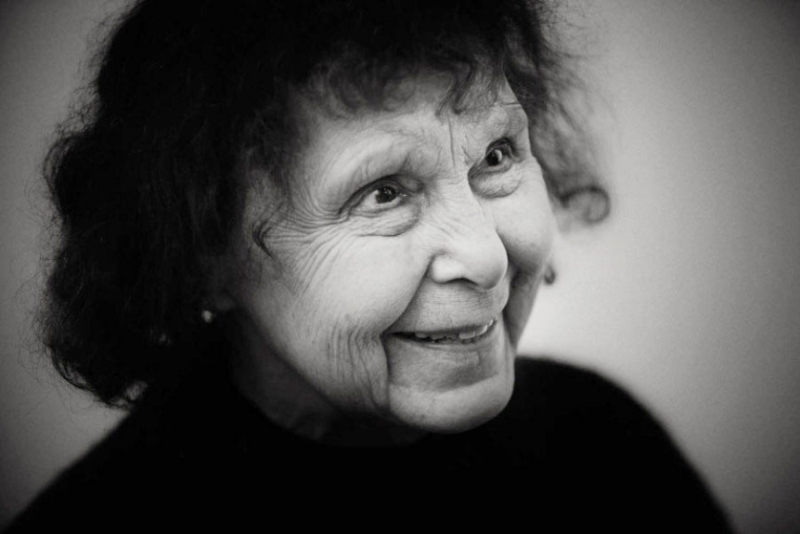
    Above: composer Sofia Gubaidulina

    ~ Author: Oberon

    Sunday May 26th, 2019 matinee – This afternoon’s Merkin Hall concert by musicians from The New York Philharmonic marked the season finale of the Philharmonic Ensembles series. These programs invariably mix new or off-the-beaten-path works with classics from the chamber music repertoire.

    Both in the choice of repertory and in the superb playing of the musicians, today’s concert was one of the finest I’ve ever experienced. The audience seemed enraptured; wonderfully silent and attentive, they created an atmosphere which doubtless inspired the players to outdo themselves. No coughing, no cellphones, no one dropped anything; there were a number of small children in the audience, but none of them made a peep. What an opportunity for blissful immersion in the music!

    An infrequently-performed work by Franz Schubert, Notturno, opened the concert. I greatly enjoyed hearing pianist Hélène Jeanney again, having previously heard her playing Zwilich and Debussy at these concerts. For today’s Schubert, she was joined by Na Sun (violin) and Qiang Tu (cello).

    Found among some of Schubert’s papers after his death, the Notturno is a work of timeless beauty and contemplation, commencing with harmonizing strings which pass through lovely modulations in which the piano sets a pace that feels like a slow waltz. Mlle. Jeanney then takes the lyrical lead with a gracious piano melody as the strings are plucked. In a role reversal, the pianist then assumes the role of a harpist, with gentle accents supporting the melodious strings.

    In a contrasting section, we move into a minor phase; there is a rising intensity and the music becomes quite passionate, with swirling cascades of notes from the keyboard. A sense of longing rises from the violin and cello, underscored by the restless piano. Na Sun and Qiang Tu then beautifully resume the original theme, the harmonies seeming even more poignant now. Following a rather sudden crescendo, the music rises to a calm finish. How poetic the atmosphere our three players conjured: simply sublime.

    The music of Sofia Gubaidulina always intrigues me, and today her Piano Quintet proved fascinating. This quintet is one of her earliest works, written in 1957 while she was still a student at the Moscow Conservatory. Several influences are in play in this quintet: Shostakovich, for sure, but maybe – even more – Prokofiev. And, strangely enough, there are also tinges of the French composers of the Impressionist school along the way. But Gubaidulina manages to weave these threads together convincingly. The quintet  sounds really original.

    Pianist Eric Huebner joined the Philharmonic’s Qianqian Li and Joo Young Oh (violins), Peter Kenote (viola), and Nathan Vickery (cello) for music-making of the highest order.  The composer gives the 2nd violinist a great deal to do in the quintet, and Joo Young Oh (his hair now blonde, and wearing a spiffy golden-tone jacket) played it all superbly.

    The opening Allegro has a rhythmic, fun start, with the music driven by Eric Huebner’s lively playing at the Steinway. Throughout, Mr. Huebner constantly reminds us of why it’s called a “piano quintet”: he’s a wonderful pianist. The music, accented, brings forth string harmonies as the piano comments. The second violin has his first chance to shine; his theme is then taken up by first violinist Quinquin Li. A long piano solo has an almost furtive quality, and then things become insistent and sonically dense. Nathan Vickery’s cello sings over pulsing motifs from the piano. The melody is passed about, then the strings assume a high, shimmering blend before the Allegro’s amusing ending.

    Peter Kenote’s viola takes the lead in the Andante marciale, which soon gets a swagger on. Laying back a bit, there’s a violin passage and the music turns fragmented. The march then picks up again, reminiscent of the its famous counterpart in Prokofiev’s L’Amour des Trois Oranges. The violin plays on high as the music strides away into the distance.

    Yearning strings and the quiet piano mark the start of the Larghetto sensibile, with the violin in a sad song that the cello joins; the piano however seems to hint at a jest. As the viola and 2nd violin blend, there’s a trace of exoticism. Syncopation rises up, becoming insistent until the viola leads us back to some searing harmonies. Mr. Kenote’s viola sounds alone, and Mr. Oh takes his violin on high in a solo passage. Harmonies shift, and Mr. Huebner at the Steinway has a final solo opportunity.

    To a bustling piano rhythm, Mr. Kenote leads off the concluding Presto. The music romps along, with momentary calmings along the way. Mr. Huebner continues to shine in the demanding piano music. After simmering down again, the cello begins to pulse and the cello and viola start buzzing in an ascent to the heights where the quintet finds its finish.

    25E4BB63-9DE4-4BCD-80B9-6AAFB6C0846F

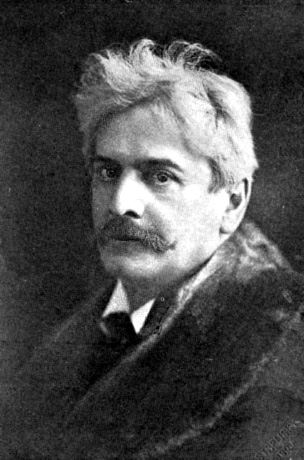
    Above: cellist and composer David Popper

    An unusual work by David Popper, Requiem, was originally composed for three cellos and orchestra; it was later transcribed for three double-basses and piano, which is how it was presented today (apparently there is also an arrangement for three trombones!).

    It’s a terrifically original work, and the three bass players – Blake Hinson, Satoshi Okamoto, and Rion Wentworth – were clearly savouring this opportunity show off what the double-bass can do, whilst pianist Steven Beck played an integral role in this gem of a piece. The doleful depths of the three basses, both in harmonies and in solo passages, continually evoked shivers as the resonances seem to invade the very soul. Passages for solo piano gave contrast; at one point, a trace of the Ave Maria was heard. The basses meanwhile made me think of the profound beauty of the opening of the “Hymn to the Sun” from Mascagni’s Iris.  

    I enjoyed the Popper rarity immensely: kudos to the bassists for bringing it to us in all its richness.

    To close the performance, Piano Trio #2 by Dmitri Shostakovich was given a sterling rendition by Yulia Ziskel (violin), Mr. Vickery (cello), and Jonathan Feldman (piano).

    This was by far the most familiar work on the program, so I put away my note pad and let the music dazzle and move me in this performance by three exceptional artists. Ms. Ziskel is a violinist who always maintains an alluring gleam on her tone; her playing could be at once ethereal and heart-wrenching. Following her poignant solo in the Largo, Mr. Vickery’s cello joined her in music that is achingly beautiful and deeply moving. Their playing reached the heights of expressiveness.

    The dazzling dance of the concluding Allegretto was so thrilling to experience today. Here Mr. Feldman’s brilliance and irresistible vitality were a pure joy, whilst Ms. Ziskel and Mr. Vickery continued to astonish. The quintet ends as the dance gives way to a reprise of the chorale of the Largo, providing a reassuring comfort which we so desperately need in these troubled times.

    As the Shostakovich progressed today, the world around me seemed to vanish; both the music the musicians reached me on a level that is rarely attained. For such moments in life, how can we express our gratitude?

    ~ Oberon

  • Ballets Russes @ Chamber Music Society

    Photo nicolas dautricourt 74

    Above: violinist Nicolas Dautricourt, photographed by Bernard Martinez

    ~ Author: Oberon

    Sunday May 19th, 2019 – For their final concert of the 2018-2019 season at Alice Tully Hall, Chamber Music Society of Lincoln Center offered a program of works by composers associated with Serge de Diaghilev’s Ballets Russes. It was a long program, full of rewards.

    Jennifer Johnson Cano, the Metropolitan Opera mezzo-soprano who in February shared a memorable program with tenor Matthew Polenzani at Zankel Hall, sang works by Manuel de Falla and Maurice Ravel, and a septet of marvelous musicians were heard – in varying configurations – in these, plus music by Debussy, Prokofiev, and Stravinsky. 

    JJC

    Ms. Cano (above, in a Matthu Placek portrait) opened the concert with Manuel de Falla’s Psyché in which she was joined by Tara Helen O’Connor (flute), Nicolas Dautricourt (violin), Yura Lee (viola), David Finckel (cello), and Bridget Kibbey (harp). Composed in 1924, as a setting of a poem by Georges Jean-Aubry, this is the awakening song of Psyché, a mortal woman whose beauty has caught the eye of Cupid, god of Love, who she will eventually marry.

    The flûte enchantée of Tara Helen O’Connor opens the work; the addition of M. Dautricourt’s ethereal violin and Ms. Kibbey’s delicate harp create an exotic atmosphere. Ms. Cano’s singing – clear, warm, and wonderfully nuanced –  was vastly pleasing; in her unaccompanied opening passage, the sheer beauty of her tone and its evenness throughout the registers marked her as a singer of exceptional natural gifts.

    Adding depth and colour to the enticing ‘orchestration’ were Ms. Lee’s viola and Mr. Finckel’s cello; overall the five instrumentalists created an impression of a larger ensemble thru the richness of their individual timbres. The music becomes urgent, and Ms. Cano’s singing golden, as flute trills and harp melismas lure the ear.  Psyché this evening was an intoxicating delight.

    For Maurice Ravel’s chamber arrangement of Shéhérazade, Ms. Cano and Ms. O’Connor returned, along with pianist Alessio Bax. It’s Mr. Bax’s delicate, silvery playing that sets the mood of the opening song, Asie. At “Je voudrais voir des assassins souriant“, passion builds: Ms. Cano brought an operatic quality to her performance at this point, rising to her steady and blooming upper range to fine effect. Asie has a little pendant at the end, full of lovely mystery. It ends on an exquisitely tapered note.

    La flûte enchantée brings forth limpid, entrancing sounds from Ms. O’Connor’s flute, and the weaving together of voice, flute, and piano is hypnotic. The concluding song, L’indifferent, begins with a calm lullabye played by Mr. Bax. Ms. Cano’s beguiling singing, sometimes bringing straight tone into play, was a marvel of expressiveness.

    Infringing on our enjoyment of the Ravel was the sound of text booklets dropping onto the floor, and a crash of something falling in the outside corridor. But Ms. Cano held to her course; this is a truly wonderful voice that I would love to hear in the music of Massenet’s Charlotte.

    Maxresdefault

    Above: harpist Bridget Kibbey

    Mlles. O’Connor, Lee, and Kibbey then offered a sublime performance of Claude Debussy’s Sonata for Flute, Viola, and Harp, written in 1915. In an evening filled with marvelous sounds, the opening sustained flute tone of this sonata – taken up by the viola – sent chills thru me at the start of the Pastorale. The blend these three remarkable musicians produced was exceptional. A gentle animation arose – soft and merry – only to subside. Mlles. Lee and O’Connor duet, the viola deep and buzzy. Swirls of notes from the harp – and then from the flute – lingered on the air.

    The Interlude commences with a viola melody underpinned by the harp, After a sprightly interjection, viola and flute play in unison, and the harp tapers to pianissimo.The viola is plucked, the music soft and swift. A percolating motif opens the Finale, like the break of dawn on a sunny day; after a momentary slowing down, the piece ends abruptly.

    Prokofiev’s Sonata in D-major for Violin and Piano, Op. 94a, brought together Mssrs. Dautricourt and Bax for a fabulous performance that sparked a shouting, standing ovation from the crowd. Though the piece was composed in 1943 as a flute sonata, Prokofiev later obliged the great violinist David Oistrakh by creating a violin version, which premiered in 1944.

    Mr. Dautricourt launched the sonata with a high sweet/melancholy song. As the music becomes increasingly animated, an ultra-familiar theme is heard, which will crop up several times along the way. Vibrant, agitated, march-like music ensues; Mr. Bax displays magic tricks of his own, and the movement has a lovely ending.

    In the Scherzo, Mr. Dautricourt’s virtuosity is astounding. A demented, off-kilter dance commences, then slows to a high-lying interlude before resuming. The music, and the playing of it, are thrilling…and then it comes to a sudden halt.

    The audience, who all evening applauded between movements, prompted the violinist to declare “Two more!” before commencing the Andante: a sorrowful song which tends to meander a bit over time, with a hint or two of of jazz thrown in; in the end it becomes high and eerie. 

    The concluding Allegro con brio dances along, with some respite for a poignant interlude before dancing on again. Moodiness briefly takes over, and then a rush to the finish. The applause began before the music stopped: Dautricourt/Bax are a winning team.

    Alessio-600

    Lucille Chung and Alessio Bax (above, photographed by Lisa-Marie Mazzucco) joined together for the evening’s Fokine finale, saluting Diaghilev’s ground-breaking choreographer with a piano-four-hands arrangement of Igor Stravinsky’s Petrushka.

    Despite more intrusions – a loud clang from the balcony, and the sound of something (or someone) falling – Stravinsky’s brilliance prevailed. For 40-minutes, the outstanding Bax/Chung duo sustained the vibrancy of a theatrical presentation; everything felt so alive – with dazzling rhythms and infinite colours – that the entire ballet danced in the mind. For their brilliant and generous playing, the couple were rewarded with hall-filling, joyous applause. What a way to end the season!

    ~ Oberon

  • Philharmonic Ensembles|Reinecke Rules!

    Reinecke-770x470

    Above: composer Carl Reinecke (1824 – 1910)

    ~ Author: Oberon

    Sunday May 27th, 2018 – The last in this season’s Philharmonic Ensembles series at Merkin Hall. These concerts, in which artists from the New York Philharmonic perform masterpieces, rarities, and contemporary works from the chamber music repertory, are always highly enjoyable. Today’s expertly-devised program introduced me to the delightful music of Carl Reinecke, and works by Vivaldi, Penderecki, and Brahms were also superbly played.

    Harpsichordist Paolo Bordignon introduced the opening work, Vivaldi’s Trio Sonata, Op.1, No. 3, in which he was joined by Duoming Ba (violin), Peter Kenote (viola) and Satoshi Okamoto (bass). Hearing this music on a gloomy day, following a distressing week, was a perfect palliative. In this four-movement work (the third being very brief), both the playing and the communication between the musicians drew us immediately into the elegant and lively world of Vivaldi, far from the madding crowds and disconcerting headlines of daily life.

    I was particularly intrigued by the beautiful instrument Mr. Okamoto was playing with such agility and charm. You can see it, and hear him playing, in this brief film.

    In a striking contrast, we next had Krzysztof Penderecki’s Duo concertante for violin and double bass, which was composed in 2010 on a commission from violinist Anne-Sophie Mutter. It was played this afternoon by Kuan Cheng Lu, violin, and Rion Wentworth, bass. The composer devised the piece as a sort of conversation between the two instruments; Ms. Mutter described it as two voices “evading each other”: while one soloist is developing a musical theme, the other falls nearly silent.

    With their expert timing, and a clear sense of enjoyment in what they were doing, the two musicians gave a performance full of vitality, precision, and wit. Among the words I jotted down along the way: agitation, brooding, mini-scherzo, jazzy bass, plodding, shimmering, almost a march, soft and high, ultra-sustained bass note, pensive violin, a dance, tapping and stamping at the end. The audience were clearly much taken with this piece, and the playing of it: loud, enthusiastic applause followed.

    The afternoon provided an opportunity to make the acquaintance of a composer new to me, Carl Reinecke. How his music has eluded me until now is inexplicable. He was a prolific composer of operas, symphonies, concertos, and chamber music, as well as a highly regarded conductor, pianist, and pedagogue. Franz Liszt hired Reinecke as piano teacher for his daughter, Cosima, who later married Richard Wagner. In 1904, at the age of 80, Reinecke made recordings of seven works playing on a piano roll; thus he was the earliest-born pianist to have his playing preserved in any format.

    Reinecke’s Trio for oboe, horn, and piano was composed in 1886. The Philharmonic’s principal oboist Liang Wang was joined by Howard Wall, horn, with Zhen Chen at the piano for today’s performance of this work, steeped in the Romantic spirit. This is music that’s terrifically appealing. 

    The piece also moved me on a personal level, for my sister played oboe and I the horn back in our youthful years in the little town. The sounds of these two instruments today, played with such tonal richness and impeccable musicality by Mssrs. Wang and Wall today, pleased me deeply.

    The composer’s cordial theme for the opening Allegro moderato must have greatly pleased the composer, for he repeats it over and over. Gorgeously played by Mr. Wang, the melody has an exotic feel. The horn joins and the music expands. A romance-tinged piano solo brings Mr. Zhen into the mix, his playing colourful and alert. A great horn theme, abundantly toneful in Mr. Wall’s ‘singing’ of it, leads to a grand passage. The voices entwine, and after a martial bit, melodies flow on with increased drama. A da capo develops a sense of urgency, which eventually subsides.

    The Scherzo, Molto vivace has charm of its own; it’s witty and bubbly, and gets a five-start rating as scherzi go. The players relished every turn of phrase, with the pianist having a lot to do. This scherzo has a sudden end; you could almost hear the audience smiling.  

    The melodic warmth of the cavatina-like Adagio brought forth a rich horn theme upon which Mr. Wall lavished the kind of tonal plushness that turned a frustrated horn player like me green with envy. And he has such prodigious reserves of breath at his command. When Mr. Wang joined, a fabulous tone-fest filled the hall. More sonic glamour from Mr. Wall in a glorious mix with the piano followed; sumptuous harmonies abounded as the movement came to its conclusion.  

    In the opening passages of the Rondo finale, Mr. Zhen had just the right feeling for what sounds like a forerunner of the piano rag. The music, full of mirth and magic, gave all three players abundant opportunity to shine, singly and as a collective. The audience response was heartfelt, as the music and playing merited. This was one of the great musical treats of the season which is now nearing its end.

    Sustaining the Romantic aura of the Reinecke, the concert concluded with the Piano Trio No. 1 of Johannes Brahms, played by Hannah Choi, violin, Patrick Jee, cello, and Steven Beck, piano. Mr. Jee spoke with great affection of this music, which clearly means so much to him. When the performance ended, he seemed in a highly emotional state – a state reflected in his rich, resonant playing. 

    The work begins pensively. After a brief piano introduction comes the marvelous cello solo theme of which Mr. Jee had spoken. His playing of it reflected what the music means to him: sheer beauty. Ms. Choi and Mr. Back prolonged the atmosphere which the cellist had established, savouring the themes and reveling in the the blendings of their voices. This long first movement, with its achingly lovely melodies and modulations, gave a great deal of pleasure.

    The Scherzo made me think of hunters on the chase; it becomes exuberant before being overtaken by an almost pastoral theme which becomes quite grand before a da capo takes us back to the hunt.

    The Adagio is like a meditative dream from which we don’t want to awaken. Woven in are luminous solo passages for each of the three instruments whilst in blended passages their tonal appeal was most affecting.

    The final Allegro is waltzy and minorish, a perfect opportunity to cease note-taking and just enjoy watching Ms. Choi and Mssrs. Jee and Beck playing their way thru this melodious music. How can we thank such artists? Only by standing and cheering.

    Emerging from the hall, the wind had kicked up – brisk and refreshing. The afterglow of this concert is strong and lasting.

    ~ Oberon

  • Concerto Night @ CMS

    A-M McDermott

    Above: Anne-Marie McDermott at the Steinway; she delivered a phenomenal Mozart K. 466 at Chamber Music Society of Lincoln Center‘s end-of-the-season performance at Alice Tully Hall tonight.

    Author – Oberon

    Sunday May 20th, 2018 – For the final offering of their 2017-2018 season, Chamber Music Society of Lincoln Center presented five concerti, each calling for a varied ensemble of players; an impressive group of artists came together to assure yet another great CMS evening of music-making. A surprise addition to the program, in the second half, was an added treat.

    Jean-Marie Leclair’s Concerto in B-flat major for Violin, Strings, and Continuo, Op. 10, No. 1 was a wonderful program-opener, bringing forth a sterling performance from violinist Bella Hristova. This was my second Leclair encounter this Spring: in April, the composer’s Sonata for Two Violins in E-minor was played by artists from the New York Philharmonic at a Merkin Hall matinee. Today, again, Leclair’s music seemed truly fresh and vivid.

    Bella

    Ms. Hristova (above, in a Lisa-Marie Mazzucco portrait) looked gorgeous in a gunmetal grey gown, styled à la Grecque. Gilles Vonsattel was ready to play at the harpsichord and, with an ensemble of string players – Aaron Boyd, Sean Lee, Mihai Marica, Paul Neubauer, and Timothy Cobb – ranged around her, Ms. Hristova and her colleagues created a picture that somehow represented everything I love about Chamber Music Society. And then they began to play. 

    Ms. Hristova has always played beautifully, but there was some intangible quality in her artistry tonight that gave her performance a special glow. In this elegant, cordial music, she sounded splendid in both the lyrical passages and in the abounding coloratura. The poignant melody of the Andante was particularly appealing, where Mr. Cobb’s genial and rich bass also made a fine impression. In the concluding Gigue, veering between major and minor, Ms. Hristova the capped her triumph. As waves of applause swept thru the hall, Ms. Hristova strode back onto the stage for a bow, assuming that her colleagues were right behind her. But the men had held back, so that she could bask in the warm reception that she so truly deserved.

    For Mozart’s Concerto in D minor for Piano and Strings, K. 466 – composed in 1785 and played tonight in Carl Czerny’s arrangement – Anne-Marie McDermott took her place at the Steinway, joined by Tara Helen O’Connor (flute), Sean Lee and Ms. Hristova (violins), Paul Neubauer (viola), Mihai Marica (cello), and Timothy Cobb (bass). The audience, poised to hear great music-making, experienced a revelatory performance from Ms. McDermott.

    The concerto’s opening Allegro has an almost sneaky start, and then proceeds thru alternating modes of storm and calm. From the piano’s first entrance in a solo passage, it was clear we were in for exceptional playing from Ms. McDermott. The movement has a da capo with added piano roulades and an exchange of phrases between Sean Lee’s violin and Ms. O’Connor’s flute. The piano part becomes increasingly prominent. After a second da capo, Ms. McDermott trilled her way into a big cadenza; then the music again moved thru major/minor variants.

    The Romance begins with the piano in straightforward phrases which develop over a gracious pulsing motif from the strings. Ms. McDermott’s gift for nuance, and her suave turns of phrase, were abundantly pleasing to hear. In the da capo, Ms. O’Connor’s flute adds a sparkle to the harmonies; modulations, masterfully handled by Mozart, carry thru to the finish.

    Agitated bowing sets up the Rondo-finale, and as Ms. McDermott sailed thru delicious virtuoso passages with technical dazzle and amazing grace. One could sense the audience’s pent up excitement was about to burst. And burst it did. Thunderous applause filled the hall, with the pianist’s colleagues joining in and refusing to stand until she had stepped forward for a bow. The delirium continued, everyone on their feet, as Ms. McDemott and her fellow artists returned for two more bows.

    VonSattelGilles_bio

    To open the evening’s second half, Gilles Vonsattel (above) treated us to an immaculate performance of the Bach Concerto in G minor for Keyboard, BWV 975 (after Vivaldi RV 316). The oldest music on the program (dating from 1713-14), it sounded brand new: so alive and clean. In the Largo, especially, Mr. Vonsattel’s hushed pianissimi phrases and his rippling figurations played over a gentle pulse made an enchanting impression. Pianist, piano, Bach…a wonderfully intimate performance, the audience keenly attentive and appreciative.

    Paul_neubauer

    Above: violist Paul Neubauer

    Still on a high from experiencing The New York Philharmonic’s extraordinary performance of the Shostakovich 5th under Semyon Bychkov’s baton a few days ago, I was happy to hear Wu Han announce a surprise addition to the scheduled program this evening. Recently when she was in Saint Petersburg, Wu Han heard that the manuscript of a very short Shostakovich piece for viola and piano had just been discovered. Somehow she managed to bring a copy of this two-page work back to New York City with her. Paul Neubauer learned it in a day, and – with Wu Han at the piano – gave us what was most likely the first public performance (and for sure the US premiere) – of Shostakovich’s Impromptu for Viola and Piano (1931).

    This Impromptu is in two movements, a sad and very Russian melody – soft and sorrowing – which displayed Mr. Neubauer’s finely-controlled tone – and then a lively, folk-like dance kicked off by Wu Han at the piano, her bright-red shoes tapping the floor. A little musical gem, this would seem a perfect encore piece for Mr. Neubauer in future.

    Leos Janáček’s Concertino for Clarinet, Bassoon, Horn, Two Violins, Viola, and Piano (1925) is a quirky delight of a piece. As if the unusual instrumentation was not enough on its own, the full complement of musicians do not play in the first and second movements. The opening Moderato involves only the piano and horn (Ms. McDermott and burnish-toned Stewart Rose), and for the second – Più mosso – only clarinet (Tommasso Lonquich) and piano are heard, until the strings add a couple of chords at the finish.

    Mr. Lonquich had brought three clarinets to the stage, switching from one to another as the music progressed. His lively trills danced the music on to a string finish. The Concertino moves on: a rocking, swaying mode, an off-kilter march, slashing bows, dancing or jogging along, vigorous plucking, extended string trills, a misterioso piano, a fast finale.  

    Bg01

    Above: percussionist Ayano Kataoka

    The evening closed with the most recently-written work on the bill: Micro-Concerto for Solo Percussion, Flute, Clarinet, Violin, Cello, and Piano, composed 1999 by Steven Mackey. Ayano Kataoka moved from place to place on the stage where her various percussion instruments were arrayed. A superb “supporting cast” had been assembled: Tara Helen O’Connor (flute, and piccolo), Tommaso Lonquich (clarinet, and bass-clarinet), Sean Lee (violin), Mihai Marica (cello), with Gilles Vonsattel at the Steinway. The musical ensemble has their work cut out for them, as the writing seemed quite tricky and they were sometimes called upon to make unusual sound effects.

    Ms. Kataoka played several ‘legit’ percussion instruments, plus a few that she and composer John Mackey apparently found under the proverbial kitchen sink, including whistles and clickers. Often she played two or three of these at a time. A petite woman with giant talent, Ms. Kataoka had choreographed herself to always be in the right place at the right time, and the audience seemed genuinely intrigued by her every move and by all the varied sounds she produced. 

    The work opens with an extra-terrestrial quality. Tara Helen O’Connor had 2 flutes and a piccolo at her fingertips; the composer calls on her for everything from low sputtering to piccolo pipings. Two passages have special appeal: one for bass clarinet (Mr. Lonquich) and Ms. Kataoka’s vibraphone, and a second where Mihai Marica’s expert cello playing meshed with the marimba to sensuous effect.  

    The composer bounded onto the stage for a bow at the end, thanking all the players, and embracing Ms. Kataoka. The percussionist’s frock was a contemporary take on traditional Japanese dress with a shortened skirt and a fanciful obi.  

    ~ Oberon

  • Sumptuous Strings @ Chamber Music Society

    Photo

    Above: violist Yura Lee

    Sunday May 22nd, 2016 – Bringing together a sextet of first-class string players, Chamber Music Society of Lincoln Center presented the final program of their Alice Tully Hall season (a program which will be repeated on Tuesday, May 24th); music by Richard Strauss, Brahms, and Dvořák was on offer.

    In Richard Strauss’s intimate opera CAPRICCIO, a rehearsal of Flamand’s newly-composed string sextet is in progress as the curtain rises on the salon of the Countess Madeleine’s château. As the opera evolves, the Countess will be called upon by her rival suitors – the composer Flamand and the poet Olivier – to answer the eternal question, “Which is the greater art, poetry or music?”, and thus to determine which of the two gentleman she favors. The opera, which includes the beloved Moonlight Music and ends with the Countess’s ravishing final aria, has been a vehicle for such beloved sopranos as Lisa Della Casa, Dame Kiri Te Kanawa, and Renee Fleming.

    It was a real treat to hear the string sextet this evening in a concert setting, and especially as it was given such a radiant performance by today’s ensemble…an ensemble of stars. Erin Keefe, wearing a striking pleated gown of gunmetal grey which set off her auburn hair, displayed (all evening, really) her ability to spin out magical phrases over a vast dynamic spectrum: she can taper her tone down to a shimmering piano/pianissimo only to soar in full-bodied melody moments later. Across from Ms. Keefe, Yura Lee, in a deep persimmon shawl and be-jeweled stilettos, summoned heartfelt sounds from her viola. A delicious “trembling” motif heralded Nicholas Canellakis’ solo, with his lustrous depth of tone.

    As Wu Han remarked in a program note, one of the things players love most about performing string sextets is: you have a mate playing the same instrument sitting next to you. And when – as in today’s Strauss – these are musicians of the calibre of Ani Kavafian (violin), Matthew Lipman (viola), and David Finckel (cello), the level of music-making is off the charts. Such gorgeous and immaculate blendings of sound, and such congenial lyricism.

    From the Strauss, so deeply engaging both musically and emotionally, the players turned to Johannes Brahms’ String Quintet No. 1. This piece was a particular favorite of the composer himself, or at least that is the impression he gave in writing this to his publisher: “You have never before had such a beautiful work from me.”

    Ms. Kavafian took the lead here, playing with her signature grace and expressiveness; she and Ms. Keefe formed a de luxe violin duo, their voices mingling with engaging clarity and savoring their many pinpoint dynamic nuances. In the melodically abounding first movement of this work, Yura Lee’s viola sings – three times – a melody that brings to mind some of the composer’s most beloved lieder. At one point, Yura and Ani ‘converse’ with one another. Nick Canellakis’s cello gives the music its resonant grounding, whilst Mr. Lipman’s evident enjoyment of the music he is playing makes him a musician as pleasing to watch as to hear. 

    In the quintet’s second movement, the instrumental voices created a lovely chorale-like atmosphere; a more animated interlude soon gives way to a return to wistfulness, and then fades mysteriously away. For the concluding Allegro energico, the five players could cavort amiably thru the rhythmic shifts with zestful playing and much mutual eye-contact as the piece sailed on to its merry conclusion.

    Following the interval, Antonin  Dvořák’s Sextet in A-major, with its goodly portion of folkish elements, found all six players on optimum form. Right from the start, with Erin Keefe’s shining tone in the opening theme, one could sense we were in for a special treat. Nick Canellakis took up the melodic thread as the Allegro moderato proceeded thru some very imaginative harmonies.

    [A cellphone went off, but at least it was between movements…and it was a ‘classical-music’ ringtone.]

    In the second movement, Dumka: Elegie; Poco allegretto, a dance which is at once both droll and dolorous is heard. The music has a sad gypsy lilt. David Finckel’s cello sets up a treading motif, over which a lament from his fellow players suggests a walk to the graveyard. In a swift change of mood, the Furiant: Presto is lively as fleeting snatches of melody pass from voice to voice. A swaying feeling pervades the music.

    The resonantly poetic sound of Matthew Lipman’s viola sets forth the theme of the final movement; variations follow where we could again savour the silver-lit sheen of Ms. Keefe’s playing and delight once more in her ability to colour phrases with her dynamic gradations.

    A sprightly dance gives way to a thoughtful cello theme from Mr. Canellakis; things intensify before subtle turns of phrase draw us to a lingering fade-out. Ms. Keefe weaves a new variation on the melody as Mr. Finckel and the violas offer plucking support. And then a high-energy dance bursts forth, only to accelerate to double-time before an urgent rising motif sends us on to a grand finish.

    The players were called out twice by the delighted audience; both the players and their admirers seemed reluctant for the concert – and the season – to end.

    Now we will have a hiatus from CMS concerts, though the musicians we’ve come to love will stay busy playing here, there, and everywhere worldwide. For the second year, the Society will offer a Summer festival at Alice Tully Hall – details here – which will help to sustain us til the Autumn.

    The Repertory:

    The Participating Artists: