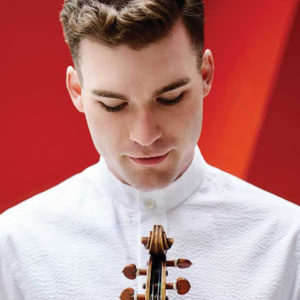
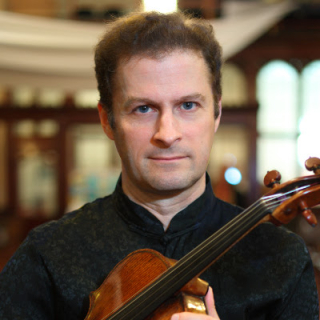
Tag: Sunday November

  • Dances We Dance @ Graham Studio Theatre

    DWD_FS-20241121-DSC00027

    Above: dancer Kathleen Caragine in Water Study, photo by Steven Pisano

    ~ Author: Oberon

    Sunday November 24th, 2024 matinee – Francesca Todesco’s company Dances We Dance presenting ACQUA, a program of danceworks inspired by water. This evening’s afternoon’s was a performance that celebrated sisterhood and helped ease the after-effects of a painful recent election, in which women’s causes that seemed set to flourish under a Harris administration now seem destined for setbacks in the years ahead.
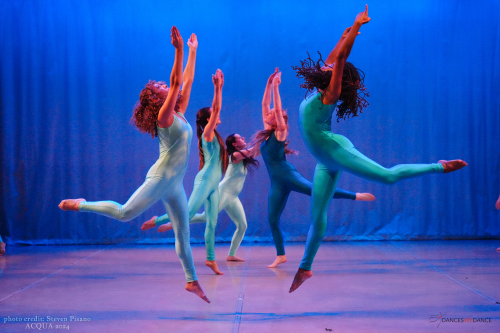
    DWD_FS-20241121-DSC00973

    Above: the ensemble in Water Study, photo by Steven Pisano

    The program presented a set of dances inspired by or alluding to themes relating to water, which – since the earliest beginnings of dance –  have evoked or reveled in this essential element. From the rain dances of the ancient tribes to Chris Wheeldon’s After The Rain… and Caterina Rago’s Alta Marea, water has been a constant source of inspiration in the dance community.

    As part of this exploration, the audience today experienced the re-staging of Doris Humphrey’s renowned 1928 choreography Water Study, performed by a cast of 11 dancers under the direction of master teacher Gail Corbin. This was preceded by a showing of Isadora Duncan’s 1905 piece Water Study, which has an improvisational feeling. As staged by Francesca Todesco, this opens to the sound of dripping water.

    As music of Schubert sounds, the lights slowly come up to reveal the dancers prone on the floor. Wearing blue/green costumes, they slowly rise and – as projections of the sea appear on screen – they come and go, executing fleeting steps and creating waves of movement suggesting the ebb and flow of the sea. A Schubert waltz sounds, and the dancers assume an ecstatic pose.

    DWD_FS-20241121-DSC01346

    Above: the dancers in Doris Humphrey’s Water Study; photo by Steven Pisano

    Silence falls as the Humphrey piece commences: the kneeling dancers awaken, the sound of their breathing hangs gently on the air. One by one they rise. Forming opposing lines, they race towards each other like tempest-tossed waves converging. They run en masse from corner to corner, as if crashing against sea walls. Standing, they sway from side to side to the sounds of their own breath. Then they fold into kneeling poses and the ballet ends as it began. Kudos to Ms. Corbin for bringing the fascinating work to currency. 

    DWD_FS-20241121-DSC01850

    Above: from Catherine Gallant’s Wave; the dancers are Colleen Edwards, Rosey Gentle, and Kathleen Caragine; photo by Steven Pisano

    The next three works were finely contrasted but they had one thing in common: each was so visually and musically enjoyable that they felt too short!     

    Wave, a 2001 work choreographed by Catherine Gallant, is an homage to Isadora with a contemporary touch. Three dancers – Kathleen Caragine, Colleen Edwards, and Rosy Gentle – are posed in a pool of light at the start. To the sounds of a Chopin mazurka, these beauties dance nobly and expressively in tunic-like costumes. They collapse and rise, evoking visions of Wagner’s Rhinemaidens, their faces are at once youthful and ancient: a sisterhood of goddesses. As the light fades, they return to their opening pose.

    Gallant

    Above: choreographer Catherine Gallant in an iconic photo

    I was ever so happy to see Catherine this evening; I felt reassured after speaking with her: now more than ever we must be there for one another. I told Catherine of the beautiful “Isadora” photo I have of her on my bookcase shelf (above); I can look up from my desk all thru the day and see her in that ecstatic pose.
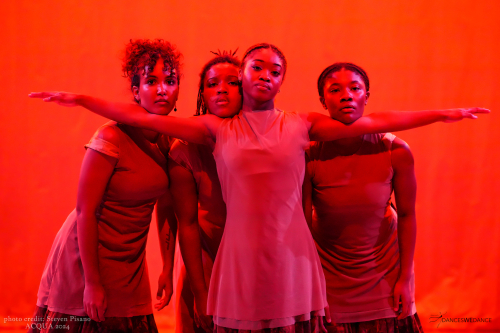
    DWD_FS-20241121-DSC02476

    Above: from Crosscurrents; the dancers are Jada Alfred, Marley Poku-Kankam, Autumn Rodrigue, and Alana Averett; photo by Steven Pisano

    Crosscurrents, choreographed by Hannah Howell, brought forth four lovely young ladies, each with a distinctive personality. To a wonderfully weird and quirky score by Angel Bat David, the dancers create movement patterns and dance in diagonal formations. The sound of the clarinet takes over – I love it! – and standing in a line up, each dancer has a brief solo. The music is incredibly evocative, it sings of solidarity. The stage becomes sun-drenched as the dancers fall and then resume their initial pose. 
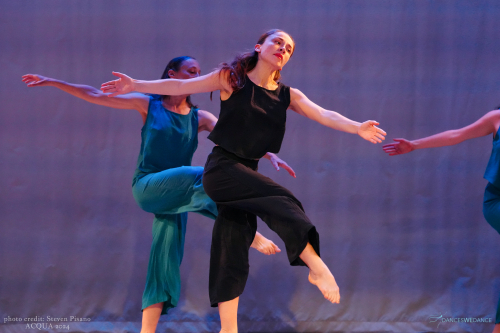
    DWD_FS-20241121-DSC03010

    Above: Lana Hankinson in Tidal Pool; photo by Steven Pisano

    Tidal Pool, set to deeply lyrical music by Yumira and choreographed by Rae Ballard, was danced by a quintet that featured Mlles. Caragine, Edwards, and Gentle joined by guest dancers Lana Hankinson and Lauren Naslund. The gentle flow of the dance created a sense of quiet serenity whilst the music evokes a luxuriant feeling of peace. Nearing the end, Ms. Naslund walks slowly forward center-stage while one by one the other dancer cross her path and depart, leaving her alone onstage with an expression of quiet wonderment. I’ve always been an admirer of Ms. Naslund, more so today than ever. Her calm beauty has the enviable gift of timeless grace. 

    DWD_FS-20241121-DSC03607

    Following the interval, Francesca Todesco’s brand new Cherchez La Femme (above photo by Steven Pisano) was danced by Mlles. Edwards, Gentle, and Caragine.These three women have developed into artists of high quality, thoroughly comfortable and assured onstage. Each has something personal to say, making their dancing really fascinating to watch.

    DWD_FS-20241121-DSC04519

    Colleen Edwards (above, photo by Steven Pisano), so impressive in the Gallant piece earlier in the program, was riveting here. As the Todesco trio commenced against a golden backdrop, the white-clad Ms. Edwards stood in the light, casting her shadow. She is joined by the other two, and shadow-play becomes a part of their movement.

    Ms. Edwards has the first solo: each character has a name, and she is Simonetta. To softly cascading piano motifs, her dancing is truly mesmerizing. She rushes about the space and finally withdraws as Ms. Gentle, clad in red as Camille, enters frantically, as if being pursued…she immediately collapses. A questing search and a plea reveal her desperation. Rising, she appears hesitant, as if seeking something…or someone. To music of Chopin, the search becomes a plea. Ms. Gentle’s dancing seemed to reveal her heart and soul to us.

    Now we meet Artemisia: fair of face, Ms. Caragine’s black hair sets off her expressive eyes; she moves beautifully, with a ballerina’s poise, as the steps and gestures flow on the music. The trio re-unite, Ms. Gentle now back in her white frock, as the dance moves to its finish.

    Here are more images from Cherchez la femme, photos by Steven Pisano:

    DWD_FS-20241121-DSC04747

    Rosy Gentle

    DWD_FS-20241121-DSC05113

    Kathleen Caragine

    DWD_FS-20241121-DSC03930

    Mlles. Edwards, Gentle, and Caragine in Cherchez La Femme 

    DWD_FS-20241121-DSC05679

    Above: Francesca Todesco in Memories; photo by Steven Pisano

    Ms. Todesco then took the stage alone to premiere a new solo choreographed by Rae Ballard to the always welcome music of Astor Piazzolla. Entitled Memories, this solo finds the dancer clad in severe black with black pumps; she seems like a widow, alone in her grief, recalling happier times The music has a lamenting feeling and becomes quite lush; a hint of a tango is woven in. Francesca’s innate musicality, with her expressive hands and face, creates a mood of longing. At times, she seemed to be dancing just for me.
    DWD_FS-20241121-DSC06615

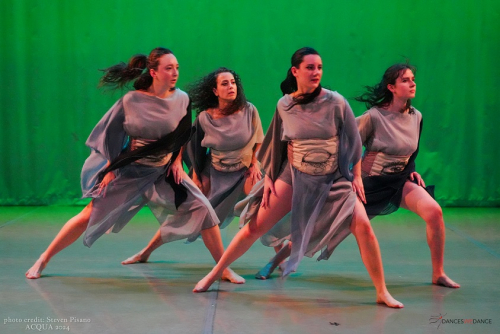
    Above, the sirens of Haunted Echoes: Colleen Edwards, Margherita Tisato, Kathleen Caragine, and Rosy Gentle; photo by Steven Pisano

    Closing the program was a newly commissioned work choreographed by the beloved former Paul Taylor star Annmaria Mazzini. This is Haunted Echoes, set to musical collage which propels a dance of the sirens – bewitching creatures all in sea-green. Drifting about the space, they pause to sing their alluring song. A big beat springs up and the dancing turns wild. And then the music becomes a bluesy lullaby, and the dancers drift off, a sisterhood lost at sea.

    On an evening that meant a lot to me, it was especially nice to greet the inimitable Jim May, who I’d only met once before, many, many moons ago at a Sokolow rehearsal. Tonight, it felt like a reunion of long-lost brothers.

    Performance photos by Steven Pisano.

    ~ Oberon
  • CMS ~ Music From Four Countries

    Nick yura

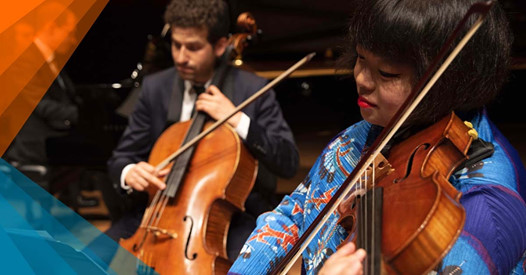
    Above: cellist Nicholas Canellakis and violist Yura Lee

    Sunday November 21st, 2021 – This evening at Alice Tully Hall, Chamber Music Society of Lincoln Center gave us a wonderfully satisfying program of music by composers from Russia, Germany, Hungary, and France. The works were all composed between 1849 and 1890.

    A very high level of playing is maintained by the Society, making it almost impossible to single out certain concerts as being of particular merit; but tonight was surely one of the most impressive and enjoyable programs have experienced since I started going to CMS concerts regularly a few seasons back.

    The program opened with the Andante Cantabile from Tchaikovsky’s String Quartet No. 1, performed in a 1888 arrangement for solo cello and strings. “Cantabile” is an Italian word meaning “singable” or “song-like”, and that’s exactly how cellist Nick Canellakis performed it: as if singing an operatic cavatina.

    From the work’s tranquil start, Nick gave us impeccable playing: warm of tone and alive with dynamic subtlety. Seated next to him, the Society’s co-Artistic Director David Finckel threaded a lovely line to compliment his cellist-colleague. Mr. Finckel and violist Misha Amory offered a gentle plucking accompaniment as Nick’s cello continued to sing a melody with a vaguely Asian feeling. Violinists Cho-liang Lin and Alexi Kenney gave silken textures to the music. The work ends on a sweetly blended pianissimo.  Mr. Finckel urged Nick Canellakis to stand first; then the other players refused to rise, leaving Nick with a solo bow, much to the delight of the crowd.

    Lin

    Above: Cho-liang Lin

    Johannes Brahms’ Quintet in G-major for Two Violins, Two Violas, and Cello, Op. 111, was written in 1890, at the start of the last decade of the composer’s life. It provides a veritable feast for the ear to listeners who – like me – love the sound of stringed instruments. Mssrs. Lin, Kenney, Amory, and Canellakis were joined by that delectable violist, Yura Lee.  Ms. Lee, who always delights with her choice of footwear, tonight wore white pumps; her one-shoulder black frock showed off some beautiful tattoos.

    The opening movement, marked Allegro non troppo, ma con brio (“…fast, but not too fast, but with a lively feeling…”) gets off to a joyous start, the violas begin duetting in a passage taken up by the violins. The music is so melodious and congenial, with Cho-liang Lin’s poignant violin theme standing out. The music turns mysterious; then Yura Lee’s passionate playing leads back to a reprise of the earlier pairings of violins and violas. Meanwhile, Mr. Canellakis’s cello is giving everything a velvety cushion. The entire movement kept me entranced: simply fantastic playing from everyone. 

    The ensuing Adagio, in D-minor, has a feeling of melancholy as Yura Lee leads off with a familiar melody. Soon the music had me so engrossed that the rest of the world seemed to vanish: they were playing this music sublimely, and playing it just for me. Yura’s ‘cadenza’ near the end was hypnotically beautiful. 

    Mr. Lin’s violin sets the third movement, Allegretto, in motion. This is essentially a scherzo, and the melodies flow merrily on. Inspired by Hungarian folk dances, the quintet’s finale is marked  Vivace ma non troppo presto (“…lively, but not too fast…”). Yura Lee’s viola is aglow, and Mr. Lin relishes his opportunities to spin more silk with his subtle playing. Suddenly the pace doubles, and the players break into an exultant dance. The crowd went wild: the only possible reaction to this kind of playing.     

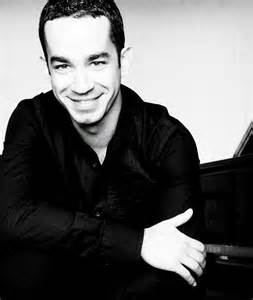
    Inon

    Pianist Inon Barnatan (above) kept the audience under a spell with his magical playing of Franz Liszt’s “Funérailles” from the Harmonies poétiques et religieuses, written in 1849. The pianist, who in 2016 gave us a mesmerizing performance of Ravel’s Gaspard de la Nuit in this very hall, was spell-binding again this evening.

    This piece, which my companion Monica Wellington soon recognized as the music to which the late Liam Scarlett’s 2014 ballet for New York City Ballet, Funérailles, is set. I did not see that pas de deux, costumed by Alexander McQueen, but hearing the music tonight, it’s hard to image a dancework set to it: the music seems to wander thru many mood swings, but Mr. Barnatan’s playing made it cohesive.

    The piece opens with gloomy funeral chimes in the slow register. A plodding rhythm reminds us of mourners in a cortège; this stops, and a somber fanfare-like passage is heard. The sense of doom lessens, and then a nostalgic melody is heard, which gets rhapsodic. Animated figurations for the left hand give rise to militaristic passages, followed by a great rise in passion, Full stop. A soft, sad tune is played, whilst low-register rumblings are heard. The music ends suddenly. All this was splendidly played by Mr. Barnatan.

    Alexi-Kenney

    Above: Alexi Kenney

    The concert concluded with Gabriel Fauré’s Quartet No. 2 in G-minor for Piano, Violin, Viola, and Cello, Op. 45. The piece premiered on January 22nd, 1887, at the Société Nationale de Musique; it is dedicated to Hans von Bülow, the pianist and conductor who was the first husband of Cosima Liszt who later married Richard Wagner.

    Amory

    Above: Misha Amory

    Inon Barnatan returned to the Steinway for this evening’s de luxe rendering of the Fauré; he was joined by violinist Alexi Kenney and violist Misha Amory, both displaying exceptional beauty of tone, whilst Nick Canellakis rounded off his stellar evening with still more phenomenal playing.

    The opening Allegro molto moderato commences dramatically, and with passion. The restless piano supports unison strings; the violin, and then the viola, have solo melodies, exquisitely played. Mr. Barnatan continues to work his magic with the music, whilst the strings bring us gorgeous blends, with Mr. Kenney’s upper register truly affecting. Nick Canellakis keeps the cello line prominent without being over-bearing.   The opening restive piano and unison strings return, moving to a sublime finish.

    The Scherzo: Allegro molto contains lively string pizzicati heard over the piano’s dazzling agitato; though the music is tinged with a strange sense of worry, there is a forward impetus. Marvelous flourishes from the keyboard lead to a sudden stop.

    In the Adagio non troppo, in which the composer drew on childhood memories of the sound of church bells, provides lyrical passages for each instrument. There is much subtlety and also much passion in their playing. A curious little interlude develops into a feeling of yearning. This quietens, as piano and viola converse; then the violin takes over. Cello and piano, soon joined by the higher strings, bring us a dreamy ending.

    The Finale : Allegro molto has a vibrant start; again Mr. Kenney’s heavenly high-range lures the ear. The music gets bouncy, and then quite grand, as the quartet sails on thru shifting moods. The audience expressed their delight in the music – and with the the playing of it – with a joyous ovation, calling the artists back for a second bow. I felt elated as I headed out into the chilly evening air. 

    ~ Oberon

  • The Soldier’s Tale @ Chamber Music Society

    McDermott_1600x660

    Above: pianist Anne Marie McDermott

    ~ Author: Oberon

    Sunday November 24th, 2019 – A thoughtfully-devised program this evening at Chamber Music Society of Lincoln Center gave prominence to the inspired – and inspiring – pianist Anne-Marie McDermott. Ms. McDermott has given me some of my happiest times at CMS, most memorably with her playing of Mozart’s K. 466 in May 2018: a performance which drew a vociferous ovation.

    Tonight, the pianist played in every work on the program, commencing with Beethoven’s Trio in B-flat major for Clarinet, Cello, and Piano, Op. 11 (1797) for which she was joined by the Spanish clarinetist Jose Franch-Ballester, and cellist Gary Hoffman, whose leap to prominence followed his 1986 win of the Rostropovich International Competition in Paris. Together, the three musicians filled Beethoven’s score with vibrant musicality.

    The timbres of the three ‘voices’ aligned perfectly, and rhythmic clarity was a hallmark of their performance. Dramatic accents cropped up in the opening Allegro con brio, to which a pensive interlude brings contrast.

    A waltz-like motif for the cello is taken up by the clarinet in the Adagio: a fine opportunity to savor the coloristic gifts of Mssrs. Franch-Ballester and Hoffman. Ms. McDermott brought gentley nuances to the mix, and, after a slightly darker passage, her delicacy of touch underscored Mr. Hoffman’s graciously expressive softness of melody.

    The trio’s finale is a theme-and-variations affair which gets off to a perky start. The first variation brings some elaborate piano passages, the second a cello/clarinet duo, and the third is fast and fun. After veering into minor mode for the fourth variation, the music proceeds to a passing about of the theme, a petite marche, some tickling trills from the keyboard, and a witty finish. 

    The concert’s centerpiece was a vivid performance of Igor Stravinsky’s L’Histoire du soldat (The Soldier’s Tale), in the trio version for violin, clarinet, and piano (1918, arranged 1919), Mr. Franch-Ballester brought two clarinets to the stage for this work, which commences with The Soldier’s March, filled with jaunty swagger and relentless piano. A bouncing piano figuration introduces The Soldier’s Violin, wherein Ida Kavafian’s bow dances across the strings, and the clarinet provides a sense of jollity. The music seems about to fade away until it hits a punctuating chord.

    A Little Concert brings swirls of notes, the piano rhythm pulsing along. The music has an ironic feeling, and turns insistent before its sudden end. A dance triptych (Tango, Waltz, Ragtime) finds Ms. Kavafian’s violin in waltzing mode, with rhythmic piano and commenting clarinet. The final movement of his colourful suite, The Devil’s Dance, has a wild streak. The three musicians seemed truly to enjoy playing this miniature masterpiece, which clocks in at a mere fifteen minutes but covers a lot of musical territory in its course.

    Following the interval, Ms. McDermott had the stage all to herself with some marvelous Mendelssohn: selections from Lieder ohne Worte (Songs Without Words). She chose numbers 1, 2, and 3 from the cycle which made for a nicely contrasted segment of the program. Her playing was both elegant and passionate, and her mastery of dynamics was very much to the fore.

    Bedřich Smetana’s Trio in G-minor for Piano, Violin, and Cello, Op. 15 (1855, revised in 1857) was written in memory of the composer’s four-year-old daughter Gabriela, who succumbed to scarlet fever in 1854.

    Thus, the work begins with Ida Kavafian’s playing of a violin solo of yearning tenderness, with a rise in passion which subsides to a cello theme and an ascending phrase for the violin. Suddenly, a forward impetus springs up, and the music gathers steam to a grand outburst. Following a brief violin cadenza, the string players introduce a buzzy agitato, over which Ms. McDermott plays some sparkling piano passages. The music grows rhapsodic, and grand passions burst forth before Mr. Hoffman’s lyrical cello and Ms. Kavafian’s shining violin conspire to play on our emotions. The Moderato assai comes to an emphatic, passionate conclusion.

    Bustling, almost furtive strings lend a scherzo-like feeling to the start of the second movement. Melodic motifs sing forth, building to grandeur before finding a quiet place to conclude. The three musicians dig in for the final Presto, for which Ms. McDermott sets a fast pace. In a reflective mood, Ms. Kavafian and Mr. Hoffman have appealing solo passages, and the pianist a thoughtful interlude.

    Now some fast plucking takes over, and the music dances along for a bit. But a calmer mood returns, with the music going deep. The trio ends grandly, with an affirmative air of hope springing from the ashes of tragedy.

    ~ Oberon

  • Flute Affair @ Chamber Music Society

    11.19.17_Flute_Affair

    Above: flautists Ransom Wilson and Tara Helen O’Connor

    Author: Oberon

    Sunday November 19th, 2017 – In a well-conceived program of works composed in four different centuries, Chamber Music Society of Lincoln Center presented two of today’s foremost flautists – Tara Helen O’Connor and Ransom Wilson – joined by an ensemble of top-flight artists. The ink’s probably not totally dry yet on John Luther Adams’ newest score, a CMS co-commission having its New York premiere this evening.

    Music of Bach opened the concert: his Trio Sonata in G-major for two flutes and continuo was given an elegant performance by Ms. O’Connor and Mr. Wilson, with cellist Timothy Eddy and Juho Pohjonen at the harpsichord providing a gracious continuo. The sound of blending flutes has an enchantment that few other instruments playing in duo can evoke. The sonata’s Adagio e piano has an air of sweet melancholy, and in the propulsive rhythmic figures of the two Allegro sections, Mr. Eddy made music that went beyond keeping time.

    For Mozart’s C-major flute quartet, K 285b, Ms. O’Connor was joined by violinist Kristin Lee, violist Paul Neubauer, and cellist Timothy Eddy. In this two-movement work, the composer keeps the flute prominent but doesn’t neglect the other instruments. Rising from the gentle flow of the opening Allegro, Ms. O’Connor’s quicksilver fluting sends a melodic line over to Ms. Lee’s violin. The strings provide a rich yet cultivated blend. We then head into the second movement: a theme-and-variations setting. The theme feels like a courtly dance; in the first variation the flute sings over gently rocking strings. Ms. Lee shines in the second variation and Mr. Eddy in the third, where the Neubauer viola injects an insinuating little phrase that’s so delicious. The fourth variation takes a minor-key turn, with a sighing quality. Flute-song is the attractive essence of the fifth variation: Ms. O’Connor’s playing is soft and sweet. The sprightly closing variation is in spirit of the country dance known as the Ländler. It’s a short dance, but full of charm.

    John luther adams

    Above: composer John Luther Adams

    The new Adams was up next: ‘there is no one, not even the wind’ proved to be both intriguing and a bit problematic. The stage had been set for the work’s large ensemble, which includes our two flautists – Ms.O’Connor now playing alto flute – two percussionists (the excellent Ayano Kataoka and Ian David Rosenbaum, with a marimba for each…and a bass drum as well), piano (Mr. Pohjonen), violin (Ms. Lee), viola (Mr. Neubauer), cello (Mr. Eddy), and bass Anthony Manzo.

    The music begins delicately with the striking of individual bell tones. Ms. Lee’s violin enters on high; slowly, the other voices of the ensemble are mixed in: we seem to be floating thru space and time. Piercing flute notes from Mr. Wilson seem like signals from distant worlds; meanwhile Ms. O’Connor’s alto flute evokes ancient realms on Earth. Notes struck on the marimbas linger on the air, enveloping us in mystery.The bass drum sounds like distant thunder, with deep piano tones adding to an ominous feeling. The flutes resume; the music transcends reality as sound-clouds move across the horizon of the mind.

    The music is marvelously crafted and – needless to say – magically played. But there’s simply too much of it: even the most poetic dream can outlast itself. An annoying cougher infringed on the atmosphere, and a sense of restlessness began to intrude. Much as I loved the sounds I was hearing, I began to wonder if we had been adrift too long. And yet, I could definitely listen to this work again – preferably at home, where the imagination could be allowed full play.

    During the interval, there was considerable buzz about the Adams work: from what I could gather, people around us found it essentially fascinating but too extended.  

    Dutilleux young

    Above: composer Henri Dutilleux around the time he wrote his Sonatine

    Henri Dutilleux passed away in 2013 at the age of 97. His Sonatine for flute and piano was commissioned by the Paris Conservatory as a test piece for the graduating flautists of 1942; tonight, Ransom Wilson and Juho Pohjonen turned it into ten minutes of magic.

    The Sonatine begins mysteriously, the piano soon entwined with the flute. The music is very “French” with lingerings in the upper range and twisty rising scales. A bird-song cadenza shows off Mr. Wilson’s fluency of technique; this leads to a lyrical developmental section. There’s a full stop, and then rippling figurations from the piano draw us into music that’s light, bright, and subtly ironic. The piano writing turns grand before another cadenza – this one heading downhill – carries us on to a witty speed-up to the end. The audience gave the players – and the piece – a warm reception. I’m going to tell some of my choreographer-friends about it.

    We bounced back to the second decade of the 19th century for the evening’s final work: the Septet in D-minor by Johann Nepomuk Hummel. Dating from 1816, this septet sounds rather ahead of its time, thanks to the composer’s ideas about instrumentation, harmony, and modulation. It’s a piece that brings the listener a sense of elation in both its musical freshness and its inspired instrumentation: Hummel calls for a trio of strings and a trio of winds, and he sets them off brilliantly against writing for the piano that calls for great virtuosity and sensitivity.

    Juho pohjonen

    Within moments of the start of the Hummel, the audience could grasp the fact that the man at the Steinway, Juho Pohjonen (above), was playing with extraordinary dexterity, feeling, and commitment. He wasn’t just playing the notes, but investing them with colour and nuance – one could often sense a full dynamic range within a single passage; and how fine were Mr. Pohjonen’s taperings of the many scale phrases to keep us under his spell. When the septet ended, his colleagues urged the pianist to step forward where he was greeted by a barrage of bravos. Called back to the stage, the players sent Mr. Pohjonen out first, then they all held back so that he had a solo bow. It was one of my favorite moments from among the many evenings I’ve spent at Alice Tully Hall.

    The Hummel is simply bursting with great opportunities for each of the seven players to show what they can do. After a full-bodied start, hesitations creep in. Mr. Manzo’s bass makes the first of numerous incursions with rich, rhythmic sound. Mr. Neubauer’s viola pulses as the three wind players comment. Meanwhile, the piano writing is a joy to hear as Mr. Pohjonen veers from extroverted to delicate in the twinkling of an eye. He can be pensive at one moment and wryly light-hearted the next. Before the first movement ends, Mr. Eddy’s cello has its say.

    “It’s a piano thing!”, I wrote as the second movement commenced: it’s cleverly marked Menuetto o scherzo by the composer, and the bass gets us involved before the piano again draws our attention. Cello and viola meld with smooth sounds from Eric Reed’s horn; Mr. Reed repeatedly sustains notes which lead into melodic motifs.

    In the Andante cantabile, a melody gets passed about with variations. Mr. Pohjonen dazzles us yet again, later adopting a ‘toy piano’ sound for some fanciful coloratura. A slow-rising tutti sends the piano swirling; the bass lures us to a fun finish.

    The forward impetus of the concluding Vivace brings us to a conversation between the Neubauer viola and James Austin Smith’s congenial oboe; Mr. Eddy has a heartfelt cello passage with piano, and then Ms. O’Connor’s flute blends beautifully with the oboe and horn as Mr. Pohjonen’s playing is honed down to a thread. Cascades of notes from the keyboard underscore the final measures of this fantastic piece. 

    • Bach Trio Sonata in G-major for Two Flutes and Continuo, BWV 1039 (c. 1736-41)
    • Mozart Quartet in C-major for Flute, Violin, Viola, and Cello, K. 285b (1781)
    • J. L. Adams there is no one, not even the wind for Two Flutes, Two Percussionists, Piano, Violin, Viola, Cello, and Bass (New York Premiere, CMS Co-Commission) (2017)
    • Dutilleux Sonatine for Flute and Piano (1943)
    • Hummel Septet in D-minor for Flute, Oboe, Horn, Viola, Cello, Bass, and Piano, Op. 74 (c. 1816)

    ~ Oberon

  • NY Philharmonic Ensembles: International Feast

    Liang

    Above: The New York Philharmonic’s principal oboist Liang Wang

    Sunday November 20th, 2016 – Music by French, Russian, German, and English composers was on offer this afternoon as a stellar ensemble of players from The New York Philharmonic took the stage at Merkin Hall. The group included some of the orchestra’s principals; the playing was divine, and all four works on the program were new to me.

    The matinee opened with the String Trio of Jean Françaix, composed in 1933. Françaix was a child prodigy, writing his first music at age 6 and being published at age 10. His String Trio exemplifies the Neo-classical style which was enjoying favor at the time he wrote it; it consists of four movements, two of which are played with the strings muted. The excellent players – Shanshan Yao (violin), Peter Kenote (viola), and Qiang Tu (cello) – were clearly having a good time with this music, and their enjoyment was transmitted to the audience, who seemed quite taken with the piece.

    The opening Allegretto vivo is a witty conversation among the three players; it has a gentle sway and a touch of jazz. With the musical lines in a state of perpetual motion, there is a sense of delicate charm in play. The following Scherzo – un-muted – is a sprightly dance played with a breezy ‘je ne sais quoi‘ quality. Plucking motifs and changes of pace eventually lead to a congenial if quirky waltz. The mutes are on for the Andante, which commences with wistful harmonies. Ms. Yao leads off with a sweet/sad song, taken up by Qiang Tu’s savorable cello and then by Mr. Kenote’s warm-toned viola: so lovely to hear each voice in succession. In a return to C-major, with the mutes set aside again, the lively start of the finale has an effervescent feeling (Mr. Kenote, in his opening remarks, spoke of a cancan). Things slow down a bit, with the violin playing over a plucked accompaniment. The pace then reaches sizzling speed, subsiding to lethargy before re-bounding to briskness and an actual march before vanishing on a surprisingly soft pizzicato. Such a fun piece! 

    Living in Paris in 1924, Sergei Prokofiev accepted a commission to compose a ballet for a touring  troupe; the director asked for a short work for five instruments with a simple plot revolving around life with the circus. Prokofiev produced a quintet for the players the director had on hand: oboe, clarinet, violin, viola, and double bass. The ballet’s title was Trapeze. Since assembling this particular complement of instruments isn’t always easy, the work is not often performed; hearing it today made me wonder what the choreography would have been like.

    Drawing from the Philharmonic roster, the instrumentation was handily (and expertly) filled out by a lively group of players, led by Anna Rabinova (violin), with Vivek Kamath (viola), Blake Hinson (bass – he also introduced the work) and wind virtuosos Sherry Sylar (oboe) and Pascual Martinez Forteza (clarinet).

    The music definitely has a ‘circus’ atmosphere. A feeling of urban bustle with a slightly Mid-Eastern tinge pervades the opening movement, with oboe and clarinet vying phrase for phrase; the viola and then the violin join the fun, and the bass induces a lumbering motif. The music stalls, and turns pensive before bursting into a fast, flashy dance with violin screeching at us. The striding bass returns us to the opening oboe theme.

    In the second movement, the bass growls at us and there’s an off-kilter feeling. The clarinet moves from burbling sounds to straightforward song; discord resolves into a major chord. The third movement, with a steady pacing, finds the clarinet and oboe trading sound-bytes; a swirling turbulence ensues.

    In the fourth movement, an Adagio, the oboe sounds a bit ominous; the clarinet trills, the violin shivers, the bass creeps about. A violin melody melds into a dense tutti, with the oboe prominent. The plucking bass introduces the light-hearted fifth movement, with ironic gestures from the clarinet and oboe. The strings pluck and slash before Mr. Forteza’s clarinet polishes things off in fine style.

    The final Andantino is whimsically dirge-like; there are clarinet cascades and the oboe gets insistent; the tread of the bass signals a minuet reprise. Suddenly alarms sound, and the piece rumbles raucously to a sudden end.

    Several pages of Beethoven’s Quintet in E-flat major (originally penned in 1793) had gone missing by the time Leopold Zellner took up the task of ‘resuscitating’ it in 1862. Zellner relied strictly on the material evidence he found in Beethoven’s drafts in preparing a performing edition.

    This work utilizes another off-beat assemblage of instruments: three horns, oboe, and bassoon. The horns – Richard Deane, R Allen Spanjer, and Howard Wall – enter in turn; their music veers from jaunty to Autumnal mellowness. As the work progressed, it became evident that the oboe was taking the most prominent position in terms of melodic opportunity: Liang Wang, the Philharmonic’s principal oboist, demonstrated both his striking virtuosity and his coloristic phrasing throughout the piece. Kim Laskowski’s bassoon seemed mostly limited to echo effects and to joining the horns; I kept hoping for a paragraph from her, but only a few phrases peeked thru the full-bodied sound of the horns.

    A horn chorale initiates the Adagio maestoso, with the oboe again very much to the fore – and so attractively played by Mr. Wang. The concluding Minuetto begins brightly and brings us some really rich horn blends. Mr. Wang’s playing was exceptional, and it was a real pleasure to watch and hear him play his extended role here this afternoon, after so often enjoying his solo moments in the big repertory at Geffen Hall.

    The Philharmonic’s principal horn, Philip Myers, introduced the concluding work – Ralph Vaughan Williams’ D-major Quintet – with a genuinely amusing speech in which he lamented the relative scarcity of chamber works featuring the horn and spoke of how he seized on the opportunity to play the Vaughan Williams today…which he did, to perfection.

    Ralph Vaughan Williams’ Quintet in D-major had been withdrawn from circulation by the composer. He instructed his first wife not to publish it, but his second wife went ahead and did so, and thus we have this unusual work to enjoy today, more than a century after its premiere.

    A deluxe quintet of Philharmonic artists gathered to perform the piece: alongside the resplendent sound of Mr. Myers’ horn, principal Anthony McGill’s clarinet playing was simply dazzling; violinist Lisa Kim (violin) and cellist Eileen Moon (my artistic crush) seized on the string passages to fine effect, whilst John Novacek underscored the ensemble beautifully from the keyboard, and relished his solo moments with some very cordial playing.

    The four-movement quintet opens with an Allegro moderato initiated by clarinet and piano. A rolling theme for the ensemble sets up a round-robin of voices: piano, violin, clarinet, a horn summons, and cello speak up in turn. Things turn big and emphatic, and Phil Myers’ lush playing here was really grand, with Mr. Novacek ideally supportive. Cello, violin, and clarinet have another say before a shimmering motif from Mr. Novacek and a sustained phrase from Mr. Myers bring the movement to a close.

    The second movement takes the form of an intermezzo; it has the feel of a Viennese waltz. Ms. Moon’s cello blends with the piano; later, Myers and McGill play in unison as the music sails on, with the piano taking up the waltz while Ms. Kim plays elegantly, incorporating a brief cadenza.

    The velvety sound of the Myers horn sets up the Andantino, with Mr. Novacek’s evocative playing and another lovely passage from Ms. Kim leading into a melodic outpouring from all the voices. Fanfare-like motifs sound forth, and then a rich blending of timbres to savor. The horn plays over a rolling cello figure, and the music turns quite grand. Clarinet and violin descend, and the horn and piano glow gorgeously in a nostalgic theme.

    The final Allegro molto induces toe-tapping from note one. Big horn-playing reigns, the clarinet and violin lead a merry dance, and a McGill cadenza with a perky trill delights us before the quintet reaches its boisterous end.

    The Repertory:

    FRANÇAIX – String Trio
    PROKOFIEV – Quintet in G minor for Oboe, Clarinet, Violin, Viola, and Double Bass
    BEETHOVEN – Quintet in E-flat major for Oboe, Three Horns, and Bassoon
    VAUGHAN WILLIAMS – Quintet in D major for Clarinet, Horn, Violin, Cello, and Piano

    The Participating Artists:

    Richard Deane, horn

    Pascual Martínez Forteza, clarinet

    Blake Hinson, bass

    Vivek Kamath, viola

    Peter Kenote, viola

    Lisa Kim, violin

    Kim Laskowski, bassoon

    Anthony McGill, clarinet

    Eileen Moon, cello

    Philip Myers, horn

    John Novacek, piano

    Anna Rabinova, violin

    R. Allen Spanjer, horn

    Sherry Sylar, oboe

    Qiang Tu, cello

    Howard Wall, horn

    Liang Wang, oboe

    Shanshan Yao, violin

  • Chamber Music Society: Nights in Vienna

    043015-GK

    Sunday November 22nd, 2015 – Pianist Gilbert Kalish (above) and a septet of his top-notch colleagues met on the stage of Alice Tully Hall this evening for a programme of works by three composers whose lives were linked to the city of Vienna. On a day when we are still trying to comprehend the recent terror attacks in Paris – and also remembering the death of John F Kennedy on this date 52 years ago – Chamber Music Society of Lincoln Center‘s offered music that was by turns heartening and thought-provoking, and all of it impeccably played.

    When New York’s great musical organizations – Chamber Music Society, the NY Phil, Carnegie Hall, The Met, Young Concert Artists – announce their upcoming seasons each year, I love to pore over the listings, searching for certain works or artists and putting the dates immediately on my calendar. Thus for many weeks I’ve been looking forward to today’s Chamber Music Society concert as an opportunity to experience first-hand Arnold Schoenberg’s Kammersymphonie; I discovered this piece years ago – it was actually my introduction to Schoenberg – and have always wanted to hear it played live. Today’s performance of the Webern arrangement was incredibly vivid.

    But, to start at the beginning, this musical celebration of Vienna opened with music of Haydn: the E-minor piano trio. Gilbert Kalish, who played in all three works this evening, is at that marvelous point in his career where his playing retains youthful vitality while his artistry – developed over a long career – is at its peak. His playing was marked by effortless technique, an assured rightness of style in each of the three contrasting works, and an Olde World feeling of grace without theatricality.

    Seeming taller and slimmer than the last time I saw him, violinist Nicolas Dautricourt strode onstage and for a moment I mistook him for ABT’s Marcelo Gomes. Mr. Dautricourt is a particular favorite of mine, both to watch and to hear; his stage presence is paradoxically relaxed and intense, and his playing is beautifully nuanced with especial attention to dynamic gradations. Cellist Torleif Thedéen was an ideal colleague for M. Dautricourt today: their rapport was inspiring to watch, aligning the harmonies and relishing the melodic opportunities Haydn has given them. Their affection and respect for Mr. Kalish was clearly evident both here and – later – in the concluding Brahms.

    Schoenberg’s Chamber Symphony spans a single movement, though the composer has identified five distinct sub-divisions: Sonata (Allegro), Scherzo, Development, Adagio, and Recapitulation and Finale. Originally written for ten wind and five string players, the composer asked his student Anton Webern to re-cast the piece for a smaller ensemble, the better to take it out on tour. The result: twenty-two minutes of sheer musical brilliance.

    The Kammersymphonie tonight was given a captivating performance: the quintet of musicians played with such richness of tone, such stimulating sense of colour, and such depth of feeling that one had the impression of a much larger ensemble playing. Gilbert Kalish’s sent waves of plush sound from the Steinway, giving the music an undercurrent of Late-Romantic lyricism; this same feeling was embraced by violinist Kristin Lee who seized upon the composer’s every melodic gesture with her pearly tone. Whenever the music turned more prickly, both Kalish and Lee were up for the adventure.

    Tara Helen O’Connor, one of the Society’s elite, sent her flute roulades wafting brightly overall whilst the gorgeous (no other word suffices) tone of Nicholas Canellakis’s cello seems always to achieve a direct hot-wire to the heart-strings.

    TommasoLonquich_bio2

    New to me this evening was clarinetist Tomasso Lonquich (above) who made a spectacular impression both with his sumptuous tone and the passion of his playing. Whether at full cry or honing the sound down to a thread, Mr. Lonquich displayed his mastery at every moment; meanwhile his deep commitment to the music sometimes nearly drew him out of his chair as he polished off Schoenberg’s demanding phrases with compelling sincerity. 

    This staggeringly opulent ensemble drew a din of applause from the Alice Tully audience; as they took a second bow, my companion Adi – who had professed indifference to Schoenberg’s music before the concert began – found his opinion of the composer transformed. That’s what a great performance can accomplish.

    As so often at Chamber Music Society’s concert, I found myself at the interval wondering how this level of music-making could possibly be sustained into the second half. Needless to say, as violist Paul Neubauer joined Mssrs. Kalish, Dautricourt and Thedéen for the Brahms Third Piano Quartet, any thoughts of a letdown were immediately dismissed.

    Nearly twenty years were to pass between the time Brahms began working on this quartet (in 1855, at the time of his friend Robert Schumann’s last illness, when Brahms was torn between sorrow for his friend and desperate love for his friend’s wife, Clara) and its publication. His romantic inclinations toward Frau Schumann seem to perfume the music, especially in the third movement.

    Tonight, Mr. Kalish’s opening octave set the tone for a performance of beautifully blended voices and outstanding solo passages (Mr. Neubauer’s expressiveness so congenial) which achieved a level of  surpassing excellence in the Andante. Here Mr. Thedéen’s opening solo was poignantly set forth, with Mssrs. Dautricourt and Neubauer joining in turn: ravishing…a deep delight. The Andante ends magically, and then Nicolas Dautricourt launched the finale with a finely-turned solo. The audience’s enthusiasm at the end called the players back twice.

    There was an odd sensation at times tonight that someone was humming along with the music. At first I thought it might have been some acoustical oddity, but Adi noticed it as well.

    Prior to the start of the concert, co-artistic Director Wu Han announced the death of the venerable violinist on teacher Joseph Silverstein. This first movement from the Barber violin concerto shows Silverstein’s poetic qualities and persuasive tone to perfection.

    The Repertory:

    The Participating Artists:


  • Golden Age of the Violin @ CMS

    Violin

    Following the senseless horror of the terrorist attacks in Paris this past Friday, we turn yet again to music as a source of consolation. These words from Leonard Bernstein have echoed thru my mind over this weekend since the appalling news from France reached us: “This will be our reply to violence: to make music more intensely, more beautifully, more devotedly than ever before.”

    Sunday November 15, 2015 – A trio of superb young violinists were featured at this evening’s concert given by at Chamber Music Society of Lincoln Center at Alice Tully Hall. Paul Neubauer and David Finckel – masters of the viola and cello respectively – joined their young colleagues in celebrating the expressive violin style epitomized by the legendary Fritz Kreisler.

    Kreisler was in fact the first violinist I ever heard; my parents had some of his recordings and by the age or eight or nine I was already preferring these – and Horowitz, Flagstad, and Toscanini – to my mom’s favorites: Lawrence Welk and the McGuire Sisters.

    The first music we heard this evening was also oldest music on the programme: a sonata for two violins by Jean-Marie Leclair. Leclair may be the only violinist/composer in history to have had a highly successful career as a ballet dancer prior to turning to composing full-time around 1723. Today’s sonata dates from 1730 and was played with lively charm by Danbi Um and Sean Lee. Passing the melodies back and forth, the duo were well-matched, nuance for nuance. The tender sadness of the sonata’s Andante graziosa maintained a forward momentum, and then our two violinists sailed confidently thru the swirls of notes than make up the concluding Presto.

    Mr. Lee returned to the stage immediately with Benjamin Beilman and Paul Neubauer for Anton Dvorak’s C-major terzetto, composed in 1887. It opens with a tranquil theme, becomes more animated, then gently shifts between moods. After a passage of hesitations, as if unsure where to go next, the composer gives us a warm lullabye-like melody with a genial ending. A feeling of propulsive dance – and a touch of Mendelssohnian sparkle – fills the Scherzo; a central song with the flavour of a country waltz is most attractive, followed by a da capo which sweeps forward in alternating currents of lyrical breadth and teasing delicacy. In the final movement, Mr. Neubauer’s viola had a shivering motif, followed by an impassioned theme from Mr. Beilman; then there’s a brisk rush to the finish. 

    David Finckel’s name in my Playbill is now triple-underlined and festooned with exclamations marks for his marvelous playing in the Alexander Borodin 1881 D-major quartet. The cello sets the pace for the opening Allegro moderato and is given some heartfelt melodies in the later movements; these were relished by Mr. Finckel whose tone has an intimate, romantic glow.

    A Spring-like feeling pervades the opening of the Scherzo: Allegro, and then a familiar tune is heard: my mother would have recognized it as the melody of the 1950s pop song Baubles, Bangles & Beads(from the musical KISMET) which was recorded – seemingly – by everyone, including Marlene Dietrich and Frank Sinatra. For all the tune’s appeal, it still sounds best in its original Borodin setting. The second movement then rushes ahead, only to withdraw to a pizzicato fadeout at the end.

    Borodin sets the third movement as a Nocturne and Mr. Finckel sets the mood to perfection. Danbi Um, in the first violin chair, then takes up a sweet, high theme. Mssrs. Lee and Neubauer make the middle voices sing, the latter in a lovely melodic exchange with Mr. Finckel’s cello (“Gorgeous blends!” I scrawled in my Playbill.) Ms. Um takes up a shining theme, passing it to Mr. Finckel who descends with it into the cello’s depths. This Nocturne, with all four players deeply immersed in the music, made a particularly satisfying impression. In the concluding movement, the quartet summarized the work in recurrent themes, playing with such conviction that the audience were swept along and responded with especially warm applause, summoning the musicians out for a second bow. 

    After the interval, Ben Beilman stood alone on the stage and delivered a stunning performance of Eugene Ysaÿe’s E-minor sonata (1924). The work is a virtuosic test piece for which Mr. Beilman gets top marks. This young artist displays thorough technical assurance as well as a masterful control of dynamics. He took the strenuous demands Ysaÿe places on the player in stride, and an appealing aspect of modesty in his delivery endeared him to the crowd. This is a serious musician with something to say to us. The applause that enveloped Mr. Beilman at the end of his dazzling performance was amply deserved, bringing him out for a double curtain call. 

    No one could blame Fritz Kreisler for featuring the violin in his A-minor quartet: it was, after all, his instrument. Mr. Beilman, fresh from the demands of the Ysaÿe, was at his most lyrically persuasive here, regaling us with the melodic treats Kreisler has laid out for him. Danbi Um seconded Ben’s beautiful playing with many graceful turns of phrase, while Mssrs. Neubauer and Finckel brought Olde World warmth and expressiveness to their playing.

    Though rife with melodic felicities, including a waltz tune “mit schlag” and a gorgeously-sustained Ben Beilman high fade-away at the conclusion of the Romanze, the Kreisler quartet is one of those perfectly pleasant works that falls short of being truly memorable. But I can’t imagine it being better-played than it was this evening.

    In her welcoming remarks tonight, Chamber Music Society co-artistic director Wu Han had spoken of the distress we have all been feeling after the horrible events in Paris. She said that from Friday night til Sunday morning she had been so consumed with sadness that she couldn’t play the piano, but that at last she sat down to practice and found solace at the keyboard. She promised us that the evening’s programme would be uplifting, and she was right. 

    The Repertory:

     The Participating Artists:

  • Shostakovich Reflected @ Chamber Music Society

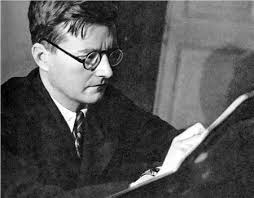
    Images of D S

    Above: Dmitry Shostakovich

    Sunday November 23rd, 2014 – We seem currently to be in the midst of an impromptu Shostakovich Festival at the halls of Lincoln Center. Last night, the New York Philharmonic gave an epic performance of the composer’s 8th symphony under the baton of Jaap van Zweden. This afternoon, Chamber Music Society of Lincoln Center offered a very satisfying programme entitled Shostakovich Reflected, with works by Sibelius and Debussy mixed with a Shostakovch song cycle and his Trio #2. At the Metropolitan Opera, the composer’s LADY MACBETH OF MTSENSK is holding forth, conducted by James Conlon (I’ll see it on November 29th). In February, New York City Ballet will jump in with a revival of Christopher Wheeldon’s ballet, MERCURIAL MANOUVRES, set to the Shostakovich piano concerto #1. The Philharmonic meanwhile will offer two more Shostakovich symphones later in their season: the 5th (conducted by Long Yu, from January 22nd-24th, 2015) and the 10th (Alan Gilbert conducting; from April 8th-11th, 2015).

    At Alice Tully Hall today, Chamber Music Society‘s Shostakovich Reflected programme again left me searching for adjectives (superlatives, really) to describe the level of music-making by the participating artists: musicians who are rapidly becoming icons for me much as the great opera singers were back in my early days of opera-going in the 1960s and 1970s.

    The Sibelius Trio in G minor opened the programme today; this brief, single-movement work has a rather dark-hued, wintry feel. The music evokes a sense of longing but also of resignation. It’s unknown why Sibelius never enlarged upon this work beyond the opening movement, though he apparently made sketches, they were never developed. Yura Lee (violin), Mark Holloway (viola), and Jakob Koranyi gave a deeply-felt performance, establishing the mood so convincingly that one wanted it to go on. 

    Soprano Dina Kuznetsova then appeared for Shostakovich’s Seven Romances on Poems of Alexander Blok, with Gilbert Kalish at the Steinway, Yura Lee, and Mr. Koranyi. The soprano’s voice at first seemed overwhelming in the hall, but soon the proper balance was found and she and the musicians worked in a fine state of rapport, the vocal line now well-controlled with some very expressive dynamics. Mr. Kalish played with his customary mixture of finesse and passion, and both Ms. Lee and Mr. Koranyi displayed their intrinsic mastery of their instruments in songs where the accompanying voices take a prominent place. The audience reacted with great enthusiasm to this set, calling the artists back three times. 

    It’s always nice to find links to the ballet on programmes of symphonic or chamber music; this afternoon my friend Monica Wellington and I were especially pleased to hear Claude Debussy’s Six épigraphes antiques for Piano, Four Hands, which we both love in its danced incarnation at New York City Ballet: ANTIQUE EPIGRAPHS, a Jerome Robbins masterpiece with an all-female cast. Gilbert Kalish and Soyean Kate Lee shared keyboard, with much hand-crossing. Their refined playing evoked Nature and the rites and rituals of a long-lost tribe. 

    The concert concluded with a thrilling performance of Shostakovich’s Trio No. 2 in E minor, composed fifty years after the opening Sibelius trio. This work opens with solo cello playing in the highest register; here Mr. Koranyi displayed incredible control. Violin and piano (the two Ms. Lees) join in a fugue; the underlying feeling is one of pensive melancholy, the playing from all three artists nothing less than ravishing. New themes rise up, and the music flows with much interchange of the three voices.

    The brisk and rather jagged scherzo that follows seems alternately joyous and frantic: a lively dancelike theme cascades along, played with marvelous virtuosity by our trio tonight. The piano ripples thru scale passages or emphatic rhythmic motifs; the violin and cello alternately pluck and sing.

    Yura Lee’s poignant introduction of the third movement’s lamenting theme set the tone for this Largo, with its heart of darkness. The voices melded in music which seemed to summon up the despairing tread of a funeral procession, the misty veil shot thru with glimpses of burnished light. 

    The finale sweeps aside this heavy sense of grief, yet proceeds under a threat of returning gloom. The pianist sets the music marching, and there’s more dance-rhythms as well; wit and humor are not forbidden, but are delivered with irony. The song-like theme of the first movement is recalled, setting up a continuum of memory even as the work plunges forward.

    I can’t say enough in praise of the three musicians who wrought this superb performance. And the  audience clearly shared my sense of deep appreciation: at the end, everyone stood up and cheered as the players were summoned back for repeated bows.

    The Program:

    The Artists:


  • Dvořák/Schubert/Chausson @ CMS

    Ani-kavafian.jpg.pagespeed.ce.EDRXV6ZGFP

    Above: violinist Ani Kavafian, celebrating an important anniversary at CMS this season

    Sunday November 16th, 2014 – A concert both musically and emotionally rewarding at Alice Tully Hall today as Chamber Music Society of Lincoln Center presented works by three composers. In her welcoming speech, the Society’s co-Artistic Director Wu Han announced that the scheduled violist, Lawrence Power, would be unable to appear due to illness; in his stead, Matthew Lipman – slated to join CMS 2 next season – stepped in, making an immediate and very favourable impression in the concert’s opening work.

    The old letter in my book“, the first of four songs from Antonin Dvořák’s Cypresses which commenced the programme, gives the melody to the viola, and Mr. Lipman’s playing showed both winningly mellow tone and warmth of expression. In the company of seasoned chamber artists, he seemed entirely at home. The prominent violin passages in “Death reigns in many a human breast” and “You ask why my songs”  were played suavely by Ani Kavafian, celebrating her 35th season with Chamber Music Society. In “When your sweet glances on me fall“, Areta Zhulla (violin 2) and Gary Hoffman (cello) added their luxuriant voices to those of Ms. Kavafian and Mr. Lipman in a resonant meshing of timbres.

    172982_750

    Mr. Lipman (above) returned with Mlles. Zhulla and Kavafian, cellist Nicholas Canellakis, and double-bassist David Grossman for a poetic rendering of Dvořák’s Nocturne in B-major. Here Ms. Zhulla spun out a silken thread of lullabye whilst Mr. Grossman’s double-bass gently indicated the music’s heartbeat. In a rich blend of inner voices, Ms. Kavafian and Mssrs. Lipman and Canellakis sustained the atmosphere of reverie with their dreamy lyricism.

    F3f9ab_fad926d58fd0409da7bbd12fbd6428ab.jpg_srz_p_325_454_75_22_0.50_1.20_0.00_jpg_srz

    Above: Areta Zhulla

    While Schubert’s ‘Trout‘ quintet was undoubtedly a major draw for music-lovers today, it was a soul-stirring performance of Ernest Chausson’s Trio in G-minor that most truly moved me. Chausson’s music with its deep-lilac perfume always gets under my skin, and this trio is particularly affecting in its melodic allure and its build-up to rhapsodic climaxes.

    Th

    Keyboard magician Inon Barnatan (above) cast a spell over the hall right from the start, with the misterioso opening of the trio elegantly intoned. As the work progresses, Ms. Zhulla and Mr. Canellakis sustained the feeling of rapture, their impassioned playing expanding the impression of yearning and melancholy in the third movement. Together they crafted an intensely rich sound, giving the illusion of a larger ensemble. Their heartfelt playing, and Mr. Barnatan’s evocatively nuanced piano line, really drew me in.

    8917fb601b89466fecca47f46bfa9edc.wix_mp_1024

    Above: Nicholas Canellakis

    As the Chausson surges forward in the waltz-like final movement, romantic tides rise up and we feel an expectation that things may end on an upbeat note; yet instead the composer takes a plunging chromatic descent into the darkish realm of the trio’s somber opening. The audience, having been held in the thrall of the three superb musicians, erupted in a gale of applause, recalling the players for an extra bow.

    For the programme’s finale, the Schubert “Trout“, Ms. Kavafian took the lead; Mr. Barnatan really went to town here, showing sparkling virtuosity. Matthew Lipman, Gary Hoffman, and David Grossman defined the music’s inspiring textures with a genial sense of community. The Theme and Variations section, based on that enduringly popular Schubert song “Die forelle” was especially gratifying, and the sold-out house seemed thoroughly engaged by this famiiar and ever-welcome masterpiece.

    The Repertory:

    The Artists:

  • SenseDance @ Peridance

    6a00d8341c4e3853ef017c31d57b4e970b-800wi

    Above: Erin Ginn of SenseDance

    Sunday November 24th, 2013 – Henning Rubsam’s SenseDance in a programme of new and older works at Peridance. On a frigid evening I trekked across The Village to attend this performance in which several friends were involved. The performance, which played to a full house, started late which put me in a grumpy funk. As the evening progressed, the dancers slowly dispelled my cranky mood.

    Much of the programme was given over to duets, well-danced, in many different styles. The first two of these were from past works: Sarabande from MERCILESS BEAUTY (2006) is a straight-up ballet pas de deux to Bach danced by the lyrically lovely Erin Ginn and and her partner, Nathan Bland; it ends with the girl borne off in a sustained overhead lift. On a more playful note, Save The Country from the 1997 Laura Nyro tribute ART OF LOVE found Jacqueline Stewart and Oisín Monaghan rolling around on the floor.

    Three premieres sustained the duet motif: in the first – RUSSIAN LESSON – to a ‘spoken’ score, Juan Rodriguez and Matt Van overcome a language barrier with some athletic sparring mixed with some cozying up: it feels like they are headed for a hotel room. This piece could be sub-titled Found In Translation.

    6a00d8341c4e3853ef01538f8b348f970b-800wi

    Above: Temple Kemezis, photo by Matt Murphy

    Spoken word features also in BORDERS, a stylized and other-worldly duet danced by Temple Kemezis and  Henning Rubsam; this displayed Mr. Rubsam’s choreography at its most impressive, and Temple, with her unique look and potent dancing, seemed wonderfully at home in this dancescape.

    6a00d8341c4e3853ef0148c70fd5a0970c

    Above: Oisín Monaghan, photo by Kokyat

    Oisín Monaghan then joined Heidi Green in a ‘young romance” duet – AN EINSAMER QUELLE – set to music of Richard Strauss. Some dancers are blessed with a unique and instantly identifiable ‘signature’ and Oisín is surely one of these. To date, no choreographer seems to have truly captured Oisín’s essence in dance – several have come very, very close – but perhaps it is exactly that elusive quality that keeps us fascinated. Here he and Ms. Green gave an attractive performance.

    Henning Rubsam’s HALF-LIFE is something of a signature piece for the choreographer. RELOAD has now been added to the title, and the cast has expanded from four to seven. I felt the original quartet setting to be preferable – our focus is now drawn in too many different directions as the dancers come and go. I missed the clarity and crispness of the original. Nevertheless, the ballet was very well-danced tonight with an outstanding performance from Matt Van.

    The evening’s final new work was SARAO, a jazzy pas de deux to music by Ricardo Llorca. This piece featured some of the evening’s most imaginative partnering and was finely executed by Erin Ginn & Matt Van. 

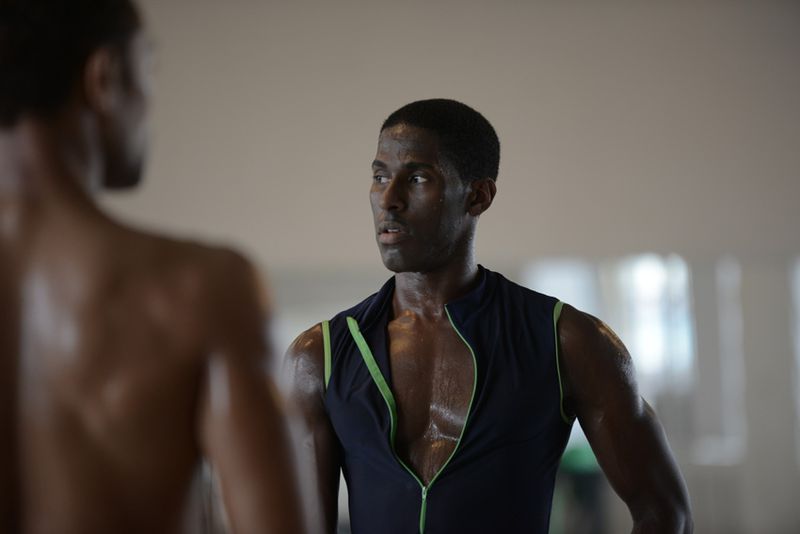
    6a00d8341c4e3853ef0192ac7d1e48970d-800wi

    Above: Lloyd Knight, photo by Nir Arieli

    Making a guest appearance with SenseDance, Lloyd Knight of the Martha Graham Dance Company joined Temple Kemezis in CAVES, a 2006 duet to a Ricardo Llorca score with a Spanish guitar ambiance. The two dancers brought both their physical prowess and their strong personalities to bear on this work which seems to alternate between allure and antagonism. Ms. Kemezis executes deep pliés in second and a sort of crab-walk reminiscent of Wendy Whelan in Christopher Wheeldon’s MORPHOSES. Lloyd Knight’s authoritative partnering, keen feeling for dynamic tension, and tantalizing torso all meshed into a compellingly charismatic performance. In this suggestive’ battle of the sexes’ duet, the woman wins – doesn’t she always? Sustained applause followed this pas de deux, though the bows were saved for the end of the evening.

    Excerpts from Henning Rubsam’s 2012 BRAHMS DANCES closed the evening on a romantic note. Duets for Ms. Stewart with Matt Van and Ms. Green with Nathan Bland had a nocturnal feeling, and then a large ensemble passage which evoked a waltz-filled ballroom.