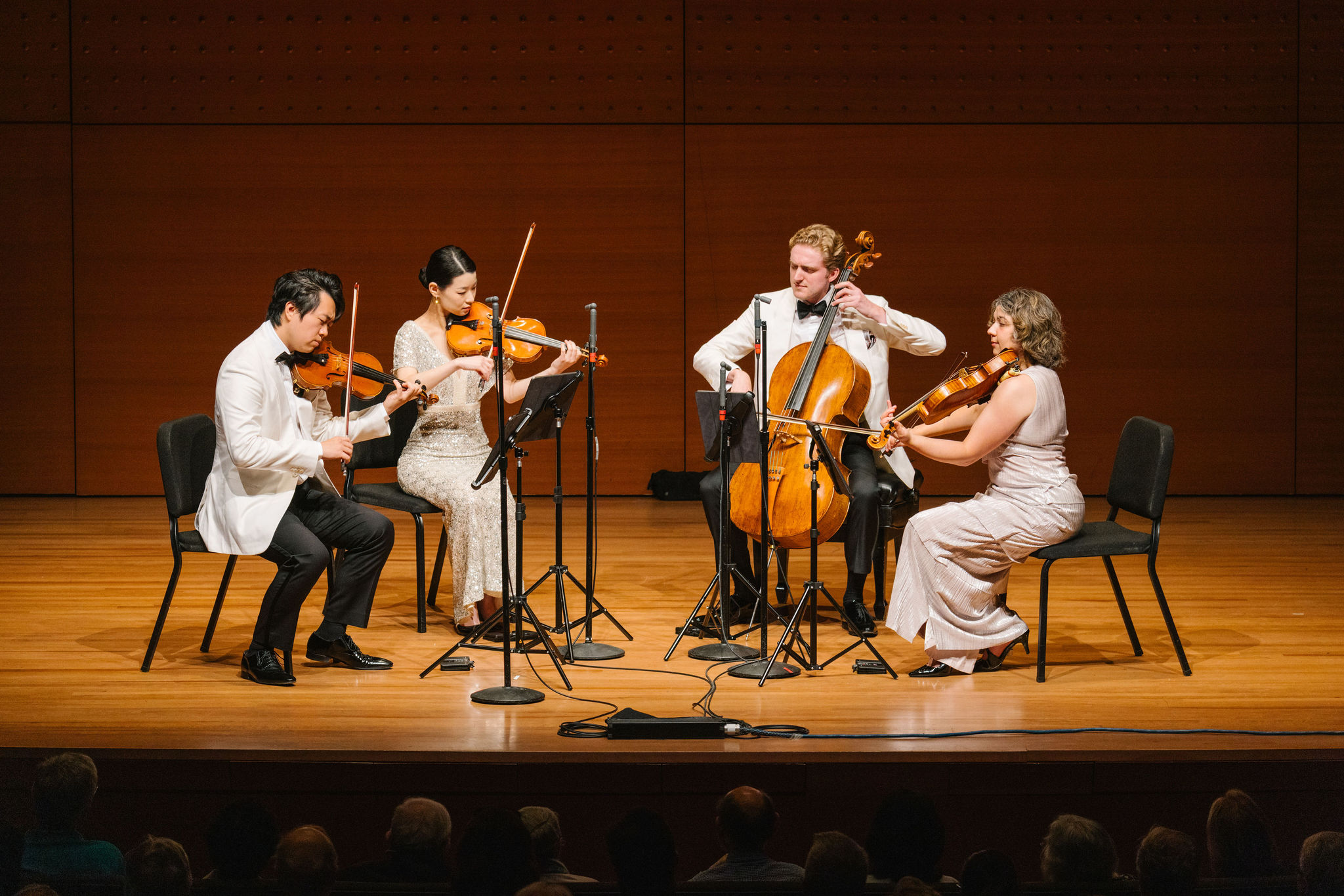
Above, the Viano Quartet: Hao Zhou & Lucy Wang (violins); Tate Zawadiuk (cello); and Aiden Kane (viola). Photo by Da Ping Luo.
~ Author: Ben Weaver
Sunday July 27th, 2025 – The oppressive heat of the summer was broken for a few hours by the Chamber Society of Lincoln Center with the last of their summer concerts at Alice Tully Hall. The Viano Quartet – Lucy Wang & Hao Zhou, violins; Aiden Kane, viola; Tate Zawadiuk, cello – played a wonderful program of Haydn, Mozart, Mendelssohn, and Schumann to a sold out hall.
First half of the program was for the classical era – Haydn and Mozart. I think many think of Haydn music as preceding Mozart, and Haydn was certainly older. But he outlived Mozart and his String Quartet in D minor, Hob. III:83, heard tonight, was composed 21 years after Mozart’s. Consisting of only two movements, Haydn did intend to compose the traditional four, but his failing health prevented its completion. It opens with a graceful, charming Andante grazioso, although the movement is briefly interrupted by a more driven middle section, before reprising the light first theme. The Minuet is more dramatic and the Vianos revealed a muscular sound. First violinist Hao Zhou dominated the proceedings, but Tate Zawadiuk was given a few solo passages to show off his warm cello playing.
Mr. Zhou remained in the first violin chair for Mozart’s G major String Quartet, K. 387. This was one of Mozart’s so-called “Haydn Quartets,” which he dedicated to the older master. The opening Allegro vivacious assai is also a light and elegant, and Mozart lets the second violin (Lucy Wang, who would move into the first chair for the second half of the program) take some wonderfully soaring solo turns. The movement ends gently, almost as if in the middle of a thought. The playful Menuetto was interrupted by a ringing cell phone, as was the lovely slow movement that followed. Mozart gives all the instruments turns to shine on their own, and every member of the Viano Quartet is a first-rate soloist. The closing movement consists of two fugatos, with each instrument passing melodies to one another and then back again.
Felix Mendelssohn’s Fugue in E-flat major, Op. 81 is the final of the Four Pieces for String Quartet, which were published posthumously, though Mendelssohn composed the Fugue when he was just 18. (The other pieces in the collection were composed 20 years later.) It opens somberly with the viola before the others join in. Mendelssohn’s layering of the melodies is masterly, and not just for one so young. Mendelssohn’s mastery of the form – and the occasionally wild nature of the writing – reminded me somewhat of Beethoven’s demented Grosse Fugue.
Robert Schumann’s magnificent Quartet in A major, Op. 41, No. 3 closed the program and brought down the house. Schumann opens with work with a brief slow introduction before unleashing a yearning, romantic melody, which is said to represent his wife Clara. The rest of the piece is filled with anxiety, restlessness and thunderous outbursts, with occasional humorous and romantic reprieves.
The Viano Quartet produces a big, dominating sound. There’s a raw, visceral energy and bite to their performances, though they are capable of tenderness that makes you lean in. It’s always so interesting to hear how the same four instruments can combine to create such different sounds depending on the four musicians and their approach to music-making. The Vianos’s energy and drive reminded me of the great Belcea Quartet, who also manage to pack a wallop.
As an encore the quartet performed a lovely arrangement of Debussy’s beloved Claire de lune, before everyone made their way out to the simmering NYC streets.
CMS will stream a video recording of this wonderful concert in the coming weeks, so check out their web-site.
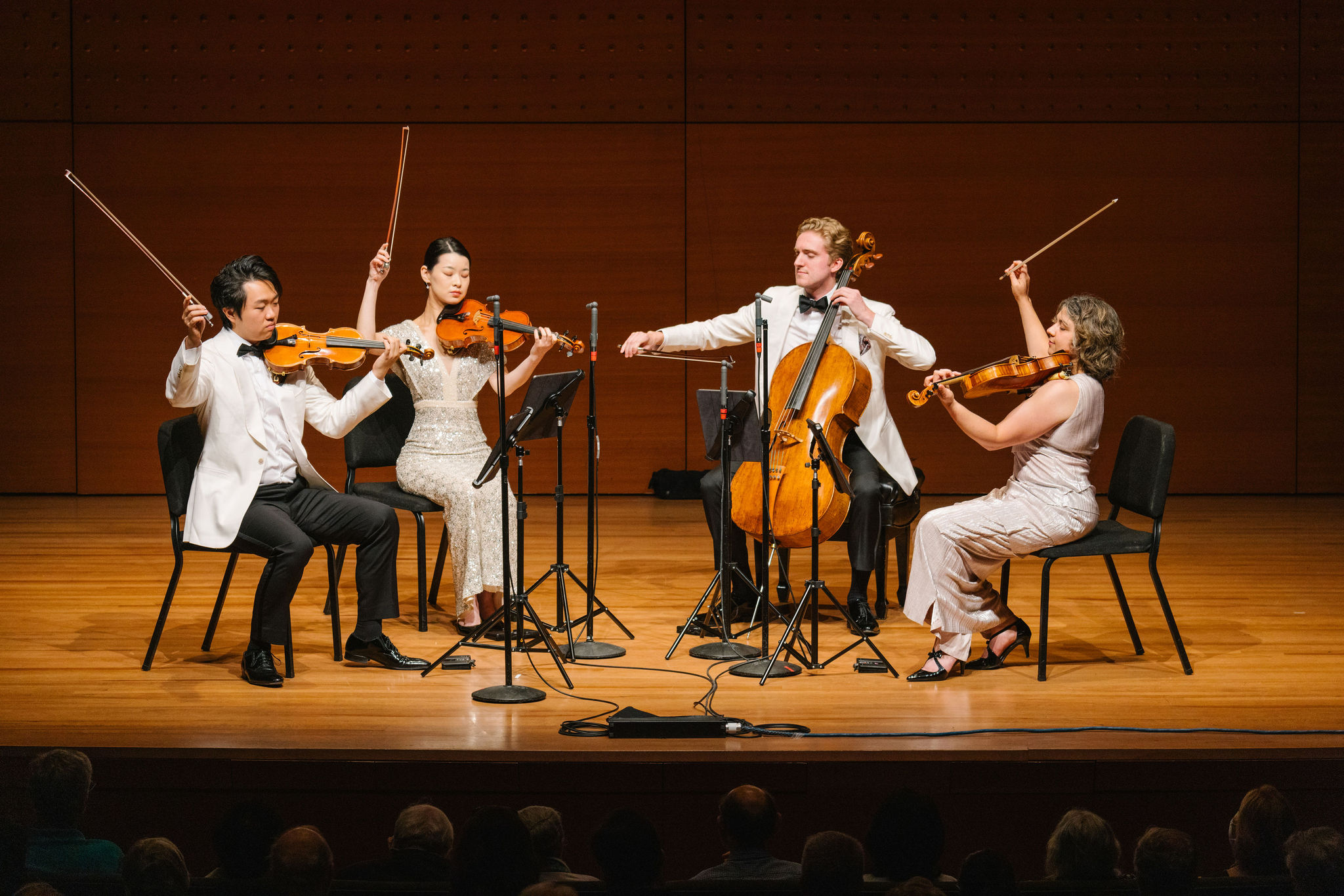
Performance photo by Da Ping Luo
~ Ben Weaver
(Concert photos by Da Ping Luo, courtesy of Chamber Music Society of Lincoln Center…with our thanks to Beverly Greenfield)
 Oberon's Glade