Bringing opera to the people: I saw this tenor in MADAMA BUTTERFLY at The Met and I met him afterwards. Tall, great-looking guy, very cordial. I love this video, especially the two tuba players.
Tag: The Met
-
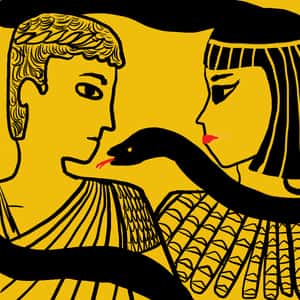
John Adams: ANTONY & CLEOPATRA @ The Met
~ Author: Oberon
Saturday May 24th, 2025 matinee – I hadn’t originally planned to go to a performance of John Adams’ Antony & Cleopatra, but some singers I especially like were in the cast, so I got a score desk – even though I was scoreless – for today’s matinee. My previous experiences with the composer’s operas have both disappointed (though the second was enthralling for the first 40 minutes); you can read about my reaction to The Death of Klinghoffer here and to El Niño here.
The Met’s first incarnation of the Shakespearean tale of Antony and Cleopatra was the opera by Samuel Barber which opened the New Met in 1966. In the late summer of that year, I had made my first solo trip to New York City in order to buy tickets to some of the performances in the first few weeks of the season, and Antony & Cleopatra was on my list.
On the evening of September 16th, 1966, in my little room in the little town, I was tuned in for the live broadcast of the new opera. I was on pins and needles because the Met Orchestra had announced an impending strike; they’d agreed to play the opening night as it was drawing international attention in the music world. Luminaries had flown in from other nations, and Lady Bird Johnson was to be the guest of honor. For two acts, I was feeling more and more certain that the performances I’d bought tickets for would never take place: rumors indicated that the standoff could not be resolved, and that both sides were standing firm. Then, before the start of Act III, Sir Rudolf Bing appeared before the gold curtain to announce that a settlement had been reached and to welcome the musicians back “as friends”. I ran screaming thru the house; my mother thought – not for the first time – that I was deranged.
On December 1st, 1966, I saw the last Met performance of the Barber Antony & Cleopatra to date. I’d learned a lot of the music from repeated playings of the reel-to-reel tape I had made of the opening night broadcast, and I was thrilled to experience the voices of Leontyne Price, Justino Diaz, Jess Thomas, Ezio Flagello, and Rosalind Elias in this music ‘live‘; I was able to silently sing along with them much of the time.
Though the Met never revived the opera, a production given at the Juilliard School, staged by Gian Carlo Menotti and conducted by James Conlon, kept much of the music intact, whilst introducing a love duet for the title-characters. Then, in 2009, the New York City Opera presented a concert performance of the Barber opera at Carnegie Hall, with Lauren Flanigan and Teddy Tahu Rhodes in the leading roles. Read about it here.
In the ensuing years, I’ve kept favorite passages of the opera in my mind: not just the big themes and the weighty arias, but the delicious (and later cut) scene for the eunuch slave Mardian and Cleopatra’s handmaidens, full of one-liners; the haunting, poetic beauty of Antony’s young attendant Eros’s suicide (“Thus do I escape the sorrow of Antony’s death...”), and most especially the opera’s original ending, with Charmian finishing Cleopatra’s last line, “What? Should I stay…?” “…in this vile world? Now boast ye, Death, for in thy bosom lies a lass unparalleled…your crown’s awry! I’ll mend it, then play til Doomsday...” as intoned by the sumptuous voice of Rosalind Elias. And of course, the glorious sound of Leontyne Price is forever bound to the music of Cleopatra.
Enough nostalgia, and forgive me for rambling on.
So this afternoon, I am sitting alone in the great darkened hall that had reverberated to the Barber score some sixty years ago, hoping to be similarly captivated by the new Adams opera. As it turned out, I was far more fascinated with the orchestral writing than with the vocal. The composer had written a very long program note, but the print was so small I could not read it. Even while the players were tuning and warming up in the pit, the sounds of such instruments as celeste, harmonium, harpsichord, mandolin, glockenspiel, vibraphone, tam-tam, flexatone (which creates glissando effects), and numberless bells, chimes, and drums, teased my ear. Adams put all of these to cunning use, creating textures that sustained my interest throughout the 90-minute first act.
The composer reportedly stipulates that amplification of the singing be used when his operas are presented. It’s OK by me, but the mixing board (taking up one of the parterre boxes) sometimes allowed the voices to be covered by the orchestra despite the singers being miked. A few times, the lower range of Julia Bullock (Cleopatra) took on a reverb feeling from over-amplification. I also noted that the cast’s diction was not always clear.
A restless orchestral prelude opens the opera, wherein Antony (Gerald Finley, the superb baritone) ignites Cleopatra’s fury when he tells her he must return to Rome due to the death of this wife, Fulvia. Between un-interesting vocal writing and patches where the singers were covered by orchestral volume, this scene was basically expendable.
A noisy interlude takes us to Rome, where Antony is greeted coolly by his ‘boss’, Caesar (the clear, lyrical tenor Paul Appleby). To patch things up between the two men, it is suggested that Antony marry Caesar’s sister, Octavia. Agrippa, the match-maker (sung by Jarrett Ott, whose clear diction was a joy) gives way to Enobarbus (that superb basso Alfred Walker) whose description of Cleopatra sailing on the Cydnus is more a sung narrative than a melodious “aria”.
Back in Alexandria, Cleopatra’s voicing of “O happy horse, to bear the weight of Antony!” is no match for Samuel Barber’s setting of the text, which Leontyne Price savoured so smoulderingly. Told by Eros (Brenton Ryan) of Antony’s marriage to Octavia sets off a wild reaction from Cleopatra, though it is expressed more by the orchestra than by Ms. Bullock’s parlando and her furious song, which goes on too long…though finely rendered by the soprano.
After an orchestral interlude, a big, beaty, turbulent theme is launched as Octavia (the plush-toned mezzo Elizabeth DeShong) cannot decide between loyalty to her brother Caesar and the appeal of Antony. Tired of her vacillating, Antony divorces her on the spot and rushes back Cleopatra. Ms DeShong brings vocal glamour to her singing, though at times the orchestra covered her. Caesar’s fury at Antony’s treatment of his sister is another case of the fascinating orchestration trumping the vocal line. When Octavia/deShong reveals (with some gorgeous measures of vocalism) that she is pregnant, her brother declares war on Antony.
A wondrously wrought orchestral interlude leads to a musical depiction of a disastrous sea battle, in which Antony miscalculates and Cleopatra erroneously calls off her own fleet of ships; there is a brief vocal highlight wherein Mr. Finley’s lament blends with a soaring phrase from Ms. Bullock; but it’s over almost as soon as it begins. Lights flash thru the hall as the orchestra pounds away at themes of battle in an endless ending to the opera’s first act.
In the 90-minute span of this opening act, memorable vocal moments have been few and far-between, whilst the orchestra has shone brilliantly. The voices were there, ready to make much of the music, but the composer’s lack of “lyric musing” (program note) deprives them of opportunities.
~ Oberon
-
Peixin Chen
Chinese basso Peixin Chen has impressed me with his performances as Timur and Sarastro at The Met.
He sings “Gada Meiren“, a Mongolian folk song, here:
-
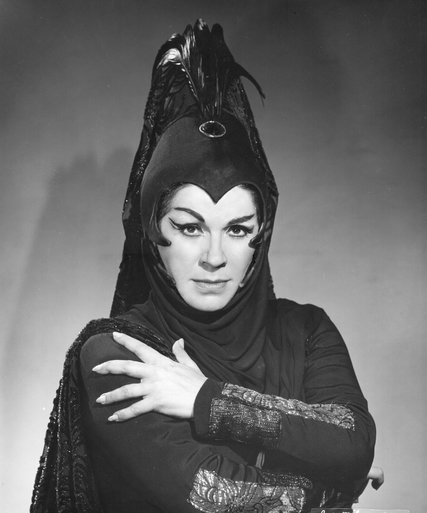
Irene Dalis as The Nurse
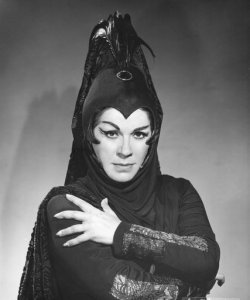
The great mezzo-soprano Irene Dalis (above) found her most memorable role as The Nurse in Richard Strauss’s DIE FRAU OHNE SCHATTEN; I was fortunate enough to have seen her in this opera twice at The Met, and both times she simply dazzled in the fiendishly difficult vocal writing whilst creating a vivid theatrical portrait of this mercurial creature.
The Nurse above all is devoted – to the point of obsession – to her charge: the half-human/half-spirit Empress, daughter of the mysterious and omniscient Keikobad. In the opera’s opening scene, the Nurse is visited by Keikobad’s messenger. The Empress has been married to the Emperor, a mere mortal, for one year, but as she still does not cast a shadow – the sign of her ability to bear children – Keikobad plans to re-claim her for the spirit world in three days. The Nurse is delighted, as she very much hates the Emperor; she longs to return to Keikobad’s realm.
The Nurse asks what will become of the Emperor after the Empress is taken by her father; “Er wird zu Stein!” says the Messenger: “He will be turned to stone!” This prospect gives the Nurse even greater satisfaction: “He will be turned to stone!” she repeats. “There do I recognize Keikobad, and bow before him!”
FRAU ~ opening scene – Irene Dalis & William Dooley – Bohm cond – Met bcast 1966
January 23, 2017 | Permalink
-
Anna Reynolds: Berlioz ~ LA CAPTIVE

Anna Reynolds was my first RHEINGOLD Fricka; at The Met’s Saturday matinee performance of February 22nd, 1969, conducted by Herbert von Karajan, Ms. Reynolds replaced the scheduled Josephine Veasey in the role of Wotan’s wife and made a memorable impression on me. I sent Anna Reynolds a fan letter a couple of days later, and received the above photo from her soon after. Read about that spectacular February weekend here.
In 1975, I had the good fortune to see Ms. Reynolds again on The Met stage as the WALKURE Fricka; she was superb. For years, I owned an LP of the mezzo-soprano singing Schumann songs; her interpretation of Mondnacht remains a favorite, though the LP has long since vanished.
Among the hundreds of items I was able to rescue from my old cassettes – converting them to MP3s – this recording of Anna Reynolds singing Berlioz’ La Captive from a 1969 BBC broadcast is particularly dear to me.
-
Anja Silja Celebrates Her 85th Birthday
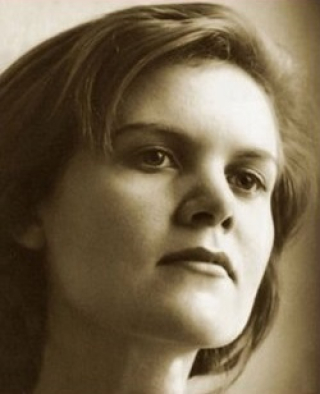
Anja Silja celebrated her 85th birthday on April 18th, 2025. She had made her operatic debut 70 years earlier, as Rosina in BARBIERE DI SIVIGLIA. In 1980, I saw her in a riveting performance of Alban Berg’s WOZZECK at The Met, with Jose van Dam in the title-role and James Levine on the podium. The production was issued on DVD and is very much worth watching…if you can find it.
Read Bruce Duffie’s 1996 interview with the German diva here.
-
Gertrud Rünger
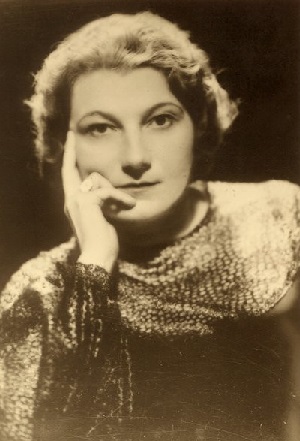
Gertrud Rünger (1899-1965) sang both mezzo-soprano and dramatic soprano roles during her career. She began as a choral singer, moving on to solo roles in smaller German houses in 1923.
In 1930, she joined the ensemble of the Vienna State Opera, and in 1934 came to the Berlin Staatsoper. She sang Verdi’s mezzo roles in German, and developed a reputation as a Wagnerian soprano, singing in Paris, London, Amsterdam, Dresden, and Munich.
Ms. Rünger sang the Nurse in FRAU OHNE SCHATTEN at the Salzburg Festival in 1932-1933, and later appeared there as Klytemnestra and as Beethoven’s Leonore. She sang briefly at The Met in 1937, as the WALKURE and GOTTERDAMMERUNG Brunnhildes, Fricka in RHEINGOLD, and as Ortrud opposite Kirsten Flagstad’s Elsa.
Designated as Kammersängerin, Gertrud Rünger continued to perform into the 1950s, whilst also teaching voice. She passed away at Berlin in 1965.
Gertrud Rünger – Sleepwalking Scene ~ MACBETH – in German
Gertrud Rünger – DON CARLO aria – in German
And here is Ms. Rünger live in a thrilling rendition of Ortrud’s Invocation.
~ Oberon
-
Donner Summons the Mists

Dwayne Croft as Donner summons the mists as Wagner’s DAS RHEINGOLD draws to its finish. I vividly recall how thrilling this was in the House as the baritone strode up the inclined stage and deployed his powerful voice into the great cavern of The Met.
The performance dates from 2010 and is conducted by James Levine.
Watch and listen here: https://www.youtube.com/watch?v=bBETnbgm6sE
-
Waiting for Elisabeth Grümmer
The most-read article from Oberon’s Grove:
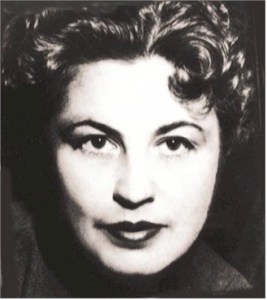
~ In 1967 the Metropolitan Opera held its first June Festival. Having just opened the ‘New Met’ in September 1966, ticket demand for the premiere season at Lincoln Center had been phenomenal and the Company seized the opportunity to add several performances in the month of June. This was a bonanza for the fans and also provided the general public, who were curious to see the interior of the new opera house, expanded possibilities. The Met offered some very fine casting that June, and topping the list of exciting events (at least from the fans’ point of view) was the belated Met debut of the German soprano Elisabeth Grummer.
Grümmer was 57 at the time, and had already had a very successful career in Europe and had made several top-class recordings, working with Europe’s finest conductors. She had made her debut with the Met on tour in Boston earlier that Spring and was now coming to the House in the role of Elsa in Wieland Wagner’s production of LOHENGRIN.
This was my first chance to see this opera; Sandor Konya was at that time the leading exponent of the title role, and my beloved Irene Dalis was singing her venomous Ortrud. Stalwarts Walter Cassel, John Macurdy and William Walker completed the cast. Andre Cluytens, who was to have conducted this production of LOHENGRIN, had died the previous summer and so Joseph Rosenstock was on the podium. I suppose by international standards that Rosenstock was considered a routinier but – inexperienced as I was – I was simply thrilled to be there.
Grümmer made her entrance, and I recall the entire phalanx of Family Circle standees were waiting with collectively bated breath for her first line, which she deployed with a silvery pianissimo: “Mein armer bruder!” We were under her spell immediately and she went on to sing a really thrilling Elsa and to win a very warm acclaim from the packed house. Although nearing the end of her career, Grümmer had maintained her clarity of sound; the voice had a lyrical feeling but she was able to ride the ensembles with a bit of metallic thrust. It was an exciting debut but after repeating the role once, she never sang at the Met again. (She did appear as the Marschallin at the New York City Opera the following season.)
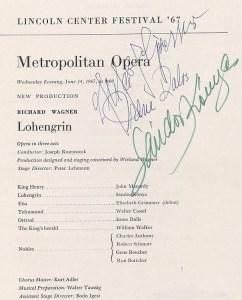
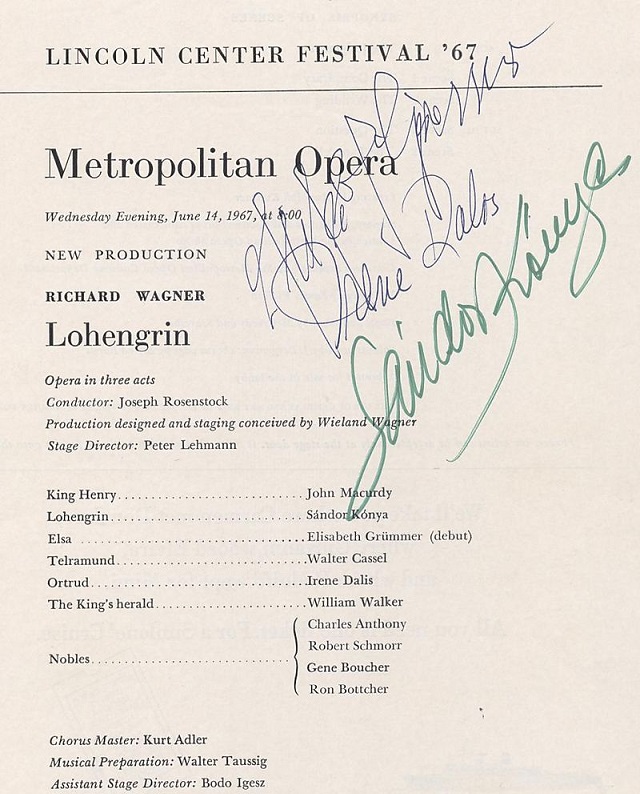
A large contingent of fans gathered at the stage door. Sandor Konya came out and was so kind; aside from signing my programme he gave me a beautiful photo of himself as Lohengrin. Irene Dalis appeared and she even remembered me and thanked me for coming. Then the crowd began to drift away. I knew Grümmer hadn’t left yet and I couldn’t imagine why no one wanted her autograph after such an exciting debut.
After a few moments only a half-dozen of us remained. A chorister walked out and someone asked him if Miss Grümmer was coming out soon: “Oh, she doesn’t sign autographs!” Someone else emerged and saw us: “You waiting for Grümmer? She won’t sign.” The other fans left. I figured at least I would get a glimpse of her. It had been an hour since the curtain had fallen, and I was exhausted. But something kept me there.
A car pulled up; the driver got out. He looked at me and said, “If you’re waiting for Elisabeth Grümmer, you’re wasting your time. She doesn’t like giving autographs.” I shrugged, trying to pretend that I WASN’T waiting for Elisabeth Grümmer.
Finally the stage door opened and Ms. Grümmer walked out with a gentleman. They got in the car and closed the doors. But they didn’t leave. I stood by the stage door holding my program and pen, looking as forlorn as I could. I was 19 but looked younger, and I hoped she would take pity on me. The driver was pointing at me and the soprano looked my way hesitantly. Then she suddenly rolled down her window and gestured to me. Neither of us spoke, but I handed her the program. She briskly wrote her name and handed it back to me with just a trace of a smile. I thanked her and made a little bow; she rolled up the window and the car pulled away.
Click to enlarge:
-
Loretta Di Franco Has Passed Away

Above: Loretta Di Franco as Countess Ceprano in RIGOLETTO, with Placido Domingo as the Duke of Mantua
Soprano Loretta Di Franco has passed away; from her Met debut as a Page in TANNHAUSER in 1961 to her farewell in 1995, she sang over 900 performances with The Met in New York City and on tour.
A native New Yorker, Ms. Di Franco had started out at The Met as a member of the chorus. In 1965, she entered and won the Met Auditions, thereafter taking on a vast number of roles in seven languages; I saw her in many of them. She sang both Barbarina and Marcellina in NOZZE DI FIGARO, Pousette in MANON, Berta in BARBIERE DI SIVIGLIA, Giannetta in ELISIR D’AMORE, both Papagena and the 1st Lady in ZAUBERFLOETE, Lisa in LA SONNAMBULA, both the Sandman and the Dew Fairy in HANSEL AND GRETEL, Marianne Leitzmertzin in ROSENKAVALIER, Zerlina, Frasquita, Xenia in BORIS GODUNOV, both Woglinde and Gerhilde in the RING Cycle, and Kate Pinkerton. She sang Violetta in some student matinees of TRAVIATA, and appeared in two Janacek operas at The Met: JENUFA and KATYA KABANOVA.
Upon retiring from singing, Loretta continued to work at The Met as a language coach.
Loretta Di Franco appears in videos of several Met productions, but the only free-standing excerpt I could find is the LUCIA sextette from the Met’s 100th Anniversary Gala in 1983: she sings Alisa, joining Robert Nagy (Arturo), Julien Robbins (Raimondo), Roberta Peters (Lucia), Dano Raffanti (Edgardo), and Brian Schexnayder (Enrico). Sir Richard Bonynge conducts. Watch and listen here.

 Oberon's Glade